Kristopher Townsend
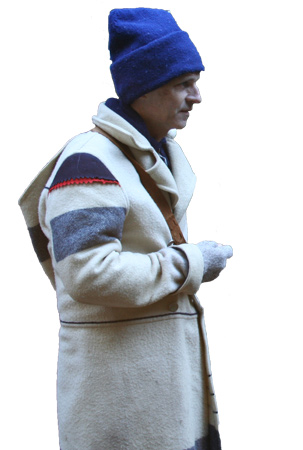
From the Pacific Northwest Living Historians at Lewis and Clark National Historic Park, Fort Clatsop.
Since 2016, Kristopher K. Townsend has been the webmaster and editor of this site, Discovering Lewis & Clark®. He has been actively photo-documenting the Lewis and Clark Trail since 1995. He attempts as closely as possible to re-create scenes as described in the journals including the same time of year, natural state, location, and weather. He has contributed numerous photos throughout the Discovering Lewis & Clark website.
Kris taught several years as a tenured instructor at Spokane Falls Community College. His courses included Internet programming and other information technology and computer science courses. During that time, he was also the series editor and an author of a popular college textbook series on Office Technology.
Shortly after the advent of the World Wide Web, he managed a web server featuring digital photos, digital video, and articles created by his Glenwood Heights Primary students. Topics included historical sites of Clark County (Washington State), wildflowers and birds of Clark County, and how-to videos for school’s physical education program.
Contributions to this Site
Alfred Jacob Miller
by Kristopher K. Townsend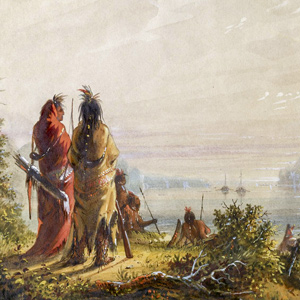
Miller’s reputation rests on his single Green River Rendezvous trip from which he transformed his original sketches and notes into a lifetime of images.
Peter Fidler
Early mapmaker
by Kristopher K. Townsend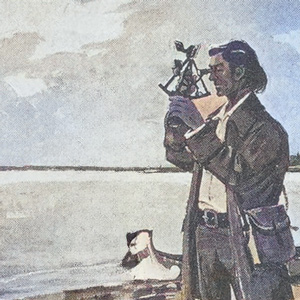
Peter Fidler (1769–1822) was a trader, surveyor, and ethnographer who played a pivotal role in mapping the Canadian Rockies and the Missouri River watershed. Employed by the Hudson’s Bay Company from 1791 to 1822, Fidler ventured into remote regions of North America. His efforts contributed significantly to the understanding of the continent’s vast and largely uncharted landscapes prior to the Lewis and Clark Expedition.
Sacagawea In the Journals
by Kristopher K. Townsend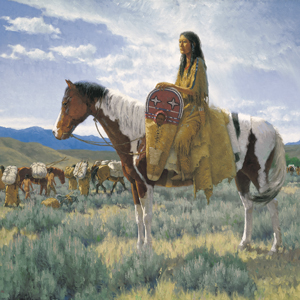
Sacagawea, also known as Sacajawea or Sakakawea, was a vital member of the Lewis and Clark Expedition, serving as an interpreter, diplomat, guide, and food gatherer. Her—and her child’s—presence symbolized peace among many of the Natives they encountered. The expedition journals document her life, tribal background, and key contributions.
Currants and Gooseberries
Eight Ribes species
by Kristopher K. Townsend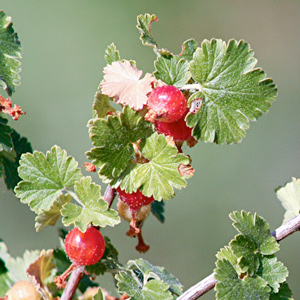
Of the dozens of currants and gooseberries along the Trail, Lewis likely preserved specimens of eight different species. Four of them reside in herbariums and four are lost.
Bulrushes (Tules)
Schoenoplectus sp.
by Kristopher K. Townsend
Lewis did not collect or describe bulrushes, nor does it appear he ever learned how they were used as a food source. The journalists did mention lodges covered with bulrush mats among the Plateau Nations from Lawyer’s Canyon in Kamiah, Idaho to The Dalles, Oregon.
Bee Balm (Horsemint)
Monarda fistulosa
by Kristopher K. Townsend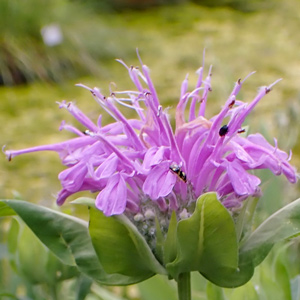
When Pvt. Bratton’s “tedious illness” left him unable to walk at Long Camp, they sweated him, dunked him in cold water, and had him drink ‘copious’ amounts of horsemint tea.
Sagebrush
Artemisia tridentata and Artemisia cana
by Kristopher K. Townsend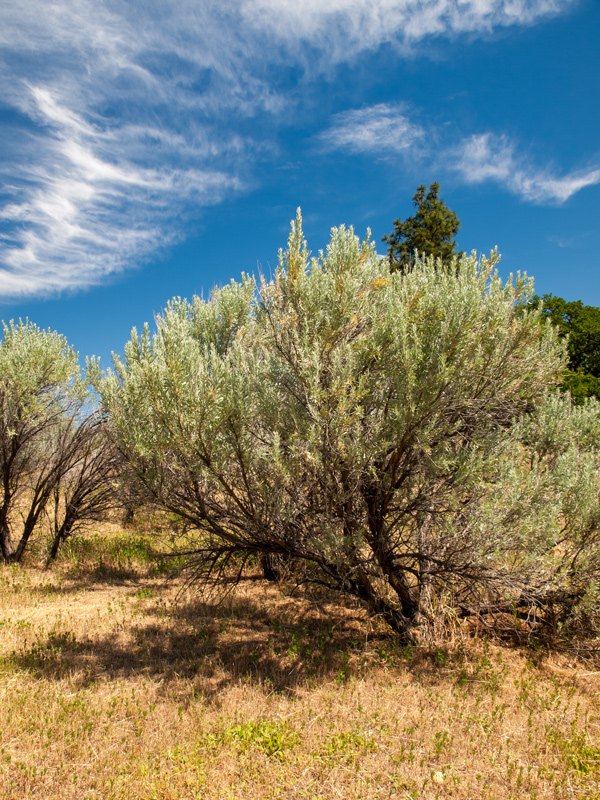
On 14 April 1805—a week after leaving Fort Mandan—near Bear Den Creek, North Dakota, the journalists mention aromatic sages. These were primarily the big sagebrush and silver sagebrush—both icons of the American West.
Western Sweet Cicely
Osmorhiza occidentalis
by Kristopher K. Townsend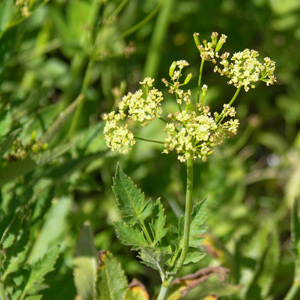
At Long Camp in 1806, Sacagawea gathered roots of Western sweet cicely which the captains found palatable and nourishing. It also alleviated their gas pains.
Indian Breadroot
Pediomelum esculentum
by Kristopher K. Townsend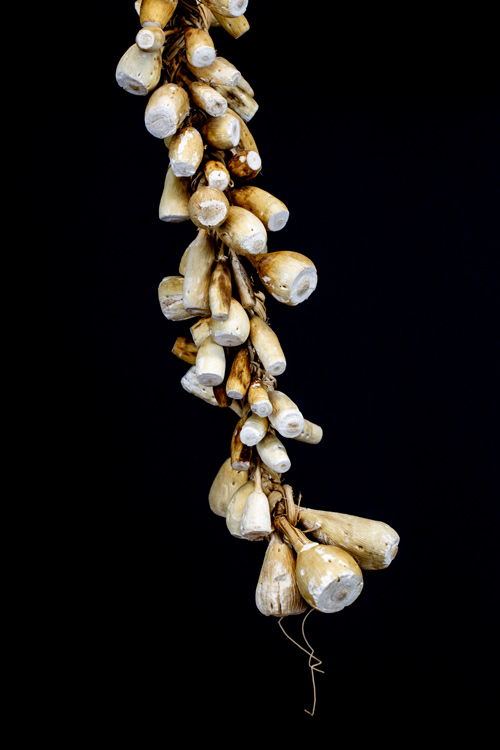
The day Sacagawea gathered Indian breadroot, Lewis wrote a detailed ethnobotanical description. The specimen he prepared a year prior is now used as the primary identifier of the species.
The Final Journey of Jean Baptiste Charbonneau
The trail's end
by Kristopher K. Townsend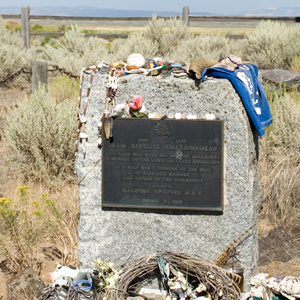
Perhaps he was seeking new gold fields, maybe California was getting too crowded, or maybe he simply wanted to see the mountains and prairies of his mountain man days. After a long life, the journey would be his last.
Jean Baptiste in California
by Kristopher K. Townsend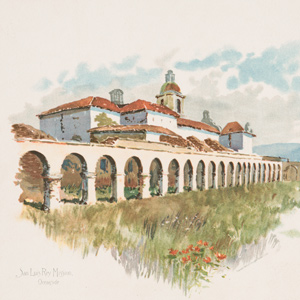
After a brief service as Alcalde of San Luis Rey, Jean Baptiste moved to the gold fields around Auburn, California where he lived for 19 years.
Jean Baptiste Charbonneau
The youngest member
by Kristopher K. Townsend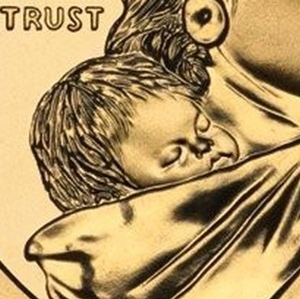
This 9-page series examines the life of Jean Baptiste Charbonneau—the infant son of Sacagawea who traveled across the continent with the Lewis and Clark Expedition. He was educated in St. Louis and Europe, a mountain man, military guide, and California miner.
Jean Baptiste, Military Guide
With the Mormon Battalion
by Kristopher K. Townsend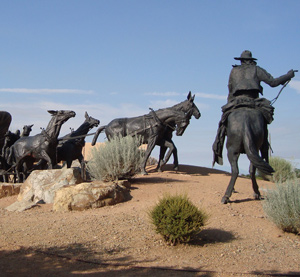
As a military guide in the U.S.-Mexican War, Jean Baptiste and the Mormon Battalion were involved in a defining moment in the American Southwest.
Jean Baptiste, Mountain Man
by Kristopher K. Townsend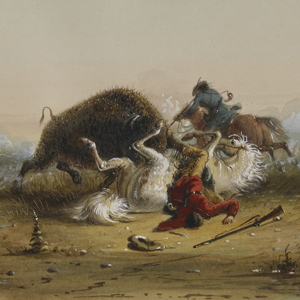
Jean Baptiste’s 17-year career as a mountain man comes from a scattering of writings from some of the most notable trappers of the era.
Jean Baptiste in Europe
by Kristopher K. Townsend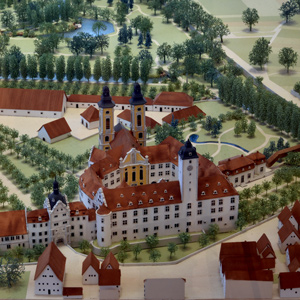
Jean Baptiste’s European experiences with Duke Paul of Württemberg were the capstone of an education that started in a Hidatsa village and developed in St. Louis under the sponsorship of William Clark.
Echinacea
Prairie coneflower, E. angustifolia
by Kristopher K. Townsend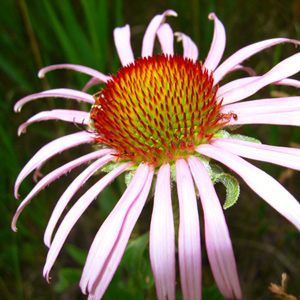
Justified by the ethnobotanical record, the captains went to unusual lengths to preserve and document echinacea. Most—if not all—the Tribal Nations encountered along the Missouri River used the plant to treat snakebites in the manner described by the two captains.
Educating Jean Baptiste
Knife River and St. Louis
by Kristopher K. Townsend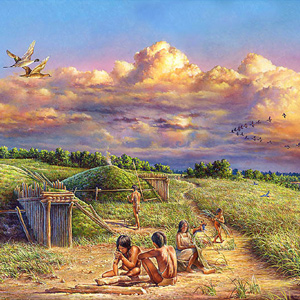
Jean Baptiste Charbonneau’s education began in a Hidatsa village. In St. Louis at the age of five or six, his classical education began under the guardianship of William Clark.
Sunflowers
Helianthus annuus
by Kristopher K. Townsend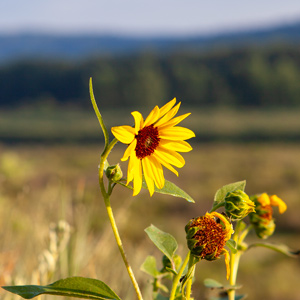
The common sunflower as a staple food among the Mandans and Lemhi Shoshones did not escape the attention of the journalists. Includes two traditional Hidatsa recipes.
Jean Baptiste in the Journals
Baby on board
by Kristopher K. Townsend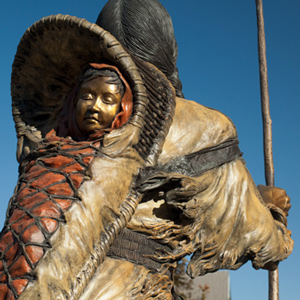
The captains’ journals give us a small glimpse into the experiences of Jean Baptiste Charbonneau as he traveled with the Lewis and Clark Expedition.
Serviceberry
Amelanchier alnifolia
by Kristopher K. Townsend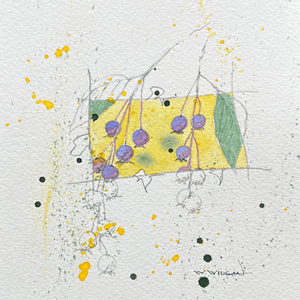
Everybody liked the abundant serviceberry fruit—the Lemhi Shoshones were living on them, the enlisted men “regaled themselves,” and Lewis was the first to collect a specimen for science.
Wild Cherries
by Kristopher K. Townsend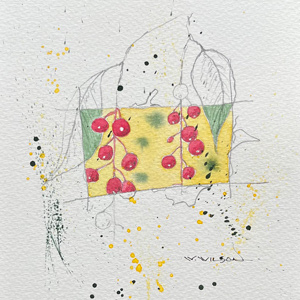
As the expedition moved across the Northern American continent, Lewis took particular notice of the changes he saw in the wild cherries. For a deeper dive into the Lewis and Clark Expedition’s encounters with wild cherries, see these four articles.
Common Chokecherry
Prunus virginiana
by Kristopher K. Townsend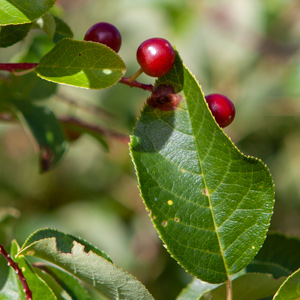
As they traveled up the Missouri in the summer of 1804, the journalists took note of a wild cherry different than the wild cherry of their homes. It was the common chokecherry, which grew on bushes instead of trees.
Black Chokecherry
Prunus virginiana var. melanocarpa
by Kristopher K. Townsend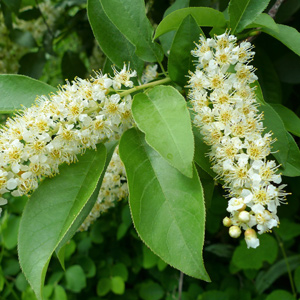
This variety of the common chokecherry gave Lewis his decoction of simples and was the subject of his botanical scrutiny.
Pin Cherry
Prunus pensylvanica
by Kristopher K. Townsend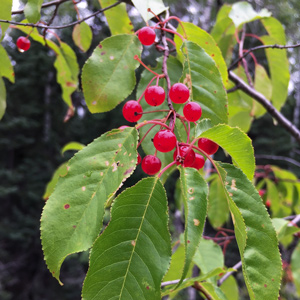
Before signing off in his last journal entry, Lewis had to botanize one last time. He concludes with an accurate description of the pin cherry, Prunus pensylvanica.
Bitter Cherry
Prunus emarginata
by Kristopher K. Townsend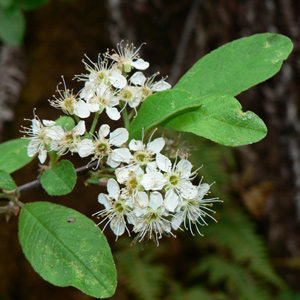
Lewis collected a specimen of bitter cherry, Prunus emarginata, while at Long Camp on 29 May 1806 and described it on 7 June 1806. He wrote that “the natives count it a good fruit”.
Lewis’s Estimate of Expenses
by Kristopher K. Townsend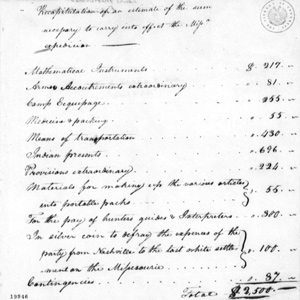
Prior to Jefferson’s annual message to Congress on 15 December 1802, Lewis prepared a roughly itemized estimate of $2500 as the cost of the expedition.
William Christy
by Kristopher K. Townsend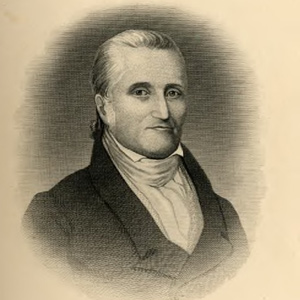
William Christy moved to St. Louis c. 1804 and opened a Public House in the old Government mansion at the corner of Main and Walnut Streets. It was here on 25 September 1806, that eighteen toasts were raised to the success of what would later become known as the Lewis and Clark Expedition.
The Coeur d’Alenes
by Kristopher K. Townsend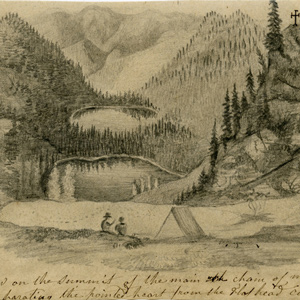
The Skitswish, or Coeur d’Alenes, often visited the Nez Perces on the Clearwater River. Three met the captains at the mouth of Colter’s Creek.
The Cowlitz
by Kristopher K. Townsend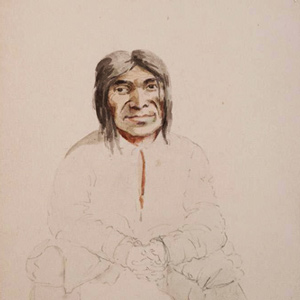
The Cowlitz proper were Southwestern Coast Salish peoples living mainly along the Cowlitz River. The people were blenders. Those living among the Chinookan Skilloots intermarried and may have been indistinguishable when the expedition passed the “Cow-e-lis’-kee” River.
The Tillamooks
by Kristopher K. Townsend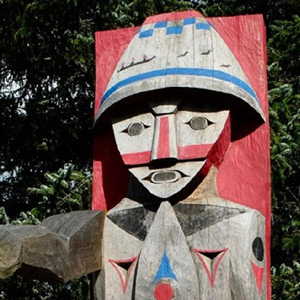
The Tillamook Indians, cordial hosts and friends to the visiting Americans in 1806, may have numbered about 2,200 persons at that time.
The Lower Chehalis
by Kristopher K. Townsend
The Lewis and Clark Expedition encountered the Lower Chehalis mainly during their stay at Station Camp on Baker Bay. In the journals, the people’s name is spelled Chieltz and Chiltch.
The Wanapums
by Kristopher K. Townsend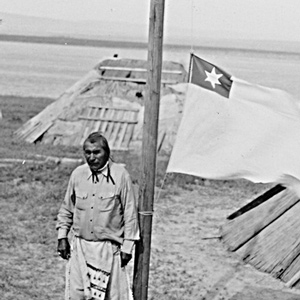
Lewis and Clark called them “Sokulks” but they were ‘river people’ from the Sahaptin wána (river) and pam (people). Wanapam is an alternate spelling.
The Palouses
by Kristopher K. Townsend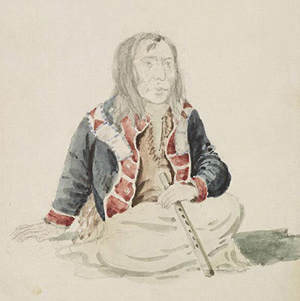
At the time of the Lewis and Clark Expedition, the Palouses had coalesced around four primary villages on the lower Snake River: Penewawa, Almota, Wawaiwai, and Palus. Lewis and Clark estimated their population as 2,300 which included Northern Nez Perce.
The Flathead Salish
by Kristopher K. Townsend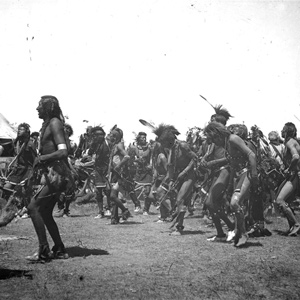
The first whites to encounter the Salish in person were the Lewis and Clark Expedition at Ross’ Hole. Although the journalists had much to say about the encounter, the Salish have said far more.
Chinookan Head Flattening
A most remarkable trait
by Joseph A. Mussulman, Kristopher K. Townsend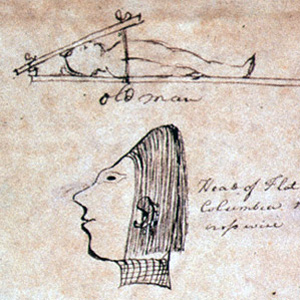
The most remarkable trait in the Clatsop Indian physiognomy, Lewis wrote on 19 March 1806, was the flatness and width of their foreheads, which they artificially created by compressing the heads of their infants, particularly girls, between two boards.
The Wahkiakums
by Kristopher K. Townsend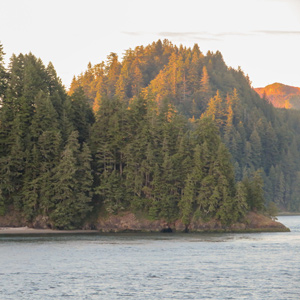
The Wahkiakums exemplify the complexities encountered when trying to classify Chinookan peoples. Linguistically, they spoke the Upper Chinookan Clackamas dialect. Culturally, they were related to the Lower Chinookan Clatsops and Chinooks proper. They resided primarily along the north side of the Columbia between Grays Bay and Cathlamet, Washington.
The Skilloots
by Kristopher K. Townsend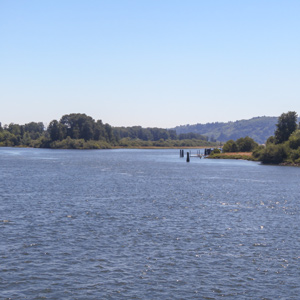
The Skilloot were an Upper Chinookan group that spoke the Clackamas dialect of the Chinookan language. They were located on both sides of the Columbia River above and below the mouth of the Cowlitz. At first, the captains applied the name over a much wider area, perhaps misinterpreting a similar expression meaning ‘look at him!’. Cape Horn, a few miles east of Washougal, was named sqúlips, and could be the origin of the tribe’s name.
The Kathlamets
by Kristopher K. Townsend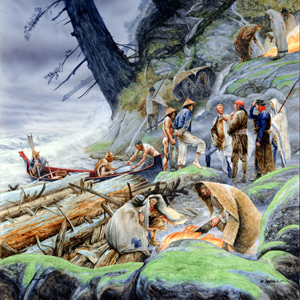
The expedition journalists recorded several encounters with the Kathlamets, or Cathlamets, during their stay at the Pacific coast during the 1805–06 winter. On 11 November 1805, while hunkered down in a “dismal nitch” on the north side of the Columbia, a canoe “loaded with fish of Salmon Spes. Called Red Charr” pulled to shore. After buying 13 sockeye, Clark marveled.
The Chinooks
by Kristopher K. Townsend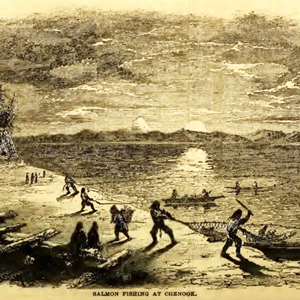
Today, Chinook often refers to the politically united Lower Chinook, Clatsops, Willapas, Wahkiakums, and Kathlamets. To Lewis and Clark, the Chinook were the people living on the north side of the Columbia River’s estuary. When Lewis and Clark met them, the people of Baker Bay had been trading with European ships for more than a decade.
Making Candles
by Kristopher K. Townsend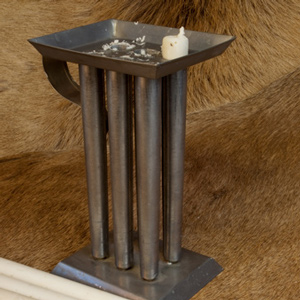
Early in 1806 while wintering at Fort Clatsop, the last candles burned down, and Lewis described how they would make new candles out of tallow rendered from elk fat. This is the process.
La Véndrye’s Golden Sands
His visit to Spirit Mound
by Joseph A. Mussulman, Kristopher K. Townsend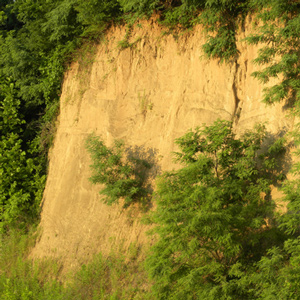
La Vérendrye’s 1728 name for Spirit Mound contains several puzzling statements. Pako’s reference to that “very fine gold-coloured sand,” suggests the “little mountain” was located in a fabulous land, an Eldorado, of precious natural riches.
Indian Tobacco
Nicotiana quadrivalvis
by James L. Reveal, Joseph A. Mussulman, Kristopher K. Townsend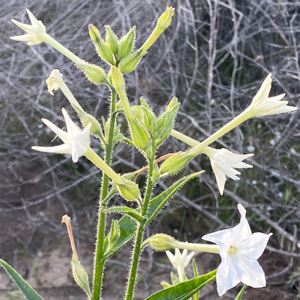
Lewis mentioned two species of tobacco, possibly Nicotiana quadrivalvis and N. rustica—a Mexican species called Aztec tobacco—that the Arikara cultivated.
Clarkia
Clarkia pulchella
by James L. Reveal, Joseph A. Mussulman, Kristopher K. Townsend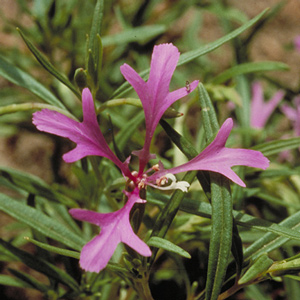
The plant’s common names include elkhorn, ragged robin, pink fairy, and deerhorn. In the spring of 1807 Lewis turned over his plant specimens to Frederick Pursh, who gave this flower the scientific name Clarkia pulchella
François Saucier
by Kristopher K. TownsendFrançois Saucier established a settlement at Portage des Sioux, a strategic part of the St. Charles district.
The Kansas
by Kristopher K. Townsend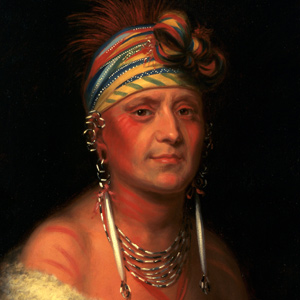
Known in the journals as Kanzas, Kansas, Kansias, Kansies, Kar sea, and Kah they are popularly called the ‘People of the South Wind’. At the mouth of the Kansas River, the captains ordered a defensive wall built, but no Kansa warriors appeared.
The Lakotas
by Kristopher K. Townsend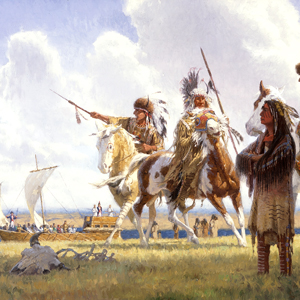
Presently known as the Lakota people, Lewis and Clark most often called them the Tetons. There were three main groups: Oglala, Brule, and Saone. The bands typically lived separately, hunted freely within each other’s territory, and came together for community events.
The Poncas
by Kristopher K. Townsend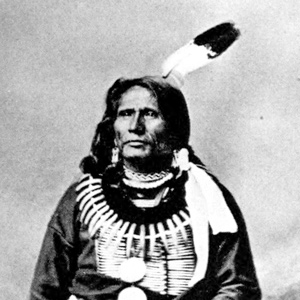
On 5 September 1804, the captains sent John Shields and George Gibson to the Ponca villages. The privates reported that the people were away hunting buffalo and that they had not planted their gardens.
Manuel Lisa
by Kristopher K. Townsend, W. Raymond Wood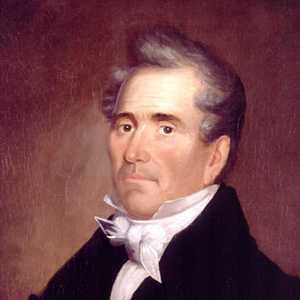
After founding the Missouri Fur Company (1807-1814) Lisa made four trips up the Missouri and Yellowstone rivers to exploit the richness of the northern Rockies, and he dominated the upriver trade until 1820, two years before his death.
Jerusalem Artichokes
Helianthus tuberosus
by Joseph A. Mussulman, Kristopher K. Townsend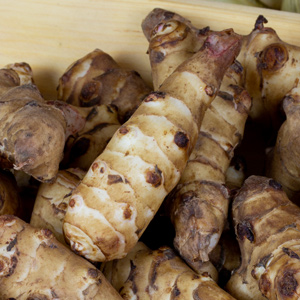
The French explorer Samuel de Champlain found the vegetable growing in Indian gardens along the Saint Lawrence seaway and carried specimens of it back to France in 1603, where its root soon became a staple food for humans.
Buffaloberry
Shepherdia argentea
by Kristopher K. Townsend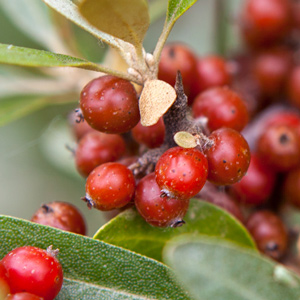
Lewis collected buffaloberry specimens which were new to science and Clark had them in a delightful tart. Native Americans had been eating the bright red berries for generations.
Experience the Lewis and Clark Trail
The Lewis and Clark Trail Experience—our sister site at lewisandclark.travel—connects the world to people and places on the Lewis and Clark Trail.
Discover More
- The Lewis and Clark Expedition: Day by Day by Gary E. Moulton (University of Nebraska Press, 2018). The story in prose, 14 May 1804–23 September 1806.
- The Lewis and Clark Journals: An American Epic of Discovery (abridged) by Gary E. Moulton (University of Nebraska Press, 2003). Selected journal excerpts, 14 May 1804–23 September 1806.
- The Lewis and Clark Journals. by Gary E. Moulton (University of Nebraska Press, 1983–2001). The complete story in 13 volumes.
This site is provided as a public service by the
Lewis and Clark Trail Alliance
with additional funding from the following: