People
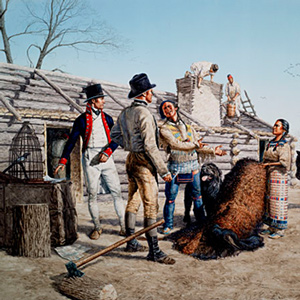
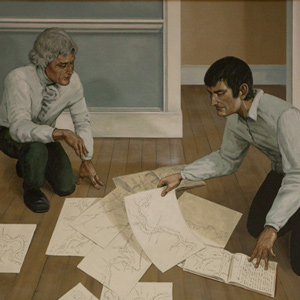
The success of the Lewis and Clark Expedition was due to its many members and the people they met, including politicians, Eastern gentleman scientists, traders, and the many people already living in the American west.
Watercolor provided by waynewilsonart.com
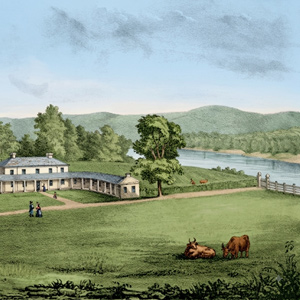
Considerable settlements
On this rainy day, Lewis and his crew head down the Ohio passing present Little Kanawha and Little Hocking rivers. The barge must be lifted over a gravel bar, and they are further delayed when one of the smaller boats falls behind. They stop for the day near Blennerhassett Island.
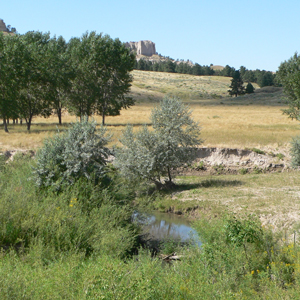
The White River
The enlisted men and engagés move boats past the creek where Pvt. Shannon had waited to be rescued. Camping near present Oacoma, South Dakota, Lewis adds three plants to his collection and Sgt. Gass and Pvt. Reubin Field spend the night twelve miles up the White River. Elsewhere, Casa Calvo urges his Spanish superiors to stop the Lewis and Clark [...]
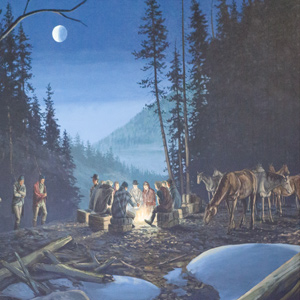
Up to Snowbank Camp
The expedition travels four miles down the Lochsa River, makes an abrupt turn to the right, and climbs a steep trail to return to the Northern Nez Perce Trail. On the climb, several horses slip and Clark's desk is broken when a horse rolls "down a mountain for 40 yards". They camp in an area with banks of old snow [...]
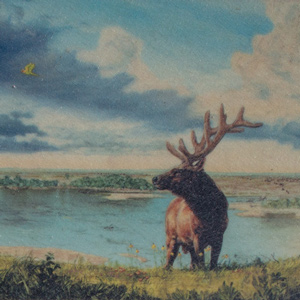
Lewis and Clark Point
On this 'disagreeably warm' day, Clark and Lewis climb a hill in present Kansas City, Missouri and think it a good location for a fort. Hunters kill a fat buck elk, and at the Little Blue River, pawpaw fruits are gathered.
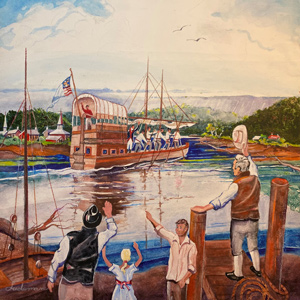
31 August–13 November 1803
On 31 August 1803, after months of preparation, Lewis and his crew finally head down the Ohio River. Unfortunately, the water is so low that they must frequently unload and tow the overloaded barge with horses and oxen.
At the request of President Jefferson, Lewis disembarks at Cincinnati and travels overland to gather fossils at Big Bone Lick. He meets the boats, and together they continue to the Falls of the Ohio to pick up William Clark and several new recruits.
The expedition arrives at Fort Massac near the mouth of the Ohio on 11 November. There, they meet George Drouillard and immediately hire him as an interpreter. His first mission is to find the missing army recruits from Fort Southwest Point in Tennessee.
Day-by-Day Pages In-depth Articles
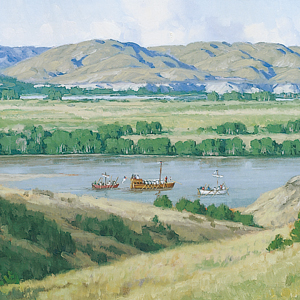
9 September–25 Oct 1804
Moving the flotilla of boats up the Missouri in the present states of South and North Dakota, the expedition encounters several nations with limited experience with St. Louis-based traders.
Soon after going around the Big Bend of the Missouri, they meet the Lakota Sioux, and a multi-day encounter goes badly for both peoples. They proceed on to some Arikara villages where they hold a council and invite Too Né (Eagle Feather) to travel with them. He provides useful information and would eventually visit Washington City.
In late October, they reach the Knife River Villages—a complex of Hidatsa and Mandan villages. With winter quickly approaching, they must act fast to establish winter quarters.
Day-by-Day Pages In-depth Articles
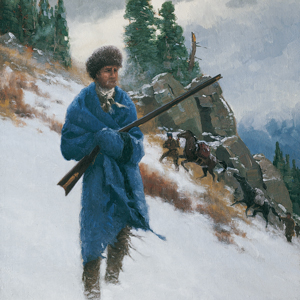
11 September–22 September 1805
On 11 September 1805, the expedition leaves Travelers’ Rest and follows a trail high above Lolo Creek in Montana. After passing some hot springs, they follow a trail to the Bitterroot divide at Packer Meadows.
They briefly follow the Lochsa River, but due to its steep canyons, they must climb to the ridges high above. It then commences snowing and there is virtually no game to be had. At one point, Clark writes “I have been wet and as cold in every part as I ever was in my life”.
The travelers subsist on portable soup, tallow melted from candles, and their own precious horses. Clark and a small party scout ahead eventually reaching two Nez Perce villages at Weippe Prairie. They are welcomed and given food, much of which is sent back to Lewis with the main party.
The expedition moves down to the Clearwater River where a camp is established to build canoes. Unfortunately, most of the men are too sick to help.
Day-by-Day Pages In-depth Articles
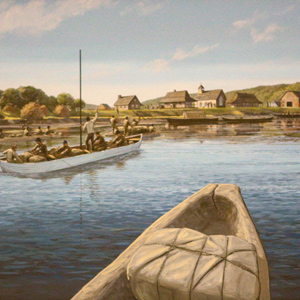
11 August–26 September 1806
While hunting on the Missouri River below present Williston, North Dakota, Lewis is accidentally shot through the flesh of his buttocks. The next day, they catch up to Clark’s party at Reunion Bay. As one united force, they are ready to sprint down the river to St. Louis.
At the Knife River Villages, they drop off the Charbonneau family and pick up Chief Sheheke and interpreter René Jusseaume who will visit Washington City.
The faithful paddlers meet several traders and receive flour, whiskey, woven shirts, and most importantly, news of the United States.
On 23 September 1806, the citizens of St. Louis—having given them up for dead—provide a boisterous welcome. The captains commence writing.
Day-by-Day Pages In-depth Articles
Private
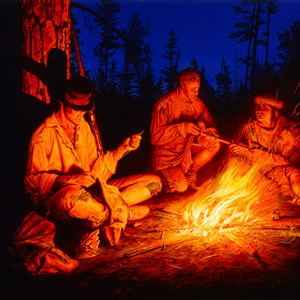
His journal begins, “about 3 Oclock P.M. Capt. Clark and the party consisting of three Sergeants and 38 men who manned the Batteaux and perogues. we fired our Swivel on the bow hoisted Sail and Set out in high Spirits for the western Expedition.”
Private
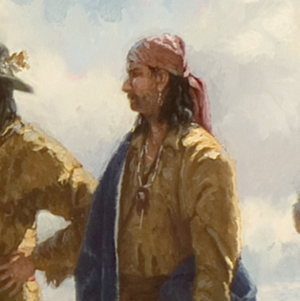
Labiche performed all the regular duties of an army private, but also performed well as a French and English interpreter. He would continue serving as an escort with Lewis for Chief Sheheke’s delegation to Washington City.
Interpreter
The fur trade had put Charbonneau in place to meet the captains and join their expedition. He was the oldest expedition member would outlive most of his fellows as he followed the rigorous life of a fur trader, guide, and interpreter.
Meriwether Lewis William Clark Sacagawea York Jean Baptiste Charbonneau Seaman All Members
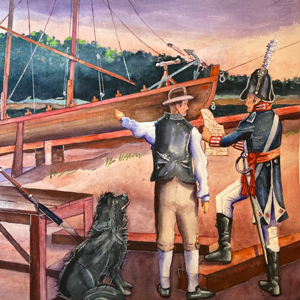
Final Inspection

Falls of the Ohio
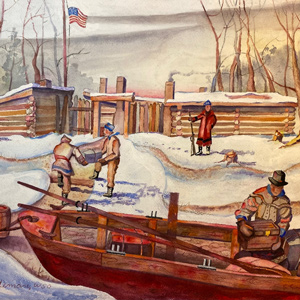
Unloading the Red Pirogue at Camp River Dubois
In the words of artist Steve Ludeman, “I am fascinated with the geology, archeology, natural history, and cultural history of our country.” For years, he has specialized in landscapes and seascapes of the Pacific Northwest, but he also interprets the Eastern Legacy of Lewis and Clark. This is the 1803-04 journey of the Lewis and Clark Expedition from the Eastern seaboard, down the Ohio, up the Mississippi, to their winter camp at River Dubois (Wood River) across from St. Louis. These focus areas combine his love of history and outdoor adventures with a love of painting. For him, the journey of painting is a joyful one.
The success of the Lewis and Clark Expedition was due to its many members and the people they met, including politicians, Eastern gentleman scientists, traders, and the many people already living in the American west.
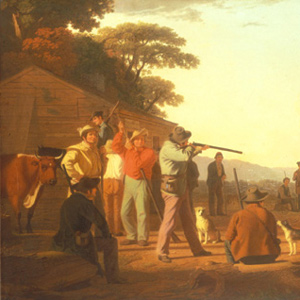
Although hunting and fishing were often considered a ‘gentleman’s sport’ especially in Europe, hunting and fishing for Native Americans and Americans alike were a matter of survival. The success of the Lewis and Clark Expedition depended on the success of its hunters.
Expedition Calendar
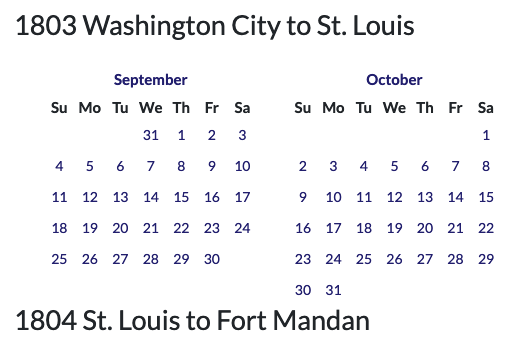
Links to every day-by-day page in a calendar format spanning 31 August 1803 to 26 September 1806. A page every day!
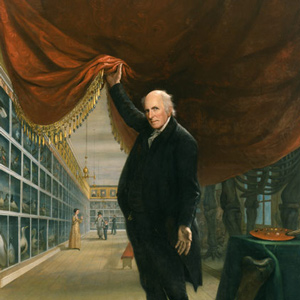
Legacy is a very slippery sort of term. If we could erase our myth concepts of Lewis and Clark … it might reawaken something really extraordinary in our national consciousness.
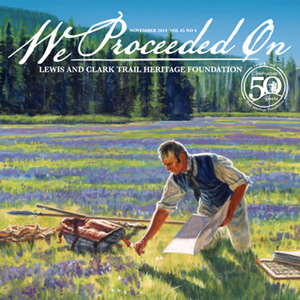
Other topics include music, holidays, High Potential Historic Sites, and an index of articles from We Proceeded On.
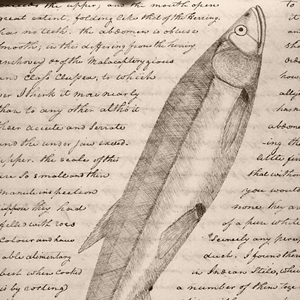
Because of the literate journalists, historians and visual artists can tell the Expedition’s story. When they celebrated with song and dance, we too can share in the experience.
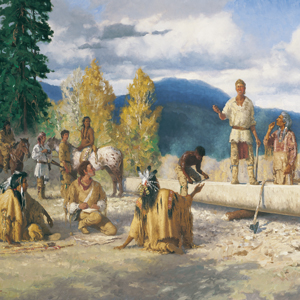
Lewis and Clark left behind among many Indians a legacy of nonviolent contact. Those who came later enjoyed that legacy and too often betrayed it.
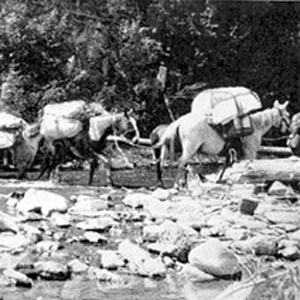
To cross the Rocky Mountains, the Lewis and Clark Expedition needed horses and the skills to manage them. Despite their seemingly constant struggle to find missing and stolen horses, as a kind of calvary unit, they left hoof prints on approximately 1,500 miles of western terrain.
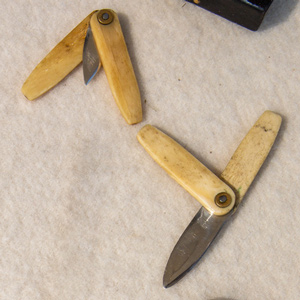
From major crisis such as the death of Sgt. Floyd, Lewis’s gunshot wound, and the illness of Sacagawea to minor events such as sexually transmitted diseases, mosquito-born illnesses, and deep cuts, the medical aspects of the Lewis and Clark Expedition provide an interesting topic of study.
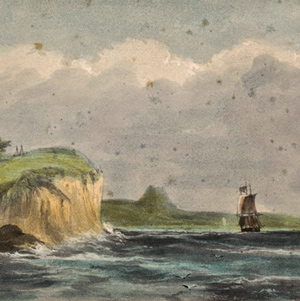
Lewis and Clark were among several significant explorers of North America both before and after the expedition.
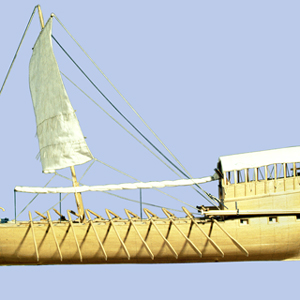
Starting at Pittsburgh, traveling to the Pacific Ocean, and then returning to St. Louis, the Lewis and Clark Expedition traveled approximately 10,600 miles. Of that, 85%—over 9,000 miles—was by boat. To understand travel in the early 1800 American West is to understand the boats and challenges of river navigation.
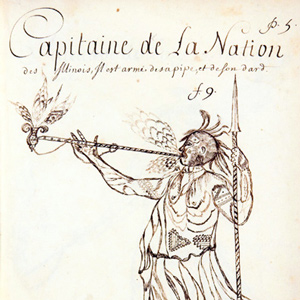
The Lewis and Clark Expedition benefited from the Indians’ knowledge and support. Maps, route information, food, horses, open-handed friendship—all gave the Corps of Discovery the edge that spelled the difference between success and failure.
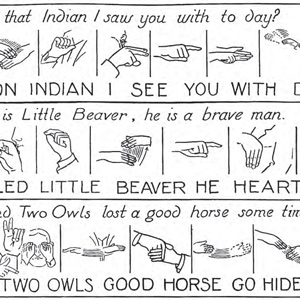
From clichés and colorful sayings of the time to Native American languages, these pages feature the art of language.
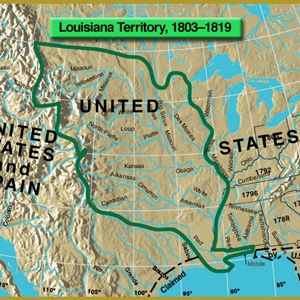
The President’s representatives in Paris had bargained successfully with Napoleon’s bureaucrats not only to buy the port of New Orleans, then the keystone of the continent, but also to acquire, at three cents an acre, an area extending from the Mississippi River to . . . where? No one knew until Meriwether Lewis stood at the crest of the Rocky Mountains at a place known today as Lemhi Pass, on 12 August 1805.
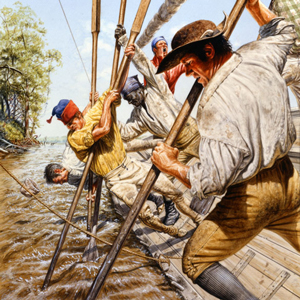
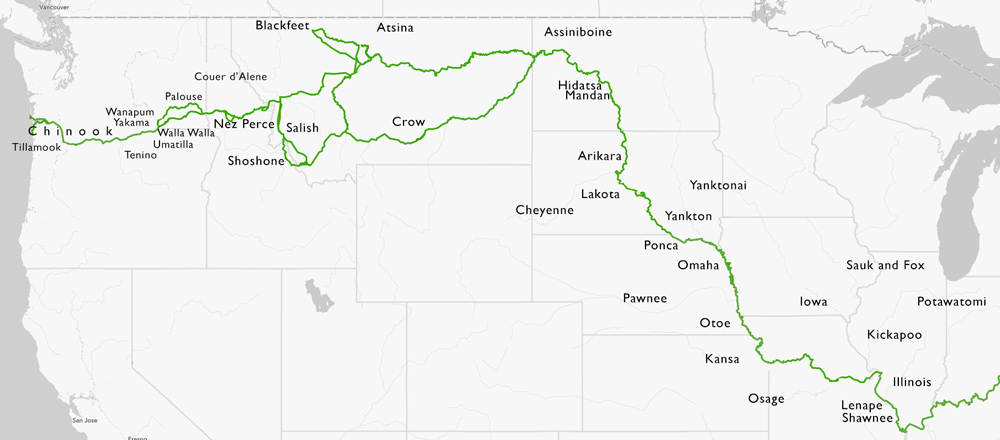
Starting with its genesis in Jefferson’s Monticello, Lewis’s training and preparations in Philadelphia, and the barge’s excursion down the Ohio River, the route they took, often called the Lewis and Clark Trail, crosses the continent weaving an epic tale of western exploration treasured by many today.
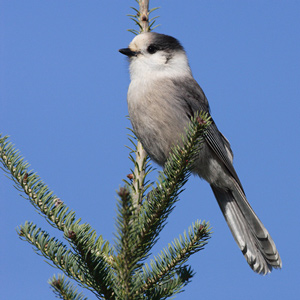
Their work in the emerging fields of botany, ethnography, geography, geology, and zoology are now considered classics of early American scientific literature.
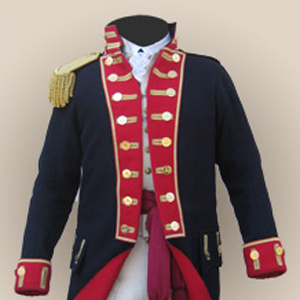
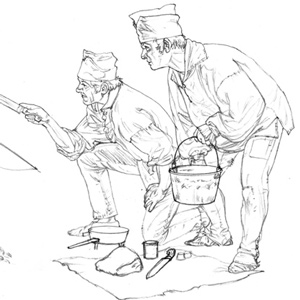
Throughout the expedition the soldiers were expected to conform to the rules and routines of the frontier soldier of 1803.
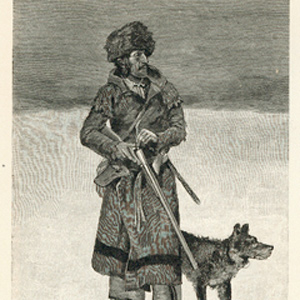
Given President Jefferson’s directive to establish commerce, the captains worked extensively within a long-established network of North American fur trade. Part of their mission was to help establish the United States of America’s position within that industry.
Experience the Lewis and Clark Trail
The Lewis and Clark Trail Experience—our sister site at lewisandclark.travel—connects the world to people and places on the Lewis and Clark Trail.
This site is provided as a public service by the
Lewis and Clark Trail Alliance
with additional funding from the following: