Joseph Mussulman

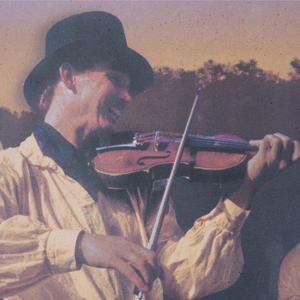
Marc A. Hefty photo.
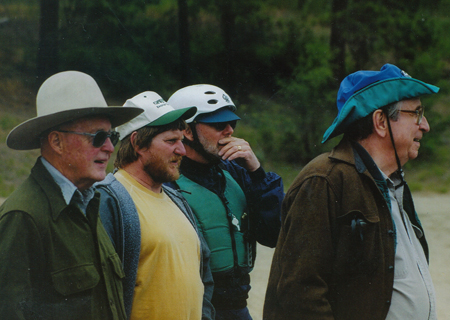
Photo by Bill Bevis.
Left to right: Two concerned dugout canoe owners, one concerned expert paddler, and Joe grinning with delight
Joseph A. Mussulman (1928–2017) was the founding producer, editor and writer for Discovering Lewis & Clark. After five years of preparation and experimentation the website went online in 1998, under the auspices of a non-profit entity called VIAs Inc., and funded by grants from various sources, especially–throughout the bicentennial observance from 2003 to 2006–the Challenge Cost Share Program of the National Park Service. In 2009 the site was taken over by the Lewis & Clark Fort Mandan Foundation of Washburn, North Dakota.
Dr. Mussulman earned his bachelor’s and master’s degrees in music history and literature at Northwestern University in 1950 and 1951. As a Danforth Scholar he earned a doctorate in humanities from Syracuse University in 1967.
He has written and produced a number of interpretive programs in collaboration with audio specialist Richard H. Kuschel, also of Missoula Montana. In 1986, he wrote, narrated, and co-produced a multimedia presentation for the Blaine County Museum (MT) titled Forty Miles from Freedom, about the Non-Treaty Nez Perce Indians’ final battle with the U.S. Army, at the Bear Paw Mountains in 1877. In 2012-13 Mussulman and Kuschel revised the 20-minute onsite production and updated it in High Definition video. In 1994 their interactive self-guided audio-CD tour of Yellowstone National Park, a five-hour program produced for Tour Technologies, Inc., received first prize in the category of media productions from the National Association for Interpretation. Their Two Days to Destiny, an audio interpretive tour of the Little Bighorn Battlefield, won first place from the NAI in 1995.
Mussulman is the author of five articles on Lewis and Clark that appeared in We Proceeded On, the official journal of the Lewis and Clark Trail Heritage Foundation, Inc.: “My Boy Pomp’: About That Name,” Vol. 21, No. 2 (May 1995); “Soundscapes: The Sonic Dimensions of the Lewis and Clark Expedition,” Vol. 21, No. 4 (November 1995); “Men in High Spirits: Humor on the Lewis and Clark Trail,” Vol.22, No. 2 (May 1996); “‘In Greatest Harmoney’: ‘Meddicine Songs’ on the Lewis and Clark Trail,” Vol. 23, No. 4 (November 1997); and “Pomp’s bier was a bar,” Vol. 27, No. 1 (February 2001).
Dr. Mussulman has designed and produced maps for various books, brochures and study guides about Lewis and Clark, including 58 full-color maps illustrating the expedition’s entire route from coast to coast for the travelers’ guide, Along the Trail with Lewis and Clark, by Barbara Fifer and Vicky Soderberg (2nd ed., Helena: Montana Magazine, 2001). Those maps also appeared in the same publisher’s annual Lewis and Clark Travel Planner and Guide. They may be seen in Discovering Lewis & Clark at Discovering Lewis & Clark from the Air. In 1998, he created a poster illustrating the trail from Washington, D.C. to the Pacific, for Farcountry Press.
His other publications include a biography, Dear People . . . Robert Shaw (Indiana University Press,1979; reprint, Chapel Hill, NC: Hinshaw Music, 1996), and Music in the Cultured Generation (Evanston: Northwestern University Press, 1974). From 1987 through 1998 he was the interpretive writer and designer of Montana Afloat, a series of sixteen maps of Montana’s major floatable rivers.
Dr. Mussulman was a 1999 recipient of a Montana Governor’s Arts Award. Several years later he received an award of meritorious achievement from the Lewis and Clark Trail Heritage Foundation “for outstanding contributions in bring to this nation a greater awareness and appreciation of the Lewis and Clark expedition.” In 2005, he received the Montana Governor’s Humanities Award.
Contributions to this Site
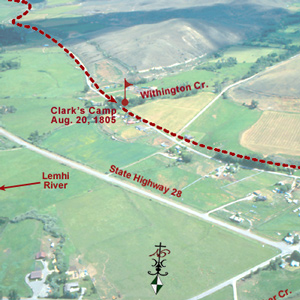
The Lost Trail Divide
Leaving the Indian road
by Joseph A. Mussulman
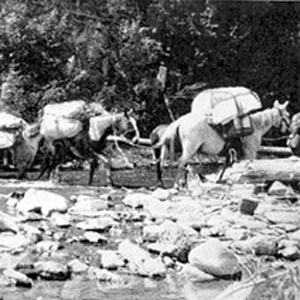
Continuing north up the North Fork Salmon River, they leave a good Indian road and must cut their own trail. Were they lost? Sergeant Gass’s laconic remark gives us a hint: “This was not the creek our guide wished to have come upon.”
Pronghorn
Antelope, Antilocapra americana
by Joseph A. Mussulman
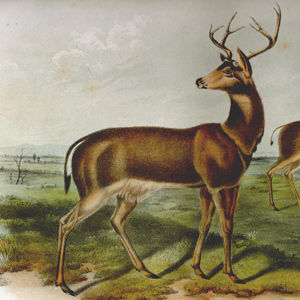
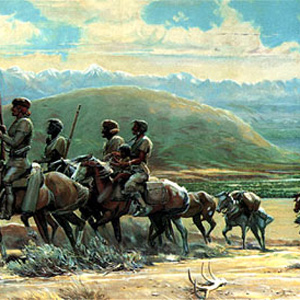
The men of the Corps of Discovery must have been electrified by their first sighting of the pronghorn antelope at the northeast corner of today’s state of Nebraska. Naturalists were eager to find the answers to some basic questions about them.
The Marias River Risk
"Of highest national importance"
by Joseph A. Mussulman
Why was it so important that Meriwether Lewis was willing to risk his life in a region occupied by the “Pahkees” or Minnetares, the Assiniboines, and other people whom he had been led—by their enemies, of course—to believe were “vicious and illy disposed”?
Local Recollections
Wheeler's inquiries
by Joseph A. Mussulman
Around 1900, Olin D. Wheeler, initiated an inquiry into the source and meaning of the name Lolo. He secured the aid of Judge Frank Woody of Missoula, who in turn discussed the matter with some other “old-timers.”
Charles B. J. F. de Saint Mémin
Early American portraitist
by Joseph A. Mussulman
Charles Balthazar Julien Févret de Saint-Mémin (1770–1852) was a portrait artist whose works include Lewis, Clark, Chief Sheheke and his wife Yellow Corn.
Larocque at Fort Mandan
by Joseph A. Mussulman
In the fall of 1804, Larocque’s job was to take a supply of North West Company merchandise to the Mandan and Hidatsa villages and trade for furs. While there, he asked the captains if he could join the expedition.
Camp Disappointment
The northernmost extent
by Joseph A. Mussulman
In 1806, Lewis, Drouillard, Joe Field, and Reubin Field made a second excursion up the Marias, this time on horseback. The four men reached the northernmost point of the Expedition’s exploration on 22 July 1806, camping on the south side of today’s Cut Bank Creek.
African-American Song and York
Did he sing?
by Joseph A. Mussulman
Even if someone had invited him to sing them, it is probable that he as well as many of his listeners would have considered it ill-mannered if not illegal to do so.
The Salmon River
A river of no return
by Joseph A. Mussulman
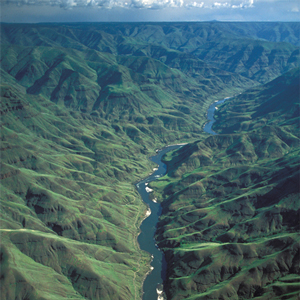
On the 23 August 1805, the centuries-old fantasy of a “water route across the continent for the purposes of commerce” dissolved in the roar of an unimaginable torrent–one of the most dangerous, unforgiving rivers in North America, that would later be called “The River of No Return.”
Naming the Lolo
by Joseph A. Mussulman
Even though it is highly unlikely that any of the expedition’s journalists ever heard the name, Lolo is among the most familiar and useful of all the place names in the story of the Lewis and Clark expedition. How did the Lolo get its name?
The Vermillion River
The stream near Spirit Mound
by Joseph A. Mussulman
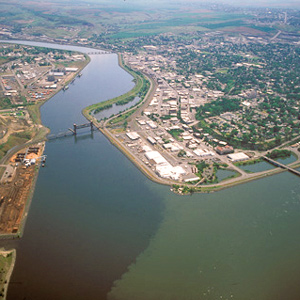
The Corps left the white pirogue at the mouth of this stream and followed it part of the way to the storied Spirit Mound. During the years between the day the Corps passed it and today, its mouth has migrated about 2.5 miles southeast.
The Tambourine
by Joseph A. Mussulman
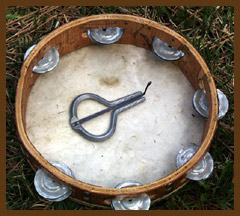
Instruments resembling tambourines are mentioned several times in the journals, but always in descriptions of Indian music, except for Sergeant Ordway’s comment on New Year’s Day of 1805.
The Portage Route
Around the Falls of the Missouri
by Joseph A. Mussulman
The shuttling of all the baggage and six canoes across the prairie to the upper portage camp opposite White Bear Islands began on 21 June 1805 and was completed on 2 July 1805. All in all, it was one of the most grueling undertakings on the entire expedition.
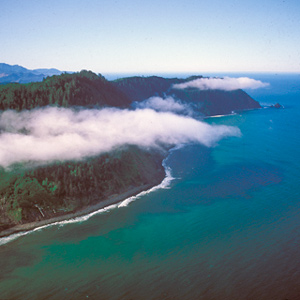
Tillamook Head by Air
Delightful view
by Joseph A. Mussulman
After two hours of “labour and fatigue,” at one point drawing themselves up by bushes and roots, they reached the summit of Bald Mountain. Clark’s description paraphrased by Biddle states, “Here one of the most delightful views in nature presents itself.”
Early American Flags
by Joseph A. Mussulman
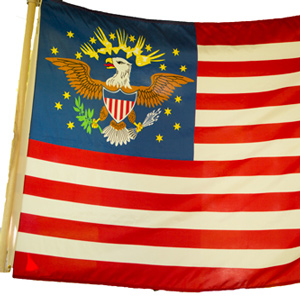
Lewis’s long list of needs for the journey would have been a large supply of American flags, to be flown on their boats, over their camps, and at their council sites. Leading up to the Lewis and Clark expedition, what did the young country’s flags look like?
The Mosquito in Literature
Songs and superstitions
by Joseph A. Mussulman
Poets and philosophers have meditated on it. The early Roman naturalist Pliny the Younger (ca. 30-ca. 112 AD) complained, “Who gave the mosquito so terrifying a voice, infinitely greater than it should be in comparison to the size of its body?”
Clark’s Lookout
by Joseph A. Mussulman
Clark arrived at this “high Point of Limestone rocks” and strolled to its low summit. This was a convenient place from which to take at least three different bearings, making of it a surveyor’s “station” or triangulation point.
Too Né’s Delegation
by Joseph A. Mussulman
A delegation of chiefs from the Arikara, Ponca, Omaha, Otoe, Iowa, and Missouria nations sailed down the Missouri with Corporal Warfington on the expedition’s keelboat in the spring of 1805. Early in January, 1806, President Jefferson greeted them in Washington City with a formal speech.
Climbing Wendover Ridge
Leaving the Lochsa
by Joseph A. Mussulman
“Several horses Sliped and roled down Steep hills which hurt them verry much The one which Carried my desk & Small trunk Turned over & roled down a mountain for 40 yards & lodged against a tree, broke the Desk…”
Dyes and Shellac
by Joseph A. MussulmanFort Clatsop Elk
Cervus canadensis roosevelti
by Greg Tollefson, Joseph A. Mussulman
Fort Clatsop’s location was chosen in part because, as some Clatsop Indians had advised the captains, there were more elk on the south side of the river than on the north. The subspecies found there was named in 1898 to honor Theodore Roosevelt.
John James Audubon
(1785–1851)
by Doug Erickson, Joseph A. Mussulman
America’s greatest ornithologist, John James Audubon, was just starting his career when Lewis and Clark returned, and there is ample evidence that he drew inspiration from Lewis and Clark’s writings.
Lewis’s Branding Iron
by Joseph A. Mussulman
Lewis may have had this branding iron custom-made before he left the East, perhaps at Harpers Ferry, although there is no mention of it in existing records. Such tools commonly were used for marking wooden packing crates and barrels, and on leather bags, until the early 20th century.
Fort Clatsop
Looking for a winter camp
by Joseph A. Mussulman
They had sketched out a plan for their fort, but it seemed that finding a level spot at least fifty feet square would be next to impossible.
Clark’s Apsáalooke (Crow) Speech
A speech never given
by Joseph A. Mussulman
While stinging from having so many of his horses stolen, Clark wrote a speech to the Crow Indians imploring them to return the booty. After all, he needed those horses to complete the captain’s bold diplomatic plan.
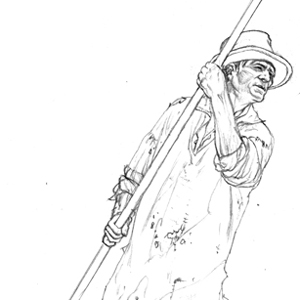
Dugout Canoes
by Joseph A. Mussulman
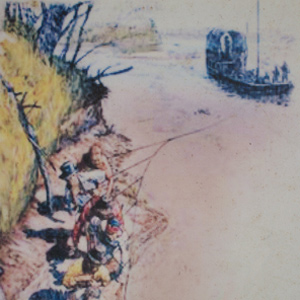
Altogether, the men carved 15 dugout canoes. At Fort Mandan they hewed 6 from cottonwood logs. West of the Rockies they used ponderosa pine logs to craft five new canoes. On the Yellowstone, Clark made two small dugouts a few miles above today’s Billings.
Deists in the ‘Wilderness’
by Joseph A. Mussulman
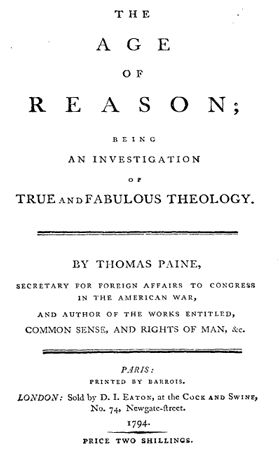
As deists in the ‘wilderness,’ Lewis and Clark simply wanted to observe and admire the surrounding world and learn to understand the relationships that held it together.
Rattlesnakes
Crotalus sp.
by Joseph A. Mussulman
Lewis awoke to find “a large rattlesnake coiled on the leaning trunk of a tree under the shade of which I had been lying.” It certainly wasn’t the first rattlesnake seen on the trip, but he killed this one, and took time to study it.
Yellowstone Canoe Camp by Air
Horse thieves
by Joseph A. Mussulman
Clark’s party made camp at today’s Park City, Montana, and settled in to build the new canoes and attend to other business. While a few of the men took turns with the three axes they had along, some of the rest, being nearly naked, made elk- and deer-skin clothing.
Guard Duty
by Joseph A. Mussulman
During their journey up the Missouri to the Mandan villages, security procedures were outlined in the detachment orders of 26 May 1804. The detachment orders setting forth procedures for the security of Fort Clatsop, were issued on 1 January 1806.
A ‘Sinque’ Hole
Below the Smoking Place
by Joseph A. Mussulman
Private Whitehouse reported: “Camped at a Small branch on the mountain near a round deep Sinque hole full of water.”
The Trapper Peaks
Bitterroot Mountain sentinels
by Joseph A. Mussulman
On 7 September 1805, the day after they left the Salish people at Ross’s Hole, the Corps proceeded north down the Bitterroot River valley. “The foot of the Snow toped mountains approach near the river on the left,” wrote Clark.
Boudin Blanc
Charbonneau's chef d'ouvre
by Joseph A. MussulmanMeriwether Lewis’s recitation of Charbonneau’s recipe for buffalo sausage, known as “white pudding,” serves not only as documentation of a unique frontier cuisine, but also as an example of the captain’s own brand of satire.
Ticks
Ixodida sp.
by Joseph A. Mussulman
In the vicinity of Beacon Rock on 5 April 1806, Clark dutifully looked around for signs that spring had begun. He noticed that “the tick has made it’s appearance.” The ticks waiting for hosts in the vicinity Beacon Rock in April 1806 were likely of the species Ixodes pacificus.
Oregon Grapes
Berberis aquifolium
by Joseph A. Mussulman
In his journal for 12 February 1806, Lewis described the plant that now goes by the name Berberis aquifolium, which he had first noticed in the vicinity of the Cascades of the Columbia River, about 145 miles from the ocean.
Colter’s Creek
Today's Potlatch River
by Joseph A. Mussulman
At 3 p.m. on 7 October 1805, the Corps loaded their five new dugout canoes–four large ones plus a small one “to look ahead”–and set out down the Clearwater River toward the Columbia and the Pacific beyond.
The Lower Yellowstone
A promising location
by Joseph A. Mussulman
On 30 July 1806 Clark and his party camped near the mouth of the War har sah, or Powder River. He summarized the Yellowstone’s attractions, directing most of his attention toward opportunities for immediate expansion of the fur trade.
Cous
Lomatium cous
by Joseph A. Mussulman
William Clark first mentioned the root cous on 1 November 1805, saying that native people living near the future Bonneville Dam site traded beads to obtain it from people up the Columbia River. To Clark, it was “cha-pel-el bread.”
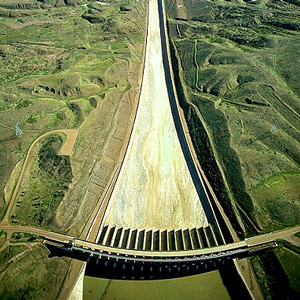
Tiber Dam
by Joseph A. Mussulman
Tiber Dam was part of an extensive project starting in 1952 to mitigate flooding, generate electricity, irrigate the deserts of the Northern Plains, and ensure ample water to float commercial river traffic below Sioux City, Iowa.
The Lochsa River
Packer Meadows to Colt Killed Creek
by Joseph A. Mussulman
Snow was falling in the high country above them on the morning of 14 September 1805 when, after striking camp two miles downstream from Packer Meadows, the Corps slogged down the Glade Creek canyon through rain and sleet.
Where the Buffalo Roam
Anthem of the American West
by Joseph A. Mussulman
For more than a hundred years the American bison has been enshrined as a symbol of the American West in the first line of a song known around the world, “Home on the Range.”
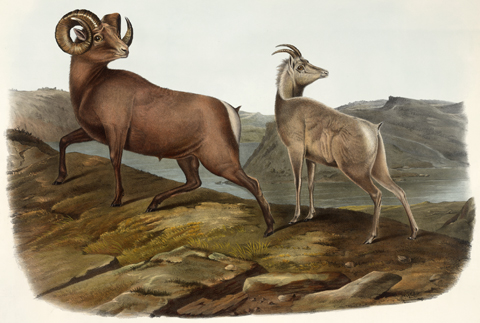
Bighorn Sheep Encounters
by Joseph A. Mussulman
During a reconnaissance assignment eight miles up the Yellowstone River on 26 April 1805, Joseph Field became the first member of the Corps to glimpse a live bighorn sheep.
The Grand Natural Wall
"walls of tolerable workmanship"
by Joseph A. Mussulman
“As we passed on it seemed as if those seens of visionary inchantment would never have an end; for here it is too that nature presents to the view of the traveler vast ranges of walls of tolerable workmanship.”
Across the Great Divide
Over Lemhi Pass
by Joseph A. Mussulman
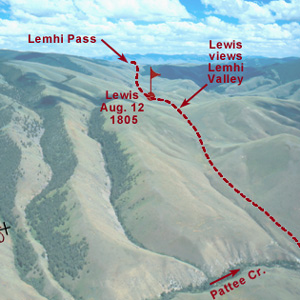
Below the summit of today’s Lemhi Pass, Lewis said that he had reached “the most distant fountain of the waters of the mighty Missouri in surch of which we have spent so many toilsome days and wristless nights.”
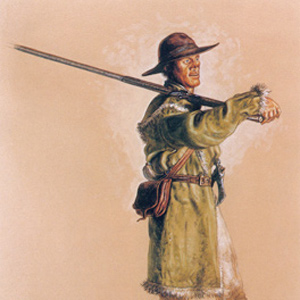
Recruiting the Hunters
Finding soldiers that could hunt
by Joseph A. Mussulman
While traveling down the Ohio and wintering at Camp River Dubois, the captains searched for army recruits accustomed to the ways of the woods. If they were to survive, the expedition needed hunters.
Ebenezer Tuttle
Private
by Barbara Fifer, Joseph A. Mussulman
His name appears only one time, when he is listed as a member of Corporal Warfington’s detachment bringing the keelboat back from Fort Mandan. He may not have even made it that far.
Big Bend of the Missouri by Air
Around the bend
by Joseph A. Mussulman
They paced off the distance across “the gouge,” wrote Clark, and found it to be about a mile and a quarter; he estimated the distance around the oxbow to be thirty miles.
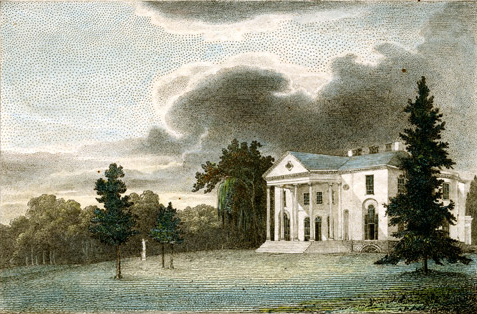
Jefferson’s Monticello
Source and paradigm
by Joseph A. Mussulman
After some eight months of planning and discussion, President Thomas Jefferson handed his twenty-eight-year-old secretary, Captain Meriwether Lewis, a letter containing instructions for the conduct of one of the most significant undertakings in American history.
Air Gun Accident
A shooting on Brunot's Island
by Joseph A. Mussulman
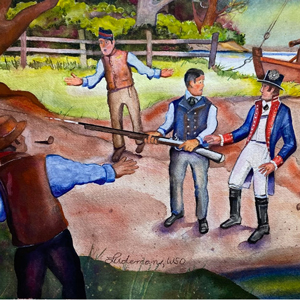
“accedentaly the ball passed through the hat of a woman about 40 yards distanc cutting her temple about the fourth of the diameter of the ball.”
The Great Fall by Air
"Sublimely Grand"
by Joseph A. Mussulman
Shortly before noon on the 13 June 1805, Lewis’s ears “were saluted with the agreeable sound of a fall of water,” which “soon began to make a roaring too tremendious to be mistaken for any cause short of the great falls of the Missouri.”
Kirwan’s Elements of Mineralogy
The captain's field guide
by David D. Alt, Joseph A. Mussulman
As a reference, Lewis purchased the second edition (1784) of Richard Kirwan’s Elements of Mineralogy. Although Lewis and Clark had the book at hand throughout the expedition, its usefulness as a field guide was limited.
Portable Inkwell
Their most important tool
by Joseph A. Mussulman
None of their tons of supplies, not even the guns, powder, and bullets with which they fed themselves, were ultimately as important as the pens, ink, and paper they carried, and protected from the elements.
Spirit Mound
An elevation of devilish spirits
by Joseph A. Mussulman
The visit to this prairie hill was among the more bizarre sidelights of the whole expedition, but evidently it was not entirely unexpected. Seventy-six years earlier, explorer Pierre La Véndrye called the place the “Dwelling of the Spirits.”
Yankton by Air
Peace parley
by Joseph A. Mussulman
Here they “formed a camp in a Butifull Plain,” erected a flagpole, ran up their large flag, and settled in to wait for the Sioux, whom they had invited to meet with them. On August 30, seventy-five Sioux men of the Yankton tribe ceremoniously entered the expedition’s camp, eager to parley.
The Salmon River by Air
"Gloomey Picture"
by Joseph A. Mussulman
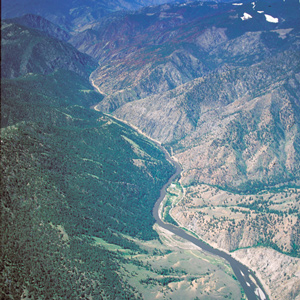
In the four days between 21 and 24 August 1805, Clark explored fifty-two miles down the Salmon River (he named it Lewis’s River) from today’s North Fork, Idaho. All he saw was a continuous series of rapids.
Rush’s Bilious Pills
Rush's Thunderbolts
by Gregory J. Higby, Joseph A. Mussulman
Dr. Rush had expressly indicated to Lewis that when one of his men showed the “sign of an approaching disease . . . take one or two of the opening pills” nicknamed “Rush’s Thunderbolts.”
Classifying Bighorn Sheep
by Joseph A. Mussulman
The first naturalist to publish an honest admission of uncertainty over the respective identities of the wild sheep and goat of North America was John Davidson Godman (1794-1830). Audubon and Bachman contributed illustrations and descriptions.
An Offer to Raise Jean Baptiste
Clark's promises
by Joseph A. Mussulman
Clark’s affection for Sacagawea’s little boy, Jean Baptiste, becomes evident while canoeing down the Yellowstone River. This article analyzes Clark’s offer to his father, Toussaint Charbonneau, to raise the child.
Jefferson the Violinist
by Joseph A. Mussulman
One of Thomas Jefferson’s favorite compositions was the Sonata for Violin and Continuo, Opus 5, written by Corelli. Using a violin such as Jefferson owned, violinist Samuel Taylor plays the theme and two of the variations.
Ridgefield National Wildlife Refuge
Horrid noise
by Joseph A. Mussulman
On the night of 4 November 1805 the expedition camped near a pond now called Post Office Lake. The next morning a weary, groggy Clark complained that he “could not Sleep for the noise” made by the numerous waterfowl.
System, Model and Legacy
Nature's taxonomy
by Joseph A. Mussulman
The science of the orderly classification of all living and extinct organisms is called taxonomy. It comprised a hierarchical outline of descriptors extending between the most general and the most specific and Lewis and Clark had a role.
Clearwater Canoe Camp by Air
by Joseph A. Mussulman
Still sick and exhausted from their recent crossing of the Bitterroot Mountains, Lewis, Clark, and their crew arrived on 26 September 1805, at what they called Canoe Camp, on the Clearwater River.
Fort Clatsop Detachment Orders
by Joseph A. Mussulman
The captains issued Detachment Orders showing the degree to which Lewis and Clark consistently maintained the spirit of Baron von Steuben’s Regulations for the Order and Discipline of the Troops of the United States.
Louisiana’s Political Geography
by Joseph A. Mussulman, Pierce Mullen
On 9 April 1682, René La Salle, claimed “possession of this country of Louisiana.” Thus, without any belligerent confrontations began the decline of one already ancient meta-culture, and the rise of a succession of new empires.
A Gentleman’s Sport
European hunting traditions
by Joseph A. Mussulman
Beginning in the Late Middle Ages until the end of the nineteenth century the chase, that is, the pastime of pursuing wild animals for sport with dogs, was governed by laws promulgated by kings and queens.
The Blackfoot River
by Joseph A. Mussulman
The road led Lewis and his men to the north of an “extensive high prarie rendered very uneven by a vast number of little hillucks and sinkholes.” Lewis noted: “These plains I called the prarie of the knobs.”
Making Leather
by Joseph A. Mussulman
“The men of the garison are still busily employed in dessing Elk’s skins for cloathing.” Regrettably, Lewis was compelled to add that “they find great difficulty for the want of branes [brains].”
Malta Bend
"butifull prarie"
by Joseph A. Mussulman
On 16 June 1804, Clark took a long walk through a “butifull extensive Prarie” to look for an old fort on Evans’s map, built by the French thereabouts more than eighty years earlier. The party spent three days here making new oars and ropes, and hunting.
Big Nemaha River
High ground
by Joseph A. Mussulman
The Corps camped for the night of 11 July 1804 on “Newfound Island” to “rest the men who are much fatigued.” Five men explored the Big Nemaha River and climbed to the top of “a high artificial Noal”—an Indian burial site—to gain “an emence, extensive & pleasing prospect of the Countrey around.”
Western Redcedar
Thuja plicata
by Joseph A. Mussulman
The tree that caught the Corps’ attention west of today’s Lolo Pass was a species that is unique to the Far West of North America, the western redcedar.
Fort Union
Upper Missouri developers
by Joseph A. Mussulman
This is where, in 1828, John Jacob Astor’s American Fur Company built Fort Union, which remained the axis of Indian-American commerce on the Upper Missouri until the late 1860s.
The Faces of Sacagawea
Interpretations of an unknown image
by Joseph A. Mussulman
Because the Shoshone woman has been the subject of so many sculptures and paintings, especially since about 1900, we have a rich heritage of artists’ conceptions to contemplate.
Over Tillamook Head
Clark's point of view
by Joseph A. Mussulman
After passing the salt works and continuing along the “round Slippery Stones under a high hill,” Clark related, “my guide made a Sudin halt, pointed to the top of the mountain and uttered the word Pe Shack which means bad, and made Signs that we . . . must pass over that mountain.
Eulachon
Thaleichthys pacificus
by Joseph A. MussulmanOn 24 February 1806, Meriwether Lewis recorded that the Clatsop Indian chief, Coboway, came to the fort to sell some hats, some sturgeon, and “a species of small fish which now begin to run, and are taken in great quantities.”
Illnesses at Fort Clatsop
by Joseph A. Mussulman
The rainy weather, monotonous diet, and crisis over the lack of basic materials to carry out a routine tanning of hides for clothes must have eroded their mental and physical health.
Crane Fly
Tipula abdominalis
by Joseph A. Mussulman
On 27 December 1805, Clark wrote: “Musquetors to day, or an insect So much the Size Shape and appearance of a Musquetor that we Could observe no kind of difference.”
Camas
Camassia quamash
by James L. Reveal, Joseph A. Mussulman
William Clark, pushing on in advance of the hungry men of the Corps, came upon two adjacent Indian villages totaling about 30 lodges on Weippe Prairie. They gave him and his six hunters “roots in different States, Some round and much like an onion which they call quamash.”
Salmon
Four 'new' species
by Joseph A. Mussulman
Meriwether Lewis and William Clark observed and described four fish belonging to the Salmonid family that were previously unknown to scientists, and that were basic foods for thousands upon thousands of Indians west of the Rockies.
Wood River by Air
Starting point
by Joseph A. Mussulman
Clark recorded: “Capts. Lewis & Clark wintered at the enterance of a Small river opposite the Mouth of Missouri Called wood River, where they formed their party, Composed of robust Young Backwoodsmen of Character.”
Grays Bay
Shallow bay
by Joseph A. Mussulman
On the morning of 8 November 1805, the Corps’ flotilla entered a “nitch” they called Shallow Bay and paused for their midday meal near the remains of an Indian village with “great numbers of flees which [we] treated with the greatest caution and distance.”
St. Joseph by Air
Bad medicine
by Joseph A. Mussulman
Pvt. Robert Frazer came close to being the expedition’s first fatality, for he was “verry Sick, struck with the Sun.” Probably his affliction would be diagnosed today as either heat exhaustion or sunstroke.
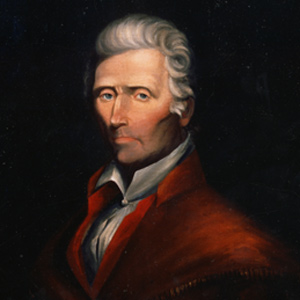
Daniel Boone
Long hunter role model
by Joseph A. Mussulman
Daniel Boone was sixty-nine years old in 1803, too old to go traipsing out to the Pacific Ocean. But Lewis’s “qualifycations” suggest that Boone would have been precisely the kind of hunter he hoped to find.
Songs They Sang
by Joseph A. MussulmanIn response to numerous requests from teachers and community musicians, we present the following lists of songs that might have been sung by the men on the expedition, or by the folks back home.
The Beaverhead River
Home ground
by Joseph A. Mussulman
With what satisfaction and relief Lewis must have written, on 8 August 1805: “The Indian woman [Sacagawea] recognized the point of a high plain to our right which she informed us was not very distant from the summer retreat of her nation.”
End of the Enlightenment
Anti calomel and the "genteel tradition"
by Joseph A. Mussulman
No more calomel! Not just an anthem, a reflection on the transition from the “Age of Enlightenment” to the “genteel tradition.”
Fort Rock
Refuge at The Dalles
by Joseph A. Mussulman
The party “Came too, under a high point of rocks on the Lard. Side below a creek”—Quenett (“salmon”), now Mill Creek—a “Situation well Calculated to defend our Selves,” and duly named their bivouac “Fort Rock Camp.”
The Salmon and Snake Villages
Side trip
by Joseph A. Mussulman
When the captains saw Nez Perces with several fresh chinook salmon, “fat and fine,” which the Indians said came from “Lewis’s River,” known today as the Salmon River, they dispatched Sgt. John Ordway and two privates to buy some.
Mosquito Netting
Pomp's 'bier' was a 'bar'
by Joseph A. Mussulman
Lewis writes: “the bier in which the woman carrys her child and all it’s cloaths wer swept away as they lay at her feet she having time only to grasp her child.” This bier, then, is a bar or net serving to keep mosquitos from one’s personal blood supply.
Shipping the Supplies
Quartermaster Lewis
by Frank Muhly, Joseph A. Mussulman
Considering all he had to do to prepare for the expedition, Lewis was fortunate in that he could rely on a small cadre of Army personnel to help him assemble, pack, and ship his supplies.
Salt-curing Meat
Preserving without refrigeration
by Joseph A. Mussulman
Salt served functions that were equally as important as dietary needs: drying meat—namely, and tanning hides for clothing and moccasins.
Arrival at the Pacific
Exploring Long Beach
by Joseph A. Mussulman
Clark was pleased that his men appeared “much Satisfied with their trip beholding with estonishment the high waves dashing against the rocks & this emence ocean.”
Clatsop Cone Hats
by Joseph A. Mussulman
They could come up with nothing in the way of hats that was as practical as the style perfected by the Clatsops and Chinooks.
Buffalo: Native Uses
An Indian commisary
by Joseph A. MussulmanClark’s Columbia River Maps
by Joseph A. MussulmanBull Boats
Sgt. Pryor's Yellowstone voyage
by Joseph A. Mussulman
Indians stole all the horses, so Sgt. Pryor and his three privates constructed two bull boats and floated down the Yellowstone River in hopes of catching up with Clark or Lewis.
Mountain Beavers
Aplodontia rufa (Sewelel)
by Joseph A. Mussulman
This secretive, primitive little rodent, which somewhat resembles the woodchuck and the muskrat, belongs to the same mammalian order, Rodentia, as the beaver, Castor canadensis, but otherwise they have nothing in common.
Glacier Lilies
Erythronium grandiflorum
by Joseph A. Mussulman
Because it appears in the Rockies at the edges of receding snowbanks it has also earned the name glacier lily. Lewis’s specimen, collected 15 June 1806 on the Clearwater River, was the one used by Pursh to describe the species.
Wheeler’s Railroad Promotions
The Lewis and Clark Centennial
by Barbara Fifer, Joseph A. Mussulman
The Northern Pacific Railway had identified two new attractions within its Wonderland—a centennial commemoration of the historic Lewis and Clark expedition, plus extensive segments of the original trail within sight of its rails.
Early American Entomology
by Joseph A. Mussulman
There were only four notable 18th century naturalists who showed much interest in America’s insects: a young Englishman named Mark Catesby, Finnish botanist Peter Kalm, Philadelphian William Bartram, and Reverend Frederick Melsheimer of New Hampshire.
Blue Lake Meander
Iowa meander
by Joseph A. Mussulman
This oxbow was once part of the main channel of the Missouri, but by 1804 the river had already cut it off, turning it into a lake “6 leagues [eighteen miles] around.”
Mapping the Falls
by Joseph A. Mussulman
The falls of the Missouri comprised the most remarkable of all the “remarkeable points” that Clark described and mapped in conscientious obedience to an order from Thomas Jefferson to take observations “with great pains & accuracy.”
Carl Linnaeus
God created, Linnaeus arranged
by Joseph A. Mussulman
Even in Lewis and Clark’s day, new species were being classified using a system developed by naturalist Carl Linnaeus.
How Flintlocks Work
With illustrations, narrations, and videos
by Joseph A. Mussulman
Though text, animations, and narrated video, this page provides a thorough explanation showing how a flintlock works, best practices in the field, and instructions to load and fire.
The Osage River
"a delightfull prospect"
by Joseph A. Mussulman
On 1 June 1804, the expedition arrived at the mouth of the Osage River, one of the major Indian trail intersections on the lower Missouri. From the height on the point, Clark wrote: “I had a delightfull prospect of the Missouries up & down, also the Osage R. up.”
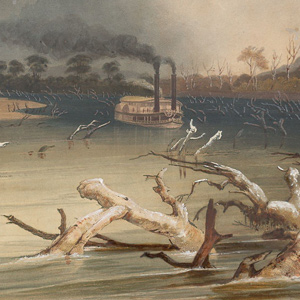
Driftwood Danger
An embarras (obstacle)
by Joseph A. Mussulman
The Missouri spawned countless hazards such as a drift or raft of logs—an embarras, or “obstacle,” as the French engagés called it.
Wheeling
"Point of Embarkation"
by Joseph A. Mussulman
Lewis had contracted with a wagoner to haul a substantial part of his baggage from Pittsburgh to Wheeling. In 1803 there were only a few thousand miles of decent wagon roads in the seventeen states, and Wheeling was the western terminus of one of the newest of them.
Beaverhead Rock
Sacagawea's landmark?
by Joseph A. Mussulman
“The Indian woman recognized the point of a high plain to our right . . . . This hill she says her nation calls the beaver’s head from a conceived resemblance of its figure to the head of that animal.”
Eastern Gray Squirrel
Scuirus carolinensis
by Joseph A. Mussulman
Lewis wrote a description of the eastern gray squirrel, the first of his natural history observations, on 11 September 1803, twelve days after he left Pittsburgh on his voyage down the Ohio.
Von Steuben’s Regulations
The Army's 'blue book'
by Joseph A. Mussulman
Steuben’s book was much more than a “blue book” of military regulations and procedures. It concluded with guides to character, pride and conduct for men of every rank, from regimental commanders and their subordinates, to non-commissioned officers and privates.
The Shoshones’ Three Roots
Examining Shoshone foods
by Joseph A. Mussulman
Lewis learned about three unfamiliar species of edible roots–a bushel of them altogether. The Shoshones who were encamped nearby helped him sort them out, and told him how they were customarily prepared.
The Marias River by Air
Narrow escape
by Joseph A. Mussulman
“I sliped at a narrow pass of about 30 yards in length and but for a quick and fortunate recovery by means of my espontoon I should have been precipitated into the river down a craggy pricipice of about ninety feet.”
Fort Yates
Hunting party
by Joseph A. Mussulman
The Corps observed an Indian strategy for hunting game. As men on horseback herded pronghorns—”goats or Antelope,” Clark called them—into the river, boys swam among them and killed some with sticks, while others on shore shot them with bows and arrows.
Crooked Falls by Air
A "thousand conjectures"
by Joseph A. Mussulman
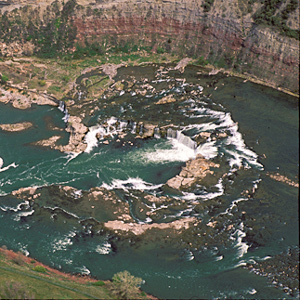
After passing “one continued rappid and three small cascades of abut for or five feet each,” Lewis “arrived at a fall of about 19 feet,” which he suitably named “the crooked falls” and proceeded to describe its geometry.
The Marias Massacre
My Lai on the Marias
by Joseph A. Mussulman
Some blame the ruin of the Blackfeet people on the Lewis and Clark Expedition. The story is far too complicated to be told fully in a few hundred words. Many foul deeds on both sides led up to the “the greatest slaughter of Indians ever made by U.S. troops.”
York in the Journals
A comprehensive listing
by Joseph A. MussulmanFort Peck Lake
Close calls
by Joseph A. Mussulman
The fourteenth of May was a day of close calls. With no time to reload their weapons, the grizzly bear hunters flung them aside and leaped over a twenty-foot-high bank into the river.
Fort Clatsop’s Legacy
by Joseph A. Mussulman
One of the first writers to devote special attention to the question of Fort Clatsop’s post-history was Olin D. Wheeler, who visited the site with Coboway’s grandson, Silas B. Smith, in 1900, and wrote briefly of it.
The Salt Works by Air
Seaside, Oregon
by Joseph A. Mussulman
Here they built an oven of stones and, day and night for a month and a half, scooped perhaps 1,400 gallons of water from the surf, boiling it down to about twenty-eight gallons of salt.
Army Hygiene
by Joseph A. Mussulman
Officers were to see that their men’s hands and faces were daily “washed clean” and their hair combed. Soap was relatively expensive, and if individuals or families couldn’t manage to make their own, they just went without.
Rainbow Falls by Air
"Pleasingly beautifull"
by Joseph A. Mussulman
After briefly contemplating the Crooked Falls on 14 June 1805, Lewis followed the sound of “a tremendious roaring” to “one of the most beautifull objects in nature,” a fifty-foot-high cascade “with an edge as regular and as straight as if formed by art.”
Clark’s Military Rank
An elephant on the trail
by Joseph A. Mussulman
Lewis had assured Clark that their situations would be identical in every respect, beginning with rank. The fact that Clark was actually a lieutenant was a secret kept throughout the expedition.
Wheeler on the Marias
Meeting a Blackfeet survivor
by Barbara Fifer, Joseph A. Mussulman
Traveling through the Marias River country with anthropologist George Bird Grinnell, Wheeler met Wolf Calf, one of the Indian survivors of Lewis’s encounter with the Blackfeet.
Sweet Grass
Hierochloe odorata
by Joseph A. Mussulman
For thousands of years sweet grass has been used as incense in spiritual and religious ceremonies, as a personal perfume, and braided into necklaces and bracelets for wearing as amulets to ward off illness and injury.
Barbary Coast War
Lewis's "Mahometant yoke"
by Joseph A. Mussulman
The story of what was known by his detractors as “Jefferson’s War,” opens for us a narrow window on a little known but intriguing episode in Meriwether Lewis’s brief position as the President’s secretary.
The Freeman-Custis Expedition
The "Grand Excursion"
by Dan Flores, Joseph A. Mussulman
Narrated in both English and Spanish, Daniel Flores tells the story of a parallel, southern exploration now nearly forgotten.
Gallatin City
Three Forks after the expedition
by Joseph A. Mussulman, Robert N. Bergantino
After the expedition, the Three Forks area would see the death of Potts and Drouillard, the start of Colter’s famous run, and an emerging frontier lifestyle in Gallatin City, later to be known as Three Forks, Montana.
Wheeler’s Lolo Crossing
On the Northern Nez Perce Trail
by Barbara Fifer, Joseph A. Mussulman
One of Wheeler’s most successful efforts to amplify any part of Lewis and Clark’s route was his exploration of the Lolo Trail. For that he relied heavily on Elliott Coues’ 1893 annotations to the expedition’s narrative.
The White Cliffs
by Joseph A. Mussulman
Under cloudy skies on the morning of 31 May 1805, the expedition “proceeded at an early hour,” and roped their flotilla of six cottonwood dugout canoes and two big pirogues into one of the most famous riverscapes on the Missouri.
The Kansas River by Air
"Great river of the Kansas"
by Joseph A. Mussulman
The expedition’s campsite from 26 June 1804 to 28 June 1804 was near the wooded point that protrudes at the confluence of the Kansas and Missouri Rivers.
The Grand Tower
Demons
by Joseph A. Mussulman
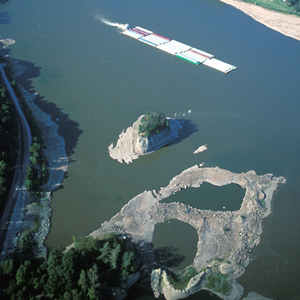
In 1673 French explorers Père Marquette and Louis Joliet listened to local Indians’ warnings about this place and erected a cross atop the ninety-foot-high rock to disempower the demons said to be lurking in the treacherous whirlpool at its base.
A Bold Diplomatic Plan
The need for five separate details
by Joseph A. Mussulman
There was no Northwest Passage by water; and the portage they found took much longer than a day. The political repercussions from that alone could be immensely embarrassing to Jefferson. Something had to be done….
Bighorn: Sheep or Goat?
by Joseph A. Mussulman
We confront the paradox that Elliott Coues pointed out in 1893—that Lewis and Clark had mistaken goats with wool … for sheep, and sheep without wool . . . for ibexes. Succeeding naturalists heightened the misunderstanding with invidious comparisons.
Dividing Forces at Travelers’ Rest
Their daring tactical plan
by Joseph A. Mussulman
Dividing into as many as five separate details was part of a bold, diplomatic plan to achieve three of the objectives set by President Jefferson.
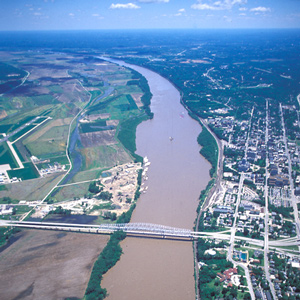
The Mouth of the Missouri
by Joseph A. Mussulman
The Missouri River still contributes its tint a few miles north of St. Louis. It is difficult to determine exactly how much, and how often, the confluence of the Missouri and the Mississippi Rivers changed during the nine decades after the Lewis and Clark Expedition.
The Osage Delegations
by Joseph A. Mussulman
They were “certainly the most gigantic men we have ever seen,” Jefferson wrote on 12 July 1804. A dozen Osage men and two boys had arrived in Washington City the previous day, escorted by Pierre Chouteau.
Sheheke’s Delegation
by Joseph A. Mussulman
Sheheke’s diplomatic trip to Washington City and his difficult return home brought down the careers of at least two great leaders—himself, and Meriwether Lewis.
Soundscapes
Sonic dimensions of the expedition
by Joseph A. Mussulman
The relatively uncomplicated sound key of the expedition itself can readily be imagined. The natural soundscape of the expedition’s trail is harder to reconstruct.
The Mouth of the Ohio
Meeting of the waters
by Joseph A. Mussulman
On the evening of 14 November 1803, Lewis and Clark camped on the point between the Ohio and Mississippi Rivers. By now they had rowed, poled, dragged, and occasionally sailed their boats a total of 981 miles.
Leaving the Lemhi Valley
Detour at Tower Creek
by Joseph A. Mussulman
The Salmon winds tortuously through a seven-mile-long canyon where the vertical walls at that time crowded the riverbanks so tightly in several places that Clark and his party were compelled to clamber over “four mountains verry Steap high & rockey.”
The Niobrara River
Rushing river
by Joseph A. Mussulman
“We hoisted Sail,” wrote Ordway, and “ran verry fast a Short time. Broke our mast.” The party “came to” on the west side of the Niobrara. There the men made a new mast from the trunk of a tall, sturdy red cedar, which apparently lasted at least until they reached the Mandan villages.
Packer Meadows
"A pretty little plain"
by Joseph A. Mussulman
Lewis acknowledged it was “a pretty little plain of about 50 acres plentifully stocked with quawmash” and “one of the principal stages or encampments of the indians”
Indian Commissions
Tools of diplomacy
by Joseph A. Mussulman
Each peace medal given out was usually accompanied by a commission, also called a parole, which is the French word for promise..
Yellowstone Canoe Camp
by Joseph A. Mussulman
One week and a hundred miles after starting down the Yellowstone River, Clark finally found cottonwood trees large enough for building canoes. That night some Indians made off with half their horses.
Mule Deer
Odocoileus hemionus
by Joseph A. Mussulman
Drouillard spotted the first “Deer with black tales” on 5 September 1804, on the cliffs upstream from the mouth of the Niobrara River in northeast Nebraska. By 10 May 1805 Lewis had seen enough specimens to write an 800-word description of the new species.
Through Wallula Gap
Yelleppit and Sacagawea help out
by Joseph A. Mussulman
They encountered several rapids that nineteenth of October, including “a verry bad one” about two miles long. Clark climbed a 200-foot “clift” from which he could see many miles across the high desert.
Lewis as Master Mason
by Joseph A. Mussulman
Lewis’s meteoric progress through the first three degrees of Masonry signified confidence on the part of the most prominent men of Albemarle that the 23-year-old Lewis was similarly destined for moral, civic, and political leadership.
The Bitterroot River
Tum-sum-lech, no salmon!
by Joseph A. Mussulman
“The stream appears navigable,” he had earlier confided to his journal in reference to the Bitterroot River, “but from the circumstance of their being no sammon in it I believe that there must be a considerable fall in it below”
Domestic Dogs
What Lewis was describing
by Joseph A. Mussulman
The Corps’ journalists, in their accounts of new species of mammals they encountered on the expedition, would occasionally call to mind comparable features of domestic canids whenever it was appropriate—in terms of their sizes, morphology, and “notes” or barks.
The Headwaters by Air
Essential point
by Joseph A. Mussulman
Upon the Corps’s arrival at this confluence on 25 July 1805, Lewis quickly recognized it as “an essential point in the geography of this western part of the Continent.”
Fort Randall Dam
Wolf tricks
by Joseph A. Mussulman
Here, Sergeant Gass went out with one of the hunters to retrieve the meat and hide of a buffalo the man killed the previous evening. The hunter had left his hat on the carcass “to keep off the vermin and beasts of prey,” apparently believing the scent of a human would scare them away”
Experience the Lewis and Clark Trail
The Lewis and Clark Trail Experience—our sister site at lewisandclark.travel—connects the world to people and places on the Lewis and Clark Trail.
Discover More
- The Lewis and Clark Expedition: Day by Day by Gary E. Moulton (University of Nebraska Press, 2018). The story in prose, 14 May 1804–23 September 1806.
- The Lewis and Clark Journals: An American Epic of Discovery (abridged) by Gary E. Moulton (University of Nebraska Press, 2003). Selected journal excerpts, 14 May 1804–23 September 1806.
- The Lewis and Clark Journals. by Gary E. Moulton (University of Nebraska Press, 1983–2001). The complete story in 13 volumes.