Kristopher Townsend
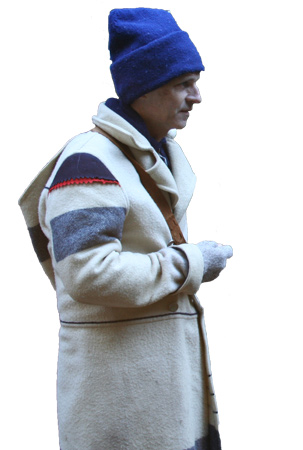
From the Pacific Northwest Living Historians at Lewis and Clark National Historic Park, Fort Clatsop.
Since 2016, Kristopher K. Townsend has been the webmaster and editor of this site, Discovering Lewis & Clark®. He has been actively photo-documenting the Lewis and Clark Trail since 1995. He attempts as closely as possible to re-create scenes as described in the journals including the same time of year, natural state, location, and weather. He has contributed numerous photos throughout the Discovering Lewis & Clark website.
Kris taught several years as a tenured instructor at Spokane Falls Community College. His courses included Internet programming and other information technology and computer science courses. During that time, he was also the series editor and an author of a popular college textbook series on Office Technology.
Shortly after the advent of the World Wide Web, he managed a web server featuring digital photos, digital video, and articles created by his Glenwood Heights Primary students. Topics included historical sites of Clark County (Washington State), wildflowers and birds of Clark County, and how-to videos for school’s physical education program.
Contributions to this Site
January 19, 1803
Laying the foundation
by Kristopher K. Townsend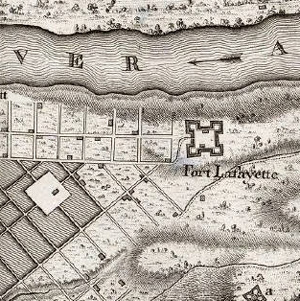
From Fort Fayette, Capt. Stoddard writes a letter to Col. Burbeck asking for further orders. Those orders would be to establish a fort on the Mississippi to support Jefferson’s western expeditions.
January 18, 1803
A Western expedition
by Kristopher K. Townsend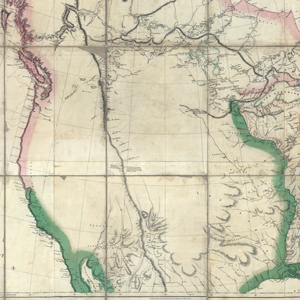
In Washington City, Meriwether Lewis delivers President Thomas Jefferson’s confidential message to the U.S. Congress proposing that they fund an expedition to the Western ocean.
January 12, 1803
Envoys to France
by Kristopher K. Townsend
In Washington City, President Jefferson writes the commission appointing Robert Livingston and James Monroe to negotiate a cession of land in the lower Mississippi and eastward toward Florida.
January 11, 1803
Negotiations proposed
by Kristopher K. Townsend 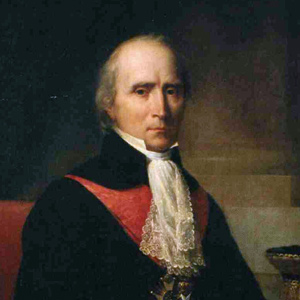
In response to the closure of New Orleans to American commercial traffic, President Jefferson’s plan to acquire the lower territory along the Mississippi River is read to the U.S. Senate—an act that would lead to the fruition of the Lewis and Clark Expedition. Jefferson also pays for 200 bottles of champaign from the private reserves of the Spanish envoy to the United States, Marqués de Casa Yrujo.
January 10, 1803
Jefferson's extraordinary plan
by Kristopher K. Townsend
From Washington City, President Thomas Jefferson writes a letter to James Monroe asking him to become Envoy Extraordinary and Minister Plenipotentiary with the authority to negotiate a solution to the Spanish closure of the port of New Orleans to American commercial traffic.
In a separate letter, Attorney General Levi Lincoln gives Jefferson advice on the legality of acquiring the Mississippi River channel from France.
In Philadelphia, Charles Willson Peale updates the president on his sons’ mammoth bone exhibit and sends silhouettes created with a physiognotrace.
Experience the Lewis and Clark Trail
The Lewis and Clark Trail Experience—our sister site at lewisandclark.travel—connects the world to people and places on the Lewis and Clark Trail.
Discover More
- The Lewis and Clark Expedition: Day by Day by Gary E. Moulton (University of Nebraska Press, 2018). The story in prose, 14 May 1804–23 September 1806.
- The Lewis and Clark Journals: An American Epic of Discovery (abridged) by Gary E. Moulton (University of Nebraska Press, 2003). Selected journal excerpts, 14 May 1804–23 September 1806.
- The Lewis and Clark Journals. by Gary E. Moulton (University of Nebraska Press, 1983–2001). The complete story in 13 volumes.
This site is provided as a public service by the
Lewis and Clark Trail Alliance
with additional funding from the following: