Pressed Beargrass (Xerophyllum tenax)
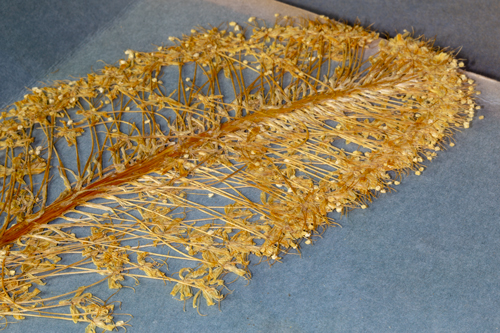
© 2018 by Kristopher K. Townsend. Permission to use granted under the Creative Commons Attribution-Share Alike 4.0 International license.
This beargrass specimen was collected by the photographer on the Lolo Trail in the area that the Corps descended into Hungery Creek. The blotting paper is similar to the paper Lewis used in the field.
Specimen Presses
A botanist presses specimens of plants for study and comparison with other specimens of similar species that have been gathered at different times and places, worldwide. Meriwether Lewis knew that his studies in the field would be backed up by the most prominent cabinet—that is, laboratory—botanists of his day.
Among them was to be Frederick Pursh (1774-1820), a German botanist whom Lewis hired at Philadelphia in May of 1807, paying him a total of seventy dollars to assist him in preparing his collection for a planned but never written publication of his own.[1]Jackson, Letters, passim. Pursh examined 124 of Lewis’s specimens, verified or corrected Lewis’s descriptions, wrote many new “diagnoses,” and assigned names to the species that were new to science.[2]It is estimated that seventy or seventy-five specimens were new to science when Lewis collected them. Pursh honored Lewis by naming four new species after him: Linum lewisii (LEE-noom … Continue reading He also painted water colors of thirteen of those, and in 1814 included them all in his two-volume Flora Americae Septentrionalis (FLO-ruh a-MAY-ree-kay sep-TEN-tree-oh-NAL-iss; Plants of North America).
Botanical Collector
A botanical collector like Meriwether Lewis had to begin the process of preserving his specimens as soon as possible after picking them, to forestall wilting and shriveling. The field botanist must place the leaves, stems, flowers, fruits, and roots on sheets of mounting paper with the utmost care and foresight. The whole point is to preserve every specimen in a way that will enable the cabinet botanist to examine minute details that will facilitate the writing of a definitive analysis of each specimen. Immediately, each mount must be covered with a sheet of soft, loose-textured, highly absorbent bibulous (Latin for “drinking”) or “blotter” paper, in order to draw all moisture out of the specimen. In some cases a discreet dissection may be necessary to provide maximum value to the collection. A memorandum is added containing the date and place the specimen was found, perhaps with a very brief description including known uses of the plant, and the collector’s name. Stacks of specimen mounts and blotter papers are weighted down or tied together tightly, then monitored frequently until the drying is complete.
The Corps of Discovery’s Lewis was a conscientious field botanist. The collector must monitor the drying process carefully including daily awareness of ambient temperature and humidity to be sure the specimens remain intact and free from mold or decay and to guard against invading insects. If possible, the specimen must be exposed occasionally to warm sunlight and dry air. This must have been a serious challenge to Lewis under the field conditions he endured from day to day. It certainly was at Fort Clatsop, where the average daily humidity probably ranged from 70 to 90 percent, and it rained all but six days between their arrival at the coast and their departure on 23 March 1806. In short, until the specimens are deposited in a secure collection facility known as a herbarium, botanizing is a tedious, time-consuming procedure which demands close, periodic attention.
Sensory Observations
Even on the toughest days of the expedition, Lewis somehow found time to observe plants along the way. However, his major periods of systematic work evidently were at Fort Mandan, Fort Clatsop, and Long Camp.
The total number of specimens he collected is not known, but it is certain that all those he acquired between Fort Mandan and the Great Falls of the Missouri were destroyed when high water in the spring of 1806 flooded the underground cache where they had been stored. Some more went astray after the expedition was over; others were eventually destroyed by beetles. For many years the collection was scattered and generally ignored. Not until 1896 were most of the known sheets assembled in one collection at the Academy of Natural Sciences in Philadelphia, and not until 1966 was it subjected to a comprehensive, detailed study.[3]That study, still a major milestone in the literature, is Paul Russell Cutright’s Lewis and Clark, Pioneering Naturalists (Lincoln: University of Nebraska Press, 1969).
Also, we don’t know precisely what methods or materials Lewis used to preserve plant specimens. He might have used presses such as the one pictured here on the previous page, or else books of blotting paper and blank sheets. We do know that all the existing specimens have been remounted at some time in the past two hundred years, and that of the 226 botanical sheets now in the Lewis and Clark Herbarium at the Academy only 34 have their original labels in Lewis’s handwriting.
The process of pressing specimens preserves only the outlines, textures and skeletal structures of plants, so Lewis also took pains to write notes about their colors and tactile qualities, and often the aromas and flavors. Thus it is possible, by reading his often minutely detailed journal entries about plants, to appreciate the full scope and intensity of his concentration, the breadth of his awareness, and depth of his curiosity.
Meriwether Lewis made every step of the journey with all of his senses working all of the time. So, of course, did his co-captain and their men, so far as we can tell. The lessons of the Lewis and Clark Expedition are less about adventure, conquest, or commerce, than about concentration and awareness. These are particularly important values to cultivate in this age when most of us are artificially over-stimulated during almost every moment of our waking hours.
Related Pages
Benjamin Smith Barton
First curator of the plant collection
by Charles F. Reed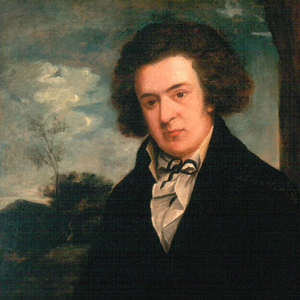
Important for the history of the scientific accomplishments of the expedition, its first plant specimens were consigned to Barton’s care. Here began the disassembling of the collection, and his promised volume on natural history was never written.
October 1, 1805
The Nez Perce method
by Kristopher K. Townsend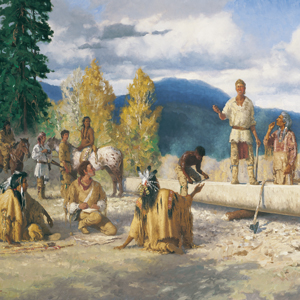
At Clearwater Canoe Camp near present Orofino, Idaho, the men employ the Nez Perce method of hollowing out dugout canoes with fire. Lewis adds a specimen of ponderosa pine to his plant collection.
October 1, 1804
The Cheyenne River
by Kristopher K. Townsend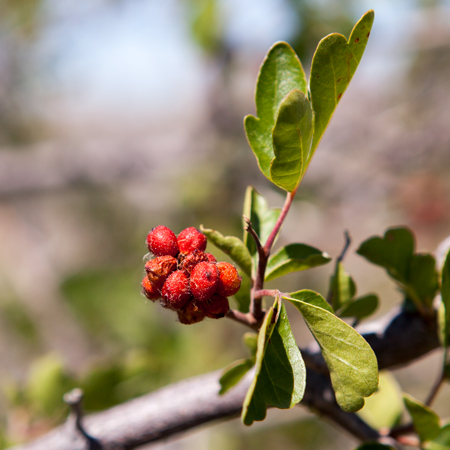
At the Cheyenne River, the captains meet trader Jean Vallé who tells them about that river. Clark finds that buffaberries make a delightful tart, and Lewis adds three specimens to his plant collection.
Serviceberry
Amelanchier alnifolia
by Kristopher K. Townsend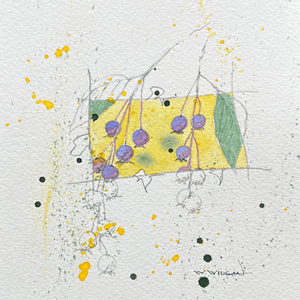
Everybody liked the abundant serviceberry fruit—the Lemhi Shoshones were living on them, the enlisted men “regaled themselves,” and Lewis was the first to collect a specimen for science.
April 16, 1806
"Great Mart of all this Country"
by Kristopher K. Townsend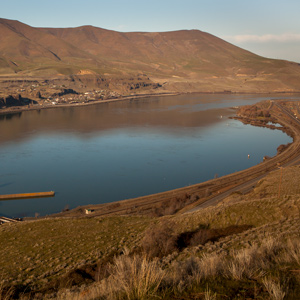
Clark’s group crosses the Columbia River to trade for horses at a Wishram village. He calls The Dalles of the Columbia the “Great Mart of all this Country”. At Fort Rock, the enlisted men make pack saddles, Lewis collects shooting star and golden currant specimens, and in the evening, Pvt. Cruzatte plays the fiddle.
May 20, 1806
Trading buttons for food
by Kristopher K. Townsend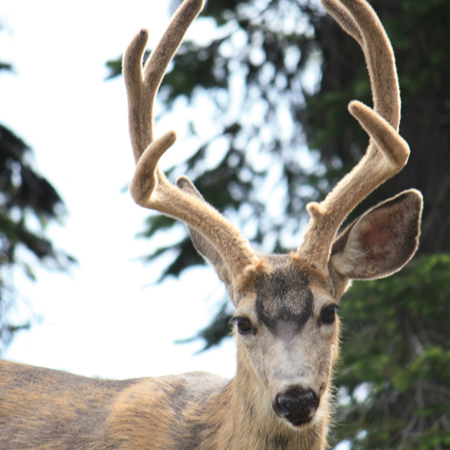
With violent rains at Long Camp—present Kamiah, Idaho—the captains lay in water most of the night. Labiche brings in a mule deer and reports snow in the higher plains. The men have traded all their brass buttons for food, and Lewis prepares a specimen of Wilcox’s beardtongue.
August 2, 1804
The Otoes arrive
by Kristopher K. Townsend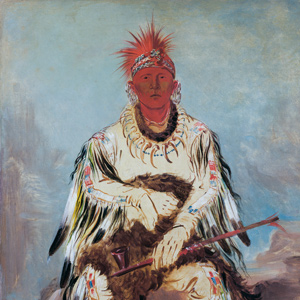
At sunset near present Fort Atkinson, Nebraska, several Otoes arrive at Council Bluff. Guns are fired, hands are shaken, and the captains exchange tobacco and food for watermelons. Lewis collects another plant specimen and examines a great egret.
June 1, 1804
Mouth of the Osage
by Kristopher K. Townsend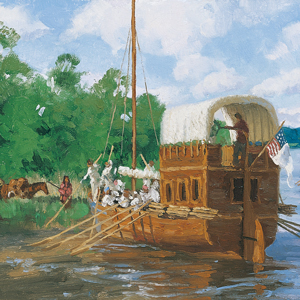
The enlisted men struggle to move the boats up a strong Missouri River current. They stop at the mouth of the Osage River where the captains take celestial observations to precisely locate this important tributary. Lewis also collects a specimen of wild ginger.
August 1, 1804
A botanist's field day
by Kristopher K. Townsend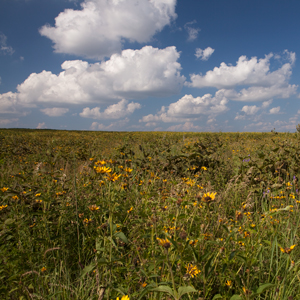
At Council Bluff in present Fort Atkinson, Nebraska, Clark prepares a peace pipe anticipating that the Otoes will soon arrive for a council. Two men search for lost horses and others search for the Otoes. Neither are found. Clark declares the area a field for botanists, and Lewis prepares a specimen of American black currant.
November 1, 1805
A day with the Watlalas
by Kristopher K. Townsend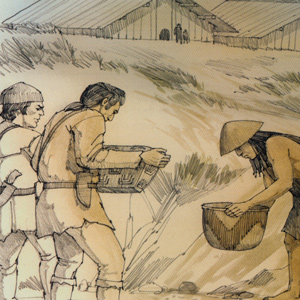
Most of the men move baggage and canoes around the Cascades of the Columbia. Clark describes the Upper Chinookan Watlala People living in the area, and Lewis adds Pacific madrone to his plant collection.
Bitter Cherry
Prunus emarginata
by Kristopher K. Townsend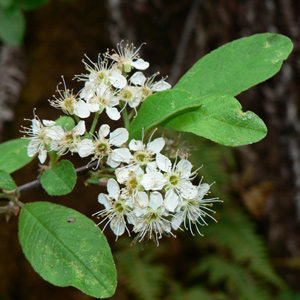
Lewis collected a specimen of bitter cherry, Prunus emarginata, while at Long Camp on 29 May 1806 and described it on 7 June 1806. He wrote that “the natives count it a good fruit”.
August 27, 1804
Nearing the Yankton Sioux
by Kristopher K. Townsend
Nearing present Yankton, South Dakota, a fire is set to signal the Sioux to a council. Soon, a Yankton man and two boys arrive. Drouillard fails to find Pvt. Shannon who has not returned from a hunting trip, and Lewis collects a specimen of lemon scurfpea.
June 9, 1806
Falling river, rising hopes
by Kristopher K. Townsend
At Long Camp, everything is ready for tomorrow’s move to Weippe Prairie. Neesh-ne-park-ke-ook (Cut Nose) harvests eagle feathers by capturing live birds from their nests, and the falling river gives hope that the mountain snows have melted. Lewis takes celestial observations and collects a specimen of varileaf phacelia—new to science.
July 30, 1804
Arrival at Council Bluff
by Kristopher K. Townsend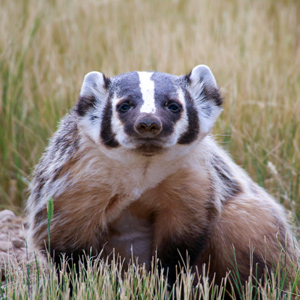
The expedition stops a bluff at present Fort Atkinson, Nebraska, where they intend to conduct a council with the Otoe Nation. Pvt. Joseph Field kills a badger, and Lewis preserves it—his first zoological specimen of the expedition. He also prepares a specimen of Illinois bundleflower—now lost.
May 29, 1804
A lost hunter
by Kristopher K. Townsend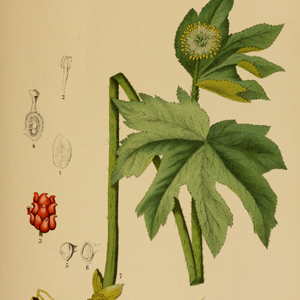
The expedition spends most of the day at the mouth of the Gasconade River drying goods and waiting for Joseph Whitehouse to return from a hunting trip. At 5 pm, they travel three miles up the Missouri without the lost hunter. Lewis prepares a plant specimen of Golden Seal.
May 25, 1804
Last 'White' village
by Kristopher K. Townsend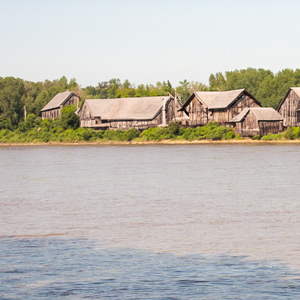
The expedition travels about ten miles reaching La Charrette—the last settlement of “white people on this River . . . .” Here the captains meet trader Régis Loisel who shares valuable information about the people and places between here and the Knife River Villages. The villagers sell them milk and eggs, and Lewis collects a cottonwood specimen.
Wild Ginger
Asarum canadense
by James L. Reveal, Joseph A. Mussulman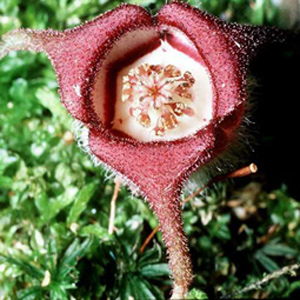
Lewis reported that a specimen of this plant “was taken the 1st of June at the mouth of the Osage River; it is known in this country by the name of the wild ginger.”
The Woodlands
Repository of plant specimens
by Catharine P. Fussell, Joseph A. Mussulman, Timothy Preston Long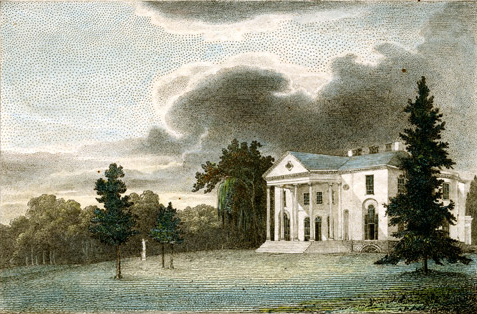
Lewis sent plant specimens to William Hamilton who cultivated them in his garden at The Woodlands outside of Philadelphia.
Indian Tobacco
Nicotiana quadrivalvis
by James L. Reveal, Joseph A. Mussulman, Kristopher K. Townsend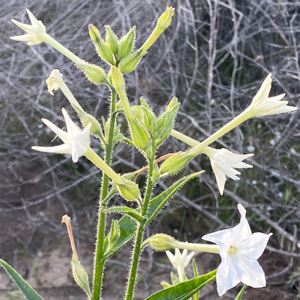
Lewis mentioned two species of tobacco, possibly Nicotiana quadrivalvis and N. rustica—a Mexican species called Aztec tobacco—that the Arikara cultivated.
Echinacea
Prairie coneflower, E. angustifolia
by Kristopher K. Townsend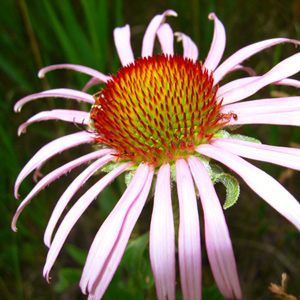
Justified by the ethnobotanical record, the captains went to unusual lengths to preserve and document echinacea. Most—if not all—the Tribal Nations encountered along the Missouri River used the plant to treat snakebites in the manner described by the two captains.
August 4, 1804
Moses Reed is missing
by Kristopher K. Townsend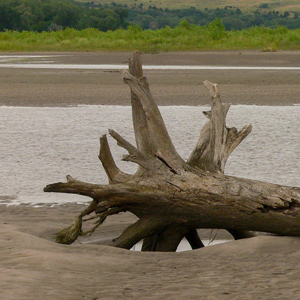
The expedition travels fifteen miles up the Missouri and encamps southwest of present Modale, Iowa. The captains record yesterday’s speech to the Otoes, and Pvt. Moses Reed—who had headed back to the previous night’s camp to retrieve his knife— does not return as expected. Lewis collects a specimen of snow-on-the-mountain, and they pass an old trading house where Pvt. Cruzatte had worked.
July 27, 1804
Leaving White Catfish Camp
by Kristopher K. Townsend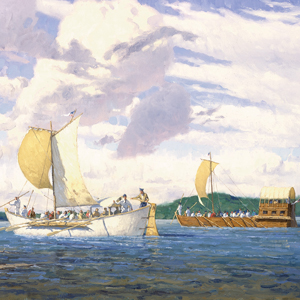
At White Catfish Camp, the enlisted men and engagés load the boats, and they proceed to present Lewis and Clark Landing in Omaha, Nebraska. Clark investigates mounds and an old Otoe village and returns after dark. A knee is cut, mosquitoes rage, and Lewis adds several plant specimens to his collection—now lost.
Academy of Natural Sciences
Home of the Herbarium
by Charles F. Reed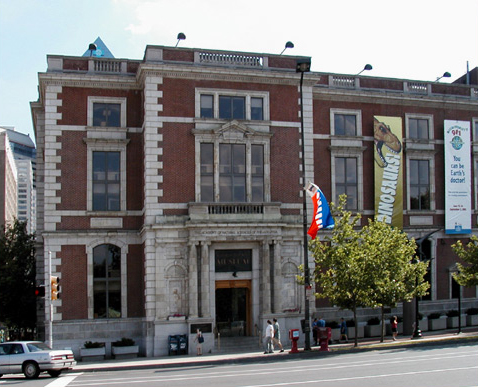
The Academy’s monumental collection of scientific specimens includes the Lewis and Clark Herbarium, consisting of most of the botanical specimens the Expedition brought back East.
September 2, 1805
Leaving the Indian road
by Kristopher K. Townsend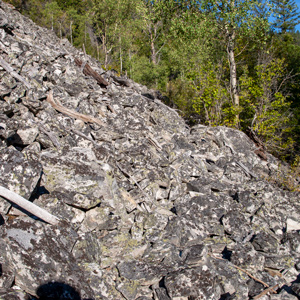
Against the advice of guide Toby, they continue up the North Fork Salmon River. Without an Indian road, they pass through thick brush, a “dismal swamp” and the horses stumble crossing rocky hillsides.
July 18, 1804
Geology and botany
by Kristopher K. Townsend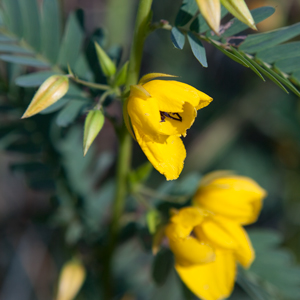
Approaching present Nebraska City, Clark remarks on the region’s geology and Lewis collects another plant specimen—the partridge pea, now lost. When a starving dog appears, the hunters throw it some meat.
In Washington City, the Secretary of War prepares to send an Osage delegation—organized in part by the captains while they were in St. Louis—back home via Pittsburgh.
June 12, 1806
The beautiful Weippe Prairie
by Kristopher K. Townsend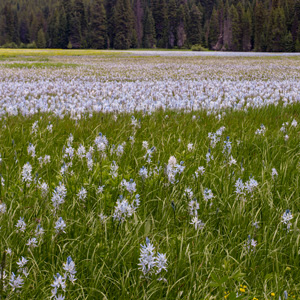
At Weippe Prairie in present Idaho, the expedition members wait for the Bitterroot Mountain snow to melt, while the warmer weather brings camas blooms and their “old companions”—mosquitoes. Lewis collects two more plant specimens: prairie smoke and American bistort.
July 15, 1804
Treeless plains
by Kristopher K. Townsend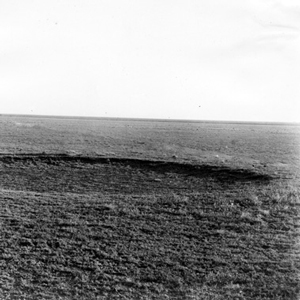
After waiting for the Missouri River fog to lift, the expedition sets out at 7 am and encamps near present Nemaha, Nebraska where the treeless plains extend for miles. Lewis’s chronometer—critical for calculating longitude—stops, and he collects a specimen of hedge bindweed—now lost.
July 20, 1804
Prairie clovers
by Kristopher K. Townsend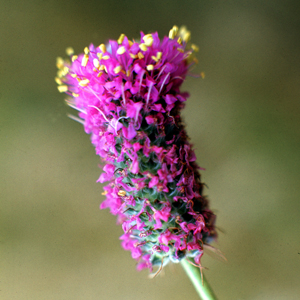
Moving along the present Nebraska-Iowa border, the expedition passes Water-which-Cries and Waubonsie creeks. Lead hunter George Drouillard is sick, so Sgt. Pryor and Pvt. Joseph Field hunt on shore this day. Lewis collects specimens of purple prairie clover and white prairie clover—both lost, and Clark describes the boils affecting several of the enlisted men.
June 14, 1804
Gobbling snakes
by Kristopher K. Townsend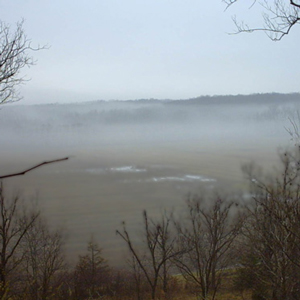
After a foggy morning at the Grand River, the enlisted men struggle to pull and row the boats up the Missouri, and they only make eight miles for the day. They meet four traders loaded with furs, and Drouillard hears snakes that gobble like turkeys. Lewis collects specimens of two willow species—now lost.
September 5, 1804
No Preserve Island
by Kristopher K. Townsend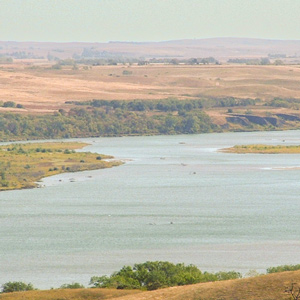
After making 13¾ miles, the boats stop early at what they name No Preserve Island to make a new cedar mast for the barge. Lewis describes the bull snake and adds two plants to his collection.
Frederick Pursh
Cataloger of expedition plants
by James L. Reveal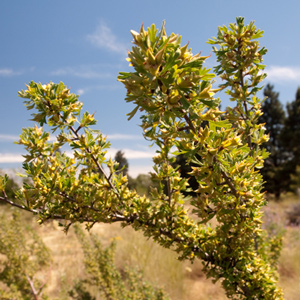
During the winter of 1807-1808, Pursh lived at the home of Bernard McMahon in Philadelphia. Here he worked on the drawings and descriptions of Lewis’s western plants.
May 30, 1804
Another fourteen miles
by Kristopher K. Townsend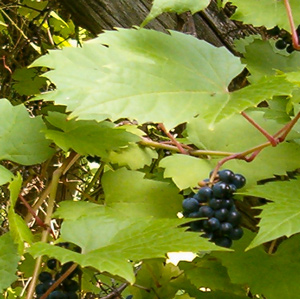
During the night, the French engagés and a lost hunter arrive at camp. In the morning, all the boats are moved another fourteen miles up the Missouri before everyone stops near present Chamois, Missouri. Lewis collects a specimen of river-bank grape-now lost.
Cous
Lomatium cous
by Joseph A. Mussulman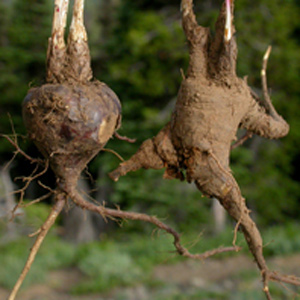
William Clark first mentioned the root cous on 1 November 1805, saying that native people living near the future Bonneville Dam site traded beads to obtain it from people up the Columbia River. To Clark, it was “cha-pel-el bread.”
August 25, 1804
Mountain of evil spirits
by Kristopher K. Townsend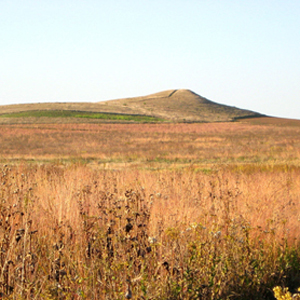
The captains take a large party to explore Spirit Mound—rumored to a mountain of evil spirits and little devils. They suffer from excessive heat and see birds eating swarms flying ants. Lewis collects a specimen of the Rocky Mountain bee plant.
Bearberry
Kinnikinnick, Arctostaphylos uva-ursi
by James L. Reveal, Joseph A. Mussulman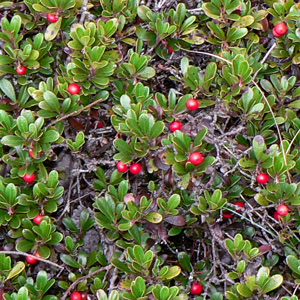
Lewis and Clark sometimes called it kinnikinnick, sometimes sacacommis. At Fort Clatsop on 29 January 1806, he described this useful plant.
Black Chokecherry
Prunus virginiana var. melanocarpa
by Kristopher K. Townsend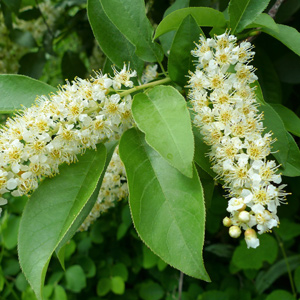
This variety of the common chokecherry gave Lewis his decoction of simples and was the subject of his botanical scrutiny.
September 27, 1805
Falling trees for canoes
by Kristopher K. Townsend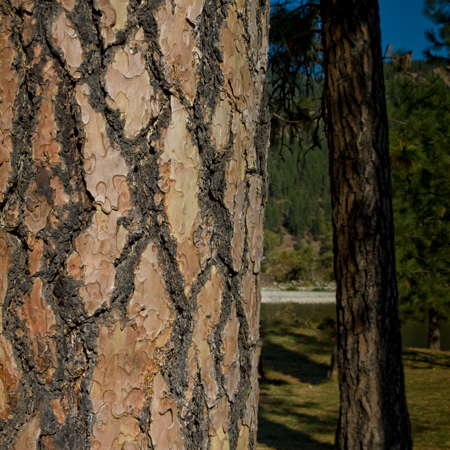
At the Clearwater River Canoe Camp near present Orofino, Idaho, work parties chop down five large ponderosa pine trees and canoe-building begins. Pvt. Colter returns having found one of the two horses lost on the Northern Nez Perce Trail. Lewis adds the cut-leaved daisy to his plant collection.
September 19, 1804
The Sioux Pass
by Kristopher K. Townsend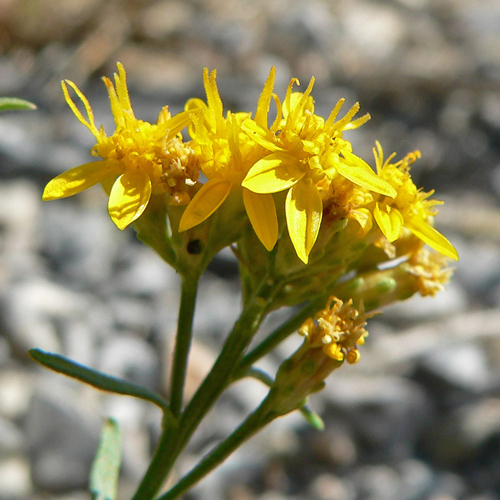
The winds are favorable and the hunting good. Clark explores the Sioux Pass of the Three Rivers, and Lewis adds broom snake weed to his plant collection. Camp is near present Lower Brule, South Dakota.
October 16, 1804
"Goat" hunting
by Kristopher K. Townsend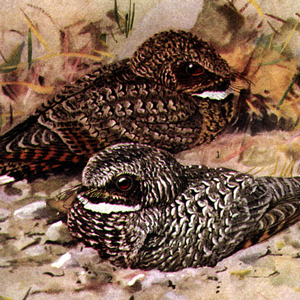
The expedition struggles 14 river miles between present Fort Yates and Beaver Creek in North Dakota. Some Arikaras hunt pronghorn, and Lewis adds common poorwill and creeping juniper to his collection.
The Osage Orange
Maclura pomifera
by James L. Reveal, Joseph A. Mussulman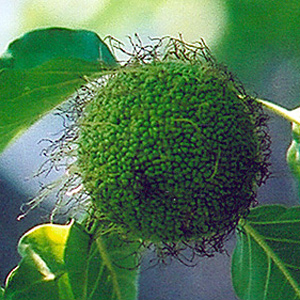
Its oak-strong, hickory-tough wood made powerful, reliable hunting bows. Early French explorers and traders translated its Indian name into bois d’arc,–”wood for a bow,” which was easily anglicized into “bodark.”
July 13, 1804
Favorable winds
by Kristopher K. Townsend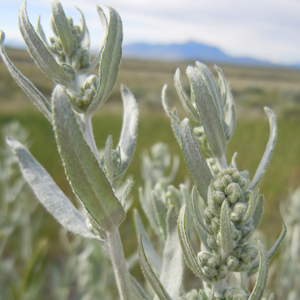
After a stormy evening, favorable winds push the boats up the Missouri River. After 20 miles, they encamp west of present Corning, Missouri. Lewis collects a white sage specimen—now lost, but otherwise, the day appears uneventful.
November 16, 1805
A break in the weather
by Kristopher K. Townsend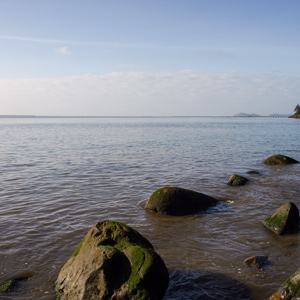
A break in the weather at Station Camp enables the main party to dry gear. Sgt. Gass reflects on reaching the end of their voyage, and Lewis adds Oregon boxleaf to his plant collection.
August 10, 1806
Sketches of River Rochejhone
by Kristopher K. Townsend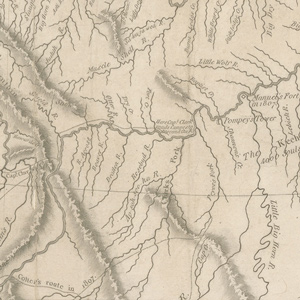
Near present Williston, North Dakota, Lewis has his men repair the boats while he prepares a specimen of white milkwort. In the afternoon, rains begin, leather-making operations cease, and they move a few miles down the river.
Several miles below Lewis, Clark waits for Lewis to arrive. The enlisted men dig for large Indian breadroot, and Clark works on his maps of the Yellowstone River.
July 1, 1806
A plan to divide forces
by Kristopher K. Townsend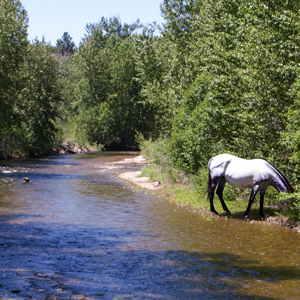
At Travelers’ Rest near present Lolo, Montana, the captains describe their plan to divide forces—each taking a different route back to the Knife River villages. Their Nez Perce guides agree to show Lewis a shortcut leading to the Falls of the Missouri, and Lewis prepares several plant specimens—all new to science.
September 21, 1804
Camp washes away
by Kristopher K. Townsend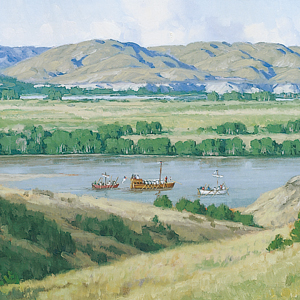
At the Big Bend of the Missouri, the men barely escape as the sandbar they are camping on washes into the river. They continue up the Missouri camping near present Joe Creek Bay, South Dakota.
Western Sweet Cicely
Osmorhiza occidentalis
by Kristopher K. Townsend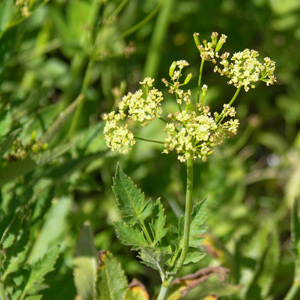
At Long Camp in 1806, Sacagawea gathered roots of Western sweet cicely which the captains found palatable and nourishing. It also alleviated their gas pains.
Clarkia
Clarkia pulchella
by James L. Reveal, Joseph A. Mussulman, Kristopher K. Townsend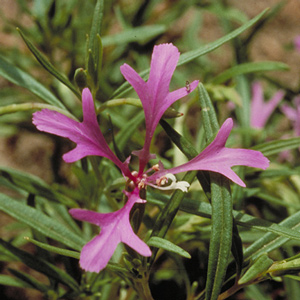
The plant’s common names include elkhorn, ragged robin, pink fairy, and deerhorn. In the spring of 1807 Lewis turned over his plant specimens to Frederick Pursh, who gave this flower the scientific name Clarkia pulchella
June 16, 1804
Unwanted passengers
by Kristopher K. Townsend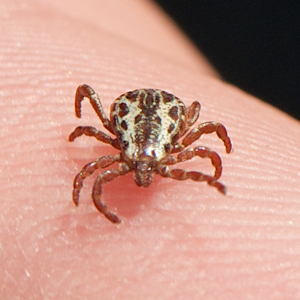
In present Missouri, the enlisted men pull the barge (keelboat) 10 long miles against a current full of rolling sand. Late in the day, they camp near present Waverly. Lewis prepares a specimen of reed canary grass—now lost—and Clark says the mosquitoes and ticks are “noumerous & bad”.
June 16, 1806
Snowbanks deepen
by Kristopher K. Townsend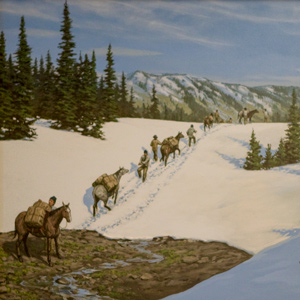
In the Lolo Travel Corridor in present Idaho, fallen trees slow progress, and deepening snowbanks appear. They encamp at Horsesteak Meadow on Hungery Creek where Clark had shot a stray horse last fall. Lewis prepares two plant specimens: Oregon boxleaf and sticky currant.
May 27, 1804
Arms inspection
by Kristopher K. Townsend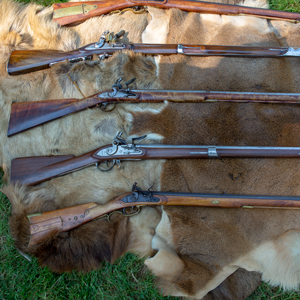
In present Missouri, they meet two parties who have been trading with the Omaha and Osage. Lewis collects three more plant specimens including a cress that they often use to make salad. At evening camp near the mouth of the Gasconade River, an arms inspection is conducted.
April 19, 1805
Grounded by winds
by Kristopher K. Townsend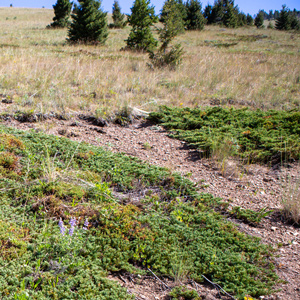
The wind being high, the captains decide to remain another day at their present camp below present Williston, North Dakota. Lewis describes the area’s beaver and collects a specimen of creeping juniper.
In Washington City, Secretary of War Henry Dearborn orders James Wilkinson to establish a factory near St. Louis to manufacture and store Indian trade goods.
June 10, 1806
Leaving Long Camp
by Kristopher K. Townsend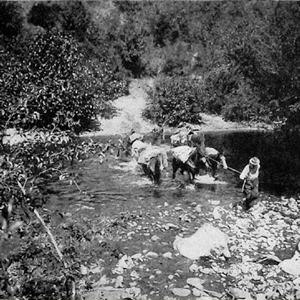
After waiting nearly six weeks at Long Camp for mountain snows to melt, the horses are loaded, and the expedition climbs the Kamiah valley hills, fords Lolo Creek, and then climbs up to the “quawmash flatts”—the Weippe prairie in Idaho. Lewis notices the fertile country, two species of wild roses, and collects specimens of buckbrush ceanothus and bluebunch wheatgrass. At camp, he taste-tests Columbian ground squirrel.
April 15, 1806
Return to Fort Rock
by Kristopher K. Townsend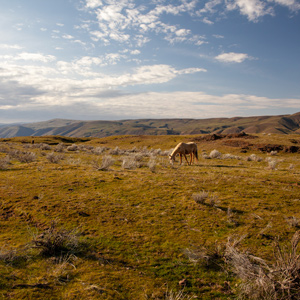
While paddling up the Columbia, the captains see many horses but are unsuccessful in trading for any. They set up a long-term encampment at Fort Rock int present The Dalles, Oregon hoping to obtain horses. Lewis prepares four plant specimens: Serviceberry, Bare-stemmed desert-parsley, biscuitroot, and thimbleberry.
Douglas in the PNW
Following Lewis and Clark
by Jack Nisbet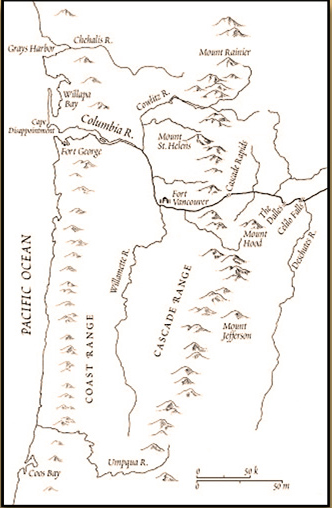
Douglas recognized landmarks from Vancouver’s and William Clark’s maps as soon as he sighted Cape Disappointment at the Columbia River’s fearsome bar. The collector continued to name familiar sentinels as he moved inland including “Mount Jefferson of Lewis and Clarke.”
September 8, 1804
Truteau's old trading house
by Kristopher K. Townsend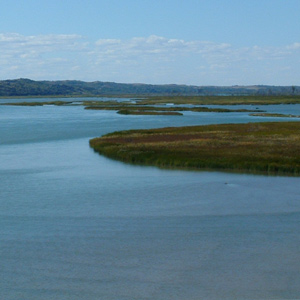
With favorable winds, the boats make 17 miles up the Missouri. They pass Jean Baptiste Truteau’s old trading house, and they are now entirely within present South Dakota. Pvt. Shannon is still missing.
June 25, 1806
Jerusalem Artichoke Camp
by Kristopher K. Townsend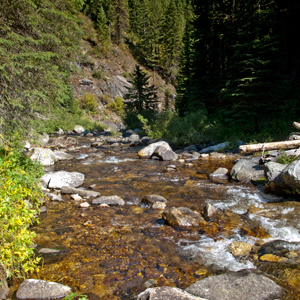
The expedition leaves Eldorado Creek and follows the Northern Nez Perce Trail over a small divide to Hungery Creek. The captains fear their Nez Perce guides have left them, so are relieved when they finally catch up. Sacagawea gathers roots resembling the Jerusalem artichoke, and Lewis prepares specimens of angelica and California false hellebore.
Prickly Pears
One of nature's greatest pests
by Joseph A. Mussulman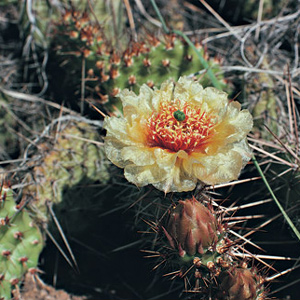
“The prickly pear is now in full blume,” he wrote on a mild early-summer day in 1805, “and forms one of the beauties as well as the greatest pests of the plains.”
September 3, 1805
The Lost Trail
by Kristopher K. Townsend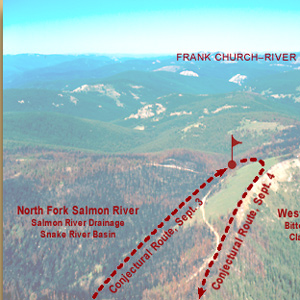
The expedition climbs the divide between the North Fork Salmon and Bitterroot Rivers near present Lost Trail Pass. In a mix of rain, snow, and sleet, they spend the night “wet hungry and cold.”
September 1, 1804
Leaving Calumet Bluff
by Kristopher K. Townsend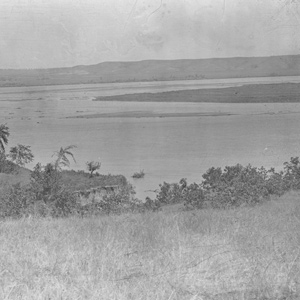
The expedition leaves the Yankton Sioux and reaches Bon Homme island, now inundated behind Point Gavins Dam. Several catfish are caught, and Lewis collects a specimen of wild four-o’clock.
Buffaloberry
Shepherdia argentea
by Kristopher K. Townsend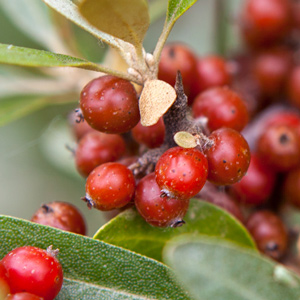
Lewis collected buffaloberry specimens which were new to science and Clark had them in a delightful tart. Native Americans had been eating the bright red berries for generations.
June 15, 1806
The Small Prairie
by Kristopher K. Townsend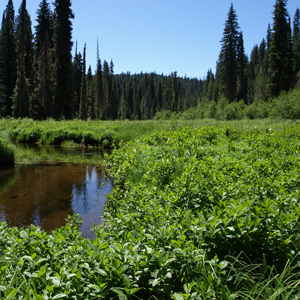
After a few hours gathering horses, the expedition finally leaves Weippe Prairie at. During lunch at last year’s Pheasant Camp, they meet their two advanced hunters. The whole group then continues to the Small Prairie on a slippery trail cluttered with fallen trees. Lewis prepares a specimen of beargrass.
May 7, 1806
Mosquito Creek
by Kristopher K. Townsend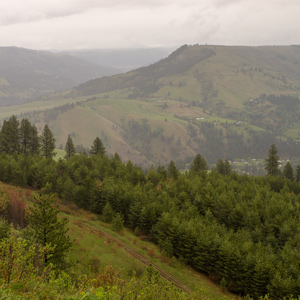
Following their Nez Perce guides, the expedition crosses to the southern side of the Clearwater River and then climbs present Angel Ridge where they can see the “spurs” of the Rocky Mountains still covered in snow. They camp at “Musquetoe” Creek, present Big Canyon. A Nez Perce man brings two lost lead canisters, and Lewis collects a specimen of serviceberry.
September 4, 1804
Shannon still missing
by Kristopher K. Townsend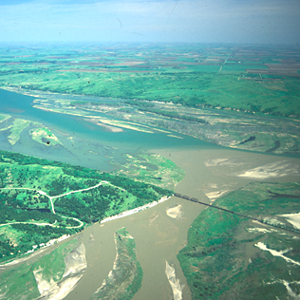
They pass an old Ponca village and make eight miles before stopping at the Niobrara River to explore, hunt, and look for signs of Pvt. Shannon who has been missing several days.
August 10, 1804
All sails ahead
by Kristopher K. Townsend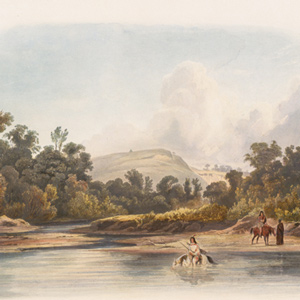
Moving along the present Nebraska-Iowa border, the enlisted men and engagés are given a reprieve when they can sail the boats up the Missouri River. They make 22½ miles and encamp within view of Blackbird Hill. Lewis collects the earliest plant specimen that survives today, field horsetail.
May 22, 1804
Kickapoo hunters
by Kristopher K. Townsend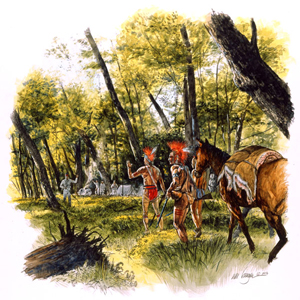
After a rainy night, the expedition sets out by 6 am. After 18 miles, they camp near the mouth of the Femme Osage River in present St. Charles County. There, they give two quarts of whiskey to some Kickapoo hunters for four deer. Lewis collects a plant specimen that was later received in Philadelphia and subsequently lost.
May 10, 1804
The first plant specimen
by Kristopher K. Townsend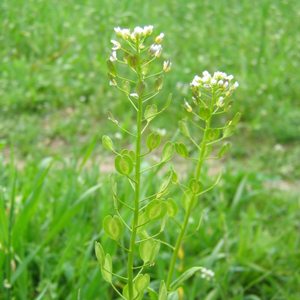
At Camp River Dubois opposite the mouth of the Missouri, the enlisted men receive orders to carry 100 balls for their rifles or two pounds of buckshot if they have a musket. In St. Louis, Lewis collects the expedition’s first plant specimen—field pennycress, now lost.
September 2, 1804
Passing Bon Homme Island
by Kristopher K. Townsend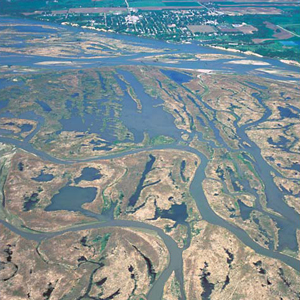
Below present Springfield, South Dakota, the boats navigate around a large island with numerous elk. They describe unusual sand ridges which appear as Indian fortifications, and Lewis collects plants.
October 4, 1804
Turn around
by Kristopher K. Townsend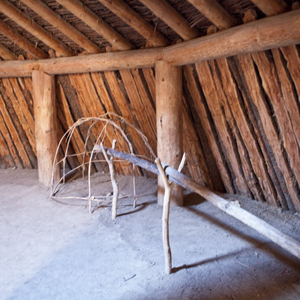
The day begins by dropping back three miles to a better channel. They avoid the Sioux along the banks, and camp across from an abandoned Arikara village near present Forest City, South Dakota.
June 3, 1804
Mosquitoes and ticks
by Kristopher K. Townsend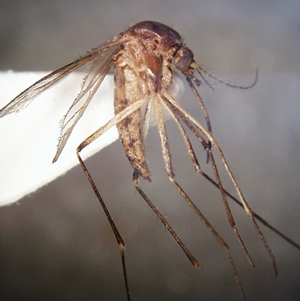
At the mouth of the Osage, Clark is vexed by mosquitoes and deer ticks, and Lewis collects a specimen of ground plum. The captains take a few celestial observations before clouds obscure the sun. Late in the day, the enlisted men move the boats to the mouth of the Moreau east of present Jefferson City.
In St. Louis, Capt. Stoddard writes a letter to Secretary of War Henry Dearborn updating him on the expedition’s progress.
June 5, 1806
Long Camp grasses
by Kristopher K. Townsend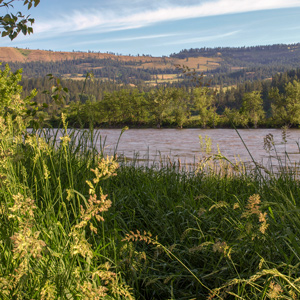
At Long Camp near present Kamiah, Idaho, a Nez Perce man reports that he was unable to cross the Bitterroot Mountains due to snow, and toddler Jean Baptiste is given a new medical treatment. Lewis describes area grasses and collects two plants: the trumpet honeysuckle and silky lupine.
October 3, 1804
Mice problems
by Kristopher K. Townsend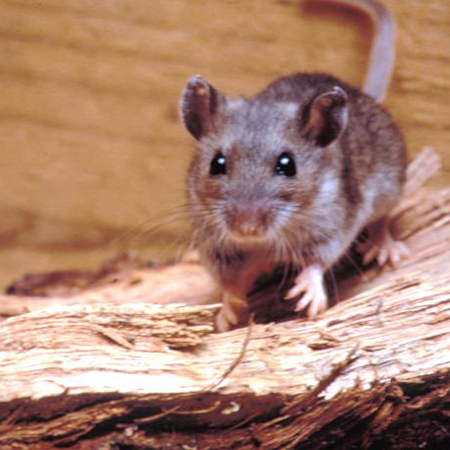
The captains discover that mice are eating their corn, paper, and cloth. Lewis adds pasture sagewort and long-leaved sagewort to his plant collection, and they camp near present Sutton Bay in South Dakota.
Biscuitroots
Nature's grateful vegetable
by Jack Nisbet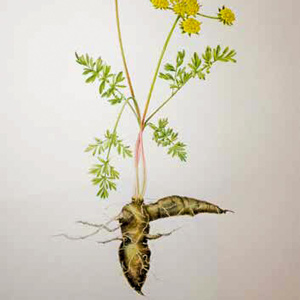
Columbia plateau biscuitroots: “one of the grateful vegetables” by naturalist Jack Nisbet. An Indian food source for thousands of years.
May 8, 1806
An argument about horses
by Kristopher K. Townsend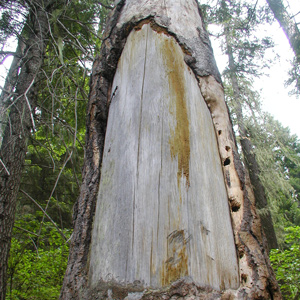
After describing northern shovelers and the Nez Perce methods of feeding on ponderosa pine, the expedition climbs to the Camas plains high above present Idaho’s Clearwater River. Walammottinin, Twisted Hair, and Neesh-ne-park-ke-ook, Cutnose, argue about the expedition’s horses left in their care the previous winter, and Lewis adds the glacier lily to his plant collection.
Cottonwoods
Populus sp.
by Joseph A. Mussulman, Kristopher K. Townsend, Mark Behan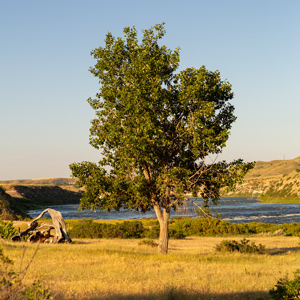
During the Expedition, they encountered four species of cottonwood trees as they moved across North America. One wonders how they would have managed without them.
Indian Breadroot
Pediomelum esculentum
by Kristopher K. Townsend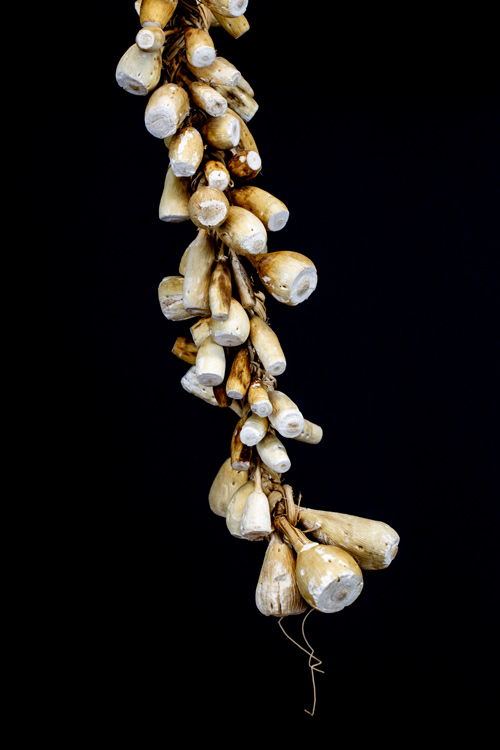
The day Sacagawea gathered Indian breadroot, Lewis wrote a detailed ethnobotanical description. The specimen he prepared a year prior is now used as the primary identifier of the species.
Glacier Lilies
Erythronium grandiflorum
by Joseph A. Mussulman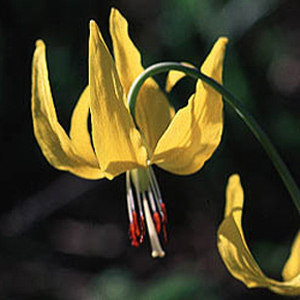
Because it appears in the Rockies at the edges of receding snowbanks it has also earned the name glacier lily. Lewis’s specimen, collected 15 June 1806 on the Clearwater River, was the one used by Pursh to describe the species.
Currants and Gooseberries
Eight Ribes species
by Kristopher K. Townsend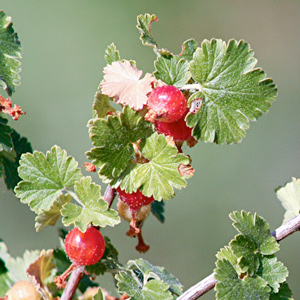
Of the dozens of currants and gooseberries along the Trail, Lewis likely preserved specimens of eight different species. Four of them reside in herbariums and four are lost.
May 29, 1806
Frazer's razor
by Kristopher K. Townsend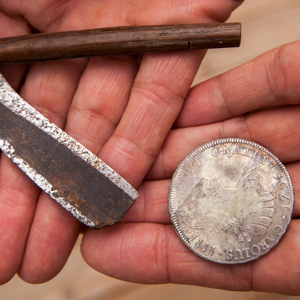
Sgt. Ordway’s group climbs up from the Salmon River and then descends to the Snake River where there is a village of Nez Perce salmon fishers. There, Pvt. Frazer trades his old razor for two Spanish dollars.
At Long Camp, Lewis describes the short-horned lizard and prepares four plant specimens—all new to science.
September 18, 1804
Coyote specimen
by Kristopher K. Townsend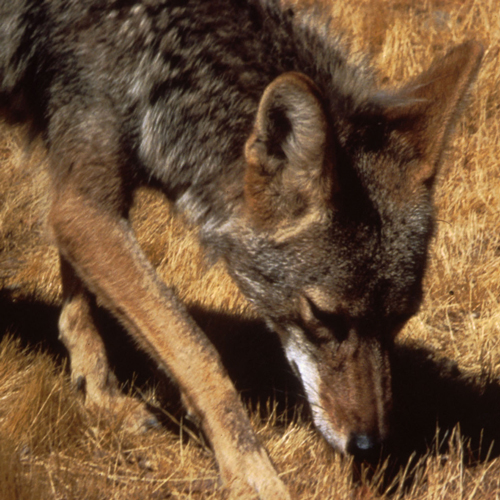
The hunters do well, so they stop early above present Chamberlain, South Dakota to jerk meat. Lewis sees the first sign of fall and makes a specimen of coyote, Missouri milkvetch, and tall blazing star.
Camas
Camassia quamash
by James L. Reveal, Joseph A. Mussulman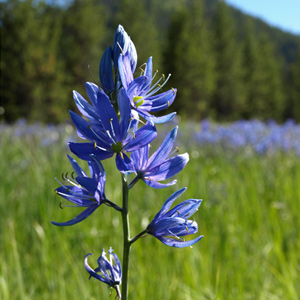
William Clark, pushing on in advance of the hungry men of the Corps, came upon two adjacent Indian villages totaling about 30 lodges on Weippe Prairie. They gave him and his six hunters “roots in different States, Some round and much like an onion which they call quamash.”
Sagebrush
Artemisia tridentata and Artemisia cana
by Kristopher K. Townsend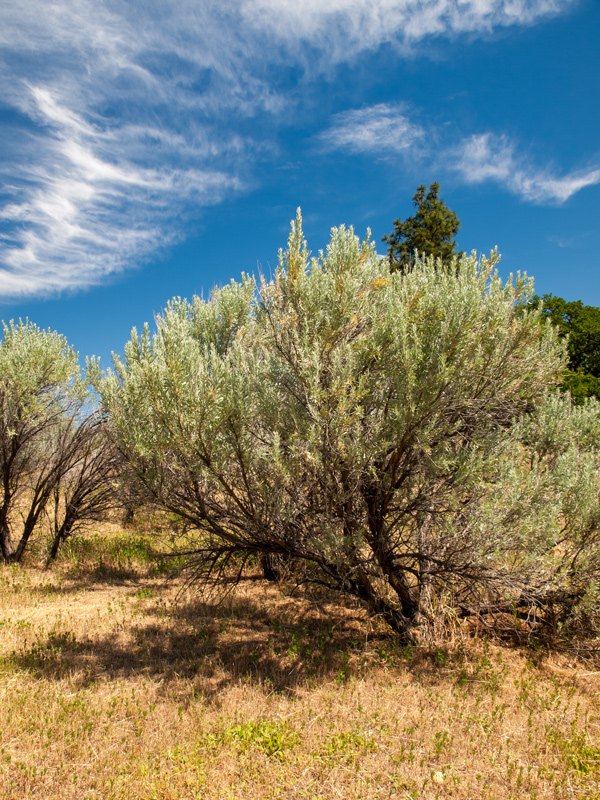
On 14 April 1805—a week after leaving Fort Mandan—near Bear Den Creek, North Dakota, the journalists mention aromatic sages. These were primarily the big sagebrush and silver sagebrush—both icons of the American West.
November 17, 1805
A disappointing cape
by Kristopher K. Townsend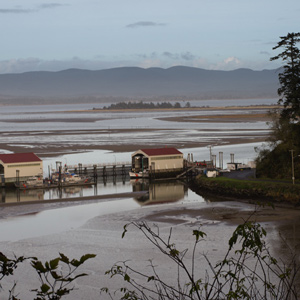
At Station Camp, Clark trades with some Chinooks and gathers volunteers to visit the Pacific Ocean tomorrow. Lewis returns from Cape Disappointment without finding any ships.
June 1, 1806
Clarkia and rough wallflower
by Kristopher K. Townsend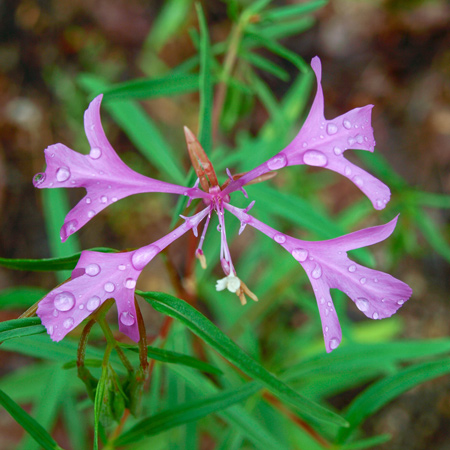
Sgt. Ordway and two privates near Long Camp with their cache of salmon while Charbonneau and Pvt. Lepage return from a “broken voyage”. Clark mentions a plan to divide forces after reaching Travelers’ Rest, and Drouillard is sent to find Nez Perce men to guide them over the mountains. Lewis discusses the Clarkia flower and prepares two more plant specimens.
May 6, 1806
Colter's Creek
by Kristopher K. Townsend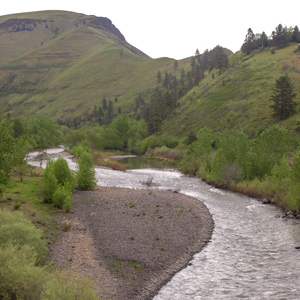
The expedition spends most of the day at Colter’s Creek—present Potlatch River. Lewis meets three Coeur d’Alene Indians, and Clark gives medical aid as payments of food. Lewis collects a nine-leaved biscuit-root specimen—an indigenous vegetable. They eventually move to another Nez Perce village a few miles up the Clearwater River.
January 20, 1806
Five plant specimens
by Kristopher K. Townsend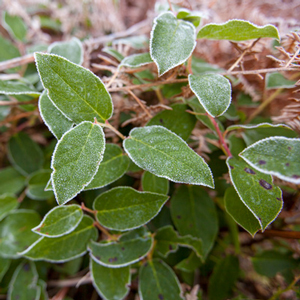
At Fort Clatsop, Lewis prepares five new plant specimens and describes roots eaten by local Chinookan Peoples. The captains worry about the rate at which they are going through their supply of elk.
July 9, 1805
Sinking the iron-framed boat
by Kristopher K. Townsend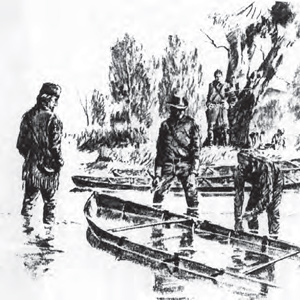
Above the Great Falls of the Missouri, the iron-framed boat is finally put into the river. They find the boat too leaky, and it is intentionally sunk to make disassembly easier. The captains initiate a plan to build two new dugout canoes. Lewis collects a specimen of blue flax—new to science and one of his namesake species.
In Natchez, Mississippi, fellow explorer William Dunbar writes President Jefferson about a new idea to determine longitude using a meridian circle.
April 14, 1806
Romantic scenes
by Kristopher K. Townsend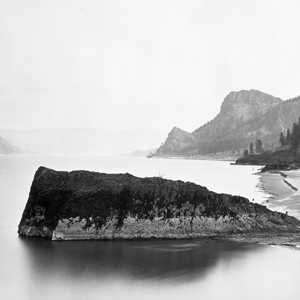
Below present Lyle, Washington, the canoeists paddle a relatively calm stretch of the Columbia River. Lewis enjoys romantic scenes and a drier climatic zone; and he prepares four plant specimens. The captains are encouraged when they see horses among the local residents.
May 17, 1806
Long Camp rain
by Kristopher K. Townsend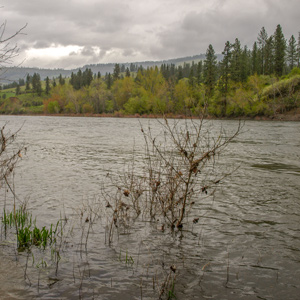
At Long Camp at Kamiah in present Idaho, all-night rain wets Lewis’s chronometer, and it requires repair. It rains all day at camp but in the surrounding hills, it snows. The hunters take extra precautions around grizzly bears, and Lewis prepares a specimen of cat’s ear mariposa lily. Everyone hopes they will soon be able to cross the Rocky Mountains.
August 27, 1806
Hunting on the Big Bend
by Kristopher K. Townsend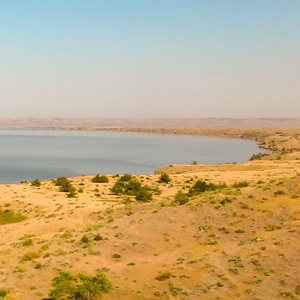
While passing around the Big Bend of the Missouri—also known as the Grand Detour—the expedition nearly runs out of meat. They hear bison bellowing and stop to hunt. Lewis collects a plant specimen, but he also aggravates his gunshot wound.
August 17, 1804
Otoe chiefs and a deserter
by Kristopher K. Townsend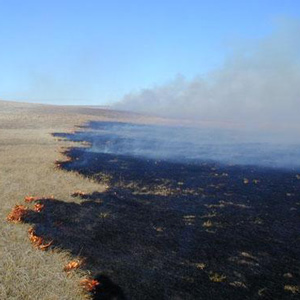
Pvt. Labiche returns to Fish Camp near present Homer, Nebraska with news that three Otoe chiefs and the deserter Pvt. Reed will soon arrive. A prairie fire is set to signal any nearby Indians, and Lewis collects a specimen of curly-cup gumweed—now lost.
October 18, 1804
Passing the Cannonball
by Kristopher K. Townsend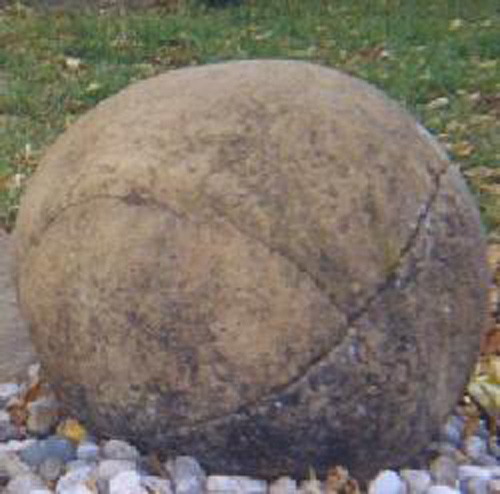
In passing the Cannonball River in present North Dakota, a ‘cannon ball’ is selected as a new anchor. Clark learns that most Arikaras avoid liquor, and Lewis adds prairie wild rose to his plant collection.
Oregon Grapes
Berberis aquifolium
by Joseph A. Mussulman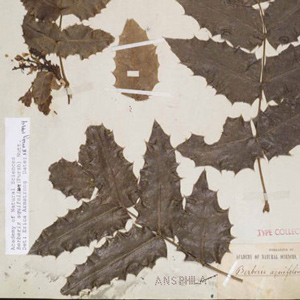
In his journal for 12 February 1806, Lewis described the plant that now goes by the name Berberis aquifolium, which he had first noticed in the vicinity of the Cascades of the Columbia River, about 145 miles from the ocean.
September 15, 1804
The White River
by Kristopher K. Townsend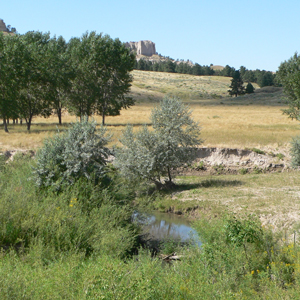
Moving up the Missouri below present Oacoma, South Dakota, the expedition passes the creek where Shannon had waited to be rescued. Gass and Reubin Field spend the night twelve miles up the White River.
September 12, 1804
Troublesome Island
by Kristopher K. Townsend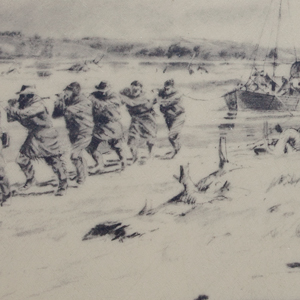
In present South Dakota, the barge nearly turns over. They then head up the wrong side of Troublesome Island and must turn back. Lewis adds two plants to his collection.
Western Spring Beauty
Claytonia lanceolata
by Joseph A. Mussulman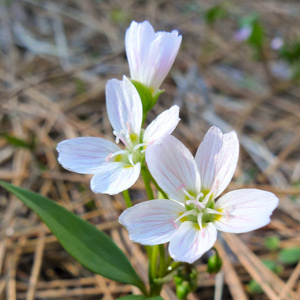
On 25 June 1806, on the branch of Hungery Creek where they “nooned it,” Sacagawea brought the captains “a parcel of roots” that Lewis immediately recognized as the kind Drouillard had given him ten months earlier.
Pin Cherry
Prunus pensylvanica
by Kristopher K. Townsend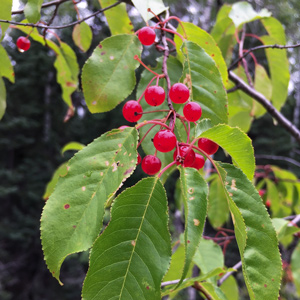
Before signing off in his last journal entry, Lewis had to botanize one last time. He concludes with an accurate description of the pin cherry, Prunus pensylvanica.
April 12, 1805
Little Missouri River
by Kristopher K. Townsend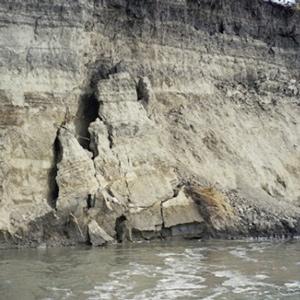
Early in the day, a crumbling riverbank nearly capsizes the red pirogue. They stop for the day at the Little Missouri River so that the captains can take celestial observations of this important tributary. They also see beaver, empty Assiniboine camps, creeping juniper, and wild onions.
Lewis as Botanist
"No regular botanist"
by James L. Reveal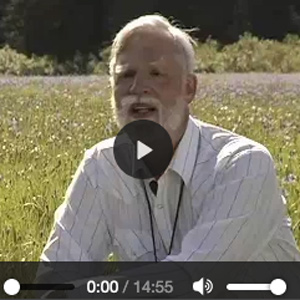
This interview with botany Professor James Reveal recorded at Packer Meadow near Lolo Pass analyzes the botany of Lewis.
Beargrass
Xerophyllum tenax
by James L. Reveal, Richard M. McCourt, Sarah Walker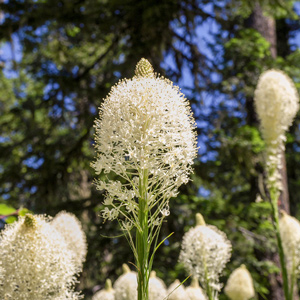
There is a great abundance of a species of bear-grass which grows on every part of these mountains,” wrote Lewis on 15 June 1806. “It’s growth is luxouriant and continues green all winter but the horses will not eat it.”
October 2, 1804
Caution Island
by Kristopher K. Townsend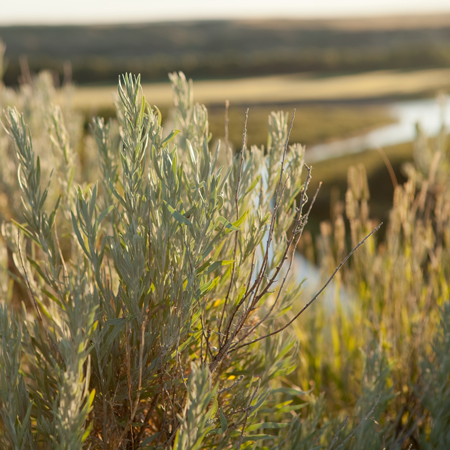
Near present Willow Creek Bay, South Dakota, the expedition anticipates an attack by the Lakota Sioux, and everyone is prepared for action. Lewis adds three specimens to his plant collection.
April 1, 1806
Exploring the 'Quicksand' River
by Kristopher K. Townsend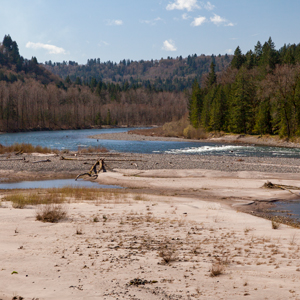
At Provision Camp, the expedition readies the hunt and makes new elk hide rope. Pryor’s detachment explores the Quicksand River—the present Sandy River in Oregon. Visiting Indians of various Nations warn there is no food upriver, and that the salmon will not come for another month. Lewis buys a Chinookan canoe for 6 fathoms of wampum beads.
The Bitterroot Plant
Lewisia rediviva
by Joseph A. Mussulman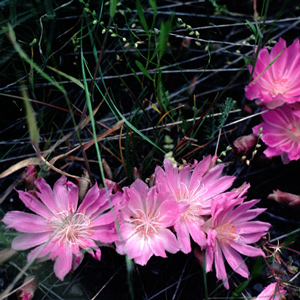
Flathead Salish, Kutenai, Shoshoni, and Nez Perce people all regard the bitterroot with solemn reverence. No other root may be harvested until the elder women of the tribe have conducted the annual First Roots ceremony.
Notes
| ↑1 | Jackson, Letters, passim. |
|---|---|
| ↑2 | It is estimated that seventy or seventy-five specimens were new to science when Lewis collected them. Pursh honored Lewis by naming four new species after him: Linum lewisii (LEE-noom loo-WEE-see-eye; Lewis’s wild flax), Mimulus lewisii (MIM-oo-luss loo-WEE-see-eye; Lewis’s monkey flower), Philadelphus lewisii (fill-uh-DELL-fuss loo-WEE-see-eye; Lewis’s syringa–si-RING-guh); and Lewisia rediviva (reh-dee-VEE-vuh; bitterroot). |
| ↑3 | That study, still a major milestone in the literature, is Paul Russell Cutright’s Lewis and Clark, Pioneering Naturalists (Lincoln: University of Nebraska Press, 1969). |
Experience the Lewis and Clark Trail
The Lewis and Clark Trail Experience—our sister site at lewisandclark.travel—connects the world to people and places on the Lewis and Clark Trail.
Discover More
- The Lewis and Clark Expedition: Day by Day by Gary E. Moulton (University of Nebraska Press, 2018). The story in prose, 14 May 1804–23 September 1806.
- The Lewis and Clark Journals: An American Epic of Discovery (abridged) by Gary E. Moulton (University of Nebraska Press, 2003). Selected journal excerpts, 14 May 1804–23 September 1806.
- The Lewis and Clark Journals. by Gary E. Moulton (University of Nebraska Press, 1983–2001). The complete story in 13 volumes.
This site is provided as a public service by the

Lewis and Clark Trail Alliance
with additional funding from the following: