On 12 June 1804, while heading up the Missouri River southwest of present-day Dalton, Missouri, the expedition met a contingent of boats led by fur trader Pierre Dorion, Sr. He quickly agreed to join the Lewis and Clark Expedition, and one of the enlisted men—John Robinson, Ebenezer Tuttle, or Isaac White—was sent home with Dorion’s flotilla.
Dorion had previously lived with the Yankton Sioux for twenty years, and he proved to be a gifted interpreter and knowledgeable diplomat. The captains commissioned Dorion:
“to act with a flag & some Cloathes & Provisions & instructions to bring about a peace with the Scioux Mahars, Panies, Ponceries, Ottoes & Missouries— and to employ any trader to take Some of the Cheifs of each or as many of those nations as he Could Perticularly the Sceiouex.”
The expedition boats left Dorion with the Yanktons,[1]Some historians classify the decision to leave Dorion as a major mistake as it left the captains without a reliable interpreter when meeting with the Lakota Sioux. Stephanie Ambrose-Tubbs, The Lewis … Continue reading and he later took a delegation of Yankton chiefs to St. Louis. Returning from St. Louis with fellow diplomat and interpreter Joseph Gravelines, he met the home-bound Lewis and Clark Expedition. Any news from Dorion seemed to be overshadowed by Gravelines’ letter from Thomas Jefferson informing the Arikaras of the death of one of their chiefs visiting Washington City. Dorion would continue negotiating with various Indian nations and worked under Clark as an Indian subagent.[2]Moulton, Journals, 2:295n3.
Related Pages
June 12, 1804
Old Dorion signs on
by Kristopher K. Townsend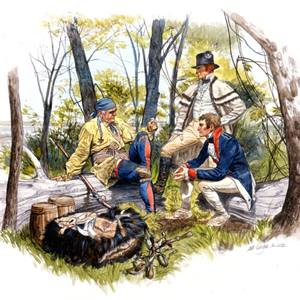
While heading up the Missouri River near present Dalton, Missouri, the expedition meets a group of boats led by Pierre Dorion, Sr. He and an unnamed expedition member trade places—the latter going back to St. Louis with the traders and Dorion leaving with the expedition as an interpreter.
August 15, 1804
Dragging for fish
by Kristopher K. Townsend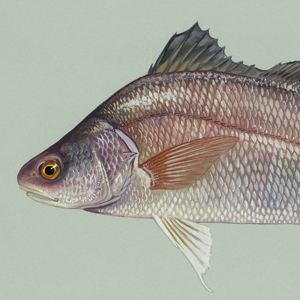
At Fish Camp near present Homer, Nebraska, Clark has a fish net made, and when they drag it through a nearby beaver pond, they catch over 300 fish. When smoke appears in the distance, fur trader Pierre Dorion leaves to find Indians.
August 21, 1804
Big Sioux country
by Kristopher K. Townsend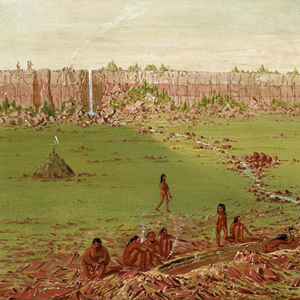
When strong winds create blowing sands, the barge’s sail must be reefed, and they must add ballast to the white pirogue to keep it on course. On board, trader Pierre Dorion informs the captains of the geography of the Big Sioux country and the Red Pipestone Quarry. At the end of the day, they camp near present Ponca, Nebraska.
In Philadelphia, the Osage delegation—previously arranged in part by Lewis and Clark and led by Pierre Chouteau—heads home.
August 27, 1804
Nearing the Yankton Sioux
by Kristopher K. Townsend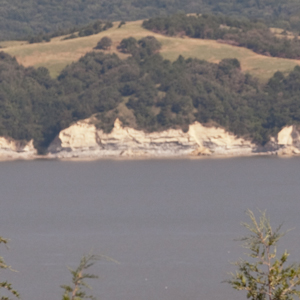
Nearing present Yankton, South Dakota, a fire is set to signal the Sioux to a council. Soon, a Yankton man and two boys arrive. Drouillard fails to find Pvt. Shannon who has not returned from a hunting trip, and Lewis collects a specimen of lemon scurfpea.
August 29, 1804
Seventy Yanktons arrive
by Kristopher K. Townsend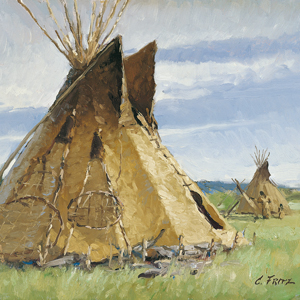
At present Yankton, South Dakota, Sgt. Pryor and ‘Old’ Dorion bring in a large delegation of Yankton Sioux. Clark writes about their ‘conic’ lodges and is presented a fat dog which he finds ‘good and well flavored’. Pvt. Shannon is still missing.
August 31, 1804
Yankton speeches
by Kristopher K. Townsend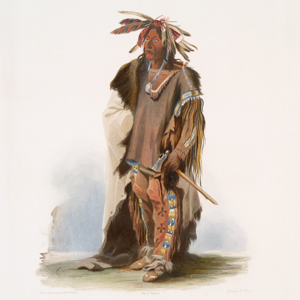
In the morning, the Yankton Sioux council started yesterday continues. Today, several of the Sioux give speeches as Clark and Sgt. Ordway take notes. Trader Pierre Dorion is assigned a diplomatic mission to make peace with all the region’s Nations, and Clark observes four Akicita Society warrior who returned from battle with the Apsálooke (Crow).
September 26, 1804
Teton Sioux ceremony
by Kristopher K. Townsend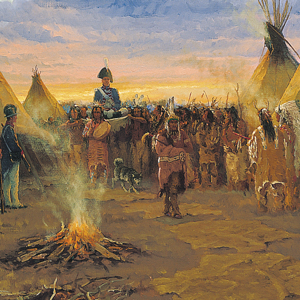
Clark and Lewis are ceremoniously carried into a Lakota Sioux village where they are feted with food and music. Clark sees several recently captured Omaha prisoners and asks for their return.
October 8, 1805
A canoe accident
by Kristopher K. Townsend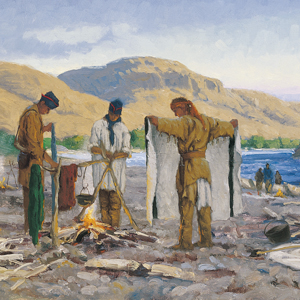
On the Clearwater River, the paddlers navigate numerous rapids and pick up guides Twisted Hair and Tetoharsky. After a canoe accident at Colter’s Creek—present Potlatch River—travel abruptly stops.
September 12, 1806
Given up for dead
by Kristopher K. Townsend
At present St. Joseph, Missouri, the captains modify orders given to Pierre Dorion and Joseph Gravelines. An old military companion, Robert McClellan, says that they have all been given up for dead.
Notes
| ↑1 | Some historians classify the decision to leave Dorion as a major mistake as it left the captains without a reliable interpreter when meeting with the Lakota Sioux. Stephanie Ambrose-Tubbs, The Lewis and Clark Companion: An Encyclopedic Guide to the Voyage of Discovery (New York: Henry Hold and Company, 2003), 95–6. |
|---|---|
| ↑2 | Moulton, Journals, 2:295n3. |
Experience the Lewis and Clark Trail
The Lewis and Clark Trail Experience—our sister site at lewisandclark.travel—connects the world to people and places on the Lewis and Clark Trail.

Discover More
- The Lewis and Clark Expedition: Day by Day by Gary E. Moulton (University of Nebraska Press, 2018). The story in prose, 14 May 1804–23 September 1806.
- The Lewis and Clark Journals: An American Epic of Discovery (abridged) by Gary E. Moulton (University of Nebraska Press, 2003). Selected journal excerpts, 14 May 1804–23 September 1806.
- The Lewis and Clark Journals. by Gary E. Moulton (University of Nebraska Press, 1983–2001). The complete story in 13 volumes.
This site is provided as a public service by the

Lewis and Clark Trail Alliance
with additional funding from the following: