Charles Fritz
Near Lolo Pass
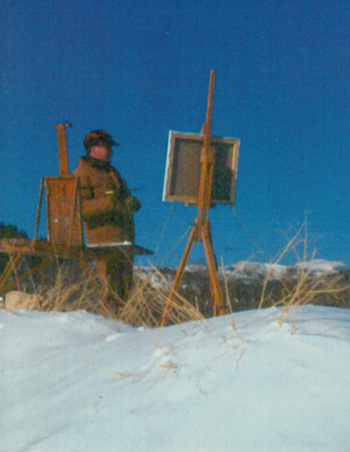
From Complete Collection: 100 Paintings Illustrating the Journals of Lewis and Clark.
Of his work, the artist Charles Fritz explains:
Historical accuracy is paramount, but there is another obvious component: the art itself . . . . In 100 Paintings Illustrating the Journals of Lewis and Clark, I sought to communicate the storyline accurately. I also wanted the paintings to be well designed, luminous, and painted with the brushwork and enthusiasm of an artist who is working from life—outside, in the presence of the actual scene.
—Complete Collection: 100 Paintings Illustrating the Journals of Lewis and Clark
Featured Works
July 28, 1805
Sacagawea's capture
by Kristopher K. Townsend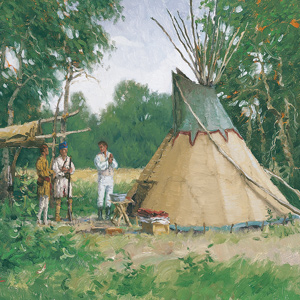
At the headwaters of the Missouri, the expedition takes a rest day. The captains learn of Sacagawea’s capture as a young child, and Lewis remarks on how she “would be perfectly content anywhere”. A shade bower is built for Clark, and Pvt. Whitehouse is busy making clothes for the party.
In a lengthy report to Thomas Jefferson, James Wilkinson discusses the new Indian factory at Camp Belle Fontaine and encourages the President to allow Pierre Chouteau to take Native delegations to Washington City.
September 17, 1805
High knobs and drains
by Kristopher K. Townsend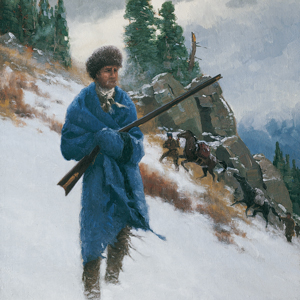
On the Northern Nez Perce Trail high in the Bitterroot Mountains, snow is falling and half the traveling day is spent searching for missing horses. Finally getting underway, they climb high knobs and pass a “Sinque hole” before encamping at Indian Grave meadow. With nothing but a few grouse on hand, they kill another colt for supper.
September 9, 1805
Travelers' Rest
by Kristopher K. Townsend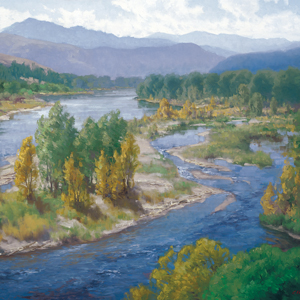
The expedition moves down the Bitterroot River valley reaching Travelers’ Rest, a well-used camping area near present Lolo, Montana. Their Shoshone guide, Toby, tells of the Road to the Buffalo—a good pass heading east to the Missouri River.
In the Spanish colony of Mexico, officials devise another plan to stop the expedition.
November 12, 1805
A dismal "nitch"
by Kristopher K. Townsend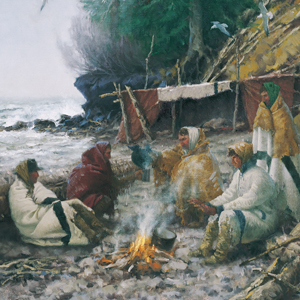
During low tide, the expedition moves into a better cove which would become known as “The Dismal Nitch”. Despite their distressing situation, several salmon are caught, and the day ends well.
July 27, 1804
Leaving White Catfish Camp
by Kristopher K. Townsend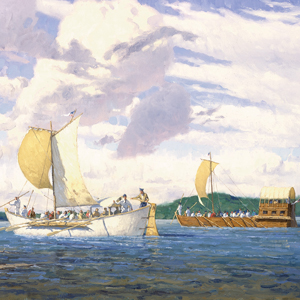
At White Catfish Camp, the enlisted men and engagés load the boats, and they proceed to present Lewis and Clark Landing in Omaha, Nebraska. Clark investigates mounds and an old Otoe village and returns after dark. A knee is cut, mosquitoes rage, and Lewis adds several plant specimens to his collection—now lost.
May 14, 1805
Charbonneau's prayer
by Kristopher K. Townsend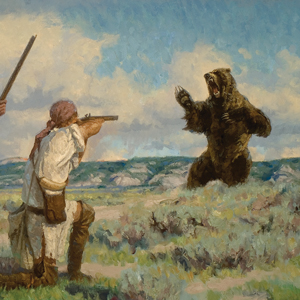
The day starts clear and cold, freezing even the moccasins near the fire. During the day, six hunters take flight from a wounded grizzly bear. When the white pirogue tips over, Charbonneau offers a prayer and is forced at gunpoint to seize the rudder. Now above present Snow Creek in Eastern Montana, the captains call it a day and issue a ration of consoling grog.
March 1, 1805
Fort Mandan industry
by Kristopher K. Townsend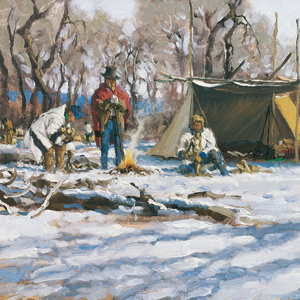
At Fort Mandan, the enlisted men make rope, charcoal, hides and clothes, and cure meat. The blacksmiths repair Indian guns and make war axes in trade for corn. The canoe builders set up their camp.
January 22, 1805
Boats gripped in ice
by Kristopher K. Townsend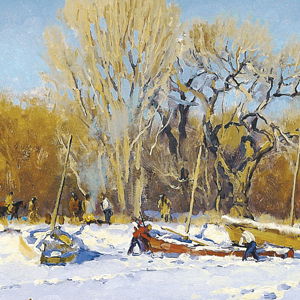
At Fort Mandan below the Knife River Villages, an unsuccessful attempt is made to cut the Missouri River ice from around the boats. They find two layers of ice nearly four feet thick.
January 2, 1805
A frolic at Ruptáre
by Kristopher K. Townsend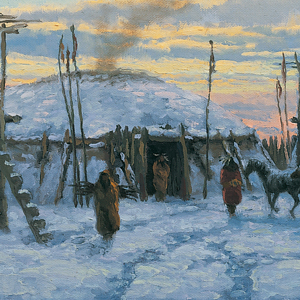
On this snowy day, Lewis takes a large group to Black Cat’s village—Ruptáre, and New Year’s celebrations continue. At Fort Mandan, several Knife River villagers bring corn to pay the blacksmiths.
October 28, 1805
Columbia River headwinds
by Kristopher K. Townsend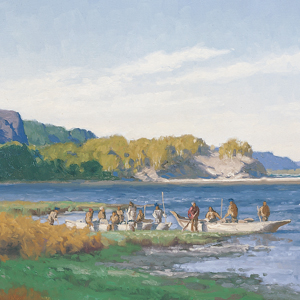
The expedition sets out from Fort Rock but is soon stopped by headwinds. The captains visit nearby Chilluckittequaws where Clark sees goods acquired from British trade ships and superior Chinookan canoes.
June 28, 1805
The final stage begins
by Kristopher K. Townsend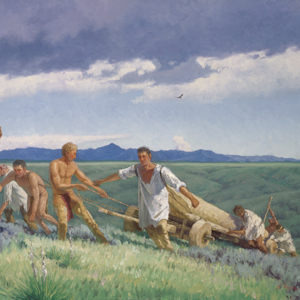
At the Great Falls of the Missouri, the last of the personnel begin to move from the lower portage camp. They get as far as Box Elder Creek and encamp. At the upper camp, work on the iron-framed boat continues and grizzly bears threaten.
October 8, 1805
A canoe accident
by Kristopher K. Townsend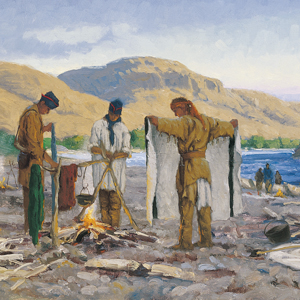
On the Clearwater River, the paddlers navigate numerous rapids and pick up guides Twisted Hair and Tetoharsky. After a canoe accident at Colter’s Creek—present Potlatch River—travel abruptly stops.
January 7, 1805
Maps from Indian information
by Kristopher K. Townsend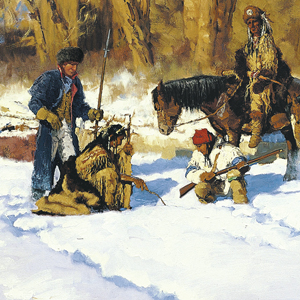
Sheheke (Big White) brings a sketch of the Yellowstone River country into Fort Mandan. He also provides oral information which Clark uses to draw a map. Three hunters return having suffered from the cold.
October 25, 1805
A "bad whorl & Suck"
by Kristopher K. Townsend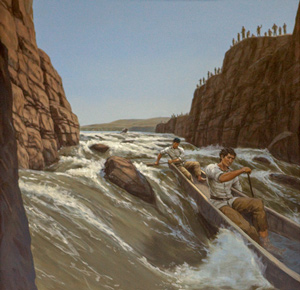
The expedition’s most valuable cargo is carried around the Long Narrows of the Columbia, and then the best paddlers run the canoes. At present The Dalles, Oregon, Fort Rock Camp is established.
September 9, 1803
Leaving Wheeling
by Kristopher K. Townsend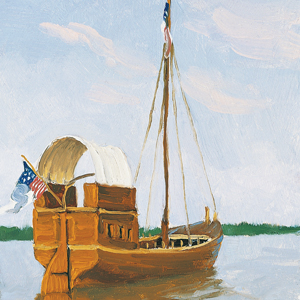
At Wheeling, complications arise over 90 pounds of baked bread, and a potential new expedition member—a doctor—fails to appear. At 3:00 pm, Lewis says goodbye to Thomas Rodney and departs. Rodney describes Lewis’s mission and predicts that he will ultimately fail. During the night, it rains so hard that Lewis is wet to the skin trying to keep the cargo dry.
December 20, 1805
Not enough roofing
by Kristopher K. Townsend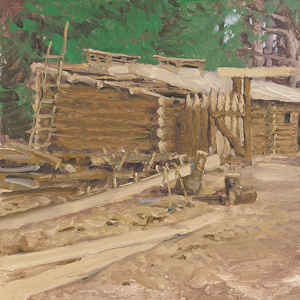
At the Fort Clatsop building site, the enlisted men install plank roofing using boards they had previously split and planks taken from an old Clatsop lodge. Clark complains about the high price of food.
September 26, 1804
Lakota ceremony
by Kristopher K. Townsend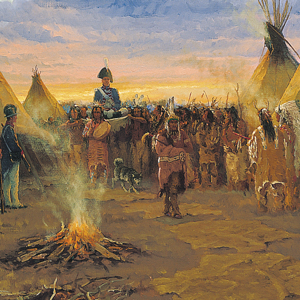
After yesterday’s heated standoff, Clark and Lewis are carried into a Lakota encampment and given a ceremony with music and a feast including pemmican, breadroot, and dog. Clark sees several recently captured Omaha prisoners and asks for their release.
August 1, 1806
Waiting for buffalo
by Kristopher K. Townsend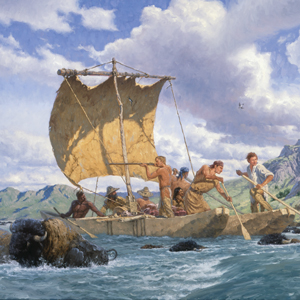
Paddling down the Yellowstone, Clark and his group are slowed by weather and then, they must wait for a large herd of bison to cross the river. The hunters take four fat cows.
Lewis and his group paddle past the Musselshell River before stopping to dry their wet deer and bighorn sheep skins. Lewis says that the season is poor for hunting grizzly bears.
Somewhere behind Clark, Sgt. Pryor and his small group paddle two bull boats trying to catch up.
March 17, 1805
Charbonneau returns
by Kristopher K. Townsend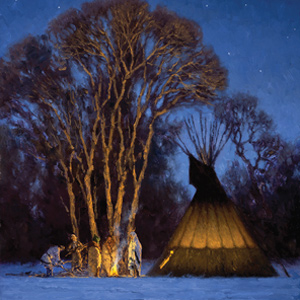
At Fort Mandan below the Knife River Villages, Toussaint Charbonneau returns, apologizes, and agrees to the captains’ terms of employment. He moves his things into a leather tent outside the fort.
September 23, 1806
St. Louis homecoming
by Kristopher K. Townsend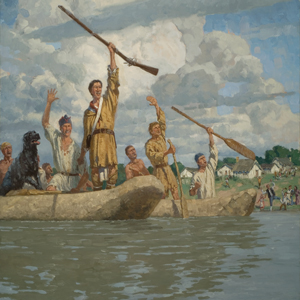
Around noon, the “corps of volunteers for North West Discovery” celebrates their St. Louis homecoming. Sgt. Ordway concludes his journal, and Lewis begins a letter to President Jefferson. Clark writes to his brother Jonathan sharing news that will eventually be published throughout the United States and Europe.
May 18, 1805
Hills and headwinds
by Kristopher K. Townsend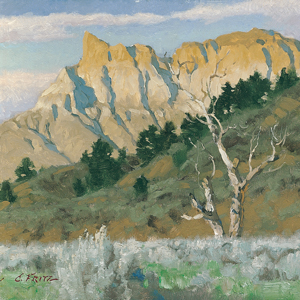
In the present Fort Peck Reservoir area of Eastern Montana, the enlisted men tow the boats against headwinds and past “verry high rough hills”. Clark kills four deer and mentions that the men are using the hides to make leggings and moccasins.
January 1, 1804
A new year at Wood River
by Kristopher K. Townsend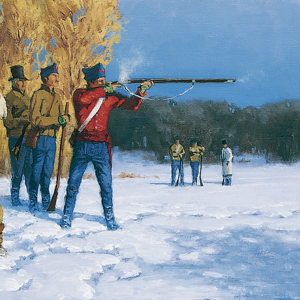
At Wood River, Clark stages a shooting contest between local farmers and the enlisted men. He notes that two soldiers—perhaps privates Reed and Windsor—were drunk. He meets with a new washer woman, and a visitor tells him about the Mandans and their country. Both captains begin their weather diaries.
May 21, 1804
Leaving St. Charles
by Kristopher K. Townsend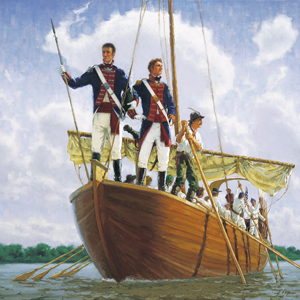
Late in the afternoon, the swivel gun is fired, three cheers are raised, and the expedition leaves St. Charles bound for the Western Sea. Facing a strong wind, the enlisted men and engagés move the boats only 3¼ miles. At camp on the north shore, storms continue through the night.
April 13, 1805
The white pirogue's near miss
by Kristopher K. Townsend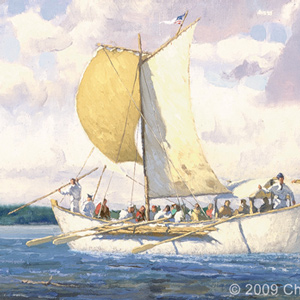
Below present Van Hook Arm, North Dakota, a sudden gust of wind hits the white pirogue with Charbonneau at the helm. In his panic, he turns the boat sideways to the wind and nearly turns it over. Those walking the shore see grizzly bear tracks and empty Assiniboine lodges.
October 24, 1805
Running the Short Narrows
by Kristopher K. Townsend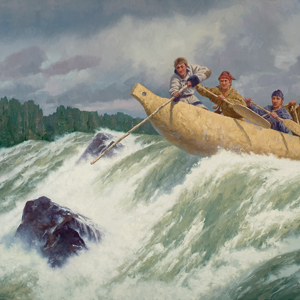
The dugout canoes are safely run down the Short Narrows of the Columbia astonishing the local onlookers. Below the narrows, the expedition encounters their first Chinookan-speaking People.
November 5, 1805
Crowded with Indians
by Kristopher K. Townsend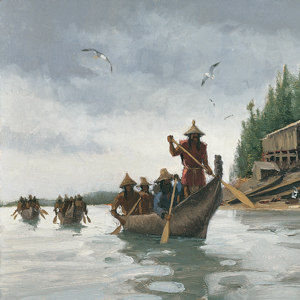
After a night made sleepless by noisy waterfowl, the expedition heads down the Columbia. They pass the large village known today as Cathlapotle and encounter various Chinookan People.
July 27, 1806
Fight with the Blackfeet
by Kristopher K. Townsend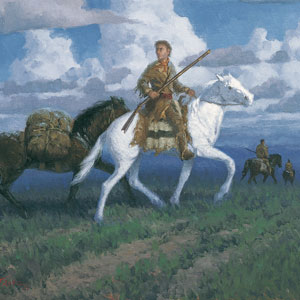
Today, the expedition travels in five separate groups along four different rivers. On the Two Medicine River, the young Blackfeet camping with Lewis and his small party attempt to steal rifles and horses. A fatal encounter ensues, and everyone takes flight.
Clark and his group paddle down the Yellowstone passing large herds of bison and elk and camping near present Forsyth, Montana.
South of Pompeys Pillar, Sgt. Pryor and three others are stranded without horses. They decide to haul their gear to the Yellowstone River and make bull boats.
Below the Great Falls of the Missouri, Sgt. Gass and Pvt. Willard swim the horses across the river and head towards the mouth of the Marias River. They camp on the Teton River.
At Lower Portage Camp, Sgt. Ordway and his group load the dugouts and white pirogue and paddle down the Missouri River intending to re-join Ordway tomorrow.
September 8, 1805
Mountains to the left and right
by Kristopher K. Townsend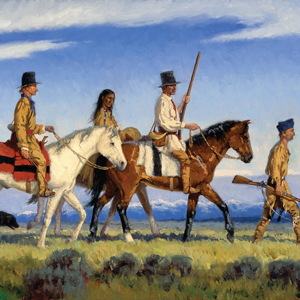
The expedition proceeds north through the Bitterroot valley with the snow-capped Bitterroot Mountains to the west and the mostly barren Sapphire mountains to the east. They find two Indian horses and a colt. They also find a new pest—brittle prickly pears.
In St. Louis, the Governor of Upper St. Louis, James Wilkinson, plans expeditions to the Yellowstone River and Sante Fe.
At Monticello in Virginia, President Jefferson writes about the mineral specimens that Lewis sent from Fort Mandan.
December 23, 1805
Clatstop traders
by Kristopher K. Townsend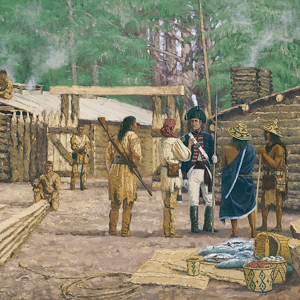
At Fort Clatsop, work on the cabins continues, and the captains move into their unfinished quarters. Clatsop traders sell food, mats, bags, and a panther hide for fishhooks, an old file, and spoiled salmon.
December 7, 1804
Hunting buffalo
by Kristopher K. Townsend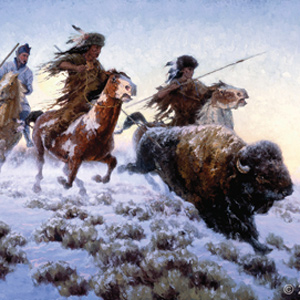
A group of hunters joins with the Mandans, and Sgt. Gass is impressed with their buffalo hunting skills and well-trained horses. By day’s end, several suffer frostbite, and Clark issues half a gill of rum.
April 5, 1805
Loading the small boats
by Kristopher K. Townsend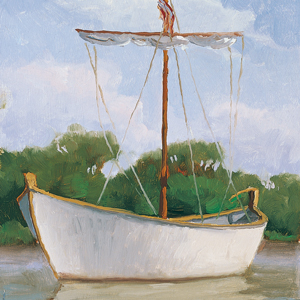
The enlisted men load the red and white pirogues and six new dugout canoes, and all is made ready for departure. Sgt. Patrick Gass reflects the sexual practices experienced during his stay at Fort Mandan amongst the Knife River Villages.
September 13, 1805
Packer Meadows
by Kristopher K. Townsend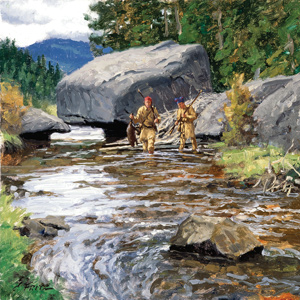
On the Northern Nez Perce Trail, the expedition stops at Lolo Hot Springs, and then after some difficulty finding the right trail, climbs to a divide between the Bitterroot River and Lochsa River drainages. They cross Packer Meadows and camp on Glade Creek.
August 13, 1805
Shoshone diplomacy
by Kristopher K. Townsend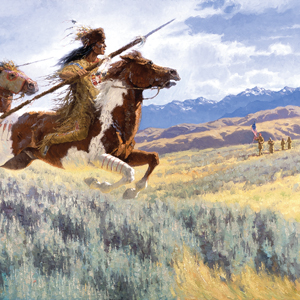
Lewis and some Lemhi Shoshones finally meet in the Lemhi River valley. Diplomatic gestures include Shoshone-style greetings, a flag presentation, a pipe ceremony, and revelry late into the night.
On the Beaverhead River, the enlisted men labor to move the heavy dugouts up the shallow river. To rest, they fish the river. Clark takes bearings from a rock now called Clark’s Lookout.
June 24, 1805
Sailing on dry land
by Kristopher K. Townsend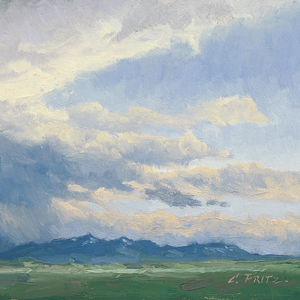
At the Great Falls of the Missouri, severe weather passes over, and there is enough wind that on the portage route, sails are employed to move two dugout canoes. At the camp above the falls, Sgt. Gass and Pvt. Shields have difficulty finding suitable wood for the iron-framed boat. Below the falls, the last canoe is taken out of the water.
August 29, 1804
Seventy Yanktons arrive
by Kristopher K. Townsend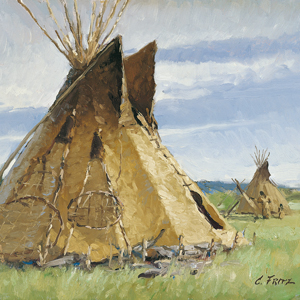
At present Yankton, South Dakota, Sgt. Pryor and ‘Old’ Dorion bring in a large delegation of Yankton Sioux. Clark writes about their ‘conic’ lodges and is presented a fat dog which he finds ‘good and well flavored’. Pvt. Shannon is still missing.
September 21, 1804
Camp washes away
by Kristopher K. Townsend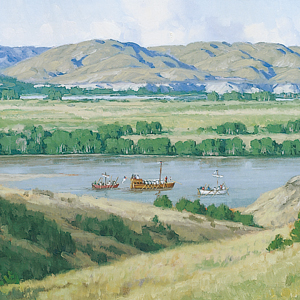
At the Big Bend of the Missouri, the men barely escape when the sandbar they are camping on washes into the river. After daylight, enlisted and engagés continue moving the boats up the Missouri camping near present Joe Creek Bay, South Dakota. Lewis adds six plants to his collection.
June 21, 1805
The portage begins
by Kristopher K. Townsend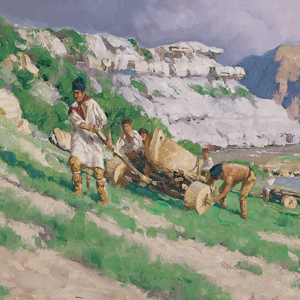
The portage around the Great Falls of the Missouri begins in earnest as enlisted men carry cargo to the plain high above present Belt Creek. They cart one dugout up the steep slope and then load it with the iron-framed boat, tools, and other items needed to establish a camp above the falls.
October 23, 1805
Lining Horseshoe Bend
by Kristopher K. Townsend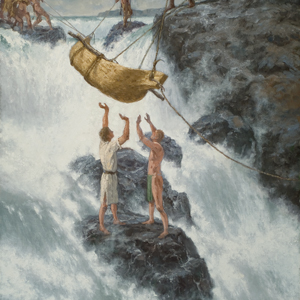
The men line the heavy dugout canoes down the Horseshoe Bend of Celilo Falls while Lewis trades their smallest dugout, a hatchet, and a few trinkets for a Chinook-style canoe. Clark shoots at a sea otter.
March 25, 1805
The spring break-up
by Kristopher K. Townsend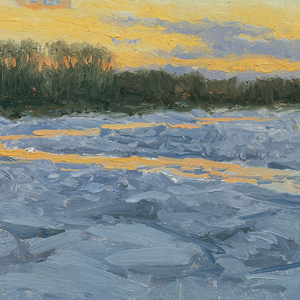
At Fort Mandan among the Knife River Indian Villages, the river ice begins breaking up, and the new canoes are endangered as they travel to the fort. Two men make a new steering oar for the barge.
July 21, 1806
Missing horses
by Kristopher K. Townsend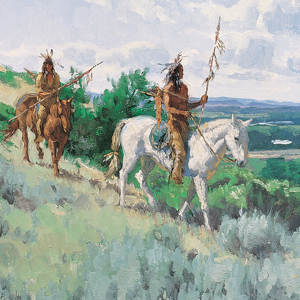
On this day, the expedition is split into three detachments separated by 200 miles. At Clark’s Yellowstone canoe camp near present Laurel, Montana, the group wakes to find several horses are missing—likely stolen by Apsáalooke (Crows). Pvt. Gibson’s wound is healing, and one dugout canoe is nearly ready.
On the Marias River, Lewis and his small group turn up Cut Bank Creek hoping its source is above the 50th parallel. With no trees present, they make a fire from buffalo dung.
Above the Great Falls of the Missouri, Sgts. Gass and Ordway delay the portage while a search is made for missing horses. They are plagued by mosquitoes and gnats.
November 3, 1804
Personnel changes
by Kristopher K. Townsend
The engagés are discharged, and Lepage and Jusseaume are hired from among the traders at the Knife River Villages. Fort Mandan’s foundation is completed, and a dram of whiskey revives the cold workers.
February 4, 1805
Clark goes hunting
by Kristopher K. Townsend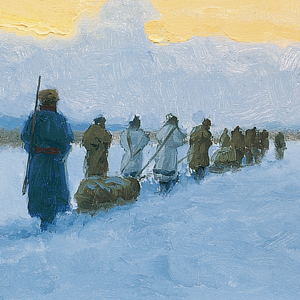
The supply of meat at Fort Mandan and the Knife River villages is nearly out, so Clark leaves with half the enlisted men on an eight-day hunting trip.
January 8, 1806
A night at Ecola
by Kristopher K. Townsend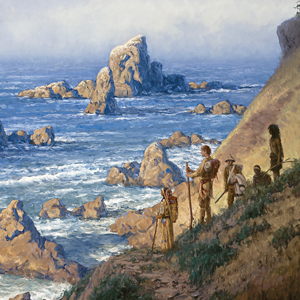
From Clark’s Point of View above Ecola, Clark’s group enjoys the “grandest and most pleasing prospects”. At Ecola, Tillamook Indians trade a little whale blubber, and Pvt. McNeal’s life is threatened.
September 16, 1805
Most terrible mountains
by Kristopher K. Townsend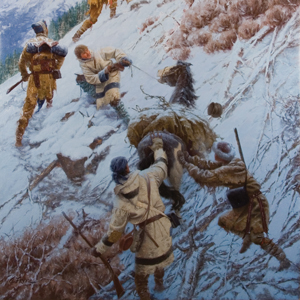
On the Northern Nez Perce Trail, overnight snow makes for a miserable day in the Bitterroots—’the most terrible mountains ever’. Wet and cold as ever, Clark moves ahead to make warming fires in a lonesome cove, and another colt is killed for dinner.
December 31, 1804
Popular blacksmiths
by Kristopher K. Townsend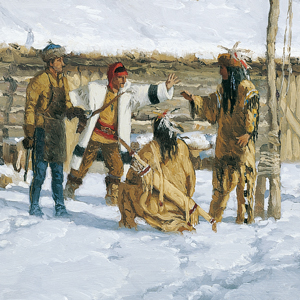
At Fort Mandan below the Knife River Villages, the wind makes hills of snow and sand. The blacksmiths continue to trade their iron work for corn, and three men look for a suitable place to make canoes.
York
Enslaved Afrikan Adventurer
by Ahati N. N. Toure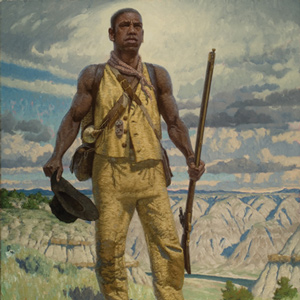
Two years after the conclusion of the historic Lewis and Clark expedition, York and his enslaver, the Virginia-born patrician William Clark, were at odds.
May 31, 1805
Scenes of visionary enchantment
by Kristopher K. Townsend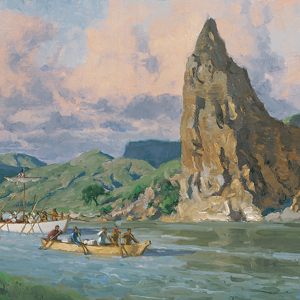
The day brings endless ‘scenes of visionary enchantment’ as the enlisted men struggle to move the boats through the White Cliffs area of the Upper Missouri River Breaks. When a tow rope breaks, Lewis once again mentions the white pirogue’s ‘evil genie’. After passing Citadel Rock and Grand Natural Wall, they camp at present Eagle Creek where Lewis notices a distinctive species of pine.
May 30, 1805
The White Cliffs
by Kristopher K. Townsend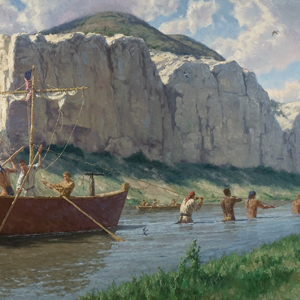
In the White Cliffs of the Upper Missouri River Breaks, the enlisted men struggle to tow the boats from slippery and narrow banks. Lewis tests the humidity by measuring the evaporation rate, and Pvt. Whitehouse describes an empty Atsina camp.
July 16, 1806
Off to the Marias
by Kristopher K. Townsend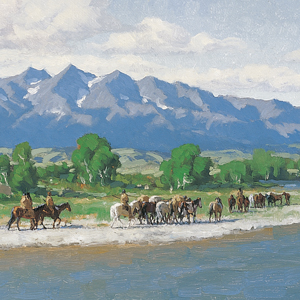
The expedition travels in four separate groups, each with a different destination. Lewis, Drouillard, and Pvts. Joseph and Reubin Field leave the Falls of the Missouri headed to the Marias River. They lunch at Rainbow Falls and encamp at the Grand Fall.
Sgt. Gass’s detachment remains at the White Bear Islands. They repair the wagon trucks that will be used to haul the canoes along the portage route.
On the Yellowstone River, Clark keeps moving downriver in search of trees large enough to make canoes. Moccasins are made for the lame horses, and Clark describes area geology and the mountain sucker—a fish new to science. He camps near present Big Timber, Montana.
On the Missouri River, Sgt. Ordway’s paddlers take the dugout canoes through the Gates of the Mountains, around Oxbow Bend, and past The Bears Tooth.
Mouth of the Yellowstone
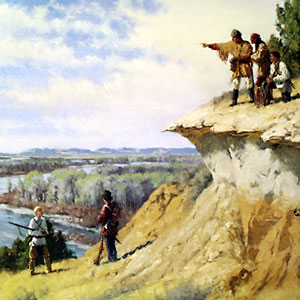
When Captain Lewis arrived at the mouth of the great river in late April 1805, he saw a “rich, delightful land, broken into valleys and meadows, and well supplied with wood and water.”
August 24, 1805
Leaving Fortunate Camp
by Kristopher K. Townsend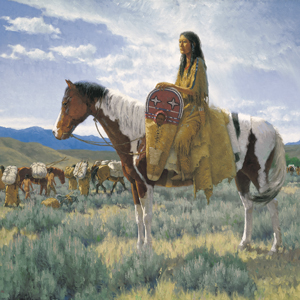
At Fortunate Camp, Lewis barters for three horses and a mule, and he gives some goods to Charbonneau so that he can buy a horse for Sacagawea. With the help of several Shoshone women, they start towards Lemhi Pass.
On the Salmon River, Clark considers three possible plans for reaching the Pacific Ocean. He sends a letter with Pvt. Colter to update Lewis, and his group heads back with nothing to eat.
June 1, 1804
Mouth of the Osage
by Kristopher K. Townsend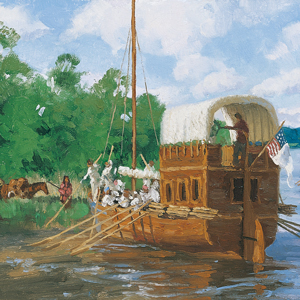
The enlisted men struggle to move the boats up a strong Missouri River current. They stop at the mouth of the Osage River where the captains take celestial observations to precisely locate this important tributary. Lewis also collects a specimen of wild ginger.
October 1, 1805
The Nez Perce method
by Kristopher K. Townsend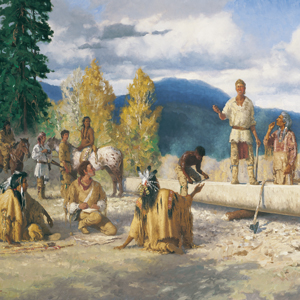
At Clearwater Canoe Camp near present Orofino, Idaho, the men employ the Nez Perce method of hollowing out dugout canoes with fire. Lewis adds a specimen of ponderosa pine to his plant collection.
July 25, 1806
Pompy's Tower (Pompeys Pillar)
by Kristopher K. Townsend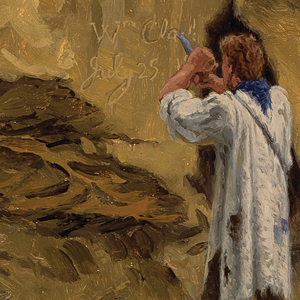
On this day, the expedition is split into four detachments spread out over 200 miles. On the Yellowstone River below present Billings, Montana, Clark names a rock Pompy’s Tower after Jean Baptiste Charbonneau—now known as Pompeys Pillar—and then, he carves his name and date into the rock. He also excavates a dinosaur fossil.
At Camp Disappointment on Cut Bank Creek, Lewis waits for the weather to clear so that he can take celestial observations. With signs of Blackfeet nearby, he decides that should tomorrow also be cloudy, he will leave for Decision Point at the mouth of the Marias.
At the Great Falls of the Missouri, another dugout is carted along the muddy portage to the Lower Portage Camp. During an outburst, they seek shelter under their canoes, but the rainwater runs under.
South of the Yellowstone, Sgt. Pryor and three others take the horses along a road that leads to the Knife River Villages. On or near this date, they pass present Pryor’s River.
François Labiche
Private
by Robert E. Gatten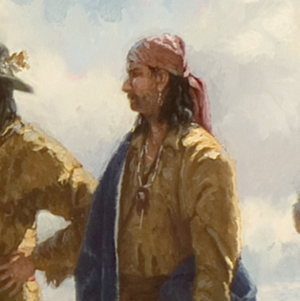
Labiche performed all the regular duties of an army private, but also performed well as a French and English interpreter. He would continue serving as an escort with Lewis for Chief Sheheke’s delegation to Washington City.
Lakota Sioux Difficulties
Tough times at the Bad
by James P. Ronda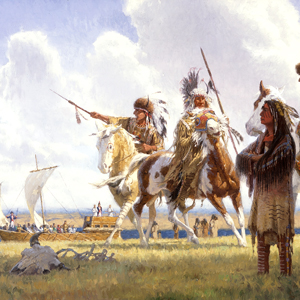
Ignorant of plains politics, Lewis and Clark barely averted disaster in their encounter with Black Buffalo’s people—an article by James P. Ronda from a keynote address to the Lewis and Clark Trail Heritage Foundation, Pierre, South Dakota, August 2002.
November 7, 1805
Ocean in view?
by Kristopher K. Townsend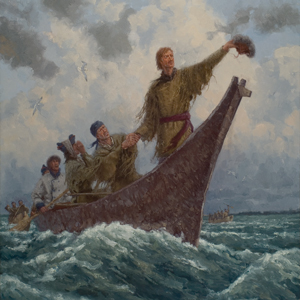
The expedition paddles around Columbia River islands and stops at two Wahkiakum villages. They reach a landmark presently named Pillar Rock where Clark mistakenly exclaims ‘Ocean in view! O! the joy’.
November 10, 1805
Small niche encampment
by Kristopher K. Townsend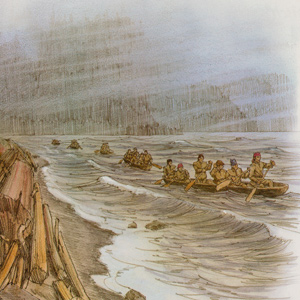
The paddlers make about ten miles down the Columbia River shoreline, but eventually are stopped by wind and waves. At their small niche camp near present Knappton, Washington, they try to dry out.
October 20, 1804
Pursuits and escapes
by Kristopher K. Townsend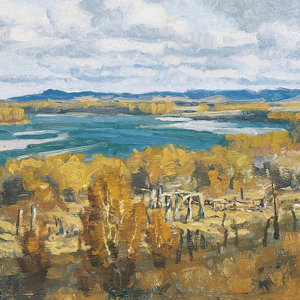
Below the Heart River Clark in present North Dakota, Clark sees On-a-Slant, a Mandan village abandoned due to Sioux attacks. Cruzatte wounds a grizzly and bison, and the unlucky hunter is chased by both.
March 4, 1806
Sumptuous living
by Kristopher K. Townsend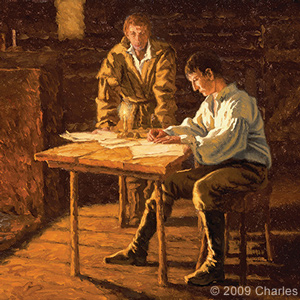
At Fort Clatsop near Astoria, Oregon, the captains “live sumptuously” on eulachon and sturgeon. Continuing his March treatise on birds, Lewis focuses on western meadowlarks and jays.
Experience the Lewis and Clark Trail
The Lewis and Clark Trail Experience—our sister site at lewisandclark.travel—connects the world to people and places on the Lewis and Clark Trail.
Discover More
- The Lewis and Clark Expedition: Day by Day by Gary E. Moulton (University of Nebraska Press, 2018). The story in prose, 14 May 1804–23 September 1806.
- The Lewis and Clark Journals: An American Epic of Discovery (abridged) by Gary E. Moulton (University of Nebraska Press, 2003). Selected journal excerpts, 14 May 1804–23 September 1806.
- The Lewis and Clark Journals. by Gary E. Moulton (University of Nebraska Press, 1983–2001). The complete story in 13 volumes.
This site is provided as a public service by the

Lewis and Clark Trail Alliance
with additional funding from the following: