Kristopher Townsend
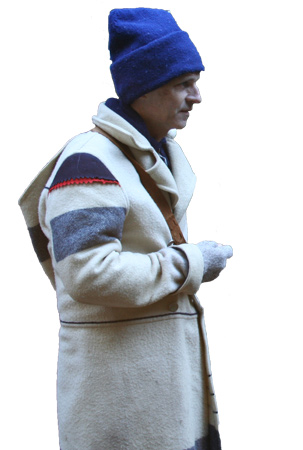
From the Pacific Northwest Living Historians at Lewis and Clark National Historic Park, Fort Clatsop.
Since 2016, Kristopher K. Townsend has been the webmaster and editor of this site, Discovering Lewis & Clark®. He has been actively photo-documenting the Lewis and Clark Trail since 1995. He attempts as closely as possible to re-create scenes as described in the journals including the same time of year, natural state, location, and weather. He has contributed numerous photos throughout the Discovering Lewis & Clark website.
Kris taught several years as a tenured instructor at Spokane Falls Community College. His courses included Internet programming and other information technology and computer science courses. During that time, he was also the series editor and an author of a popular college textbook series on Office Technology.
Shortly after the advent of the World Wide Web, he managed a web server featuring digital photos, digital video, and articles created by his Glenwood Heights Primary students. Topics included historical sites of Clark County (Washington State), wildflowers and birds of Clark County, and how-to videos for school’s physical education program.
Contributions to this Site
July 31, 1804
Waiting at Council Bluff
by Kristopher K. Townsend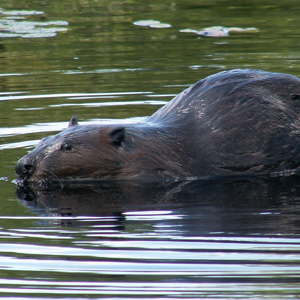
At a camp called Council Bluff—located in present Fort Atkinson, Nebraska—everyone waits for the arrival of the Otoes. Instead of Indians, they are befriended by a young beaver and numerous mosquitoes. Lewis determines latitude and Clark works his courses and distances.
July 30, 1804
Arrival at Council Bluff
by Kristopher K. Townsend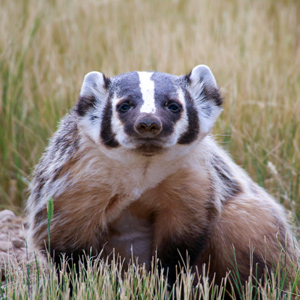
The expedition stops a bluff at present Fort Atkinson, Nebraska, where they intend to conduct a council with the Otoe Nation. Pvt. Joseph Field kills a badger, and Lewis preserves it—his first zoological specimen of the expedition. He also prepares a specimen of Illinois bundleflower—now lost.
July 29, 1804
Seeking the Otoes
by Kristopher K. Townsend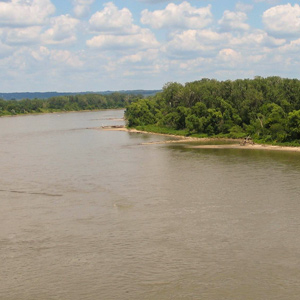
Moving along the Nebraska-Iowa border above Omaha, La Liberté—one of the French engagés—and a Missouria visitor leave on a mission to invite the Otoes to a council. Three large catfish are caught, and Pvt. Willard has a bad day. The evening’s camp is west of present Honey Creek, Iowa.
July 28, 1804
Old Iowa village
by Kristopher K. Townsend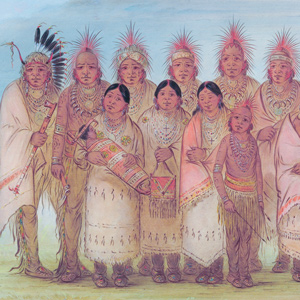
The expedition leaves present Omaha, Nebraska and passes an old Iowa village on the opposite side of the river. While out hunting, Drouillard meets a Missouria man who lives with the Otoes, and he brings the man to the evening’s camp west of Crescent, Iowa. The visitor tells the captains that most of the Otoes are away hunting buffalo.
July 27, 1804
Leaving White Catfish Camp
by Kristopher K. Townsend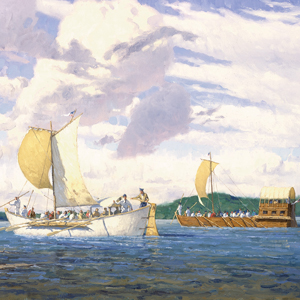
At White Catfish Camp, the enlisted men and engagés load the boats, and they proceed to present Lewis and Clark Landing in Omaha, Nebraska. Clark investigates mounds and an old Otoe village and returns after dark. A knee is cut, mosquitoes rage, and Lewis adds several plant specimens to his collection—now lost.
July 26, 1804
Blowing sand and mosquitoes
by Kristopher K. Townsend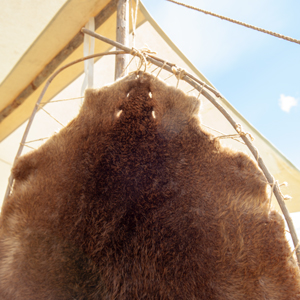
At White Catfish Camp near present Bellevue, Nebraska, the day proves too windy to load the barge. Clark endures a day of blowing sand and mosquitoes while the enlisted men hunt and make leather. Clark collects half a pint of fluid from one man’s abscess.
July 25, 1804
Empty Otoe village
by Kristopher K. Townsend 
Near present Bellevue, Nebraska, George Drouillard and Pierre Cruzatte return to White Catfish Camp without finding any Otoes or Pawnees. Finding the Otoe village empty, they had continued their search as far as the Elkhorn River.
July 24, 1804
White catfish
by Kristopher K. Townsend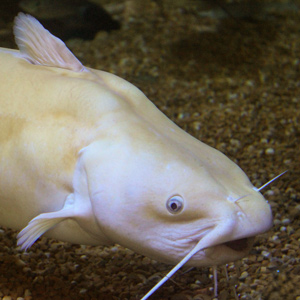
Near present Bellevue, Nebraska, the captains wait another day for Otoes—and perhaps some Pawnees—to come in for a council. Clark works on a map, and Lewis writes reports for President Jefferson. Pvt. Goodrich catches a channel catfish—likely a species new to science—and four men make oars for the “bateaux”—their military-style barge.
July 23, 1804
In search of Otoes
by Kristopher K. Townsend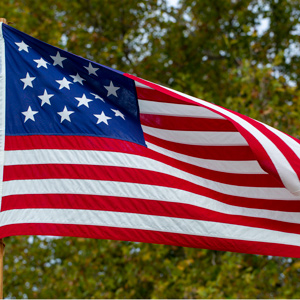
At White Catfish Camp near present Bellevue, Nebraska, an American flag is hoisted as a signal for the Otoes to visit. George Drouillard and Pvt. Cruzatte are in sent in search of them with an invitation to council. At camp, everyone is engaged with various tasks.
July 22, 1804
White Catfish Camp
by Kristopher K. Townsend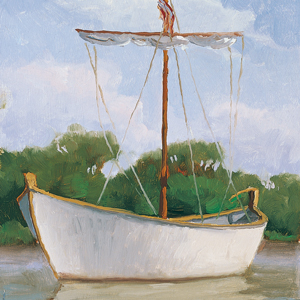
Near present Bellevue, Nebraska, the expedition sets up a camp that Lewis would later call White Catfish Camp. The captains find a shady place near to rest and arrange a council with the Otoes, and Lewis describes his astronomical instruments.
July 21, 1804
Passing the Platte
by Kristopher K. Townsend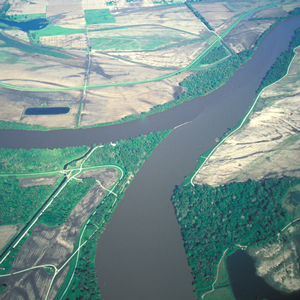
At midday, the expedition arrives at the mouth of the Platte where they remark on the sandy river’s effect on the Missouri. Before continuing, the captains take a pirogue one mile up the Platte and confirm that the river cannot be navigated with boats or canoes.
July 20, 1804
Prairie clovers
by Kristopher K. Townsend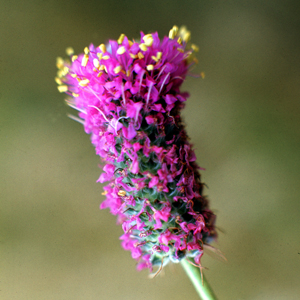
Moving along the present Nebraska-Iowa border, the expedition passes Water-which-Cries and Waubonsie creeks. Lead hunter George Drouillard is sick, so Sgt. Pryor and Pvt. Joseph Field hunt on shore this day. Lewis collects specimens of purple prairie clover and white prairie clover—both lost, and Clark describes the boils affecting several of the enlisted men.
July 19, 1804
Coffee and cherry whiskey
by Kristopher K. Townsend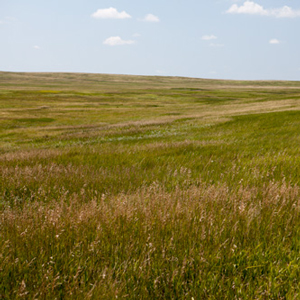
Near present Nebraska City, Clark enjoys a breakfast of roasted deer ribs and coffee. He notices that the sandbars are increasing as they near the mouth of the Platte River. They run out of butter, and the men make cherry-flavored whiskey.
July 18, 1804
Geology and botany
by Kristopher K. Townsend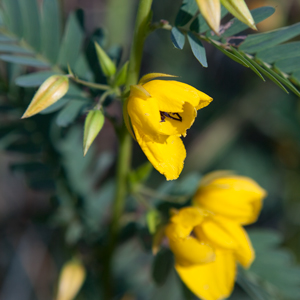
Approaching present Nebraska City, Clark remarks on the region’s geology and Lewis collects another plant specimen—the partridge pea, now lost. When a starving dog appears, the hunters throw it some meat.
In Washington City, the Secretary of War prepares to send an Osage delegation—organized in part by the captains while they were in St. Louis—back home via Pittsburgh.
July 17, 1804
A day at 'Bald Pated' Prairie
by Kristopher K. Townsend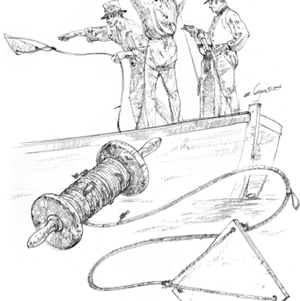
The expedition spends the day at a “Bald Pated Prairie” near the present Iowa-Missouri border. The Missouri’s current is measured using a log line, reel, and ship, mosquitoes come and go with the wind, and tumors trouble several of the enlisted men and engagés.
In Washington City, Secretary of War Henry Dearborn gives instructions to Pierre Chouteau—a recently appointed Indian Agent for Upper Louisiana.
July 16, 1804
Stuck on a sawyer
by Kristopher K. Townsend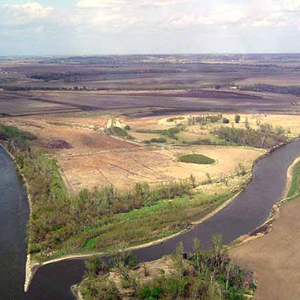
As the expedition sails twenty miles up the Missouri River, one boat runs fast on a “sawyer”—a submerged log. At noon, Lewis attempts to set his chronometer to the correct time, and in the evening, they camp near a ‘Bald Pated’ prairie along the Nishnabotna River.
Meanwhile, in Washington City, President Jefferson addresses an Osage delegation and asks them to carry his words to their nation.
July 15, 1804
Treeless plains
by Kristopher K. Townsend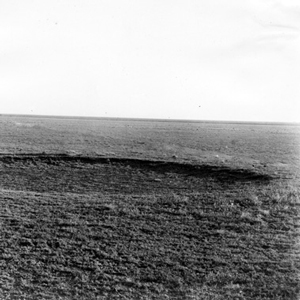
After waiting for the Missouri River fog to lift, the expedition sets out at 7 am and encamps near present Nemaha, Nebraska where the treeless plains extend for miles. Lewis’s chronometer—critical for calculating longitude—stops, and he collects a specimen of hedge bindweed—now lost.
July 14, 1804
A sudden storm
by Kristopher K. Townsend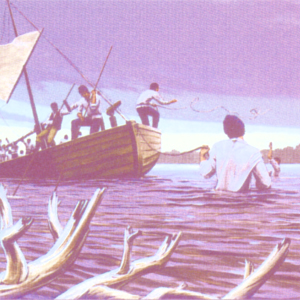
Below present Langdon, Missouri, the expedition encounters a sudden storm, and the enlisted men and engagés must jump into the water to save the boats. When an elk is wounded, Lewis’s dog, Seaman, joins the chase. Before stopping for the day, they pass an old Otoe and Pawnee trading post.
July 13, 1804
Favorable winds
by Kristopher K. Townsend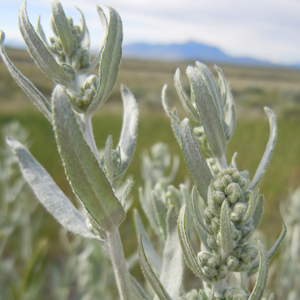
After a stormy evening, favorable winds push the boats up the Missouri River. After 20 miles, they encamp west of present Corning, Missouri. Lewis collects a white sage specimen—now lost, but otherwise, the day appears uneventful.
July 12, 1804
Willards' court martial
by Kristopher K. Townsend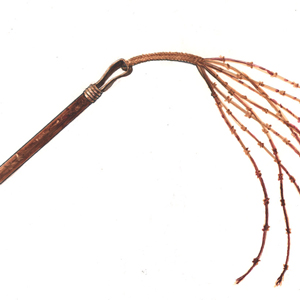
At the Big Nemaha River, everyone has a break from the labor of moving the boats up the Missouri River. Pvt. Willard is tried and found guilty of sleeping while on guard duty, and Clark mentions wild grapes and cherries.
In Washington City, President Jefferson gives a speech to an Osage delegation organized in part by the captains during their in St. Louis.
July 11, 1804
Entering Nebraska
by Kristopher K. Townsend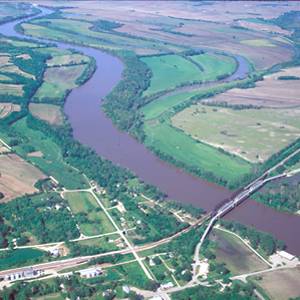
In present Nebraska, the enlisted men and engagés move the boats just six miles before camping on an island at the mouth of the Big Nemaha River. Sgt. Floyd says they will rest a day or two because “the men is all Sick”.
Elsewhere, an Osage delegation organized in part by the captains arrives in Washington City.
July 10, 1804
Wild rye and ground apples
by Kristopher K. Townsend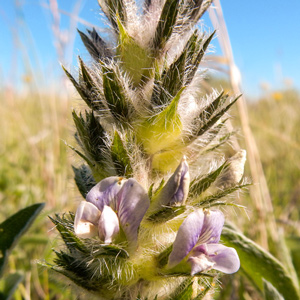
The previous night’s confusion regarding the lost hunters is sorted out, and all together again, they continue up the Missouri. As they approach the present Nebraska-Kansas border, the journalists remark on a large prairie of Canada wild rye and ‘ground apples’ growing on an island.
July 9, 1804
Friendly fire
by Kristopher K. Townsend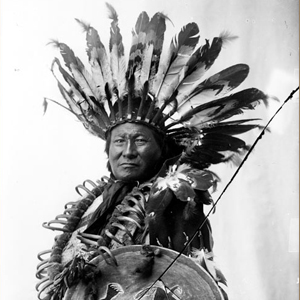
The enlisted men and engagés move the boats up the Missouri River between the Nodaway River and Wolf Creek Bend—about 30 river miles above present St. Joseph, Missouri. Pvt. Bratton marks a tree to tell some lost hunters that the boats are ahead, and during the night, those hunters light a signal fire. Due to miscommunication, they are mistaken for a Sioux war party.
July 8, 1804
New cooks
by Kristopher K. Townsend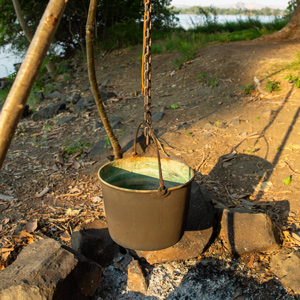
Near the present Nodaway River in Missouri, Clark reports that several men are sick with headaches and boils. Lewis assigns new cooks to each sergeant’s mess along with instructions on conserving rations and providing good nutrition.
July 7, 1804
Frazer's sun stroke
by Kristopher K. Townsend
The day is warm as the enlisted men and engagés row and tow the boats up the Missouri. Pvt. Frazer is “Struck with the Sun,” and Sgt. Ordway fails to return to the boats. Everyone but Ordway camps opposite present St. Joseph, Missouri.
July 6, 1804
The "Grande de Tour"
by Kristopher K. Townsend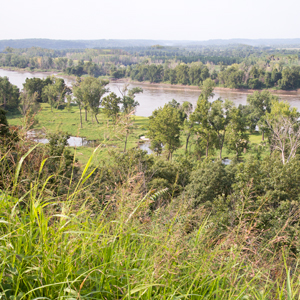
Approaching present Wathena, Kansas, the sweat runs off the enlisted men and engagés “in Streams” as they move the boats around the “Grande de Tour” or Grand Bend of the Missouri. Clark remarks on the local geology, and all the journalists comment on the treeless hills and prairies.
July 5, 1804
Seaman's chase
by Kristopher K. Townsend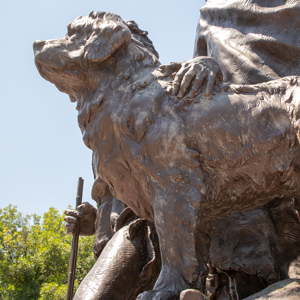
Heading up the Missouri, the current turns the boats around three times, and Lewis’s dog, Seaman, drives some beavers from their house. They pass an old fort and Missouria village before encamping near the present Bluffwoods Conservation Area in Missouri.
July 4, 1804
Independence Day
by Kristopher K. Townsend
North of present Atchison, Kansas, a swivel gun is fired, an extra gill of whiskey is issued, and Independence Creek is named to honor the Fourth of July. Pvt. Joseph Field is bitten by a snake.
July 3, 1804
The "bucks Eye"
by Kristopher K. Townsend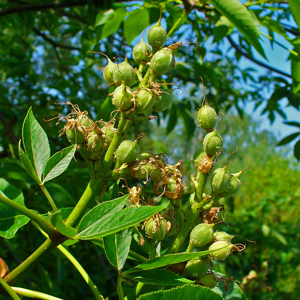
As the enlisted men and engagés move the boats 11¼ miles up the Missouri River, Sgt. Ordway notices the nuts of the Ohio buckeye growing in the river bottoms. They find a stray white horse, pass an old French trading post, and encamp near present Bean Lake, Missouri.
July 2, 1804
Old Fort de Cavagnial
by Kristopher K. Townsend
Near present Leavenworth, Kansas, the expedition sets out early. At noon, they stop to construct a temporary mast to take advantage of the tailwinds. They make 11 miles and camp opposite an old Kansa village and French trading post—Fort de Cavagnial.
July 1, 1804
Driftwood danger
by Kristopher K. Townsend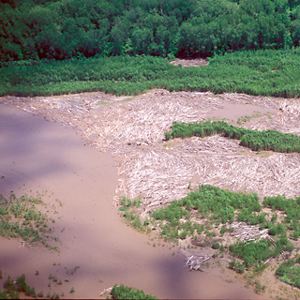
During the night, the guard hears something suspicious and calls everyone to action. During the day, the enlisted men and engagés must move the boats around several Missouri River islands to reach their camp near present Leavenworth, Kansas.
June 30, 1804
The Little Platte River
by Kristopher K. Townsend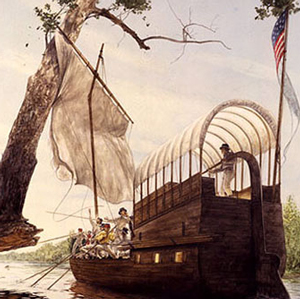
On this very hot day, the enlisted men and engagés move the boats past the Little Platte River, and they see as many deer tracks “as Hogs about a farm”. When going to shore, the mast of the barge (keelboat) hits an overhanging tree and breaks.
June 29, 1804
Sneaking whiskey
by Kristopher K. Townsend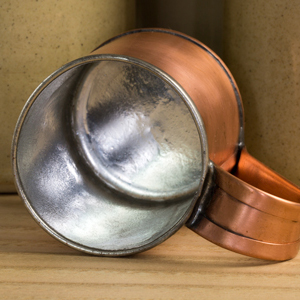
Before leaving the Kansas River, navigational observations are completed, and Pvts. Collins and Hall are tried and convicted for sneaking whiskey. In the evening, the expedition continues up the Missouri, experiences another close call with the barge (keelboat), and encamps near present Riverside, Kansas.
June 28, 1804
The Kansa People
by Kristopher K. Townsend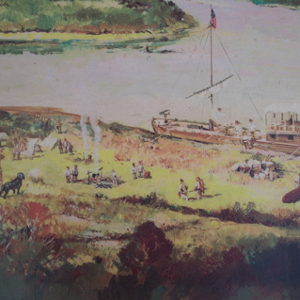
The expedition remains another day at the mouth of the Kansas River where Lewis determines its latitude. He also writes about the river, while Clark describes the Kansa People.
June 27, 1804
Building a redoubt
by Kristopher K. Townsend
On a point of land between the Missouri and Kansas rivers—Kaw Point—the enlisted men cut down trees so that the captains can make navigational measurements. A wall of timber and brush—a redoubt—is built to prevent attack from any Kansa (Kaw).
June 26, 1804
Kaw Point difficulties
by Kristopher K. Townsend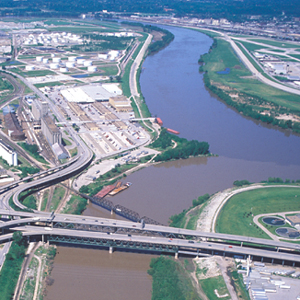
After an early start, the enlisted men and engagés struggle to move the boats past the Blue River in present Kansas City, Missouri. At Kaw Point, the towrope breaks, and they are forced to row the barge (keelboat) to shore and encamp. In a later interview with Nicholas Biddle, Clark discusses the Carolina parakeets and Blue River seen this day.
June 25, 1804
Coal banks and deer
by Kristopher K. Townsend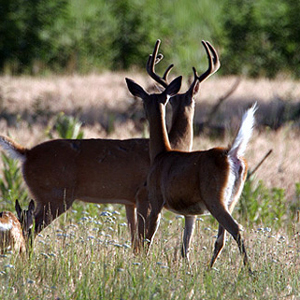
After waiting for the fog to clear, the expedition heads up the Missouri River. They pass coal banks, crab apple and plum trees, and see numerous deer. Camp is on an island near present Sugar Creek east of Kansas City, Missouri.
June 24, 1804
Snake attack
by Kristopher K. Townsend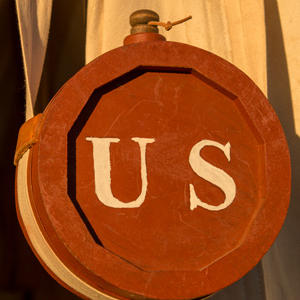
Approaching present Missouri City, hunter George Drouillard hangs a deer over the river to be retrieved by the enlisted men and engagés manning the boats. Clark watches a snake attack the carcass. The boats eventually catch up to the hunters, and at noon, they all stop to take care of the meat of a fat bear shot by Clark.
June 23, 1804
Clark mires in mud
by Kristopher K. Townsend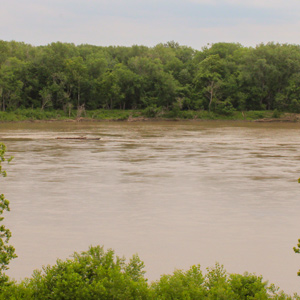
In present Missouri, winds prevent the enlisted men and engagés from moving the boats more than 3½ miles. They stop for the day at the future site of Fort Osage. While hunting several miles ahead, Clark mires in mud and is forced to spend the night away from the boats.
June 22, 1804
Fire Prairie
by Kristopher K. Townsend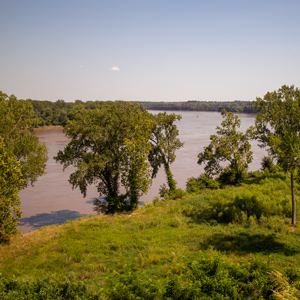
In present Missouri, an early morning storm awakens the men. After it passes, the enlisted men and engagés move the boats against a swift Missouri River crowded with snags. By the time they meet up with their hunters at Fire Prairie, the day is already hot and disagreeable. They camp near the present Jackson-Lafayette County line.
June 21, 1804
Camden Bend difficulties
by Kristopher K. Townsend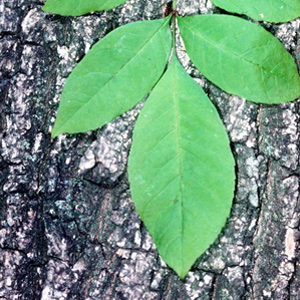
At present Camden Bend in Missouri, experienced boatman Pvt. Cruzatte looks for the best channel around an island. He reports that one rapid roars like a waterfall. In passing the island, Clark feels fortunate that only window was broken and some oars lost. He also describes the trees growing in the rich bottomlands.
June 20, 1804
York nearly blinded
by Kristopher K. Townsend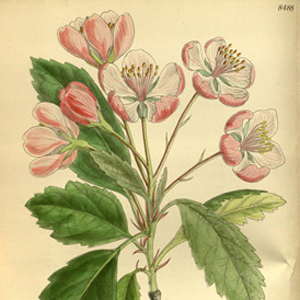
On the red pirogue, Pvt. Whitehouse says he and the engagés have difficulty rowing against the current—at one point having to walk the boat upstream. On another boat, Sgt. Ordway sees crab apple trees on the shore. At camp near present Lexington, Missouri, York is nearly blinded when one of the men throws sand in his eyes.
June 19, 1804
Clearing a channel
by Kristopher K. Townsend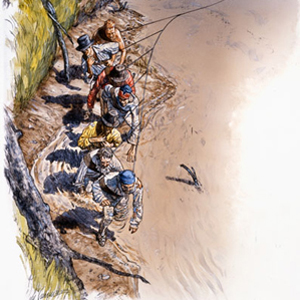
The expedition sails several miles up the Missouri River, but later in the day the enlisted men and engagés must clear the channel of driftwood and tow the boats. At camp near the mouth of present the Crooked River in Missouri, Lewis issues mosquito netting.
In Philadelphia, German polymath Alexander von Humboldt—returning from his Mexican and Cuban expedition—writes to Secretary of State James Madison seeking funding for another expedition.
June 18, 1804
Mosquito grease
by Kristopher K. Townsend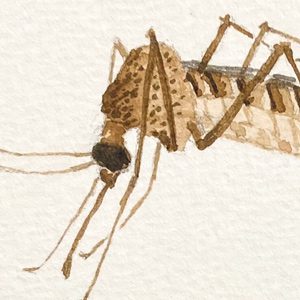
At Rope Walk Camp near present Waverly, Missouri, the hunters kill five deer and a bear. To deter mosquitoes, the enlisted men and engagés coat themselves with bear grease. They finish making 600 feet of new rope and 20 new oars.
June 17, 1804
Rope Walk Camp
by Kristopher K. Townsend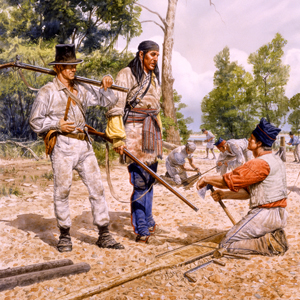
Near present Waverly, Missouri, the expedition travels one mile to Rope Walk Camp—a better site for making rope and oars. The engagés ask the captains for more food and instead receive a rebuke. Clark complains about the numerous ticks and mosquitoes, and several men suffer from boils and dysentery.
June 16, 1804
Unwanted passengers
by Kristopher K. Townsend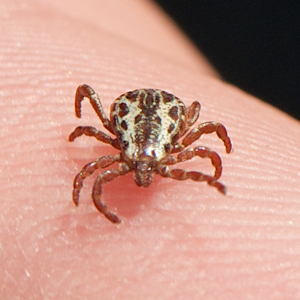
In present Missouri, the enlisted men pull the barge (keelboat) 10 long miles against a current full of rolling sand. Late in the day, they camp near present Waverly. Lewis prepares a specimen of reed canary grass—now lost—and Clark says the mosquitoes and ticks are “noumerous & bad”.
June 15, 1804
Malta Bend hazards
by Kristopher K. Townsend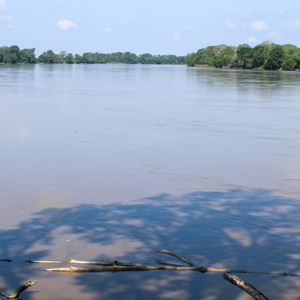
All day, the enlisted men and engagés struggle to move the boats around the Missouri River hazards. Submerged logs and crumbling banks add to the danger. They make 12¼ miles camping near abandoned Osage and Missouria villages at present Malta Bend.
June 14, 1804
Gobbling snakes
by Kristopher K. Townsend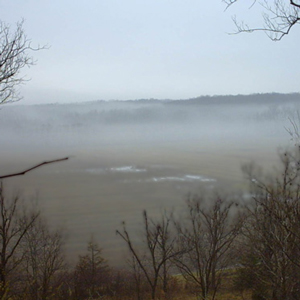
After a foggy morning at the Grand River, the enlisted men struggle to pull and row the boats up the Missouri, and they only make eight miles for the day. They meet four traders loaded with furs, and Drouillard hears snakes that gobble like turkeys. Lewis collects specimens of two willow species—now lost.
June 13, 1804
The mouth of the Grand
by Kristopher K. Townsend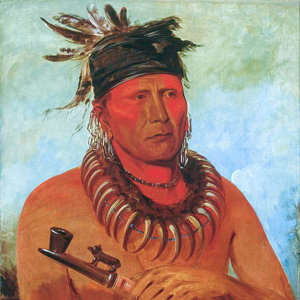
The enlisted men and engagés move the boats nine miles up the Missouri passing sandbars, shoals, and an abandoned Missouria village. They camp at the mouth of the Grand River where Clark and Lewis climb a hill for the view and make lunar observations late into the night.
June 12, 1804
Old Dorion signs on
by Kristopher K. Townsend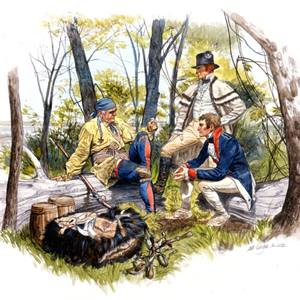
While heading up the Missouri River near present Dalton, Missouri, the expedition meets a group of boats led by Pierre Dorion, Sr. He and an unnamed expedition member trade places—the latter going back to St. Louis with the traders and Dorion leaving with the expedition as an interpreter.
Experience the Lewis and Clark Trail
The Lewis and Clark Trail Experience—our sister site at lewisandclark.travel—connects the world to people and places on the Lewis and Clark Trail.
Discover More
- The Lewis and Clark Expedition: Day by Day by Gary E. Moulton (University of Nebraska Press, 2018). The story in prose, 14 May 1804–23 September 1806.
- The Lewis and Clark Journals: An American Epic of Discovery (abridged) by Gary E. Moulton (University of Nebraska Press, 2003). Selected journal excerpts, 14 May 1804–23 September 1806.
- The Lewis and Clark Journals. by Gary E. Moulton (University of Nebraska Press, 1983–2001). The complete story in 13 volumes.
This site is provided as a public service by the

Lewis and Clark Trail Alliance
with additional funding from the following: