Figure 1
Plaster cast of the skull of Sergeant Charles Floyd

Olin D. Wheeler, The Trail of Lewis and Clark. See also Wheeler’s “Trail of Lewis and Clark”.
Before Floyd’s remains were sealed in the concrete core of an obelisk’s base, two plaster casts of the skull and jaw were made and photographed (Figure 1). One of the casts has long since been lost. The other, now in the Sioux City museum, served as the basis for a reconstruction of Floyd’s head by a forensic artist in 1997 (Figure 2), and placed on a specially designed and suitably uniformed mannequin that is now on display in the Sergeant Floyd Riverboat Museum.
Figure 2
Reconstruction of Sergeant Floyd’s Facial Features
by forensic artist Sharon Long[1]V. Strode Hinds, “Reconstructing Charles Floyd,” We Proceeded On, Vol. 27, No. 1 (February 2001), 16-19. See also James J. Holmberg, “Monument to a y’oung Man of Much … Continue reading
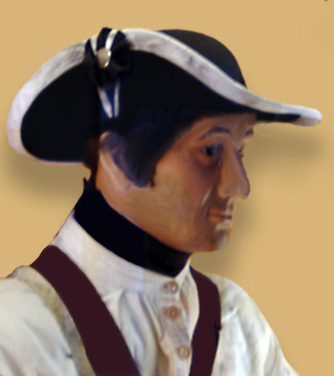
Courtesy, Sergeant Floyd Museum and Welcome Center at Sioux City
Charles Floyd (1783–1804), born in 1782, was the only one of the expedition’s famed “Nine Young Men from Kentucky” who actually was born there. He was a cousin of another expedition member, Sergeant Nathaniel Pryor, and may have been remotely related to William Clark. On 11 August 1803, 21-year-old Charles enlisted in the Corps of Discovery direct from civilian life. As an infantry officer prior to his retirement in 1796 on grounds of poor health, Captain Clark had developed the ability to recognize the potentials of his recruits, and he immediately began to systematically groom Floyd as a soldier.
Young Charles was a quick study. On 20 February 1804 Lewis placed him in charge of the officer’s quarters during their absences in St. Louis, and added: “the commanding Officer hopes that this proof of his confidence will be justifyed by the rigid performance of the orders given him on that subject.” In April 1804 he was promoted to the rank of sergeant.
Floyd began his journal on 14 May 1804, the day of the expedition’s departure from Camp Dubois, and with occasional advice thereafter from his captain, faithfully entered in it his brief, often fragmentary but usually pointed memoranda.
On 30 July 1804, Clark noted that Sergeant Floyd was “verry unwell a bad Cold & c,” and the next day Floyd himself admitted, “I am verry Sick and Has ben for Somtime but have Recoverd my helth again.” Meanwhile, the captains were preoccupied with the pursuit and punishment of a deserter, Private Moses Reed, and diplomatic relations with the Oto people. On 18 August 1804, Floyd wrote his last entry, emphasizing that “the Grand Chief of the ottoes” had arrived in camp. That same day, Clark reported that Floyd was “dangerously ill,” and that every man was attentive to him, especially Clark’s black servant, York. Shortly after noon on the 20th, Charles Floyd died “with a great deal of composure.”
Today it is generally agreed that he probably suffered a ruptured appendix, with resultant peritonitis. The captains tried every treatment they knew of, unaware that even the most advanced medical care of that day would not have saved his life.
“We carried him to the top of a bluff,” Clark wrote, “below a small river to which we gave his name and he was buried with the honors of war, much lamented.” Lewis read the funeral service, and the men marked the grave with a cedar post bearing the sergeant’s name and date of death. Two days later the men elected Patrick Gass, originally a private in Floyd’s squad, to assume Floyd’s rank and post.[2]Many years later, when Patrick Gass was in his late 70s, he offered a wholly fictitious account of the cause of Floyd’s demise. On 19 August 1804, he said, Floyd “had been amusing himself … Continue reading
On the expedition’s return from the mouth of the Columbia River in early September 1806, the men paused to visit Floyd’s grave for a final farewell. Finding that it had been partly uncovered, they refilled it and restored the fallen wooden marker.
After the Expedition
In his official post-expedition report to Secretary of War Henry Dearborn, dated 7 January 1807, Lewis affirmed that Charles Floyd was:
a young man of much merit. His father, who now resides in Kentucky, is a man much rispected, tho’ possessed of but moderate wealth. As the son has lost his life while on this service, I consider his father entitled to some gratuity, in consideration of his loss, and also, that the deceased being noticed in this way, will be a tribute but justly due to his merit.[3]Private Floyd’s father, also named Charles, was a surveyor who moved from Virginia to the Falls of the Ohio in 1779-80 via Daniel Boone‘s Wilderness Road. Jackson, Letters,, 1:366.
Pvt. Floyd’s land allotment of 320 acres (half a square mile) in Adams County, Mississippi, was conveyed to his heirs, and in 1839 his sister, Mary Walton, sold it for $640. His heirs also received his salary in cash–$86.33⅓ for one year of service (August 1803-August 1804)–as a member of the Corps of Volunteers for North-Western Discovery.
Related Pages
Sgt. Floyd’s Memorials
Much Remembered
by Joseph A. Mussulman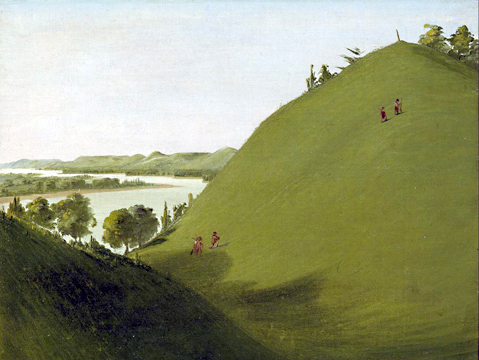
Floyd’s grave became a conspicuous point and a historic shrine on the Lewis and Clark trail almost immediately after the expedition was over. The American artist George Catlin painted Floyd’s Bluff in 1832, with the original cedar marker still in place.
Alcohol Rations
Ardent spirits on the expedition
by Robert R. Hunt
No military commander of the 18th-century would have thought of leading his troops on any mission without planning for liquor. In legislation and military orders of the day, the ration was typically expressed in “gills.”
Church in St. Charles
by Joseph A. Mussulman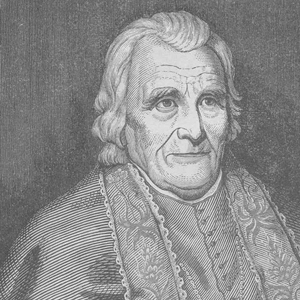
On the first Sunday after leaving Camp River Dubois, Joseph Whitehouse wrote that some of the party “went to church, which the french call Mass, and Saw their way of performing &c.”
Floyd’s Monument by Air
"Much Lamented"
by Joseph A. Mussulman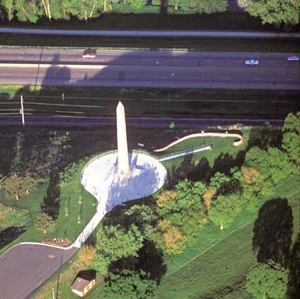
On 20 August 1804, the Corps proceeded thirteen miles, while young Floyd quickly grew worse. A little past noon they landed, and presently Floyd said, “I am going away.”
Sgt. Floyd’s Burial
The artist's interpretation
by Michael Haynes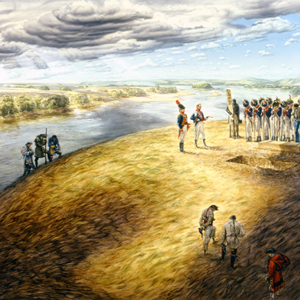
Two hundred years after the event, interpretive artist Michael Haynes explains how he created his painting “Hallowed Ground.”
Selected Journal Excerpts
December 16, 1803
Eight men from Tennessee
by Kristopher K. Townsend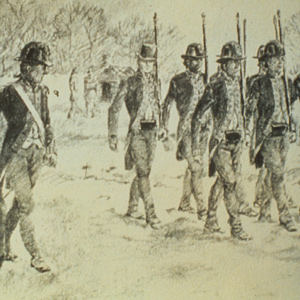
Samuel Griffith, a local farmer, visits camp at Wood River, and Clark sends Sgt. Floyd to Cahokia with letters for Lewis. In the evening, Drouillard arrives at Cahokia with eight new recruits.
December 21, 1803
Seven fat turkeys
by Kristopher K. Townsend
The enlisted men continue to raise cabins at Wood River, and two hunters bring in several turkeys. In a letter dated 28 December, Lewis describes the nature of his work in Spanish controlled St. Louis.
March 1, 1804
Quarters and stores
by Kristopher K. Townsend
At Wood River, Illinois, the day begins with sub-zero temperatures. While they are in St. Louis, the captains leave specific orders for Sgt. Floyd regarding quarters and stores.
April 7, 1804
Capt. Stoddard's ball
by Kristopher K. Townsend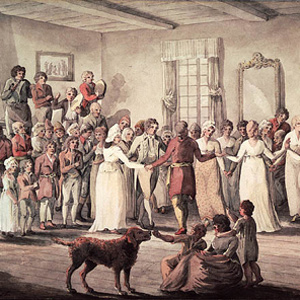
Clark, Lewis, and York leave Camp River Dubious to attend a formal dinner and ball hosted by Captain Amos Stoddard, the new Commandant of Upper Louisiana. In their absence, Sgt. Ordway “will be held accountable for the Poliece; and good order of the Camp”.
April 12, 1804
Discipline problems
by Kristopher K. Townsend
On this or the next day, Clark and Army Commissary Major Nathan Rumsey leave St. Louis with provisions for the men at Camp River Dubois. Also near this date, Clark summarizes the discipline problems encountered thus far—mostly fights among the enlisted men.
April 18, 1804
Sending for Capt. Lewis
by Kristopher K. Townsend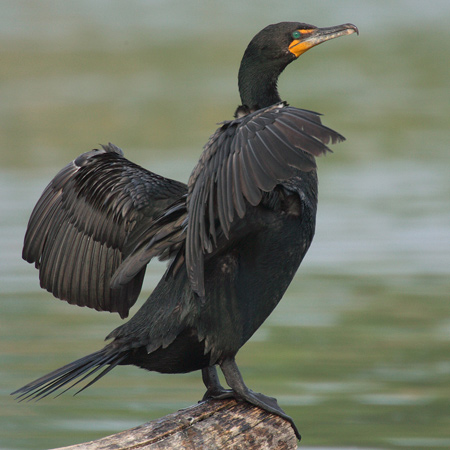
Sgt. Charles Floyd and Pvt. George Shannon leave Camp River Dubois with two horses to meet Lewis who is crossing over from St. Louis. Hunters add the double-crested cormorant and muskrat to their tally of kills.
May 14, 1804
Leaving Camp River Dubois
by Kristopher K. Townsend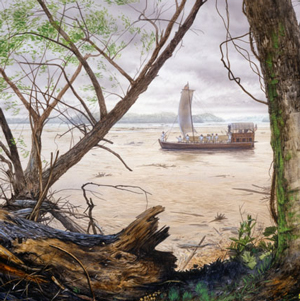
Clark and the enlisted men leave Camp River Dubois, cross the Mississippi, and begin their journey up the Missouri. Likely at their encampment opposite present Fort Belle Fontaine, several men begin their journals: Sgt. Ordway, Sgt. Floyd, Pvt. Gass, Pvt. Whitehouse, and likely several others.
In Mississippi Territory, Thomas Rodney writes about a mountain and river of salt in the unexplored west—a topic frequently mentioned in satires meant to demean Thomas Jefferson and his Western Explorations.
May 26, 1804
New detachment orders
by Kristopher K. Townsend
The enlisted man and engagés move the boats about ten miles up the Missouri reaching the area of present Berger, Missouri. Lewis issues detachment orders dividing the enlisted men into three squads with specific directions for handling their rations. They camp on an island below the 10-mile-long Otter—or la Loutre—Island.
July 7, 1804
Frazer's sun stroke
by Kristopher K. Townsend
The day is warm as the enlisted men and engagés row and tow the boats up the Missouri. Pvt. Frazer is “Struck with the Sun,” and Sgt. Ordway fails to return to the boats. Everyone but Ordway camps opposite present St. Joseph, Missouri.
August 12, 1804
Rounding Snyder Bend
by Kristopher K. Townsend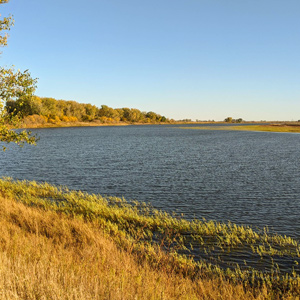
As the enlisted men and engagés move the boats around an eighteen-mile bend in the Missouri River—present Snyder Bend—a coyote barks like a feist dog. At camp, mosquitoes are “verry troublesome” and in Sgt. Floyd’s mess, Pvt. Weiser replaces Pvt. Thompson as cook.
August 19, 1804
Sgt. Floyd taken ill
by Kristopher K. Townsend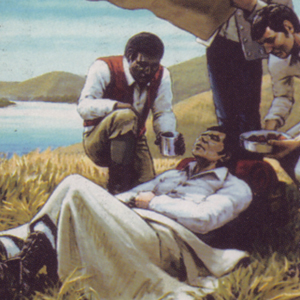
During a council with some Otoes near present Homer, Nebraska, speeches and gifts are exchanged, but the Otoes appear dissatisfied with their gifts. Sgt. Floyd becomes seriously ill and requires urgent care.
August 20, 1804
Burying Sgt. Floyd
by Kristopher K. Townsend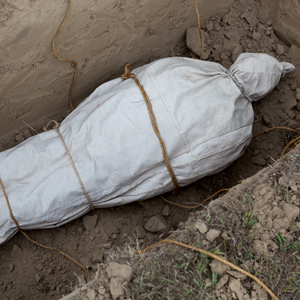
Near present Homer, Nebraska, Clark spends most of the night attending to Sgt. Floyd who is gravely ill. They head up the Missouri in the morning, but soon stop near present Sioux City, Iowa to bury the young sergeant.
Elsewhere in New Orleans, the former Spanish governor of Louisiana reports on several American expeditions in contested Spanish territory.
June 2, 1806
Managing horses
by Kristopher K. Townsend
At Long Camp in present Kamiah, Idaho, a horse corral is made, and Lewis’s suffering horse must be shot. Sgt. Ordway brings 17 tainted salmon from the Snake River, Pvt. McNeal and York return from trading with the Nez Perce, and George Drouillard returns with Sgt. Floyd’s old tomahawk.
September 4, 1806
Floyd's grave
by Kristopher K. Townsend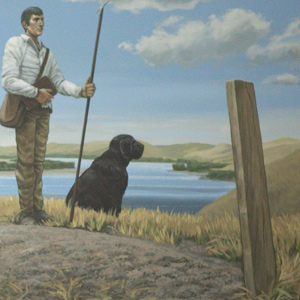
On a wet morning, the expedition heads down the Missouri re-supplied with tobacco and flour obtained from trader James Aird. They stop to visit Sgt. Floyd’s grave and camp early to dry out near present Dakota City, Nebraska.
Notes
| ↑1 | V. Strode Hinds, “Reconstructing Charles Floyd,” We Proceeded On, Vol. 27, No. 1 (February 2001), 16-19. See also James J. Holmberg, “Monument to a y’oung Man of Much Merit’,” We Proceeded On, Vol. 22, No. 3 (August 1996), 4-13. |
|---|---|
| ↑2 | Many years later, when Patrick Gass was in his late 70s, he offered a wholly fictitious account of the cause of Floyd’s demise. On 19 August 1804, he said, Floyd “had been amusing himself and carousing at an Indian dance until he became overheated and it being his duty to stand guard that night, he threw himself down on a sand bar of the Missouri, despising the shelter of a tent offered him by his comrade on guard, and was soon seized with the cramp cholic, which terminated his life” on the following day. Gass’s memory simply failed him, and he obviously saw no reason to check his own journal, in which he would have been reminded that, to begin with, Floyd was sick all night on the 15th. John G. Jacob, The Life and Times of Patrick Gass, Now Sole Survivor of the Overland Expedition to the Pacific, Under Lewis and Clark, in 1804-5-6 (Wellsburg, Virginia: Jacob & Smith, 1859), 43-44. |
| ↑3 | Private Floyd’s father, also named Charles, was a surveyor who moved from Virginia to the Falls of the Ohio in 1779-80 via Daniel Boone‘s Wilderness Road. Jackson, Letters,, 1:366. |
Experience the Lewis and Clark Trail
The Lewis and Clark Trail Experience—our sister site at lewisandclark.travel—connects the world to people and places on the Lewis and Clark Trail.

Originally funded in part by a grant from the National Park Service, Challenge-Cost Share Program
Discover More
- The Lewis and Clark Expedition: Day by Day by Gary E. Moulton (University of Nebraska Press, 2018). The story in prose, 14 May 1804–23 September 1806.
- The Lewis and Clark Journals: An American Epic of Discovery (abridged) by Gary E. Moulton (University of Nebraska Press, 2003). Selected journal excerpts, 14 May 1804–23 September 1806.
- The Lewis and Clark Journals. by Gary E. Moulton (University of Nebraska Press, 1983–2001). The complete story in 13 volumes.
This site is provided as a public service by the

Lewis and Clark Trail Alliance
with additional funding from the following: