Kristopher Townsend
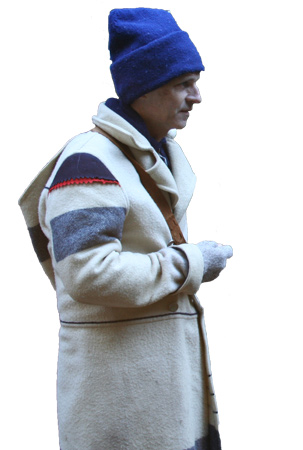
From the Pacific Northwest Living Historians at Lewis and Clark National Historic Park, Fort Clatsop.
Since 2016, Kristopher K. Townsend has been the webmaster and editor of this site, Discovering Lewis & Clark®. He has been actively photo-documenting the Lewis and Clark Trail since 1995. He attempts as closely as possible to re-create scenes as described in the journals including the same time of year, natural state, location, and weather. He has contributed numerous photos throughout the Discovering Lewis & Clark website.
Kris taught several years as a tenured instructor at Spokane Falls Community College. His courses included Internet programming and other information technology and computer science courses. During that time, he was also the series editor and an author of a popular college textbook series on Office Technology.
Shortly after the advent of the World Wide Web, he managed a web server featuring digital photos, digital video, and articles created by his Glenwood Heights Primary students. Topics included historical sites of Clark County (Washington State), wildflowers and birds of Clark County, and how-to videos for school’s physical education program.
Contributions to this Site
June 11, 1804
Bear and deer jerky
by Kristopher K. Townsend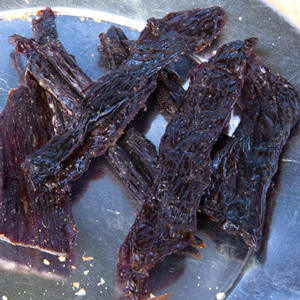
Near present Cambridge, Missouri, the winds make steering the boats impossible. Instead of moving forward, they use the day to dry wet cargo. Clark has a bad cold, and the men make bear and deer jerky. The day ends with lively dancing and singing.
June 10, 1804
Chariton Rivers
by Kristopher K. Townsend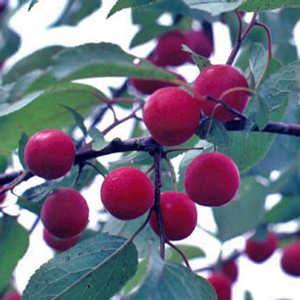
On the lower Missouri, the enlisted men and engagés move the boats to the Chariton Rivers where they find rock suitable for making whetstones. The prairies abound with wild plums, mulberries, hazelnuts, and grapes. They must continue up the Missouri to get away from the mosquitoes.
June 9, 1804
Hitting a snag
by Kristopher K. Townsend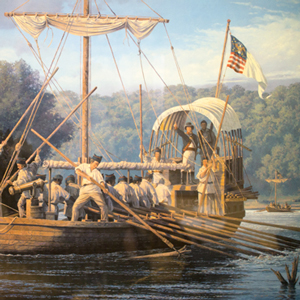
After passing Arrow Rock in present Missouri, the barge (keelboat) hits a snag and turns sideways to the current exposing it to drifting logs. The enlisted men struggle to get her off before she is injured. Camp is near present Richland Creek.
June 8, 1804
Lamine River
by Kristopher K. Townsend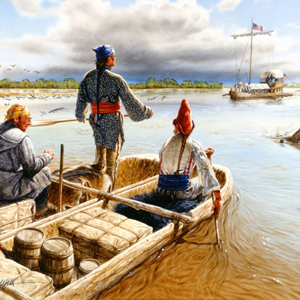
At first light, the enlisted men and engagés move the three boats up the Missouri. During the day, they meet three French traders who are out of provisions and powder. Clark explores the Lamine River and finds a cache of supplies and furs. At camp below Arrow Rock, rains prevent them from lighting their cooking fires.
June 7, 1804
"white red & blue flint"
by Kristopher K. Townsend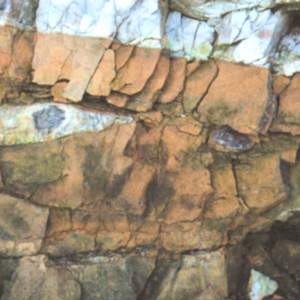
Above present Jefferson City, Missouri, the enlisted men and engagés move the boats up the Mississippi. They name a creek Big Devil—today’s Moniteau Creek. Clark finds a den of rattlesnakes and observes that the cliffs are inlaid with “white red & blue flint”.
June 6, 1804
Passing Petite Saline Creek
by Kristopher K. Townsend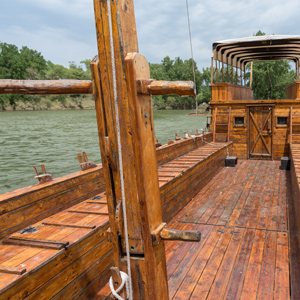
Above present Jefferson City, Missouri, they fix the barge’s (keelboat’s) mast and set out by 7am. They pass Petite Saline Creek which has several salt licks and signs that indicate bison are nearby. They camp sooner than usual to let a pirogue catch up.
June 5, 1804
Passing the Manitou
by Kristopher K. Townsend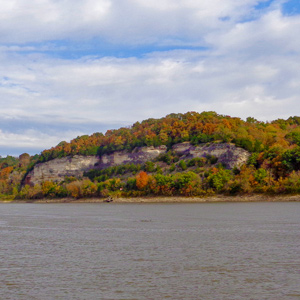
South of present Lupus, Missouri, the enlisted men and engagés struggle to move the boats past sandbars and channels clogged with driftwood. They pass a pictograph of a Manitou, York gathers cress to supplement their diet, and a scout finds fresh signs of a Sauk war party. They meet two French traders coming down in a raft.
June 4, 1804
Sugar Loaf Rock
by Kristopher K. Townsend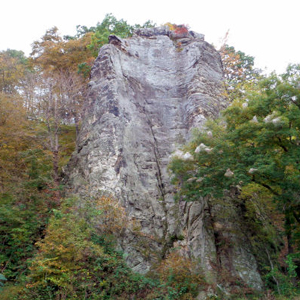
In the area of Jefferson City, Missouri, what Clark calls a “nightingale” sings all during the night. Moving up the river, the barge (keelboat) catches a rope on a tree and breaks a mast. On the shore, Clark ascends a high hill—now called Sugar Loaf Rock—in search of lead ore, and the captains mark several trees with their names.
June 3, 1804
Mosquitoes and ticks
by Kristopher K. Townsend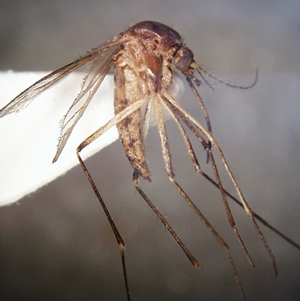
At the mouth of the Osage, Clark is vexed by mosquitoes and deer ticks, and Lewis collects a specimen of ground plum. The captains take a few celestial observations before clouds obscure the sun. Late in the day, the enlisted men move the boats to the mouth of the Moreau east of present Jefferson City.
In St. Louis, Capt. Stoddard writes a letter to Secretary of War Henry Dearborn updating him on the expedition’s progress.
June 2, 1804
Osage River observations
by Kristopher K. Townsend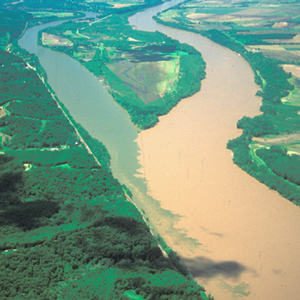
The expedition remains at the confluence of the Osage and Missouri rivers so that the captains can make celestial observations at this important location. Clark measures the width of each river and ascends a nearby hill to view the area. After seven days out hunting, George Drouillard and Pvt. Shields return “much worsted”.
June 1, 1804
Mouth of the Osage
by Kristopher K. Townsend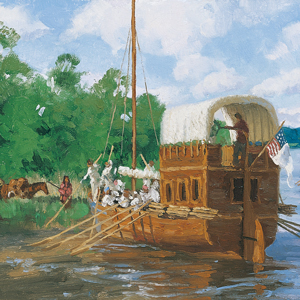
The enlisted men struggle to move the boats up a strong Missouri River current. They stop at the mouth of the Osage River where the captains take celestial observations to precisely locate this important tributary. Lewis also collects a specimen of wild ginger.
May 31, 1804
At the Osage
by Kristopher K. Townsend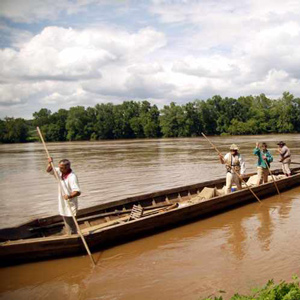
In present Missouri, the expedition struggles against a strong current before stopping at the mouth of the Osage River. The captains try to determine the precise location of this important tributary by taking celestial observations late into the night. Lewis also collects a specimen of wild ginger.
May 30, 1804
Another fourteen miles
by Kristopher K. Townsend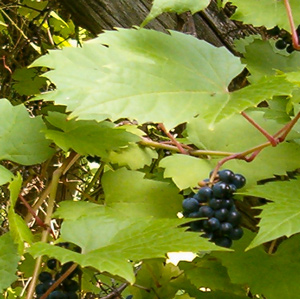
During the night, the French engagés and a lost hunter arrive at camp. In the morning, all the boats are moved another fourteen miles up the Missouri before everyone stops near present Chamois, Missouri. Lewis collects a specimen of river-bank grape-now lost.
May 29, 1804
A lost hunter
by Kristopher K. Townsend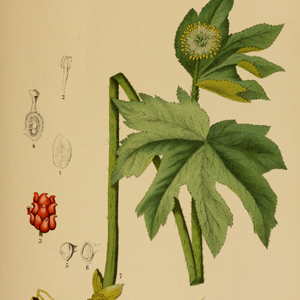
The expedition spends most of the day at the mouth of the Gasconade River drying goods and waiting for Joseph Whitehouse to return from a hunting trip. At 5 pm, they travel three miles up the Missouri without the lost hunter. Lewis prepares a plant specimen of Golden Seal.
May 28, 1804
'Resting' at the Gasconade
by Kristopher K. Townsend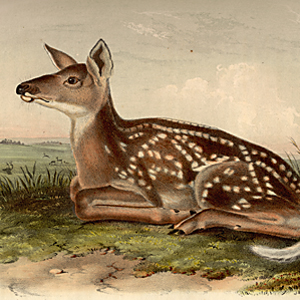
At the mouth of the Gasconade in present Missouri, the day is used to hunt and dry items that got wet in the red pirogue. The captains try to make celestial observations, but clouds obscure the sun.
In St. Louis, trader Régis Loisel warns Spanish officials of American encroachments on the Missouri River.
May 27, 1804
Arms inspection
by Kristopher K. Townsend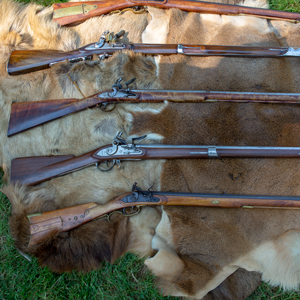
In present Missouri, they meet two parties who have been trading with the Omaha and Osage. Lewis collects three more plant specimens including a cress that they often use to make salad. At evening camp near the mouth of the Gasconade River, an arms inspection is conducted.
May 26, 1804
New detachment orders
by Kristopher K. Townsend
The enlisted man and engagés move the boats about ten miles up the Missouri reaching the area of present Berger, Missouri. Lewis issues detachment orders dividing the enlisted men into three squads with specific directions for handling their rations. They camp on an island below the 10-mile-long Otter—or la Loutre—Island.
May 25, 1804
Last 'White' village
by Kristopher K. Townsend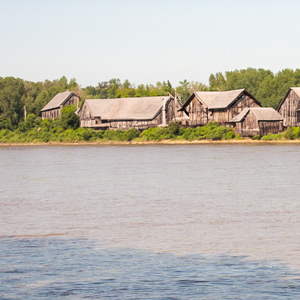
The expedition travels about ten miles reaching La Charrette—the last settlement of “white people on this River . . . .” Here the captains meet trader Régis Loisel who shares valuable information about the people and places between here and the Knife River Villages. The villagers sell them milk and eggs, and Lewis collects a cottonwood specimen.
May 24, 1804
The Devils Race Ground
by Kristopher K. Townsend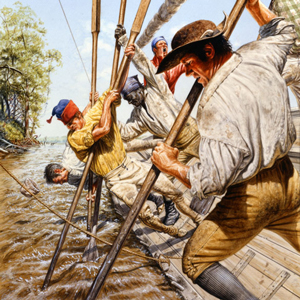
In the Devils Race Ground, the enlisted men and engagés struggle to move the boats against strong currents and shifting sands. The barge is endangered when it grounds on a sandbar and its tow-rope breaks. They must turn back two miles and try a different channel. The night’s encampment is appropriately named Retrograde Bend.
May 23, 1804
Lewis escapes death
by Kristopher K. Townsend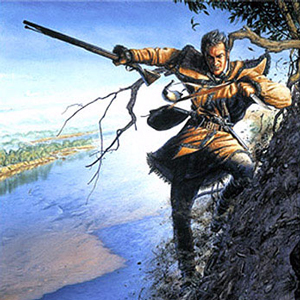
Lewis climbs the pinnacles of Tavern Rock, slips, and manages to escape with the help of his knife. In Tavern Cave, Clark adds his name among the graffiti left by earlier travelers. The enlisted men and engagés struggle to move the boats against a swift current, and Lewis collects a specimen of indigo.
May 22, 1804
Kickapoo hunters
by Kristopher K. Townsend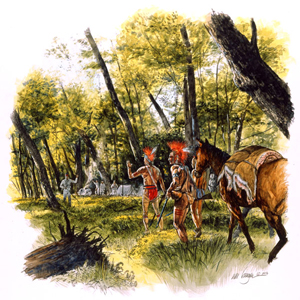
After a rainy night, the expedition sets out by 6 am. After 18 miles, they camp near the mouth of the Femme Osage River in present St. Charles County. There, they give two quarts of whiskey to some Kickapoo hunters for four deer. Lewis collects a plant specimen that was later received in Philadelphia and subsequently lost.
May 21, 1804
Leaving St. Charles
by Kristopher K. Townsend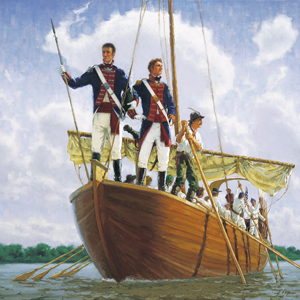
Late in the afternoon, the swivel gun is fired, three cheers are raised, and the expedition leaves St. Charles bound for the Western Sea. Facing a strong wind, the enlisted men and engagés move the boats only 3¼ miles. At camp on the north shore, storms continue through the night.
May 20, 1804
Church in St. Charles
by Kristopher K. Townsend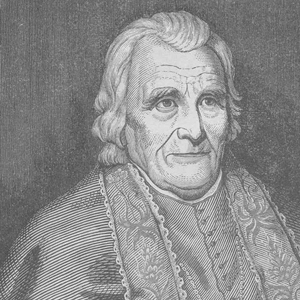
Lewis leaves St. Louis with Amos Stoddard, key traders, and several distinguished citizens. Due to a violent thunderstorm, they must shelter in a small cabin. Already in St. Charles, many of the enlisted men attend a Catholic mass.
May 19, 1804
St. Charles pay day
by Kristopher K. Townsend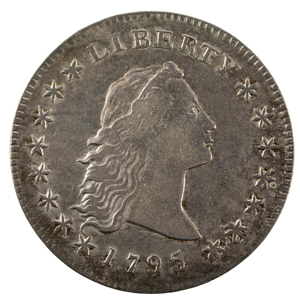
Drouillard returns to St. Charles with cash and a temporarily misplaced letter from Lewis. Clark collects pay receipts from the enlisted men and apparently pays some of them in lieu of clothing and rations. Local citizens visit the boats and invite the men to socialize in town.
May 18, 1804
Shifting the cargo
by Kristopher K. Townsend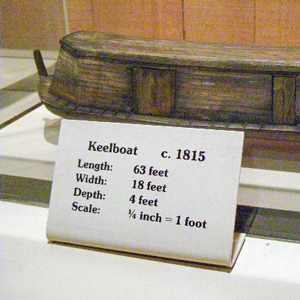
At St. Charles, Clark has the enlisted men shift each boat’s load to the front so that they will handle better. Drouillard leaves for St. Louis with a message for Lewis. More supplies are purchased, and some of the men pass the evening dancing with St. Charles ladies.
May 17, 1804
St. Charles court martials
by Kristopher K. Townsend
In St. Charles, Pvts. Hugh Hall, William Werner, and John Collins misbehave the previous night and today face a court martial. Some visiting Kickapoos tell Clark that the Sauk and Osage are at war—something the captains have been trying to prevent. Lewis continues in St. Louis.
May 16, 1804
St. Charles arrival
by Kristopher K. Townsend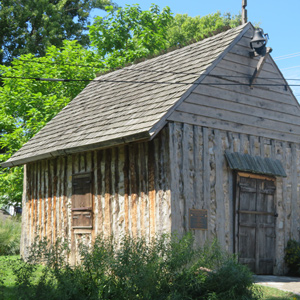
The boats set out early, pass the coal beds of Charbonier Bluff, and reach St. Charles, an early French settlement on the Missouri River. Many citizens come out to see the event and socialization commences.
Still in St. Louis, Lewis authorizes Amos Stoddard, the commandant of Upper Louisiana Territory, to act as his agent concerning any Indian delegations and engagés sent to St. Louis.
From Washington City, the Secretary of War Henry Dearborn asks Capt. Amos Stoddard to continue as Civil Commandant of Upper Louisiana.
May 15, 1804
Missouri River lessons
by Kristopher K. Townsend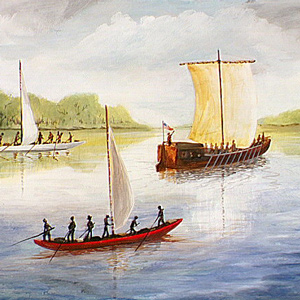
As the boats pass Portage des Sioux below St. Charles, the crews adjust to their boats. The barge grounds three times on submerged logs, a pirogue has difficulty keeping up, and provisions become wet from the rain. Later in the day, they employ the sails.
May 14, 1804
Leaving Camp River Dubois
by Kristopher K. Townsend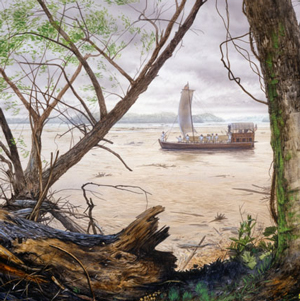
Clark and the enlisted men leave Camp River Dubois, cross the Mississippi, and begin their journey up the Missouri. Likely at their encampment opposite present Fort Belle Fontaine, several men begin their journals: Sgt. Ordway, Sgt. Floyd, Pvt. Gass, Pvt. Whitehouse, and likely several others.
In Mississippi Territory, Thomas Rodney writes about a mountain and river of salt in the unexplored west—a topic frequently mentioned in satires meant to demean Thomas Jefferson and his Western Explorations.
May 13, 1804
Ready to start
by Kristopher K. Townsend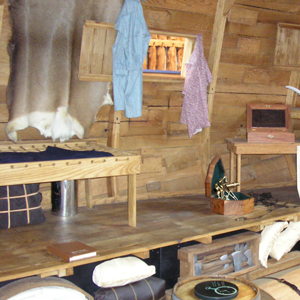
At Camp River Dubois opposite the mouth of the Missouri, Clark writes Lewis to tell him that everything is ready to start their voyage. He also worries that they may not have enough trade goods and gifts for the Native Americans they will encounter.
May 12, 1804
Arranging loads
by Kristopher K. Townsend
At Camp River Dubois opposite the mouth of the Missouri, Clark has the enlisted men arrange each boat’s load. Charles Gratiot forwards about $1500 in bills to Lewis who is working in St. Louis.
In Worcester, Massachusetts, republican Samuel Brazer gives a fervent and memorable speech commemorating the Louisiana cession.
May 11, 1804
The engagés arrive
by Kristopher K. Townsend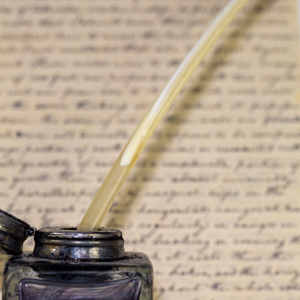
At River Dubois opposite the mouth of the Missouri, Clark spends the day writing. Drouillard and seven French engagés arrive—likely the St. Charles boatmen who crew the red pirogue. In St. Louis, Lewis continues with preparations for their imminent departure up the Missouri.
May 10, 1804
The first plant specimen
by Kristopher K. Townsend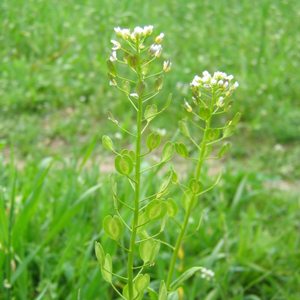
At Camp River Dubois opposite the mouth of the Missouri, the enlisted men receive orders to carry 100 balls for their rifles or two pounds of buckshot if they have a musket. In St. Louis, Lewis collects the expedition’s first plant specimen—field pennycress, now lost.
May 9, 1804
Moving into tents
by Kristopher K. Townsend
At Camp River Dubois opposite the mouth of the Missouri, Clark moves the enlisted men out of their cabins and into tents—their new shelters for the upcoming voyage. He also tells the men to collect water from the Missouri finding its water cooler than the Mississippi or Wood rivers. Lewis continues working in St. Louis.
May 8, 1804
Shakedown cruise
by Kristopher K. Townsend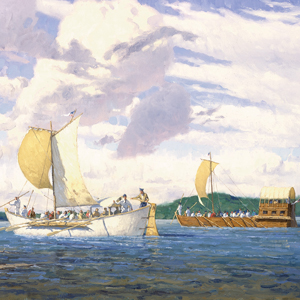
At Camp River Dubois opposite the mouth of the Missouri, the barge and a pirogue are taken a few miles up the Mississippi for a shakedown cruise.
In New Orleans, the former governor of Spanish Louisiana urges his Commandant General to arrest Meriwether Lewis and his expedition.
May 7, 1804
Loading the barge
by Kristopher K. Townsend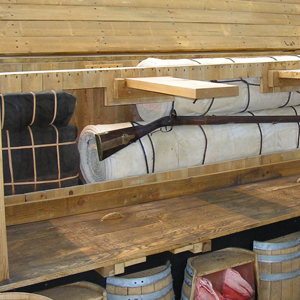
Privates John Colter and Moses Reed deliver a letter to William Clark that informs him that his commission is for second lieutenant—not the captaincy originally promised. The enlisted men are loading the barge to make ready their imminent departure up the Missouri.
May 6, 1804
Clark's commission
by Kristopher K. Townsend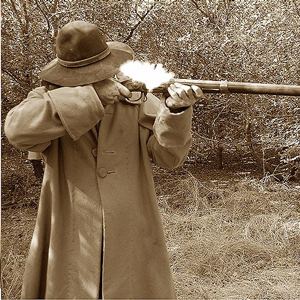
Working in St. Louis, Lewis sends Clark’s commission for second lieutenant—not for captain as promised. He also expresses a strong opinion regarding traders Manuel Lisa and Francis Benoit. Across the Mississippi at Camp River Dubois, the enlisted men win shooting contests held with several of the local people.
May 5, 1804
Sauk and Kickapoo visitors
by Kristopher K. Townsend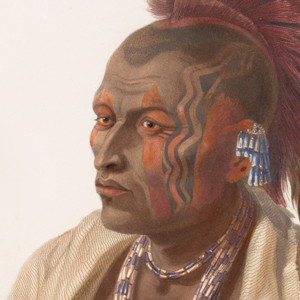
In St. Louis, Lewis prepares for departure up the Missouri River. Across the Mississippi at Camp River Dubois, Clark receives Sauk and Kickapoo visitors.
May 4, 1804
Officer of the Day
by Kristopher K. Townsend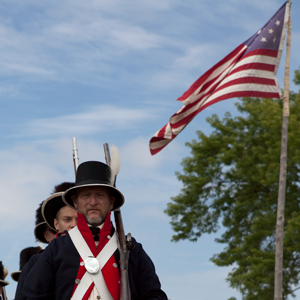
The day is rainy at winter camp across from the mouth of the Missouri. In his journal, Sgt. John Ordway records detachment orders for Officer of the Day and leaving camp. Lewis continues working in St. Louis.
From Washington City, Secretary of War Henry Dearborn tells Captain Amos Stoddard that Major James Bruff will soon arrive to replace him.
May 3, 1804
Chouteau's Osage delegation
by Kristopher K. Townsend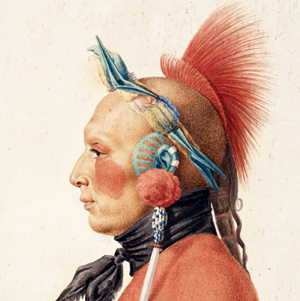
In St. Louis and Camp River Dubois, Lewis and Clark write letters of introduction for Pierre Chouteau who will soon take an Osage delegation to Washington City. At winter camp, the bottom of the barge is inspected, influential trader Manuel Lisa visits, and Sgt. Floyd brings letters to Clark.
May 2, 1804
Flags, nets, and shirts
by Kristopher K. Townsend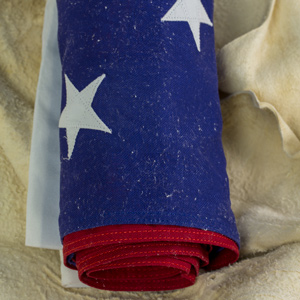
In St. Louis, Lewis writes Clark regarding seven French engagés and the enlisted men’s pay. He sends flags, mosquito netting, and shirts to Camp River Dubois where the barge is rolled over and several men are drunk.
May 1, 1804
Heeling the barge
by Kristopher K. Townsend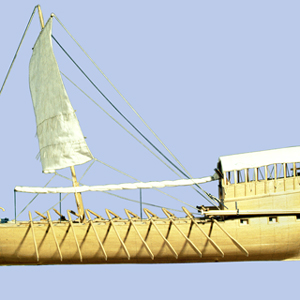
The month of May 1804 finds the expedition at Camp River Dubois on the present Wood River and across the Mississippi from St. Louis. An attempt is made to tilt the barge to one side so that its bottom can be inspected.
April 30, 1804
"Indian goods" nearly ready
by Kristopher K. Townsend
At Camp River Dubois, the enlisted men are busy making ready for their voyage up the Missouri. Fur trader John Hay and Cpt. Clark nearly finish sorting and packing the diplomatic gifts into bundles—each designated to be given to a specific Nation. Across the Mississippi, Cpt. Lewis works in St. Louis.
April 29, 1804
Packing Indian goods
by Kristopher K. Townsend
Several Kickapoo chiefs and a boat captain from Louisville visit Clark at Camp River Dubois. Fur trader John Hay continues to pack “Indian goods”, and Lewis continues across the Mississippi at St. Louis.
April 28, 1804
Shooting for money
by Kristopher K. Townsend
At Camp River Dubois, several local settlers lose their money in marksmanship contests with the enlisted men. John Hay works with “Indian goods” and all hands prepare for their imminent journey up the Missouri. Lewis continues working in St. Louis.
April 27, 1804
Preparing Indian goods
by Kristopher K. Townsend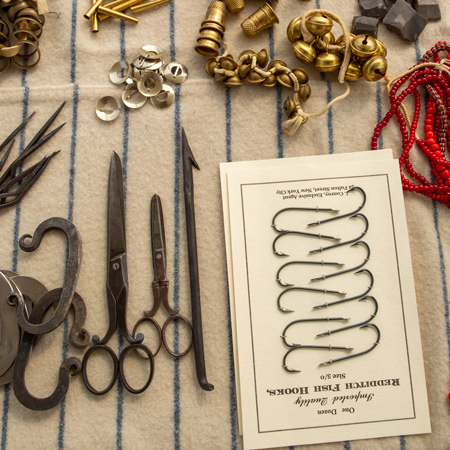
At Camp River Dubois in Illinois, Clark and fur trader John Hay organize the many goods that will be used as diplomatic gifts for the Native Nations the expedition will soon meet. Popular gifts include scissors, fishhooks, iron strikers, and metallic buttons.
April 26, 1804
A killing frost
by Kristopher K. Townsend
At Camp River Dubois across the Mississippi River from St. Louis, fur trader and Cahokia Postmaster John Hay arrives to help prepare what the journalists called ‘Indian gifts’. He reports that frost has killed much of the Cahokia area fruit crop.
April 25, 1804
Crossing the Mississippi
by Kristopher K. Townsend
Clark leaves St. Louis and crosses the Mississippi in a pirogue. He arrives at the expedition’s winter cantonment—Camp River Dubois in present Illinois—after dark.
April 24, 1804
Missing pay
by Kristopher K. Townsend
The captains work in St. Louis while across the Mississippi at Camp River Dubois, the military routine is managed by Sgt. Ordway. An undated note written about this time discusses the missing pay of Pvt. Whitehouse.
April 23, 1804
Missing hair pipes
by Kristopher K. Townsend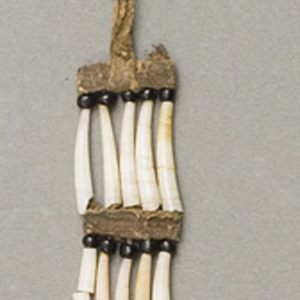
The captains work in St. Louis while the enlisted men at Camp River Dubois follow Sgt. Ordway‘s orders. In an undated note, Clark informs Lewis that he can’t find the hair pipes purchased as Indian gifts.
Experience the Lewis and Clark Trail
The Lewis and Clark Trail Experience—our sister site at lewisandclark.travel—connects the world to people and places on the Lewis and Clark Trail.
Discover More
- The Lewis and Clark Expedition: Day by Day by Gary E. Moulton (University of Nebraska Press, 2018). The story in prose, 14 May 1804–23 September 1806.
- The Lewis and Clark Journals: An American Epic of Discovery (abridged) by Gary E. Moulton (University of Nebraska Press, 2003). Selected journal excerpts, 14 May 1804–23 September 1806.
- The Lewis and Clark Journals. by Gary E. Moulton (University of Nebraska Press, 1983–2001). The complete story in 13 volumes.
This site is provided as a public service by the

Lewis and Clark Trail Alliance
with additional funding from the following: