Lewis and some Lemhi Shoshones finally meet in the Lemhi River valley. Diplomatic gestures include Shoshone-style greetings, a flag presentation, a pipe ceremony, and revelry late into the night.
On the Beaverhead River, the enlisted men labor to move the heavy dugouts up the shallow river. To rest, they fish the river. Clark takes bearings from a rock now called Clark’s Lookout.
Lewis: Shoshone Diplomacy
Captain Lewis Meeting the Shoshones
36″ x 66″ oil on canvas
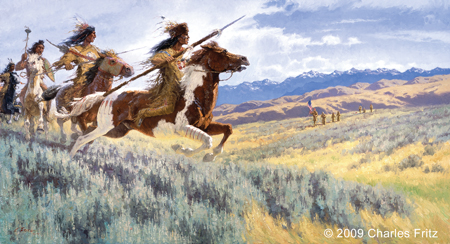
© 2009 by Charles Fritz. Used by permission.
First Idaho Flag Unfurling
I directed the partyFirst to halt and leaving my pack and rifle I took the flag which I unfurled and avanced singly towards them the women soon disappeared behind the hill, the man continued untill I arrived within a hundred yards of him and then likewise absconded.
—Meriwether Lewis
Affectionate Shoshone Greetings
[W]e met a party of about 60 warriors mounted on excellent horses who came in nearly full speed, when they arrived I advanced towards them with the flag leaving my gun with the party about 50 paces behid me. the chief and two others who were a little in advance of the main body spoke to the women, and they informed them who we were and exultingly shewed the presents which had been given them these men then advanced and embraced me very affectionately in their way . . . .
—Meriwether Lewis
Flag Presentation
the principal chief Ca-me-âh-wait made a short speach to the warriors. I gave him the flag which I informed him was an emblem of peace among whitemen and now that it had been received by him it was to be respected as the bond of union between us.
—Meriwether Lewis
Ceremony of the Pipe
I now had the pipe lit and gave them smoke; they seated themselves in a circle around us and pulled of their mockersons before they would receive or smoke the pipe. this is a custom among them as I afterwards learned indicative of a sacred obligation of sincerity in their profession of friendship given by the act of receiving and smoking the pipe of a stranger.
—Meriwether Lewis
Shoshone Weapons
they were armed with b[o]ws arrow and Shield except three whom I observed with small pieces such as the N. W. Company furnish the naives with which they had obtained from the Rocky Mountain Indians [Apsáalooke] on the yellow stone river with whom they are at peace.
—Meriwether Lewis
Late-night Revelry
This evening the Indians entertained us with their dancing nearly all night. at 12 O’Ck. I grew sleepy and retired to rest leaving the men to amuse themselves with the Indians
—Meriwether Lewis
Three Prickly Pears
Lewis’s Prickly Pears
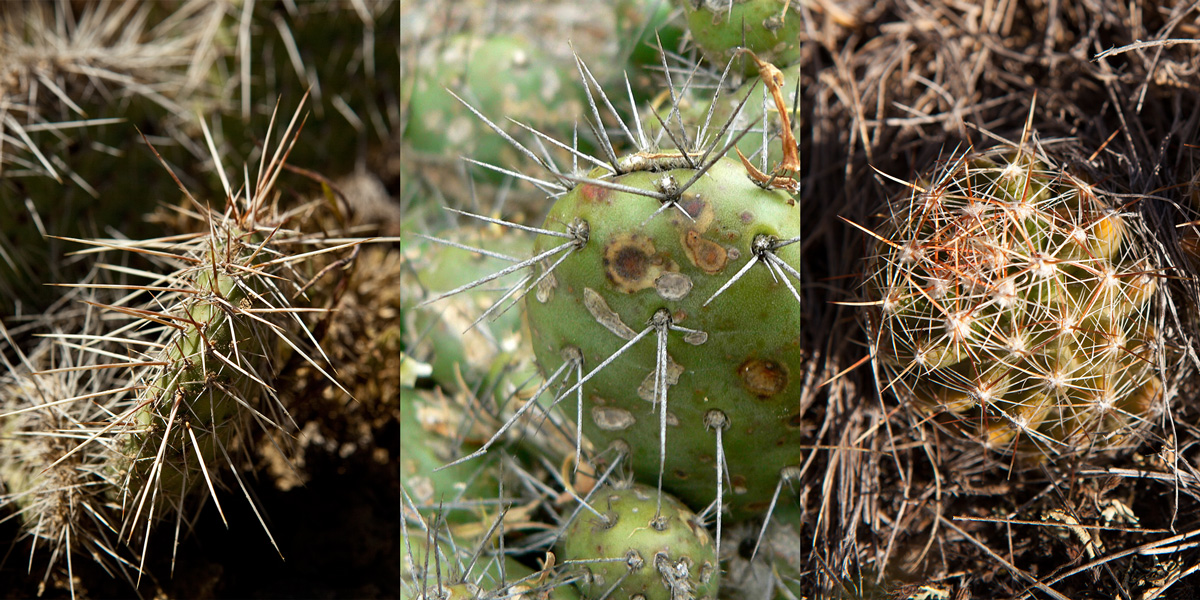
© 2014 by Kristopher K. Townsend. Permission to use granted under the Creative Commons Attribution-Share Alike 4.0 International license.
Moving left to right: Plains prickly pear, Opuntia macrorhiza; Brittle prickly pear, Opuntia fragilis; and Pincushion cactus, Pediocactus simpsonii.
the prickley pear are of three species that with a broad leaf common to the missouri; that of a globular form also common to the upper pat of the Missouri and more especially after it enters the Rocky Mountains, also a 3rd peculiar to this country. it consists of small circular thick leaves with a much greater number of thorns.
—Meriwether Lewis
Clark on the Beaverhead
Clark’s Lookout
View of Dillon from Clark’s Lookout
(McNeal Creek)
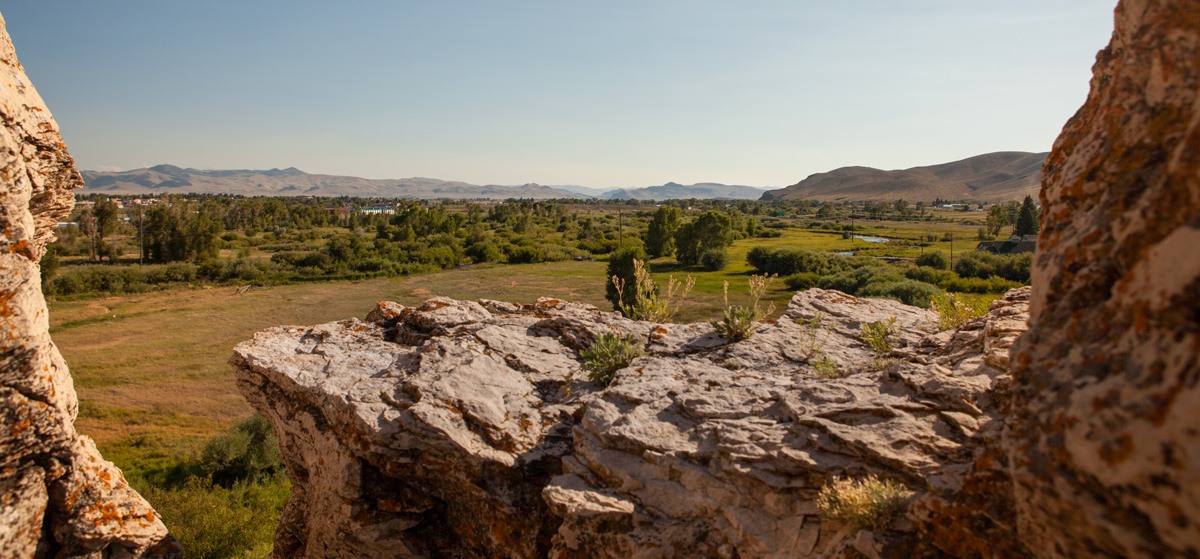
© 21 July 2013 by Kristopher K. Townsend. Permission to use granted under the Creative Commons Attribution-Share Alike 4.0 International license.
passed the mouth of a bold running Stream 7 yards wide on the Lard Side below a high Point of Limestone rocks on the Stard Side this Creek heads in the mountains to the easte and forms a Vallie between two mountains. Call this stream McNeal Creek
—William Clark
Laboring Up the Beaverhead
The river obliges the men to undergo great fatigue and labour in hauling the Canoes over the Sholes in the Cold water naked.
—William Clark
Good Fishing
we had caught a nomber of fine Trout this Several days passed high clifts of rocks and fine Springs on S. Side
—John Ordway
Weather Diary
State of the Thermometer at rise
Weather at Wind at State of the Thermometer at 4 P.M. Weather at 4 P.M. Wind at 4 P.M. 52 [above 0] cloudy after fair N. W. 70 [above 0] fair after rain N W very cold last night. passed the dividing ridge to the waters of Columbia river
—Meriwether Lewis[1]To assist the reader, the editor of this web page has omitted the date column and spelled out some abbreviations.


First Flag Unfurling Site is a High Potential Historic Site along the Lewis and Clark National Historic Trail managed by the U.S. National Park Service. A historical marker and interpretive wayside exhibit can be visited on Warm Springs Road, NF-185.
Clark’s Lookout is a High Potential Historic Site along the Lewis and Clark National Historic Trail managed by the U.S. National Park Service. The site is a Montana State Park near Dillon.
Notes
| ↑1 | To assist the reader, the editor of this web page has omitted the date column and spelled out some abbreviations. |
|---|
Experience the Lewis and Clark Trail
The Lewis and Clark Trail Experience—our sister site at lewisandclark.travel—connects the world to people and places on the Lewis and Clark Trail.
This page was funded in part by the Lewis and Clark National Historic Trail, U.S. National Park Service.
Discover More
- The Lewis and Clark Expedition: Day by Day by Gary E. Moulton (University of Nebraska Press, 2018). The story in prose, 14 May 1804–23 September 1806.
- The Lewis and Clark Journals: An American Epic of Discovery (abridged) by Gary E. Moulton (University of Nebraska Press, 2003). Selected journal excerpts, 14 May 1804–23 September 1806.
- The Lewis and Clark Journals. by Gary E. Moulton (University of Nebraska Press, 1983–2001). The complete story in 13 volumes.
This site is provided as a public service by the
Lewis and Clark Trail Alliance
with additional funding from the following: