Kristopher Townsend
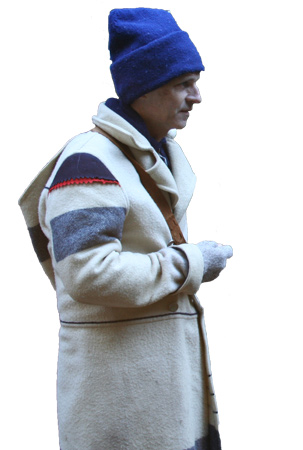
From the Pacific Northwest Living Historians at Lewis and Clark National Historic Park, Fort Clatsop.
Since 2016, Kristopher K. Townsend has been the webmaster and editor of this site, Discovering Lewis & Clark®. He has been actively photo-documenting the Lewis and Clark Trail since 1995. He attempts as closely as possible to re-create scenes as described in the journals including the same time of year, natural state, location, and weather. He has contributed numerous photos throughout the Discovering Lewis & Clark website.
Kris taught several years as a tenured instructor at Spokane Falls Community College. His courses included Internet programming and other information technology and computer science courses. During that time, he was also the series editor and an author of a popular college textbook series on Office Technology.
Shortly after the advent of the World Wide Web, he managed a web server featuring digital photos, digital video, and articles created by his Glenwood Heights Primary students. Topics included historical sites of Clark County (Washington State), wildflowers and birds of Clark County, and how-to videos for school’s physical education program.
Contributions to this Site
October 5, 1803
Big Bone Lick
by Kristopher K. Townsend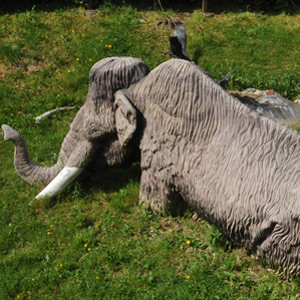
Lewis is likely at Big Bone Lick collecting fossils and fellow travelers Thomas Rodney and Nicholas Cresswell describe the diggings that he saw. Elsewhere, the U.S. Army expects problems with Spain.
October 4, 1803
To Big Bone Lick
by Kristopher K. Townsend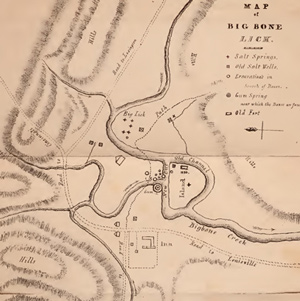
On or near this date, Lewis leaves Cincinnati for Big Bone Lick where he expects to collect fossils for Thomas Jefferson. Elsewhere, tensions rise between Spain and the United States over Louisiana.
October 3, 1803
Spoiled smallpox vaccine
by Kristopher K. Townsend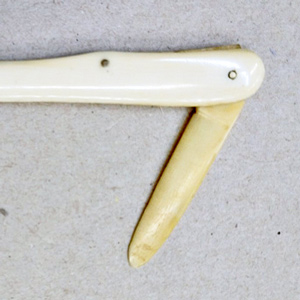
Lewis writes a letter to Jefferson describing his time in Cincinnati. He says that his kinepox vaccine—used to prevent smallpox—has spoiled and also asks for a copy of the Louisiana Purchase treaty.
October 2, 1803
The North Bend of the Ohio
by Kristopher K. Townsend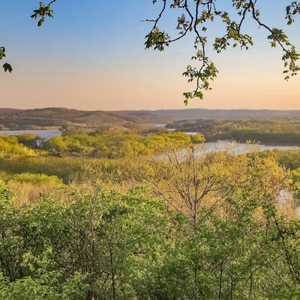
Lewis is in Cincinnati while the boats continue down the Ohio. On or near this day, they pass the Miami River. In 1749, French explorer Céloron left a lead plate there claiming possession of the Ohio.
October 1, 1803
Dispatching the boats
by Kristopher K. Townsend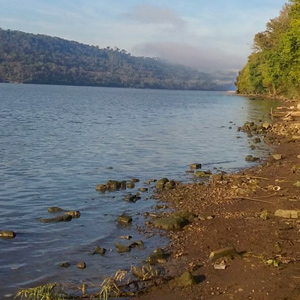
In the evening, Lewis dispatches the boats from Cincinnati to the Big Bone Lick landing. Contemporary traveler Thomas Rodney encounters numerous rapids and bars in this stretch of the Ohio River.
September 30, 1803
Resting in Cincinnati
by Kristopher K. Townsend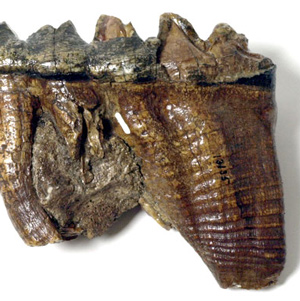
Lewis remains in Cincinnati instead of leaving as previously planned. His crew is likely resting, and Lewis may be finalizing plans to collect fossils at Big Bone Lick.
September 29, 1803
Mastodon bones
by Kristopher K. Townsend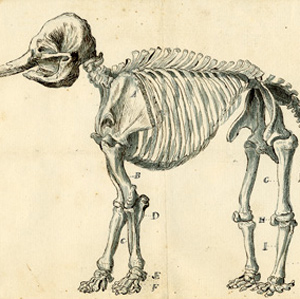
At Cincinnati, Ohio, Lewis rests his crew and works with Dr. Goforth to examine the fossil bones that were excavated from nearby Big Bone Lick.
Near Natchez, the governor of the Mississippi Territory William Claiborn updates President Jefferson regarding the Louisiana Territory.
September 28, 1803
Cincinnati arrival
by Kristopher K. Townsend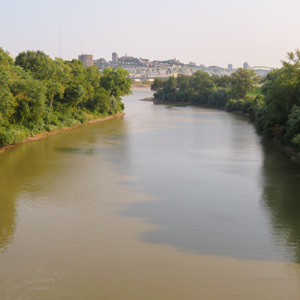
Lewis arrives in Cincinnati, Ohio where he rests his crew and writes letters to President Jefferson and William Clark. He tells Jefferson he has come 500 miles and tells Clark that he has two recruits that may be suitable for the expedition.
September 27, 1803
Little Miami River
by Kristopher K. Townsend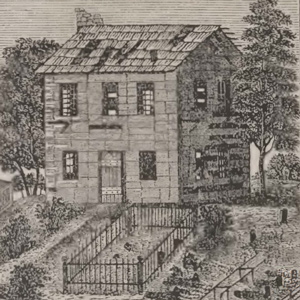
On or near this date, Lewis and his crew pass the Little Miami River. Contemporary traveler Thomas Rodney describes that river and the Ohio River from there to Cincinnati.
September 26, 1803
Honey locusts and sycamores
by Kristopher K. Townsend
On or near this date, Lewis and his crew move down the Ohio River in the area between Augusta, Kentucky and New Richmond, Ohio. A fellow traveler in this area treated a settler with mercury pills.
September 25, 1803
The Augusta ferry
by Kristopher K. Townsend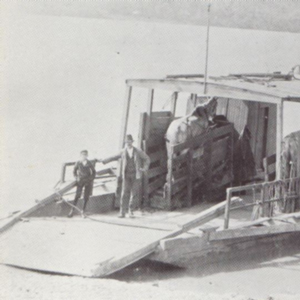
On or near this date, Lewis and his boats travel through the area between Maysville and Augusta, Kentucky. Thomas Rodney described small settlements and ferry crossings on this stretch of the Ohio River.
September 24, 1803
Maysville recruit?
by Kristopher K. Townsend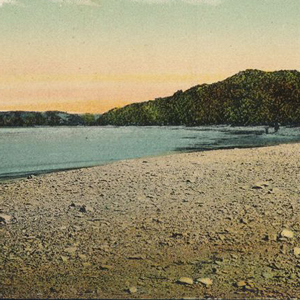
At Maysville, Kentucky, John Colter likely asked Lewis if he could join the expedition. Soon after, Thomas Rodney described the town and expressed his low opinion of Ohio River settlers.
September 23, 1803
Dangerous riffles
by Kristopher K. Townsend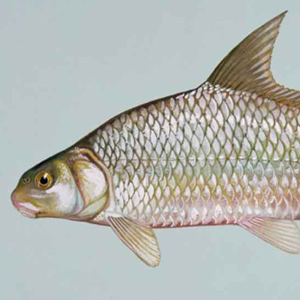
On or near this date, Lewis travels between present Portsmouth, Ohio and Maysville, Kentucky. Fellow traveler Thomas Rodney describes the rapids, high hills, and river carpsuckers in this area.
September 22, 1803
Hanging Rock
by Kristopher K. Townsend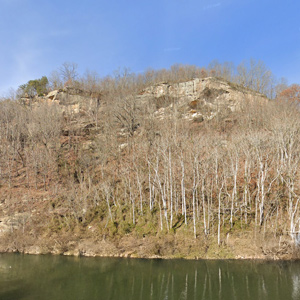
On or near this date, Lewis passes a notable hanging rock and the Ohio River towns of Alexandria (Portsmouth, Ohio) and Vanceburg, Kentucky. Travelers Fortescue Cuming and Thomas Rodney describe the area.
September 21, 1803
Entering Kentucky
by Kristopher K. Townsend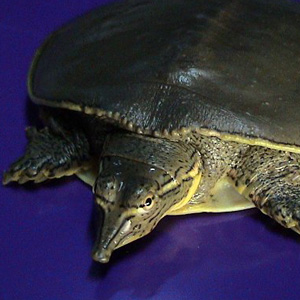
On or near this date, Lewis and his crew pass the Big Sandy and enter Kentucky. Just as did fellow traveler Thomas Rodney, Lewis likely noticed the many Eastern spiny soft-shelled turtles in this area.
September 20, 1803
Guyandotte Rivers
by Kristopher K. Townsend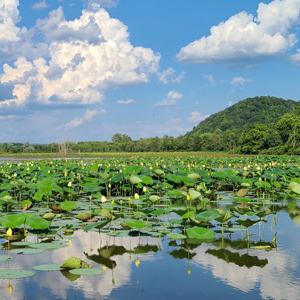
On or near this day, Lewis passes present Guyan Creek and speeds through a narrow section of the Ohio River. He would encounter an “ugly” riffle at the mouth of the Guyandotte River.
September 19, 1803
Point Pleasant
by Kristopher K. Townsend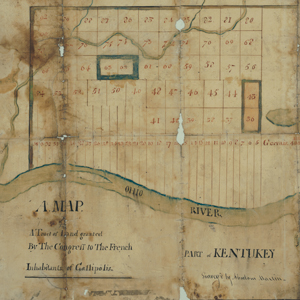
From Thomas Rodney’s journal and Zadok Cramer’s 1802 river guide, we can reasonably assume that Lewis reached, or was near, Point Pleasant, West Virginia and Gallipolis, Ohio on this day.
September 18, 1803
Letart Falls
by Kristopher K. Townsend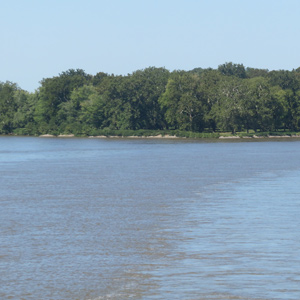
The expedition heads out down the Ohio before sunrise. They safely pass a rapid near the present community of Letart Falls, and Lewis writes his last journal entry until 11 November 1803.
September 17, 1803
Drying out
by Kristopher K. Townsend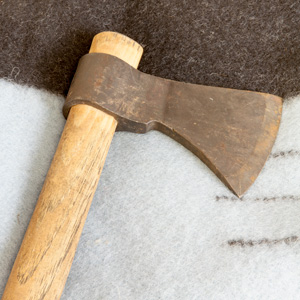
On the advice of his pilot, Lewis heads down the Ohio before the morning fog has cleared. They stop near present Millwood, West Virginia to dry wet cargo. Rusty guns and tomahawks are oiled.
September 16, 1803
Very bad riffles
by Kristopher K. Townsend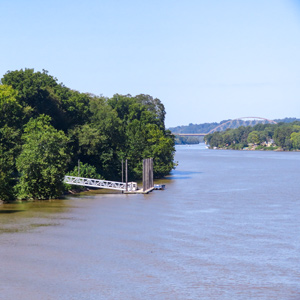
After delaying for fog, Lewis pushes his crew until nearly dark. They pass an area with trees marked by both Indians and settlers. At camp near present Ravenswood, West Virginia, the crew is exhausted.
September 15, 1803
Passing Belpre
by Kristopher K. Townsend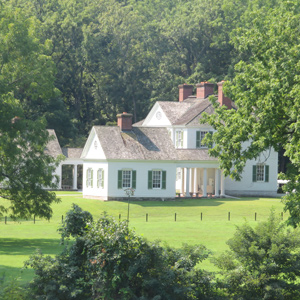
Lewis and his crew head down the Ohio passing present Little Kanawha and Little Hocking rivers. The barge must be lifted over a gravel bar, and they stop for the day near Blennerhassett Island.
September 14, 1803
Helpless sailors
by Kristopher K. Townsend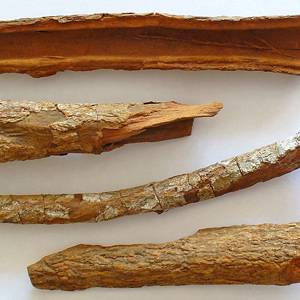
In Marietta, two of the crew are so drunk that Lewis must assist them to the boat. On their way down the Ohio, Seaman catches squirrels, and Lewis notes that many settlers suffer from malaria and ague.
September 13, 1803
Marietta, Ohio
by Kristopher K. Townsend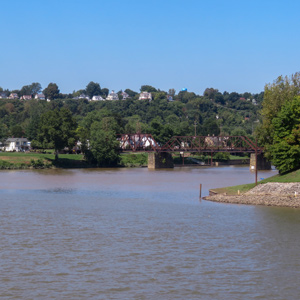
At sunrise, the boats move down the Ohio River. They lift the barge over a few riffles and see a flock of passenger pigeons. Anchored opposite Marietta, Ohio, Lewis writes a letter to President Jefferson.
September 12, 1803
Cutting a channel
by Kristopher K. Townsend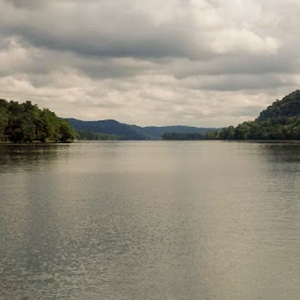
To pass through a shallow spot in the Long Reach of the Ohio, the crew must cut a channel through the gravel. They anchor about nine miles upstream from Marietta, Ohio.
September 11, 1803
Swimming squirrels
by Kristopher K. Townsend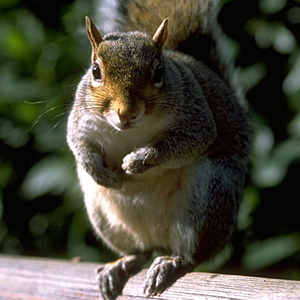
The boats enter the Long Reach of the Ohio River where Lewis sees squirrels swimming across the river. He has his dog, Seaman, capture several and when fried, he finds them fat and tasty.
September 10, 1803
Exploring Indian mounds
by Kristopher K. Townsend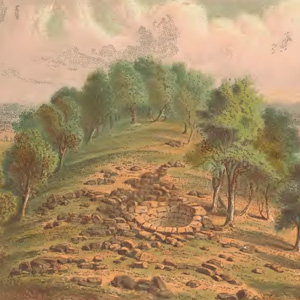
After a missing corporal arrives, the boats make 24 miles down the Ohio stopping opposite present Clarington, Ohio. On the way, Lewis explores ancient Indian mounds at Moundsville.
September 9, 1803
Leaving Wheeling
by Kristopher K. Townsend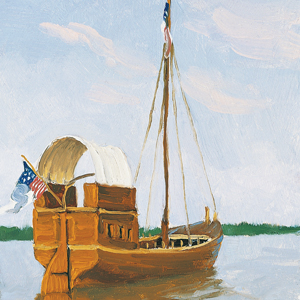
At Wheeling, potential new member Dr. Patterson fails to appear, so at 3:00 pm, Lewis heads down the Ohio without him. During the night, it rains so hard that he is unable to keep the cargo dry.
September 8, 1803
Buying another pirogue
by Kristopher K. Townsend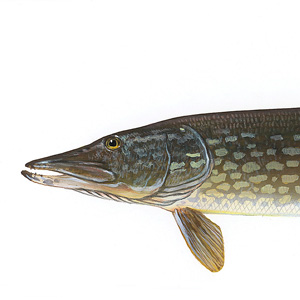
At Wheeling in present West Virginia, Lewis writes a letter to President Jefferson, purchases another pirogue, and meets a doctor who offers to come along. He dines with Thomas Rodney.
September 7, 1803
Wheeling, (West) Virginia
by Kristopher K. Townsend
Lewis and his crew reach Wheeling in present West Virginia, and he inspects the cargo that had arrived by wagon. In the evening, he meets with Thomas Rodney who is also traveling down the Ohio.
September 6, 1803
Sailing past Steubenville
by Kristopher K. Townsend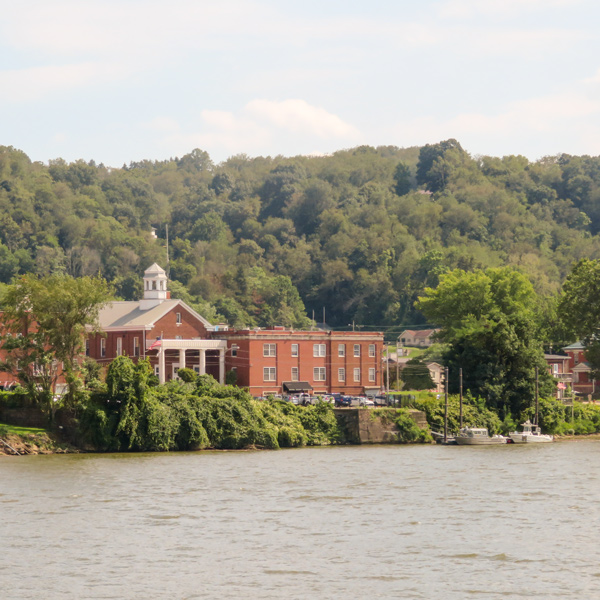
Lewis employs horses, sails, and oxen to pass over several gravel bars. He tries sailing, but in the high wind, the sprit sail breaks. They pass Steubenville, Ohio but only make ten miles for the day.
September 5, 1803
Canoes delayed
by Kristopher K. Townsend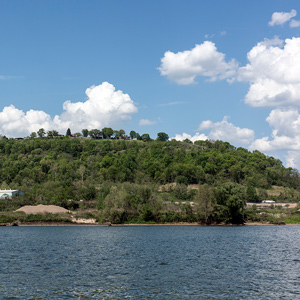
In present West Virginia, the Ohio River is deep enough to navigate without the help of horses or oxen. When the two canoes fail to arrive, the sounding horn is blown.
Already stationed on the Mississippi, the expedition’s future Sergeant of the Guard, John Ordway, writes home.
Up the Missouri River in present South Dakota, trader Pierre-Antoine Tabeau describes a diplomatic encounter among the Lakota, Omaha, and Ponca.
September 4, 1803
Leaky boats
by Kristopher K. Townsend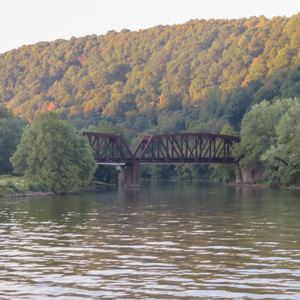
As they leave Pennsylvania along the Ohio River, the pirogue springs a serious leak, so they must stop to repair it. Lewis buys a canoe, but it too leaks. Camp is near Newell in present West Virginia.
September 3, 1803
Passing Fort McIntosh
by Kristopher K. Townsend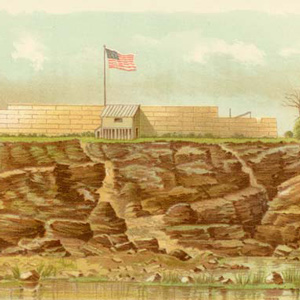
Morning fog delays departure, but they eventually pass Fort McIntosh. The barge must be unloaded and dragged by horses before they stop near present Industry, Pennsylvania.
September 2, 1803
Logstown frustrations
by Kristopher K. Townsend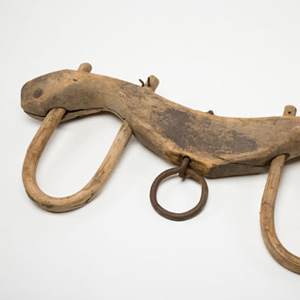
The Ohio River around Logstown presents a day of challenges navigating through shallow water. Lewis complains about the high price residents charge to drag the barge over the ‘riffles’ with their oxen.
September 1, 1803
Woollery's Trap
by Kristopher K. Townsend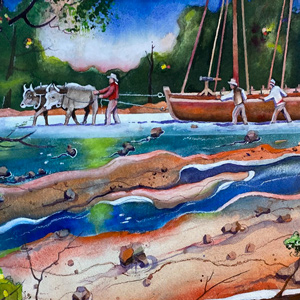
Leaving McKees Rocks below Pittsburgh, the barge has difficulty in the shallow water. At Woollery’s Trap, Lewis hires oxen to drag the emptied boat. They stop for the day near Edgeworth, Pennsylvania.
August 31, 1803
On their way, finally!
by Kristopher K. Townsend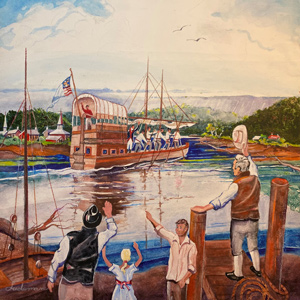
After eight months of preparation and a summer of waiting for the barge to be ready, Lewis is finally underway with a crew of eleven hands. During a stop, he shows off his air gun, and notable citizen Blaze Cenas accidentally shoots a female spectator. They camp near McKees Rocks, Pennsylvania.
In New York, the Secretary of the Treasury worries about issuing the stock that will pay for Louisiana—an issue key to the success of the Lewis and Clark Expedition.
August 30, 1803
Praying for rain
by Kristopher K. Townsend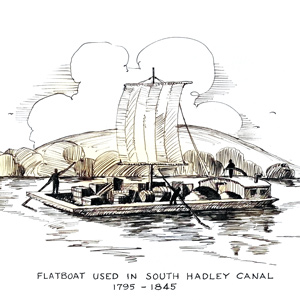
In Pittsburgh, the expedition’s barge is nearly ready, but the low Ohio River likely has Lewis and his crew wishing for rain. The autumnal rains typically won’t start until October. Until then, river traffic is suitable only for small boats and lightly loaded flatboats.
August 29, 1803
Ohio River flatboats
by Kristopher K. Townsend
In Pittsburgh, Lewis oversees the final steps to complete the expedition’s military-style barge. All summer he could see flat-bottomed boats heading down the river—each a reminder that he is unable to get underway.
August 28, 1803
Ohio freshets needed
by Kristopher K. Townsend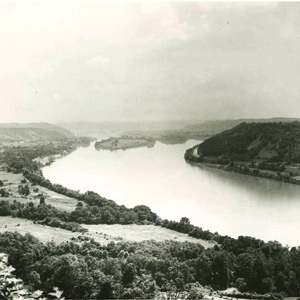
In Pittsburgh, the expedition’s barge is nearly ready. Unfortunately, the high-water season—here described by fellow traveler Thaddeus Harris—is long past for such a large boat.
August 27, 1803
Trenails and caulking
by Kristopher K. Townsend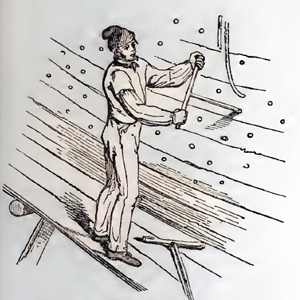
In Pittsburgh, the expedition’s barge nears completion. Final tasks include placement of the trenails and caulking. These are described and illustrated in Palmer’s The Pictorial Gallery of Arts.
August 26, 1803
An offer for John Conner
by Kristopher K. Townsend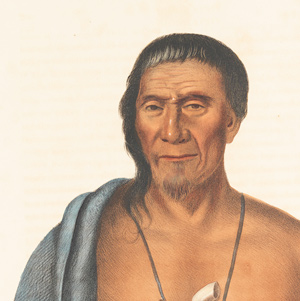
From the Falls of the Ohio, Clark writes a letter to John Conner—who worked with the Shawnees and Lenape Delawares—offering him a position as interpreter for the Western Expedition.
In Pittsburgh, Lewis waits for the completion of barge prior to departing down the Ohio River.
August 25, 1803
Media leaks
by Kristopher K. Townsend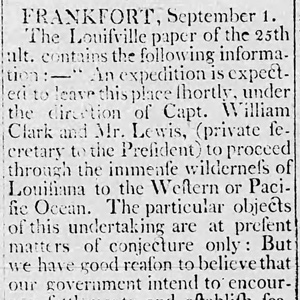
In Louisville, Kentucky, a newspaper leaks a story that “Capt. William Clark and Mr. Lewis, (private secretary to the President)” will soon lead an expedition to the Pacific Ocean. In Pittsburgh, the expedition’s barge nears completion.
August 24, 1803
New Orleans smugglers
by Kristopher K. Townsend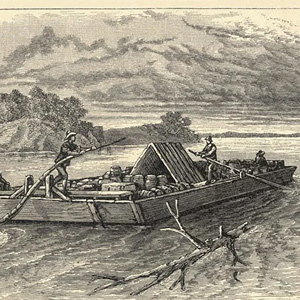
As Clark waits in Louisville and Lewis waits in Pittsburgh for the barge to be ready, the Governor of the Mississippi Territory answers Thomas Jefferson’s questions about Louisiana. In his letter, he describes smuggling at New Orleans—an activity experienced first-hand by Clark.
August 23, 1803
Possible delay
by Kristopher K. Townsend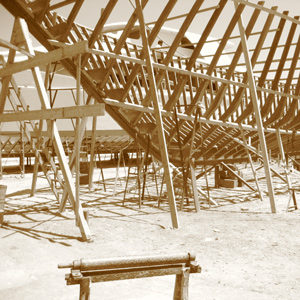
In Pittsburgh, Lewis witnesses a vibrant boat-building industry. Just last year, two large ocean-going ships had been built there. To reach deep water, they had to wait until the spring flood of 1803. With historically low water in August 1803, Lewis likely fears he may have to delay the expedition until next year’s high water.
August 22, 1803
Ohio flatboat men
by Kristopher K. Townsend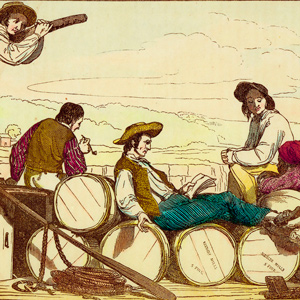
As he waits in Pittsburgh for the expedition’s barge to be completed, Lewis likely sees many Ohio River flatboat men heading down the river—and wishes he could too.
August 21, 1803
Clark's advise
by Kristopher K. Townsend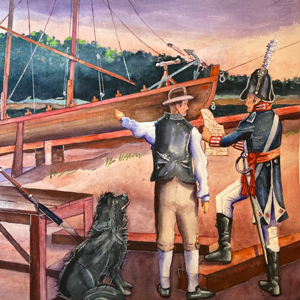
At the Falls of the Ohio, Clark has been looking for interpreters, hunters, and boatmen and writes a letter advising Lewis to look for them in St. Louis and Cahokia. But first, construction of the expedition’s barge must be completed in Pittsburgh.
August 20, 1803
Maple sugar
by Kristopher K. Townsend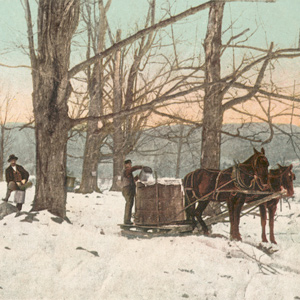
In Pittsburgh, Lewis oversees construction of the expedition’s military-style barge before departing down the Ohio River. Most of the town’s residents drink tea and coffee, and many sweeten their cups with locally made coarse maple sugar. The sugar is typically sold in “loaves” weighing six, eight, or ten pounds.
August 19, 1803
Pittsburgh rivers
by Kristopher K. Townsend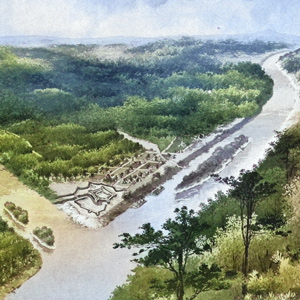
While overseeing construction of the expedition’s barge, Lewis likely found time to explore the rivers and hills surrounding Pittsburgh. There, the Monongahela and Allegheny rivers merge to form the Ohio River. He likely noticed their changing flows and turbidity levels.
August 18, 1803
Louisiana difficulties
by Kristopher K. Townsend
In Washington City and New Orleans, private and encrypted letters are written regarding difficulties arising from the cession of Louisiana. One letter condemns the actions of the French colonial prefect in New Orleans, and the other questions the constitutionality of the Louisiana Purchase.
In Pittsburgh, Lewis oversees construction of the expedition’s military-style barge before departing down the Ohio River.
August 17, 1803
Seneca oil
by Kristopher K. Townsend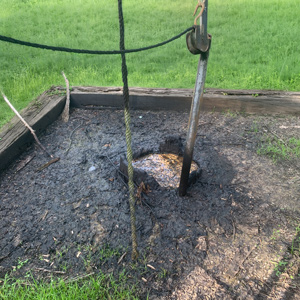
In Pittsburgh, Lewis oversees construction of the expedition’s military-style barge before departing down the Ohio River. During this time, the area’s Seneca oil used by Native Americans and settlers likely came under his inquisitive eye.
Experience the Lewis and Clark Trail
The Lewis and Clark Trail Experience—our sister site at lewisandclark.travel—connects the world to people and places on the Lewis and Clark Trail.
Discover More
- The Lewis and Clark Expedition: Day by Day by Gary E. Moulton (University of Nebraska Press, 2018). The story in prose, 14 May 1804–23 September 1806.
- The Lewis and Clark Journals: An American Epic of Discovery (abridged) by Gary E. Moulton (University of Nebraska Press, 2003). Selected journal excerpts, 14 May 1804–23 September 1806.
- The Lewis and Clark Journals. by Gary E. Moulton (University of Nebraska Press, 1983–2001). The complete story in 13 volumes.
This site is provided as a public service by the
Lewis and Clark Trail Alliance
with additional funding from the following: