Kristopher Townsend
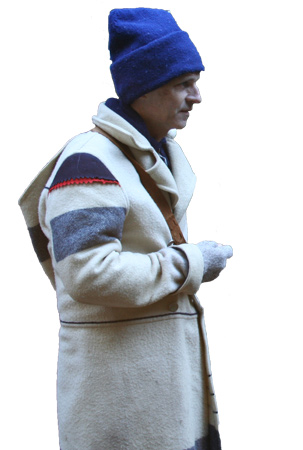
From the Pacific Northwest Living Historians at Lewis and Clark National Historic Park, Fort Clatsop.
Since 2016, Kristopher K. Townsend has been the webmaster and editor of this site, Discovering Lewis & Clark®. He has been actively photo-documenting the Lewis and Clark Trail since 1995. He attempts as closely as possible to re-create scenes as described in the journals including the same time of year, natural state, location, and weather. He has contributed numerous photos throughout the Discovering Lewis & Clark website.
Kris taught several years as a tenured instructor at Spokane Falls Community College. His courses included Internet programming and other information technology and computer science courses. During that time, he was also the series editor and an author of a popular college textbook series on Office Technology.
Shortly after the advent of the World Wide Web, he managed a web server featuring digital photos, digital video, and articles created by his Glenwood Heights Primary students. Topics included historical sites of Clark County (Washington State), wildflowers and birds of Clark County, and how-to videos for school’s physical education program.
Contributions to this Site
June 22, 1803
Louisiana news and rumors
by Kristopher K. Townsend
A Frankfort newspaper reports that Louisiana will be ceded to the United States while in Washington City, the National Intelligencer reports that the port of New Orleans has re-opened. Amongst these political changes, President Jefferson’s Western Expedition plans continue.
June 20, 1803
Jefferson's instructions
by Kristopher K. Townsend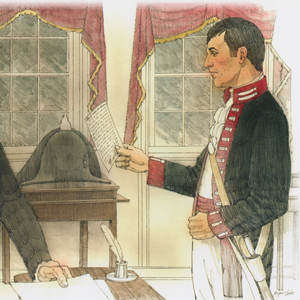
In Washington City, the final draft of President Jefferson’s instructions for the Western Expedition is complete. His directives include geography, ethnography, diplomacy, commerce, natural history, vaccinations, and safety. He also promises open letters of credit to use as needed.
June 19, 1803
Clark's invitation
by Kristopher K. Townsend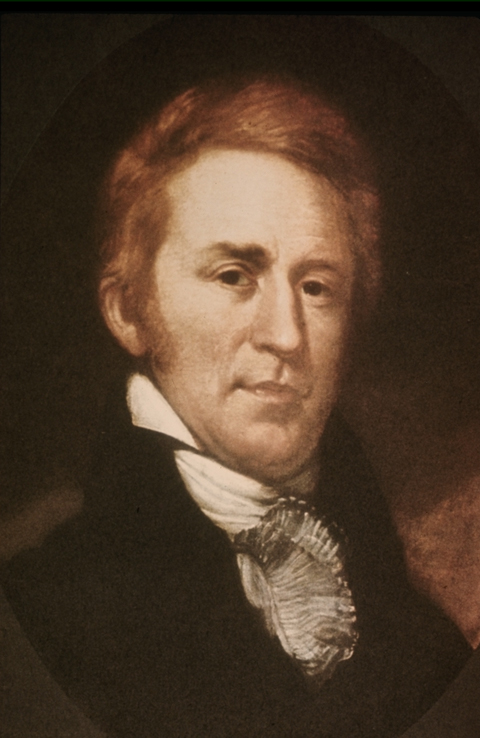
In Washington City, Meriwether Lewis pens William Clark’s invitation to share in the fatigues, dangers, and honors of the upcoming exploration of the west. He also tells Clark of his intention to embark from Pittsburgh and the need to recruit suitable soldiers and hunters.
June 18, 1803
Patterson's statistical table
by Kristopher K. Townsend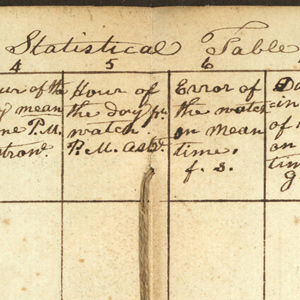
In Philadelphia, Robert Patterson—the oldest and perhaps the most erudite of the five American Philosophical Society members that Meriwether Lewis consulted—sends Lewis a statistical table for recording celestial observations during the expedition.
June 17, 1803
Critical books and maps
by Kristopher K. Townsend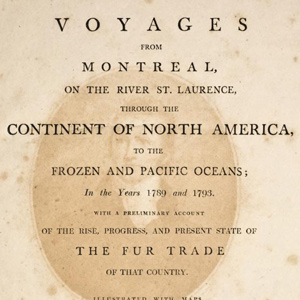
In Washington City, President Thomas Jefferson orders a copy of Alexander Mackenzie’s Voyages from Montreal and Aaron Arrowsmith’s map of North America recently updated with information from Hudson’s Bay explorer Peter Fidler. Both would be carried west with the expedition.
Jefferson also offers Federal appointments to Thomas Rodney who would document his 1803 trip down the Ohio and his encounters there with Meriwether Lewis and William Clark.
June 16, 1803
Pouches and powder horns
by Kristopher K. Townsend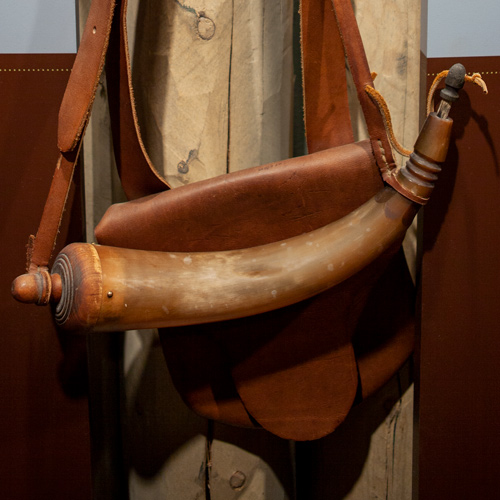
Philadelphia saddle maker Robert Martin invoices U.S. Army purchasing agent Israel Whelan for 15 shot pouches and powder horns—essential solider gear purchased by Lewis for the expedition.
June 15, 1803
Tents and bags
by Kristopher K. Townsend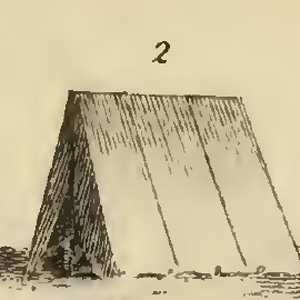
On behalf of Meriwether Lewis, U.S. Army Purveyor of Public Supplies Israel Whelan purchases tents, cloth, and two dozen “Hooks & Eyes” from Philadelphia upholsterer Richard Wevill.
June 10, 1803
Shipping goods
by Kristopher K. Townsend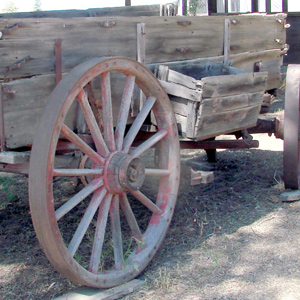
In Philadelphia, Lewis arranges the shipment of the expedition’s supplies to Fort Fayette in Pittsburgh. The expedition’s most expensive piece of equipment, the chronometer, is cleaned, adjusted, and given a new mahogany box.
June 9, 1803
Jefferson's surprise
by Kristopher K. Townsend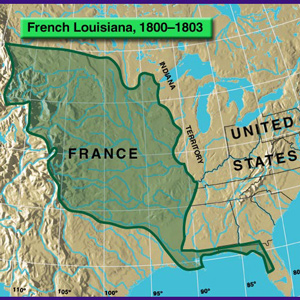
In Philadelphia, Lewis has a painted chest made to hold his scientific instruments.
In Washington City, Thomas Jefferson receives the news that France wishes to sell their entire Louisiana colony. Unknown to anyone in the United States, the actual purchase treaty has been signed.
June 8, 1803
Sewing awls
by Kristopher K. Townsend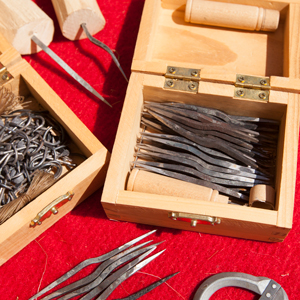
On behalf of Meriwether Lewis, Philadelphia merchants Harvey & Worth sell eight gross (over 1100) sewing awls to Israel Whelan, U.S. Army Purveyor of Public Supplies. The awls will be used mostly as gifts for Native People and eventually, by the enlisted men to make their own leather clothes.
June 6, 1803
The Pittsburgh shipment
by Kristopher K. Townsend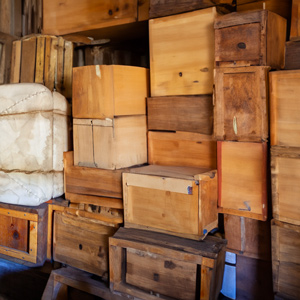
In Philadelphia, Lewis writes to William Linnard to arrange the shipment of the expedition’s supplies to Pittsburgh. Tools, hardware, and tailored goods are purchased.
In Washington City, President Jefferson’s new secretary—Lewis’s replacement—arrives.
June 3, 1803
63 pounds of tobacco
by Kristopher K. Townsend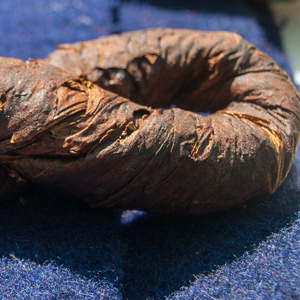
On behalf of Meriwether Lewis, U.S. Army purchasing agent Israel Whelan buys 63 pounds of pig tail tobacco from Philadelphia tobacconist Thomas Leiper, Jr. Tobacco will be an essential ration for the expedition soldiers and a critical part of diplomatic entreaties with the Native Nations they encounter.
June 2, 1803
Ratify quickly!
by Kristopher K. Townsend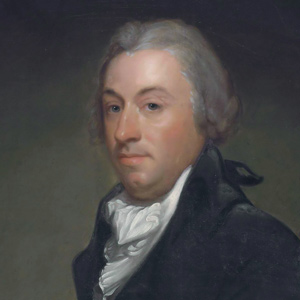
In a letter written in Paris, U.S. Minister to France Robert Livingston advises President Jefferson to ratify the Louisiana Treaty and its Conventions quickly and without making any changes lest Napoleon has an excuse to revoke it.
In Philadelphia, Lewis continues preparing for the Western Expedition despite the Louisiana Territory still being owned by France and controlled by Spain. He remains unaware of recent developments in France.
June 1, 1803
Wet and dry goods
by Kristopher K. Townsend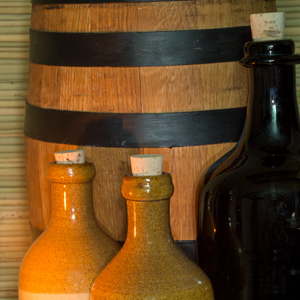
In Philadelphia, U.S. Army Purveyor of Public Supplies Israel Whelan buys a trunk of dry goods, 30 gallons of strong spirit wine, and six empty kegs —all or the expedition.
May 31, 1803
Navigational instruments
by Kristopher K. Townsend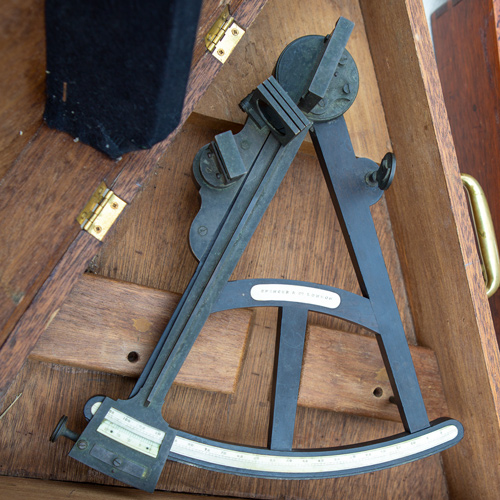
In Philadelphia, Thomas Whitney provides nearly all the expedition’s navigational instruments at a cost of $162.20.
May 30, 1803
Portable soup
by Kristopher K. Townsend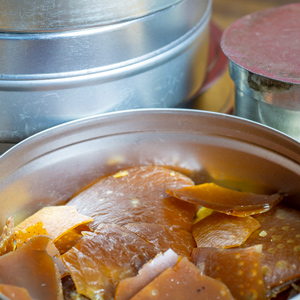
In Philadelphia, François Baillet completes an order for 193 pounds of “portable soup”. Two years later, while crossing the Bitterroot Mountains of Idaho, the travelers relied on the soup for emergency rations. Three years later, it was given as medicine.
May 29, 1803
Lewis's progress report
by Kristopher K. Townsend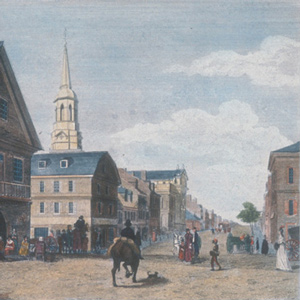
In Philadelphia, Lewis writes a lengthy letter to President Thomas Jefferson updating him on his progress. He says that his mentors have been helpful, that he is having difficulty finding qualified recruits, and that he is sending a copy of George Vancouver’s map of the west coast. He expects to return to Washington City in about a week.
May 28, 1803
Cloth goods, tea, and soap
by Kristopher K. Townsend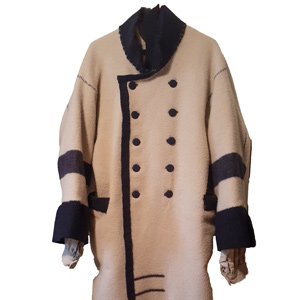
In Philadelphia, Israel Whelan, U.S. Army Purveyor of Public Supplies, buys wool blankets, pants, watch coats, and stockings. Receipts for today also include a tent, flannel shirts, Hyson tea, Castile soap, and 176 pounds of black powder.
May 27, 1803
Slow chronometer
by Kristopher K. Townsend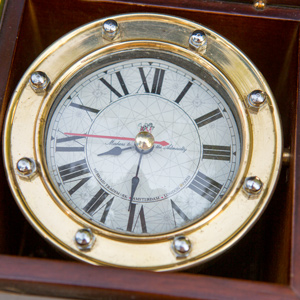
In Philadelphia, Lewis writes to master surveyor Andrew Ellicott to let him know that he has obtained a chronometer for taking celestial observations. He says it has been cleaned and running 14 seconds too slow per day.
May 26, 1803
The druggist's order
by Kristopher K. Townsend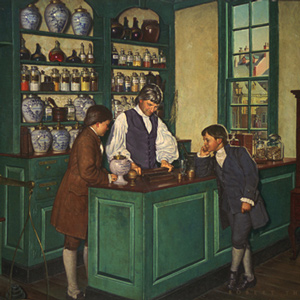
In Philadelphia, a large druggist’s order for botanical medicines, chemical drugs, and medical supplies is ready for delivery from Gillaspy and Strong. The bill comes to $90.69 and tells us much about the medicines brought on the expedition.
May 25, 1803
52 lead canisters
by Kristopher K. Townsend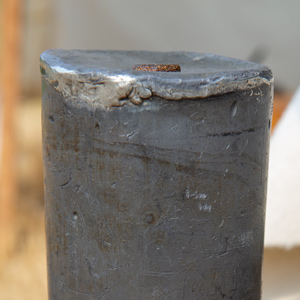
In Philadelphia, purchasing agent Israel Whelan orders 52 lead canisters from a plumber. They will keep the expedition’s gunpowder dry and when emptied, melted down to make lead balls.
May 24, 1803
A conference with Dickerson
by Kristopher K. Townsend 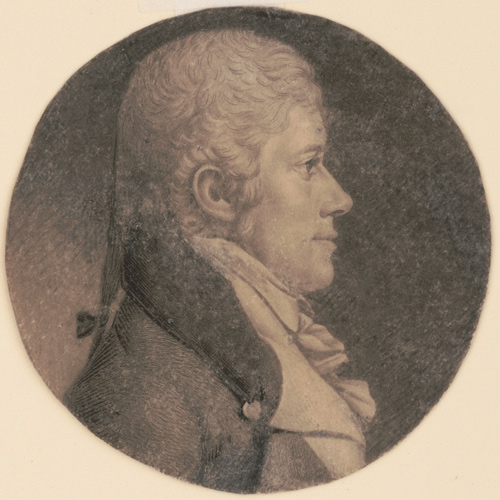
In Philadelphia, Lewis enjoys a small network of influential friends and mentors while preparing his Western Expedition. According to his friend Mahlon Dickerson, the two hold a conference on this day.
May 23, 1803
Rings and brooches
by Kristopher K. Townsend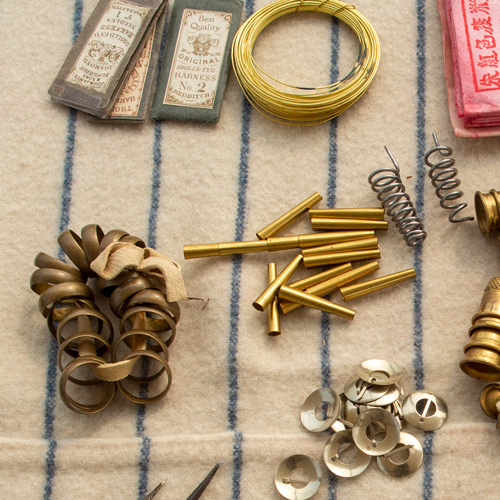
In Philadelphia, Israel Whelan, purveyor of public supplies, buys rings and brooches to be used as gifts and trade items for the Native Nations Lewis’s expedition will encounter. Gold and silver smith Samuel Williamson sells him 500 broaches and 72 rings from his shop on Philadelphia’s South Front Street.
May 21, 1803
New pocket pistols
by Kristopher K. Townsend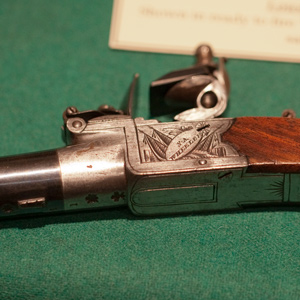
In Philadelphia, Israel Whelan, Purveyor of Public Goods, pays for a pair of pocket pistols with hidden triggers. Hidden triggers made the gun more streamlined and less prone to snag when withdrawn from the pocket.
May 19, 1803
New tinware and cloth
by Kristopher K. Townsend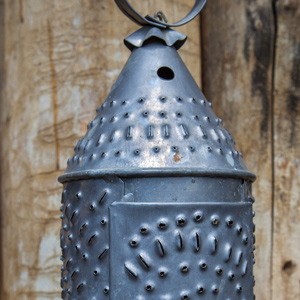
In Philadelphia, Israel Whelan, Purveyor of Public Supplies, buys supplies and equipment for the Lewis and Clark Expedition: tinware; brass kettles, scarlet and drab cloth; and the most expensive item of the expedition, a chronometer.
May 18, 1803
Gifts and fishing tackle
by Kristopher K. Townsend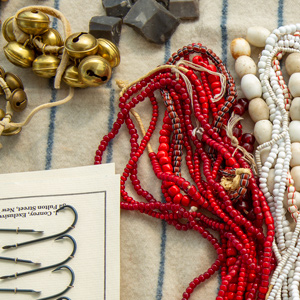
In Philadelphia, Purveyor of Public Supplies Israel Whelan buys over $150 of gifts and trade items and $25 of fishing tackle.
Spain announces the retrocession of Louisiana to France, and Washington City residents learn that the port of New Orleans has reopened to American trade.
May 17, 1803
Red paint and questions
by Kristopher K. Townsend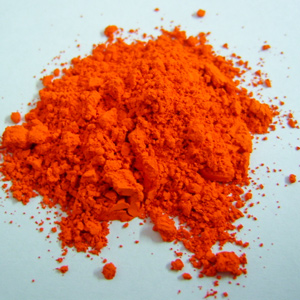
In Philadelphia, Israel Whelan, Purveyor of Public Supplies, purchases red paint pigments on behalf of the expedition. Also on this day, Benjamin Rush, one of the expedition supporters, writes his list of questions for Lewis to ask the Native Nations they will encounter.
May 16, 1803
The necessary instruments
by Kristopher K. Townsend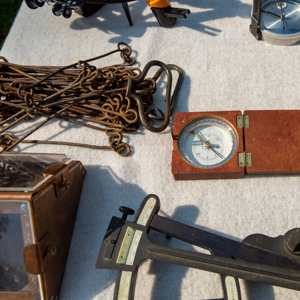
In Washington City, President Thomas Jefferson writes a letter to Meriwether Lewis updating him on the status of the expedition’s navigational instruments. Jefferson is undecided about the need for a theodolite and says to refer to his mentors, Robert Patterson and Andrew Ellicott.
May 15, 1803
Dinner with friends
by Kristopher K. Townsend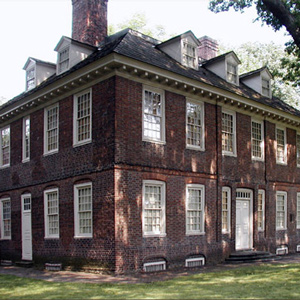
Lewis and his Philadelphia friend Mahlon Dickerson dine at “Dr. Logans”—likely at the country estate of the U.S. Senator from Pennsylvania, George Logan, a key supporter of Thomas Jefferson’s expedition to the Western Sea. The evening is spent with another supportive politician, Pennsylvania Governor Thomas McKean.
May 14, 1803
Indispensable instruments
by Kristopher K. Townsend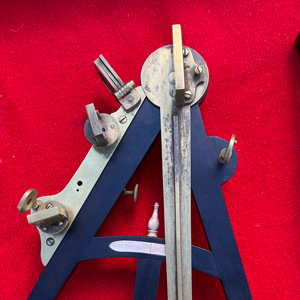
In Philadelphia, Lewis writes Thomas Jefferson to tell him about the indispensable instruments needed to make celestial observations. A theodolite does not make the list. In the evening, he dines with friend Mahlon Dickerson.
May 13, 1803
Louisiana Treaty details
by Kristopher K. Townsend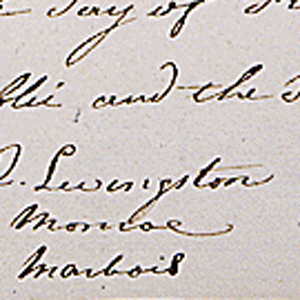
In Paris, France, Robert Livingston and James Monroe record the details of the Louisiana Purchase for James Madison. Also in Paris, fellow scientist B. G. É. L. Lacepède provides Thomas Jefferson information about the Columbia River. The letters must then cross the Atlantic.
May 12, 1803
Dinner with Armistead Mason
by Kristopher K. Townsend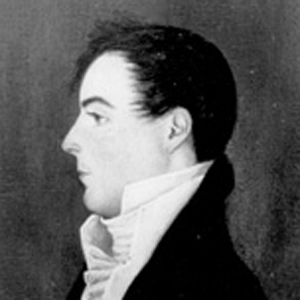
In Philadelphia, Lewis dines with Mahlon Dickerson and future militia colonel and U.S. Senator Armistead Mason.
In Paris, U.S. envoy Robert Livingston reflects on the significance of the recently signed Louisiana Treaty.
May 10, 1803
Meeting Isaac Briggs
by Kristopher K. Townsend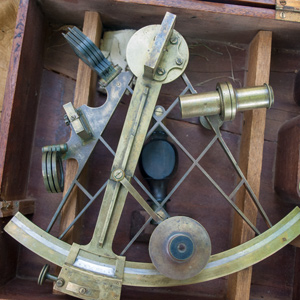
In Philadelphia, Isaac Briggs—a friend of Thomas Jefferson and fellow member of the American Philosophical Society—meets Meriwether Lewis. Briggs has been working with Jefferson to calculate longitude without the need for a chronometer.
May 7, 1803
A delicate horizon
by Kristopher K. Townsend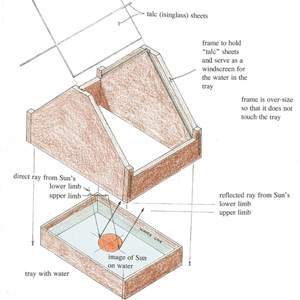
In Lancaster, Pennsylvania, master surveyor and cartographer Andrew Ellicott gives a letter to Meriwether Lewis who will soon deliver it to Robert Patterson in Philadelphia. In the letter, Ellicott discusses a key component of an artificial horizon.
May 4, 1803
Pinckney's dead end
by Kristopher K. Townsend
The United States minister to Spain, Charles Pinckney, writes from Madrid to report on his progress to obtain Florida and keep the port of New Orleans open. Spain will not concede Florida and defers the New Orleans question to France.
May 2, 1803
Louisiana Treaty signed
by Kristopher K. Townsend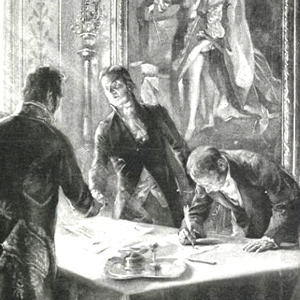
In Paris, France, the French-language version of the Louisiana Purchase Treaty and Convention is signed. Robert Livingston writes to President Thomas Jefferson to tell him that New Orleans and Louisiana will soon belong to the United States.
May 1, 1803
Monroe meets Napoleon
by Kristopher K. Townsend
United States minister plenipotentiary James Monroe meets Napoleon Bonaparte and wordsmithing of the Louisiana Purchase Convention continues. Secretary of State James Madison tells of imminent war between Britain and France.
April 30, 1803
Corn mills
by Kristopher K. Townsend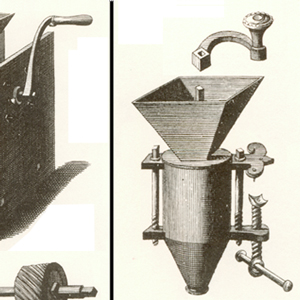
In Lancaster, Pennsylvania, Lewis receives training in celestial navigation from a preeminent American surveyor—Andrew Ellicott.
In Washington City, President Jefferson writes a letter suggesting the Western expedition take some steel or iron corn mills with them.
April 29, 1803
The price for Louisiana
by Kristopher K. Townsend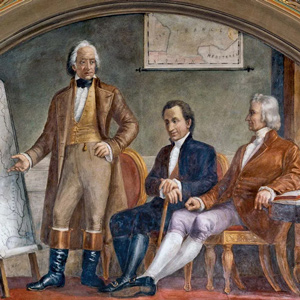
In Paris, France, the Louisiana Purchase negotiators settle on a price—80 million francs (about 15 million dollars) plus payment of French debts worth about 20 million francs (3.75 million dollars). This is twice as much as Napoleon originally desired.
April 27, 1803
Philadelphia mentors
by Kristopher K. Townsend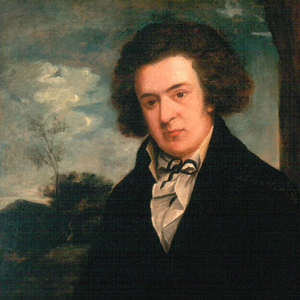
From Washington City, President Jefferson tells Lewis that he has mentors waiting for him in Philadelphia. He also misinforms the public by saying his Western Expedition will explore the Mississippi River.
In Paris, James Monroe, Robert Livingston, and François Barbé-Marbois negotiate a price for Louisiana’s purchase.
April 23, 1803
Jefferson's update
by Kristopher K. Townsend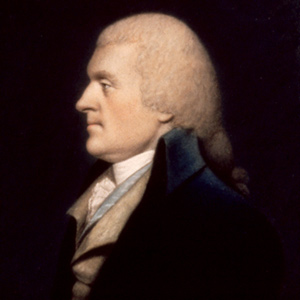
In Washington City, President Thomas Jefferson hears news of Meriwether Lewis and writes to him asking for a first-hand account of his progress. He warns that any further delays may lose a year in the end.
April 22, 1803
Lewis's replacement notified
by Kristopher K. Townsend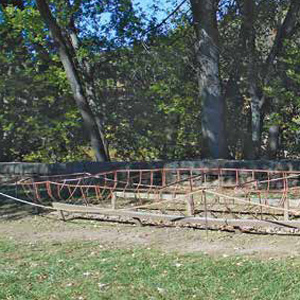
In Washington City, Thomas Jefferson writes to his new secretary, Lewis Harvie, informing him of Lewis’s detention at Harpers Ferry and discusses Spain’s cession of New Orleans to France.
April 20, 1803
Lewis leaves Harpers Ferry
by Kristopher K. Townsend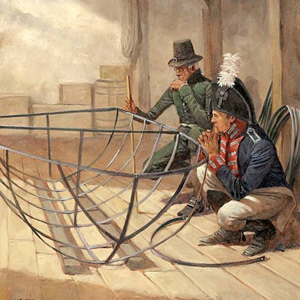
Meriwether Lewis writes to President Thomas Jefferson explaining a delay at Harpers Ferry Armory due to the design and construction of the iron-framed boat. He also discusses plans to hire interpreter John Conner and a boat builder in Nashville. He leaves for Lancaster, Pennsylvania where Andrew Ellicott will train him in celestial navigation.
April 19, 1803
New Orleans re-opens
by Kristopher K. Townsend
In Washington City, envoy Casa Yrujo tells James Madison that the Spanish King has opened the port of New Orleans to United States merchants. Madison summarizes the letter and sends a translation of the full letter the National Intelligencer.
Elsewhere, Meriwether Lewis spends his last full day at the Harpers Ferry armory before leaving for Lancaster, Pennsylvania.
April 18, 1803
Ellicott's instruments
by Kristopher K. Townsend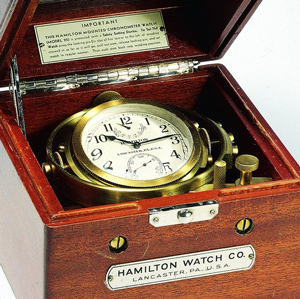
In Lancaster, Pennsylvania, Surveyor General Andrew Ellicott writes a letter about some navigational instruments he believes are intended for Meriwether Lewis.
In Washington City, James Madison forms an alternate plan for the Louisiana negotiators working in France.
April 17, 1803
Livingston's commission
by Kristopher K. Townsend
In Paris, France, Robert Livingston informs the United States Secretary of State, James Madison, that his commission is insufficient for negotiating the purchase of Louisiana.
In Washington City, the U.S. Attorney General, Levi Lincoln, writes a list of questions for Meriwether Lewis to ask of the Native Nations he will meet.
April 15, 1803
Order for portable soup
by Kristopher K. Townsend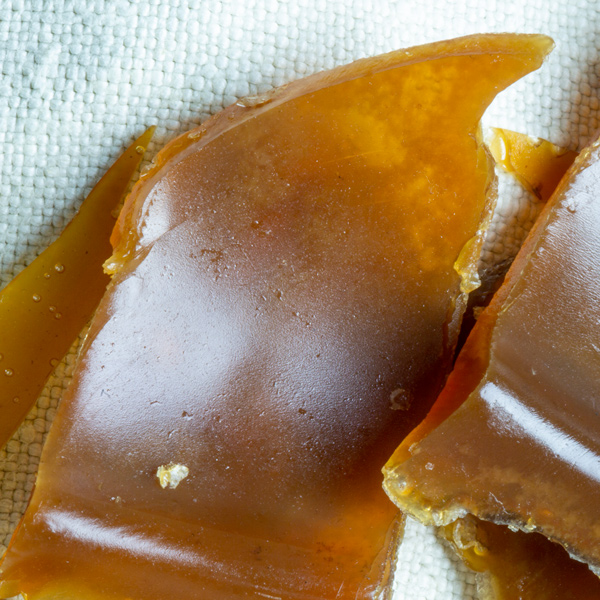
From Frederick, Maryland, Meriwether Lewis writes a letter to the Superintendent of Schuylkill Arsenal, William Irvine, ordering two hundred pounds of portable soup—a reduced gelatinous mixture that can be stored in tin cans.
April 14, 1803
Priced too high
by Kristopher K. Townsend
In a letter written on this day to Thomas Jefferson, the American minister to France, Robert Livingston reports that the asking price of 125 million francs for the Louisiana Territory is too high. Negotiations continue.
April 13, 1803
Of vast importance
by Kristopher K. Townsend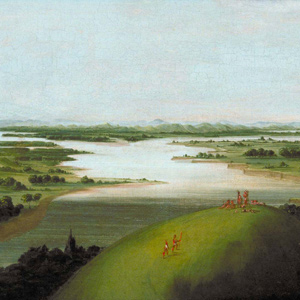
By this date in Washington City, Secretary of the Treasury Albert Gallatin asks that Meriwether Lewis include a report on the “extent & fertility” of the Missouri country stating that the destiny of this area is “of vast importance to the United States”.
April 11, 1803
Talleyrand spills the beans
by Kristopher K. Townsend
In Paris, Minister to France, Robert Livingston, is shocked when French Minister of Foreign Affairs, Charles-Maurice de Talleyrand, tells him that Napoleon wants to sell the whole Louisiana colony. His brothers try to change his mind, yet the outcome would directly affect Jefferson’s Western Expedition.
Experience the Lewis and Clark Trail
The Lewis and Clark Trail Experience—our sister site at lewisandclark.travel—connects the world to people and places on the Lewis and Clark Trail.
Discover More
- The Lewis and Clark Expedition: Day by Day by Gary E. Moulton (University of Nebraska Press, 2018). The story in prose, 14 May 1804–23 September 1806.
- The Lewis and Clark Journals: An American Epic of Discovery (abridged) by Gary E. Moulton (University of Nebraska Press, 2003). Selected journal excerpts, 14 May 1804–23 September 1806.
- The Lewis and Clark Journals. by Gary E. Moulton (University of Nebraska Press, 1983–2001). The complete story in 13 volumes.
This site is provided as a public service by the
Lewis and Clark Trail Alliance
with additional funding from the following: