Kristopher Townsend
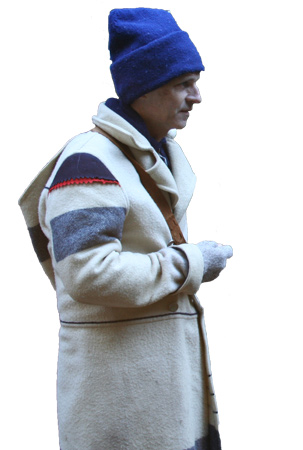
From the Pacific Northwest Living Historians at Lewis and Clark National Historic Park, Fort Clatsop.
Since 2016, Kristopher K. Townsend has been the webmaster and editor of this site, Discovering Lewis & Clark®. He has been actively photo-documenting the Lewis and Clark Trail since 1995. He attempts as closely as possible to re-create scenes as described in the journals including the same time of year, natural state, location, and weather. He has contributed numerous photos throughout the Discovering Lewis & Clark website.
Kris taught several years as a tenured instructor at Spokane Falls Community College. His courses included Internet programming and other information technology and computer science courses. During that time, he was also the series editor and an author of a popular college textbook series on Office Technology.
Shortly after the advent of the World Wide Web, he managed a web server featuring digital photos, digital video, and articles created by his Glenwood Heights Primary students. Topics included historical sites of Clark County (Washington State), wildflowers and birds of Clark County, and how-to videos for school’s physical education program.
Contributions to this Site
January 13, 1804
The Evans map
by Kristopher K. Townsend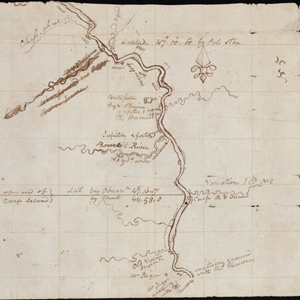
At Wood River across from the mouth of the Missouri, Sgt. Pryor takes letters from Clark to Lewis who is working in Cahokia. In Washington City, President Jefferson sends Lewis a map of the Missouri River.
January 12, 1804
Chimney fire
by Kristopher K. Townsend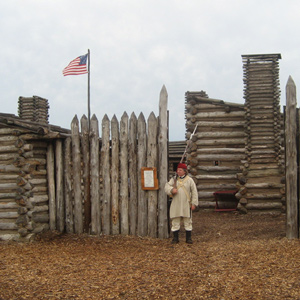
During the night at Wood River across from the mouth of the Missouri, Clark’s chimney catches fire, and large sheets collide on the Mississippi. Clark adds to a growing data set from celestial observations.
January 11, 1804
Missing hunters
by Kristopher K. Townsend
At Wood River, two hunters—Pvt. McNeal and Sgt. Ordway—are lost during the night and fail to return. Ice runs in the Missouri River, Clark is indisposed, and Lewis works in Cahokia and St. Louis.
January 10, 1804
Icy river crossing
by Kristopher K. Townsend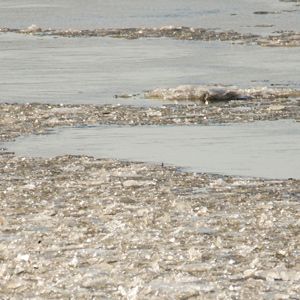
Pvt. J. Field passes between sheets of ice to cross the Mississippi. Clark comments on the maps and information obtained from trader James Mackay who recently made a surveying trip up the Missouri River.
January 9, 1804
Cahokia Mounds
by Kristopher K. Townsend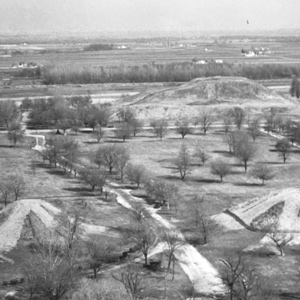
Clark visits Cahokia Mounds—the site of one of the largest Mississippian culture cities that “formed more than 1000 years before European contact.” On the way back, his wet feet freeze to his shoes.
January 8, 1804
Reubin Field takes a turn
by Kristopher K. Townsend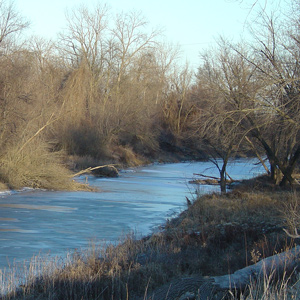
At Wood River, Pvt. Reubin Field takes his first turn at hunting and bags a deer. A local French man and his family come to see Clark about their missing hog—stolen by expedition hunters on January 5.
January 7, 1804
Boat trouble
by Kristopher K. Townsend
At Wood River, ice flowing down the Missouri and Mississippi rivers continues to make it difficult to keep the barge upright. Clark works on a map with information gathered from traders.
January 6, 1804
The washerwoman's hut
by Kristopher K. Townsend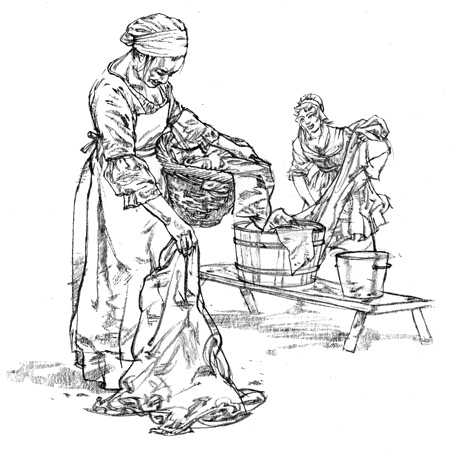
Clark orders the soldiers caught drinking and fighting two days ago to build a cabin for the new washer woman, and the investigation into the theft of a farmer’s hog continues.
January 5, 1804
Stolen hog
by Kristopher K. Townsend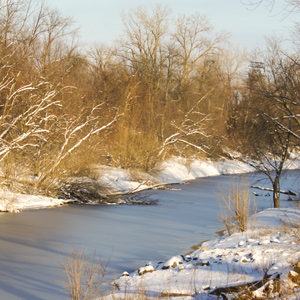
At Wood River, two hunters bring in part of a local settler’s hog that they found hanging in the woods. They tell Clark that it is bear meat. On the river, rising water threatens the barge’s moorings.
January 4, 1804
Unruly soldiers
by Kristopher K. Townsend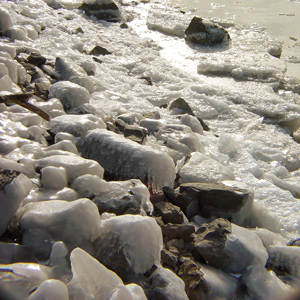
During the night at Wood River, the enlisted men make merry. In the morning, the Mississippi River ices over, and Clark learns that a fight between Pvts. Werner and Potts was allowed by a corporal.
January 3, 1804
A cold, blustery day
by Kristopher K. Townsend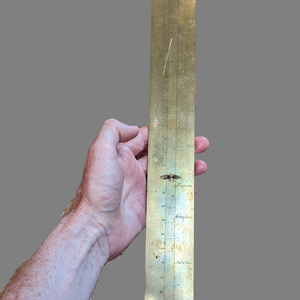
The day at Wood River is cold and the wind blows sand “with fury”. Clark measures the altitude of the sun, and Lewis continues at Cahokia and St. Louis “on business of importance to the enterprise”.
January 2, 1804
Lewis's 'business of importance'
by Kristopher K. Townsend
At Wood River, Clark receives news from Lewis that Captain Amos Stoddard will be the United States agent to receive the Upper Louisiana Territory when it is transferred from France.
January 1, 1804
A new year at Wood River
by Kristopher K. Townsend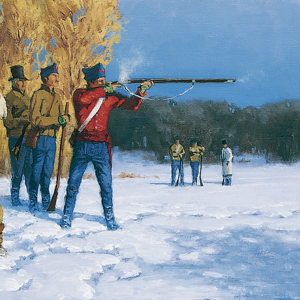
At Wood River, Clark stages a shooting contest between local farmers and the enlisted men. He notes that two soldiers—perhaps privates Reed and Windsor—were drunk. He meets with a new washer woman, and a visitor tells him about the Mandans and their country. Both captains begin their weather diaries.
December 31, 1803
Discipline problems
by Kristopher K. Townsend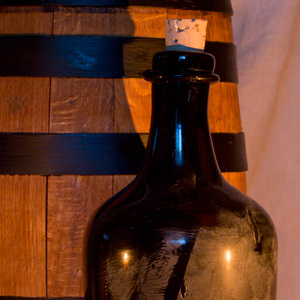
At Wood River, Clark addresses problems with excessive drinking. Lewis travels between Cahokia and St. Louis gathering intelligence on upper Louisiana and preparing for departure in the spring.
December 30, 1803
Snowy morning
by Kristopher K. Townsend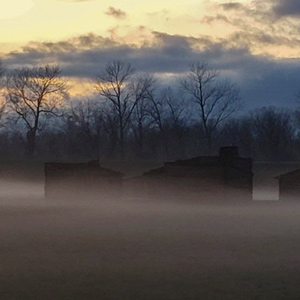
At Wood River, the morning comes with snow. Clark implements a new guard duty roster and sends the plan with Drouillard and Sgt. Ordway to Lewis in Cahokia.
December 29, 1803
Writing letters
by Kristopher K. Townsend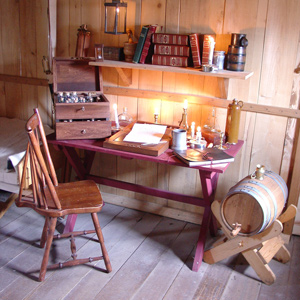
At Wood River, Clark writes letters to George Hancock in Fincastle, Virginia and Richard Clough Anderson in Louisville, Kentucky. Lewis continues working in St. Louis and Cahokia.
December 28, 1803
Mackay and Evans journals
by Kristopher K. Townsend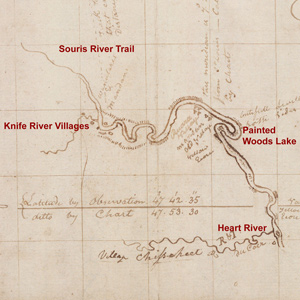
At Wood River, Clark reports “nothing remarkable to day”. Elsewhere, Lewis tells President Jefferson that he has a census of Louisiana and journals and maps from explorers John Evans and James Mackay.
December 27, 1803
Blankets and other goods
by Kristopher K. Townsend
At Wood River, Clark has blankets set out to air and dry before placing them in a storeroom. The French prefect at New Orleans has his opinion of the boundaries of Louisiana reported to James Madison.
December 26, 1803
Estimate of the Eastern Indians
by Kristopher K. Townsend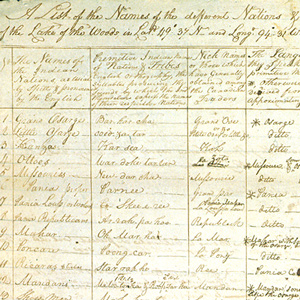
At Wood River, Clark writes that “nothing material” happens. Near this date, Lewis creates the Estimate of Eastern Indians—a form to collate information about the Native Nations living in Louisiana.
December 25, 1803
Wood River Christmas
by Kristopher K. Townsend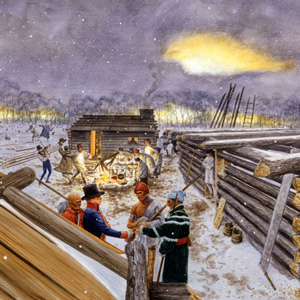
At Wood River, the men celebrate Christmas by drinking, hunting, and frolicking. Visiting Indians share a rumor regarding Louisiana trade, and interpreter and hunter George Drouillard agrees to join.
December 24, 1803
American emigrants
by Kristopher K. Townsend
Working in Cahokia and St. Louis, Lewis finds that many American emigrants have arrived in anticipation of the Louisiana transfer. At Wood River, roofs are completed and passing boatmen visit with Clark.
December 23, 1803
Mr. Morrison's corn
by Kristopher K. Townsend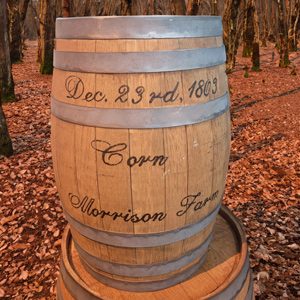
At Wood River, work continues building huts, Mr. Morrison’s corn arrives, and a Lenape Delaware man known to Clark visits. Near this date, Lewis observes the current system of slavery in Louisiana.
December 22, 1803
Prying the barge
by Kristopher K. Townsend
At Wood River, Clark receives eight new recruits from Tennessee. The river runs with ice, so the barge is unloaded and supported with pry bars. Elsewhere, Lewis uses “stealth” to gather intelligence.
December 21, 1803
Seven fat turkeys
by Kristopher K. Townsend
The enlisted men continue to raise cabins at Wood River, and two hunters bring in several turkeys. In a letter dated 28 December, Lewis describes the nature of his work in Spanish controlled St. Louis.
December 20, 1803
Louisiana's formal transfer
by Kristopher K. Townsend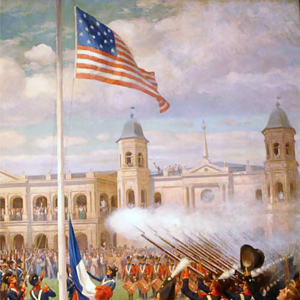
In New Orleans, officials conduct the formal transfer of the city and lower Louisiana from France to the United States. At the Wood River construction site, the enlisted men move into their huts.
December 19, 1803
Provisions arrive
by Kristopher K. Townsend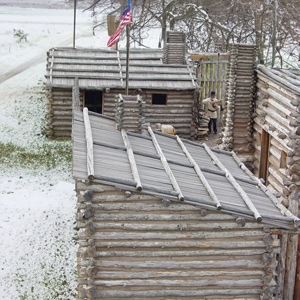
Wagons with food and other provisions arrive at winter camp at Wood River. In Cahokia, Lewis writes a letter telling President Jefferson that Antoine Soulard will share geographic information about the West.
December 18, 1803
Louisiana observations
by Kristopher K. Townsend
While winter camp on the Wood River is constructed, Clark checks the accuracy of his chronometer and sextant. In Cahokia, Lewis sends information about the Louisiana Territory to Thomas Jefferson.
December 17, 1803
Sawyers needed
by Kristopher K. Townsend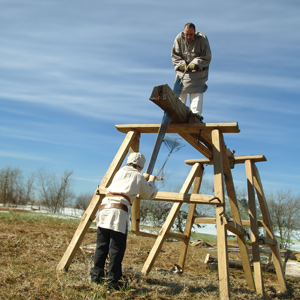
Lewis describes the new recruits from Tennessee who are with him in Cahokia. He also recommends that Clark assign two men to saw boards. At Wood River, Clark practices taking celestial observations.
December 16, 1803
Eight men from Tennessee
by Kristopher K. Townsend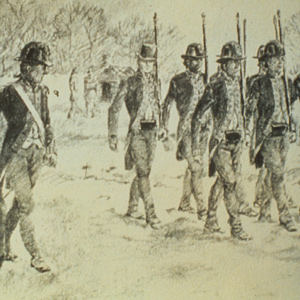
Samuel Griffith, a local farmer, visits camp at Wood River, and Clark sends Sgt. Floyd to Cahokia with letters for Lewis. In the evening, Drouillard arrives at Cahokia with eight new recruits.
December 15, 1803
Cutting a road
by Kristopher K. Townsend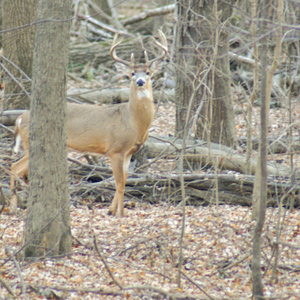
At winter camp at Wood River—Camp River Dubois—the day brings snow, and a road is made from the camp site to the prairie. An Indian brings meat, and the hunters kill several grouse.
December 14, 1803
Cutting logs
by Kristopher K. Townsend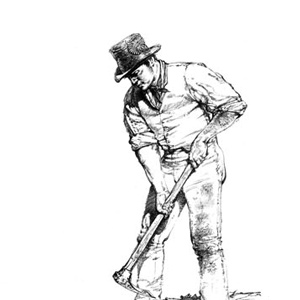
At Wood River, construction of winter quarters—presently called Camp River Dubois—continues. Lewis works elsewhere, likely in Cahokia.
December 13, 1803
Clearing land
by Kristopher K. Townsend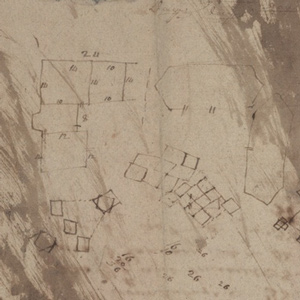
At winter camp at Wood River—Camp River Dubois—construction begins when the enlisted men clear land and fell timber. Clark’s field notes give an indication of possible layouts for the fort.
December 12, 1803
Rivière à Dubois arrival
by Kristopher K. Townsend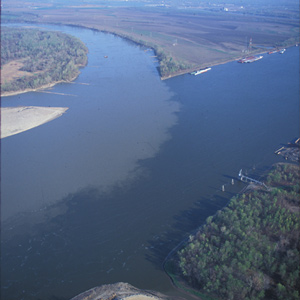
Lewis works in St. Louis, and Clark takes the boats to Riviére á Dubois—today called Wood River—just below the old confluence of the Missouri and Mississippi rivers. Two canoes of drunk Potawatomis arrive.
December 11, 1803
St. Louis fanfare
by Kristopher K. Townsend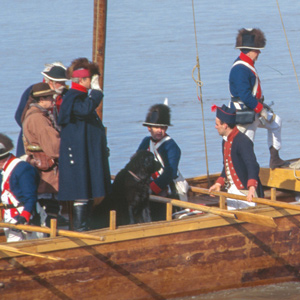
From Cahokia, Clark takes the boats across the Mississippi and arrives in St. Louis under full sails and colors. Many people come to the landing to greet them.
December 10, 1803
St. Louis
by Kristopher K. Townsend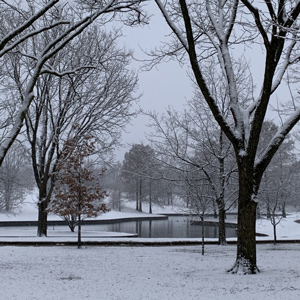
The captains continue to work separately. Lewis gathers intelligence in St. Louis. Clark brings the enlisted men and boats up the Mississippi and encamps in Illinois.
December 9, 1803
Cahokia connections
by Kristopher K. Townsend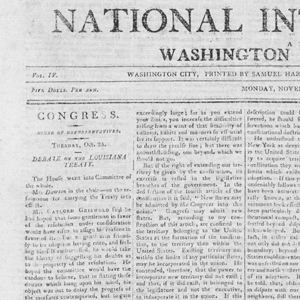
While in Cahokia, Lewis receives mail and newspapers sent to him by President Jefferson. In St. Louis, the Spanish Governor of Upper Louisiana updates his superiors about the nature of Lewis’s mission.
December 8, 1803
Spanish resistance
by Kristopher K. Townsend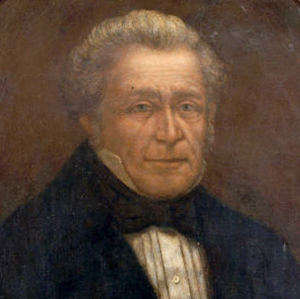
On this or the previous day, Lewis meets with Dehault Delassus, the Spanish Lt. Governor of Upper Louisiana, and all agree that the expedition should spend the winter near Cahokia.
December 7, 1803
Cahokia arrivals
by Kristopher K. Townsend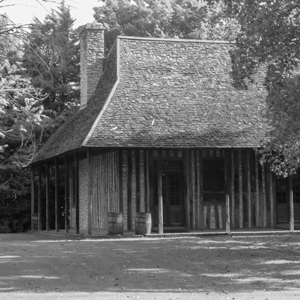
Lewis travels by land and Clark by river to arrive at Cahokia, Illinois. Lewis meets John Hay and Nicholas Jarrot who help him negotiate with the Spanish Lt. governor of Upper Louisiana.
December 6, 1803
Passing the Meramec
by Kristopher K. Townsend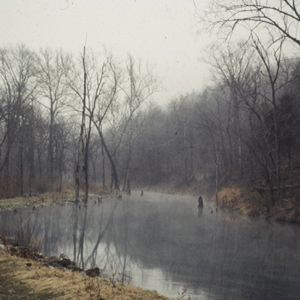
On this dark, wet day, Lewis travels by land towards Cahokia and St. Louis. Clark and the boats move up the Mississippi and stop at a farm above the Meramec River.
December 5, 1803
Romantic cliffs, difficult rock
by Kristopher K. Townsend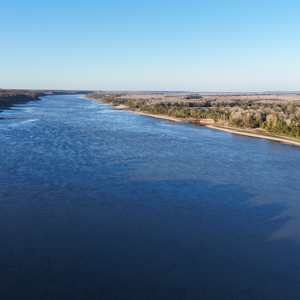
Lewis travels from Fort Kaskaskia to Cahokia by land. Meanwhile, Clark commandeers the boats up the Mississippi passing romantic cliffs and a difficult rock. He camps at the 1803 mouth of Fountain Creek.
December 4, 1803
Old Fort de Chartres
by Kristopher K. Townsend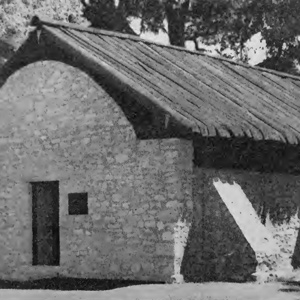
From Ste. Geneviéve, Clark takes the boats nineteen miles up the Mississippi. At old Fort de Chartres, he describes the changing river. Lewis orders $136 of goods from merchant William Morrison.
December 3, 1803
Leaving Fort Kaskaskia
by Kristopher K. Townsend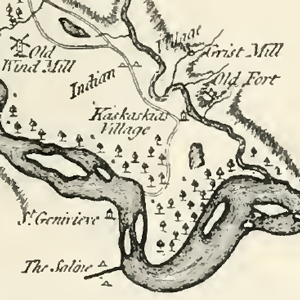
In the late afternoon, Clark leaves Fort Kaskaskia with the boats, and they go three miles up the Mississippi. Lewis checks the accuracy of his chronometer by taking equal altitudes of the sun.
December 2, 1803
Kaskaskia observations
by Kristopher K. Townsend
At Fort Kaskaskia in the Illinois Territory, Lewis follows President Jefferson’s instruction by taking celestial observations. In the Mississippi Territory, Thomas Rodney reports his arrival.
December 1, 1803
Kaskaskia recruits
by Kristopher K. Townsend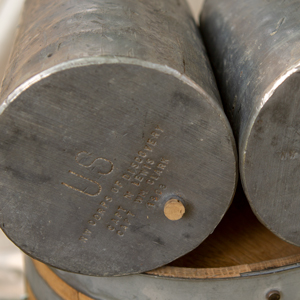
While at Fort Kaskaskia, Illinois, William Clark and Meriwether Lewis select at least 13 new recruits. Lewis also writes a receipt to Cpt. Amos Stoddard for 75 pounds of gunpowder and a cask.
November 30, 1803
Spain cedes Louisiana
by Kristopher K. Townsend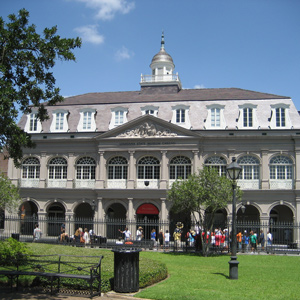
In New Orleans, Pierre-Clément de Laussat has a parade and signs papers that officially cede the Louisiana Province from Spain to France. In Illinois, Lewis and Clark work at Fort Kaskaskia..
November 29, 1803
Spanish obstruction
by Kristopher K. Townsend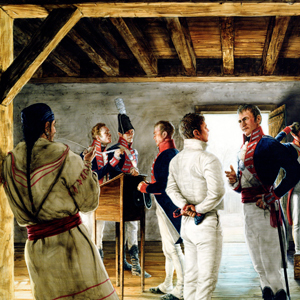
On or after this date at Fort Kaskaskia, the captains learn that the Spanish Governor of Upper Louisiana intends to block the expedition. They select more soldiers and make decisions about their next steps.
November 28, 1803
Kaskaskia arrivals
by Kristopher K. Townsend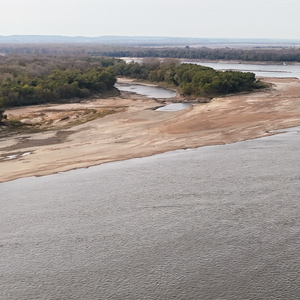
At camp near Horse Island, the morning is foggy. Clark leaves with the boats and after fifteen miles up the Mississippi, arrives at Kaskaskia. Lewis travels by land to the new American outpost there.
November 27, 1803
A bold point of rocks
by Kristopher K. Townsend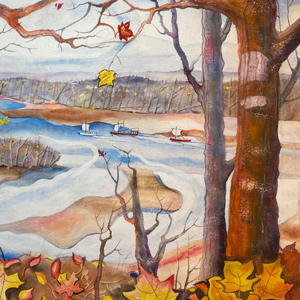
The expedition travels about thirteen miles up the Mississippi camping opposite present Chester, Illinois. Lewis describes the range of hills forming Cinque Hommes Cape and reports three grist mills and several settlers living in the area.
November 26, 1803
Devil's Bake Oven
by Kristopher K. Townsend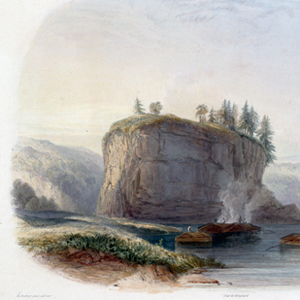
Moving up the Mississippi, the boats pass through a narrow channel to avoid a dangerous whirlpool near Tower Rock. They camp near present Seventy-Six Conservation Area in Missouri.
November 25, 1803
Grand Tower ritual
by Kristopher K. Townsend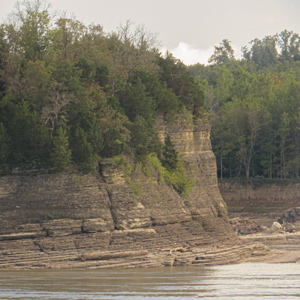
As the expedition’s flotilla of boats approach the Grand Tower of the Mississippi, Lewis learns of the ritual held the first time a boatman passes it. He also describes coal mines and the Apple River Shawnees living in that area.
In Washington City, the senior Senator from New York state tells his wife about the progress of the Lewis and Clark Expedition.
Experience the Lewis and Clark Trail
The Lewis and Clark Trail Experience—our sister site at lewisandclark.travel—connects the world to people and places on the Lewis and Clark Trail.
Discover More
- The Lewis and Clark Expedition: Day by Day by Gary E. Moulton (University of Nebraska Press, 2018). The story in prose, 14 May 1804–23 September 1806.
- The Lewis and Clark Journals: An American Epic of Discovery (abridged) by Gary E. Moulton (University of Nebraska Press, 2003). Selected journal excerpts, 14 May 1804–23 September 1806.
- The Lewis and Clark Journals. by Gary E. Moulton (University of Nebraska Press, 1983–2001). The complete story in 13 volumes.
This site is provided as a public service by the

Lewis and Clark Trail Alliance
with additional funding from the following: