Kristopher Townsend
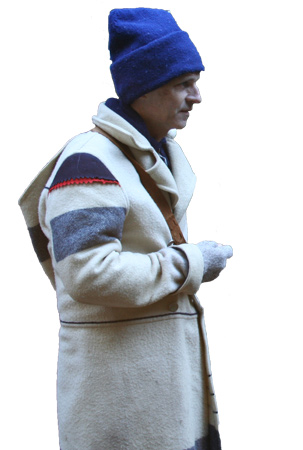
From the Pacific Northwest Living Historians at Lewis and Clark National Historic Park, Fort Clatsop.
Since 2016, Kristopher K. Townsend has been the webmaster and editor of this site, Discovering Lewis & Clark®. He has been actively photo-documenting the Lewis and Clark Trail since 1995. He attempts as closely as possible to re-create scenes as described in the journals including the same time of year, natural state, location, and weather. He has contributed numerous photos throughout the Discovering Lewis & Clark website.
Kris taught several years as a tenured instructor at Spokane Falls Community College. His courses included Internet programming and other information technology and computer science courses. During that time, he was also the series editor and an author of a popular college textbook series on Office Technology.
Shortly after the advent of the World Wide Web, he managed a web server featuring digital photos, digital video, and articles created by his Glenwood Heights Primary students. Topics included historical sites of Clark County (Washington State), wildflowers and birds of Clark County, and how-to videos for school’s physical education program.
Contributions to this Site
April 7, 1805
Leaving Fort Mandan
by Kristopher K. Townsend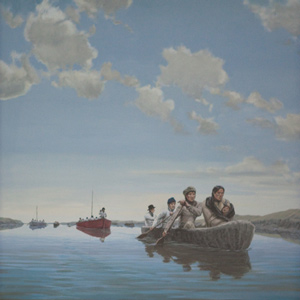
The permanent party—under Capts. Lewis and Clark—leaves Fort Mandan in six dugout canoes and two larger pirogues bound for the Pacific Ocean. They make it only as far as Mitutanka, one of the Knife River Villages. The return party—under Cpl. Warfington—takes the barge and one canoe down the Missouri headed for St. Louis.
In Washington City, James Wilkinson writes to James Madison, United States Secretary of State, accepting his appointment as Governor of Louisiana Territory.
April 6, 1805
A diplomatic delay
by Kristopher K. Townsend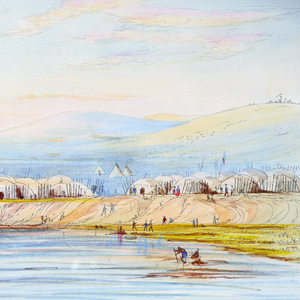
Some visiting Mandans tell the captains that the entire Arikara nation has moved to one of their old villages nearby. The captains decide to postpone leaving Fort Mandan to learn more. One of the men kills several cedar waxwing birds, and Lewis promptly writes a zoological description of the species.
April 5, 1805
Loading the small boats
by Kristopher K. Townsend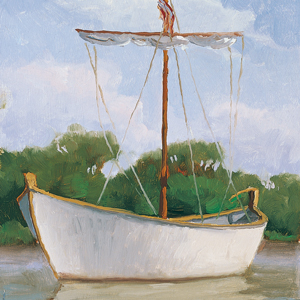
The enlisted men load the red and white pirogues and six new dugout canoes, and all is made ready for departure. Sgt. Patrick Gass reflects the sexual practices experienced during his stay at Fort Mandan amongst the Knife River Villages.
April 4, 1805
McKenzie's recollections
by Kristopher K. Townsend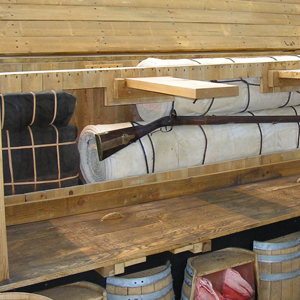
At Fort Mandan amongst the Knife River Villages, the barge is loaded and made ready for its return to St. Louis. It is too windy to load the pirogues for their journey up the river. Canadian traders François-Antoine Larocque and Charles McKenzie say their final goodbyes. Years later, McKenzie writes his recollections of the expedition.
April 3, 1805
Packing up Jefferson's things
by Kristopher K. Townsend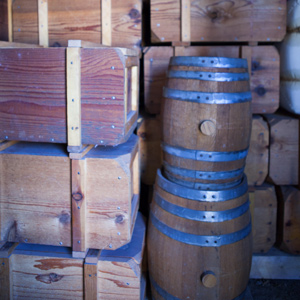
The men use the day to pack the animal, plant, and mineral specimens, as well as Indian artifacts to be shipped from Fort Mandan on the barge. Two clerks from the N.W. Company ask the captains to pay for the two lost company horses the expedition borrowed last winter.
April 2, 1805
Preparing Clark's journals
by Kristopher K. Townsend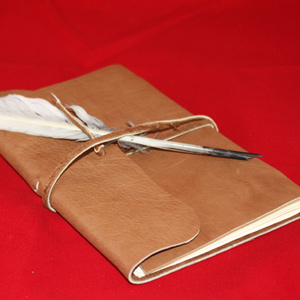
Clark works all day and into the night preparing his journals so that they can be sent to Thomas Jefferson or whomever the new president might be. Mandan Chief Raven Man ends his extended stay at Fort Mandan and returns to his village, Ruptáre.
April 1, 1805
Testing the boats
by Kristopher K. Townsend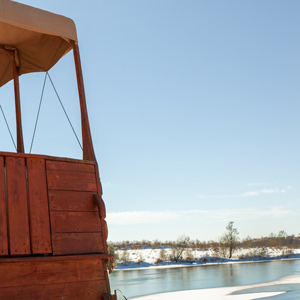
The day at Fort Mandan brings hail, thunderstorms, and the first rain they have seen since 15 September. Because they will soon be leaving, the enlisted men test the boats, and animal and plant specimens bound for St. Louis are put into wooden boxes. Six enlisted men, three French engagés, and some Arikara will go on the “Big Barge”.
March 31, 1805
A letter to home
by Kristopher K. Townsend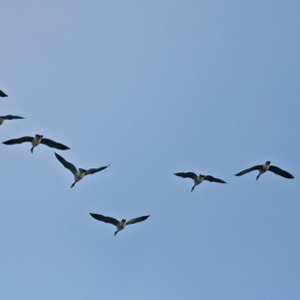
At Fort Mandan amongst the Little Knife River Villages, it rains, the river ice thins, and ducks and geese pass over. Lewis writes a letter to his mother, Lucy Marks.
March 30, 1805
Possessing perfect harmony
by Kristopher K. Townsend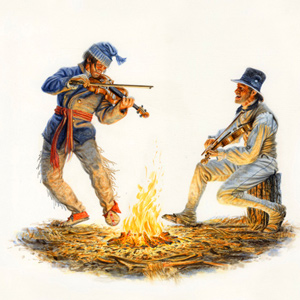
At Fort Mandan in present North Dakota, Clark reports everyone is in good spirits and working in “perfect harmony and good understanding towards each other.” Lewis takes celestial observations.
March 29, 1805
Burning the winter grass
by Kristopher K. Townsend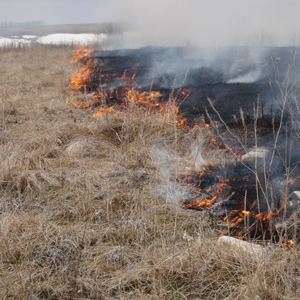
At the Knife River Villages, the Indians’ ability to jump from one ice cake to another while pulling dead bison from the Missouri amazes Clark. They also burn the dead winter grass to promote new growth.
March 28, 1805
Making oars and poles
by Kristopher K. Townsend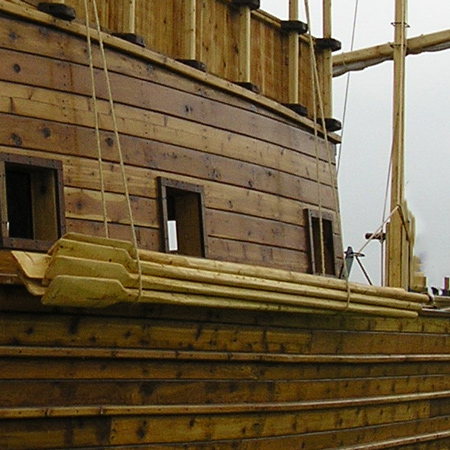
At Fort Mandan amongst the Knife River Villages, the soldiers make oars and poles for the boats. The local villagers pull dead bison out of the river’s ice, and Lewis observes equal altitudes of the sun.
March 27, 1805
Preparing the boats
by Kristopher K. Townsend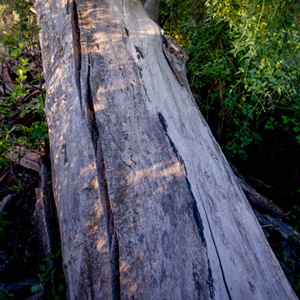
The men prepare the new dugout canoes and the red and white pirogues for their upcoming voyage from Fort Mandan in present North Dakota. Lewis sees a large black gnat—the first insect of the season.
March 26, 1805
Perilous river
by Kristopher K. Townsend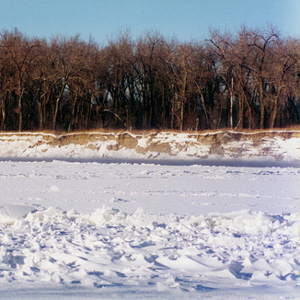
At Fort Mandan amongst the Knife River Villages in present North Dakota, the river ice breaks into large moving sheets as several men take the new canoes to the fort. They must act quickly to save them.
March 25, 1805
The spring break-up
by Kristopher K. Townsend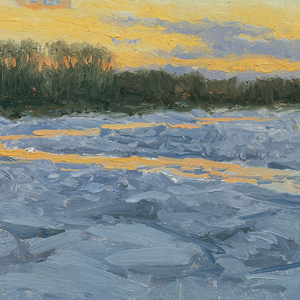
At Fort Mandan among the Knife River Indian Villages, the river ice begins breaking up, and the new canoes are endangered as they travel to the fort. Two men make a new steering oar for the barge.
March 24, 1805
Bird cages
by Kristopher K. Townsend
At Fort Mandan, cages are made for the live birds that will soon be sent to Washington City. In St. Louis, Capt. Amos Stoddard updates President Thomas Jefferson regarding Lewis’s delegation of Iowas.
March 23, 1805
A Hidatsa vocabulary
by Kristopher K. Townsend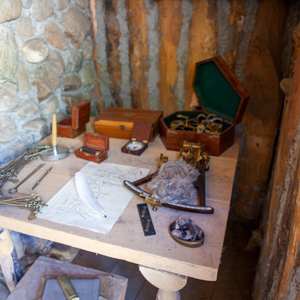
Fur trade clerks Charles McKenzie and François-Antoine Larocque end their visit at Fort Mandan in present North Dakota. A Hidatsa man helps the captains record a vocabulary of his language.
March 22, 1805
Man Wolf Chief visits
by Kristopher K. Townsend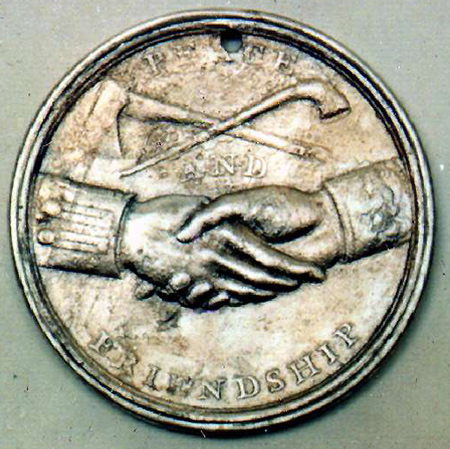
At Fort Mandan, Man Wolf Chief of Menetarra is given the standard diplomatic treatment: an Indian peace medal, gifts, and a speech. Engagé François Rivet comes for his canoe.
March 21, 1805
Collecting clinker
by Kristopher K. Townsend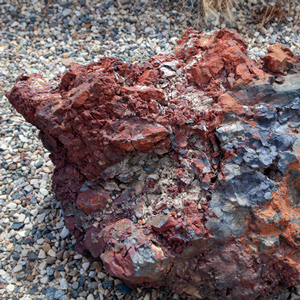
On the Missouri shore about five miles north of Fort Mandan, Sgt. Gass and two enlisted men guard the new canoes. Clark collects echinacea and clinker rock and conducts an experiment with the latter.
March 20, 1805
Moving the dugout canoes
by Kristopher K. Townsend
A few miles north of Fort Mandan, Clark and six men join a large group at the canoe camp where they move four dugout canoes to the river’s edge. Lewis discusses what we presently call Jerusalem artichokes.
March 19, 1805
Hidatsa war parties
by Kristopher K. Townsend
At Fort Mandan, two Mandan chiefs tell the captains that the Hidatsas are forming war parties. Sgt. Gass seeks helpers to move the new dugout canoes from his canoe camp to the river.
March 18, 1805
Dividing the merchandise
by Kristopher K. Townsend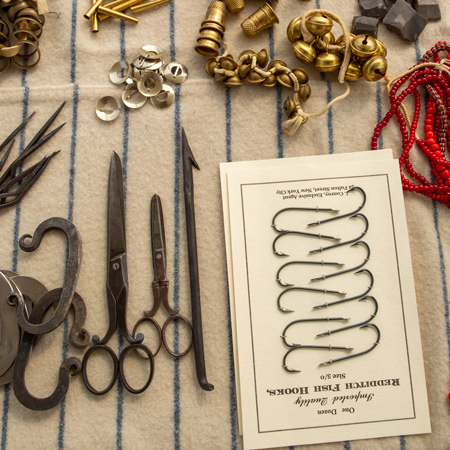
At Fort Mandan below the Knife River Villages, the Indian ‘merchandise’ is divided into eight packs—one for each boat that will soon go up the Missouri. Charbonneau officially enlists as an interpreter.
March 17, 1805
Charbonneau returns
by Kristopher K. Townsend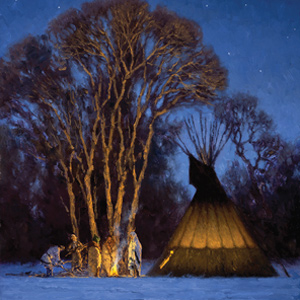
At Fort Mandan below the Knife River Villages, Toussaint Charbonneau returns, apologizes, and agrees to the captains’ terms of employment. He moves his things into a leather tent outside the fort.
March 16, 1805
Arikara bead-making
by Kristopher K. Townsend
At Fort Mandan, trader Joseph Garreau shows the captains how the Arikara melt glass trade beads and then re-make them more to their liking. Pvt. Whitehouse strikes an Indian with his spoon.
March 15, 1805
Hullling corn
by Kristopher K. Townsend
The day at Fort Mandan is sunny and warm, so Clark has the party’s goods, parched corn meal, and clothing set out to air. This arouses the curiosity of Knife River villagers. The enlisted men hull corn.
March 14, 1805
Charbonneau moves out
by Kristopher K. Townsend
Interpreter Toussaint Charbonneau terminates his employment and moves out of Fort Mandan with the intent to return to his Hidatsa village. The enlisted men are tasked with shelling corn.
March 13, 1805
Busy blacksmiths
by Kristopher K. Townsend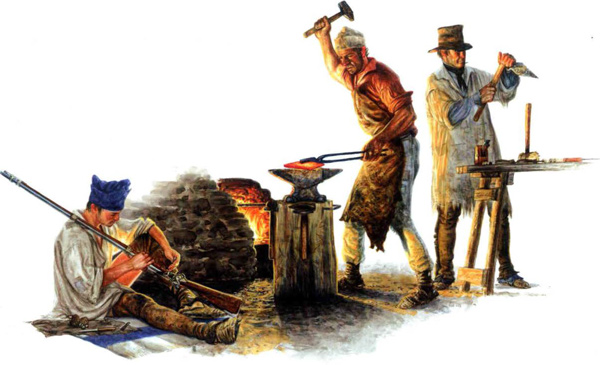
At Fort Mandan below the Knife River Villages, the Mandans and Hidatsas are anxious for the blacksmiths to make war axes before the expedition leaves for the Western Sea. North West Company traders visit.
March 12, 1805
Charbonneau quits
by Kristopher K. Townsend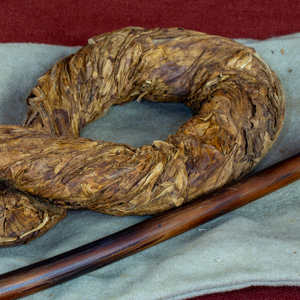
At Fort Mandan, Hidatsa interpreter Toussaint Charbonneau quits, and two men go to a Hidatsa village to trade for tobacco.
In St. Louis, Commandant James Bruff forwards President Jefferson a speech made by a Kaskaskia chief that foments war against the Osage.
In Washington City, Spanish Minister Yrujo complains that President Jefferson‘s Western expeditions are intruding on Spanish territory.
March 11, 1805
Charbonneau's corruption
by Kristopher K. Townsend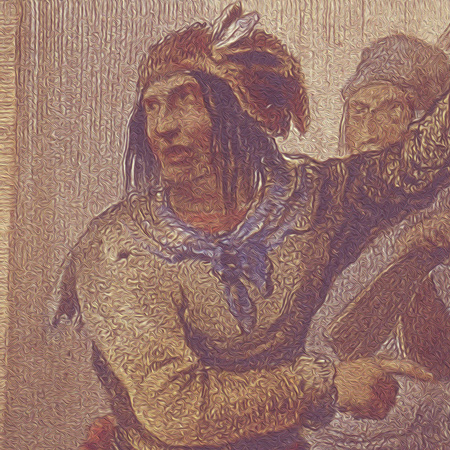
At Fort Mandan below the Knife River Villages, the captains accuse Hidatsa interpreter Toussaint Charbonneau of acting in the interests of local fur traders and give him an ultimatum.
In Washington City, President Jefferson commissions James Wilkinson as Territorial Governor of Louisiana.
In St. Louis, Pierre Chouteau—U.S. Agent for Indian affairs west of the Mississippi River—informs Jefferson of an alliance against the Osage—a complication arising from the captains sending a delegation of Osage to Washington City.
March 10, 1805
Hidatsa migration
by Kristopher K. Townsend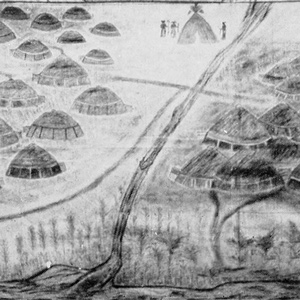
Black Moccasin and another Hidatsa—likely White Buffalo Robe Unfolded visit Fort Mandan. They tell the captains how the Mandans and Hidatsas were decimated by wars and smallpox and then banded together.
March 9, 1805
Grand Chief Le Borgne
by Kristopher K. Townsend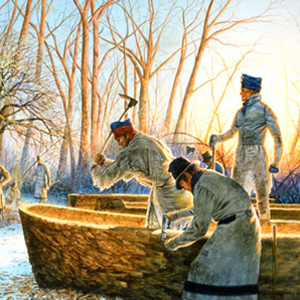
Le Borgne pays his first visit to Fort Mandan where the captains try to impress this important Hidatsa chief. Despite Lewis’s efforts, he leaves with disdain for all except the blacksmith and gunsmith.
March 8, 1805
Rocky Mountain Indians
by Kristopher K. Townsend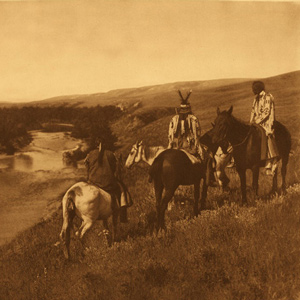
Greasy Head, a Hidatsa, and an Arikara man inform Clark about the Rocky Mountain Indians They also tell of the rescue of a kidnapped daughter.
March 7, 1805
Charbonneau's windfall
by Kristopher K. Townsend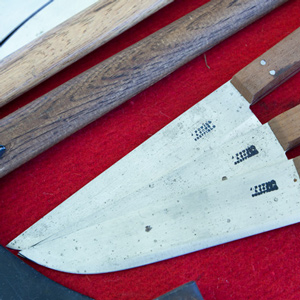
At Fort Mandan, Charbonneau returns with a large assortment of North West Company trade goods. A child is given Rush’s Thunderbolts, a strong laxative, and work on the new canoes continues.
March 6, 1805
Shannon's accident
by Kristopher K. Townsend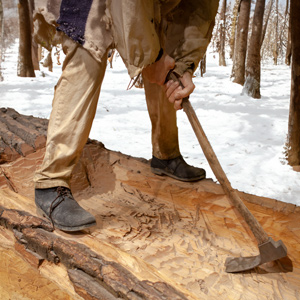
At the canoe camp away from Fort Mandan, Pvt. Shannon cuts his foot with an adze. Surrounding the Knife River Villages, some Hidatsas burn off dead winter grass making the air smoky.
March 5, 1805
The echinicea plant
by Kristopher K. Townsend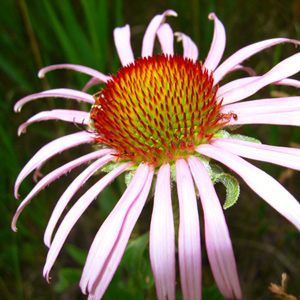
The day at Fort Mandan is warm. A letter is sent to trader Pierre-Antoine Tabeau staying nearby with some Arikaras, and Lewis writes a letter to President Jefferson describing the echinacea plant.
March 4, 1805
Assiniboine horse raid
by Kristopher K. Townsend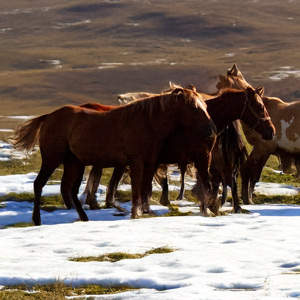
A North West Company engagé comes to Fort Mandan for a horse and silk for his boss’s wife. The Assiniboines who recently visited the Knife River Villages attempt to steal horses drawing Hidatsa fire.
March 3, 1805
All hands employed
by Kristopher K. Townsend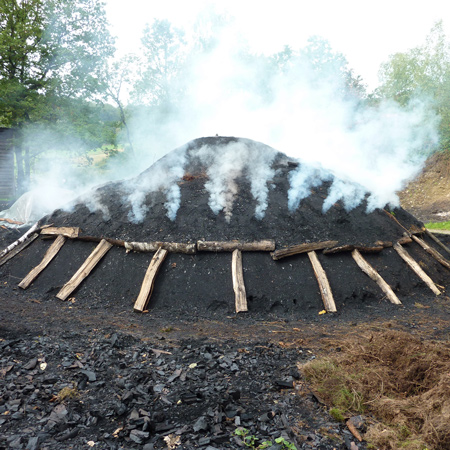
At Fort Mandan, the captains receive Mandan and Hidatsa visitors. The enlisted men make charcoal, braid a tow-line rope, and away from the fort, a detachment carves dugout canoes from cottonwood logs.
March 2, 1805
North West Company news
by Kristopher K. Townsend
At Fort Mandan, Canada-based trader François-Antoine Larocque visits with a fresh supply of trade goods and news of the death of Simon McTavish, the principal director of the North West Company.
From St. Louis, fur trader and merchant Pierre Chouteau writes President Jefferson to tell him news of the Lewis and Clark Expedition.
In Kaskaskia, Illinois, the captain’s intended peace between the Osage and their many neighbors appears to be falling apart.
March 1, 1805
Fort Mandan industry
by Kristopher K. Townsend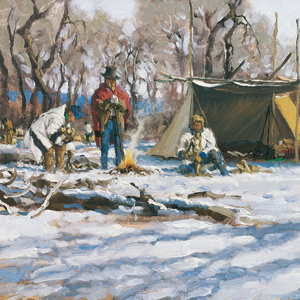
At Fort Mandan, the enlisted men make rope, charcoal, hides and clothes, and cure meat. The blacksmiths repair Indian guns and make war axes in trade for corn. The canoe builders set up their camp.
February 28, 1805
Arikara and Sioux news
by Kristopher K. Townsend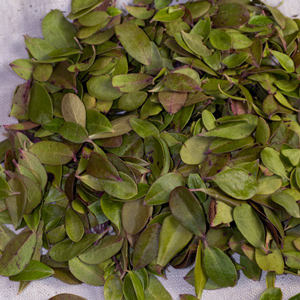
Traders arrive at the Knife River Villages with news and two plant specimens for Lewis. About six miles from Fort Mandan, several enlisted men cut down cottonwood trees to make dugout canoes.
February 27, 1805
Preparing to make new canoes
by Kristopher K. Townsend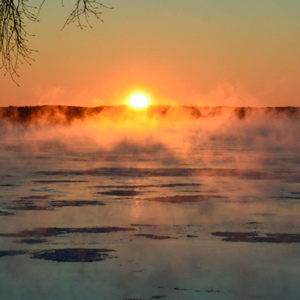
At Fort Mandan north of present Bismarck, North Dakota, several enlisted men prepare to build new dugout canoes. The two pirogues are moved to the shade, and Clark works on his map of the Missouri.
February 26, 1805
The ice gives way
by Kristopher K. Townsend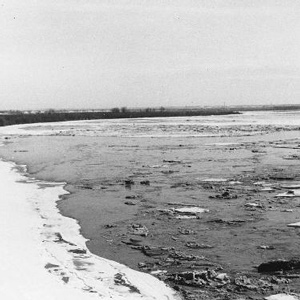
The day is spent skidding the barge away from the Missouri riverbank where the breaking ice threatens the big boat. Soon after they accomplish this “troublesome task”, a large sheet of ice gives way.
February 25, 1805
Skidding the red pirogue
by Kristopher K. Townsend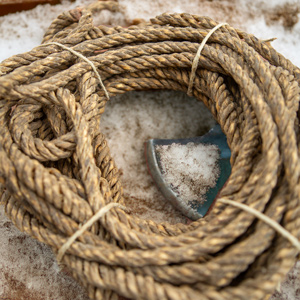
At Fort Mandan, the men use log rollers, a windlass, and an elk skin rope to tow the pirogues off the riverbank. The barge is put on skids, and several Hidatsas from the Knife River Villages bring meat.
February 24, 1805
Freeing the boats
by Kristopher K. Townsend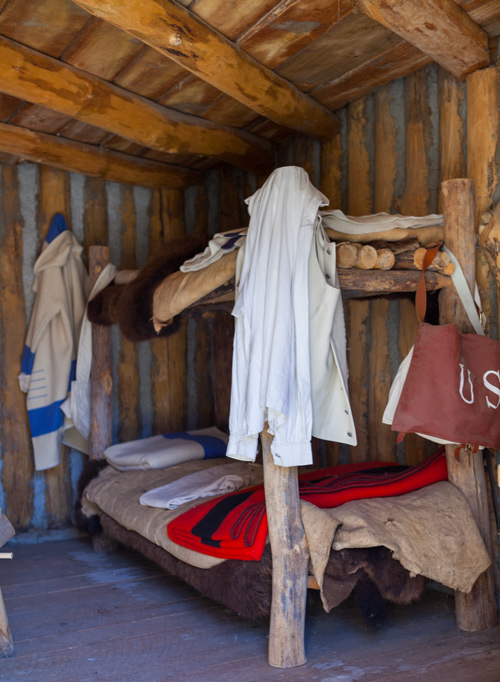
At Fort Mandan north of present Bismarck, North Dakota, the enlisted men free the barge and red pirogue from the grip of the Missouri River ice. Interpreter René Jusseaume and his family return.
February 23, 1805
Freeing the white pirogue
by Kristopher K. Townsend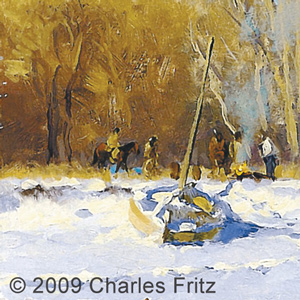
At Fort Mandan, the enlisted men take advantage of the warm day to free the icebound white pirogue from the Missouri River’s grip. The boy with toes amputated by Lewis is taken home on a sled.
February 22, 1805
Fort Mandan rain
by Kristopher K. Townsend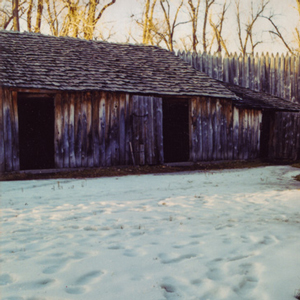
The residents of Fort Mandan receive their first rain since last November. Lewis and his recently returned hunters rest while the other enlisted men work to free the boats from the river’s snow and ice.
February 21, 1805
Mandan Medicine Stone
by Kristopher K. Townsend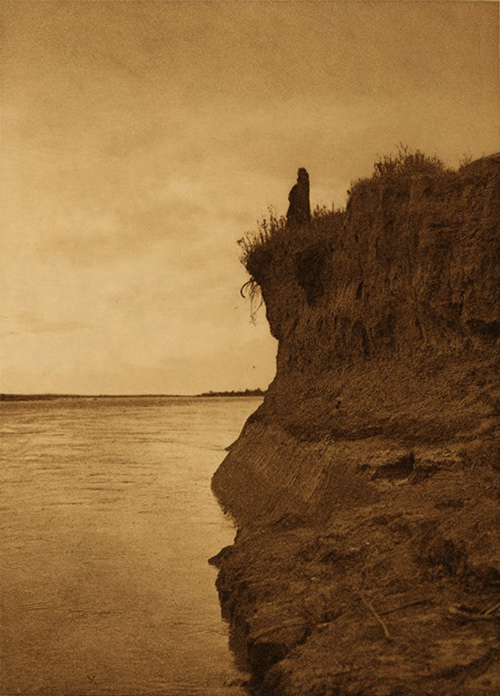
At Fort Mandan, Big White and Big Man tell Clark that several Mandan men left the Knife River Villages to consult their Medicine Stone. Lewis’s hunting party returns with about 3,000 pounds of meat.
February 20, 1805
Return to the old village
by Kristopher K. Townsend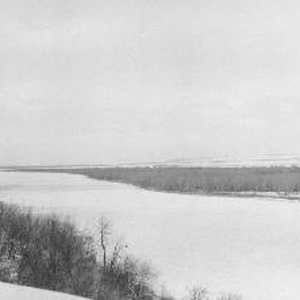
At Fort Mandan, Clark learns about the death an old Mandan man who is interned in a way that will return him to the “old village under ground.” Lewis’s group hunts its way back towards the fort.
February 19, 1805
Harvesting the hunt
by Kristopher K. Townsend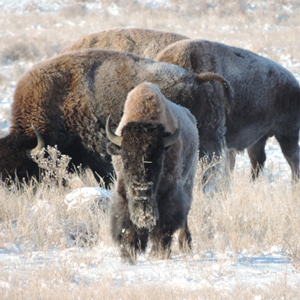
Below the Knife River Villages, fifteen men and one horse pull two sleds piled with meat towards Fort Mandan. At the fort, the blacksmiths continue mending and making axes to trade for corn.
February 18, 1805
Map making
by Kristopher K. Townsend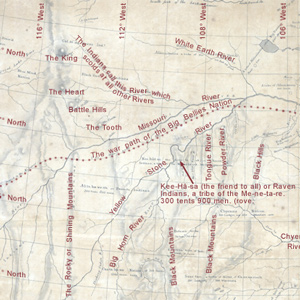
At the Fort Mandan, Clark works on his list of tributaries to the Missouri and Yellowstone rivers. Several miles south, Lewis and his hunters butcher and haul elk and deer meat to secure it in a pen.
February 17, 1805
Deer and elk
by Kristopher K. Townsend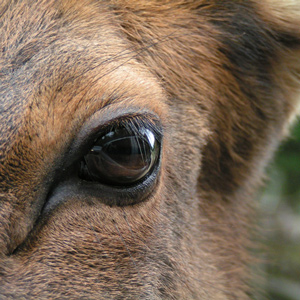
Lewis’s hunting party finds elk and deer as they work their way back to Fort Mandan below the Knife River Villages. At the fort, The Coal of Mitutanka and Charles McKenzie visit with Clark.
Experience the Lewis and Clark Trail
The Lewis and Clark Trail Experience—our sister site at lewisandclark.travel—connects the world to people and places on the Lewis and Clark Trail.
Discover More
- The Lewis and Clark Expedition: Day by Day by Gary E. Moulton (University of Nebraska Press, 2018). The story in prose, 14 May 1804–23 September 1806.
- The Lewis and Clark Journals: An American Epic of Discovery (abridged) by Gary E. Moulton (University of Nebraska Press, 2003). Selected journal excerpts, 14 May 1804–23 September 1806.
- The Lewis and Clark Journals. by Gary E. Moulton (University of Nebraska Press, 1983–2001). The complete story in 13 volumes.
This site is provided as a public service by the

Lewis and Clark Trail Alliance
with additional funding from the following: