Kristopher Townsend
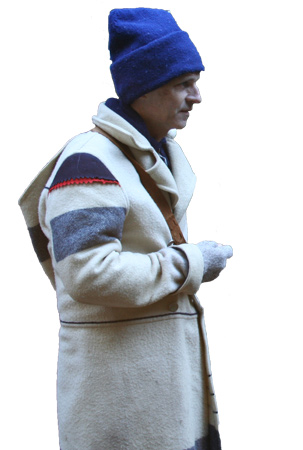
From the Pacific Northwest Living Historians at Lewis and Clark National Historic Park, Fort Clatsop.
Since 2016, Kristopher K. Townsend has been the webmaster and editor of this site, Discovering Lewis & Clark®. He has been actively photo-documenting the Lewis and Clark Trail since 1995. He attempts as closely as possible to re-create scenes as described in the journals including the same time of year, natural state, location, and weather. He has contributed numerous photos throughout the Discovering Lewis & Clark website.
Kris taught several years as a tenured instructor at Spokane Falls Community College. His courses included Internet programming and other information technology and computer science courses. During that time, he was also the series editor and an author of a popular college textbook series on Office Technology.
Shortly after the advent of the World Wide Web, he managed a web server featuring digital photos, digital video, and articles created by his Glenwood Heights Primary students. Topics included historical sites of Clark County (Washington State), wildflowers and birds of Clark County, and how-to videos for school’s physical education program.
Contributions to this Site
February 16, 1805
Scorched earth
by Kristopher K. Townsend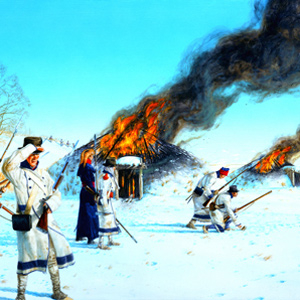
Many miles south of Fort Mandan and the Knife River Villages, Lewis and his soldiers continue their pursuit of a Sioux war party. They come to an old Mandan village where two lodges have been set afire.
February 15, 1805
Pursuing Sioux robbers
by Kristopher K. Townsend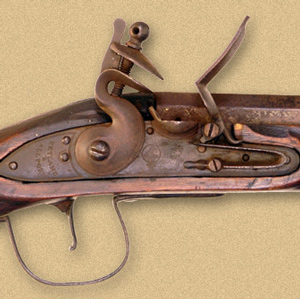
Lewis, twenty volunteers, and a few Knife River villagers leave Fort Mandan in pursuit of the Sioux who stole horses yesterday. After a 30-mile march, they spend the night at an abandoned village.
In St. Louis, fur merchant, Indian agent, and friend of the expedition, Pierre Choureau suffers from a devastating housefire.
February 14, 1805
Cornbread diplomacy
by Kristopher K. Townsend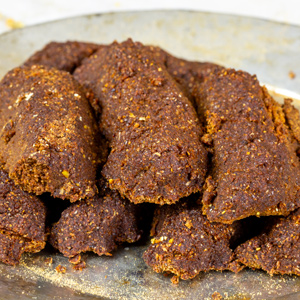
Drouillard and three others return to Fort Mandan to tell of a Sioux ambush. They lost their horses and knives, but after gifting the Sioux some cornbread, they were given back one horse. The captains prepare a military response.
In New Orleans, an interview with William Dunbar—a co-leader of another of Jefferson’s Western explorations—is published.
February 13, 1805
Clark returns
by Kristopher K. Townsend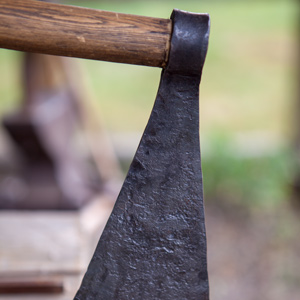
Clark returns to Fort Mandan during the night and today, records the events of his nine-day-long hunting trip. Mandan chief Posecopsahe (Black Cat) is given a war axe and appears ‘much gratified’.
February 12, 1805
Cottonwood feed
by Kristopher K. Townsend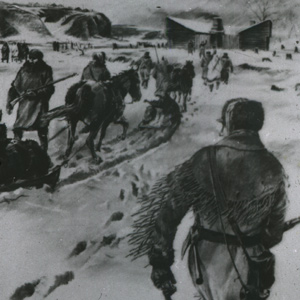
At Fort Mandan, blacksmiths shoe horses and three sleds are prepared to retrieve the harvest from Clark’s hunt. Lewis is amazed that Mandan and Hidatsa horses prefer cottonwood bark over meal.
February 11, 1805
Baby Charbonneau arrives
by Kristopher K. Townsend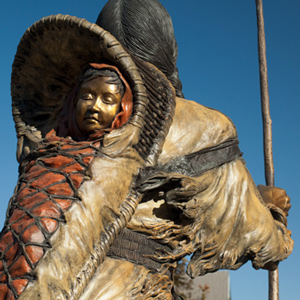
At Fort Mandan below the Knife River Villages, Sacagawea gives birth to Jean Baptiste Charbonneau after a tedious and painful labor. Hunting about 40 miles to the south, Clark starts back to the fort.
February 10, 1805
Howard's court-martial
by Kristopher K. Townsend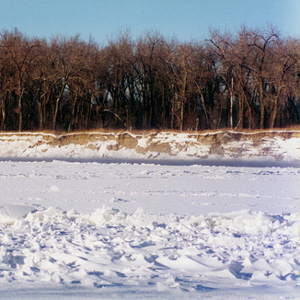
At Fort Mandan, Pvt. Howard’s sentence of 50 lashes—given for climbing the back wall—is forgiven. Away from the fort, Pvt. Joseph Field, a member of Clark’s hunting party, suffers frostbite.
February 9, 1805
Climbing the back wall
by Kristopher K. Townsend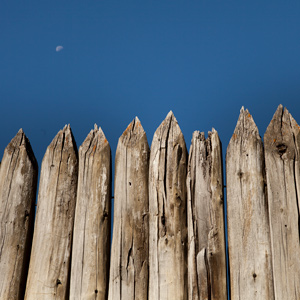
Pvt. Howard climbs the wall and for his offense is placed under military guard. Clark turns his hunting party around and camps about 40 miles south of the Knife River Villages.
February 8, 1805
Wolves and Ravens
by Kristopher K. Townsend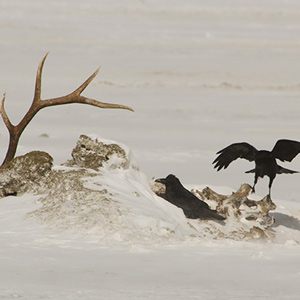
At Fort Mandan, Lewis entertains Posecopsahe (Black Cat) and his wife. Away from the Knife River Villages, Clark has a pen built to keep the wolves and ravens away from the harvest of the hunt.
February 7, 1805
Securing the fort
by Kristopher K. Townsend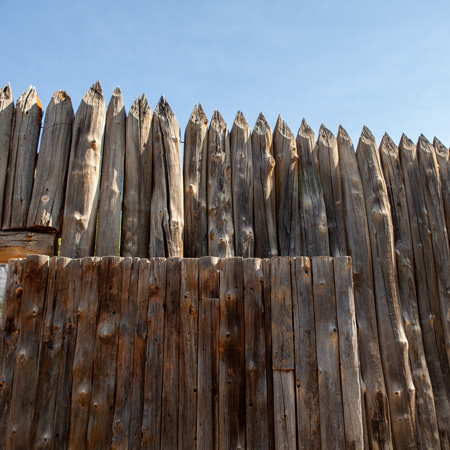
At Fort Mandan, Lewis learns that one of the interpreters’ wives has been letting Indians through the gate during the night. Clark’s party works hard to process and pack fresh deer and elk meat.
February 6, 1805
A happy resource
by Kristopher K. Townsend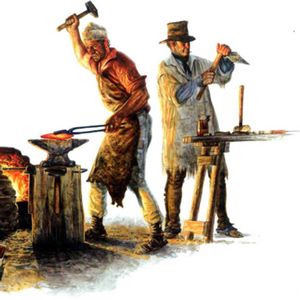
Several Mandan men from Mitutanka briefly visit Fort Mandan, and Lewis describes the blacksmiths as a ‘happy resource’. Elsewhere, Clark’s large group hunts near present Square Butte Creek, North Dakota.
February 5, 1805
Axes and scrapers
by Kristopher K. Townsend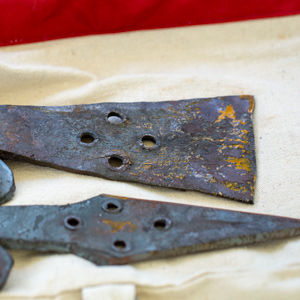
On their first day out from the Knife River Villages, Clark’s hunting party struggles down the frozen Missouri River. At Fort Mandan, Lewis writes about the war axes desired by the Mandans and Hidatsas.
February 4, 1805
Clark goes hunting
by Kristopher K. Townsend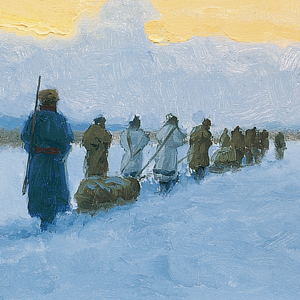
The supply of meat at Fort Mandan and the Knife River villages is nearly out, so Clark leaves with half the enlisted men on an eight-day hunting trip.
February 3, 1805
A new plan
by Kristopher K. Townsend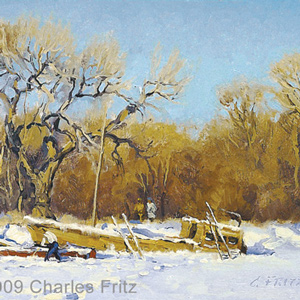
Clark prepares a hunting trip away from Fort Mandan and the Knife River Villages, and Lewis resumes writing in his journal. Today, he describes a new plan to free the boats from the river ice.
February 2, 1805
Mr. Larocque's compass
by Kristopher K. Townsend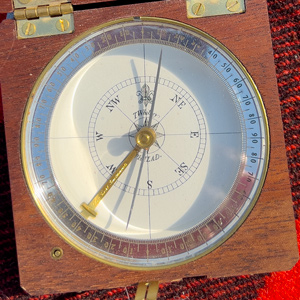
At Fort Mandan, Lewis fixes North West Company trader François-Antoine Larocque’s compass, but latter’s attempt to join the expedition fails. One of the interpreters’ wives—perhaps Sacagawea—is taken ill.
February 1, 1805
Pacifying Fears the Snake
by Kristopher K. Townsend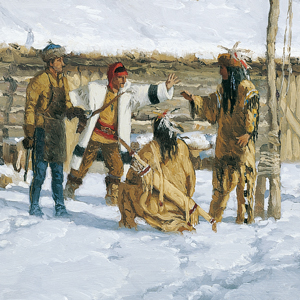
Hidatsa chief Fears the Snake brings corn to Fort Mandan as payment for a war axe, and the captains try to talk him out of fighting the Sioux and Arikaras. The day is cold and the hunting poor.
January 31, 1805
Surgical treatments
by Kristopher K. Townsend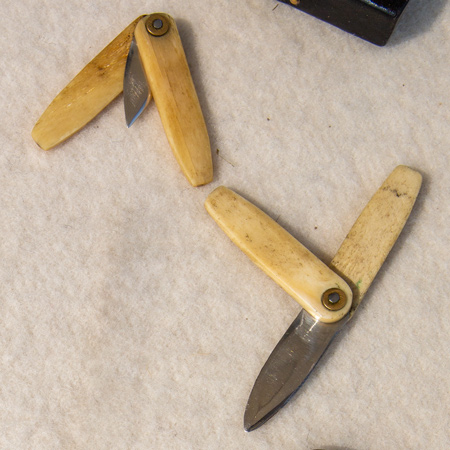
At Fort Mandan amongst the Knife River Villages, the captains amputate more toes belonging to a Mandan boy who was frostbitten while hunting. Interpreter and hunter George Drouillard is bled and given sage tea to treat his pleurisy.
January 30, 1805
Mr. Larocque's rejection
by Kristopher K. Townsend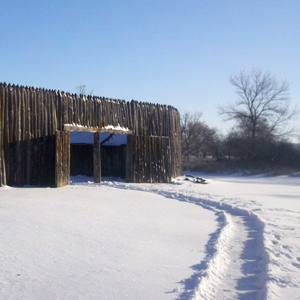
Fur trader François-Antoine Larocque comes to Fort Mandan to have his compass fixed and to check on his horses that are being kept safe from visiting Assiniboines. The captains deny his request to join the expedition.
January 29, 1805
Exploding rocks
by Kristopher K. Townsend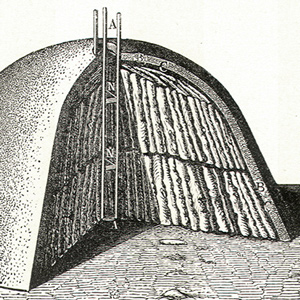
At Fort Mandan below the Knife River Villages, several enlisted men attempt to melt the Missouri River ice surrounding the boats resulting in exploding rocks. Others keep the charcoal pile burning.
January 28, 1805
Ellicott's artificial horizon
by Kristopher K. Townsend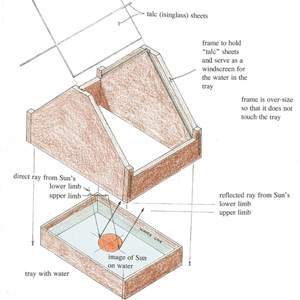
The weather is so cold at Fort Mandan amongst the Knife River Villages that Lewis must substitute spirituous liquor for water to make an artificial horizon for his sextant. The blacksmiths make war axes and others try to free the boats from the river ice.
January 27, 1805
Amputated toes
by Kristopher K. Townsend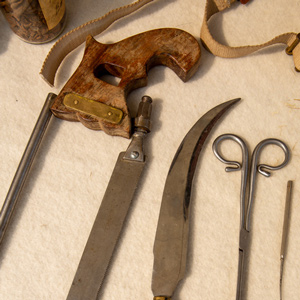
At Fort Mandan, Lewis amputates a boy’s toes and bleeds one man to cure his pleurisy. Enlisted men either work to cut the boats out of the Missouri River ice or gather grass for the charcoal-making pile..
January 26, 1805
A violent pleurisy
by Kristopher K. Townsend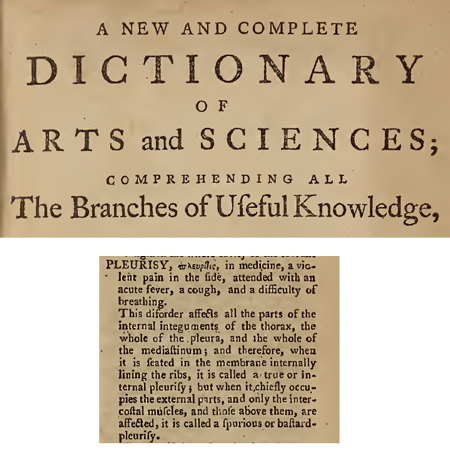
At Fort Mandan below the Knife River Villages, an unnamed man is treated for a ‘violently bad’ pleurisy. Lewis determines latitude, and some of the enlisted men make charcoal for the blacksmith forge.
January 25, 1805
Assiniboine traders
by Kristopher K. Townsend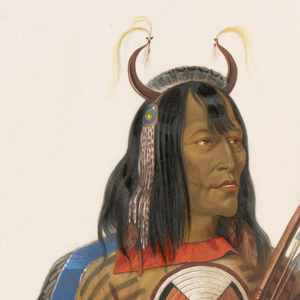
At Fort Mandan, the enlisted men continue making charcoal for the blacksmiths and trying to free the boats from the Missouri River ice. At the Knife River Villages, a band of Assiniboine traders arrives.
January 24, 1805
Wood for charcoal
by Kristopher K. Townsend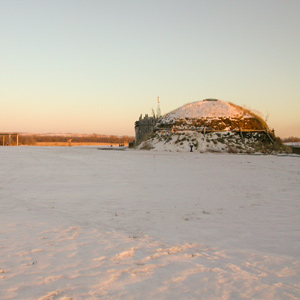
At Fort Mandan below the Knife River Villages, the two interpreters appear to have reconciled, hunters return empty-handed, and men cut wood to make charcoal for the blacksmith’s forge.
January 23, 1805
Making sleds
by Kristopher K. Townsend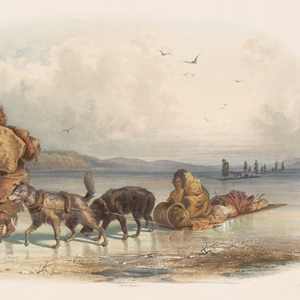
At Fort Mandan below the Knife River Villages, the enlisted men awake to four inches of fresh snow and go about their ‘common’ day. Sleds are made and traded for locally grown beans and corn.
January 22, 1805
Boats gripped in ice
by Kristopher K. Townsend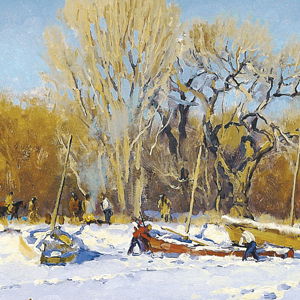
At Fort Mandan below the Knife River Villages, an unsuccessful attempt is made to cut the Missouri River ice from around the boats. They find two layers of ice nearly four feet thick.
January 21, 1805
Corn and tobacco
by Kristopher K. Townsend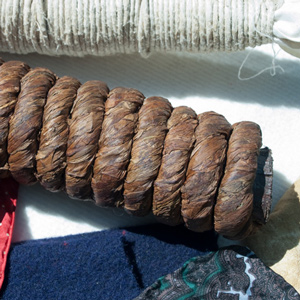
On or near this snowy day at winter camp across from the mouth of the Missouri, Clark estimates they will cross the Rocky Mountains this coming November. Lewis continues working in Cahokia and St. Louis.
January 20, 1805
Mandan gratitude ritual
by Kristopher K. Townsend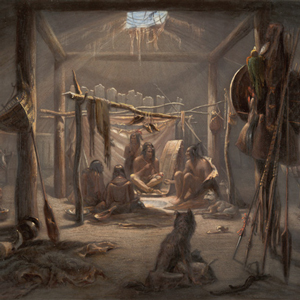
Sgt. Gass witnesses some Mandans offering food to a sacred buffalo skull, and Clark explains yesterday’s jealousy between the two interpreters’ wives. The gunsmithing skills of Pvt. Shields is described..
January 19, 1805
Fort Mandan departures
by Kristopher K. Townsend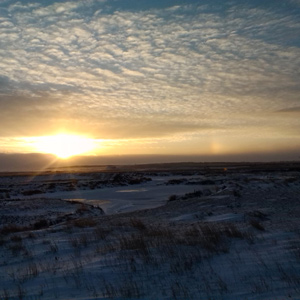
At Fort Mandan below the Knife River Villages, one of the interpreter’s wives leaves after a jealous spat. Two North West Company traders leave, and Clark offers to care for and protect their horses.
January 18, 1805
The "Brarow" (badger)
by Kristopher K. Townsend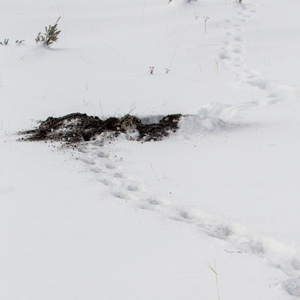
At Fort Mandan, two traders staying at a nearby Hidatsa village visit the captains. Hunters bring in four wolf skins and a badger, the latter identified by the visitors as a “brarow”—a badger.
January 17, 1805
Windy and cold
by Kristopher K. Townsend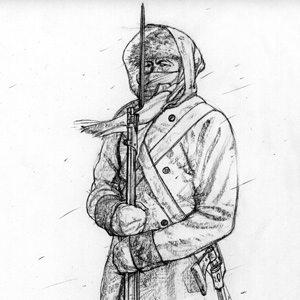
With the thermometer dropping to -12°F, there is little activity at Fort Mandan and only a few Knife River villagers visit. In Spain, King Charles IV authorizes the arrest of Lewis and his expedition.
January 16, 1805
Hidatsa-Mandan jealousy
by Kristopher K. Townsend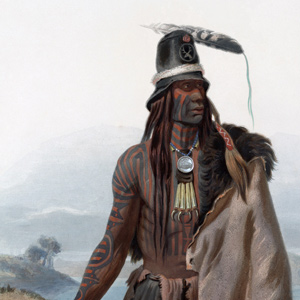
At Fort Mandan, the captains attempt to smooth over Hidatsa and Mandan jealousy. Lewis demonstrates the air gun and cannon, and the captains caution Seeing Snake not to war with the Shoshones.
January 15, 1805
Lunar eclipse
by Kristopher K. Townsend
At Fort Mandan, celestial observations are made during a lunar eclipse. The captains receive their first Hidatsa visitors since November, and Pvt. Whitehouse is brought in to recover from frozen feet.
January 14, 1805
Frozen feet
by Kristopher K. Townsend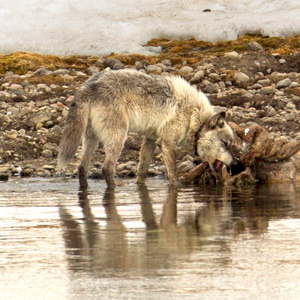
At Fort Mandan, Sgt. Pryor takes five hunters out, and a horse is sent to Pvt. Whitehouse who has frostbitten feet. Clark provides the first report of sexually transmitted disease among the expedition.
January 13, 1805
Major buffalo hunt
by Kristopher K. Townsend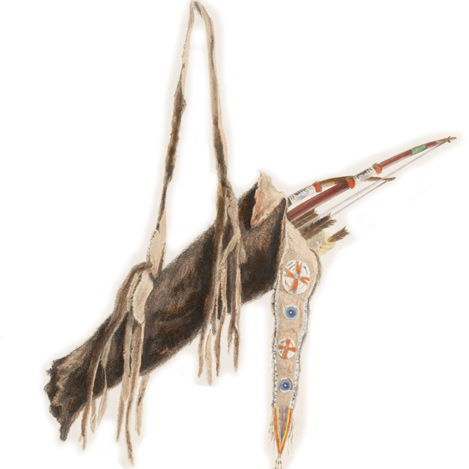
At Fort Mandan, Clark estimates that half the Mandan population has formed a large hunting party. Charbonneau returns from a trip and tells Clark why Hidatsa Chief Le Borgne has kept his distance.
January 12, 1805
Lunar halo
by Kristopher K. Townsend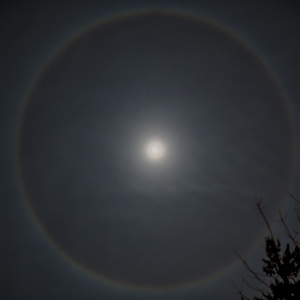
In the clear night sky at Fort Mandan below the Knife River Villages, a lunar halo appears. Pvts. Joseph and Reubin Field return from hunting and ask for help to bring in their four elk.
January 11, 1805
War medicine dance
by Kristopher K. Townsend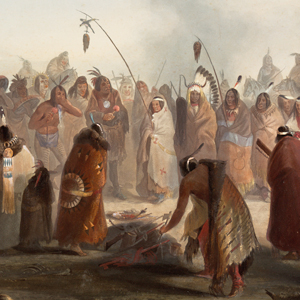
Posecopsahe (Black Cat) of Ruptáre and The Coal of Mitutanka visit Fort Mandan and spend the night. At Mitutanka village, several soldiers witness a war medicine dance—perhaps the Mandan Wolf Ceremony. In a lodge at a nearby Hidatsa village, trader François-Antoine Larocque‘s ink freezes.
January 10, 1805
40 below zero
by Kristopher K. Townsend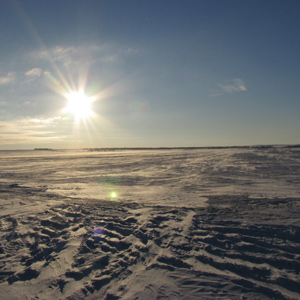
With the thermometer dipping to 40 degrees below zero, several Mandans search for a boy who was out all night. The boy is found, and a missing hunter returns to Fort Mandan on his own.
January 9, 1805
"nearly frosed"
by Kristopher K. Townsend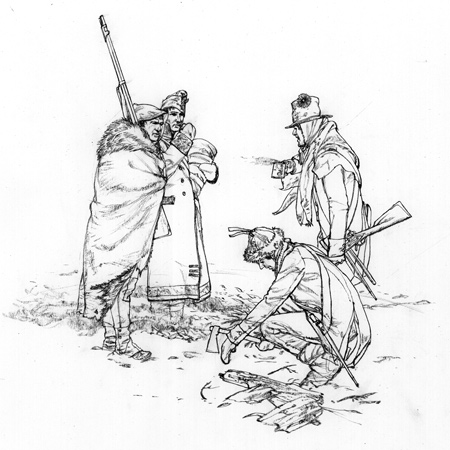
Several Knife River villagers come to Fort Mandan “nearly frosed.” One of the expedition hunters and an Indian boy fail to come in. After a failed search, there is little hope they will survive the night.
January 8, 1805
Sgt. Ordway's visit
by Kristopher K. Townsend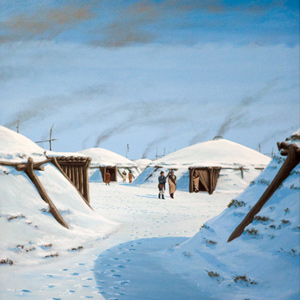
Braving a cold northwest wind, Sgt. Ordway visits a Mandan village, likely the one nearest Fort Mandan—Mitutanka. On the Ouachita River in present Arkansas, the Hunter and Dunbar Expedition turns back.
January 7, 1805
Maps from Indian information
by Kristopher K. Townsend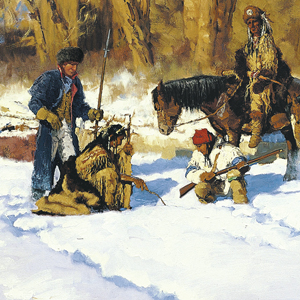
Sheheke (Big White) brings a sketch of the Yellowstone River country into Fort Mandan. He also provides oral information which Clark uses to draw a map. Three hunters return having suffered from the cold.
January 6, 1805
A trapped fox
by Kristopher K. Townsend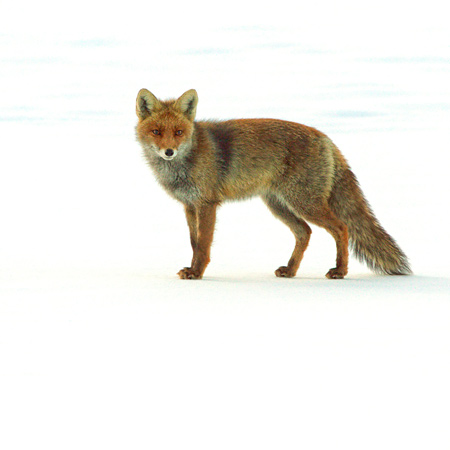
At Fort Mandan, a fox finds a way into the butchering area and is caught by Pvt. Bratton. Clark continues working on his maps with information gathered from observation, Indians, and fur traders.
January 5, 1805
The Buffalo Dance
by Kristopher K. Townsend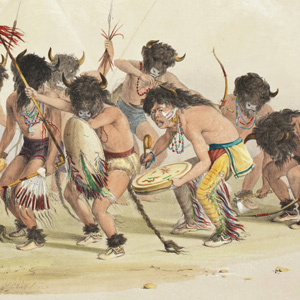
At Fort Mandan below the Knife River Villages, Clark works on his map of the west using information gathered from traders and Indians. He also describes the Mandan Nation’s Buffalo Dance ceremony.
January 4, 1805
Gifts for Little Raven
by Kristopher K. Townsend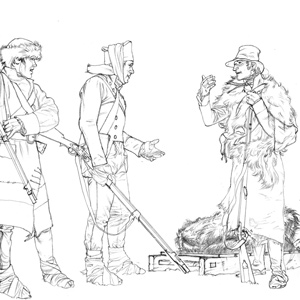
At Fort Mandan below the Knife River Villages, the weather warms enough to encourage hunters who kill a buffalo calf. Little Raven of Mitutanka visits and is given gifts, and the day ends cold and windy.
January 3, 1805
A safe refuge
by Kristopher K. Townsend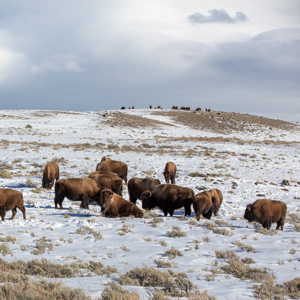
A Hidatsa man comes for his wife who is seeking refuge at Fort Mandan, and hunters return with a white-tailed jackrabbit. Charbonneau and one enlisted man arrive late at one of the Hidatsa villages.
January 2, 1805
A frolic at Ruptáre
by Kristopher K. Townsend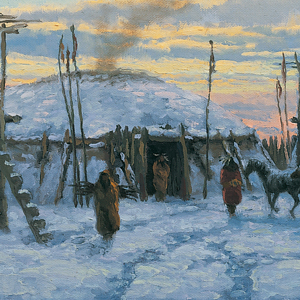
On this snowy day, Lewis takes a large group to Black Cat’s village—Ruptáre, and New Year’s celebrations continue. At Fort Mandan, several Knife River villagers bring corn to pay the blacksmiths.
January 1, 1805
A new year at Fort Mandan
by Kristopher K. Townsend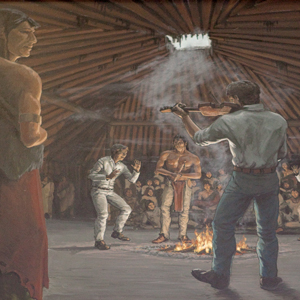
At Fort Mandan, New Year’s Day starts with rain and cannon fire. Several enlisted men are allowed to visit Mitutanka—a nearby Mandan village, and Clark orders York to dance for them. He also learns of a conflict between the two Hidatsa villages, and the day ends snowy and cold.
December 31, 1804
Popular blacksmiths
by Kristopher K. Townsend
At Fort Mandan below the Knife River Villages, the wind makes hills of snow and sand. The blacksmiths continue to trade their iron work for corn, and three men look for a suitable place to make canoes.
December 30, 1804
Mandan corn balls
by Kristopher K. Townsend
At Fort Mandan below the Knife River Villages, some Mandan villagers bring corn, beans, and squash to trade for blacksmith services. Sgt. Ordway describes cornballs made from parched corn and beans.
December 29, 1804
The blacksmiths' trade
by Kristopher K. Townsend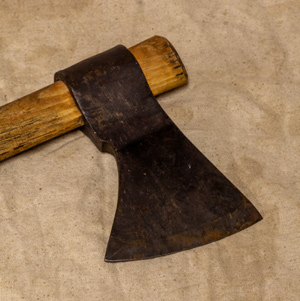
At Fort Mandan below the Knife River Villages, Clark notices that they are becoming acclimated to the cold. Several villagers bring broken kettles and axes to be repaired by the expedition blacksmiths.
Experience the Lewis and Clark Trail
The Lewis and Clark Trail Experience—our sister site at lewisandclark.travel—connects the world to people and places on the Lewis and Clark Trail.
Discover More
- The Lewis and Clark Expedition: Day by Day by Gary E. Moulton (University of Nebraska Press, 2018). The story in prose, 14 May 1804–23 September 1806.
- The Lewis and Clark Journals: An American Epic of Discovery (abridged) by Gary E. Moulton (University of Nebraska Press, 2003). Selected journal excerpts, 14 May 1804–23 September 1806.
- The Lewis and Clark Journals. by Gary E. Moulton (University of Nebraska Press, 1983–2001). The complete story in 13 volumes.
This site is provided as a public service by the

Lewis and Clark Trail Alliance
with additional funding from the following: