Kristopher Townsend
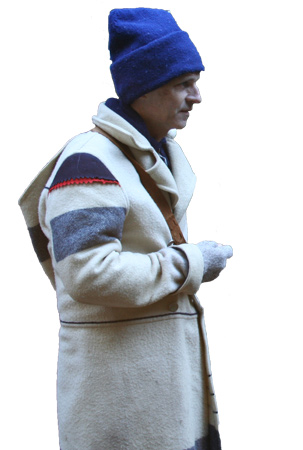
From the Pacific Northwest Living Historians at Lewis and Clark National Historic Park, Fort Clatsop.
Since 2016, Kristopher K. Townsend has been the webmaster and editor of this site, Discovering Lewis & Clark®. He has been actively photo-documenting the Lewis and Clark Trail since 1995. He attempts as closely as possible to re-create scenes as described in the journals including the same time of year, natural state, location, and weather. He has contributed numerous photos throughout the Discovering Lewis & Clark website.
Kris taught several years as a tenured instructor at Spokane Falls Community College. His courses included Internet programming and other information technology and computer science courses. During that time, he was also the series editor and an author of a popular college textbook series on Office Technology.
Shortly after the advent of the World Wide Web, he managed a web server featuring digital photos, digital video, and articles created by his Glenwood Heights Primary students. Topics included historical sites of Clark County (Washington State), wildflowers and birds of Clark County, and how-to videos for school’s physical education program.
Contributions to this Site
May 27, 1805
Scenes of desolation
by Kristopher K. Townsend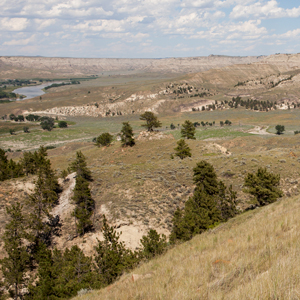
The expedition continues through the Upper Missouri River Breaks—now a National Monument. Sgt. Gass finds it offers nothing more than “scenes of barrenness and desolation.” The enlisted men tow the boats against strong headwinds and currents making only fourteen miles for the day.
May 26, 1805
Deserts of America
by Kristopher K. Townsend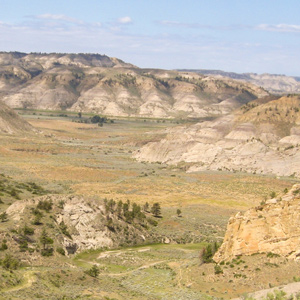
In Central Montana, the enlisted men tow the boats through the Upper Missouri River Breaks reaching the Cow Creek area. Lewis ascends the river hills to capture his first glimpse of the Rocky Mountains, and Clark describes the breaks as the “Deserts of America”.
May 25, 1805
Into the breaks
by Kristopher K. Townsend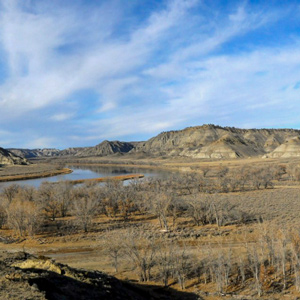
The journalists describe a change in geological formations as they move the boats through the Upper Missouri River Breaks National Monument. Drouillard kills the expedition’s first bighorn sheep, and Lewis gives the animal a description.
In Washington City, President Thomas Jefferson discusses the Freeman-Custis Expedition, another of his Western exploration projects.
May 24, 1805
A fine breeze
by Kristopher K. Townsend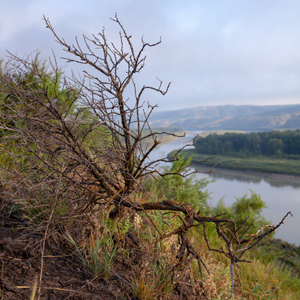
In the morning, ice covers standing water. With a “fine breeze”, they sail much of the day making 24 miles through the Upper Missouri River Breaks in Central Montana. Above present Kipp Recreation Area, they set up camp and wait for the hunters and scouts to return.
May 23, 1805
Prairie dogs
by Kristopher K. Townsend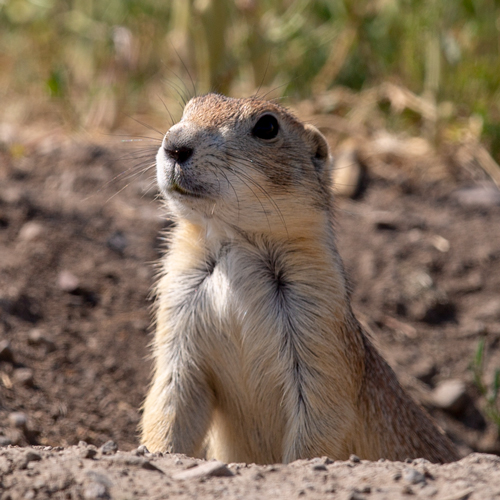
The morning is cold, but the day ends with temperatures warm enough to encourage mosquitoes. As the Little Rocky and Bears Paw mountains come into view, Lewis describes the prairie dog and the purgative effect experienced when drinking from local streams. At dinner, an out-of-control fire burns one of the enlisted men’s shot pouch, powder horn, and rifle stock.
May 22, 1805
Grouse Creek
by Kristopher K. Townsend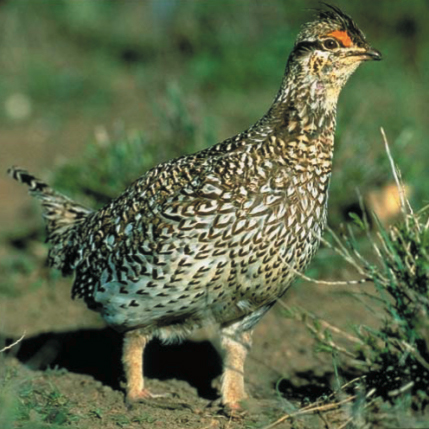
After a wind delay, the enlisted men tow the boats sixteen miles up the Missouri along present Charles M. Russell National Wildlife Refuge. They pass “grows Creek,” named for the many grouse seen there, and then stop early to render oil from a grizzly bear.
In St. Louis, Pierre Chouteau asks Illinois Governor William Henry Harrison about the numerous Indian delegates that have recently arrived on the expedition’s barge.
May 21, 1805
Seeking shelter
by Kristopher K. Townsend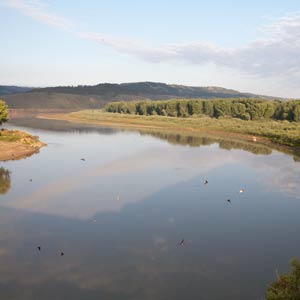
In Eastern Montana, the enlisted men row, pole, and tow the boats along the Missouri River shores of present UL Bend. The winds increase throughout the day, and after dark they become so strong that camp must be moved to a more sheltered location.
May 20, 1805
"Sâh-câ-gar me-âh or bird woman's River"
by Kristopher K. Townsend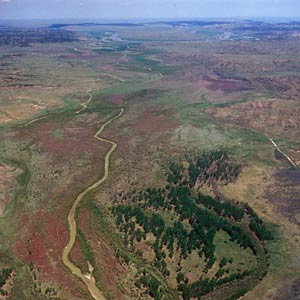
The captains name a creek Blowing Fly after the blowflies that often congregate on raw meat and open wounds. At the mouth of the Musselshell, they explore and take celestial observations. A tributary of the Musselshell is named “Sâh-câ-gar me-âh [Sacagawea] or bird woman’s River”.
Elsewhere, the barge, that headed down the Missouri from Fort Mandan on 7 April 1805, arrives in St. Louis.
May 19, 1805
Seaman bitten
by Kristopher K. Townsend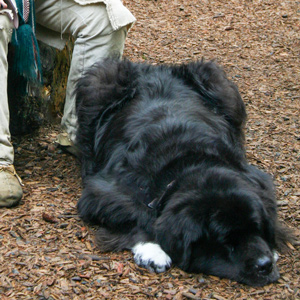
After morning fog clears, the enlisted men tow the boats up the Missouri stopping about seven miles below the Musselshell River in Eastern Montana. A grizzly bear shot in the heart runs for 1/4 miles before falling, and Lewis’s dog Seaman is bitten by a wounded beaver.
May 18, 1805
Hills and headwinds
by Kristopher K. Townsend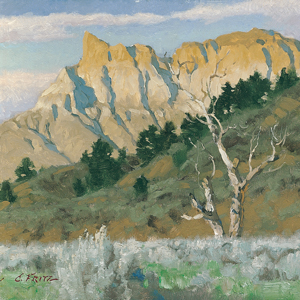
In the present Fort Peck Reservoir area of Eastern Montana, the enlisted men tow the boats against headwinds and past “verry high rough hills”. Clark kills four deer and mentions that the men are using the hides to make leggings and moccasins.
May 17, 1805
Snakes and fires
by Kristopher K. Townsend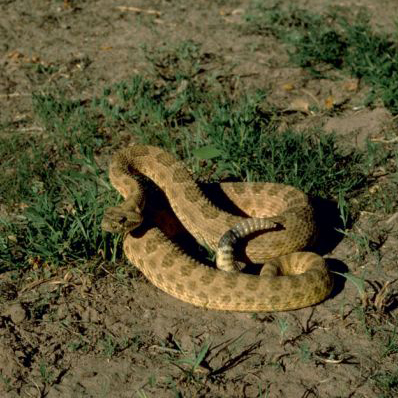
In Eastern Montana, the enlisted men take advantage of a firm shore to tow the pirogues up the Missouri River east of present Fourchette Creek. A prairie rattlesnakes threatens Clark, and during the night, a tree catches fire causing havoc in camp.
May 16, 1805
Sacagawea's fortitude
by Kristopher K. Townsend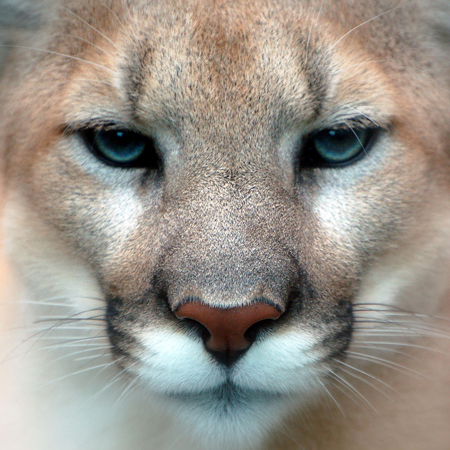
Early in the morning, a panther appears near camp in present Eastern Montana. Most of the day is used to dry things out and Lewis takes inventory of what was lost when the white pirogue upset. He mentions Sacagawea’s “fortitude and resolution” to have saved so many items. Around 4 pm, they set out making seven miles for the day.
May 15, 1805
Stopping to dry out
by Kristopher K. Townsend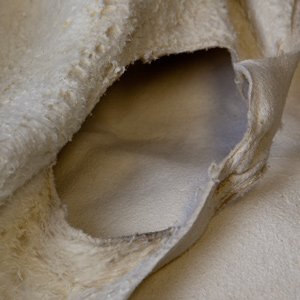
West of present Snow Creek in Eastern Montana, the expedition stops early to dry out articles made wet in yesterday’s accident. The enlisted men busy themselves dressing skins and hunting. Clark comments on the many dead bison encountered along this stretch of the Missouri River.
May 14, 1805
Charbonneau's prayer
by Kristopher K. Townsend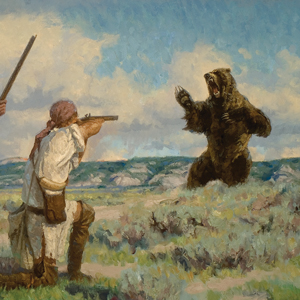
The day starts clear and cold, freezing even the moccasins near the fire. During the day, six hunters take flight from a wounded grizzly bear. When the white pirogue tips over, Charbonneau offers a prayer and is forced at gunpoint to seize the rudder. Now above present Snow Creek in Eastern Montana, the captains call it a day and issue a ration of consoling grog.
May 13, 1805
Hunting for hides
by Kristopher K. Townsend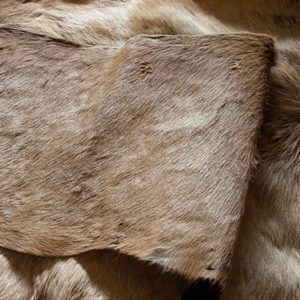
While they delay for high winds, hunters are sent out for deer and elk so that they can make leather clothes and a cover for the iron-framed boat. The enlisted men manage to move the boats only nine miles before camping near present Snow Creek in Eastern Montana.
May 12, 1805
Blooming chokecherries
by Kristopher K. Townsend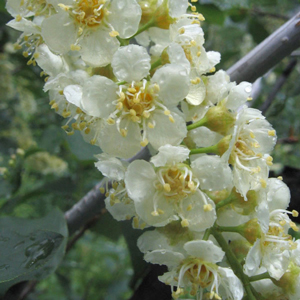
The enlisted men move the boats about 18 miles before wind stops them near present Hell Creek Bay, Montana. Lewis observes chokecherries in bloom and the poor, sterile soils of the river hills.
May 11, 1805
Another grizzly chase
by Kristopher K. Townsend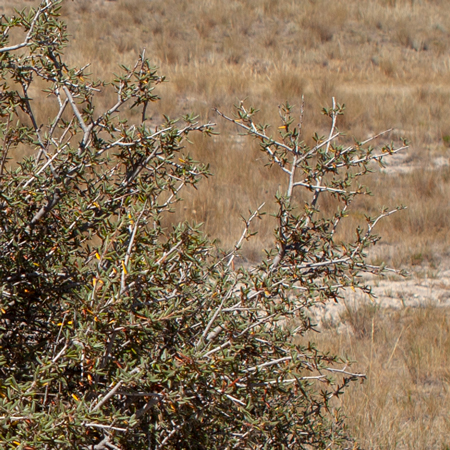
On the Missouri River west of present Fort Peck Dam, a wounded grizzly bear chases Pvt. Bratton, and collapsing riverbanks threaten to capsize the boats. Lewis describes two sage plants: greasewood and big sagebrush.
May 10, 1805
Mule deer
by Kristopher K. Townsend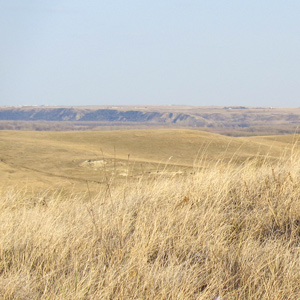
After five miles struggling against the Missouri’s current near present Fort Peck, Montana, high winds stop the boats entirely. When a dog appears at camp, the soldiers scout the hills and ready their weapons. Lewis describes the mule deer, new to science, and many of the party suffer from boils and sore eyes.
May 9, 1805
Charbonneau's boudin blanc
by Kristopher K. Townsend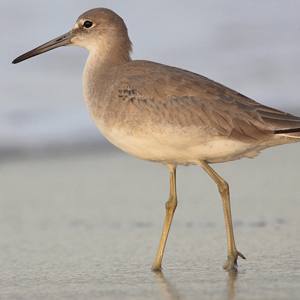
East of present Fort Peck, Montana, Lewis worries as sandbars begin to crowd the river with the Rocky Mountains still not in sight. He describes the willet, and savors Charbonneau’s white sausage that he calls boudin blanc.
May 8, 1805
The 'River that Scolds all Others'
by Kristopher K. Townsend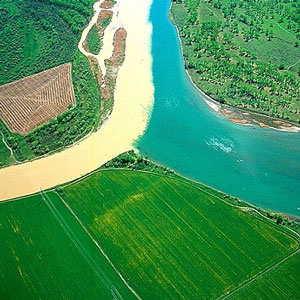
In eastern Montana, Clark explores the Milk River and sees wide plains, large herds of bison, and distant smoke. While walking the shore with Clark, Sacagawea gathers breadroot, an important food source. Fears mount when Lewis discovers where a pronghorn hide was recently scraped, and he wishes to avoid an encounter with the Assiniboine People.
May 7, 1805
Milk River plains
by Kristopher K. Townsend
The enlisted men move the boats past beautiful plains near the mouth of the Milk River present eastern Montana. A dugout canoe swamps, and everybody stops to dry the cargo. Lewis surmises that the Missouri River is too turbid to support fishing birds.
May 6, 1805
Curiosity satisfied
by Kristopher K. Townsend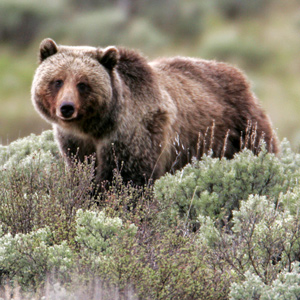
With a fair morning and favorable winds, the expedition sets out early making 25 miles up the Missouri. Lewis notices salt deposits on the banks and sandbars, and he says that the enlisted men’s curiosity with killing grizzly bears is satisfied. Camp is east of present Frazer, Montana.
May 5, 1805
Wolves and grizzlies
by Kristopher K. Townsend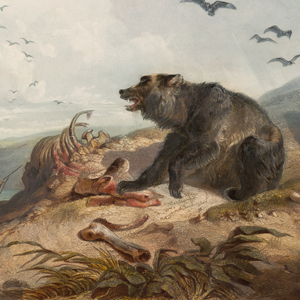
As the enlisted men move the boats 17 miles up the Missouri, the expedition stops to repair the white pirogue’s rudder. Lewis describes snow geese and wolves, and Clark tells of difficulty with a “terrible looking” grizzly bear. Camp is near present Wolf Point, Montana.
May 4, 1805
Immense quantities of buffalo
by Kristopher K. Townsend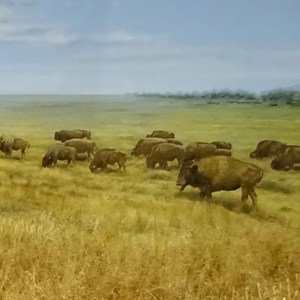
Before departure, the red pirogue’s rudder must be repaired. Lewis describes empty Indian hunting camps and treats Pvt. Joseph Field with salts and opium. On their way to evening camp east of present Wolf Point, Montana, Lewis reports seeing immense quantities of buffalo along with elk and pronghorn.
May 3, 1805
The Porcupine River
by Kristopher K. Townsend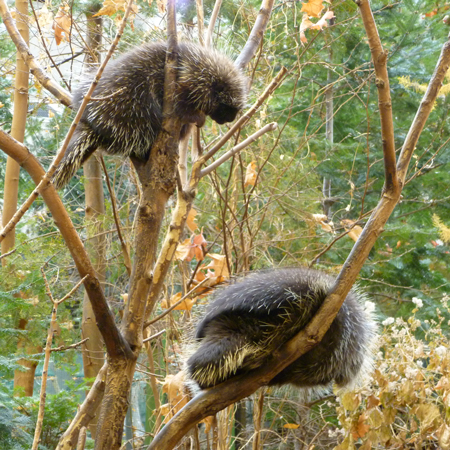
After an icy morning, the enlisted men move the boats over 18 miles up the Missouri River. Clark walks the shore in the morning and Lewis in the afternoon—the practice being that one captain is always with the boats. They camp near the mouth of the Porcupine—the present Poplar River.
May 2, 1805
Beaver tails
by Kristopher K. Townsend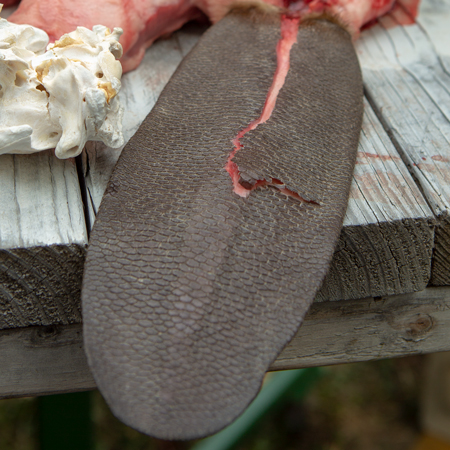
In eastern Montana, the morning brings an inch of new snow. Due to wind, the enlisted men move the boats less than five miles, and they encamp southeast of present Poplar. Lewis considers beaver tail a delicacy, Pvt. Joseph Field finds a scarlet cloth hanging from a tree branch, and Lewis explains “big medicine”.
May 1, 1805
Stopping for wind
by Kristopher K. Townsend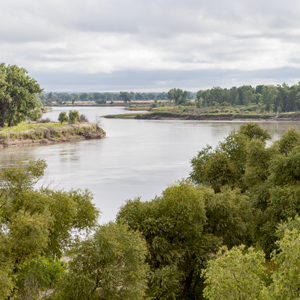
In eastern Montana, favorable winds push the boats up the Missouri River. Eventually, the waves become too big for the dugout canoes and, they must stop for the day. One boat is stranded on the wrong side of the river, and its crew must spend a cold night there on their own. Pvt. Shields suffers from rheumatism.
April 30, 1805
Buffalo currants
by Kristopher K. Townsend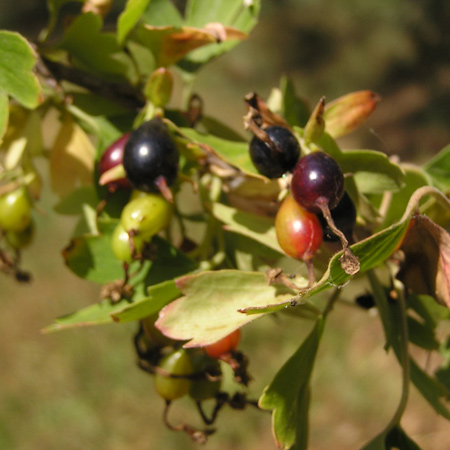
While walking on the shore with Clark and Charbonneau, Sacagawea collects a plant specimen—likely the buffalo currant. Sgt. Ordway lets a bison swim safely by the boats, and Lewis measures a large buck elk. After moving 24 miles up the Missouri, they camp about five miles southwest of present Brockton, Montana.
April 29, 1805
First grizzly kill
by Kristopher K. Townsend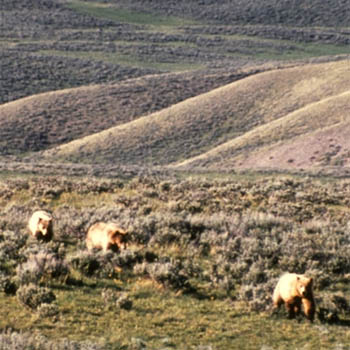
Lewis kills the expedition’s first grizzly bear—an immature male. During the day, they see abundant wildlife including a herd of bighorn sheep and with moderate winds, the enlisted men move the boats another 25 miles up the Missouri River. Sgt. Ordway notices a stray horse and abundant sagebrush, and camp is about five miles west of present Culbertson, Montana.
April 28, 1805
Favorable winds
by Kristopher K. Townsend
With a tailwind most of the day, the enlisted men move the boats 24 miles up the Missouri. They see great quantities of wild game and remark on the bright, colored layers of the Fort Union Formation exposed in the river hills. Camp is below present Culbertson, Montana.
April 27, 1805
Entering Montana
by Kristopher K. Townsend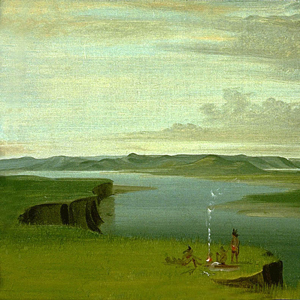
At the mouth of the Yellowstone, the captains make separate recommendations for the location of a fort or trading post. By midday, the expedition enters present Montana where they will be traveling another four months. Camp is near Snowden Bridge.
April 26, 1805
Yellowstone River celebration
by Kristopher K. Townsend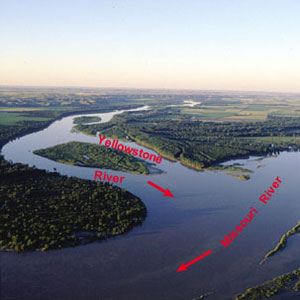
Pvt. Joseph Field scouts the lower reaches of the Yellowstone River while Lewis explores that river’s confluence with the Missouri. The boats catch up and with everyone now at this milestone, they celebrate with a dram of whiskey followed by singing and dancing.
April 25, 1805
Lewis on the Yellowstone
by Kristopher K. Townsend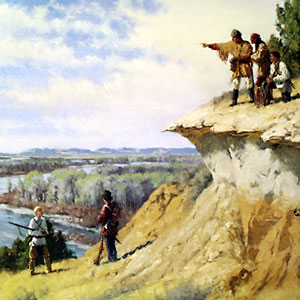
Lewis’s dog Seaman disappears during the night but fortunately returns in the morning. Lewis and a small detachment advance to the Yellowstone River. With water freezing to the paddles, Clark commands the boats. His group stops short of the Yellowstone.
April 24, 1805
Blowing dust
by Kristopher K. Townsend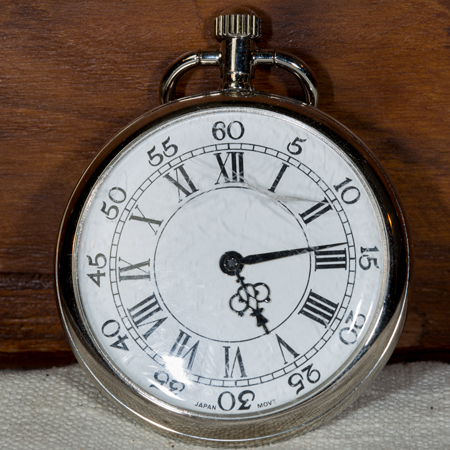
High winds pin the expedition down at their camp near present Trenton, North Dakota. Hunters are sent out, and they kill a “considerable number of Buffalo, Elk and Deer“. The dust from blowing sand gets into Lewis’s watch and makes everyone’s eyes sore.
April 23, 1805
A sudden storm
by Kristopher K. Townsend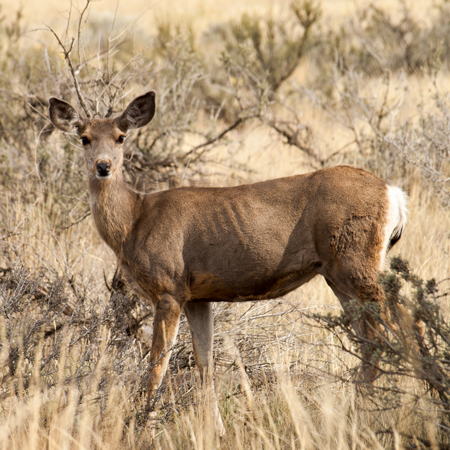
While paddling up the Missouri, a sudden storm forces everyone to take immediate shelter. Hunting ahead of the boats, Clark kills three mule deer. Towards evening, they proceed on and encamp near present Trenton, North Dakota.
April 22, 1805
A frightened buffalo calf
by Kristopher K. Townsend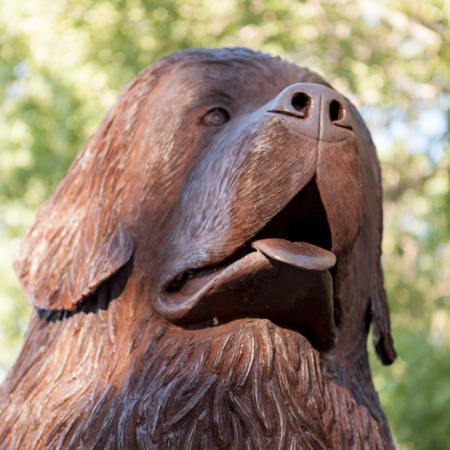
Towing the boats in high winds, the expedition makes only eleven miles up the Missouri River. In the area of present Williston, North Dakota, Lewis describes salt deposits and glacial erratics. A bison calf, perhaps afraid of Lewis’s dog Seaman, looks to Lewis for protection.
April 21, 1805
Immense herds
by Kristopher K. Townsend
After a chilly morning that froze the water in their buckets, the enlisted men move the boats sixteen miles up the Missouri River. They encounter ‘immence herds’ of bison, elk, deer, and pronghorn and after dark, encamp across from the mouth of the Little Muddy River.
April 20, 1805
An Assiniboine grave
by Kristopher K. Townsend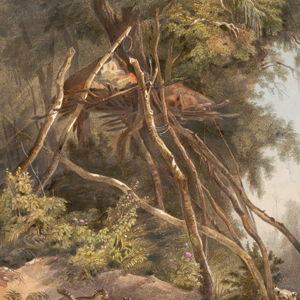
Below present Williston, North Dakota, hard winds prevent the enlisted men from moving the boats more than seven miles up the Missouri. Lewis walks the shore where he observes a partially fallen Assiniboine scaffold grave.
April 19, 1805
Grounded by winds
by Kristopher K. Townsend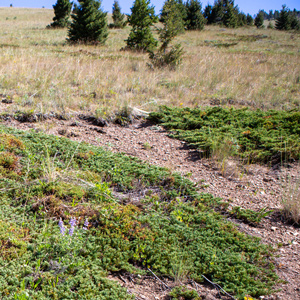
The wind being high, the captains decide to remain another day at their present camp below present Williston, North Dakota. Lewis describes the area’s beaver and collects a specimen of creeping juniper.
In Washington City, Secretary of War Henry Dearborn orders James Wilkinson to establish a factory near St. Louis to manufacture and store Indian trade goods.
April 18, 1805
Head winds
by Kristopher K. Townsend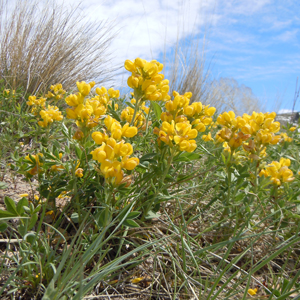
During the night, a beaver is caught in two different traps, and an argument over ownership ensues. The entire Charbonneau family joins Clark on shore while the enlisted men struggle to move the boats against strong headwinds. Later, Lewis takes a turn walking the shore where he observes bison wool and the golden pea. Camp is below present Williston, North Dakota.
April 17, 1805
Smooth sailing
by Kristopher K. Townsend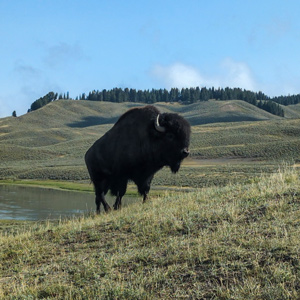
With a tailwind, the boats make nearly twenty-six miles up the Missouri River. On the way, they see fresh tracks of Assiniboine travelers. The bison are too lean to eat, and Lewis prefers beaver tail and liver. Camp is above present Lewis and Clark State Park in North Dakota.
April 16, 1805
A remarkable large beaver
by Kristopher K. Townsend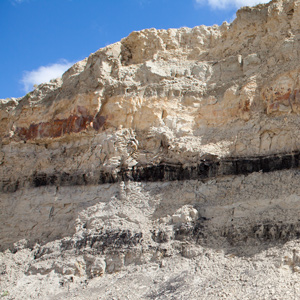
As they paddle up the Missouri River in present North Dakota, Sgt. Ordway notices four-feet-thick piles of ice left from the spring melt. Clark remarks on the quality and quantity of beaver and Lewis remarks on the seams of lignite coal seen in the hills. Camp is opposite Beaver Creek near the present White Earth River.
April 15, 1805
Near Four Bears Village
by Kristopher K. Townsend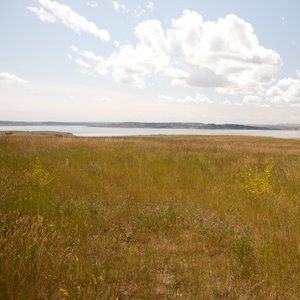
Lewis walks on the shore and observes fertile plains, salty creeks, several sharp-tailed grouse, and empty Indian encampments. Clark commands the boats and nearly gets a shot at a grizzly bear. After 22 miles, they camp above present Four Bears Village, North Dakota.
April 14, 1805
Bear Den Creek
by Kristopher K. Townsend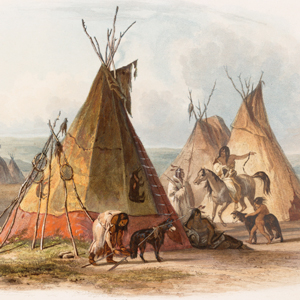
The enlisted men move the boats fourteen miles up the Missouri River reaching the area of present Bear Den Creek, North Dakota. Along the way, they pass sage-covered hills with prairie dogs, elk, buffalo, and two empty Assiniboine camps.
April 13, 1805
The white pirogue's near miss
by Kristopher K. Townsend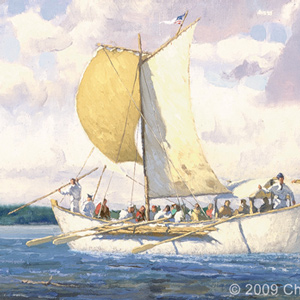
Below present Van Hook Arm, North Dakota, a sudden gust of wind hits the white pirogue with Charbonneau at the helm. In his panic, he turns the boat sideways to the wind and nearly turns it over. Those walking the shore see grizzly bear tracks and empty Assiniboine lodges.
April 12, 1805
Little Missouri River
by Kristopher K. Townsend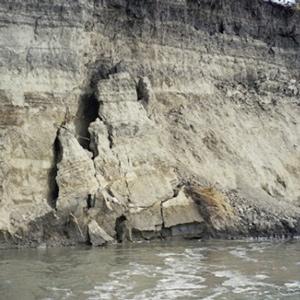
Early in the day, a crumbling riverbank nearly capsizes the red pirogue. They stop for the day at the Little Missouri River so that the captains can take celestial observations of this important tributary. They also see beaver, empty Assiniboine camps, creeping juniper, and wild onions.
April 11, 1805
A comfortable dinner
by Kristopher K. Townsend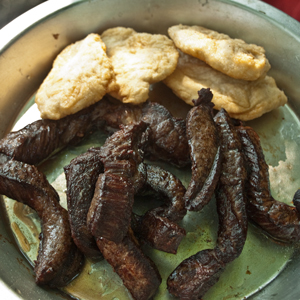
As the boats near the Little Missouri River, the journalists notice crusts of white salt and hills layered with black lignite coal. Midday, they enjoy a “comfortable dinner” of fresh venison, beaver tails, and yesterday’s soggy biscuits. In their Weather Diaries, the captains describe the area’s birds, trees, and plants.
April 10, 1805
The Great Bend
by Kristopher K. Townsend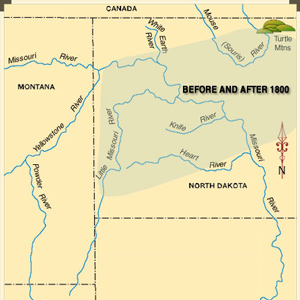
The expedition reaches the Great Bend of the Missouri where the river turns west in present North Dakota. They see fertile, treeless plains, a bluff with burning lignite coal, and catch up to three French trappers who had left the Knife River Villages a few days before them.
April 9, 1805
Passing Garrison Bluffs
by Kristopher K. Townsend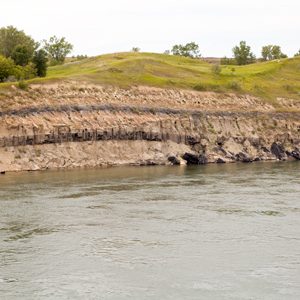
As the enlisted men move the boats up the Missouri near present Pick City, North Dakota, they see dark bands of lignite coal, large squirrels, and the first Missouri River gravel bars. Sgt. Ordway says the “Musquetoes begin to Suck our blood” and for dinner, Sacagawea gathers Jerusalem artichoke bulbs.
April 8, 1805
A swamped canoe
by Kristopher K. Townsend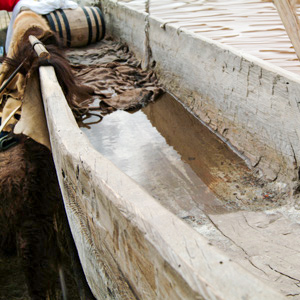
After leaving the Knife River Villages, a leaky dugout canoe fills with water wetting a wooden keg of gunpowder. Below present Garrison Dam in North Dakota, the enlisted men struggle to move the against a headwind and must stop. In the Weather Diary, the captains describe the birds observed during their stay at Fort Mandan.
Experience the Lewis and Clark Trail
The Lewis and Clark Trail Experience—our sister site at lewisandclark.travel—connects the world to people and places on the Lewis and Clark Trail.

Discover More
- The Lewis and Clark Expedition: Day by Day by Gary E. Moulton (University of Nebraska Press, 2018). The story in prose, 14 May 1804–23 September 1806.
- The Lewis and Clark Journals: An American Epic of Discovery (abridged) by Gary E. Moulton (University of Nebraska Press, 2003). Selected journal excerpts, 14 May 1804–23 September 1806.
- The Lewis and Clark Journals. by Gary E. Moulton (University of Nebraska Press, 1983–2001). The complete story in 13 volumes.
This site is provided as a public service by the

Lewis and Clark Trail Alliance
with additional funding from the following: