Kristopher Townsend
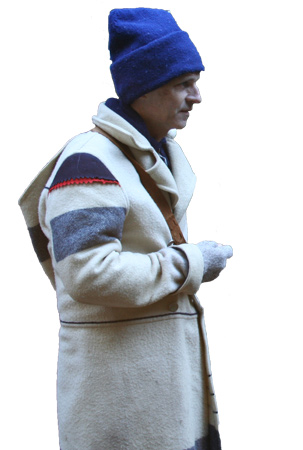
From the Pacific Northwest Living Historians at Lewis and Clark National Historic Park, Fort Clatsop.
Since 2016, Kristopher K. Townsend has been the webmaster and editor of this site, Discovering Lewis & Clark®. He has been actively photo-documenting the Lewis and Clark Trail since 1995. He attempts as closely as possible to re-create scenes as described in the journals including the same time of year, natural state, location, and weather. He has contributed numerous photos throughout the Discovering Lewis & Clark website.
Kris taught several years as a tenured instructor at Spokane Falls Community College. His courses included Internet programming and other information technology and computer science courses. During that time, he was also the series editor and an author of a popular college textbook series on Office Technology.
Shortly after the advent of the World Wide Web, he managed a web server featuring digital photos, digital video, and articles created by his Glenwood Heights Primary students. Topics included historical sites of Clark County (Washington State), wildflowers and birds of Clark County, and how-to videos for school’s physical education program.
Contributions to this Site
December 13, 1805
Cat skins
by Kristopher K. Townsend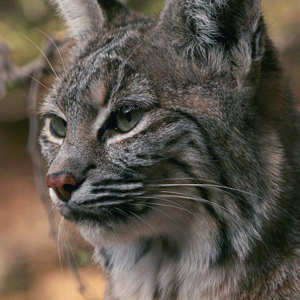
At the Fort Clatsop construction site, the captains trade for bobcat and lynx furs. Two hunters return having left several butchered elk in the woods, and workers attempt to split grand fir into boards.
December 12, 1805
Coboway's peace medal
by Kristopher K. Townsend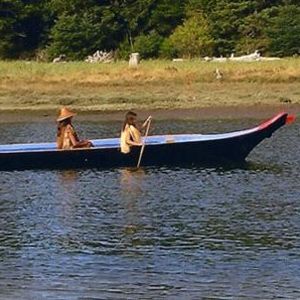
Two canoes of Clatsops come to the construction site to trade wapato and a sea otter skin. The captains give a medal to Chief Coboway, and Clark describes the Clatsop’s desire for blue beads.
December 11, 1805
Putting up huts
by Kristopher K. Townsend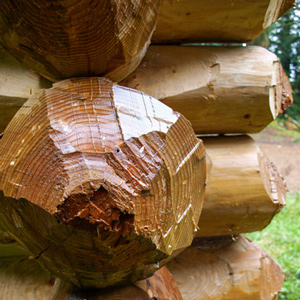
At the Fort Clatsop construction site on the present Lewis and Clark River, rains are constant as the men put up the huts. Several of the enlisted men are sick or injured.
December 10, 1805
Beachcombing
by Kristopher K. Townsend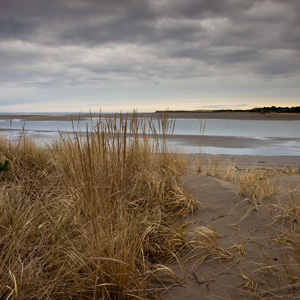
Near present Seaside, Oregon, Clark goes beach combing while the villagers look for fish stranded by the retreating tide. He returns to the Fort Clatsop construction site, where workers are falling trees and building a foundation.
Near Little Falls, Minnesota, U.S. Army explorer Zebulon Pike‘s men must drag two sleds over the prairie and a pirogue over the frozen river.
An attempt to return Arikara chief Too Né (Eagle Feather) to his home is stopped by some Kansa. Louisiana Territory Governor James Wilkinson decides to send him to Washington City.
December 9, 1805
The Necanicum Clatsop Village
by Kristopher K. Townsend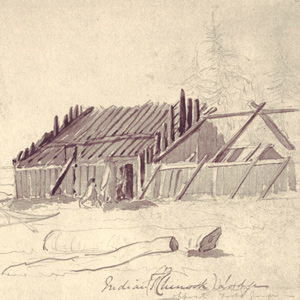
Looking for a place to make salt, Clark meets three Necanicum Clatsops who take his group to their village at present Seaside, Oregon. At the Fort Clatsop site, construction begins on a “small fort”.
December 8, 1805
Pursuing elk
by Kristopher K. Townsend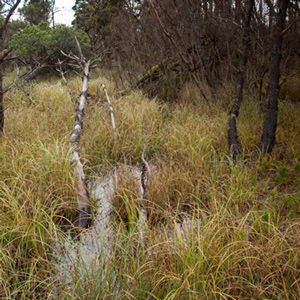
While looking place to make salt, Clark’s group of six pursues elk through coastal bogs and marshes. Elsewhere, Pvt. Gass leads a large party to bring back elk to the Fort Clatsop construction site.
December 7, 1805
Moving to winter quarters
by Kristopher K. Townsend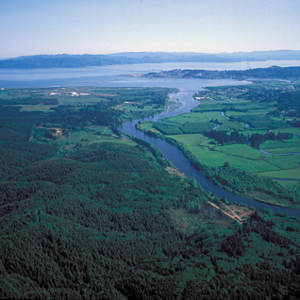
The morning is fair as the expedition travels from Tongue Point to the Netul River—a ‘most eligible situation’ for what will later be named Fort Clatsop. Clark is delayed waiting for York to return from hunting.
December 6, 1805
Rising tide, rising hopes
by Kristopher K. Townsend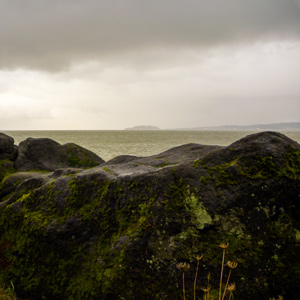
At Tongue Point near present Astoria, Oregon, the day is stormy, and a flood tide forces everyone to move to higher ground. The evening clears and hopes that they can move to the new winter site rise.
December 5, 1805
Lewis returns
by Kristopher K. Townsend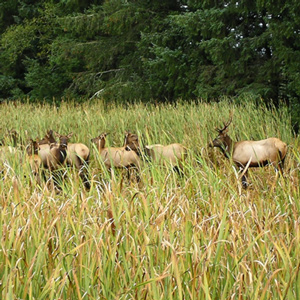
Lewis returns to Tongue Point having found an eligible situation to build a winter fort. The whole party will move there as soon as the weather permits.
December 4, 1805
A stormy day
by Kristopher K. Townsend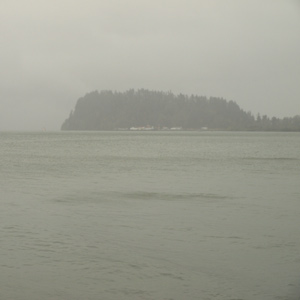
The day is wet and windy as Lewis looks for a winter site near the Columbia River mouth. At Tongue Point, Sgt. Pryor and six men bring in six elk. Clark’s health returns, but he worries about Lewis.
December 3, 1805
Food for the sick
by Kristopher K. Townsend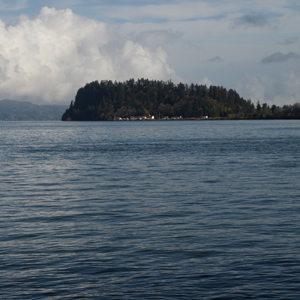
At their Tongue Point bivouac, spirits lift when the morning proves fair and fresh elk meat arrives. Clark and several enlisted men find healing in the wapato and marrow.
December 2, 1805
First Pacific elk
by Kristopher K. Townsend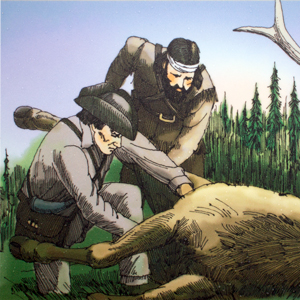
At Tongue Point, Pvt. Joseph Field brings in marrow bones from their first Pacific elk, a significant addition to the health of Clark and the several enlisted men who are ill. Lewis looks for a winter site.
December 1, 1805
Poor hunting
by Kristopher K. Townsend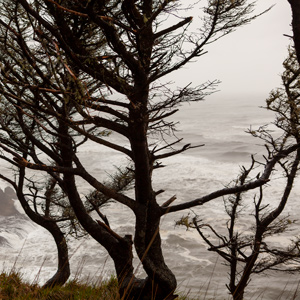
While enduring another storm at Tongue Point, Clark complains that he has “not Seen one pacific day” since his arrival. Lewis’s group continues searching for a winter site. They find nothing but squirrels.
November 30, 1805
Discouraging prospects
by Kristopher K. Townsend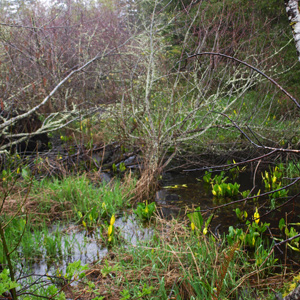
Lewis paddles up the Skipanon River but can find no place eligible as a winter encampment. Back at Tongue Point, several are ill, and Sacagawea gives some old, sour bread to Clark.
November 29, 1805
Looking for winter camp
by Kristopher K. Townsend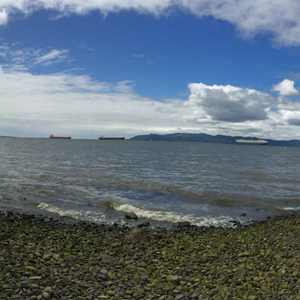
Lewis and five men leave Tongue Point in their Chinookan canoe to find a site to build winter quarters. Meanwhile, some try to hunt while others attempt to dry leather clothes over smoky fires.
November 28, 1805
"O! how Tremendious"
by Kristopher K. Townsend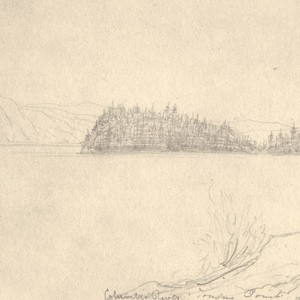
On the small isthmus of present Tongue Point, the party has no way to keep dry, the hunters have no success, and in the afternoon a “Tremendious” windstorm arrives. Clark calls it a disagreeable situation.
November 27, 1805
Sheltering at Tongue Point
by Kristopher K. Townsend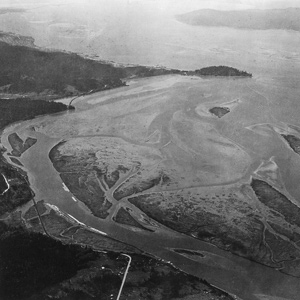
Unable to continue due to high winds and waves, they are forced to take shelter on a narrow isthmus—present Tongue Point near Astoria, Oregon. Everyone is wet and disagreeable.
November 26, 1805
Crossing the Columbia
by Kristopher K. Townsend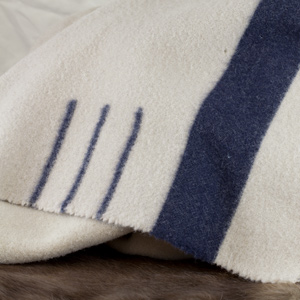
Several miles above the mouth of the Columbia, they safely cross the river and continue west along the southern shore. At a Kathlamet village, the villagers want blue beads and blue, red, or brown blankets.
November 25, 1805
Leaving Station Camp
by Kristopher K. Townsend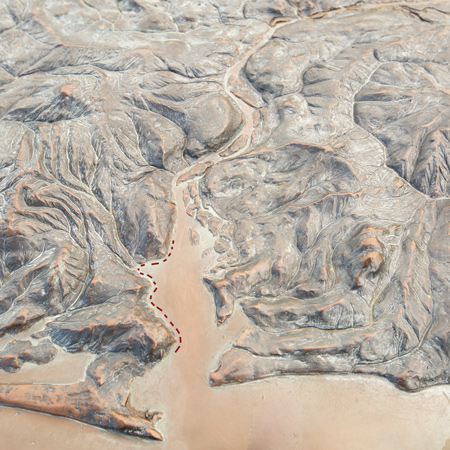
Having decided to winter on the Columbia River’s southern shore, they leave Station Camp. With Mt. St. Helens in view, they paddle upriver and encamp near Pillar Rock where the river narrows.
November 24, 1805
The winter camp decision
by Kristopher K. Townsend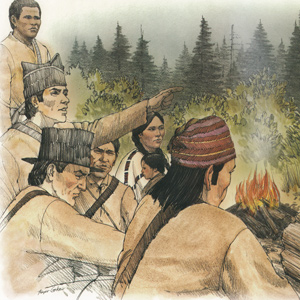
At Station Camp near the mouth of the Columbia, the captains gather each persons’ opinion regarding where to spend the winter. Clark lists the advantages of wintering over on the river’s southern shore.
November 23, 1805
Marking the territory
by Kristopher K. Townsend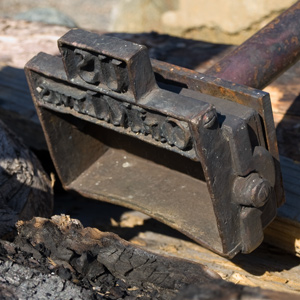
At Station Camp on Baker Bay, Lewis brands a tree and then, Clark and several of the party make marks of their own. Clatsop visitors come to trade for blue beads, and in the evening, the weather clears.
November 22, 1805
A horrible day
by Kristopher K. Townsend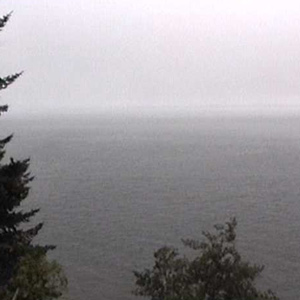
At Station Camp on present Baker Bay, a storm blows in with high waves and tides. Some must move their shelters and fires, a dugout canoe is damaged, and Clark calls it a horrible day.
November 21, 1805
Clatsop and Chehalis visitors
by Kristopher K. Townsend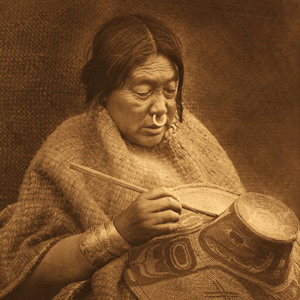
At Station Camp near the mouth of the Columbia, some Clatsops and Lower Chehalis visit. Additionally, the wife of Chinook chief Delashelwilt brings six young females to camp. Clark describes Chinookan head flattening and woven mats and hats.
In Washington City, Secretary of War Henry Dearborn orders Louisiana Territory Governor and Commander of the U.S. Army, James Wilkinson, to cancel his plans to build a fort on the Platte River.
November 20, 1805
Sacagawea's belt of blue beads
by Kristopher K. Townsend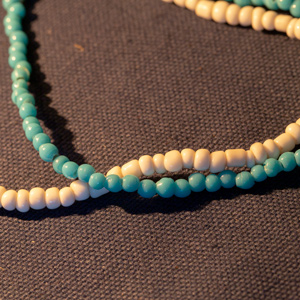
At Station Camp on present Baker Bay, the captains meet with Chiefs Concomly and Shelathwell. Another Indian trades two sea otter skins for Sacagawea‘s belt of blue beads, and she is given a new coat.
November 19, 1805
A day at the beach
by Kristopher K. Townsend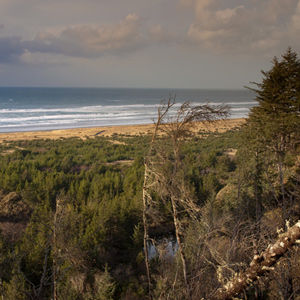
Clark’s group walks four miles up present Long Beach and sees a dead sturgeon and whale. At Station Camp near Chinook, Washington, one of the men trades his old razor blade for a Chinookan woven hat.
November 18, 1805
Astonishing Pacific Ocean
by Kristopher K. Townsend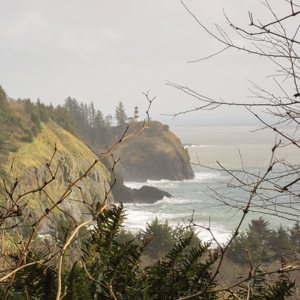
Clark takes a group to view the Pacific Ocean. The men behold “with estonishment the high waves dashing against the rocks & this emence ocian”. At Station Camp, Lewis records a Chinook vocabulary.
November 17, 1805
A disappointing cape
by Kristopher K. Townsend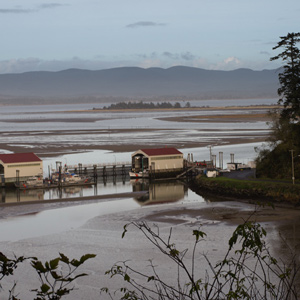
At Station Camp, Clark trades with some Chinooks and gathers volunteers to visit the Pacific Ocean tomorrow. Lewis returns from Cape Disappointment without finding any ships.
November 16, 1805
A break in the weather
by Kristopher K. Townsend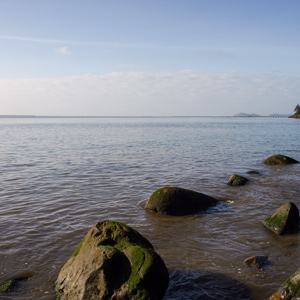
A break in the weather at Station Camp enables the main party to dry gear. Sgt. Gass reflects on reaching the end of their voyage, and Lewis adds Oregon boxleaf to his plant collection.
November 15, 1805
Moving to Station Camp
by Kristopher K. Townsend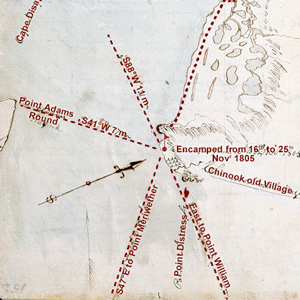
They leave their “dismal nitich” and paddle to Baker Bay where Station Camp is established near the Chinook Middle Village. Clark learns of stolen rifles, and Lewis is at or near Cape Disappointment.
November 14, 1805
Situation miserable
by Kristopher K. Townsend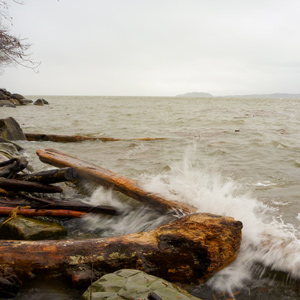
Pvt. Colter returns to the “Dismal Nitch” camp site to inform the captains that a better encampment area is not far down the river—a sizeable beach near the Chinookan village later named Middle Village.
November 13, 1805
Around Point Ellice
by Kristopher K. Townsend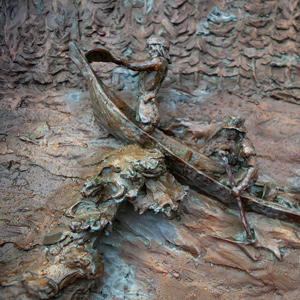
Clark climbs a steep hill above their “Dismal Nitch” camp but is unable to see very far down the river. Late in the day, three paddlers make it around Point Ellice across from present Astoria, Oregon.
November 12, 1805
A dismal "nitch"
by Kristopher K. Townsend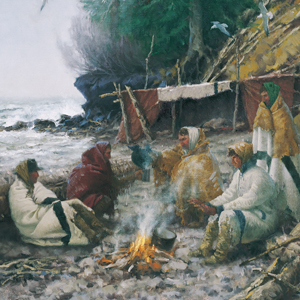
During low tide, the expedition moves into a better cove which would become known as “The Dismal Nitch”. Despite their distressing situation, several salmon are caught, and the day ends well.
November 11, 1805
Kathlamet visitors
by Kristopher K. Townsend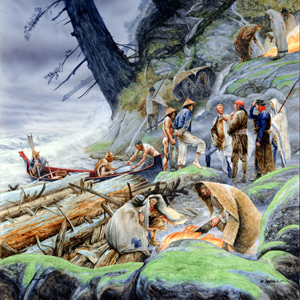
The expedition makes the best of their poor location in a small niche exposed to high waves and driving rain. Five Kathlamet visitors skillfully cross the Columbia in a canoe loaded with fish.
November 10, 1805
Small niche encampment
by Kristopher K. Townsend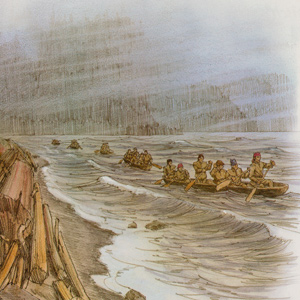
The paddlers make about ten miles down the Columbia River shoreline, but eventually are stopped by wind and waves. At their small niche camp near present Knappton, Washington, they try to dry out.
November 9, 1805
Wet as water can be
by Kristopher K. Townsend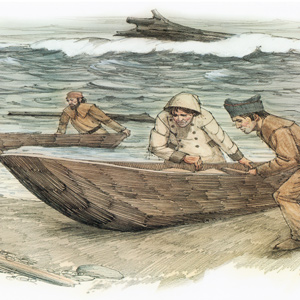
At Grays Bay in present Washington, high tides flood camp and waves throw huge logs at the dugout canoes. That and the heavy rain makes “every man as wet as water could make them.”
November 8, 1805
Seasick paddlers
by Kristopher K. Townsend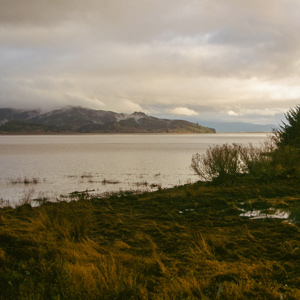
Moving down the Columbia, the wet weather continues. While crossing Grays Bay, high waves force the dugout canoes to stay close to shore. They cross safely but arrive with several seasick paddlers.
November 7, 1805
Ocean in view?
by Kristopher K. Townsend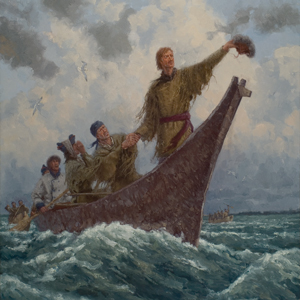
The expedition paddles around Columbia River islands and stops at two Wahkiakum villages. They reach a landmark presently named Pillar Rock where Clark mistakenly exclaims ‘Ocean in view! O! the joy’.
November 6, 1805
Little Cape Horn bivouac
by Kristopher K. Townsend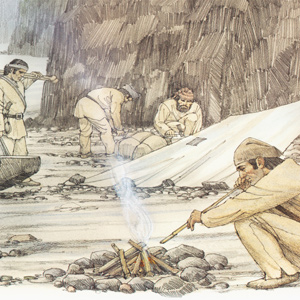
The men paddle down the Columbia in the rain interacting with several villages near the mouth of the Cowlitz. In the evening, they build large fires to dry out and kill the fleas infesting their blankets.
November 5, 1805
Crowded with Indians
by Kristopher K. Townsend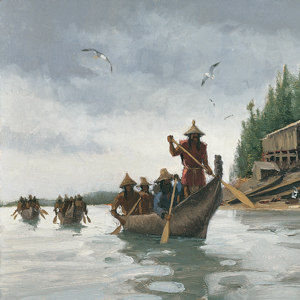
After a night made sleepless by noisy waterfowl, the expedition heads down the Columbia. They pass the large village known today as Cathlapotle and encounter various Chinookan People.
November 4, 1805
Busy day, noisy night
by Kristopher K. Townsend
Moving down the Columbia River, a Chinookan villager introduces the captains to the wapato bulb—a staple Native food. At camp near present Ridgefield, Washington, they are kept awake by noisy waterfowl.
November 3, 1805
The "Quick Sand" River
by Kristopher K. Townsend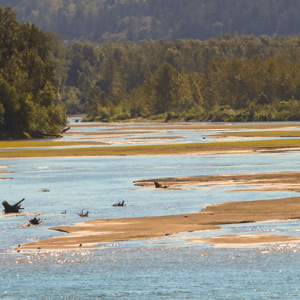
Moving down the Columbia River above present Portland, Oregon, Clark is unable to cross a river full of quicksand—today’s Sandy River. They continue to a large island full of ponds and waterfowl.
November 2, 1805
Last of the rapids
by Kristopher K. Townsend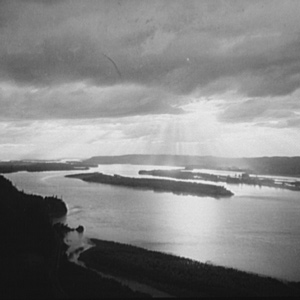
Non-swimmers carry baggage, and others paddle the empty dugout canoes though the lower rapids of the Cascades of the Columbia. They pass Beacon Rock and camp below present Crown Point in Oregon.
November 1, 1805
A day with the Watlalas
by Kristopher K. Townsend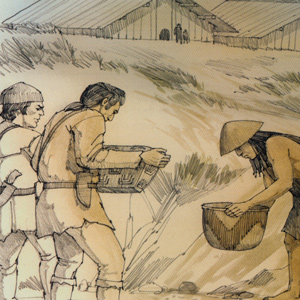
Most of the men move baggage and canoes around the Cascades of the Columbia. Clark describes the Upper Chinookan Watlala People living in the area, and Lewis adds Pacific madrone to his plant collection.
October 31, 1805
Portaging the "Great Shute"
by Kristopher K. Townsend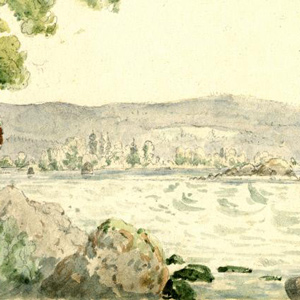
Clark and Pvt. Cruzatte scout the “Great Shute” at the Cascades of the Columbia, and two canoes are carried around the rapids. Clark continues down the river and sees a tall monolith—Beacon Rock.
October 30, 1805
Bridge of the Gods
by Kristopher K. Townsend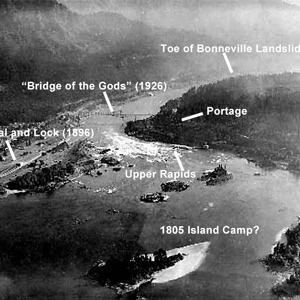
Above the Bridge of the Gods, they see waterfalls, California condors, two trees new to science, and a sunken forest. Lewis visits a Watlala village, and they camp above the Cascades of the Columbia.
October 29, 1805
Friendly villages
by Kristopher K. Townsend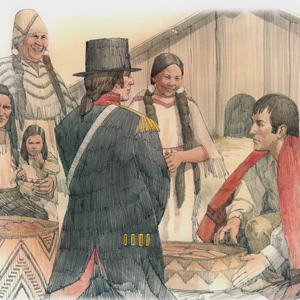
Moving 35 miles down the Columbia, the expedition encounters many Sahaptin and Upper Chinook villages. They pass an island with numerous graves—Memaloose—and camp above the Little White Salmon River.
October 28, 1805
Columbia River headwinds
by Kristopher K. Townsend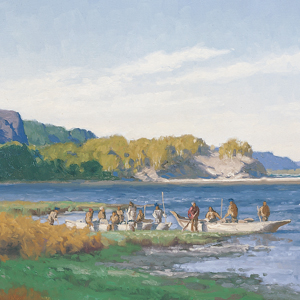
The expedition sets out from Fort Rock but is soon stopped by headwinds. The captains visit nearby Chilluckittequaws where Clark sees goods acquired from British trade ships and superior Chinookan canoes.
October 27, 1805
Sahaptin v. Chinookan
by Kristopher K. Townsend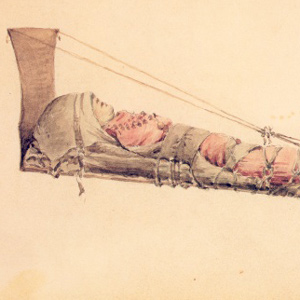
Sgt. Gass notices visitors with flattened heads, and the captains compare languages and customs of the Sahaptin and Chinookan Peoples living above and below The Dalles of the Columbia.
October 26, 1805
Refuge at Fort Rock
by Kristopher K. Townsend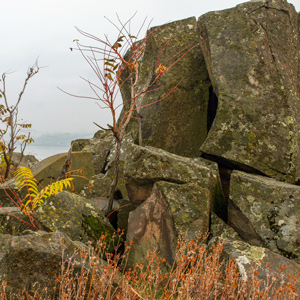
At Fort Rock in present The Dalles, Oregon, two chiefs and fifteen warriors cross the river to visit and share food. They are given peace medals and other gifts, and York dances to the fiddle.
October 25, 1805
A "bad whorl & Suck"
by Kristopher K. Townsend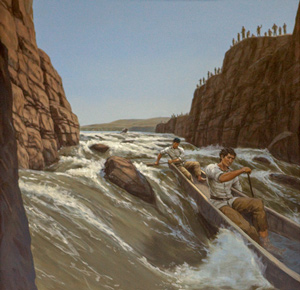
The expedition’s most valuable cargo is carried around the Long Narrows of the Columbia, and then the best paddlers run the canoes. At present The Dalles, Oregon, Fort Rock Camp is established.
Experience the Lewis and Clark Trail
The Lewis and Clark Trail Experience—our sister site at lewisandclark.travel—connects the world to people and places on the Lewis and Clark Trail.
Discover More
- The Lewis and Clark Expedition: Day by Day by Gary E. Moulton (University of Nebraska Press, 2018). The story in prose, 14 May 1804–23 September 1806.
- The Lewis and Clark Journals: An American Epic of Discovery (abridged) by Gary E. Moulton (University of Nebraska Press, 2003). Selected journal excerpts, 14 May 1804–23 September 1806.
- The Lewis and Clark Journals. by Gary E. Moulton (University of Nebraska Press, 1983–2001). The complete story in 13 volumes.
This site is provided as a public service by the
Lewis and Clark Trail Alliance
with additional funding from the following: