Kristopher Townsend
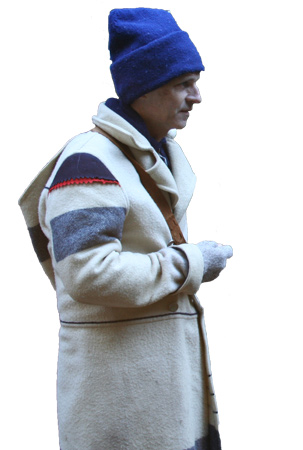
From the Pacific Northwest Living Historians at Lewis and Clark National Historic Park, Fort Clatsop.
Since 2016, Kristopher K. Townsend has been the webmaster and editor of this site, Discovering Lewis & Clark®. He has been actively photo-documenting the Lewis and Clark Trail since 1995. He attempts as closely as possible to re-create scenes as described in the journals including the same time of year, natural state, location, and weather. He has contributed numerous photos throughout the Discovering Lewis & Clark website.
Kris taught several years as a tenured instructor at Spokane Falls Community College. His courses included Internet programming and other information technology and computer science courses. During that time, he was also the series editor and an author of a popular college textbook series on Office Technology.
Shortly after the advent of the World Wide Web, he managed a web server featuring digital photos, digital video, and articles created by his Glenwood Heights Primary students. Topics included historical sites of Clark County (Washington State), wildflowers and birds of Clark County, and how-to videos for school’s physical education program.
Contributions to this Site
February 1, 1806
Ammunition inspection
by Kristopher K. Townsend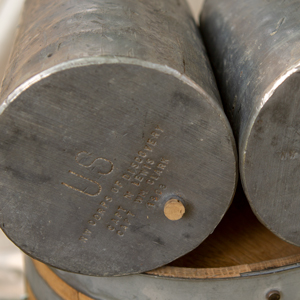
At Fort Clatsop near present Astoria, Oregon, the lead canisters are unsealed, and the gunpowder they hold is found to be safe and dry. The captains also describe highly prized Chinookan canoes.
Elsewhere, Zebulon M. Pike reaches what he thinks is the source of the Mississippi River—the intended destination of his expedition.
In St. Louis, several prominent citizens petition Congress to repeal an act requiring that Spanish land grants be transferred on the condition of occupancy and cultivation.
January 31, 1806
Stopped by ice
by Kristopher K. Townsend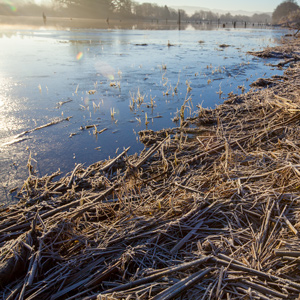
At Fort Clatsop near present Astoria, Oregon, Sgt. Gass takes a hunting party up the river but due to ice, must turn around. After helping other hunters at the salt works, Pvt. Joseph Field returns with news of killed elk. Charbonneau brings Lewis a new bird—the varied thrush.
January 30, 1806
Chinookan lifeways
by Kristopher K. Townsend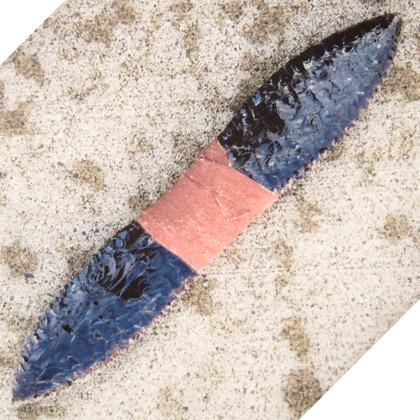
On this snowy day at Fort Clatsop near the Pacific Ocean, Lewis says that nothing worthy of notice happens. He then writes about Chinookan lifeways describing their dress, hats, and double-edge knives.
In Washington City, General Wilkinson is appointed governor of Louisiana.
January 29, 1806
Making leather
by Kristopher K. Townsend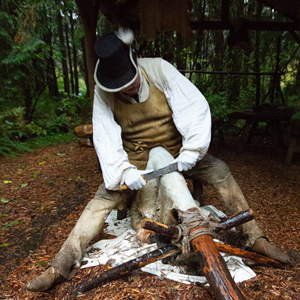
At Fort Clatsop near present Astoria, Oregon, the morning is clear and cold. The enlisted men spend the day gathering firewood and making leather. Boiled elk is again on the menu, and Lewis describes Native uses for bearberry (kinnikinnick) berries.
In Washington City, New York Senator Samuel Latham Mitchill writes to his wife to tell her of new maps of the west—some from French explorers and others drawn by visiting Native Americans.
January 28, 1806
Naming the Netul
by Kristopher K. Townsend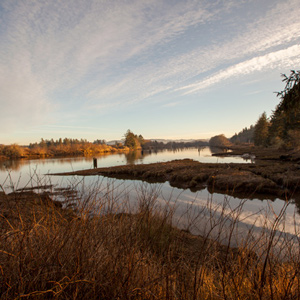
The captains adopt the Clatsop word to name the Netul—present Lewis and Clark River, and Lewis describes the Oregon crabapple tree. Pvts. Howard and Werner arrive at Fort Clatsop with a fresh supply of salt and report the salt makers are “much straitened for provision”. Due to fresh snow, only three of yesterday’s killed elk can be found.
January 27, 1806
An elk bonanza
by Kristopher K. Townsend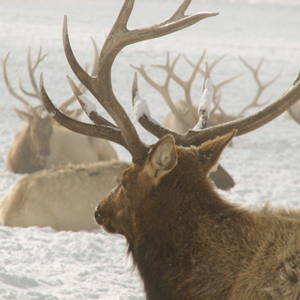
Pvt. Shannon returns to Fort Clatsop with news of ten elk ready to be brought in. Lewis compares how he and the Chinookan People treat gonorrhea and syphilis and adds two plants to his collection.
January 26, 1806
Missing salt makers
by Kristopher K. Townsend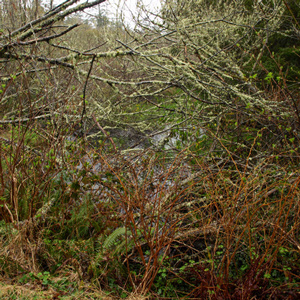
Two inexperienced woodsmen may have lost their way traveling from present Seaside, Oregon to Fort Clatsop. Pvt. Collins is sent to the salt makers’ camp, and Lewis describes the evergreen huckleberry.
January 25, 1806
Critical updates
by Kristopher K. Townsend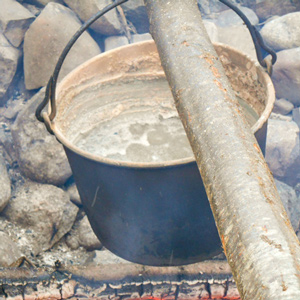
At Fort Clatsop near the Pacific Ocean, the captains receive several updates: a report from the salt makers, the location of two previously missing hunters, and new information about the Tillamooks.
January 24, 1806
Astonishing weaponry
by Kristopher K. Townsend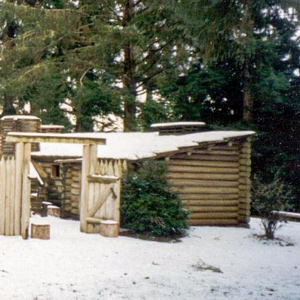
At Fort Clatsop, several Clatsop visitors are impressed with Drouillard’s shooting skills. Lewis demonstrates his air gun and describes how Chinookan People use the seashore lupine and wapato plants.
January 23, 1806
A lack of brains
by Kristopher K. Townsend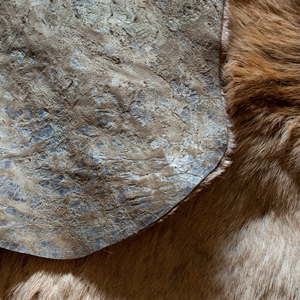
At Fort Clatsop, Lewis laments a “want of [animal] branes” and lye soap with which to make leather. He sends Pvts. Werner and Howard to fetch some salt from the Salt Makers’ Camp at present Seaside, Oregon.
January 22, 1806
Bracken ferns
by Kristopher K. Townsend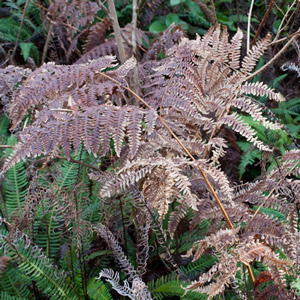
Hunters try to supply fresh elk, and the salt brought to Fort Clatsop on 5 January runs out. Lewis describes the western bracken fern and how it is prepared and eaten by Chinookan Peoples.
January 21, 1806
Sweet edible thistles
by Kristopher K. Townsend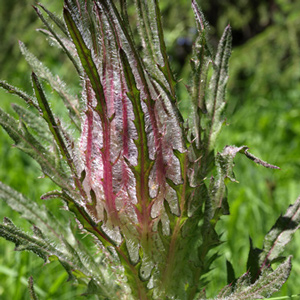
At Fort Clatsop near the Pacific Ocean, Lewis describes edible thistle and how Chinookan People prepare and eat the plant’s sweet root. Pvts. Shannon and Labiche return having killed three elk.
January 20, 1806
Five plant specimens
by Kristopher K. Townsend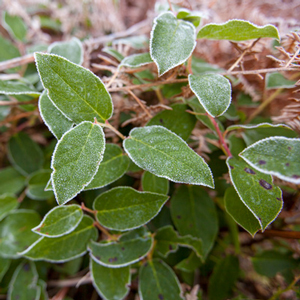
At Fort Clatsop, Lewis prepares five new plant specimens and describes roots eaten by local Chinookan Peoples. The captains worry about the rate at which they are going through their supply of elk.
January 19, 1806
Last of the blue beads
by Kristopher K. Townsend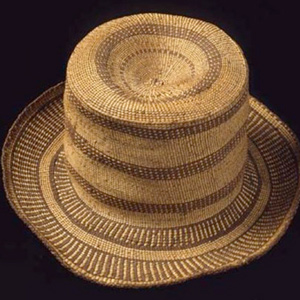
At Fort Clatsop, the captains trade the last of the blue beads for a sea otter skin and buy a Chinookan woven hat made in the shape of a cap. Lewis describes Chinookan laws and customs.
January 18, 1806
Chinookan houses
by Kristopher K. Townsend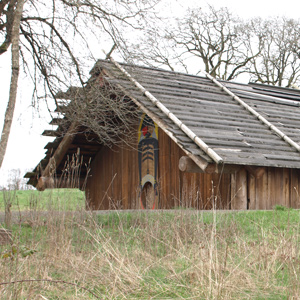
Some Clatsops return to the fort to fetch a dog they had left behind, and then Lewis states that “no further occurrence worthy of relation took place.” Both captains describe Chinookan plankhouses.
January 17, 1806
Hats, mats, and baskets
by Kristopher K. Townsend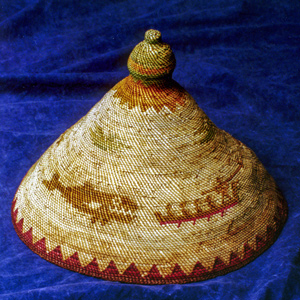
At Fort Clatsop near present Astoria, Oregon, Lewis describes Chinookan eating utensils, woven baskets, and hats. A Clatsop man refuses to trade his otter skin robe for anything other than blue beads.
January 16, 1806
Chinookan fishing methods
by Kristopher K. Townsend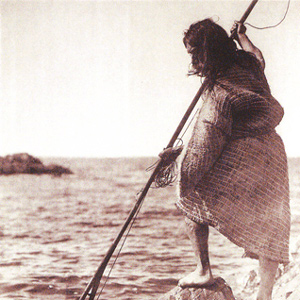
At Fort Clatsop, the rain and high wind continues. The captains contemplate their ample supply of elk—with a little salt—and they appreciate their dry huts. Lewis describes Chinookan fishing methods.
January 15, 1806
Lewis's new fur coat
by Kristopher K. Townsend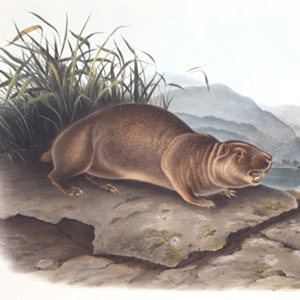
Lewis’s new fur coat—made by local Indians from bobcat and perhaps mountain beaver robes—is brought to Fort Clatsop. The captain also describes Chinookan hunting methods and weaponry.
January 14, 1806
The Columbia River fishery
by Kristopher K. Townsend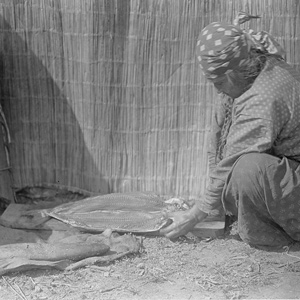
While wintering at Fort Clatsop, the captains estimate that the Native Columbia River fishery produces 30,000 pounds of salmon for market each year. Another canoe goes adrift and must be found.
January 13, 1806
Out of candles
by Kristopher K. Townsend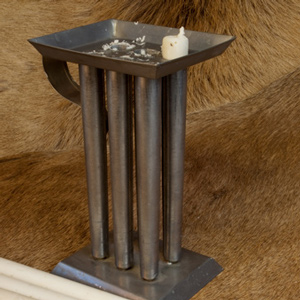
At Fort Clatsop near present Astoria, Oregon, elk tallow is rendered to make new candles, and Lewis finds that elk do not have enough fat. He also describes the ship trade among the area’s Nations.
January 12, 1806
Conserving elk
by Kristopher K. Townsend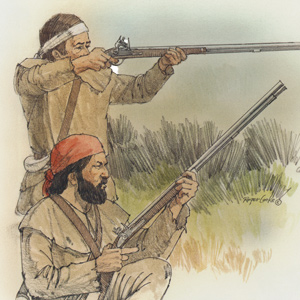
At Fort Clatsop near the Pacific Ocean, George Drouillard kills seven elk and new plan to conserve meat begins. In Washington City, President Jefferson shares news of the Lewis and Clark Expedition.
January 11, 1806
Lost canoe
by Kristopher K. Townsend
The previous night at Fort Clatsop, careless paddlers fail to properly secure the Chinookan canoe, and it floats away with the tide. After the visiting Kathlamets leave to barter with the Clatsops, Lewis briefly describes the Columbia River trade network.
In Washington City, President Jefferson says an Indian delegation—organized previously by Lewis and others in St. Louis—will soon leave.
January 10, 1806
Šax̣awaq̀ap visits
by Kristopher K. Townsend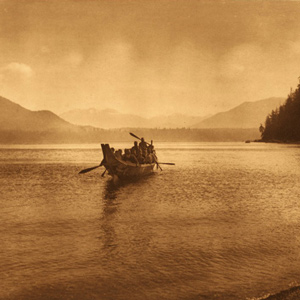
After an early start at the salt makers’ camp, Clark hikes and canoes well into the dark to return to Fort Clatsop. During the day, a dozen Kathlamets visit Lewis and elk become scarce.
January 9, 1806
Re-crossing Tillamook Head
by Kristopher K. Townsend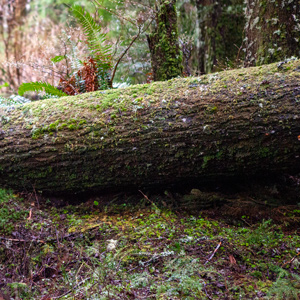
Clark’s small group crosses Tillamook Head and returns to the salt makers’ camp with about 300 pounds of whale blubber and a few gallons of whale oil. At Fort Clatsop, Lewis describes Chinookan Peoples.
January 8, 1806
A night at Ecola
by Kristopher K. Townsend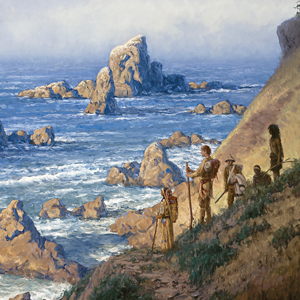
From Clark’s Point of View above Ecola, Clark’s group enjoys the “grandest and most pleasing prospects”. At Ecola, Tillamook Indians trade a little whale blubber, and Pvt. McNeal’s life is threatened.
January 7, 1806
Climbing Clark's Mountain
by Kristopher K. Townsend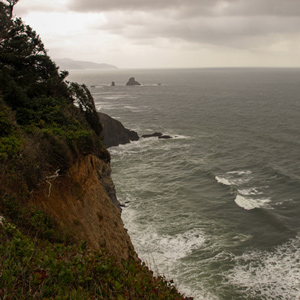
Clark’s small group walks several miles along the beach to reach the Salt Works at present Seaside, Oregon. From there, they climb up and over the very “Pe Shack” (bad) Tillamook Head—Clark’s Mountain.
January 6, 1806
Sacagawea's plea
by Kristopher K. Townsend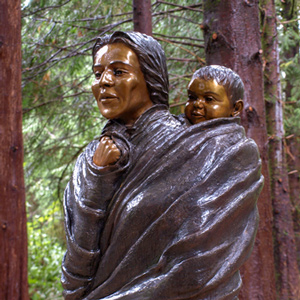
At Fort Clatsop, Sacagawea pleads to be permitted to see a beached whale, and her wish is “indulged”. Half-way to the salt works, Clark’s group—including Sacagawea—have a clear night with a “Shiney” moon.
January 5, 1806
Blubber and salt
by Kristopher K. Townsend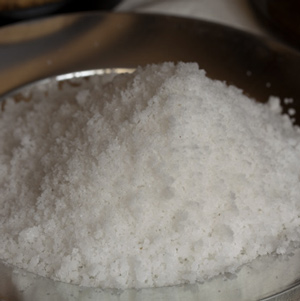
Two men return to Fort Clatsop with whale blubber and fine, white salt. The captains decide that Clark will visit a beached whale, and Sgt. Gass endures a cold swim on his way to the salt works.
January 4, 1806
Across the Clatsop Plain
by Kristopher K. Townsend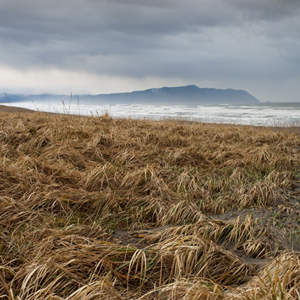
Sgt. Gass and Pvt. Shannon travel through the marshes and dunes of the Clatsop Plain on their way to the salt makers’ camp. At Fort Clatsop, Lewis describes Clatsop views on material goods.
January 3, 1806
An agreeable food
by Kristopher K. Townsend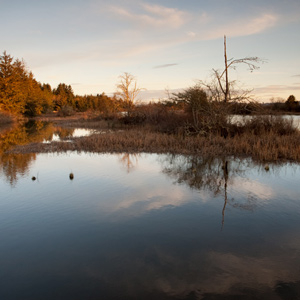
Clatsop villagers come to Fort Clatsop to sell whale blubber and dogs. Lewis finds the latter “an agreeable food”. Two men are sent to fetch long-overdue Pvts. Willard and Weiser from the salt works.
January 2, 1806
Infested with fleas
by Kristopher K. Townsend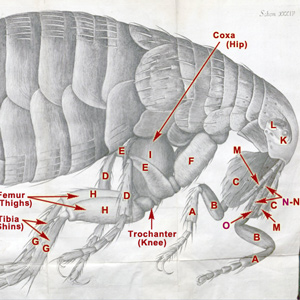
Two men from the salt works fail to return Fort Clatsop. Trade with local Clatsop villagers and trouble with fleas continue. Also mentioned today are aquatic birds and local fur trapping.
January 1, 1806
A new year at Fort Clatsop
by Kristopher K. Townsend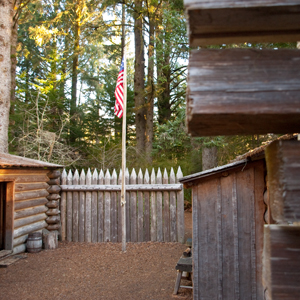
To bring in the new year at Fort Clatsop, the enlisted men fire a volley to awaken the captains. Lewis resumes writing his journal and imagines New Year’s Day in 1807 when everyone is home. Clark inventories ship captains that visit the area, and Sgt. Gass is surprised by the number of active insects during this time of year.
In Washington City, President Jefferson hosts a party attended by Indian delegates, Tunisians, and John Quincy Adams.
December 31, 1805
Latrine and sentry box
by Kristopher K. Townsend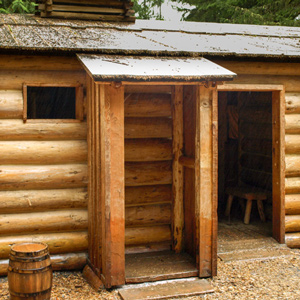
At Fort Clatsop, an Indian’s musket is repaired, and a red-headed Clatsop is among the many visitors today. Clark notes that their behavior has improved, and a new latrine and sentry box are added.
December 30, 1805
Fair morning
by Kristopher K. Townsend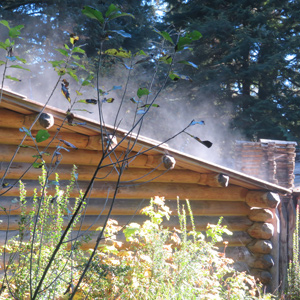
At Fort Clatsop, the journalists appear happy to see the sun, and Clark enjoys a sumptuous dinner of fresh elk tongue and marrow bones. With the fort’s pickets and gates completed, overnight guests are banned from the fort. Clark lists the area fauna: slugs, insects, snakes, and waterfowl.
In Washington City, visiting Cherokee and Osage delegates go to the Capitol where Congress is in session.
December 29, 1805
Wahkiakum traders
by Kristopher K. Townsend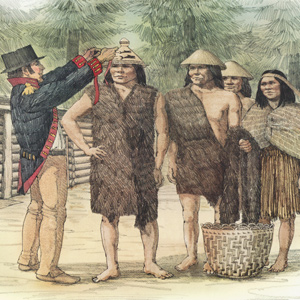
Clark gives visiting Wahkiakum traders a small peace medal and ties a red ribbon to a cone hat; Clatsop chief Coboway is given a razor. Clark also lists the day’s work details and sick men.
December 28, 1805
Leaving for the salt works
by Kristopher K. Townsend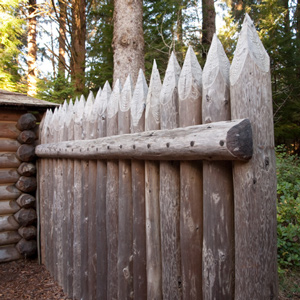
At Fort Clatsop, the salt makers leave for the beach while others hunt or work on the fort’s pickets and gates. Clark’s slave, York, is unwell, and news of a beached whale reaches the fort.
December 27, 1805
Chimneys
by Kristopher K. Townsend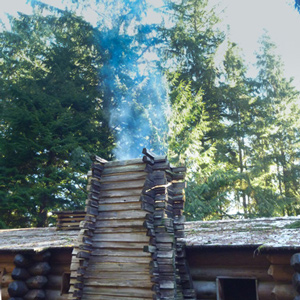
At Fort Clatsop, the enlisted men are hunting, setting up a salt works, building chimneys, or making pickets and gates. Coboway brings roots and receives a sheepskin headband and earrings in return.
December 26, 1805
Smoke and fleas
by Kristopher K. Townsend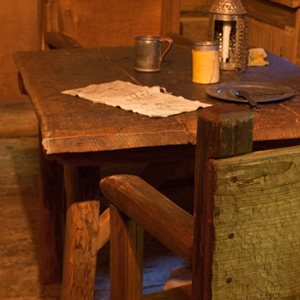
At Fort Clatsop, fleas infest the cabins making sleep difficult. Sgt. Gass recommends adding chimneys to the smoky cabins, and Pvt. Joseph Field finishes a table and two chairs for the captains’ quarters.
December 25, 1805
Fort Clatsop Christmas
by Kristopher K. Townsend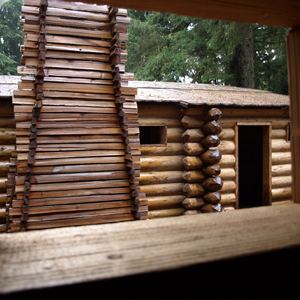
At Fort Clatsop, the captains give gifts of tobacco for the smokers and handkerchiefs to the others. Sacagawea gives weasel tails to Clark, and the day ends with “all the party Snugly fixed in their huts”.
December 24, 1805
New writing slabs
by Kristopher K. Townsend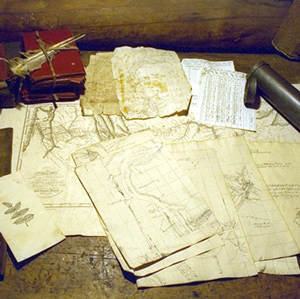
At Fort Clatsop, all the cabins are covered and several enlisted men move into their quarters. The captains refuse offers made by a visiting Clatsop chief, and Pvt. J. Field gives each captain a writing slab.
December 23, 1805
Clatstop traders
by Kristopher K. Townsend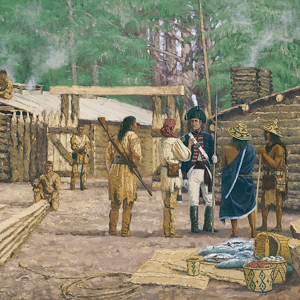
At Fort Clatsop, work on the cabins continues, and the captains move into their unfinished quarters. Clatsop traders sell food, mats, bags, and a panther hide for fishhooks, an old file, and spoiled salmon.
December 22, 1805
Floors and bunks
by Kristopher K. Townsend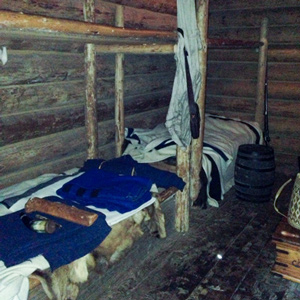
With four cabins completely covered at the Fort Clatsop construction site, the enlisted men begin working on floors and bunks. In the smoke house, the elk meat begins to spoil.
December 21, 1805
Harvesting kinnikinnick
by Kristopher K. Townsend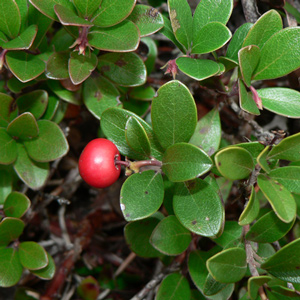
At the Fort Clatsop site, the enlisted men daub and chink their cabins but have difficulty splitting logs into puncheons. Two men are harvesting kinnikinnick to mix with the little tobacco they have left.
December 20, 1805
Not enough roofing
by Kristopher K. Townsend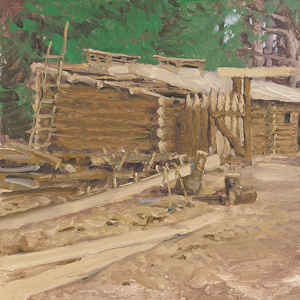
At the Fort Clatsop building site, the enlisted men install plank roofing using boards they had previously split and planks taken from an old Clatsop lodge. Clark complains about the high price of food.
December 19, 1805
'Borrowing' Clatsop boards
by Kristopher K. Townsend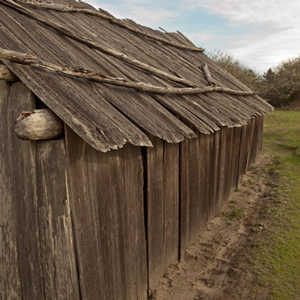
Several Clatsops visit the fort construction site, and everyone except Sgt. Ordway is in good health. Sgt. Pryor heads a detachment across Youngs Bay to retrieve boards from an abandoned Clatsop house.
December 18, 1805
The gray jay, new to science
by Kristopher K. Townsend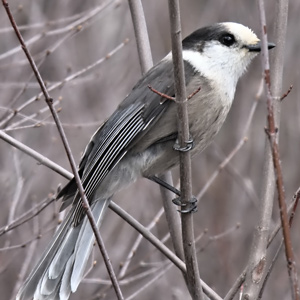
At Fort Clatsop, the morning brings rain, snow, and hail. Several men bring in planks taken from an old Chinookan fishing camp across Youngs Bay, and Lewis describes the gray jay, new to science.
December 17, 1805
Trying to stay dry
by Kristopher K. Townsend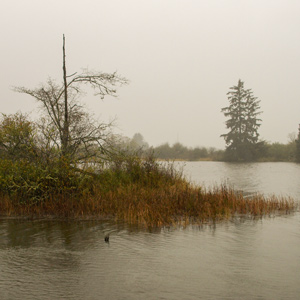
Everyone endures rain, hail, and snow as they work to complete Fort Clatsop. Several are assigned the task of making elk jerky, and others chink cabin walls or attempt to split boards to cover the huts.
December 16, 1805
Filling the meat house
by Kristopher K. Townsend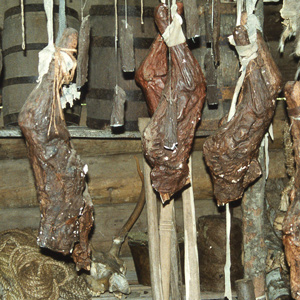
After a wet night without fires, Clark’s detachment hauls 16 elk down the river. Despite a storm that topples trees, they arrive at Fort Clatsop safely and hang the meat in the newly covered meat house.
December 15, 1805
Packing elk meat
by Kristopher K. Townsend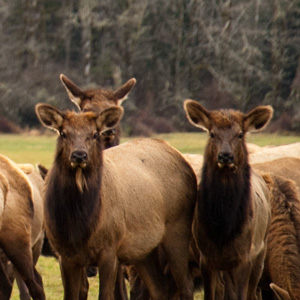
Clark and a large group pack elk meat out of the dense woods so that it can be hauled in canoes. At the Fort Clatsop site, work continues to complete the captains’ quarters and cover huts.
December 14, 1805
Scarcely one day dry
by Kristopher K. Townsend
At the Fort Clatsop construction site, covering the meat house and huts becomes necessary as their elk spoils and ‘scarcely one man in camp can boast of being one day dry.’
Experience the Lewis and Clark Trail
The Lewis and Clark Trail Experience—our sister site at lewisandclark.travel—connects the world to people and places on the Lewis and Clark Trail.
Discover More
- The Lewis and Clark Expedition: Day by Day by Gary E. Moulton (University of Nebraska Press, 2018). The story in prose, 14 May 1804–23 September 1806.
- The Lewis and Clark Journals: An American Epic of Discovery (abridged) by Gary E. Moulton (University of Nebraska Press, 2003). Selected journal excerpts, 14 May 1804–23 September 1806.
- The Lewis and Clark Journals. by Gary E. Moulton (University of Nebraska Press, 1983–2001). The complete story in 13 volumes.
This site is provided as a public service by the
Lewis and Clark Trail Alliance
with additional funding from the following: