Kristopher Townsend
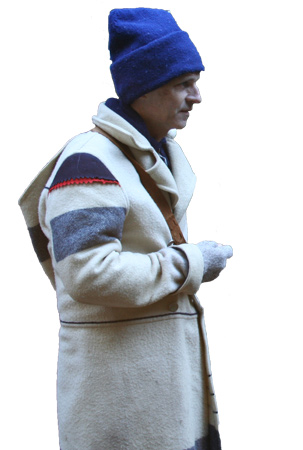
From the Pacific Northwest Living Historians at Lewis and Clark National Historic Park, Fort Clatsop.
Since 2016, Kristopher K. Townsend has been the webmaster and editor of this site, Discovering Lewis & Clark®. He has been actively photo-documenting the Lewis and Clark Trail since 1995. He attempts as closely as possible to re-create scenes as described in the journals including the same time of year, natural state, location, and weather. He has contributed numerous photos throughout the Discovering Lewis & Clark website.
Kris taught several years as a tenured instructor at Spokane Falls Community College. His courses included Internet programming and other information technology and computer science courses. During that time, he was also the series editor and an author of a popular college textbook series on Office Technology.
Shortly after the advent of the World Wide Web, he managed a web server featuring digital photos, digital video, and articles created by his Glenwood Heights Primary students. Topics included historical sites of Clark County (Washington State), wildflowers and birds of Clark County, and how-to videos for school’s physical education program.
Contributions to this Site
August 20, 1806
"My dancing little boy"
by Kristopher K. Townsend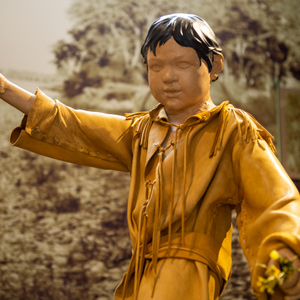
After morning rain, the expedition sets out early paddling about eighty miles between present Huff, North Dakota and Pollock, South Dakota. Clark notices the river has changed in many places since the previous year. He also writes a letter to Toussaint Charbonneau offering him several job prospects and repeats his willingness to raise Jean Baptiste—his “little dancing boy.”
August 19, 1806
Jusseaume's leather lodge
by Kristopher K. Townsend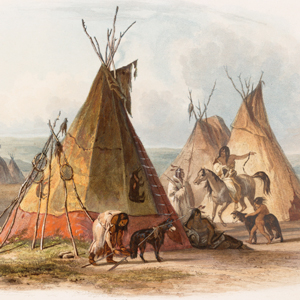
The day is “dark, windy & cold,” and because the waves are too high to paddle their dugouts safely, hunters are sent out. In the late afternoon, they finally head down the Missouri making only ten miles for the day. At evening camp near present Huff, North Dakota, interpreter René Jusseaume offers Clark space in his leather lodge, and Lewis continues to recover from his gunshot wound.
August 18, 1806
The Mandan Creation Story
by Kristopher K. Townsend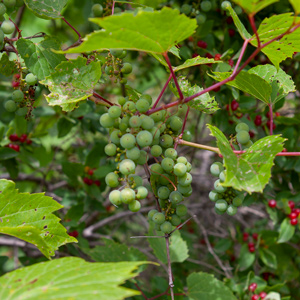
Despite windy conditions, the expedition reaches the Heart River—below present Bismarck, North Dakota—having made forty miles for the day. Sheheke (Big White) tells Clark the Mandan Creation Story and explains the history of the Mandans and Hidatsas.
August 17, 1806
Saying goodbye
by Kristopher K. Townsend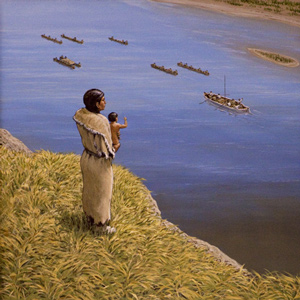
Before saying goodbye to the Hidatsas, Mandans, Pvt. Colter, and the Charbonneaus, Clark encourages Charbonneau to come to St. Louis where he promises to sponsor the education of Jean Baptiste. After stopping at their old Fort Mandan site, they camp near present Hensler, North Dakota.
August 16, 1806
Parting gifts
by Kristopher K. Townsend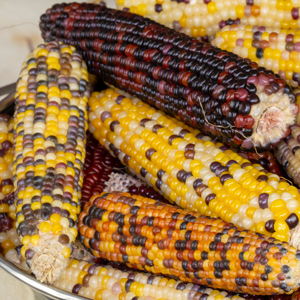
At the Knife River Villages in present North Dakota, a Mandan village gifts more corn than the expedition boats can carry. A swivel gun is given to Hidatsa Chief Le Borgne, and the blacksmith tools are given to Charbonneau. Mandan Chief Sheheke (Big White) agrees to go to Washington City.
In St. Louis, a discredited James Wilkinson leaves town after being recalled as Governor of Upper Louisiana—a change that would directly impact Meriwether Lewis.
August 15, 1806
Broken promises of peace
by Kristopher K. Townsend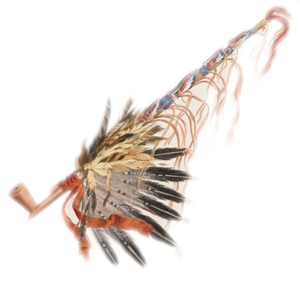
Having returned to the Knife River Villages in present North Dakota, the captains hear of several broken promises of peace among the several tribes with whom they thought peace treaties were in place. Pvt. Colter asks to leave the expedition so that he can go back west with two fur trappers.
August 14, 1806
Among old friends
by Kristopher K. Townsend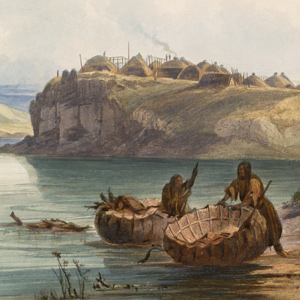
Early in the day, the expedition arrives at the Knife River Villages—one of which is the home of Charbonneau, Sacagawea, and Jean Baptiste. The captains meet with various chiefs, and Clark invites them to travel with the expedition to Washington City.
August 13, 1806
All hands aboard
by Kristopher K. Townsend
With all hands aboard, the expedition starts the day as one corps for the first time since separating on 3 July 1806. With favorable winds, they make 86 miles passing some Hidatsa hunters and the Little Missouri River. Camp is near present Riverdale, North Dakota.
August 12, 1806
Reunion—at last!
by Kristopher K. Townsend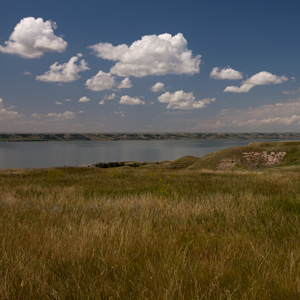
Below the Little Knife River in present North Dakota, the two captains finally reunite after going separate ways from Travelers’ Rest on 3 July 1806. They share stories, abandon Sgt. Pryor’s bull boats, treat Lewis’s gunshot wound, and proceed on. Lewis writes his last daily journal entry.
August 11, 1806
Cruzatte shoots Lewis
by Kristopher K. Townsend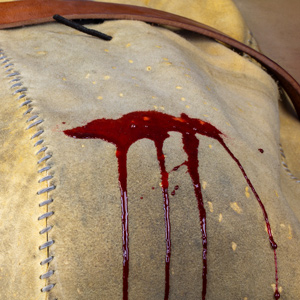
Near present Bismarck, North Dakota, Lewis is shot through the buttock. At first, an attack is suspected, but likely Pvt. Cruzatte mistook his captain for an elk. They move down the river and find a note from Clark.
Waiting for Lewis several miles down the river, Clark meets a group of fur traders and learns the fate of the expedition’s barge. He also learns that the Mandans and Hidatsas did not maintain the peace that the captains had tried to establish.
August 10, 1806
Sketches of River Rochejhone
by Kristopher K. Townsend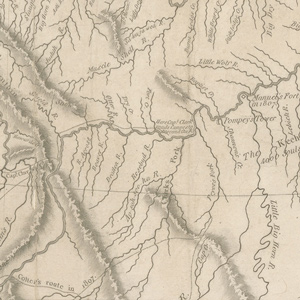
Near present Williston, North Dakota, Lewis has his men repair the boats while he prepares a specimen of white milkwort. In the afternoon, rains begin, leather-making operations cease, and they move a few miles down the river.
Several miles below Lewis, Clark waits for Lewis to arrive. The enlisted men dig for large Indian breadroot, and Clark works on his maps of the Yellowstone River.
August 9, 1806
Sacagawea gathers currants
by Kristopher K. Townsend
Near present Tobacco Garden Creek, North Dakota, Clark and his group move a few miles down the Missouri River. He walks the shore with Sacagawea, and she gathers currants.
Near present Williston, Lewis and his group stop for a day to make leather, sew new clothes, and hunt. Two missing hunters—Pvts. Colter and Collins—catch up after several days out.
August 8, 1806
Sgt. Pryor catches up
by Kristopher K. Townsend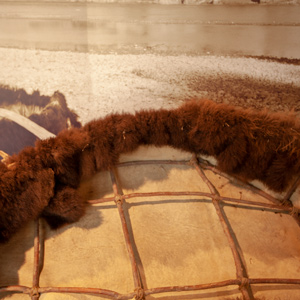
In the morning, Sgt. Pryor and his three men paddle their two bull boats to Clark’s camp near present Tobacco Garden Creek, North Dakota. Clark learns of Pryor’s failed mission and successful return. Pryor is then sent back to retrieve the saddlebags he forgot at the previous night’s camp.
Having failed to catch up to Clark, Lewis and his group stop near present Williston, North Dakota to make clothes and dry meat. He finds the mosquitoes extremely troublesome but unavoidable.
August 7, 1806
Still no reunion
by Kristopher K. Townsend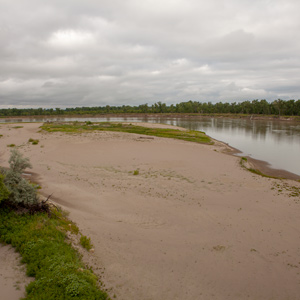
Lewis and his group reach the mouth of the Yellowstone where they find fragments of notes and signs of Clark’s and Sgt. Pryor’s old camps. They continue paddling anticipating a reunion with Clark.
Clark and his group continue moving down the river to escape the mosquitoes. They camp on a sandbar free of the pests, but a reunion with Lewis does not occur.
Sgt. Pryor and three others continue down the Missouri in two bull boats. They are ahead of Lewis, but still behind Clark.
August 6, 1806
A note goes missing
by Kristopher K. Townsend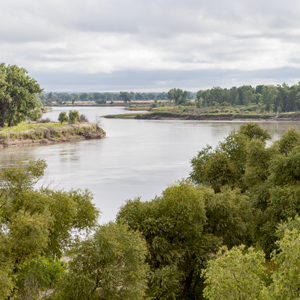
On or near this date, Sgt. Pryor and his small group reach the mouth of the Yellowstone. There, he takes Clark’s note meant for Lewis. That decision would delay the captains’ reunion by several days.
Both Clark’s and Lewis’s groups endure a stormy night. Delayed by winds, Lewis passes the Poplar River and camps near present Brockton, Montana.
Near present Williston, North Dakota, Clark moves down the river a short distance. A grizzly bear mistakes one of their dugouts for a dead bison floating in the river, and Clark sees where Indians have been digging breadroot.
August 5, 1806
Nine-foot grizzly
by Kristopher K. Townsend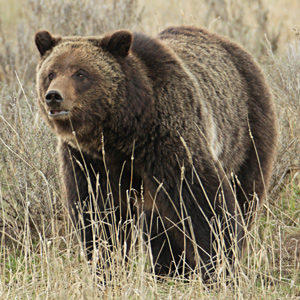
Heading home, Lewis and his group paddle down the Missouri approaching present Oswego, Missouri. Pvts. Colter and Collins fail to return from a hunting trip, and the Field brothers kill a nine-foot grizzly bear. At camp, a storm fills the dugouts with water and blows dust everywhere.
Many miles ahead, Clark and his group suffer swarms of mosquitoes as they wait for Lewis below the mouth of the Yellowstone. Clark and another hunter kill a large female grizzly.
Having failed in their mission to take the expedition’s horses to the Knife River Villages, Sgt. Pryor and his three men are forced paddle down the Yellowstone in two bull boats.
August 4, 1806
Willard swept away
by Kristopher K. Townsend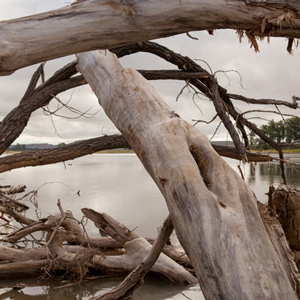
Lewis and his group pass the Milk River and proceed on. During the night, Sgt. Ordway and Pvt. Willard get caught in a tangle of overhanging snags and Willard is swept down the Missouri with Ordway paddling from the bow in pursuit.
Clark and his group leave a note for Lewis and then move a few miles below the mouth the Yellowstone to escape the mosquitoes. Toddler Jean Baptiste‘s face is swollen from the bites.
Moving down the Yellowstone, Sgt. Pryor and his three men find that their two small bull boats handle the rapids and shoals well. They hope to catch up with the expedition.
After returning the barge to St. Louis on 20 May 1805, Corporal Richard Warfington leaves a clue that he is still connected to the expedition.
In Philadelphia, museum curator Charles Willson Peale puzzles over Lewis’s pronghorn specimen. He writes a letter to President Jefferson proposing that they name it the “American Antilope”.
August 3, 1806
Clark reaches the Missouri
by Kristopher K. Townsend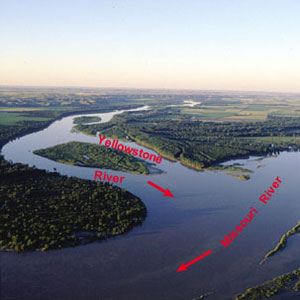
Reaching the mouth of the Yellowstone, Clark and his group stop to dry everything at their old camp of 26 April 1805. The mosquitoes are so thick that Clark cannot shoot accurately, yet he recommends the site for a fur trade post.
Many miles up the Missouri, Lewis and his group paddle seventy miles. To devote more time to paddling, he orders each mess to cook all they need for the next day. The hunting is good with 29 deer killed since yesterday morning.
Still on the Yellowstone, Sgt. Pryor and his group of three must navigate their small bull boats around the many bison crossing the river.
August 2, 1806
Grizzly attacks canoe
by Kristopher K. Townsend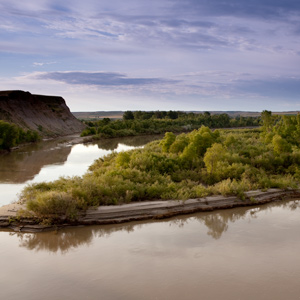
Clark and his group near the mouth of the Yellowstone, but they are delayed by large bison herds crossing the river. When a grizzly bear attacks their catamaran-style canoe, they fire three balls.
On the Missouri about fifteen miles below the mouth of the Musselshell, Lewis stops to rest his men and dry things out. He is anxious to reunite with Clark at the mouth of the Yellowstone.
Having failed in his mission to take the horses to the Knife River Villages, Sgt. Pryor wisely decides to build two bull boats in case they have an accident moving down the Yellowstone.
August 1, 1806
Waiting for buffalo
by Kristopher K. Townsend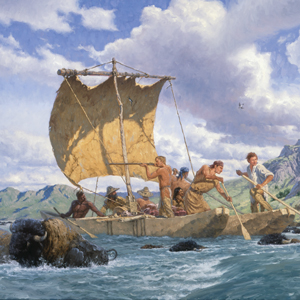
Paddling down the Yellowstone, Clark and his group are slowed by weather and then, they must wait for a large herd of bison to cross the river. The hunters take four fat cows.
Lewis and his group paddle past the Musselshell River before stopping to dry their wet deer and bighorn sheep skins. Lewis says that the season is poor for hunting grizzly bears.
Somewhere behind Clark, Sgt. Pryor and his small group paddle two bull boats trying to catch up.
July 31, 1806
Land of plenty
by Kristopher K. Townsend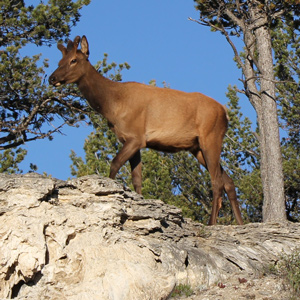
On this cloudy day, the expedition is divided into three groups—one on the Missouri and the other two on the Yellowstone. Lewis and his group paddle down the Missouri River taking fifteen elk and fourteen deer with little effort. Late in the evening, they stay dry by covering some empty lodges with elk hides.
Clark and his group paddle through the Yellowstone River badlands where they see layers of lignite coal. They camp near present Terry, Montana.
Somewhere behind Clark, Sgt. Pryor and his three men paddle their bull boats trying to catch up.
July 30, 1806
Faithful paddlers
by Kristopher K. Townsend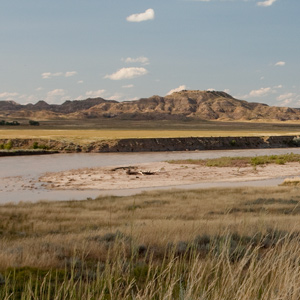
On this stormy day, the expedition is divided into three groups—one on the Missouri and the other two on the Yellowstone. Lewis and his group paddle “faithfully” through the Upper Missouri River Breaks moving at about seven miles per hour. They often stop to hunt, taking two bison, one elk, two beaver, and a female grizzly bear.
Clark and his group paddle down the Yellowstone but must stop for a “violent Storm” before lining their dugouts through the ‘Buffalo Shoals’. At the mouth of the Powder River, Clark observes great quantities of red stone known as clinker.
Far behind Clark and without horses, Sgt. Pryor and his three men must paddle their two leather bull boats with vigor if they are to catch the expedition.
July 29, 1806
White Cliffs rain
by Kristopher K. Townsend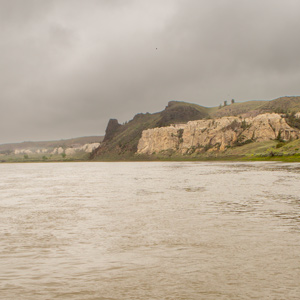
On this rainy day, the expedition is divided into three groups—one on the Missouri and the other two on the Yellowstone. Lewis and his group paddle down a high and muddy Missouri River passing through the White Cliffs at midday. His hunters bag nine bighorn sheep.
Clark and his group are slowed by headwinds as they paddle down the Yellowstone. Before reaching the present Tongue River, they see many signs of beaver and great numbers of bison.
Far behind Clark, Sgt. Pryor’s mission to the Knife River Villages failed when all his horses were stolen. By this date, his group of four men are likely paddling their two new bull boats down the Yellowstone.
July 28, 1806
Joining forces
by Kristopher K. Townsend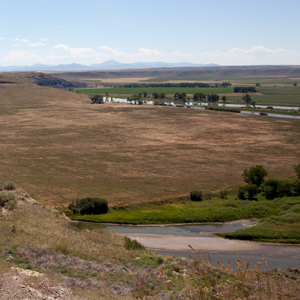
The expedition escapes disaster when three of their five detachments converge. Lewis, Drouillard, and the two Field brothers ride most of the night fleeing from a fatal fight at the Two Medicine River. In the morning, they arrive at the Missouri River to see Sgt. Ordway commandeering the boats.
Joining forces, Lewis and Ordway’s group paddle to the mouth of the Marias. In the early afternoon, Sgt. Gass and Pvt. Willard arrive with the horse herd. They dig up the caches there, abandon their horses and the red pirogue, and paddle another 15 miles down the Missouri.
On the lower Yellowstone below present Forsyth, Montana, Clark’s group glides down a “Smooth Stream” seeing layers of lignite coal, large herds of elk, and many beaver.
In the vicinity of Pompeys Pillar, Sgt. Pryor and his three men build two bull boats—on or near this date—so they can return home.
July 27, 1806
Fight with the Blackfeet
by Kristopher K. Townsend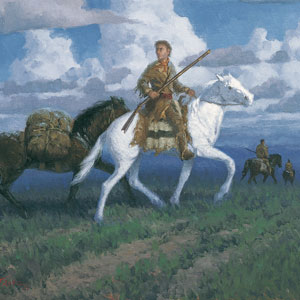
Today, the expedition travels in five separate groups along four different rivers. On the Two Medicine River, the young Blackfeet camping with Lewis and his small party attempt to steal rifles and horses. A fatal encounter ensues, and everyone takes flight.
Clark and his group paddle down the Yellowstone passing large herds of bison and elk and camping near present Forsyth, Montana.
South of Pompeys Pillar, Sgt. Pryor and three others are stranded without horses. They decide to haul their gear to the Yellowstone River and make bull boats.
Below the Great Falls of the Missouri, Sgt. Gass and Pvt. Willard swim the horses across the river and head towards the mouth of the Marias River. They camp on the Teton River.
At Lower Portage Camp, Sgt. Ordway and his group load the dugouts and white pirogue and paddle down the Missouri River intending to re-join Ordway tomorrow.
July 26, 1806
A Blackfeet interview
by Kristopher K. Townsend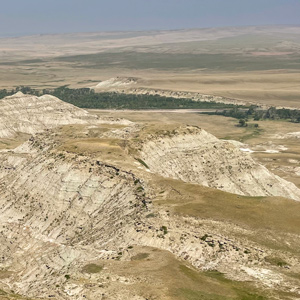
The risk of splitting into four groups becomes overly apparent on this day. Lewis and his small group leave Camp Disappointment and head south. At the Two Medicine River, they are joined by a group of young Blackfeet and an uncomfortable and wary night ensues.
On their way to the Knife River Villages, Sgt. Pryor and his small group wake to find that all their horses have been stolen. They pursue the culprits’ tracks for ten miles before giving up. Later during the night, a wolf bites Pryor’s hand.
At the Great Falls of the Missouri, the men move the last dugout canoe along the muddy portage. All the dugouts are then taken to Lower Portage Camp.
Clark and his group paddle quickly down the Yellowstone River. Clark and Pvt. Labiche explore seven miles up the Bighorn River.
July 25, 1806
Pompy's Tower (Pompeys Pillar)
by Kristopher K. Townsend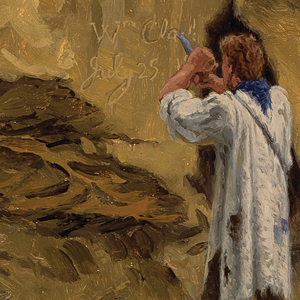
On this day, the expedition is split into four detachments spread out over 200 miles. On the Yellowstone River below present Billings, Montana, Clark names a rock Pompy’s Tower after Jean Baptiste Charbonneau—now known as Pompeys Pillar—and then, he carves his name and date into the rock. He also excavates a dinosaur fossil.
At Camp Disappointment on Cut Bank Creek, Lewis waits for the weather to clear so that he can take celestial observations. With signs of Blackfeet nearby, he decides that should tomorrow also be cloudy, he will leave for Decision Point at the mouth of the Marias.
At the Great Falls of the Missouri, another dugout is carted along the muddy portage to the Lower Portage Camp. During an outburst, they seek shelter under their canoes, but the rainwater runs under.
South of the Yellowstone, Sgt. Pryor and three others take the horses along a road that leads to the Knife River Villages. On or near this date, they pass present Pryor’s River.
July 24, 1806
Pryor's mission begins
by Kristopher K. Townsend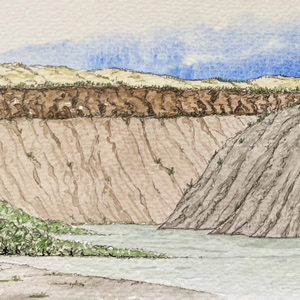
With the departure of Sgt. Pryor, the expedition is divided into four detachments. On the Yellowstone River, Clark’s new dugouts are launched. Above present Billings, they meet with Sgt. Pryor and help him take swim horses across the river. The boats continue down a rapid river making 70 miles for the day.
After crossing the Yellowstone, Pryor with three enlisted men and all the horses start out on an Indian road leading to the Knife River Villages.
At Camp Disappointment near present Cutbank, Montana, Lewis is unable to take the desired celestial observations and has a meal of pigeon, cous root, and buffalo grease.
At the Great Falls of the Missouri, Sgts. Ordway and Gass oversee the portage of the dugout canoes around the falls. One canoe is taken to the Lower Portage Camp.
July 23, 1806
Blackfeet and Apsáalooke near
by Kristopher K. Townsend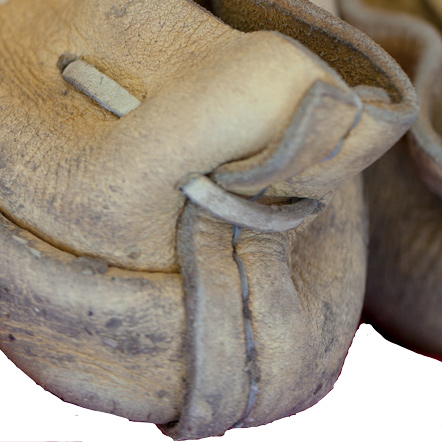
The expedition travels in three groups separated by 200 miles. Due to clouds at Camp Disappointment, Lewis cannot make celestial observations. He is surprised to see Columbian ground squirrels east of the Continental Divide, and Drouillard sees signs that the Blackfeet are near.
On the Yellowstone, Clark’s group finishes two dugout canoes and begins making paddles and poles. They find signs that Apsáalooke (Crows) are trying to steal their remaining horses, and Sgt. Pryor is given his orders to take them to the Knife River Villages.
Sgts. Gass and Ordway lead the portage of the canoes around the Great Falls of the Missouri. After multiple breakdowns, they get two across Box Elder Creek and camp. Pvt. Weiser suffers a bad cut on his leg.
July 22, 1806
Lewis's great disappointment
by Kristopher K. Townsend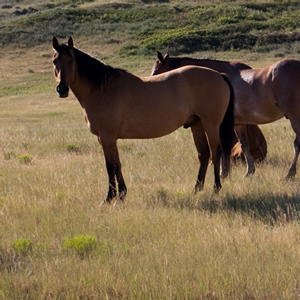
Today, the expedition is in three groups separated by 200 miles. At Camp Disappointment on Cut Bank Creek, Lewis determines that the Marias River watershed does not go any farther north. They stop to hunt and make celestial observations.
At his Yellowstone canoe camp near present Laurel, Montana, Clark’s group searches for missing horses. They are not found, and Apsáalooke (Crow) horse thieves are suspected.
At the Great Falls of the Missouri, the portage around the falls has a bad start.
July 21, 1806
Missing horses
by Kristopher K. Townsend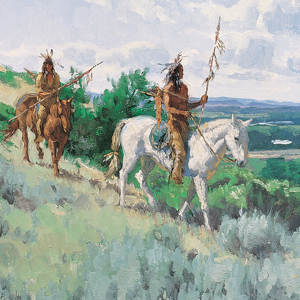
On this day, the expedition is split into three detachments separated by 200 miles. At Clark’s Yellowstone canoe camp near present Laurel, Montana, the group wakes to find several horses are missing—likely stolen by Apsáalooke (Crows). Pvt. Gibson’s wound is healing, and one dugout canoe is nearly ready.
On the Marias River, Lewis and his small group turn up Cut Bank Creek hoping its source is above the 50th parallel. With no trees present, they make a fire from buffalo dung.
Above the Great Falls of the Missouri, Sgts. Gass and Ordway delay the portage while a search is made for missing horses. They are plagued by mosquitoes and gnats.
July 20, 1806
Hopes dim and rise
by Kristopher K. Townsend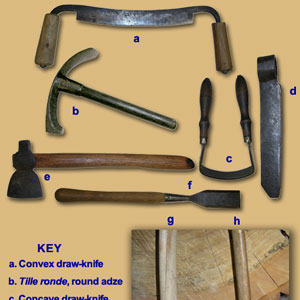
On this day, the expedition is split into three detachments. On the Marias River, Lewis can see a divide between the Marias and South Saskatchewan rivers, and his hopes for extending the boundaries of the Louisiana Territory dim.
At his canoe camp on the Yellowstone River, Clark has the enlisted men start two new dugout canoes. He rests his horses before they are sent to the Knife River Indian Villages and hopes that Hugh Heney will accept his offer to organize a Sioux delegation.
Above the Great Falls of the Missouri, Sgt. Ordway’s squad rests while Sgt. Gass’s squad makes the final preparations for portaging the dugouts around the falls.
July 19, 1806
Clark's canoe camp
by Kristopher K. Townsend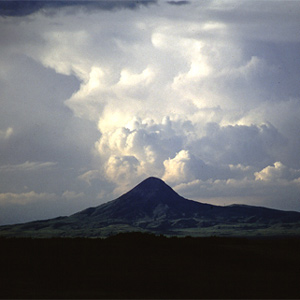
Today, two detachments merge, while the other two move in different directions. Lewis and three others head up the Marias River hoping to find a northern tributary, but the creek running from Tower Mountain appears too small to extend the boundaries of the Louisiana Territory.
Moving down the Yellowstone, Clark and his group finally reach cottonwood trees large enough for making canoes. They establish a canoe camp near present Laurel, Montana and attend to Pvt. Gibson who was seriously wounded yesterday.
Sgt. Ordway and his nine paddlers reach the upper portage camp above the Great Falls of the Missouri where Sgt. Gass and his detachment have been waiting. They beach the dugouts in preparation for the portage around the falls.
July 18, 1806
Smoke signals
by Kristopher K. Townsend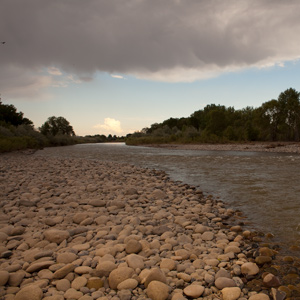
Today, the expedition travels in five different groups separated by 200 miles. Moving down the Yellowstone River near present Columbus, Montana, Charbonneau is thrown from his horse, and Pvt. Gibson seriously wounds his thigh. They see distant smoke signals, and Clark suspects that some Apsáalooke (Crows) have discovered them.
Lewis and his small group reach the Marias River at Dugout Coulee. They see one continual herd of bison 12 miles wide, and Lewis takes turns as night guard—a rarity for a captain.
Sgt. Ordway and his paddlers nearly reach the Great Falls of the Missouri—just a day away. Meanwhile, Sgt. Gass and three men travel to the Lower Portage Camp where they take some tobacco from a cache. The rest of his men remain at the White Bear Islands.
July 17, 1806
Signs of danger
by Kristopher K. Townsend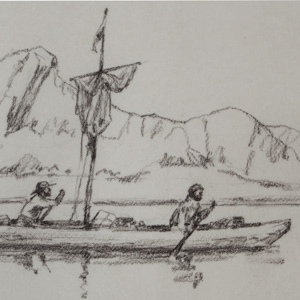
The expedition is split into four detachments separated by over 200 miles. On the plains north of the Great Falls of the Missouri, Lewis and his small group see a wounded bison, a sign that Indian hunters may be near.
On the Yellowstone River, Clark and his group scout for timber to make dugouts and see an “Indian fort” used by traveling war parties. He camps near present Reed Point, Montana.
Sgt. Ordway leads the paddlers down the Missouri navigating Pine Tree Rapids and passing Tower Rock. At the White Bear Islands, Sgt. Gass and his detail wait for the arrival of Ordway and the canoes.
July 16, 1806
Off to the Marias
by Kristopher K. Townsend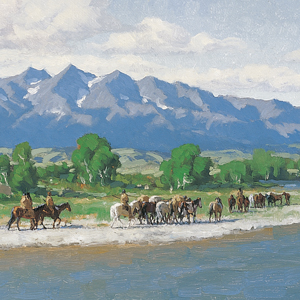
The expedition travels in four separate groups, each with a different destination. Lewis, Drouillard, and Pvts. Joseph and Reubin Field leave the Falls of the Missouri headed to the Marias River. They lunch at Rainbow Falls and encamp at the Grand Fall.
Sgt. Gass’s detachment remains at the White Bear Islands. They repair the wagon trucks that will be used to haul the canoes along the portage route.
On the Yellowstone River, Clark keeps moving downriver in search of trees large enough to make canoes. Moccasins are made for the lame horses, and Clark describes area geology and the mountain sucker—a fish new to science. He camps near present Big Timber, Montana.
On the Missouri River, Sgt. Ordway’s paddlers take the dugout canoes through the Gates of the Mountains, around Oxbow Bend, and past The Bears Tooth.
July 15, 1806
Yellowstone arrival
by Kristopher K. Townsend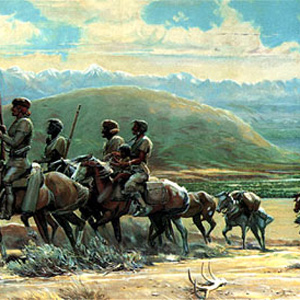
Today, the expedition is split into five separate detachments. Clark crosses present Bozeman Pass and arrives at the Yellowstone River. He names a river after Pvt. Shields but fails to find any trees large enough to build canoes.
Lewis remains at camp above the Great Falls of the Missouri where mosquitoes torment his dog, Seaman.
In three other detachments, Pvt. McNeal clubs a grizzly bear with his musket while on his way to the Lower Portage Camp. Drouillard returns without the missing horses, and Sgt. Ordway and his nine enlisted men paddle the dugouts down the Missouri.
Elsewhere, at Cantonment Belle Fontaine near the mouth of the Missouri, Zebulon Pike’s Southwest expedition begins.
July 14, 1806
Sacagawea knows a way
by Kristopher K. Townsend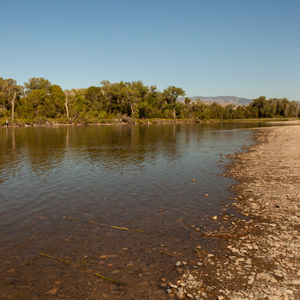
Today, the expedition travels along three different routes to reach the mouth of the Yellowstone. Paddling down the Missouri, Sgt. Ordway and his nine enlisted men are delayed by high winds. They camp near Yorks Islands south of present Townsend, Montana.
Moving by horse up the Gallatin River valley, Clark’s group mires in numerous swamps created by beaver dams. Sacagawea knows of a road through the valley, and they soon find it—an old bison trace.
At the Great Falls of the Missouri, Lewis has the iron-framed boat and the carriage wheels for hauling canoes over land removed from their caches. Wet trunks and items are placed on scaffolds to dry and wolves continually howl.
July 13, 1806
Two groups become three
by Kristopher K. Townsend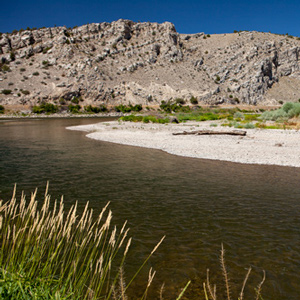
The expedition splits into three groups, each taking a different route to reach the mouth of the Yellowstone. At the headwaters of the Missouri, Sgt. Ordway and nine enlisted men head down the Missouri in dugout canoes. Clark and those remaining in his group head up the Gallatin River valley on horseback. Sacagawea recommends that they head to present Bozeman Pass.
Above the Great Falls of the Missouri, Lewis opens a cache and discovers it had flooded over the winter. His plant specimens and several medicines are ruined. Drouillard has not yet returned from his quest to find missing horses.
July 12, 1806
Navigating rivers
by Kristopher K. Townsend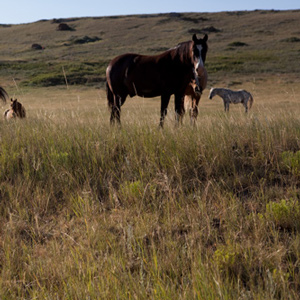
At the mouth of the Sun River, Lewis and his group wake to discover several horses are missing. Some are found, and Drouillard is sent to find the rest. Lewis then crosses the Missouri in bull boats.
On the Jefferson River, Clark and his group abandon two extra dugouts and then continue down the river. Pvt. Howard’s canoe crashes into a sweeper and then gets caught in driftwood. Traveling by land, Sgt. Pryor herds the horses.
July 11, 1806
10,000 buffalo
by Kristopher K. Townsend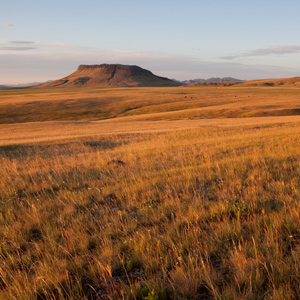
Returning home, the expedition takes two different routes. Lewis arrives at the mouth of the Sun River above the Great Falls of the Missouri where he sees 10,000 bison. They commence hunting and from the hides, begin building two bull boats.
Clark paddles down the Beaverhead River, passes Beaverhead Rock, and stops at the mouth of the Big Hole. There, they recover a dugout canoe and bayonet left last fall. Traveling by land, Sgt. Pryor herds the horses.
July 10, 1806
Down familiar rivers
by Kristopher K. Townsend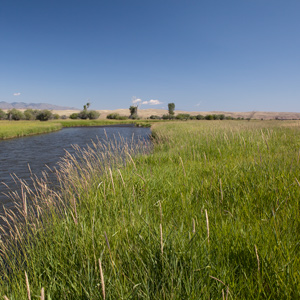
Today, the expedition splits into four separate groups. Near the Great Falls of the Missouri, Lewis and his group hunt elk along the Sun River. They also find lots of grizzly bears, prickly pears, and mud. Sgt. Gass is sent ahead with the pack horses.
Clark and his group paddle down the Beaverhead River from Fortunate Camp to Beaverhead Rock passing six camps from the previous year. Traveling by land, Sgt. Pryor herds the horses.
July 9, 1806
A buffalo feast
by Kristopher K. Townsend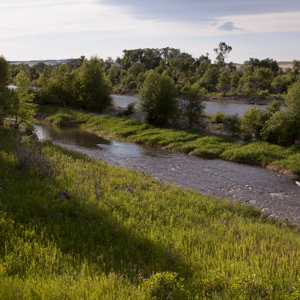
The expedition travels home along two different routes. Lewis moves down the Medicine (Sun) River nearly reaching the Great Falls of the Missouri. They feast on buffalo—their first since 16 July 1805.
At Fortunate Camp south of present Dillon, Montana, Clark’s group prepares the dugout canoes left there last fall. Sgt. Ordway’s detachment brings in the lost horses, and Sacagawea collects a lomatium root.
July 8, 1806
Happy returns
by Kristopher K. Townsend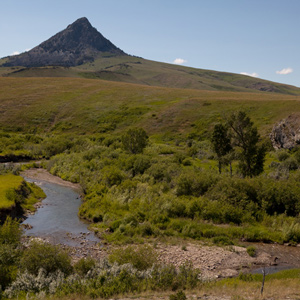
On this day, the expedition travels in three separate groups. Lewis and his group cross the Dearborn River, pass Haystack Butte—a landmark on the Old North Trail—and once again find themselves “in the plains of the Missouri which abound with game.”
Clark and his group return to Fortunate Camp where provisions and several dugouts are cached. The enlisted men immediately dig up the tobacco.
Sgt. Ordway and three others return stray horses 40 miles across the Big Hole Valley. They find a pronghorn head dropped previously by Clark’s party, and the tired men make a dinner of it.
July 7, 1806
Over mountain and dale
by Kristopher K. Townsend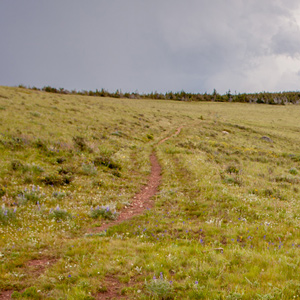
East of Lincoln, Montana, Lewis and his group follow the Road to the Buffalo cresting the Rocky Mountains and descending to the plains. His dog Seaman is bitten by a beaver and Pvt. Reubin Field wounds a moose. They also see fresh signs of bison.
In Montana’s Big Hole Valley, Clark’s group wakes to find several horses missing. Sgt. Ordway and three others spend the day looking for them while the others cross the valley.
July 6, 1806
Approaching the Rockies
by Kristopher K. Townsend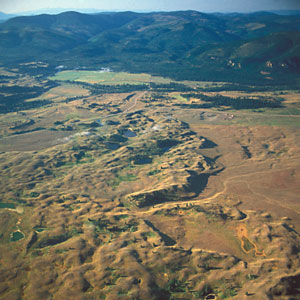
Clark and his group cross the Rocky Mountains on an Indian road—today’s Gibbons Pass. Sacagawea remembers the Big Hole Valley and tells Clark of a pass leading to the dugouts cached at Fortunate Camp.
Lewis and his group continue on the Road to the Buffalo nearly reaching the Continental Divide. They cross a “prairie of the knobs” before camping near present Lincoln, Montana.
July 5, 1806
Crossing rivers and creeks
by Kristopher K. Townsend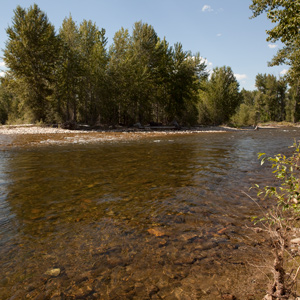
Lewis continues east on the Road to the Buffalo generally following the present Blackfoot River east of Missoula, Montana. He crosses several creeks, and names one after Pvt. Werner and another for his dog Seaman.
Nearing the end of the Bitterroot Valley in present Montana, Clark must cross the west and east forks of the Bitterroot River. They wet several items and then stop for the day at the place they met the Interior Salish last fall—present Ross’ Hole.
July 4, 1806
Dangerous roads
by Kristopher K. Townsend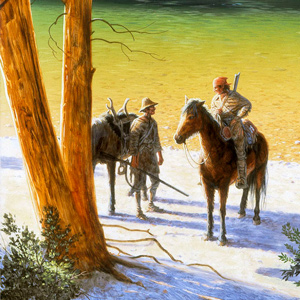
The expedition is divided into two groups, and today, both are on dangerous roads.
On the Blackfoot River, Lewis’s Nez Perce guides warn him about dangerous Indians, and they decline to continue. He travels east on “Cokahlahishkit”—the Road to the Buffalo—for eight miles. He also collects a specimen of mock orange, a species named in his honor.
On the Bitterroot River, Clark’s group must cross several creeks swollen from snows melting in the nearby Bitterroot Mountains. Despite there being no buffalo, whiskey, or tobacco, they celebrate the Fourth of July with a “Sumptious Dinner”.
July 3, 1806
Splitting up
by Kristopher K. Townsend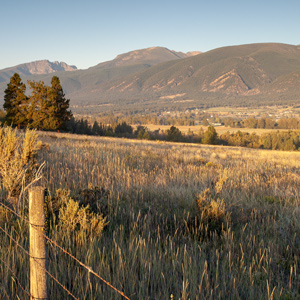
At Travelers’ Rest, the expedition splits up. Lewis heads north and spends most of the day rafting baggage across present Clark Fork west of Missoula, Montana. Clark’s group heads south and travels between the Bitterroot Mountains and Bitterroot River.
July 2, 1806
Rest and torment
by Kristopher K. Townsend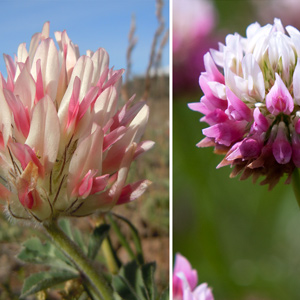
At Travelers’ Rest near present Lolo, Montana, Lewis notices two types of clover. All the arms are put in good working order, and their Nez Perce guides race horses. They also run foot races with the enlisted men. Pvts. McNeal and Goodrich suffer from syphilis, and mosquitoes torment everybody.
Experience the Lewis and Clark Trail
The Lewis and Clark Trail Experience—our sister site at lewisandclark.travel—connects the world to people and places on the Lewis and Clark Trail.
Discover More
- The Lewis and Clark Expedition: Day by Day by Gary E. Moulton (University of Nebraska Press, 2018). The story in prose, 14 May 1804–23 September 1806.
- The Lewis and Clark Journals: An American Epic of Discovery (abridged) by Gary E. Moulton (University of Nebraska Press, 2003). Selected journal excerpts, 14 May 1804–23 September 1806.
- The Lewis and Clark Journals. by Gary E. Moulton (University of Nebraska Press, 1983–2001). The complete story in 13 volumes.
This site is provided as a public service by the

Lewis and Clark Trail Alliance
with additional funding from the following: