Blackbird Hill
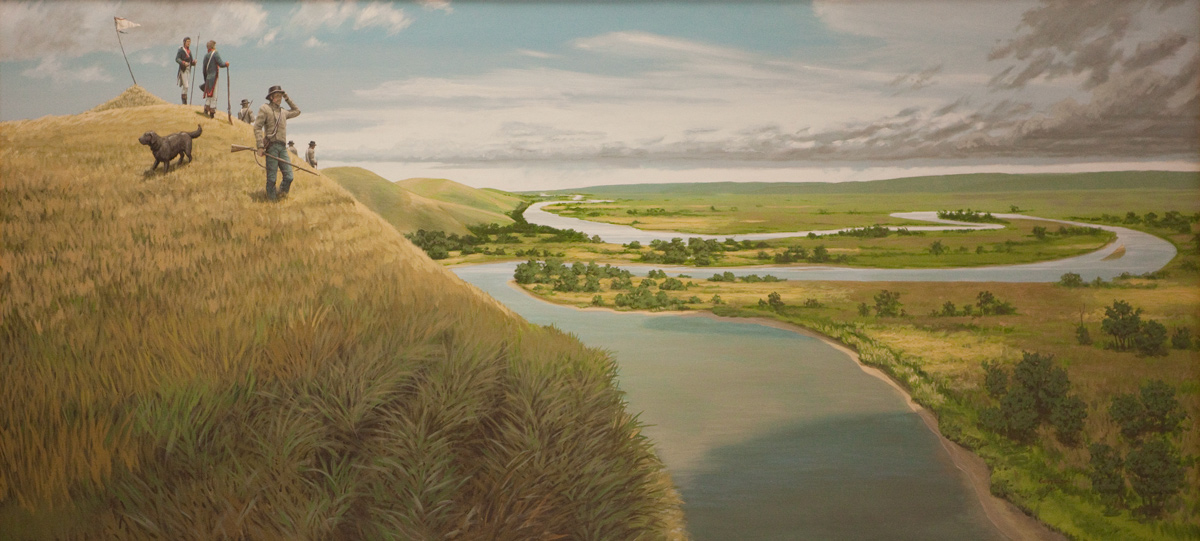
Painting created by Split Rock Studios, Sioux City, Iowa. Original in the collection of the Lewis and Clark Trail Heritage Foundation. Photographed by Kristopher Townsend.
Some authors say that the expedition never met any Omaha people. It is true that they found their villages empty and were unable to hold a council with the people, but they did see Omaha prisoners among the Lakota Sioux (Tetons). They also met several traders bound for, or returning from, Omaha villages. More indirect exposures were with expedition members, François Labiche and Pierre Cruzatte who were both half Omaha.
The captains appeared eager to meet with the Omaha. They tried to find them at their two biggest villages and planted a flag at the gravesite of the chief who for many years had controlled trade in the region, the infamous Chief Blackbird. With Blackbird now dead, a smallpox epidemic in 1800–1801, and recent Teton Sioux attacks, the Omaha were severely weakened. In the “Estimate of the Eastern Indians,” Clark holds out hope:
They might easily be induced to become stationary: they are well disposed towards the whites, and are good hunters: their country abounds in beaver and otter, and their trade will increase and become valuable, provided they become stationary, and are at peace.[1]Moulton, Journals, 3:339.
On 13 August 1804, the Omaha Big Village, also known as Tonwantonga, was found abandoned, apparently destroyed and without a growing garden. Nearly two weeks later, on 26 August 1804, the boats passed Bow Creek, the site of another abandoned Omaha village called Petite Arch—or by Clark, Little Bow. That village had split from the Big Village in a dispute with Blackbird. After the expedition, both bands would come together and rebuild Big Village.
Despite wars with other native nations, European diseases, removal to reservations, boarding schools, and complex land ownership issues resulting from the allotment system, the Omaha people retained its tribal identity. They consider “The Original Omaha Powwow”—held after the first full moon in August—as the oldest celebration of native music and dance still in existence.[2]Margot P. Liberty, W. Raymond Wood, and Lee Irwin, Handbook of North American Indians: Plains Vol. 13, ed. Raymond J. DeMallie (Washington, D.C.: Smithsonian Institution, 2001), 412.
Selected Pages and Encounters
Too Né’s Delegation
by Joseph A. Mussulman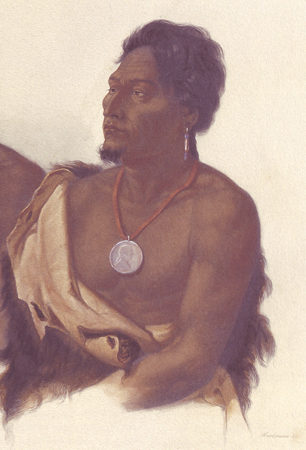
A delegation of chiefs from the Arikara, Ponca, Omaha, Otoe, Iowa, and Missouria nations sailed down the Missouri with Corporal Warfington on the expedition’s keelboat in the spring of 1805. Early in January, 1806, President Jefferson greeted them in Washington City with a formal speech.
Chief Blackbird
Late Omaha chief
by Joseph A. Mussulman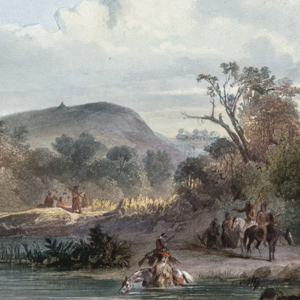
The two captains and ten of the enlisted men climbed the hill to visit the grave of one of the most notorious and controversial leaders of the Omaha Nation, whose name was Washinga Sahba—Blackbird.
May 27, 1804
Gasconade River
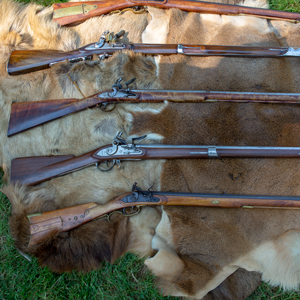
As the expedition travels up the Missouri, they meet two parties who had been trading with the Omaha and Osage. Lewis collects three more plant specimens including a cress that they use to make salad. At evening camp near the mouth of the Gasconade River in present Missouri, arms and ammunition are inspected.
July 14, 1804
Sudden storm
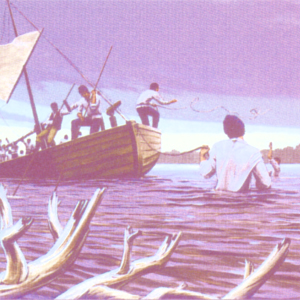
When they encounter a sudden storm, the men jump into the water to save the boats. An elk is wounded, and Lewis’s dog, Seaman, joins the chase. They encamp southwest of present Langdon, Missouri.
August 3, 1804
The Otoe council
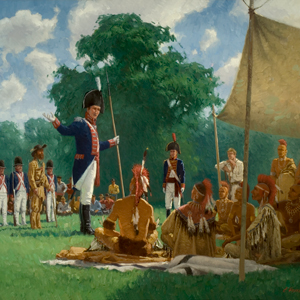
Most of the day is spent exchanging speeches, gifts, and knowledge with the Otoes and Missourias on Council Bluff at present Fort Atkinson, Nebraska. Then, the boats travel six miles up the Missouri.
August 4, 1804
Moses Reed is missing
The expedition travels 15 miles and encamps southwest of present Modale, Iowa. The captains record yesterday’s speech to the Otoes, and Pvt. Moses Reed, who left to retrieve his knife, does not return.
August 10, 1804
Blackbird Hill in view
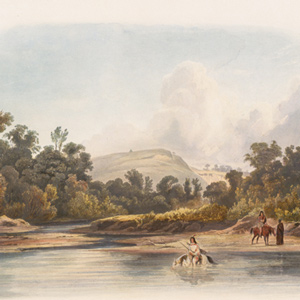
The boats sail 22½ miles up the Missouri River, and they encamp within view of Blackbird Hill. Lewis collects the earliest plant specimen that survives today, field horsetail.
August 11, 1804
Honoring Blackbird
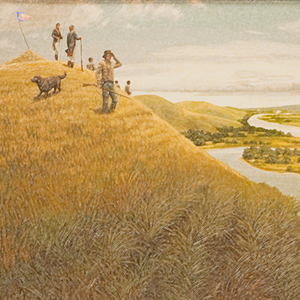
The captains place a flag at the grave of Blackbird, an Omaha chief and prolific trader. They then continue up the Missouri River passing a creek where many Omaha people died from smallpox.
August 13, 1804
The Omaha's Big Village
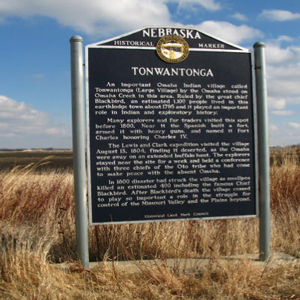
The expedition passes old Fort Charles, a starting point for a previous exploration of the upper Missouri. They camp east of present Homer, Nebraska and men are sent to invite the Omahas to a council.
August 17, 1804
Otoe chiefs and a deserter
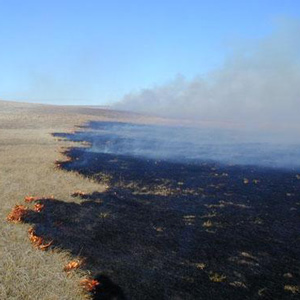
At Fish Camp near present Homer, Nebraska Pvt. Labiche informs the captains that three Otoe chiefs and the deserter Pvt. Reed will soon arrive. A prairie fire is set as a signal to any nearby Indians.
August 18, 1804
The Omahas arrive
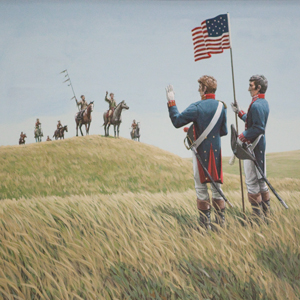
At Fish Camp near present Homer, Nebraska, the Omahas arrive for a council. Three Otoe chiefs witnessing deserter Pvt. Reed’s corporeal punishment ask for mercy, and Lewis’s birthday is celebrated.
August 21, 1804
Big Sioux country
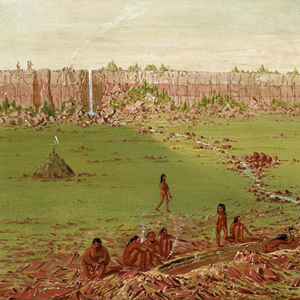
As the battle strong winds heading up the Missouri, trader Pierre Dorion informs the captains about the Big Sioux country including their red pipestone quarry. They camp near present Ponca, Nebraska.
August 24, 1804
Bluffs on fire
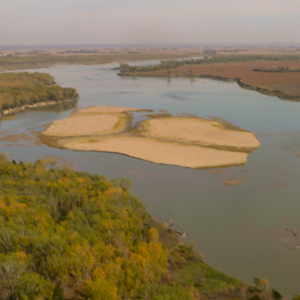
On their way to the Vermillion River, the expedition passes a burning bluff that some call the Ionia Volcano. They express curiosity about a small mound—present Spirit Mound—that the Indians fear.
Spirit Mound
An elevation of devilish spirits
by Joseph A. Mussulman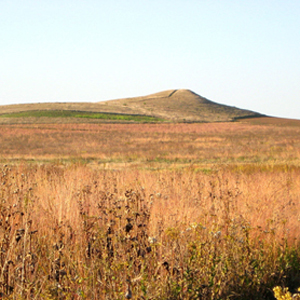
The visit to this prairie hill was among the more bizarre sidelights of the whole expedition, but evidently it was not entirely unexpected. Seventy-six years earlier, explorer Pierre La Véndrye called the place the “Dwelling of the Spirits.”
August 31, 1804
Yankton speeches
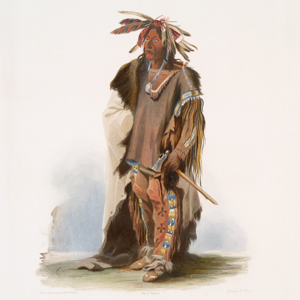
The council with the Yankton Sioux continues with many of them giving speeches while Clark and Sgt. Ordway take notes. Trader Pierre Dorion is assigned a mission to make peace with the region’s Nations.
September 4, 1804
Shannon still missing
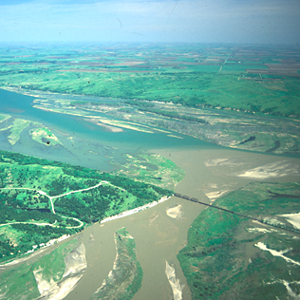
They pass an old Ponca village and make eight miles before stopping at the Niobrara River to explore, hunt, and look for signs of Pvt. Shannon who has been missing several days.
September 26, 1804
Teton Sioux ceremony
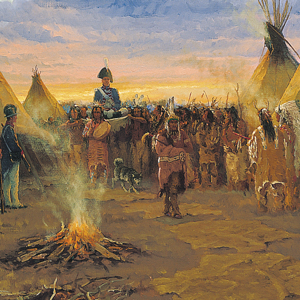
Clark and Lewis are ceremoniously carried into a Lakota Sioux village where they are feted with food and music. Clark sees several recently captured Omaha prisoners and asks for their return.
May 20, 1805
"Sâh-câ-gar me-âh or bird woman's River"
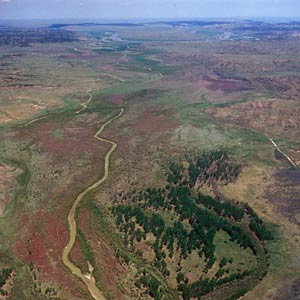
The captains name a creek Blowing Fly after the flies that congregate on raw meat and open wounds. At the mouth of the Musselshell River, they explore and take celestial observations. A tributary of the Musselshell is named “Sâh-câ-gar me-âh [Sacagawea] or bird woman’s River”.
The barge, which headed down the Missouri from Fort Mandan on 7 April 1805, arrives in St. Louis.
June 12, 1805
Searching for the Falls
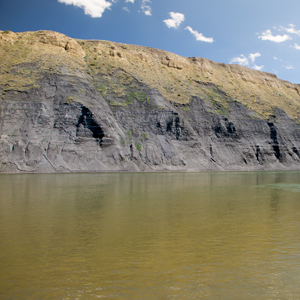
Clark takes the boats up the Missouri past black bluffs and rattlesnakes nearly reaching present Fort Benton. Sacagawea remains ill.
Lewis hikes over the plains in search of the Great Falls of the Missouri, and he sees the Rocky Mountain Front. He has an encounter with a grizzly bear, describes two types of cottonwood trees, and then goes fishing.
After the arrival of the barge in St. Louis, some of its many Native passengers return home and others prepare to leave for Washington City.
September 3, 1806
News from home
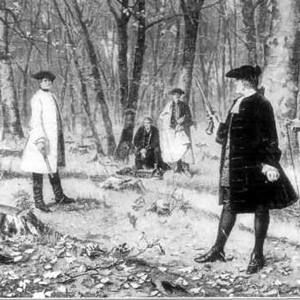
Moving down the Missouri, they meet a group of traders who tell them that Jefferson is again president and that Alexander Hamilton died in a duel with Aaron Burr. They camp above present Sioux City, Iowa.
September 5, 1806
Challenging river
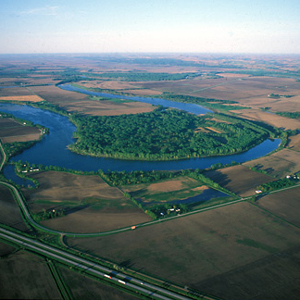
The narrowing Missouri river challenges the paddlers and rowers who must navigate its many bends and hazards. By the end of the day, they camp near present Onawa, Iowa, 75 miles closer to home.
September 10, 1806
News of Zebulon Pike
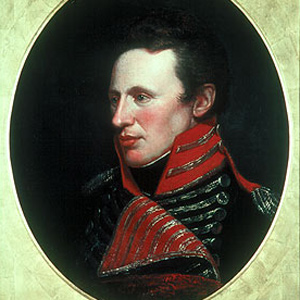
Fur traders heading up the river tell the captains that Zebulon Pike is leading an expedition to the source of the Arkansas River. They end the day near present Bean Lake, Missouri.
September 12, 1806
Given up for dead
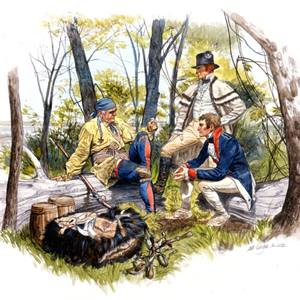
At present St. Joseph, Missouri, the captains modify orders given to Pierre Dorion and Joseph Gravelines. An old military companion, Robert McClellan, says that they have all been given up for dead.
September 16, 1806
A young trader
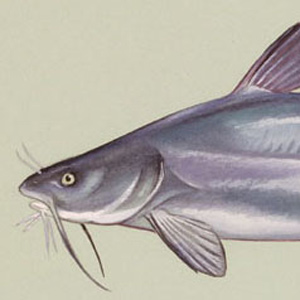
Moving down the Missouri, they question a young trader—likely Joseph Robidoux Jr.—who lacks a properly signed license. They end the day near present Waverly, Missouri 52 miles closer to home.
September 20, 1806
La Charrette welcome
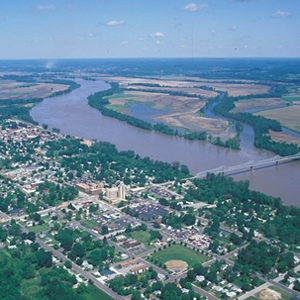
After 68 miles of hard paddling, the expedition arrives at the French settlement of La Charrette. They fire three rounds, and the villagers return the welcome. They enjoy their first beef since leaving.
Notes
Experience the Lewis and Clark Trail
The Lewis and Clark Trail Experience—our sister site at lewisandclark.travel—connects the world to people and places on the Lewis and Clark Trail.

Discover More
- The Lewis and Clark Expedition: Day by Day by Gary E. Moulton (University of Nebraska Press, 2018). The story in prose, 14 May 1804–23 September 1806.
- The Lewis and Clark Journals: An American Epic of Discovery (abridged) by Gary E. Moulton (University of Nebraska Press, 2003). Selected journal excerpts, 14 May 1804–23 September 1806.
- The Lewis and Clark Journals. by Gary E. Moulton (University of Nebraska Press, 1983–2001). The complete story in 13 volumes.
This site is provided as a public service by the
Lewis and Clark Trail Alliance
with additional funding from the following: