Joseph Mussulman

Marc A. Hefty photo.
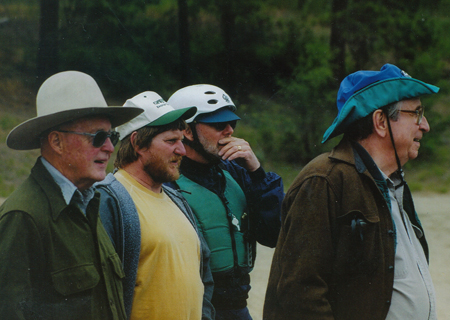
Photo by Bill Bevis.
Left to right: Two concerned dugout canoe owners, one concerned expert paddler, and Joe grinning with delight
Joseph A. Mussulman (1928–2017) was the founding producer, editor and writer for Discovering Lewis & Clark. After five years of preparation and experimentation the website went online in 1998, under the auspices of a non-profit entity called VIAs Inc., and funded by grants from various sources, especially–throughout the bicentennial observance from 2003 to 2006–the Challenge Cost Share Program of the National Park Service. In 2009 the site was taken over by the Lewis & Clark Fort Mandan Foundation of Washburn, North Dakota.
Dr. Mussulman earned his bachelor’s and master’s degrees in music history and literature at Northwestern University in 1950 and 1951. As a Danforth Scholar he earned a doctorate in humanities from Syracuse University in 1967.
He has written and produced a number of interpretive programs in collaboration with audio specialist Richard H. Kuschel, also of Missoula Montana. In 1986, he wrote, narrated, and co-produced a multimedia presentation for the Blaine County Museum (MT) titled Forty Miles from Freedom, about the Non-Treaty Nez Perce Indians’ final battle with the U.S. Army, at the Bear Paw Mountains in 1877. In 2012-13 Mussulman and Kuschel revised the 20-minute onsite production and updated it in High Definition video. In 1994 their interactive self-guided audio-CD tour of Yellowstone National Park, a five-hour program produced for Tour Technologies, Inc., received first prize in the category of media productions from the National Association for Interpretation. Their Two Days to Destiny, an audio interpretive tour of the Little Bighorn Battlefield, won first place from the NAI in 1995.
Mussulman is the author of five articles on Lewis and Clark that appeared in We Proceeded On, the official journal of the Lewis and Clark Trail Heritage Foundation, Inc.: “My Boy Pomp’: About That Name,” Vol. 21, No. 2 (May 1995); “Soundscapes: The Sonic Dimensions of the Lewis and Clark Expedition,” Vol. 21, No. 4 (November 1995); “Men in High Spirits: Humor on the Lewis and Clark Trail,” Vol.22, No. 2 (May 1996); “‘In Greatest Harmoney’: ‘Meddicine Songs’ on the Lewis and Clark Trail,” Vol. 23, No. 4 (November 1997); and “Pomp’s bier was a bar,” Vol. 27, No. 1 (February 2001).
Dr. Mussulman has designed and produced maps for various books, brochures and study guides about Lewis and Clark, including 58 full-color maps illustrating the expedition’s entire route from coast to coast for the travelers’ guide, Along the Trail with Lewis and Clark, by Barbara Fifer and Vicky Soderberg (2nd ed., Helena: Montana Magazine, 2001). Those maps also appeared in the same publisher’s annual Lewis and Clark Travel Planner and Guide. They may be seen in Discovering Lewis & Clark at Discovering Lewis & Clark from the Air. In 1998, he created a poster illustrating the trail from Washington, D.C. to the Pacific, for Farcountry Press.
His other publications include a biography, Dear People . . . Robert Shaw (Indiana University Press,1979; reprint, Chapel Hill, NC: Hinshaw Music, 1996), and Music in the Cultured Generation (Evanston: Northwestern University Press, 1974). From 1987 through 1998 he was the interpretive writer and designer of Montana Afloat, a series of sixteen maps of Montana’s major floatable rivers.
Dr. Mussulman was a 1999 recipient of a Montana Governor’s Arts Award. Several years later he received an award of meritorious achievement from the Lewis and Clark Trail Heritage Foundation “for outstanding contributions in bring to this nation a greater awareness and appreciation of the Lewis and Clark expedition.” In 2005, he received the Montana Governor’s Humanities Award.
Contributions to this Site
Friedrich Wilhelm von Steuben (1730–1794)
Early American Army trainer
by Joseph A. Mussulman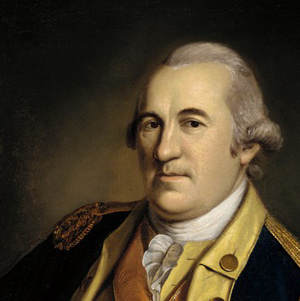
Until he presented his services to General Washington at Valley Forge, the Continental Army still consisted merely of a number of state-sponsored militias that were entirely independent of one another, each operating according to its own rules and regulations.
Rattlesnakes
Crotalus sp.
by Joseph A. Mussulman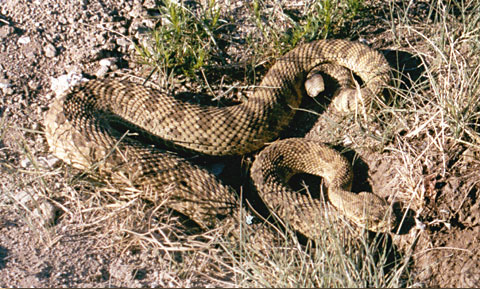
Lewis awoke to find “a large rattlesnake coiled on the leaning trunk of a tree under the shade of which I had been lying.” It certainly wasn’t the first rattlesnake seen on the trip, but he killed this one, and took time to study it.
The Portage Route
Around the Falls of the Missouri
by Joseph A. Mussulman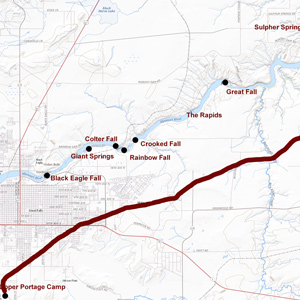
The shuttling of all the baggage and six canoes across the prairie to the upper portage camp opposite White Bear Islands began on 21 June 1805 and was completed on 2 July 1805. All in all, it was one of the most grueling undertakings on the entire expedition.
Army Hygiene
by Joseph A. Mussulman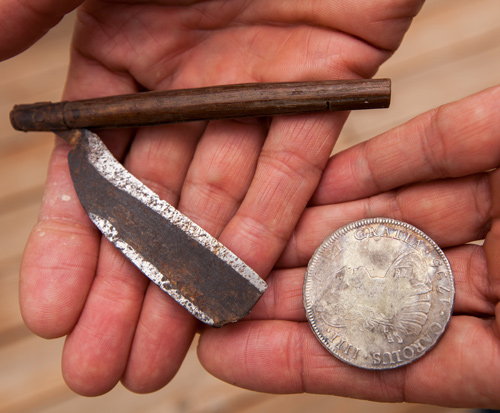
Officers were to see that their men’s hands and faces were daily “washed clean” and their hair combed. Soap was relatively expensive, and if individuals or families couldn’t manage to make their own, they just went without.
Harpers Ferry by Air
Wedge of history
by Joseph A. Mussulman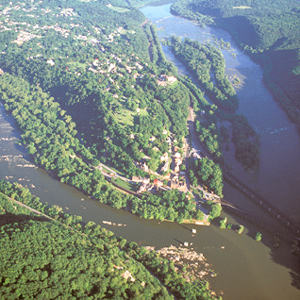
Harpers Ferry’s tiny footprint belies the richness of its roles in American history—in industrialization, in commerce, and especially in the unfolding of the Civil War and the long struggle of African-Americans out of slavery.
Mapping the Falls
by Joseph A. Mussulman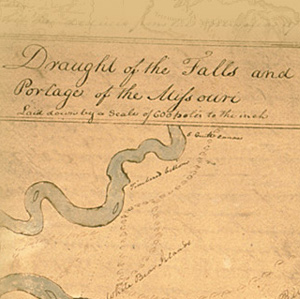
The falls of the Missouri comprised the most remarkable of all the “remarkeable points” that Clark described and mapped in conscientious obedience to an order from Thomas Jefferson to take observations “with great pains & accuracy.”
Flag Presentations
by Joseph A. Mussulman
Lewis and Clark usually distributed flags at councils with the chiefs and headmen of the tribes they encountered—one flag for each tribe or independent band.
Where the Buffalo Roam
Anthem of the American West
by Joseph A. Mussulman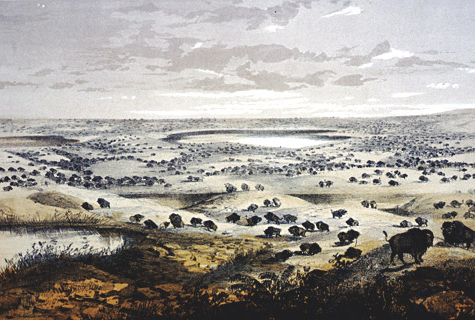
For more than a hundred years the American bison has been enshrined as a symbol of the American West in the first line of a song known around the world, “Home on the Range.”
Lewis’s Hunting Accident
Lewis's closest call
by Joseph A. Mussulman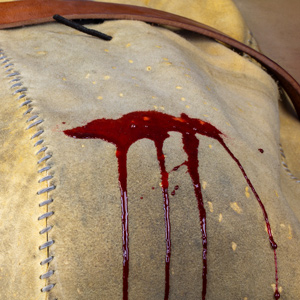
The most serious hunting mishap, and surely the most memorable episode in Lewis’s frequently referenced “chapter of accedents,” was the moment on 11 August 1806 when Pierre Cruzatte shot him in the buttocks.
The White Cliffs
by Joseph A. Mussulman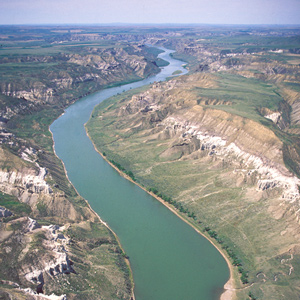
Under cloudy skies on the morning of 31 May 1805, the expedition “proceeded at an early hour,” and roped their flotilla of six cottonwood dugout canoes and two big pirogues into one of the most famous riverscapes on the Missouri.
Barbary Coast War
Lewis's "Mahometant yoke"
by Joseph A. Mussulman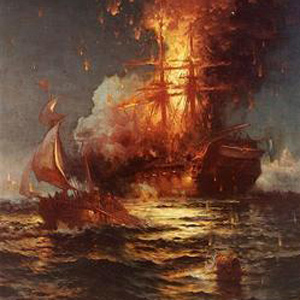
The story of what was known by his detractors as “Jefferson’s War,” opens for us a narrow window on a little known but intriguing episode in Meriwether Lewis’s brief position as the President’s secretary.
Holidays on the Trail
Three special days
by Joseph A. Mussulman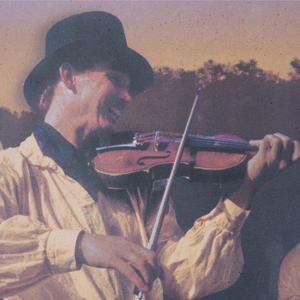
In a compromise with its multicultural makeup, the Corps of Discovery celebrated just three special days—Christmas Day, New Year’s Day, and Independence Day—and each must have been observed with a jovial mixture of traditions.
Chief Blackbird
Late Omaha chief
by Joseph A. Mussulman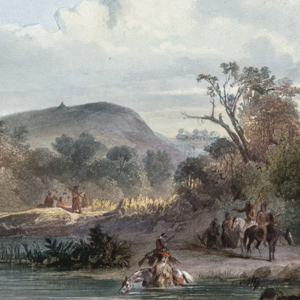
The two captains and ten of the enlisted men climbed the hill to visit the grave of one of the most notorious and controversial leaders of the Omaha Nation, whose name was Washinga Sahba—Blackbird.
Indian Presentation Flags
What kind of flag did they give out?
by Joseph A. Mussulman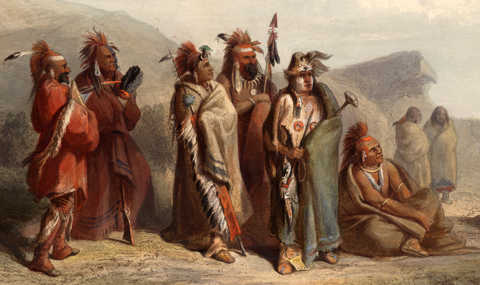
Several vexillologists have speculated that Lewis and Clark might have carried some “Indian presentation flags” with seventeen stripes, plus the Great Seal in the canton with seventeen stars either surrounding the eagle or inside the Glory.
John Colter
Private
by Barbara Fifer, Joseph A. Mussulman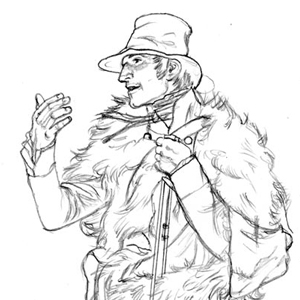
Colter left a legacy of western lore, not the least of which was his famous run from the Blackfeet Indians and his exploration of “Colter’s Hell.” Yet his contributions to the expedition were also many.
Fort Yates
Hunting party
by Joseph A. Mussulman
The Corps observed an Indian strategy for hunting game. As men on horseback herded pronghorns—”goats or Antelope,” Clark called them—into the river, boys swam among them and killed some with sticks, while others on shore shot them with bows and arrows.
Pryor Mountains
Local lore and myths
by Joseph A. Mussulman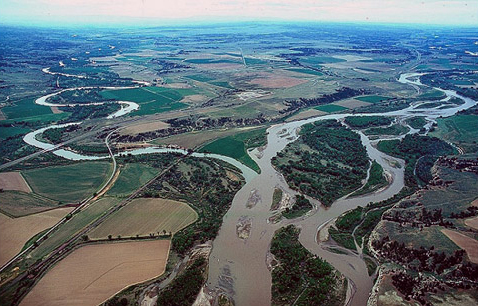
Pryor Creek begins in the Pryor Mountains 50 miles from its mouth, but coils into nearly 100 miles of creek bottom by the time it empties into the Yellowstone. Local lore maintains that Pryor traveled up this creek to those mountains.
Fort Randall Dam
Wolf tricks
by Joseph A. Mussulman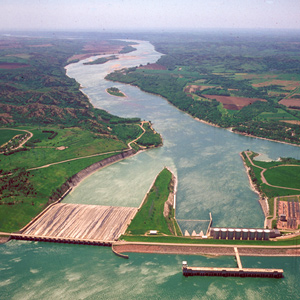
Here, Sergeant Gass went out with one of the hunters to retrieve the meat and hide of a buffalo the man killed the previous evening. The hunter had left his hat on the carcass “to keep off the vermin and beasts of prey,” apparently believing the scent of a human would scare them away”
Clark’s Columbia River Maps
by Joseph A. Mussulman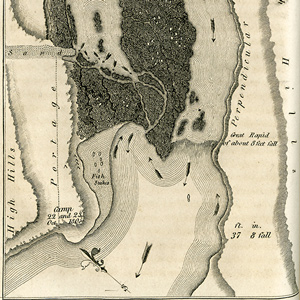
The Jefferson Canyon
The fourth mountain gate
by Joseph A. Mussulman, Robert N. Bergantino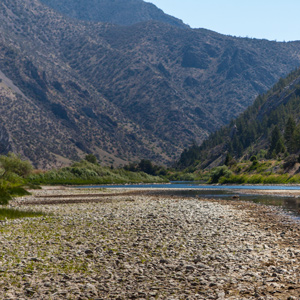
On 1 August 1805, Clark and the expedition’s flotilla of eight dugout canoes pushed up the Jefferson River through “a verrey high mountain which jutted its tremendious Clifts on either Side for 9 Miles, the rocks ragide.” They emerged into a “wide exte[n]sive vallie.”
Gritty American Place-Names
Robert Southey's criticism
by Joseph A. Mussulman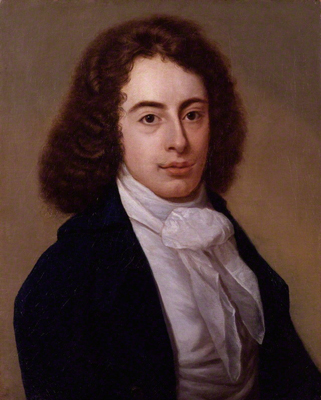
To the European Romantics, the gritty names those American explorers uttered sounded like throwbacks to a cruder, more barbarous epoch, boding ill for the future of poetic taste in the New World. In 1815, Robert Southey found plenty of evidence.
The Marias River by Air
Narrow escape
by Joseph A. Mussulman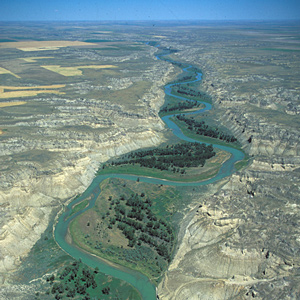
“I sliped at a narrow pass of about 30 yards in length and but for a quick and fortunate recovery by means of my espontoon I should have been precipitated into the river down a craggy pricipice of about ninety feet.”
The Blackfoot River
by Joseph A. Mussulman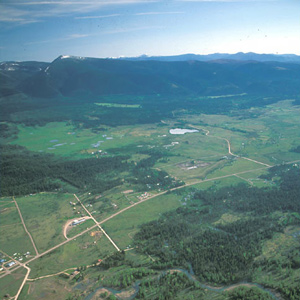
The road led Lewis and his men to the north of an “extensive high prarie rendered very uneven by a vast number of little hillucks and sinkholes.” Lewis noted: “These plains I called the prarie of the knobs.”
Indigenous Forestry
by Joseph A. Mussulman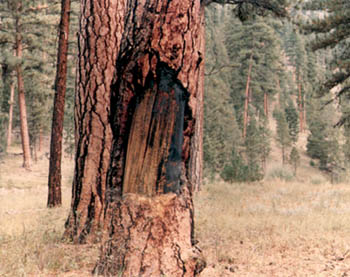
Archaeological evidence indicates that deliberate burning of forests and fields has been occurring on the North American continent for at least the past 10,000 to 20,000 years.
Dividing Forces at Travelers’ Rest
Their daring tactical plan
by Joseph A. Mussulman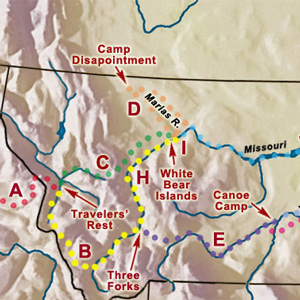
Dividing into as many as five separate details was part of a bold, diplomatic plan to achieve three of the objectives set by President Jefferson.
The Osage Orange
Maclura pomifera
by James L. Reveal, Joseph A. Mussulman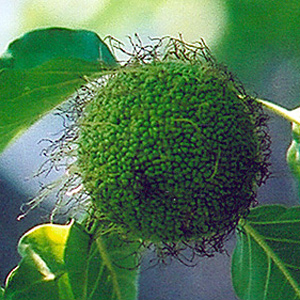
Its oak-strong, hickory-tough wood made powerful, reliable hunting bows. Early French explorers and traders translated its Indian name into bois d’arc,–”wood for a bow,” which was easily anglicized into “bodark.”
Charles M. Russell NWR
Missouri Breaks
by Joseph A. Mussulman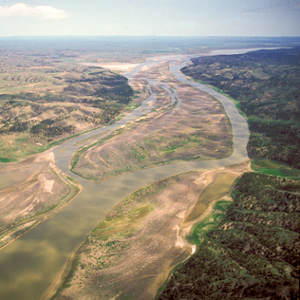
The wind against them again on 25 May 1805, the Corps had to tow their boats with ropes. Lewis observed, “the water run with great violence, and compelled us in some instances to double our force in order to get a perorogue or canoe by them.”
Wheeler on the Columbia
Fish wheels and canneries
by Barbara Fifer, Joseph A. Mussulman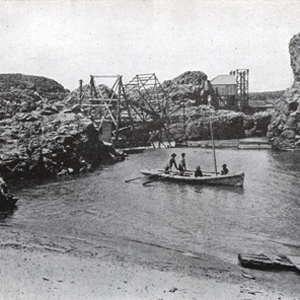
At The Dalles in 1902, a hospitable local citizen helped Wheeler make his way to the brink of the long narrow channel and chasm through which Lewis and Clark took their canoes, where he “overlooked the swirling waters as they boiled and raged.”
Rainbow Falls by Air
"Pleasingly beautifull"
by Joseph A. Mussulman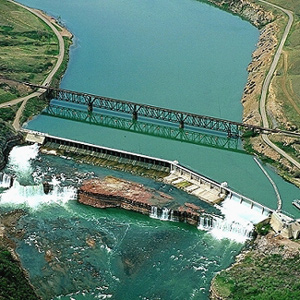
After briefly contemplating the Crooked Falls on 14 June 1805, Lewis followed the sound of “a tremendious roaring” to “one of the most beautifull objects in nature,” a fifty-foot-high cascade “with an edge as regular and as straight as if formed by art.”
The Freeman-Custis Expedition
The "Grand Excursion"
by Dan Flores, Joseph A. Mussulman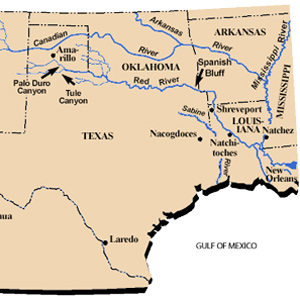
Narrated in both English and Spanish, Daniel Flores tells the story of a parallel, southern exploration now nearly forgotten.
Crooked Falls by Air
A "thousand conjectures"
by Joseph A. Mussulman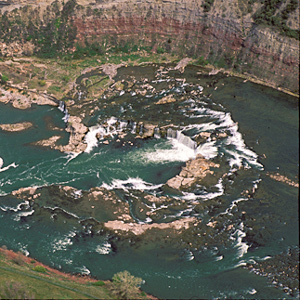
After passing “one continued rappid and three small cascades of abut for or five feet each,” Lewis “arrived at a fall of about 19 feet,” which he suitably named “the crooked falls” and proceeded to describe its geometry.
Stolen Horses
Apsáalooke horse culture
by Joseph A. Mussulman, Robert N. Bergantino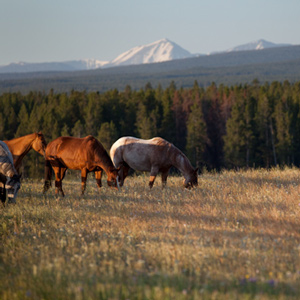
Pryor and six privates had successfully driven forty-one horses all the way to the Yellowstone Valley, apparently without any trouble. Then, smoke on the horizon. Twenty-four horses stolen on the twentieth. Seventeen taken on the twenty-fifth.
Three Forks of the Missouri
Essential geographic point
by Joseph A. Mussulman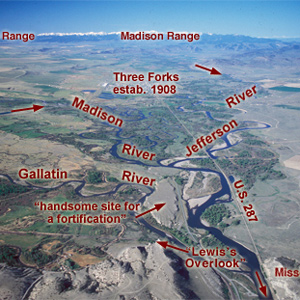
Lewis and his canoes slowly approached the forks, “the current still so rapid that the men are in a continual state of their utmost exertion to get on, and they begin to weaken fast from this continual state of violent exertion.” He described the “extensive and beatifull plains and meadows.”
Three Pests and a Yoke
Lewis's literary metaphor
by Joseph A. Mussulman
Lewis displays his talent for seeing the world metaphorically. Perhaps he wrote this vignette as he slapped at mosquitoes, waved off gnats, or plucked barbed spines from his feet.
Crossing the Yellowstone
Parting ways
by Joseph A. Mussulman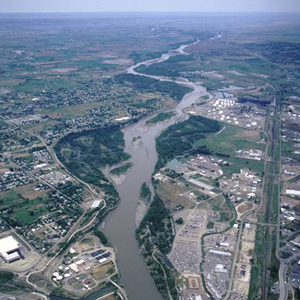
Pryor was to proceed downriver to the mouth of the Bighorn River, where Clark, with the canoes, would help him and his detail across the Yellowstone to its south bank. But they happened upon a good fording place at today’s Billings, and seized the opportunity.
Climbing Wendover Ridge
Leaving the Lochsa
by Joseph A. Mussulman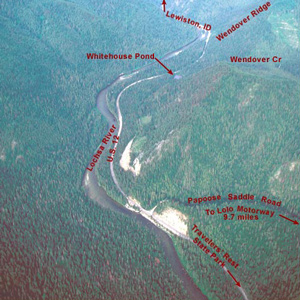
“Several horses Sliped and roled down Steep hills which hurt them verry much The one which Carried my desk & Small trunk Turned over & roled down a mountain for 40 yards & lodged against a tree, broke the Desk…”
Log Line, Reel, and Ship
Measuring nautical speed
by Joseph A. Mussulman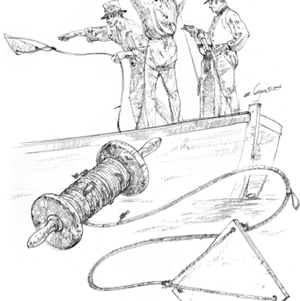
This device was typically used for measuring the speed of a vessel at sea, but it could also be used to measure the velocity of a river’s current. It consisted of four parts: a log-ship, or log-chip; a specially calibrated log-line; a reel to hold the log-line; and a log-glass, or sand-glass.
St. Joseph by Air
Bad medicine
by Joseph A. Mussulman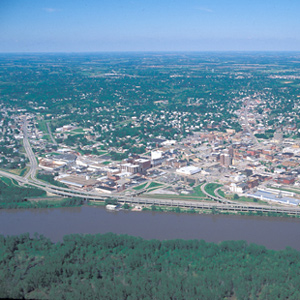
Pvt. Robert Frazer came close to being the expedition’s first fatality, for he was “verry Sick, struck with the Sun.” Probably his affliction would be diagnosed today as either heat exhaustion or sunstroke.
Kirwan’s Elements of Mineralogy
The captain's field guide
by David D. Alt, Joseph A. Mussulman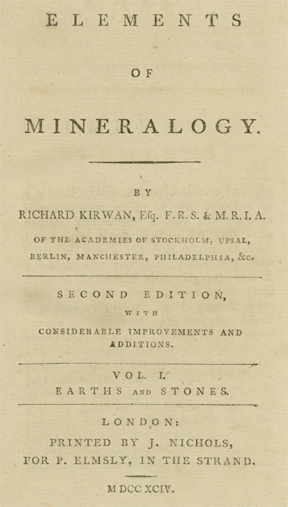
As a reference, Lewis purchased the second edition (1784) of Richard Kirwan’s Elements of Mineralogy. Although Lewis and Clark had the book at hand throughout the expedition, its usefulness as a field guide was limited.
Wheeler on the Yellowstone
Bozeman Pass and Pompeys Pillar
by Barbara Fifer, Joseph A. Mussulman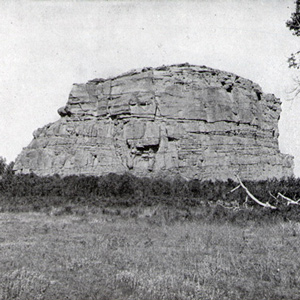
In 1902, Wheeler followed the Northern Pacific’s course over Bozeman Pass and the Yellowstone River promoting both the railroad and the Lewis and Clark Centennial.
Lolo’s Faith and Death
Clues about 'Laurence'
by Joseph A. Mussulman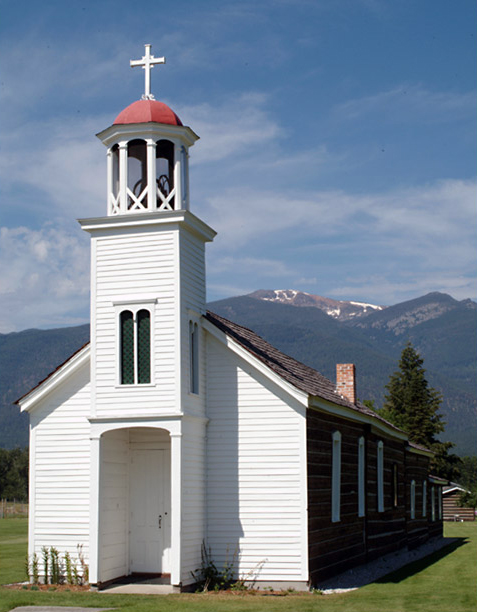
The closing of the first St. Mary’s Mission on 5 November 1850 was punctuated by the sudden death of “Lolo, the only Indian who still remained well disposed and really attached to religion.”
Lolos in the Fur Trade
Thompson, Ashley, and Work
by Joseph A. Mussulman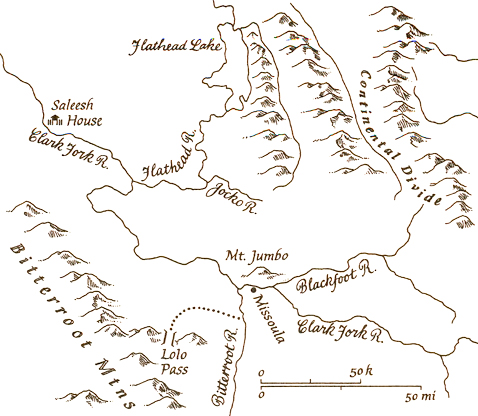
The first written record of a man named Lolo appeared in the field notes of David Thompson while at today’s Kettle Falls on the Columbia River. Fifteen years later, trader John Ashley mentions a “Mr. Lolo.”
Charles B. J. F. de Saint Mémin
Early American portraitist
by Joseph A. Mussulman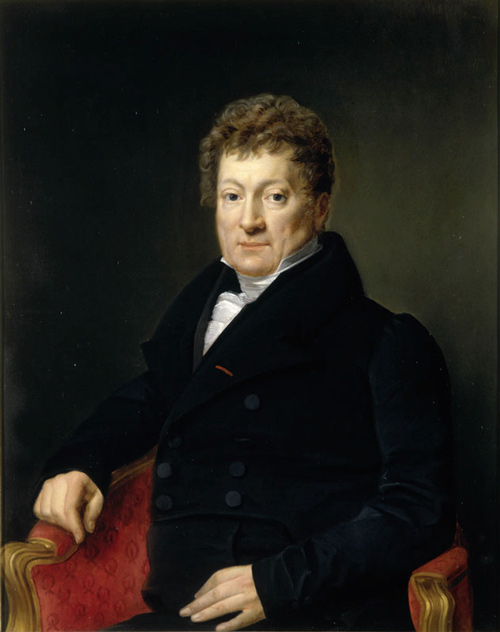
Charles Balthazar Julien Févret de Saint-Mémin (1770–1852) was a portrait artist whose works include Lewis, Clark, Chief Sheheke and his wife Yellow Corn.
Scales and Steelyards
Tools of commerce
by Joseph A. Mussulman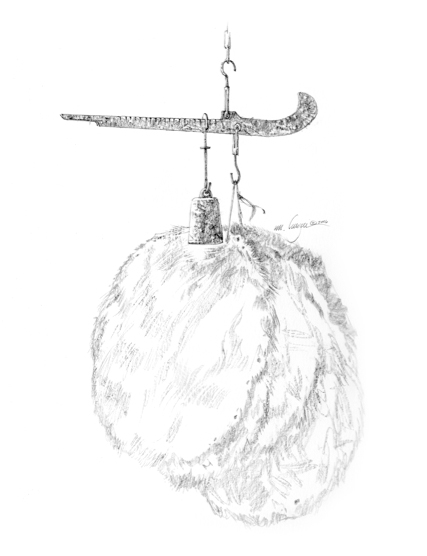
The use of a lever as a tool for measuring weight in terms of current standards of weights and measures may be at least as old as labor and commerce. It embodies a classic proposition in elementary mechanics.
Outfitting the Expedition
Buying supplies in Philadelphia and St. Louis
by Frank Muhly, Joseph A. Mussulman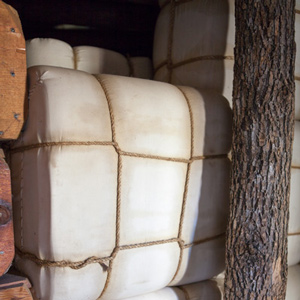
The original shopping list contained more than 180 items, including various “Mathematical Instruments”, arms and accouterments, ammunition, clothing, camp equipage, provisions, Indian presents, medicine, and packing materials.
Pronghorn
Antelope, Antilocapra americana
by Joseph A. Mussulman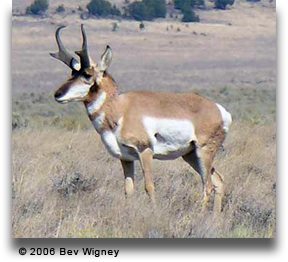
The men of the Corps of Discovery must have been electrified by their first sighting of the pronghorn antelope at the northeast corner of today’s state of Nebraska. Naturalists were eager to find the answers to some basic questions about them.
Reunion
Lewis and Pryor catch up
by Joseph A. Mussulman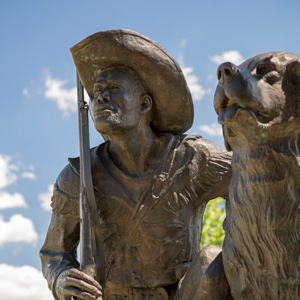
After splitting up into five separate details over five weeks earlier, all the members of the Corps of Discovery were finally reunited 142 miles downriver from the mouth of the Yellowstone.
Wilson’s “Foresters”
An early American epic poem
by Joseph A. Mussulman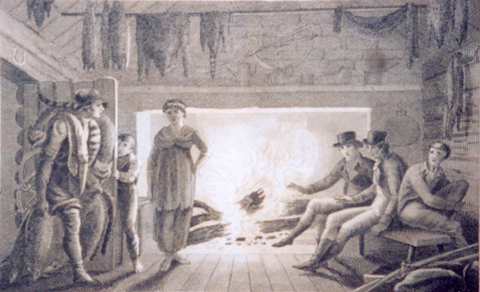
Alexander Wilson’s epic poem The Foresters, was a tediously versified 2,210-line diary of his twelve hundred mile round-trip hike from Philadelphia to Niagara Falls in the autumn of 1804.
The Mouth of the Ohio
Meeting of the waters
by Joseph A. Mussulman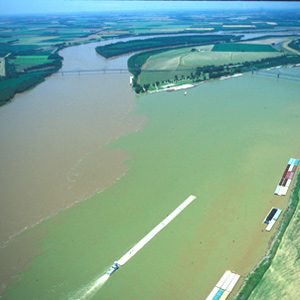
On the evening of 14 November 1803, Lewis and Clark camped on the point between the Ohio and Mississippi Rivers. By now they had rowed, poled, dragged, and occasionally sailed their boats a total of 981 miles.
Naming the Lolo
by Joseph A. Mussulman
Even though it is highly unlikely that any of the expedition’s journalists ever heard the name, Lolo is among the most familiar and useful of all the place names in the story of the Lewis and Clark expedition. How did the Lolo get its name?
Experience the Lewis and Clark Trail
The Lewis and Clark Trail Experience—our sister site at lewisandclark.travel—connects the world to people and places on the Lewis and Clark Trail.
Discover More
- The Lewis and Clark Expedition: Day by Day by Gary E. Moulton (University of Nebraska Press, 2018). The story in prose, 14 May 1804–23 September 1806.
- The Lewis and Clark Journals: An American Epic of Discovery (abridged) by Gary E. Moulton (University of Nebraska Press, 2003). Selected journal excerpts, 14 May 1804–23 September 1806.
- The Lewis and Clark Journals. by Gary E. Moulton (University of Nebraska Press, 1983–2001). The complete story in 13 volumes.
This site is provided as a public service by the

Lewis and Clark Trail Alliance
with additional funding from the following: