Joseph Mussulman
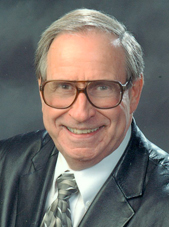
Marc A. Hefty photo.
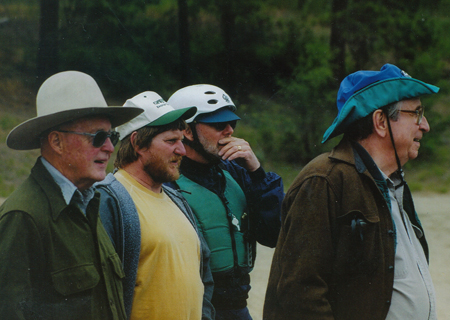
Photo by Bill Bevis.
Left to right: Two concerned dugout canoe owners, one concerned expert paddler, and Joe grinning with delight
Joseph A. Mussulman (1928–2017) was the founding producer, editor and writer for Discovering Lewis & Clark. After five years of preparation and experimentation the website went online in 1998, under the auspices of a non-profit entity called VIAs Inc., and funded by grants from various sources, especially–throughout the bicentennial observance from 2003 to 2006–the Challenge Cost Share Program of the National Park Service. In 2009 the site was taken over by the Lewis & Clark Fort Mandan Foundation of Washburn, North Dakota.
Dr. Mussulman earned his bachelor’s and master’s degrees in music history and literature at Northwestern University in 1950 and 1951. As a Danforth Scholar he earned a doctorate in humanities from Syracuse University in 1967.
He has written and produced a number of interpretive programs in collaboration with audio specialist Richard H. Kuschel, also of Missoula Montana. In 1986, he wrote, narrated, and co-produced a multimedia presentation for the Blaine County Museum (MT) titled Forty Miles from Freedom, about the Non-Treaty Nez Perce Indians’ final battle with the U.S. Army, at the Bear Paw Mountains in 1877. In 2012-13 Mussulman and Kuschel revised the 20-minute onsite production and updated it in High Definition video. In 1994 their interactive self-guided audio-CD tour of Yellowstone National Park, a five-hour program produced for Tour Technologies, Inc., received first prize in the category of media productions from the National Association for Interpretation. Their Two Days to Destiny, an audio interpretive tour of the Little Bighorn Battlefield, won first place from the NAI in 1995.
Mussulman is the author of five articles on Lewis and Clark that appeared in We Proceeded On, the official journal of the Lewis and Clark Trail Heritage Foundation, Inc.: “My Boy Pomp’: About That Name,” Vol. 21, No. 2 (May 1995); “Soundscapes: The Sonic Dimensions of the Lewis and Clark Expedition,” Vol. 21, No. 4 (November 1995); “Men in High Spirits: Humor on the Lewis and Clark Trail,” Vol.22, No. 2 (May 1996); “‘In Greatest Harmoney’: ‘Meddicine Songs’ on the Lewis and Clark Trail,” Vol. 23, No. 4 (November 1997); and “Pomp’s bier was a bar,” Vol. 27, No. 1 (February 2001).
Dr. Mussulman has designed and produced maps for various books, brochures and study guides about Lewis and Clark, including 58 full-color maps illustrating the expedition’s entire route from coast to coast for the travelers’ guide, Along the Trail with Lewis and Clark, by Barbara Fifer and Vicky Soderberg (2nd ed., Helena: Montana Magazine, 2001). Those maps also appeared in the same publisher’s annual Lewis and Clark Travel Planner and Guide. They may be seen in Discovering Lewis & Clark at Discovering Lewis & Clark from the Air. In 1998, he created a poster illustrating the trail from Washington, D.C. to the Pacific, for Farcountry Press.
His other publications include a biography, Dear People . . . Robert Shaw (Indiana University Press,1979; reprint, Chapel Hill, NC: Hinshaw Music, 1996), and Music in the Cultured Generation (Evanston: Northwestern University Press, 1974). From 1987 through 1998 he was the interpretive writer and designer of Montana Afloat, a series of sixteen maps of Montana’s major floatable rivers.
Dr. Mussulman was a 1999 recipient of a Montana Governor’s Arts Award. Several years later he received an award of meritorious achievement from the Lewis and Clark Trail Heritage Foundation “for outstanding contributions in bring to this nation a greater awareness and appreciation of the Lewis and Clark expedition.” In 2005, he received the Montana Governor’s Humanities Award.
Contributions to this Site
Shoshone Travel Advice
Leaving Withington Creek Village
by Joseph A. Mussulman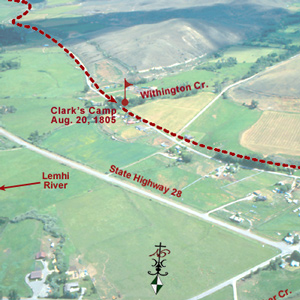
Lewis was still at Camp Fortunate directing the digging of a cache and the making of packs and pack-saddles for the portage across the divide. Meanwhile, Clark and his contingent left to see whether the Salmon River was as bad as Cameahwait had said.
Western Whitetail Deer
Mysterious "longtailed deer"
by Joseph A. Mussulman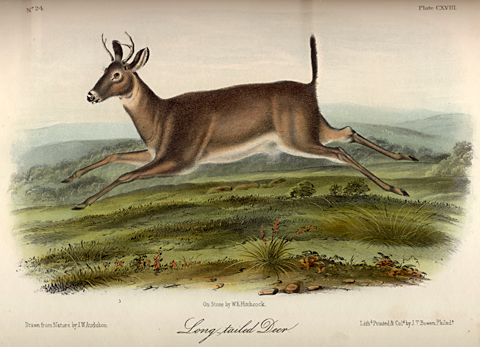
One of the most confusing terms in Lewis and Clark’s lexicon of quadrupeds was the adjective long-tailed—or longtailed. At the Three Forks on 29 July 1805, he compounded the ambiguity.
Caching Supplies
by Joseph A. Mussulman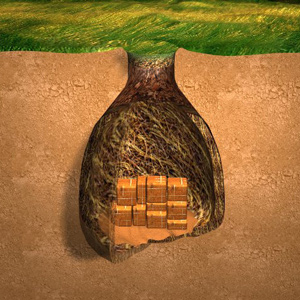
Lewis records the method for hiding and storing goods, which he learned from the French members of the Corps.
Lemhi Pass by Air
Division point
by Joseph A. Mussulman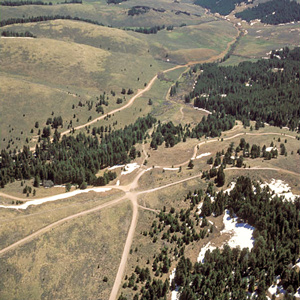
The gravel road winding parallels Trail Creek, which is lined by low willows. It corresponds roughly to the Indian road that Lewis, Drouillard, Shields, and McNeal followed westward from the forks of the Beaverhead River.
Indigenous Forestry
by Joseph A. Mussulman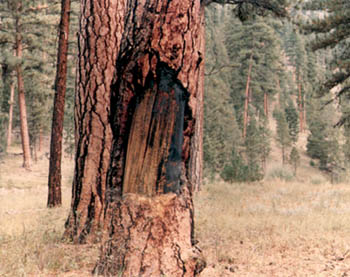
Archaeological evidence indicates that deliberate burning of forests and fields has been occurring on the North American continent for at least the past 10,000 to 20,000 years.
Packer Meadows
"A pretty little plain"
by Joseph A. Mussulman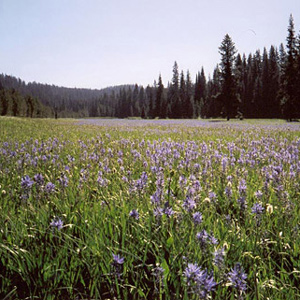
Lewis acknowledged it was “a pretty little plain of about 50 acres plentifully stocked with quawmash” and “one of the principal stages or encampments of the indians”
Bobcats
Lynx rufus fasciatus
by Joseph A. Mussulman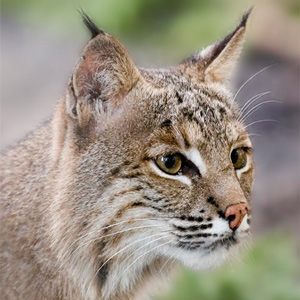
While constructing Fort Clatsop, Clark recorded two significant transactions: “The Indians left us to day after brackfast, haveing Sold us 2 of the robes of a Small animal for which I intend makeing a Capot.”
Sharp-tailed Grouse
Tympanuchus phasianellus
by Joseph A. Mussulman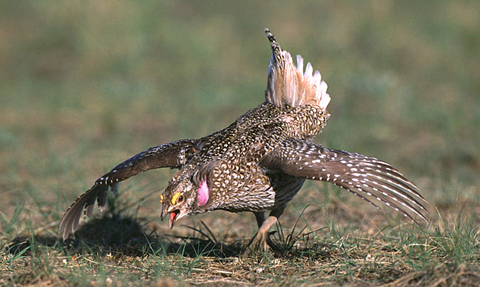
Elliott Coues, whose scientific interest centered on ornithology, in 1893 declared Lewis’s “Grouse or Prarie hen” to be the Oregon ruffed grouse, at that time classified as Bonasa umbellus sabinei (Ord) Coues.
Naming Places
Lewis and Clark's Montanan names
by Joseph A. Mussulman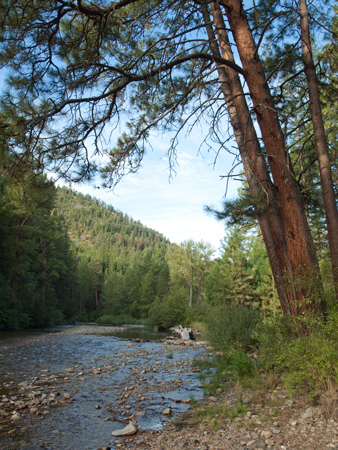
Lewis and Clark’s name “Travelers Rest” was too site-specific to simultaneously function equitably with the creek, the peak, the hot springs, the pass, and all the rest. By the time settlers began moving into the region, the old name was basically meaningless.
Blue Grouse
Dendragapus obscurus
by Joseph A. Mussulman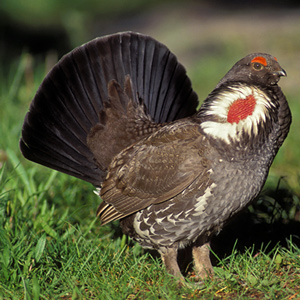
“this bird is fully a third larger than the common phesant of the Atlantic states. it’s form is much the same. it is booted nearly to the toes and the male has not the tufts of long black feathers on the sides of the neck which are so conspicuous in those of the Atlantic.”
Oxbow Bend
Land and water
by Joseph A. Mussulman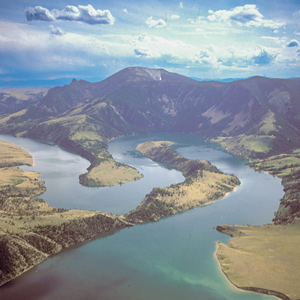
On 19 July 1805, Lewis ‘doubled’ around Oxbow Bend, then 30 feet lower and maybe one-fourth as wide as it is today. Behind the river’s curve, an ancient landmark on the Indian Old North Trail, still stands out.
Decision Point by Air
At the mouth of the Marias
by Joseph A. Mussulman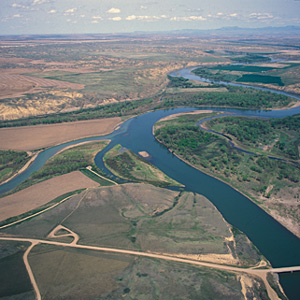
In the late afternoon of Sunday, 2 June 1805, the Corps of Discovery “came too on the Lard. side in a handsome bottom of small cottonwood timber opposite to the entrance of a very considerable river.” They now faced a crucial question: Which river was the Missouri?
Making Leather
by Joseph A. Mussulman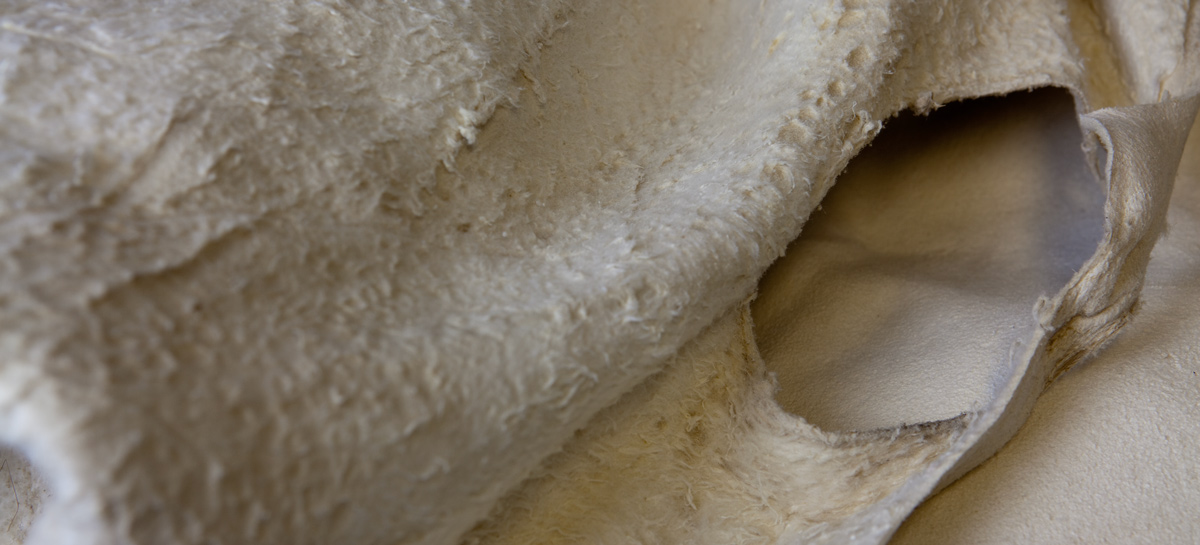
“The men of the garison are still busily employed in dessing Elk’s skins for cloathing.” Regrettably, Lewis was compelled to add that “they find great difficulty for the want of branes [brains].”
Nathaniel Pryor
Sergeant
by Joseph A. Mussulman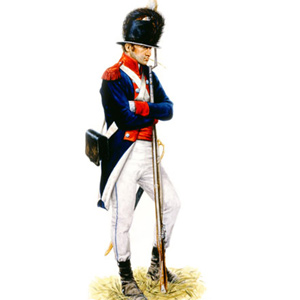
Pryor was assigned several special missions from exploring the Sandy River to escorting Mandan Chiefs to Washington City. He would barely survive his adventures on the Yellowstone River.
The Osage Delegations
by Joseph A. Mussulman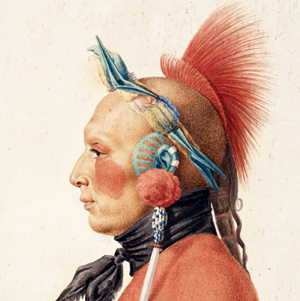
They were “certainly the most gigantic men we have ever seen,” Jefferson wrote on 12 July 1804. A dozen Osage men and two boys had arrived in Washington City the previous day, escorted by Pierre Chouteau.
Little Gate of the Mountain
Lewis's "second grand chain"
by Joseph A. Mussulman, Robert N. Bergantino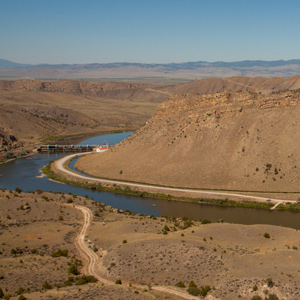
Before arriving at the three forks of the Missouri, Whitehouse wrote that they “passed some rough rockey hills, which we expect from the account we have from the Indian Woman that is with us, to be the commencement of the Second chain of the Rockey Mountains.
Jefferson’s Monticello
Source and paradigm
by Joseph A. Mussulman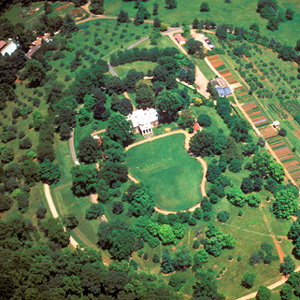
After some eight months of planning and discussion, President Thomas Jefferson handed his twenty-eight-year-old secretary, Captain Meriwether Lewis, a letter containing instructions for the conduct of one of the most significant undertakings in American history.
A Flash Flood
A narrow escape
by Joseph A. Mussulman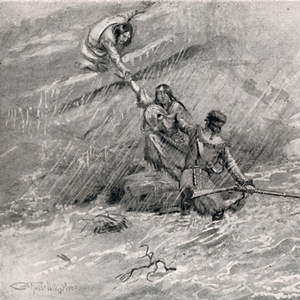
Of all the near-calamities the Corps of Discovery experienced, none was more dire than the one that occurred on 29 June 1805 in a normally dry ravine a short distance above the Great Fall. The principals were Charbonneau, Sacagawea, Jean Baptiste, York, and William Clark.
Columbian Black-Tailed Deer
Odocoileus hemionus columbianus
by Joseph A. Mussulman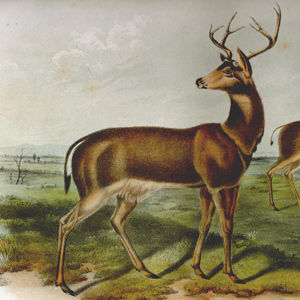
Lewis’s conviction that the “black tailed fallow deer of the coast” and the “common fallow deer” were two distinct species was sufficient to urge later investigators to try to clarify them.
The Shoshone Caparison
Indian horse tack
by Joseph A. Mussulman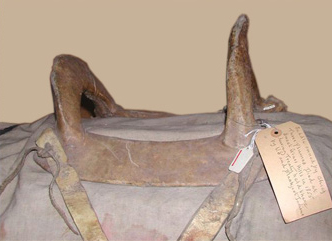
On the day before he left Camp Fortunate for the last time, Lewis described, with typical attention to detail, the usual caparison of the Shoshone Horse”–halter, saddle, and all other trappings.
The Niobrara River
Rushing river
by Joseph A. Mussulman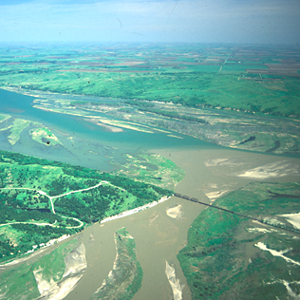
“We hoisted Sail,” wrote Ordway, and “ran verry fast a Short time. Broke our mast.” The party “came to” on the west side of the Niobrara. There the men made a new mast from the trunk of a tall, sturdy red cedar, which apparently lasted at least until they reached the Mandan villages.
Harvesting the Hunt
by Joseph A. Mussulman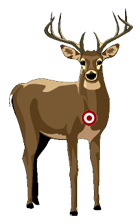
After the animal is shot, the work begins: field dressing, hauling the meat to camp, butchering, and preserving the extra meat for future meals.
Miller Island
River of the falls
by Joseph A. Mussulman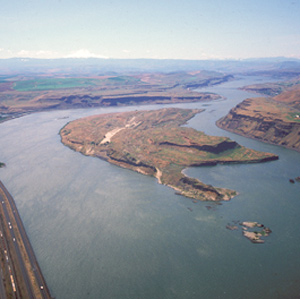
Near the west end of the island, they passed a sizeable tributary local Indians called To war ne hi ooks. The journalists left us no hint that the word they heard as Towarnehiooks was a Chinookan expression meaning “enemies.”
Richardson’s Ground Squirrel
Spermophilus richardsonii
by Joseph A. Mussulman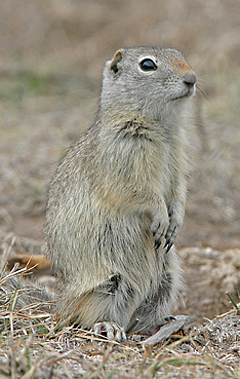
Lewis wrote his brief account of the new species on 25 February 1806: “the small grey squirrel common to every part of the rocky mountain which is timbered, difirs from the dark brown squirrel . . . only in its colour.”
Culbertson, Montana
Abundance
by Joseph A. Mussulman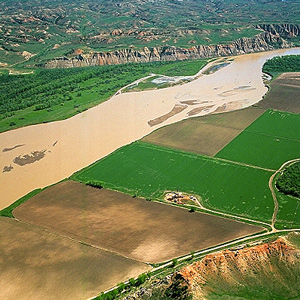
Somewhere in this vicinity, on 29 April 1805, Lewis shot his first grizzly bear and promptly began his detailed study of the fascinating species. Other game was astonishingly abundant, too.
Meeting the Columbia
A welcoming fanfare
by Joseph A. Mussulman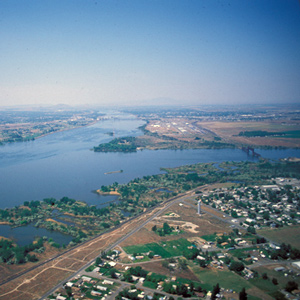
In the afternoon of 16 October 1805, the expedition portaged around “the last bad rapid as the Indians Sign to us”–the last on the Snake River, that is–and soon arrived at the “Great River of the West,” the Columbia.
Promises to Keep
Lewis's threats and promises
by Joseph A. Mussulman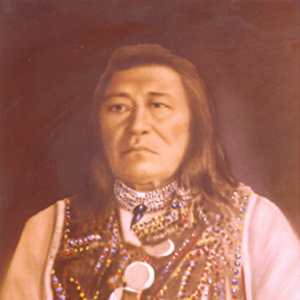
Pretending to have been insulted by their accusation, Lewis pompously declared that “if they continued to think thus meanly of us…they might rely on it that no whitmen would ever come to trade with them or bring them arms and amunition.”
Lithography
"Stone-printing"
by Joseph A. Mussulman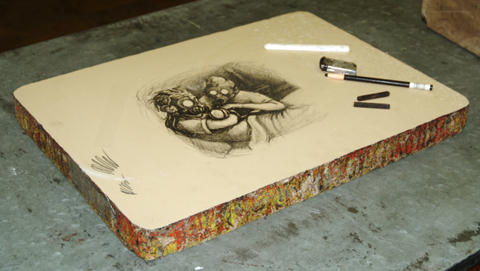
In 1798 a German actor-playwright-turned-printer named Alois Senefelder (1771-1834) discovered the principle of lithography, relying upon simple chemical principles—the mutual repulsion of oil and water, and the mutual attraction of water and salt.
Unaccountable ‘Artillery’ of the Rockies
by Joseph A. Mussulman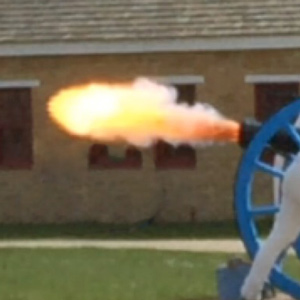
Near the Great Falls, Lewis describes loud noises “resembling precisely the discharge of a piece of ordinance of 6 pounds at the distance of three miles.” Thunder didn’t seem likely as “It was perfectly calm, clear, and not a cloud to be seen.”
Father De Smet’s Arrival
Did they know any Lolos?
by Joseph A. Mussulman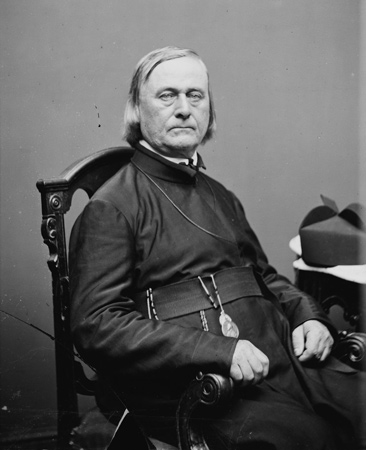
Among the most faithful of the missionaries’ converts to Catholicism was a half-breed trapper named Lolo who was killed by a grizzly bear in November 1850.
Recognizing Divine Providence
Did they pray?
by Joseph A. Mussulman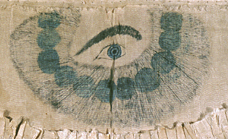
Did they pray? The answer is yes, they did—to invoke the catch-phrase their journalists sometimes used to generalize about the habits of others—”in their way.”
Badgers
Taxidea taxus or brarow
by Joseph A. Mussulman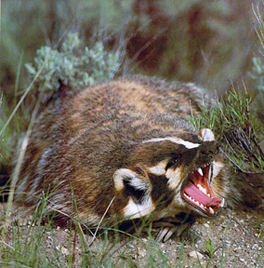
No doubt Lewis was preoccupied with the preservation process, for his entry was shorter. “It is a carniverous anamal . . . . it’s eye are small black and piercing.”
Jerusalem Artichokes
Helianthus tuberosus
by Joseph A. Mussulman, Kristopher K. Townsend
The French explorer Samuel de Champlain found the vegetable growing in Indian gardens along the Saint Lawrence seaway and carried specimens of it back to France in 1603, where its root soon became a staple food for humans.
Return to the Portage
Lewis's hiatus
by Joseph A. Mussulman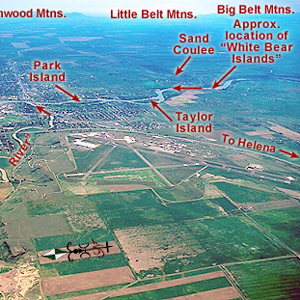
One can almost feel the thrill of wakening to a clear early-summer dawn at this powerful place on the pregnant plains where the Medicine meets the Missouri. Here began a five-day hiatus in Lewis’s master plan for his junket to find the boundary of British-held Canada.
Jerking Meat
Preserving meat without refrigeration
by Joseph A. Mussulman, Kristopher K. Townsend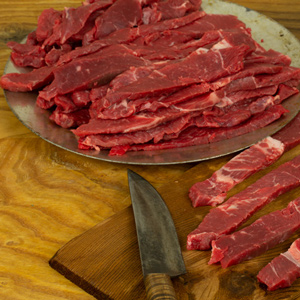
What did the captains mean when they say they stopped to jerk their meat? At the time of the expedition “jerk” simply stood for “dried meat.” This article includes a recipe.
Hunting
by Joseph A. Mussulman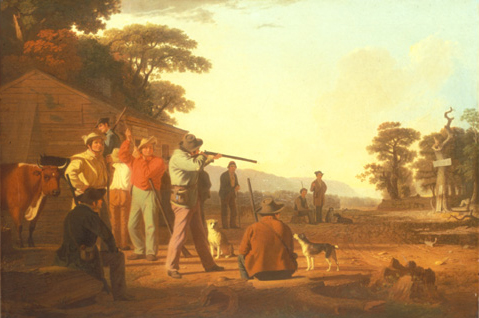
Target shooting contests were an important part of American frontier life from the late 17th century until the end of the 19th. Competition was also an important part of Lewis and Clark’s plans to hone the marksmanship of the Corps’ most promising hunters.
Indian Commissions
Tools of diplomacy
by Joseph A. Mussulman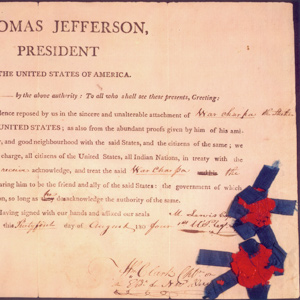
Each peace medal given out was usually accompanied by a commission, also called a parole, which is the French word for promise..
Oregon Grapes
Berberis aquifolium
by Joseph A. Mussulman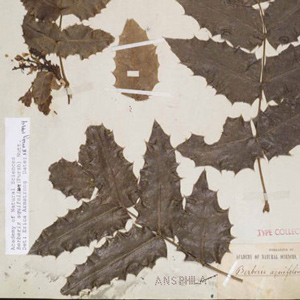
In his journal for 12 February 1806, Lewis described the plant that now goes by the name Berberis aquifolium, which he had first noticed in the vicinity of the Cascades of the Columbia River, about 145 miles from the ocean.
Fiddle Music
Fiddle music on the trail
by Joseph A. Mussulman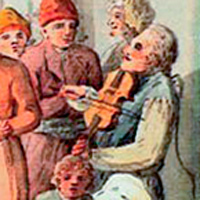
The principal catalyst for their musical diversions was undoubtedly Private Pierre Cruzatte, whose official duty was as a boatman, but who also played the fiddle.
Jefferson City
"Nightengale" song
by Joseph A. Mussulman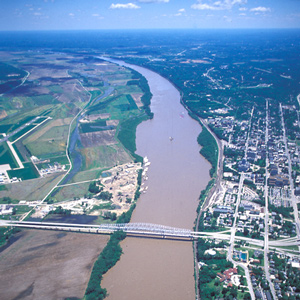
On Sunday, 3 June 1804, the expedition left its camp at the mouth of the Osage River and proceeded five miles upstream to the mouth of the Moreau River. There, Clark wrote, he and George Drouillard, “Saw much sign of war parties of Inds. having Crossed from the mouth of this Creek.”
Columbia River near Blalock
Greatest chief
by Joseph A. Mussulman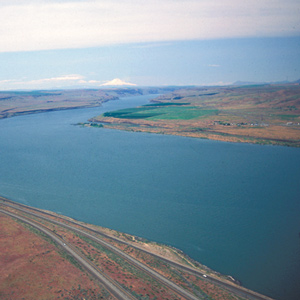
This scene’s most arresting feature is still the “high mountain of emence hight covered with Snow” on the photo’s horizon. Clark mistook it for Mount St. Helens. The Indians called the mountain Pahtoe. Since 1838 it has been known as Mount Adams.
John James Audubon
(1785–1851)
by Doug Erickson, Joseph A. Mussulman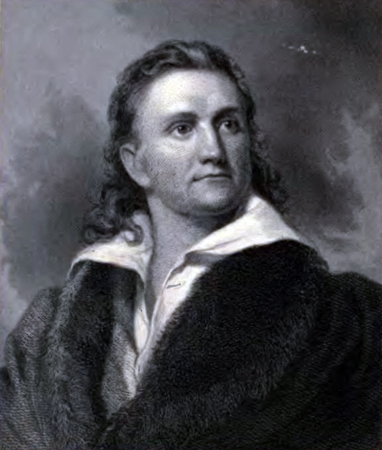
America’s greatest ornithologist, John James Audubon, was just starting his career when Lewis and Clark returned, and there is ample evidence that he drew inspiration from Lewis and Clark’s writings.
Long Beach
Mementos
by Joseph A. Mussulman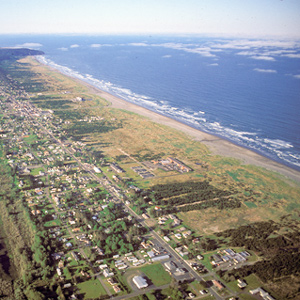
Clark’s party continued north along the beach for four miles, to the vicinity of today’s Long Beach, Washington. Here Clark memorialized their first visit to the Pacific Ocean by marking his name and the date on a small pine tree.
Smoking
Smoking on the expedition
by Joseph A. Mussulman, Kristopher K. Townsend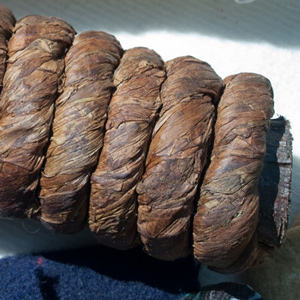
The captains would have to ration their dwindling supplies, and the smokers would have to extend their tobacco with leaves and inner bark from local plants and trees. The captains would also learn the endless variety of ceremonies practiced when sharing a pipe the People they met.
Decision Point
Marias River decision
by Joseph A. Mussulman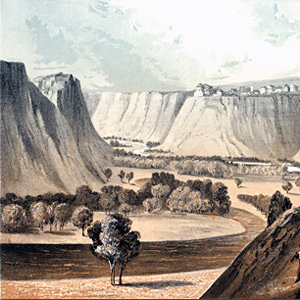
The two captains “strolled out to the top of the hights in the fork of these rivers,” from which they had “an extensive and most inchanting view.”
The Platte River
High road junction
by Joseph A. Mussulman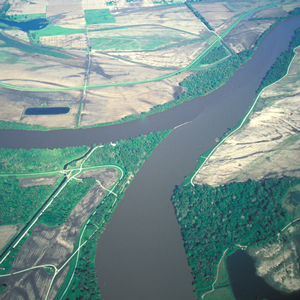
The Corps of Discovery arrived at the mouth of the Platte on 21 July 1804, noting first of all that “the Current of This river Comes with great Velocity roleing its Sands into the Missouri, filling up its Bend….”
Naming Travelers’ Rest
Thinking of South Carolina?
by Joseph A. Mussulman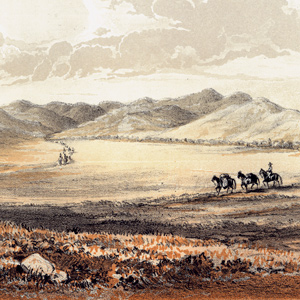
Lewis and Clark and their men camped on 9–10 September 1805 and again on 30 June though 2 July 1806 beside a stream they called “Travelers Rest Creek.” Meriwether Lewis may have seen or sensed a comparison between it and the Travelers Rest in South Carolina.
The Grand Tower
Demons
by Joseph A. Mussulman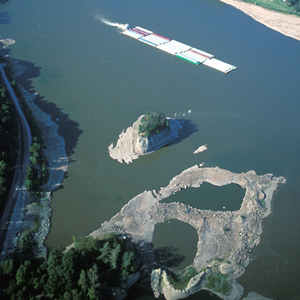
In 1673 French explorers Père Marquette and Louis Joliet listened to local Indians’ warnings about this place and erected a cross atop the ninety-foot-high rock to disempower the demons said to be lurking in the treacherous whirlpool at its base.
Hungery Creek
And a return to Bald Mountain
by Joseph A. Mussulman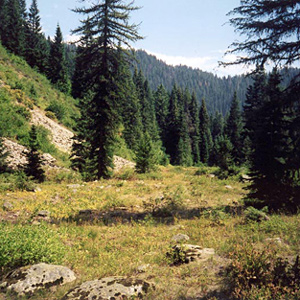
By the evening of 17 September 1805, their seventh sleep west of Travelers’ Rest, it was obvious to the captains that the Indians’ assurance that they could cross the mountains in six days was false, whereas the prediction that they would find no game there was all too true.
Prairie Dogs
Cynomys ludovicianus
by Joseph A. Mussulman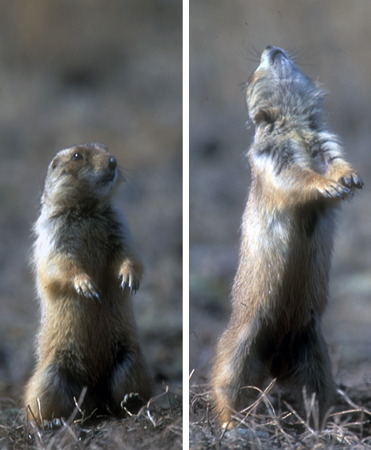
Few of their discoveries seized more interest, even controversy, from the American public. And certainly no others demanded more care than the six live specimens—including one prairie dog—that endured a four-month, 4,000-mile cage-bound odyssey to Washington City.
Experience the Lewis and Clark Trail
The Lewis and Clark Trail Experience—our sister site at lewisandclark.travel—connects the world to people and places on the Lewis and Clark Trail.
Discover More
- The Lewis and Clark Expedition: Day by Day by Gary E. Moulton (University of Nebraska Press, 2018). The story in prose, 14 May 1804–23 September 1806.
- The Lewis and Clark Journals: An American Epic of Discovery (abridged) by Gary E. Moulton (University of Nebraska Press, 2003). Selected journal excerpts, 14 May 1804–23 September 1806.
- The Lewis and Clark Journals. by Gary E. Moulton (University of Nebraska Press, 1983–2001). The complete story in 13 volumes.
This site is provided as a public service by the
Lewis and Clark Trail Alliance
with additional funding from the following: