The French, Sioux, Hidatsa, Omaha, Caddoan, and Shoshone languages were all needed to communicate with the many peoples between St. Louis and the Pacific. At times, long translation chains involving several interpreters were used. When all else failed, Plains Sign Language was used.
Pierre Dorion, Sr.
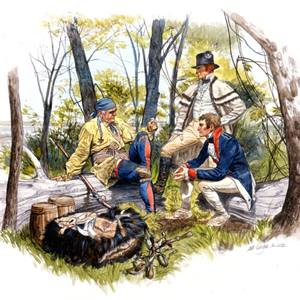
Dorion had previously lived with the Yankton Sioux for twenty years, and he proved to be a gifted interpreter and knowledgeable diplomat. The captains commissioned him achieve their objectives for the Yankton Sioux.
Toussaint Charbonneau
Interpreter
by Barbara Fifer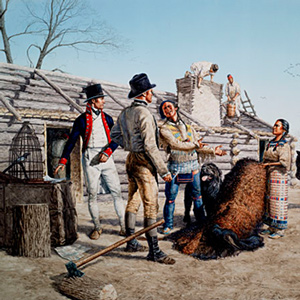
The fur trade had put Charbonneau in place to meet the captains and join their expedition. He was the oldest expedition member would outlive most of his fellows as he followed the rigorous life of a fur trader, guide, and interpreter.
François Labiche
Private
by Robert E. Gatten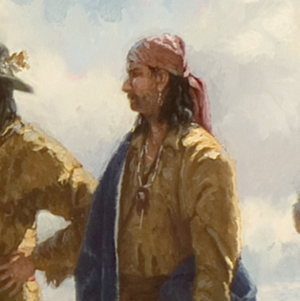
Labiche performed all the regular duties of an army private, but also performed well as a French and English interpreter. He would continue serving as an escort with Lewis for Chief Sheheke’s delegation to Washington City.
George Drouillard
Hunter and interpreter
by Barbara Fifer, Joseph A. Mussulman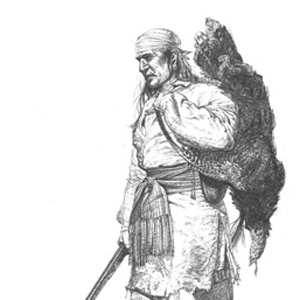
Drouillard was one of the captains’ three most valuable hands. He was also the highest paid member after the captains, he shared the Charbonneaus’ tent with the family and the captains, and he was the only man Clark seemed to call by first name in the journals.
Pierre Cruzatte
Private
by Barbara Fifer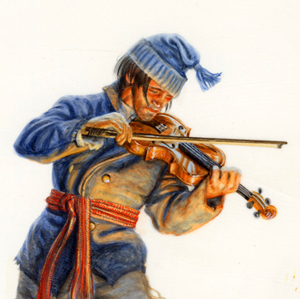
Cruzatte’s skills in piloting boats were called on frequently during the expedition. As the main fiddle player, his music brought life to many a celebration. In addition, he could speak Omaha.
Joseph Gravelines
by Clay S. Jenkinson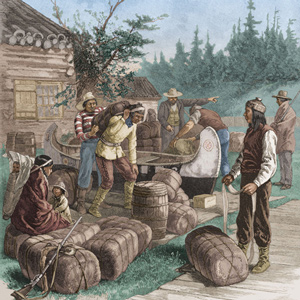
The Arikara-resident trader and interpreter Gravelines proved to be so reliable and so good at the immediate tasks put to him that long after the Lewis and Clark Expedition he was employed by the United States government to represent its interests among the Arikara.
Nicholas Jarrot
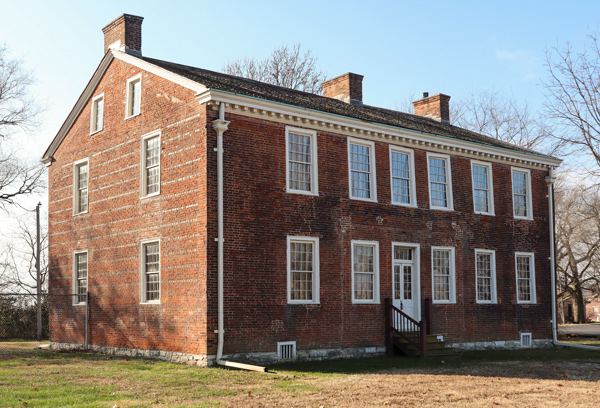
Meriwether Lewis met Nicholas Jarrot in Cahokia on 7 December 1803. The next day, he and Cahokia postmaster John Hay served as translators when Lewis met the Spanish Governor of Upper Louisiana, Carlos Dehault Delassus.
Sacagawea
Interpreter
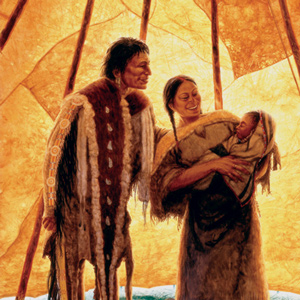
Speaking Hidatsa and Shoshone, she was an interpreter beyond value yet never on the payroll. Still, Sacagawea remains the third most famous member of the Lewis and Clark Expedition.
René Jusseaume
One the many traders encountered at the Knife River villages, free trader René Jusseaume offered his services as an interpreter. He also accompanied Sheheke’s delegation to Washington City and thus traveled with the expedition on the final leg between the Knife River Indian Villages and St. Louis.
John Hay
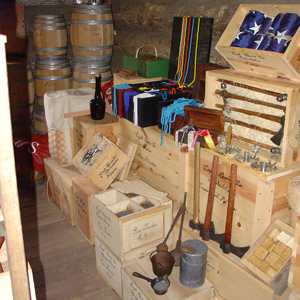
With his considerable experience with Native American Nations and the Missouri-Mississippi fur trade, John Hay provided the captains significant information and advice.
Experience the Lewis and Clark Trail
The Lewis and Clark Trail Experience—our sister site at lewisandclark.travel—connects the world to people and places on the Lewis and Clark Trail.
Discover More
- The Lewis and Clark Expedition: Day by Day by Gary E. Moulton (University of Nebraska Press, 2018). The story in prose, 14 May 1804–23 September 1806.
- The Lewis and Clark Journals: An American Epic of Discovery (abridged) by Gary E. Moulton (University of Nebraska Press, 2003). Selected journal excerpts, 14 May 1804–23 September 1806.
- The Lewis and Clark Journals. by Gary E. Moulton (University of Nebraska Press, 1983–2001). The complete story in 13 volumes.
This site is provided as a public service by the
Lewis and Clark Trail Alliance
with additional funding from the following: