Joseph Mussulman

Marc A. Hefty photo.
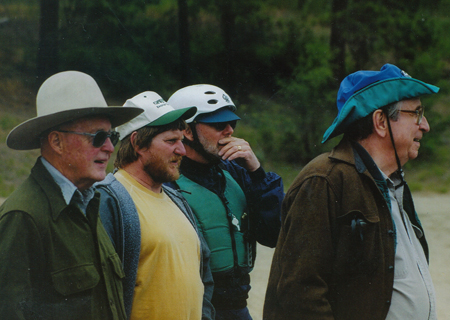
Photo by Bill Bevis.
Left to right: Two concerned dugout canoe owners, one concerned expert paddler, and Joe grinning with delight
Joseph A. Mussulman (1928–2017) was the founding producer, editor and writer for Discovering Lewis & Clark. After five years of preparation and experimentation the website went online in 1998, under the auspices of a non-profit entity called VIAs Inc., and funded by grants from various sources, especially–throughout the bicentennial observance from 2003 to 2006–the Challenge Cost Share Program of the National Park Service. In 2009 the site was taken over by the Lewis & Clark Fort Mandan Foundation of Washburn, North Dakota.
Dr. Mussulman earned his bachelor’s and master’s degrees in music history and literature at Northwestern University in 1950 and 1951. As a Danforth Scholar he earned a doctorate in humanities from Syracuse University in 1967.
He has written and produced a number of interpretive programs in collaboration with audio specialist Richard H. Kuschel, also of Missoula Montana. In 1986, he wrote, narrated, and co-produced a multimedia presentation for the Blaine County Museum (MT) titled Forty Miles from Freedom, about the Non-Treaty Nez Perce Indians’ final battle with the U.S. Army, at the Bear Paw Mountains in 1877. In 2012-13 Mussulman and Kuschel revised the 20-minute onsite production and updated it in High Definition video. In 1994 their interactive self-guided audio-CD tour of Yellowstone National Park, a five-hour program produced for Tour Technologies, Inc., received first prize in the category of media productions from the National Association for Interpretation. Their Two Days to Destiny, an audio interpretive tour of the Little Bighorn Battlefield, won first place from the NAI in 1995.
Mussulman is the author of five articles on Lewis and Clark that appeared in We Proceeded On, the official journal of the Lewis and Clark Trail Heritage Foundation, Inc.: “My Boy Pomp’: About That Name,” Vol. 21, No. 2 (May 1995); “Soundscapes: The Sonic Dimensions of the Lewis and Clark Expedition,” Vol. 21, No. 4 (November 1995); “Men in High Spirits: Humor on the Lewis and Clark Trail,” Vol.22, No. 2 (May 1996); “‘In Greatest Harmoney’: ‘Meddicine Songs’ on the Lewis and Clark Trail,” Vol. 23, No. 4 (November 1997); and “Pomp’s bier was a bar,” Vol. 27, No. 1 (February 2001).
Dr. Mussulman has designed and produced maps for various books, brochures and study guides about Lewis and Clark, including 58 full-color maps illustrating the expedition’s entire route from coast to coast for the travelers’ guide, Along the Trail with Lewis and Clark, by Barbara Fifer and Vicky Soderberg (2nd ed., Helena: Montana Magazine, 2001). Those maps also appeared in the same publisher’s annual Lewis and Clark Travel Planner and Guide. They may be seen in Discovering Lewis & Clark at Discovering Lewis & Clark from the Air. In 1998, he created a poster illustrating the trail from Washington, D.C. to the Pacific, for Farcountry Press.
His other publications include a biography, Dear People . . . Robert Shaw (Indiana University Press,1979; reprint, Chapel Hill, NC: Hinshaw Music, 1996), and Music in the Cultured Generation (Evanston: Northwestern University Press, 1974). From 1987 through 1998 he was the interpretive writer and designer of Montana Afloat, a series of sixteen maps of Montana’s major floatable rivers.
Dr. Mussulman was a 1999 recipient of a Montana Governor’s Arts Award. Several years later he received an award of meritorious achievement from the Lewis and Clark Trail Heritage Foundation “for outstanding contributions in bring to this nation a greater awareness and appreciation of the Lewis and Clark expedition.” In 2005, he received the Montana Governor’s Humanities Award.
Contributions to this Site
Long Camp
Five weeks with the "Chopunnish"
by Joseph A. Mussulman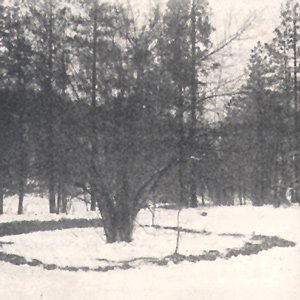
Upon its return from the Pacific coast in the spring of 1806, the expedition camped on the Clearwater River near present-day Kamiah from 14 May 1806 until 10 June 1806, waiting for the snow to melt on the crest of the Bitterroot Mountains.
Gates of the Mountains by Air
"Gloomy aspect"
by Joseph A. Mussulman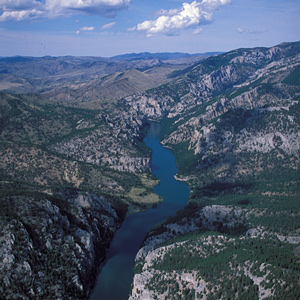
“The river appears to have forced it’s way through this immence body of solid rock for the distance of 5-3/4 miles,” Lewis observed.
The Clearwater Canoe Camp
by Joseph A. Mussulman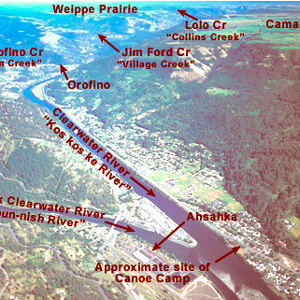
Still sick and exhausted from their recent crossing of the Bitterroot Mountains, Lewis, Clark, and their crew arrived on 26 September 1805, at what they called Canoe Camp, on the Clearwater River.
Arrival at the Pacific
Exploring Long Beach
by Joseph A. Mussulman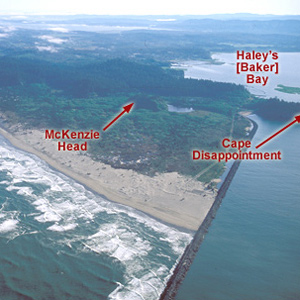
Clark was pleased that his men appeared “much Satisfied with their trip beholding with estonishment the high waves dashing against the rocks & this emence ocean.”
The Dearborn River Crossing
Along the Old North Trail
by Joseph A. Mussulman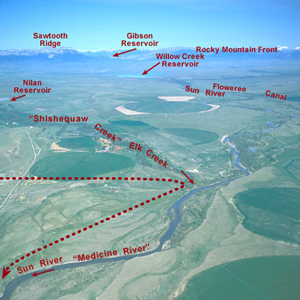
Shortly after crossing the Dearborn River, Lewis saw that the Indian road “continued along the foot of the mountain to the West of north” so he and his men cut northeast across the “tolerably level” plain toward the Sun River.
Leaving the Lemhi Valley
Detour at Tower Creek
by Joseph A. Mussulman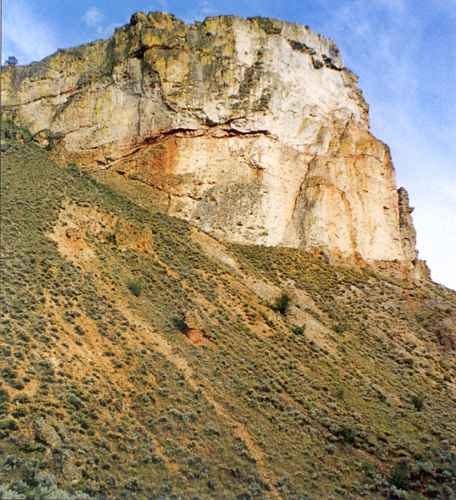
The Salmon winds tortuously through a seven-mile-long canyon where the vertical walls at that time crowded the riverbanks so tightly in several places that Clark and his party were compelled to clamber over “four mountains verry Steap high & rockey.”
American White Pelican
Pelecanus erythrorhynchos
by Joseph A. Mussulman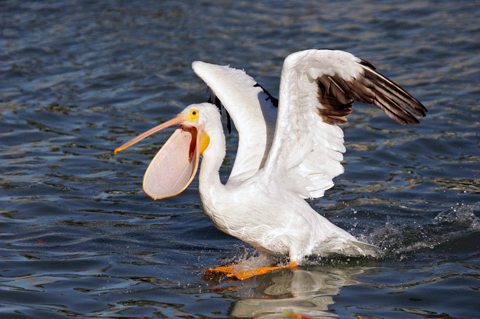
After killing one in flight, Lewis outlined the pelican’s habits of migration and reproduction, possibly relying on one of the reference books he had with him.
Kirwan’s Elements of Mineralogy
The captain's field guide
by David D. Alt, Joseph A. Mussulman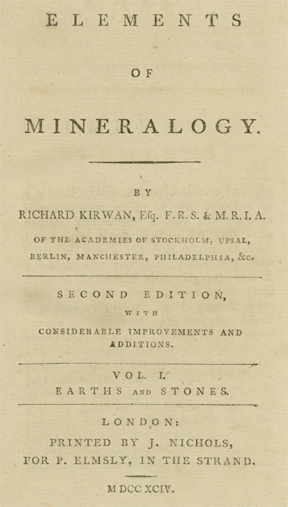
As a reference, Lewis purchased the second edition (1784) of Richard Kirwan’s Elements of Mineralogy. Although Lewis and Clark had the book at hand throughout the expedition, its usefulness as a field guide was limited.
Friedrich Wilhelm von Steuben (1730–1794)
Early American Army trainer
by Joseph A. Mussulman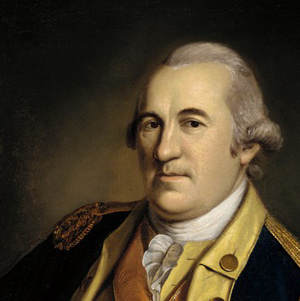
Until he presented his services to General Washington at Valley Forge, the Continental Army still consisted merely of a number of state-sponsored militias that were entirely independent of one another, each operating according to its own rules and regulations.
The Sun River by Air
"Curious adventures"
by Joseph A. Mussulman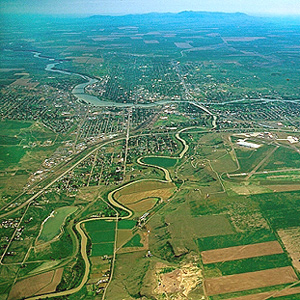
The day’s “succession of curious adventures wore the impression on my mind of inchantment,” he mused. “It now seemed to me that all the beasts of the neighbourhood had made a league to distroy me.”
The Dalles
Through the Narrows
by Joseph A. Mussulman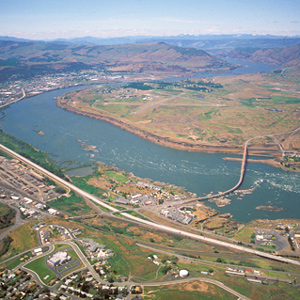
There really was no need for him to have been on the defensive. Pierre Cruzatte cast a spell over the assembled Indians with his fiddle, which was much more effective than any pompous diplomatic talk.
The Great Fall by Air
"Sublimely Grand"
by Joseph A. Mussulman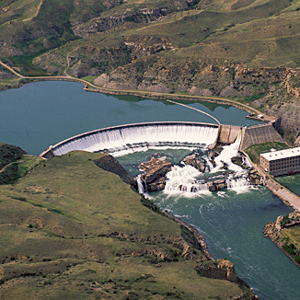
Shortly before noon on the 13 June 1805, Lewis’s ears “were saluted with the agreeable sound of a fall of water,” which “soon began to make a roaring too tremendious to be mistaken for any cause short of the great falls of the Missouri.”
The Salmon River
A river of no return
by Joseph A. Mussulman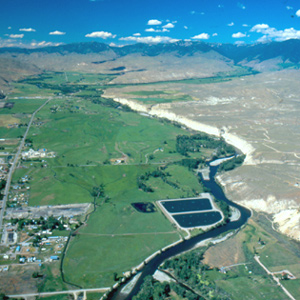
On the 23 August 1805, the centuries-old fantasy of a “water route across the continent for the purposes of commerce” dissolved in the roar of an unimaginable torrent–one of the most dangerous, unforgiving rivers in North America, that would later be called “The River of No Return.”
George Drouillard
Hunter and interpreter
by Barbara Fifer, Joseph A. Mussulman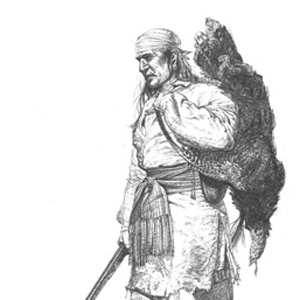
Drouillard was one of the captains’ three most valuable hands. He was also the highest paid member after the captains, he shared the Charbonneaus’ tent with the family and the captains, and he was the only man Clark seemed to call by first name in the journals.
The Jefferson Canyon
The fourth mountain gate
by Joseph A. Mussulman, Robert N. Bergantino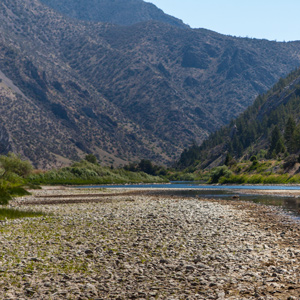
On 1 August 1805, Clark and the expedition’s flotilla of eight dugout canoes pushed up the Jefferson River through “a verrey high mountain which jutted its tremendious Clifts on either Side for 9 Miles, the rocks ragide.” They emerged into a “wide exte[n]sive vallie.”
The Salt Works by Air
Seaside, Oregon
by Joseph A. Mussulman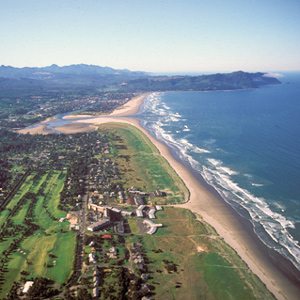
Here they built an oven of stones and, day and night for a month and a half, scooped perhaps 1,400 gallons of water from the surf, boiling it down to about twenty-eight gallons of salt.
The Manual of Arms
Basic maneuvers for every soldier
by Joseph A. Mussulman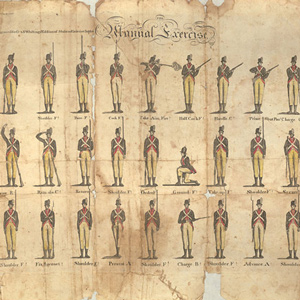
The first major objective of basic training was mastery of the “Manual Exercise,” or manual of arms. It involved 27 commands from the sergeant, calling for 56 motions by the recruit. The single command, “Prime and Load,” involved fifteen motions.
The Jefferson River
Third gap
by Joseph A. Mussulman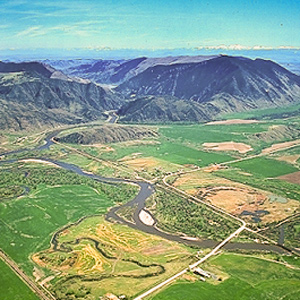
On the first of August 1805, Clark and the expedition’s flotilla of eight dugout canoes pushed up the Jefferson River through “a verrey high mountain which jutted its tremendious Clifts on either Side for 9 Miles, the rocks ragide.”
Walnut Street Prison and A.M.E. Church
Ironic juxtaposition
by Charles F. Reed, Joseph A. Mussulman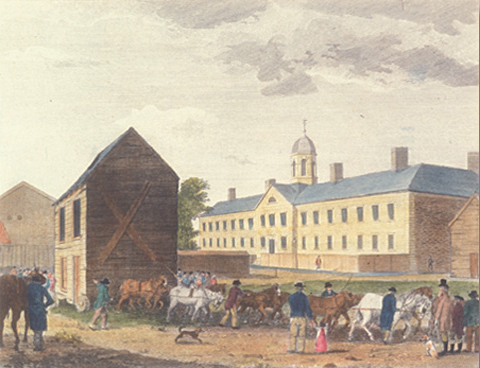
The irony inherent in the juxtaposition of the A.M.E. Church’s prime sanctuary as a symbol of fellowship and hope, with the Walnut Street Gaol (jail) as a place of isolation and despair, would not have been lost on any black person or white abolitionist.
Lignite
'Strater of carbonated wood'
by Joseph A. Mussulman, Robert N. Bergantino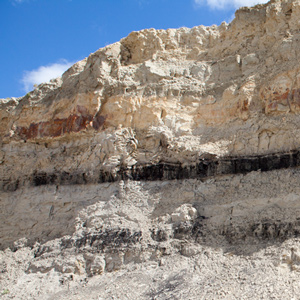
Lewis and Clark sometimes called this coal “carbonated wood” because sometimes they could see the outlines of woody stems and other plant remains. Coal geologists call it lignite, but Lewis and Clark were essentially correct in their description.
Glacier Lilies
Erythronium grandiflorum
by Joseph A. Mussulman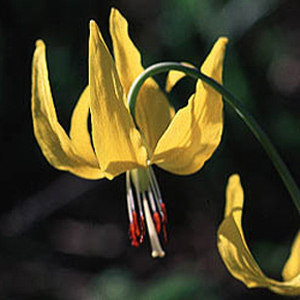
Because it appears in the Rockies at the edges of receding snowbanks it has also earned the name glacier lily. Lewis’s specimen, collected 15 June 1806 on the Clearwater River, was the one used by Pursh to describe the species.
Illnesses at Fort Clatsop
by Joseph A. Mussulman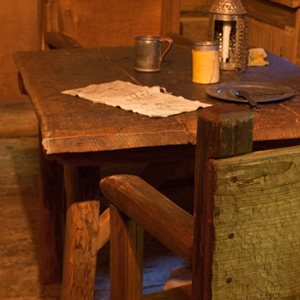
The rainy weather, monotonous diet, and crisis over the lack of basic materials to carry out a routine tanning of hides for clothes must have eroded their mental and physical health.
Blowflies
Calliphora sp.
by Joseph A. Mussulman
On 20 May 1805, the captains named a certain watercourse Blowing Fly Creek, “from the immence quantities of those insects found in this neighbourhood.” As Lewis explained, “they infest our meat while roasting or boiling, and we are obliged to brush them off our provision as we eat.”
Badgers
Taxidea taxus or brarow
by Joseph A. Mussulman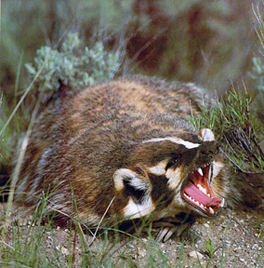
No doubt Lewis was preoccupied with the preservation process, for his entry was shorter. “It is a carniverous anamal . . . . it’s eye are small black and piercing.”
The Lochsa River
Packer Meadows to Colt Killed Creek
by Joseph A. Mussulman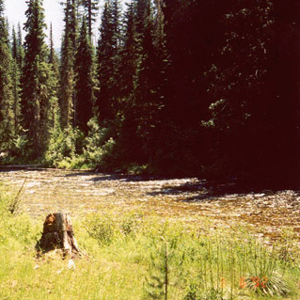
Snow was falling in the high country above them on the morning of 14 September 1805 when, after striking camp two miles downstream from Packer Meadows, the Corps slogged down the Glade Creek canyon through rain and sleet.
The Lemhi Valley
Hospitable people
by Joseph A. Mussulman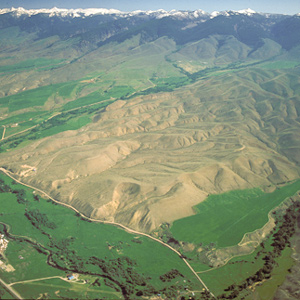
Lewis and his four companions crossed over the dividing ridge on the west side of the upper Missouri River basin and the Columbia drainage, then descended a dusty, well-traveled Indian road for some miles down into a “handsome little valley” among the sources of the Columbia River basin.
Bad ‘humered’ Island
Change of heart
by Joseph A. Mussulman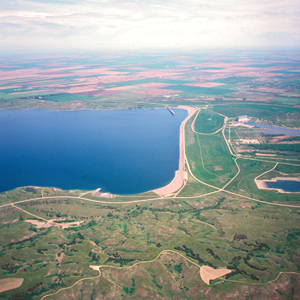
On the evening of 25 September 1804 after a negative encounter with the Lakota Sioux, the Corps camped on a nearby island Clark called “bad humered Island.” The next morning, the Indians had a change of heart.
Early American Flags
by Joseph A. Mussulman
Lewis’s long list of needs for the journey would have been a large supply of American flags, to be flown on their boats, over their camps, and at their council sites. Leading up to the Lewis and Clark expedition, what did the young country’s flags look like?
Uniforms
by Joseph A. Mussulman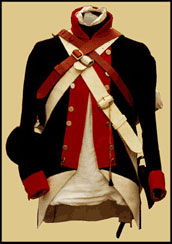
Each enlisted man, as well as the Captains, brought with them their dress uniforms which was worn for formal, official occasions such as dress reviews and parades, courts-martial, and funerals.
Wheeler’s Railroad Promotions
The Lewis and Clark Centennial
by Barbara Fifer, Joseph A. Mussulman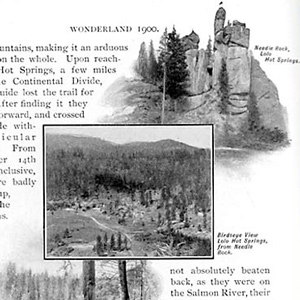
The Northern Pacific Railway had identified two new attractions within its Wonderland—a centennial commemoration of the historic Lewis and Clark expedition, plus extensive segments of the original trail within sight of its rails.
Floyd’s Monument by Air
"Much Lamented"
by Joseph A. Mussulman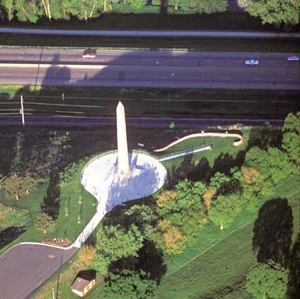
On 20 August 1804, the Corps proceeded thirteen miles, while young Floyd quickly grew worse. A little past noon they landed, and presently Floyd said, “I am going away.”
Columbia River Explorers
Hecata, Gray, and Vancouver
by Joseph A. Mussulman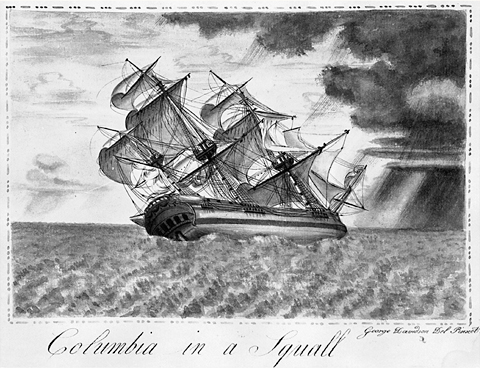
The Corps of Discovery was but one of a great number of expeditions by land and sea made between 1770 and 1870 across the North American continent in search of a Northwest Passage. Lewis knew much about the mouth of the Columbia River.
Lewis’s Five Firs
by James L. Reveal, Joseph A. Mussulman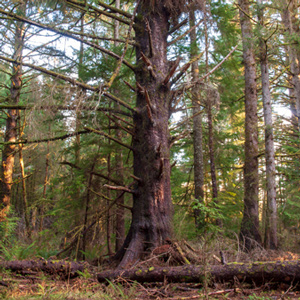
Lewis describes one of the richest resources of the Pacific northwest coast: Sitka spruce, western hemlock, grand fir, perhaps the Pacific silver fir, and Douglas-fir.
Ecola
Whale tale
by Joseph A. Mussulman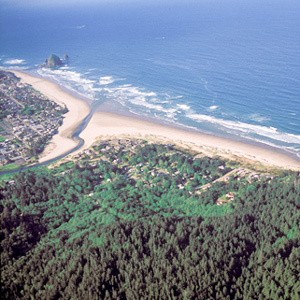
By the time Clark and his party got to present-day Cannon Beach, Oregon, on 8 January 1806, the locals had picked the dead whale’s 105-foot-long carcass clean.
The Bears Tooth
Key landmark on the Old North Trail
by Joseph A. Mussulman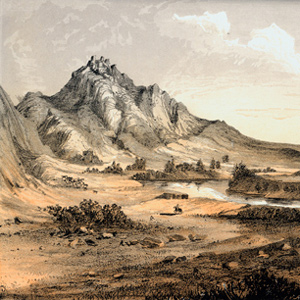
The Bears Tooth was an important landmark on the the ancient Indian road that has come to be known as the Old North Trail. It was included on Nicholas King’s 1804 map, and the captains expected to find it.
Engraving
Mass producing art
by Joseph A. Mussulman, William Gadradt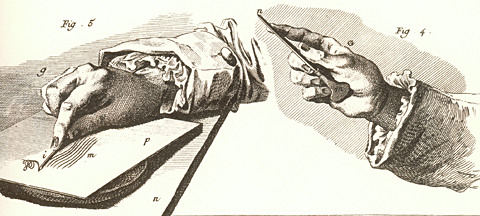
The printing of pictures employed a 350-year-old technology based on a process called intaglio—from an Italian word meaning to “cut in”—in which lines and dots were incised into a metal sheet called a plate.
Lewis’s Three Wishes
Pencil, pen, and camera obscura
by Joseph A. Mussulman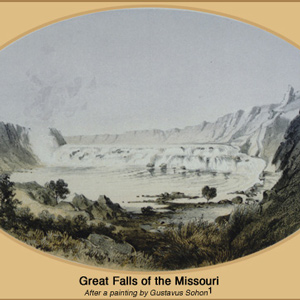
“I wished for the pencil of Salvator Rosa, or the pen of Thompson, that I might be enabled to give to the enlightened world some just idea of this truly magnifficent and sublimely grand object, which has from the commencement of time been concealed from the view of civilized man”
Western Meadowlark
Sturnella neglecta
by Joseph A. Mussulman
The species remained nameless until John James Audubon dubbed it neglecta because, he wrote in 1840, although “the existence of this species was known to the celebrated explorers of the west, Lewis and Clark . . . no one has since taken the least notice of it.”
The Mouth of the Ohio
Meeting of the waters
by Joseph A. Mussulman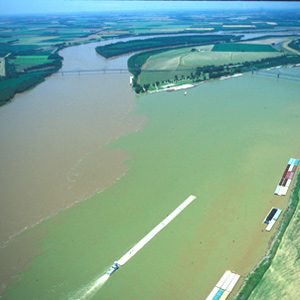
On the evening of 14 November 1803, Lewis and Clark camped on the point between the Ohio and Mississippi Rivers. By now they had rowed, poled, dragged, and occasionally sailed their boats a total of 981 miles.
Wild Horses
by Joseph A. Mussulman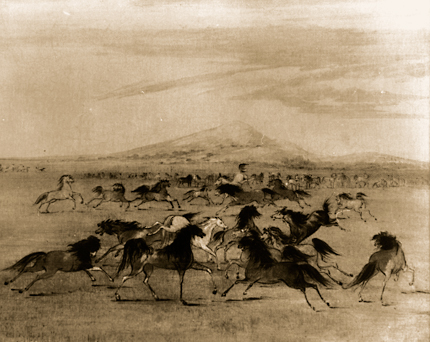
On 14 August 1805, Meriwether Lewis commented on the Shoshones’ herds: “Most of them are fine horses…. I saw several with Spanish brands on them, and some mules which they informed me that they had also obtained from the Spaniards.”
The Marias River Risk
"Of highest national importance"
by Joseph A. Mussulman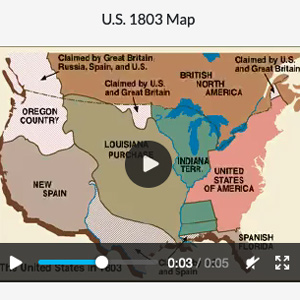
Why was it so important that Meriwether Lewis was willing to risk his life in a region occupied by the “Pahkees” or Minnetares, the Assiniboines, and other people whom he had been led—by their enemies, of course—to believe were “vicious and illy disposed”?
End of the Enlightenment
Anti calomel and the "genteel tradition"
by Joseph A. Mussulman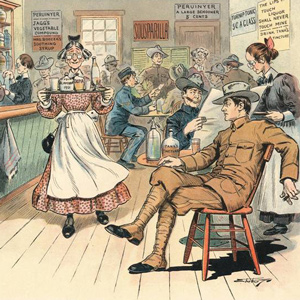
No more calomel! Not just an anthem, a reflection on the transition from the “Age of Enlightenment” to the “genteel tradition.”
A Bold Diplomatic Plan
The need for five separate details
by Joseph A. Mussulman
There was no Northwest Passage by water; and the portage they found took much longer than a day. The political repercussions from that alone could be immensely embarrassing to Jefferson. Something had to be done….
The Newfoundland Dog
Seaman's breed
by Joseph A. Mussulman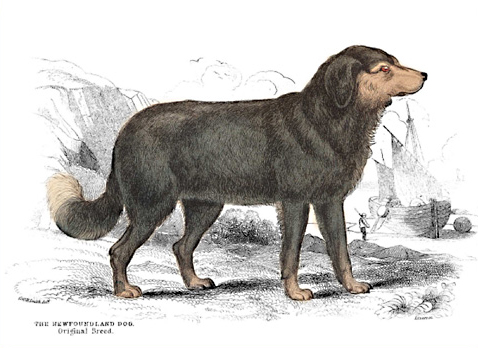
The original Newfoundland was smaller, the body more slender, forehead more arched, the muzzle sharper, and “nearly all of a totally black colour, excepting a bright rust coloured spot above each eye.”
The Bitterroots by Air
"Tremendious Mountanes"
by Joseph A. Mussulman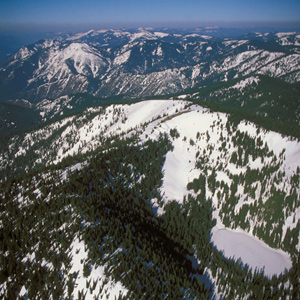
“I have been wet and as cold in every part as I ever was in my life,” Clark complained. “Indeed I was at one time fearfull my feet would freeze in the thin mockersons which I wore.”
Clark’s Fort Mandan Maps
by Joseph A. Mussulman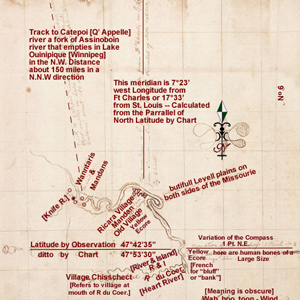
While wintering over at Fort Mandan, Clark made a series of maps based on Indian information and previous traders such as John Evans and François Larocque.
The Articles of War
Rules for soldiers
by Joseph A. MussulmanThe expedition’s enlisted men were obliged to comply with the basic military rules and regulations contained in two distinct official documents that had been written in the initial heat of the Revolutionary War.
Naming Travelers’ Rest
Thinking of South Carolina?
by Joseph A. Mussulman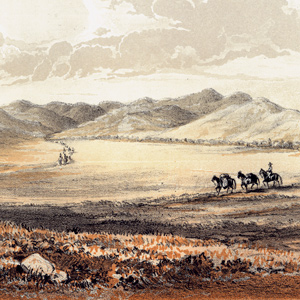
Lewis and Clark and their men camped on 9–10 September 1805 and again on 30 June though 2 July 1806 beside a stream they called “Travelers Rest Creek.” Meriwether Lewis may have seen or sensed a comparison between it and the Travelers Rest in South Carolina.
Peace Medals
Tools of diplomacy and trade
by Joseph A. Mussulman, Kristopher K. Townsend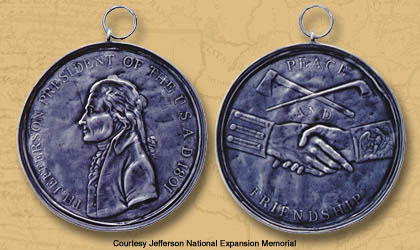
One of the tasks assigned to the expedition was to replace the French, Spanish, and English peace medals previously gifted to North American Indians with those from the United States. The gifts symbolized mutual loyalty in trade and, at least to the Indians, military protection.
Caching Supplies
by Joseph A. Mussulman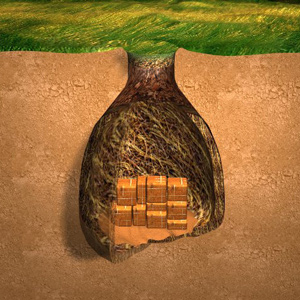
Lewis records the method for hiding and storing goods, which he learned from the French members of the Corps.
Experience the Lewis and Clark Trail
The Lewis and Clark Trail Experience—our sister site at lewisandclark.travel—connects the world to people and places on the Lewis and Clark Trail.
Discover More
- The Lewis and Clark Expedition: Day by Day by Gary E. Moulton (University of Nebraska Press, 2018). The story in prose, 14 May 1804–23 September 1806.
- The Lewis and Clark Journals: An American Epic of Discovery (abridged) by Gary E. Moulton (University of Nebraska Press, 2003). Selected journal excerpts, 14 May 1804–23 September 1806.
- The Lewis and Clark Journals. by Gary E. Moulton (University of Nebraska Press, 1983–2001). The complete story in 13 volumes.
This site is provided as a public service by the
Lewis and Clark Trail Alliance
with additional funding from the following: