Historical artist Roger Cooke worked with the Washington State Historical Society to recreate several Lewis and Clark scenes of their trek in Washington and Oregon. His art is featured on many interpretive signs at waysides throughout this area of the historic trail. A compendium of his illustrations, along with text by history professor Robert Carriker, is Ocian in View! O! the Joy: Lewis & Clark in Washington State, Washington State Historical Society, 2005. Of Cooke’s Lewis and Clark illustrations, historian David Nicandri wrote:
. . . aside from the obvious technical skill Roger employed in creating this oeuvre, is that the Snake and Columbia River segments of the Lewis and Clark trail have down through history been strangely underinterpreted by artists . . . . Now we know better and, really for the first time, have visual insights into what various episodes of Lewis and Clark in Washington may have looked like.
Cooke’s works bring people to the forefront of the Lewis and Clark story. His illustrations feature not just the expedition members but Nez Perce, Palouse, Yakama, Wanapum, Walla Walla, Umatilla, Tenino, Wishram, and various Upper and Lower Chinook Peoples. He displays a full spectrum of emotions—even smiling Indians—and multi-generational families near their villages. These are stories that modern cameras and digital editing cannot capture.
Many historians and agencies have assisted Roger to render historical accuracy including the Washington State Historical Society, Washington State Lewis and Clark Trail Advisory Committee, and the Lewis and Clark Trail Alliance (then the Lewis and Clark Trail Heritage Foundation).
Featured Works
June 20, 1803
Jefferson's instructions
by Kristopher K. Townsend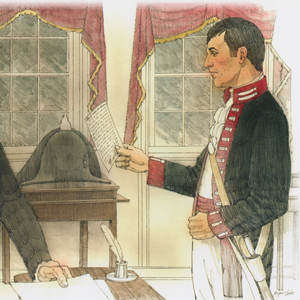
In Washington City, the final draft of President Jefferson’s instructions for the Western Expedition is complete. His directives include geography, ethnography, diplomacy, commerce, natural history, vaccinations, and safety. He also promises open letters of credit to use as needed.
October 12, 1805
Snake River rapids
by Kristopher K. Townsend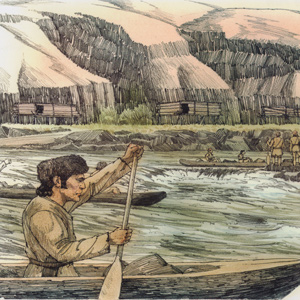
The paddlers make about thirty miles down the Snake River in present Washington. Sgt. Gass describes the Palouse villages they pass, and they have difficulty finding firewood.
October 14, 1805
'Ship Rock'
by Kristopher K. Townsend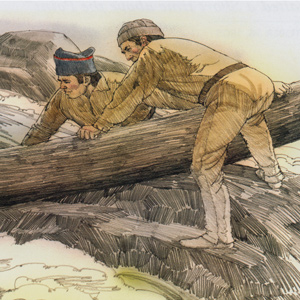
After passing a ‘ship rock’—Monumental Rock on the Snake River in Washington—Sgt. Ordway‘s canoe gets stuck on a rock and fills with water. They stop for the day and begin drying wet items.
October 17, 1805
Snake and Columbia observations
by Kristopher K. Townsend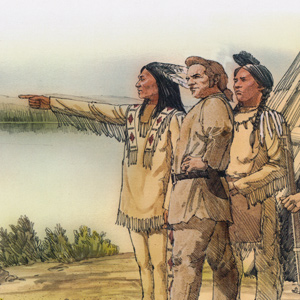
At the confluence of the Columbia and Snake rivers, Lewis takes a Wanapum vocabulary, and hunters are sent out to collect sage grouse specimens. Clark explores the Yakima River.
October 19, 1805
Frightened Umatillas
by Kristopher K. Townsend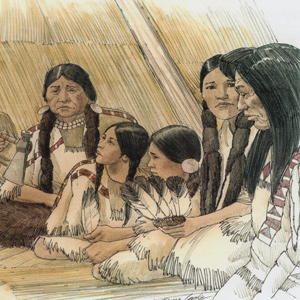
After passing Hat Rock in the Wallula Gap, Clark frightens several Umatillas who—after seeing Sacagawea—learn he is not part of a war party. The day ends with mutual smoking and fiddle music.
October 22, 1805
Falls of the Columbia
by Kristopher K. Townsend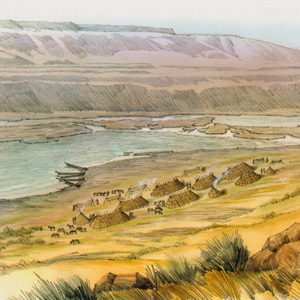
The expedition arrives at the Falls of the Columbia. With the help of some Wishram villagers, they portage their baggage along the northern shore. Others scout the channel that the canoes will navigate.
October 24, 1805
Running the Short Narrows
by Kristopher K. Townsend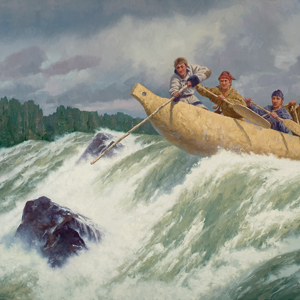
The dugout canoes are safely run down the Short Narrows of the Columbia astonishing the local onlookers. Below the narrows, the expedition encounters their first Chinookan-speaking People.
October 25, 1805
A "bad whorl & Suck"
by Kristopher K. Townsend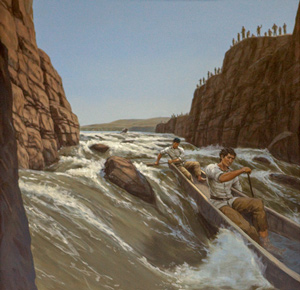
The expedition’s most valuable cargo is carried around the Long Narrows of the Columbia, and then the best paddlers run the canoes. At present The Dalles, Oregon, Fort Rock Camp is established.
October 29, 1805
Friendly villages
by Kristopher K. Townsend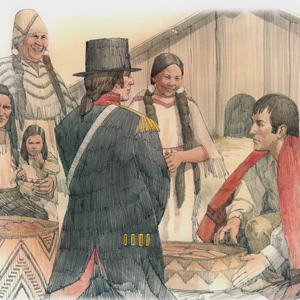
Moving 35 miles down the Columbia, the expedition encounters many Sahaptin and Upper Chinook villages. They pass an island with numerous graves—Memaloose—and camp above the Little White Salmon River.
November 1, 1805
A day with the Watlalas
by Kristopher K. Townsend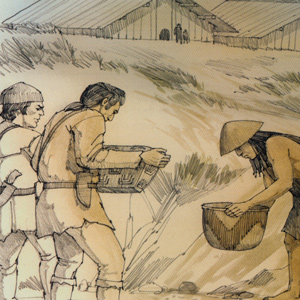
Most of the men move baggage and canoes around the Cascades of the Columbia. Clark describes the Upper Chinookan Watlala People living in the area, and Lewis adds Pacific madrone to his plant collection.
November 4, 1805
Busy day, noisy night
by Kristopher K. Townsend
Moving down the Columbia River, a Chinookan villager introduces the captains to the wapato bulb—a staple Native food. At camp near present Ridgefield, Washington, they are kept awake by noisy waterfowl.
November 5, 1805
Crowded with Indians
by Kristopher K. Townsend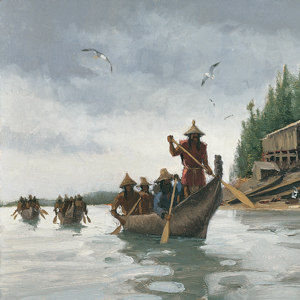
After a night made sleepless by noisy waterfowl, the expedition heads down the Columbia. They pass the large village known today as Cathlapotle and encounter various Chinookan People.
November 6, 1805
Little Cape Horn bivouac
by Kristopher K. Townsend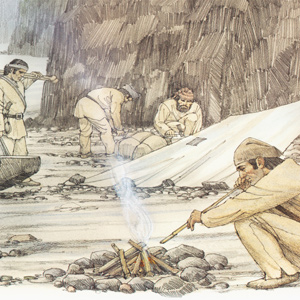
The men paddle down the Columbia in the rain interacting with several villages near the mouth of the Cowlitz. In the evening, they build large fires to dry out and kill the fleas infesting their blankets.
November 9, 1805
Wet as water can be
by Kristopher K. Townsend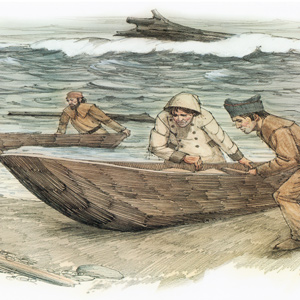
At Grays Bay in present Washington, high tides flood camp and waves throw huge logs at the dugout canoes. That and the heavy rain makes “every man as wet as water could make them.”
November 10, 1805
Small niche encampment
by Kristopher K. Townsend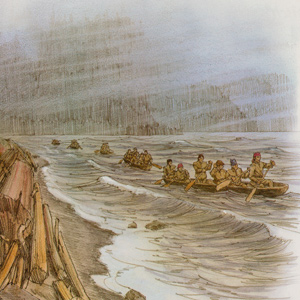
The paddlers make about ten miles down the Columbia River shoreline, but eventually are stopped by wind and waves. At their small niche camp near present Knappton, Washington, they try to dry out.
November 11, 1805
Kathlamet visitors
by Kristopher K. Townsend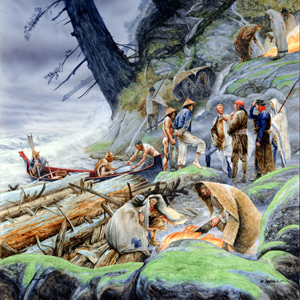
The expedition makes the best of their poor location in a small niche exposed to high waves and driving rain. Five Kathlamet visitors skillfully cross the Columbia in a canoe loaded with fish.
November 12, 1805
A dismal "nitch"
by Kristopher K. Townsend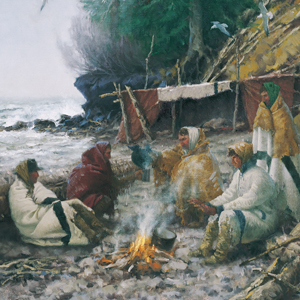
During low tide, the expedition moves into a better cove which would become known as “The Dismal Nitch”. Despite their distressing situation, several salmon are caught, and the day ends well.
November 16, 1805
A break in the weather
by Kristopher K. Townsend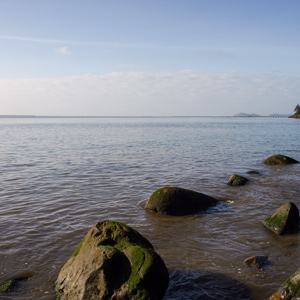
A break in the weather at Station Camp enables the main party to dry gear. Sgt. Gass reflects on reaching the end of their voyage, and Lewis adds Oregon boxleaf to his plant collection.
November 18, 1805
Astonishing Pacific Ocean
by Kristopher K. Townsend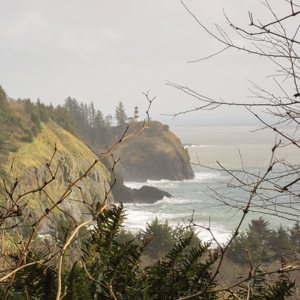
Clark takes a group to view the Pacific Ocean. The men behold “with estonishment the high waves dashing against the rocks & this emence ocian”. At Station Camp, Lewis records a Chinook vocabulary.
November 24, 1805
The winter camp decision
by Kristopher K. Townsend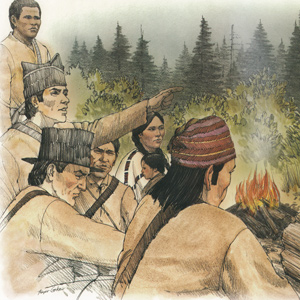
At Station Camp near the mouth of the Columbia, the captains gather each persons’ opinion regarding where to spend the winter. Clark lists the advantages of wintering over on the river’s southern shore.
December 2, 1805
First Pacific elk
by Kristopher K. Townsend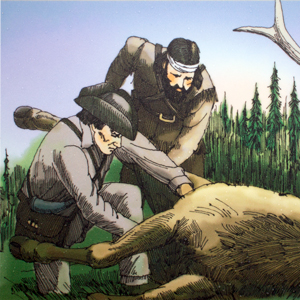
At Tongue Point, Pvt. Joseph Field brings in marrow bones from their first Pacific elk, a significant addition to the health of Clark and the several enlisted men who are ill. Lewis looks for a winter site.
December 29, 1805
Wahkiakum traders
by Kristopher K. Townsend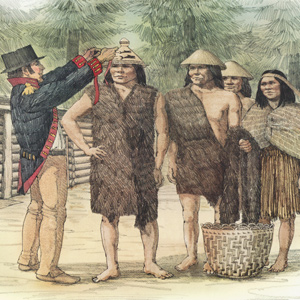
Clark gives visiting Wahkiakum traders a small peace medal and ties a red ribbon to a cone hat; Clatsop chief Coboway is given a razor. Clark also lists the day’s work details and sick men.
January 12, 1806
Conserving elk
by Kristopher K. Townsend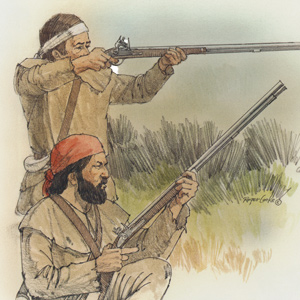
At Fort Clatsop near the Pacific Ocean, George Drouillard kills seven elk and new plan to conserve meat begins. In Washington City, President Jefferson shares news of the Lewis and Clark Expedition.
March 25, 1806
Downstreamer Chinooks
by Kristopher K. Townsend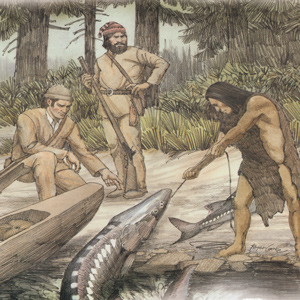
As they paddle along the south shore of the Columbia, the expedition sees Downstreamer Chinooks trolling for sturgeon. After fifteen miles, they find a popular camping spot at the present Clatskanie River.
March 29, 1806
Nahpooitle Village
by Kristopher K. Townsend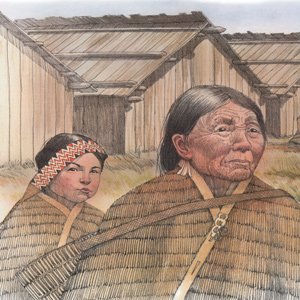
They paddle fifteen miles up the Columbia and encamp near present Ridgefield, Washington. The captains describe the dress, houses, wapato trade, and customs of the Nahpooitle (Cathlapotle) villagers.
March 30, 1806
Prospects for a settlement
by Kristopher K. Townsend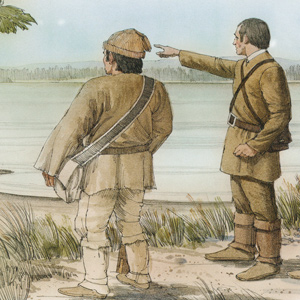
As they paddle through an area dense with Multnomah and Watlala villages, they see Cascade Mountain snow peaks, fertile land, and the best prospect for a large settlement west of the Rocky Mountains.
April 2, 1806
Exploring the Willamette River
by Kristopher K. Townsend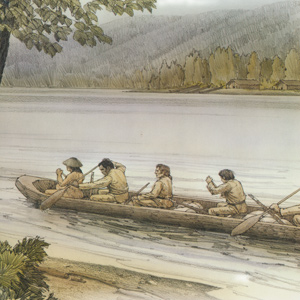
Clackamas visitors tell the captains about the Willamette River, and Clark sets out to find it. At a village at the that rivers’ mouth, Clark resorts to trickery to entice them to trade for food. At Provision Camp at present Washougal, Washington, Lewis says the berries are all gone except for the Oregon grape.
April 5, 1806
Last day at Provision Camp
by Kristopher K. Townsend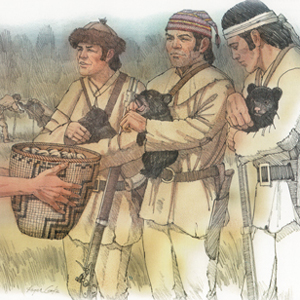
At Provision Camp near present Washougal, Washington, Nathaniel Pryor brings in the last of the elk jerky. Lewis says it is too wet and must be jerked again. Three “pett” bear cubs are brought to camp and traded for wapato.
In Philadelphia, Charles Willson Peale reports on the pronghorn specimens that recently arrived from Fort Mandan.
April 10, 1806
To the Cascades of the Columbia
by Kristopher K. Townsend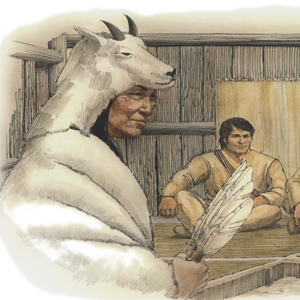
The men tow and ferry the dugout canoes to reach the portage around the Cascades of the Columbia. Before ferrying, Lewis collects a checker lily specimen on “Brant Island”. A canoe breaks loose, loses all its cargo, and is returned by local villagers.
In Washington City, President Thomas Jefferson seeks the name of the Arikara chief who recently died.
April 11, 1806
Lining the big chute
by Kristopher K. Townsend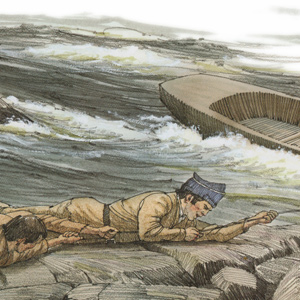
On this wet spring day at the Cascades of the Columbia, the men tow four dugout canoes through the “big Shoote.” Hostilities ensue when a few local Natives start stealing things. Even Lewis’s dog Seaman is stolen.
In Washington City, President Jefferson writes a letter to the Arikaras explaining Chief Too Né‘s death there.
April 17, 1806
Struggles with horses
by Kristopher K. Townsend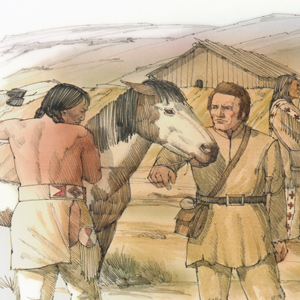
At the Wishram villages on the north side of Celilo Falls, Clark and Charbonneau struggle to buy horses. Across the river at Fort Rock, Lewis remarks on the rich verdure of the country and prepares several plant specimens including the bicolored cluster lily (Brodiaea howellii).
April 19, 1806
First Salmon Ceremony
by Kristopher K. Townsend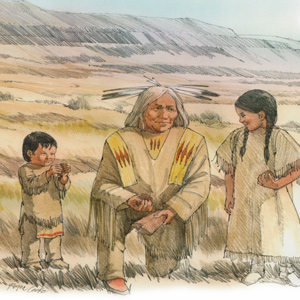
All hands spend the day portaging the Long Narrows of the Columbia River. The last big kettles are traded for horses, and the Indians celebrate the start of the spring salmon run. In the evening, Clark and a few others move up to a Tenino village to trade for horses.
April 22, 1806
Clark's mountain view
by Kristopher K. Townsend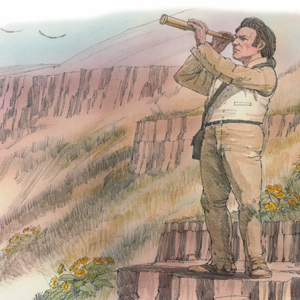
Charbonneau‘s horse suffers an accident causing several items to fall off. The scattered booty is quickly hidden by watchful Wishram Indians. While Lewis retrieves the lost items, Clark climbs a hill to view the landscape. They continue by foot, horse, and dugout canoe reaching a spring near present John Day dam.
April 25, 1806
Horse heaven
by Kristopher K. Townsend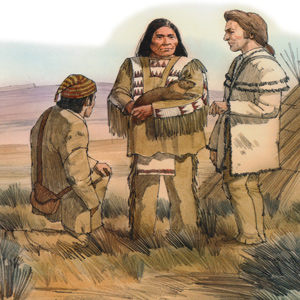
During a march of twenty miles, the travelers stop at a large village of Pish-quit-pahs—Yakamas or Umatillas—where none of the residents have seen white men before. Lewis remarks on the abundant bunch grass of the Horse Heaven Hills, Columbia River basalt, and the Northern Shoveler, new to science.
April 28, 1806
Yelleppit brings a horse
by Kristopher K. Townsend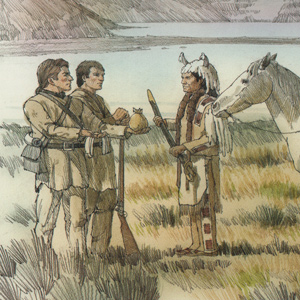
A Shoshone prisoner is found at Yelleppit’s village across from the mouth of the Walla Walla and talks begin with Sacagawea, Charbonneau, and one of the French men acting as interpreters. Yelleppit brings Clark a horse, Clark gives medical aid, and Pvt. Frazer buys ten fat dogs for consumption. The day ends with singing and dancing.
May 1, 1806
Along the Travois Road
by Kristopher K. Townsend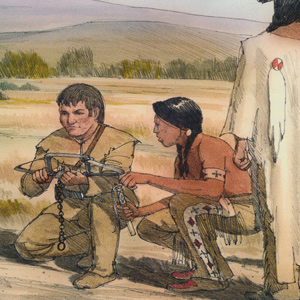
While traveling along the Travois Road in southeastern Washington, the corps’ guides and companions argue about which trail to take. Three honest Walla Walla men return a forgotten beaver trap, and after 26 miles, they camp on the Touchet River near present Waitsburg.
May 2, 1806
Along the Touchet
by Kristopher K. Townsend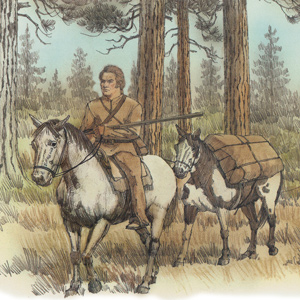
The day begins with considerable time and effort collecting horses. An Indian brings in a stray and is given a tomahawk, knife, and pants. The expedition then continues along the north hills of the Touchet River. Near present Dayton, Washington, they turn up Patit Creek and encamp where the trail leaves the valley.
May 3, 1806
The Tucannon crossing
by Kristopher K. Townsend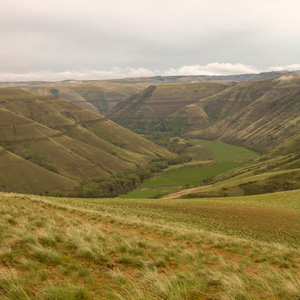
In southeastern Washington, the expedition follows the Travois Road climbing from present Patit Creek to the high plains. They then descend into the Tucannon Canyon and climb to the plains on the other side. The trail takes them to the fertile Pataha Creek valley where they are met by a familiar Nez Perce chief, We-ah-koomt.
May 4, 1806
Reaching the Snake
by Kristopher K. Townsend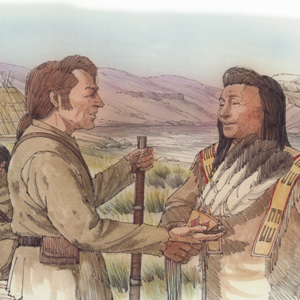
After a frosty morning, the Corps descends present Alpowa Creek to reach the Snake River. Their 1805 guide Te-toh-kan Ahs-kahp, or Tetoharsky, shows them where to cross the river. They continue to a campsite near present Clarkston, Washington where many curious Nez Perce villagers crowd around them. Lewis describes their menstrual lodges.
Bee Balm (Horsemint)
Monarda fistulosa
by Kristopher K. Townsend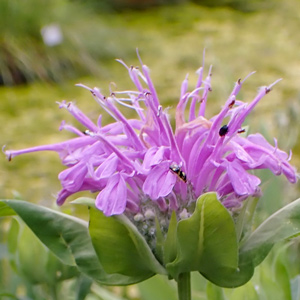
When Pvt. Bratton’s “tedious illness” left him unable to walk at Long Camp, they sweated him, dunked him in cold water, and had him drink ‘copious’ amounts of horsemint tea.
Experience the Lewis and Clark Trail
The Lewis and Clark Trail Experience—our sister site at lewisandclark.travel—connects the world to people and places on the Lewis and Clark Trail.
Discover More
- The Lewis and Clark Expedition: Day by Day by Gary E. Moulton (University of Nebraska Press, 2018). The story in prose, 14 May 1804–23 September 1806.
- The Lewis and Clark Journals: An American Epic of Discovery (abridged) by Gary E. Moulton (University of Nebraska Press, 2003). Selected journal excerpts, 14 May 1804–23 September 1806.
- The Lewis and Clark Journals. by Gary E. Moulton (University of Nebraska Press, 1983–2001). The complete story in 13 volumes.
This site is provided as a public service by the
Lewis and Clark Trail Alliance
with additional funding from the following: