Joseph Mussulman

Marc A. Hefty photo.
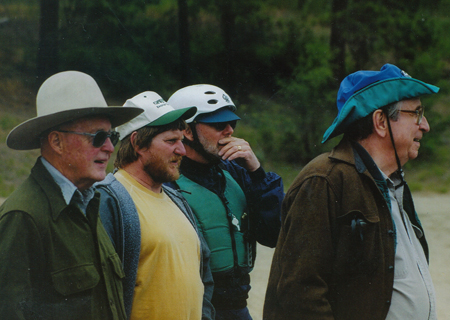
Photo by Bill Bevis.
Left to right: Two concerned dugout canoe owners, one concerned expert paddler, and Joe grinning with delight
Joseph A. Mussulman (1928–2017) was the founding producer, editor and writer for Discovering Lewis & Clark. After five years of preparation and experimentation the website went online in 1998, under the auspices of a non-profit entity called VIAs Inc., and funded by grants from various sources, especially–throughout the bicentennial observance from 2003 to 2006–the Challenge Cost Share Program of the National Park Service. In 2009 the site was taken over by the Lewis & Clark Fort Mandan Foundation of Washburn, North Dakota.
Dr. Mussulman earned his bachelor’s and master’s degrees in music history and literature at Northwestern University in 1950 and 1951. As a Danforth Scholar he earned a doctorate in humanities from Syracuse University in 1967.
He has written and produced a number of interpretive programs in collaboration with audio specialist Richard H. Kuschel, also of Missoula Montana. In 1986, he wrote, narrated, and co-produced a multimedia presentation for the Blaine County Museum (MT) titled Forty Miles from Freedom, about the Non-Treaty Nez Perce Indians’ final battle with the U.S. Army, at the Bear Paw Mountains in 1877. In 2012-13 Mussulman and Kuschel revised the 20-minute onsite production and updated it in High Definition video. In 1994 their interactive self-guided audio-CD tour of Yellowstone National Park, a five-hour program produced for Tour Technologies, Inc., received first prize in the category of media productions from the National Association for Interpretation. Their Two Days to Destiny, an audio interpretive tour of the Little Bighorn Battlefield, won first place from the NAI in 1995.
Mussulman is the author of five articles on Lewis and Clark that appeared in We Proceeded On, the official journal of the Lewis and Clark Trail Heritage Foundation, Inc.: “My Boy Pomp’: About That Name,” Vol. 21, No. 2 (May 1995); “Soundscapes: The Sonic Dimensions of the Lewis and Clark Expedition,” Vol. 21, No. 4 (November 1995); “Men in High Spirits: Humor on the Lewis and Clark Trail,” Vol.22, No. 2 (May 1996); “‘In Greatest Harmoney’: ‘Meddicine Songs’ on the Lewis and Clark Trail,” Vol. 23, No. 4 (November 1997); and “Pomp’s bier was a bar,” Vol. 27, No. 1 (February 2001).
Dr. Mussulman has designed and produced maps for various books, brochures and study guides about Lewis and Clark, including 58 full-color maps illustrating the expedition’s entire route from coast to coast for the travelers’ guide, Along the Trail with Lewis and Clark, by Barbara Fifer and Vicky Soderberg (2nd ed., Helena: Montana Magazine, 2001). Those maps also appeared in the same publisher’s annual Lewis and Clark Travel Planner and Guide. They may be seen in Discovering Lewis & Clark at Discovering Lewis & Clark from the Air. In 1998, he created a poster illustrating the trail from Washington, D.C. to the Pacific, for Farcountry Press.
His other publications include a biography, Dear People . . . Robert Shaw (Indiana University Press,1979; reprint, Chapel Hill, NC: Hinshaw Music, 1996), and Music in the Cultured Generation (Evanston: Northwestern University Press, 1974). From 1987 through 1998 he was the interpretive writer and designer of Montana Afloat, a series of sixteen maps of Montana’s major floatable rivers.
Dr. Mussulman was a 1999 recipient of a Montana Governor’s Arts Award. Several years later he received an award of meritorious achievement from the Lewis and Clark Trail Heritage Foundation “for outstanding contributions in bring to this nation a greater awareness and appreciation of the Lewis and Clark expedition.” In 2005, he received the Montana Governor’s Humanities Award.
Contributions to this Site
The Tobacco Root Mountains
Beautiful prairies
by Joseph A. Mussulman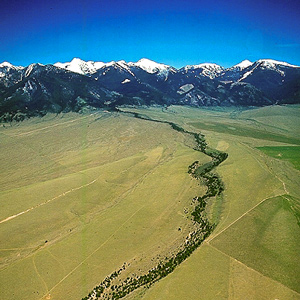
“We proceeded on and passed a large beautiful bottom,” wrote Pvt. Joseph Whitehouse on 2 August 1805, “and Prairies lying on both sides of the River.” On each side of the valley, Sergeant Gass observed, “there is a high range of mountains . . . with some spots of snow on their tops.”
Dividing Forces at Travelers’ Rest
Their daring tactical plan
by Joseph A. Mussulman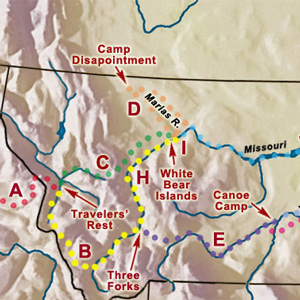
Dividing into as many as five separate details was part of a bold, diplomatic plan to achieve three of the objectives set by President Jefferson.
The Salmon River
A river of no return
by Joseph A. Mussulman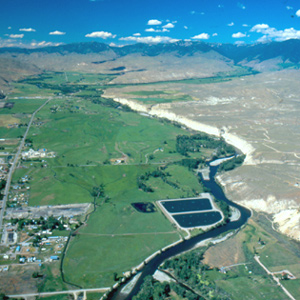
On the 23 August 1805, the centuries-old fantasy of a “water route across the continent for the purposes of commerce” dissolved in the roar of an unimaginable torrent–one of the most dangerous, unforgiving rivers in North America, that would later be called “The River of No Return.”
Little Gate of the Mountain
Lewis's "second grand chain"
by Joseph A. Mussulman, Robert N. Bergantino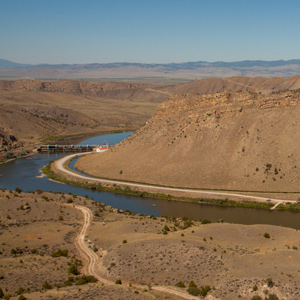
Before arriving at the three forks of the Missouri, Whitehouse wrote that they “passed some rough rockey hills, which we expect from the account we have from the Indian Woman that is with us, to be the commencement of the Second chain of the Rockey Mountains.
Pryor Creek
Ill-fated mission
by Joseph A. Mussulman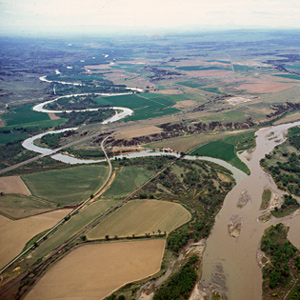
The stream Clark named for Nathaniel Pryor meanders from its montane sources in the mountain range that now bears Pryor’s name to join the Yellowstone River in the area where Pryor began his ill-fated diplomatic mission.
The Vermillion River
The stream near Spirit Mound
by Joseph A. Mussulman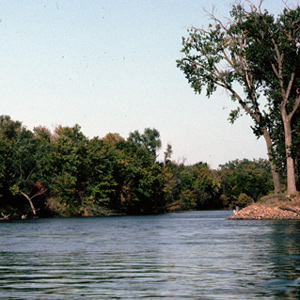
The Corps left the white pirogue at the mouth of this stream and followed it part of the way to the storied Spirit Mound. During the years between the day the Corps passed it and today, its mouth has migrated about 2.5 miles southeast.
Unviolated Forests
The Bitterroot National Forest
by Joseph A. Mussulman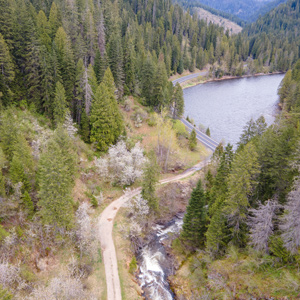
The orator spoke of the promises of “regions yet groaning under unviolated forests.” Lewis responded similarly: “With you I trust, that the discoveries we have made will not long remain unimproved.”
Lewis’s Shoshone Tippet
Cameahwait's gift
by Joseph A. Mussulman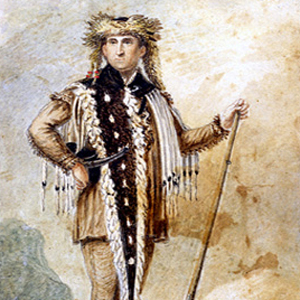
Cameahwait and some of his people agreed to help the Corps of Discovery carry its baggage over the divide. In the early afternoon. “We now dismounted,” wrote Lewis, “and the Chief with much cerimony put tippets about our necks such as they temselves woar.”
Eulachon
Thaleichthys pacificus
by Joseph A. Mussulman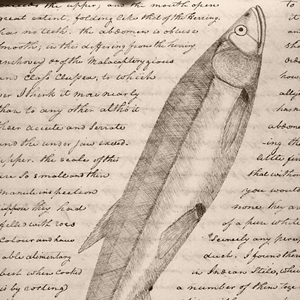
On 24 February 1806, Meriwether Lewis recorded that the Clatsop Indian chief, Coboway, came to the fort to sell some hats, some sturgeon, and “a species of small fish which now begin to run, and are taken in great quantities.”
Clark’s Portage Route Survey
Measuring the falls and portage
by Joseph A. Mussulman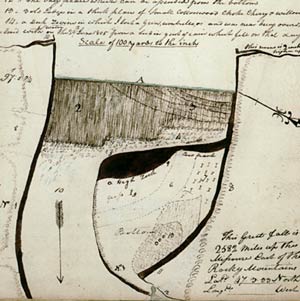
On 17 June 1805, Clark and five men set out to determine the best portage route around the Great Falls of the Missouri. On the way up the river, he stopped to also measure the fall of the river and to map the falls.
Seaman’s Creek
Clues to his name
by Joseph A. Mussulman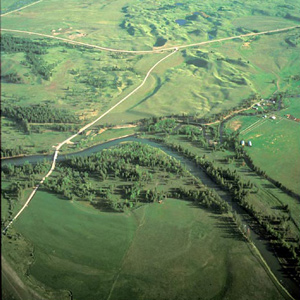
Twenty-eight and one-half miles upriver from their camp of 4 July 1806 the Indian road crossed a stream Lewis named after William Werner. At mile 31, they camped near the mouth of a stream the captain named after his dog, Seaman.
Lower Portage Camp
Good news, bad news
by Joseph A. Mussulman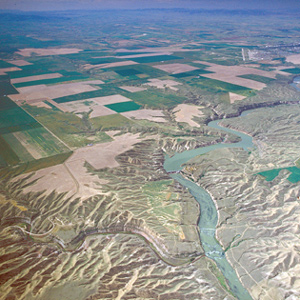
By the evening of 15 June 1805, Clark had gotten the canoes and the white perogue as close to the Great Falls as possible, and the next afternoon Lewis joined him at the “lower portage camp,” a mile below the mouth of Belt Creek.
Across the Great Divide
Over Lemhi Pass
by Joseph A. Mussulman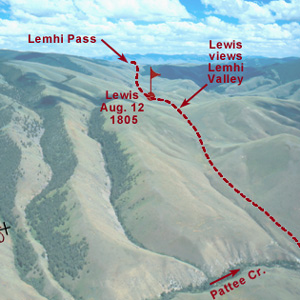
Below the summit of today’s Lemhi Pass, Lewis said that he had reached “the most distant fountain of the waters of the mighty Missouri in surch of which we have spent so many toilsome days and wristless nights.”
Nathaniel Pryor
Sergeant
by Joseph A. Mussulman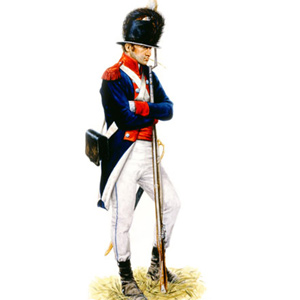
Pryor was assigned several special missions from exploring the Sandy River to escorting Mandan Chiefs to Washington City. He would barely survive his adventures on the Yellowstone River.
Measuring Heights and Distances
From Owen's Dictionary
by Joseph A. Mussulman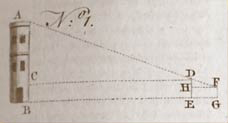
This article shows methods for measuring heights and distances as described by Owen’s Dictionary of Arts and Sciences (1754), a book in the expedition’s traveling library.
Air Gun Accident
A shooting on Brunot's Island
by Joseph A. Mussulman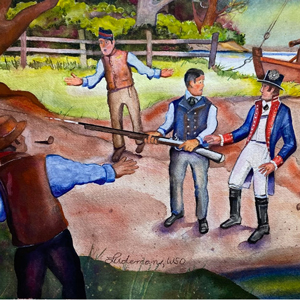
“accedentaly the ball passed through the hat of a woman about 40 yards distanc cutting her temple about the fourth of the diameter of the ball.”
Lewis’s Birthday Meditation
A "sadly interesting passage"
by Joseph A. Mussulman
It has been remembered as “the most gloomy self-examination of the entire journal,” and “a passage of unreasonable melancholy,” of poignant sadness and self-doubt.
A Flash Flood
A narrow escape
by Joseph A. Mussulman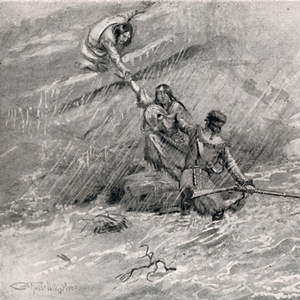
Of all the near-calamities the Corps of Discovery experienced, none was more dire than the one that occurred on 29 June 1805 in a normally dry ravine a short distance above the Great Fall. The principals were Charbonneau, Sacagawea, Jean Baptiste, York, and William Clark.
Fort Peck Dam
Varied landscape
by Joseph A. Mussulman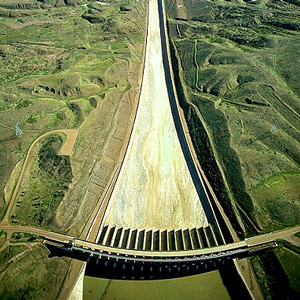
“The countrey on the North Side of the Missouri is one of the handsomest plains we have yet Seen on the river,” Clark declared. Lewis described the ragged badlands on the south side as “high broken hills….”
Jefferson-Lewis Cryptology
Jefferson's ciphers
by Joseph A. Mussulman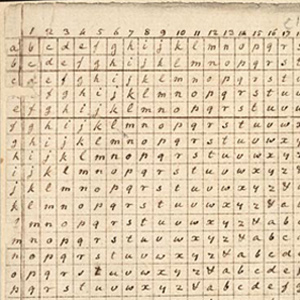
It was Thomas Jefferson who gave cryptography in America its greatest impetus. Sometime in 1803 Jefferson presented Meriwether Lewis with a cipher based on a square table or tableau used to create a substitution cipher.
Defining ‘Squaw’
Shades of meaning
by Joseph A. Mussulman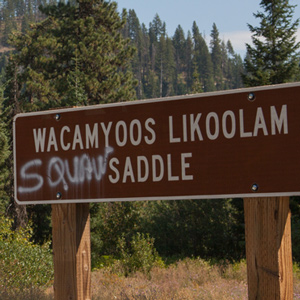
Both of the captains referred to Charbonneau’s young wife as a squaw, usually spelling it with a post-vocalic /r/—”Squar.” In the 1980s a nationwide movement arose to extirpate squaw from general use, because of its worst connotations.
Lewis’s Dog Seaman
A working expedition member
by Joseph A. Mussulman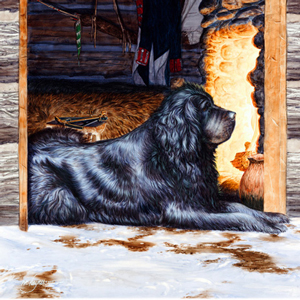
The Shoshones, like all other Indian people, had owned, bred, trained, used, and loved dogs from the dimmest days of their own origins. What was it, then, about this dog that thrilled them so? Lewis called it sagacity.
Sgt. Floyd’s Memorials
Much Remembered
by Joseph A. Mussulman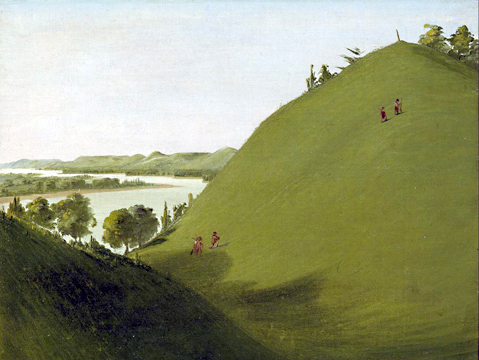
Floyd’s grave became a conspicuous point and a historic shrine on the Lewis and Clark trail almost immediately after the expedition was over. The American artist George Catlin painted Floyd’s Bluff in 1832, with the original cedar marker still in place.
Lost Hunters
by Joseph A. Mussulman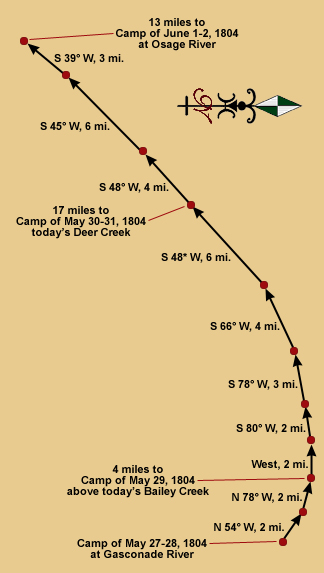
Every hunter, after following the land instead of the river, had to somehow end his day within sight or sound of the party’s camp at a location which no one could have known in advance. They were not always successful.
Outfitting the Expedition
Buying supplies in Philadelphia and St. Louis
by Frank Muhly, Joseph A. Mussulman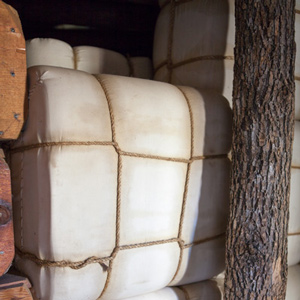
The original shopping list contained more than 180 items, including various “Mathematical Instruments”, arms and accouterments, ammunition, clothing, camp equipage, provisions, Indian presents, medicine, and packing materials.
Pryor Mountains
Local lore and myths
by Joseph A. Mussulman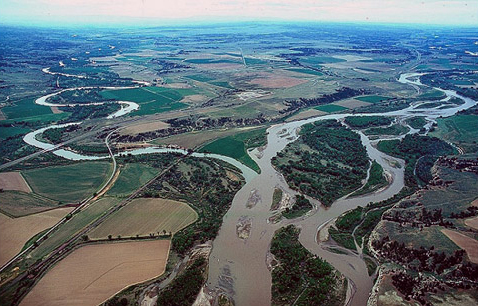
Pryor Creek begins in the Pryor Mountains 50 miles from its mouth, but coils into nearly 100 miles of creek bottom by the time it empties into the Yellowstone. Local lore maintains that Pryor traveled up this creek to those mountains.
The Mosquito
Measures of torment
by Joseph A. Mussulman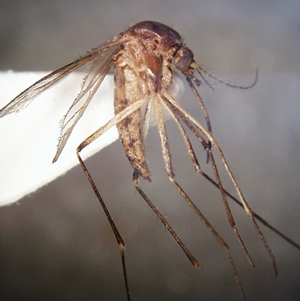
“Our trio of pests still invade and obstruct us on all occasions, these are the Musquetoes eye knats and prickley pears, equal to any three curses that ever poor Egypt laiboured under.”
Elk Point
Names
by Joseph A. Mussulman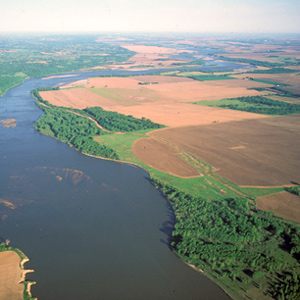
In the vicinity of Elk Point, South Dakota, the captains found a variety of unfamiliar minerals, including what Clark believed were arsenic and cobalt. “Capt. Lewis in proveing the quality of those minerals was near poisoning himself by the fumes & taste.”
System, Model and Legacy
Nature's taxonomy
by Joseph A. Mussulman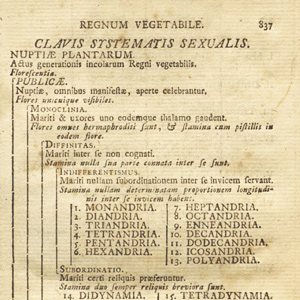
The science of the orderly classification of all living and extinct organisms is called taxonomy. It comprised a hierarchical outline of descriptors extending between the most general and the most specific and Lewis and Clark had a role.
Camas
Camassia quamash
by James L. Reveal, Joseph A. Mussulman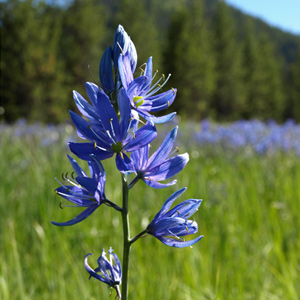
William Clark, pushing on in advance of the hungry men of the Corps, came upon two adjacent Indian villages totaling about 30 lodges on Weippe Prairie. They gave him and his six hunters “roots in different States, Some round and much like an onion which they call quamash.”
William Clark (1784–1838)
by Joseph A. Mussulman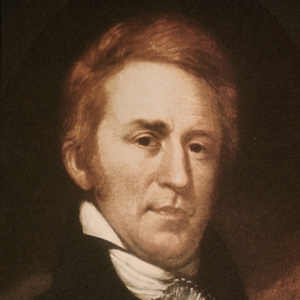
Clark was a highly intelligent man, and in terms of the practical knowledge required to make his way in the wilderness, to lead men, and to succeed in the world of frontier politics, he was highly educated and consummately effective.
The Osages
by Joseph A. Mussulman, Kristopher K. Townsend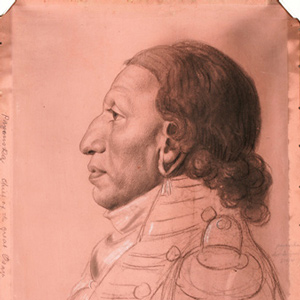
The Osage were experienced traders, exchanging horses and Indian slaves for French guns, knives, axes, kettles, and other metal objects. After the 1760s, the Osage adopted a new economic system of planting gardens in permanent villages, summer hunts in the plains, and fur-trapping in the winter.
Yellowstone Canoe Camp
by Joseph A. Mussulman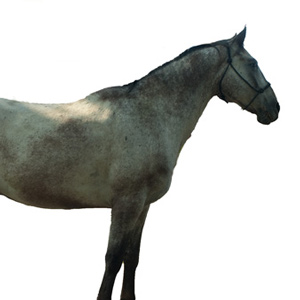
One week and a hundred miles after starting down the Yellowstone River, Clark finally found cottonwood trees large enough for building canoes. That night some Indians made off with half their horses.
Reunion
Lewis and Pryor catch up
by Joseph A. Mussulman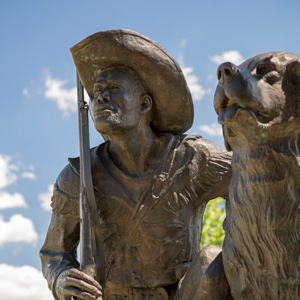
After splitting up into five separate details over five weeks earlier, all the members of the Corps of Discovery were finally reunited 142 miles downriver from the mouth of the Yellowstone.
Long-tailed Weasels
Mustela frenata
by Joseph A. Mussulman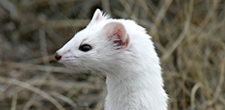
The captains saw their first white weasel at Fort Mandan on 9 November 1804. At Fort Clatsop on Christmas Day, 1805, Sacagawea gave Clark “2 Doz wesels tales.”
Promises to Keep
Lewis's threats and promises
by Joseph A. Mussulman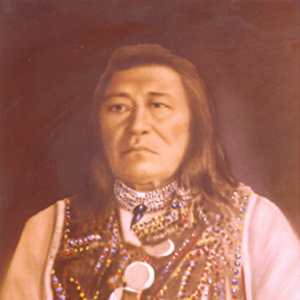
Pretending to have been insulted by their accusation, Lewis pompously declared that “if they continued to think thus meanly of us…they might rely on it that no whitmen would ever come to trade with them or bring them arms and amunition.”
Badgers
Taxidea taxus or brarow
by Joseph A. Mussulman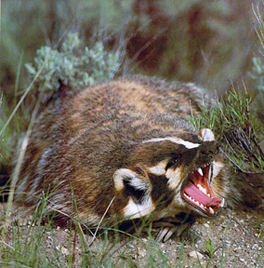
No doubt Lewis was preoccupied with the preservation process, for his entry was shorter. “It is a carniverous anamal . . . . it’s eye are small black and piercing.”
Eye Gnats
Hippelates sp.
by Joseph A. Mussulman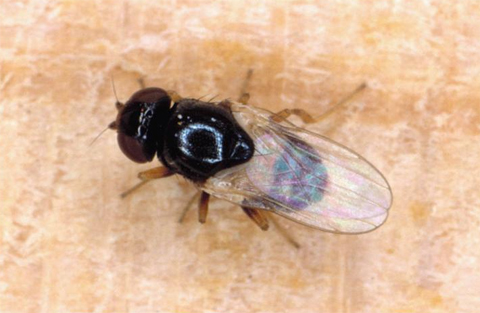
On 11 July 1805 while making canoes above the Falls of the Missouri, Clark wrote “Musquitors verry troublesom, and in addition to their torments we have a Small Knat, which is as disagreeable.”
Foggy Ohio Mornings
Weather report
by Joseph A. Mussulman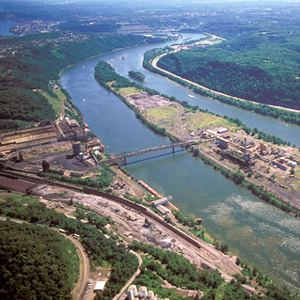
They camped for that night somewhere on the big island now known as Brown’s. When darkness fell the two canoes, which carried most of Lewis’s most valuable supplies, were still behind. “Ordered the trumpet to be sound[ed],” he wrote, “and they came up in a few minutes.”
Dung Beetles
by Joseph A. Mussulman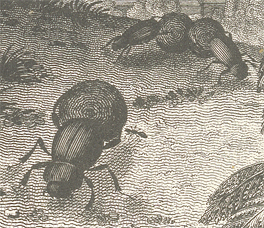
In his 261-word catalog of the insects, Lewis wrote that “a great variety of beatles common to the Atlantic states are found here likewise,” except that “the black beatle usually [c]alled the tumble bug which are not found here.”
Fight on the Two Medicine
An "accedental interview"
by Joseph A. Mussulman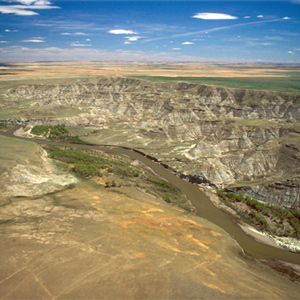
The Indians invited the Americans to share a campsite that night. At daybreak, despite the soldiers’ watchfulness, the Indians tried to steal the Americans’ guns and horses. That immediately erupted into a skirmish.
Grays Bay
Shallow bay
by Joseph A. Mussulman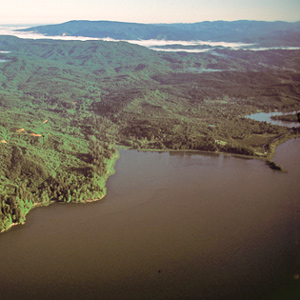
On the morning of 8 November 1805, the Corps’ flotilla entered a “nitch” they called Shallow Bay and paused for their midday meal near the remains of an Indian village with “great numbers of flees which [we] treated with the greatest caution and distance.”
Lithography
"Stone-printing"
by Joseph A. Mussulman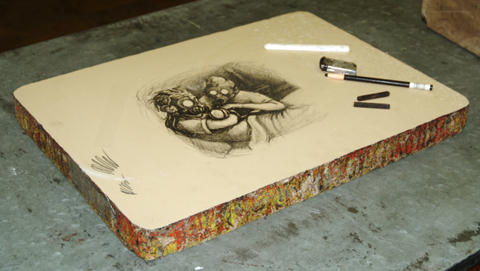
In 1798 a German actor-playwright-turned-printer named Alois Senefelder (1771-1834) discovered the principle of lithography, relying upon simple chemical principles—the mutual repulsion of oil and water, and the mutual attraction of water and salt.
Grouse
by Joseph A. Mussulman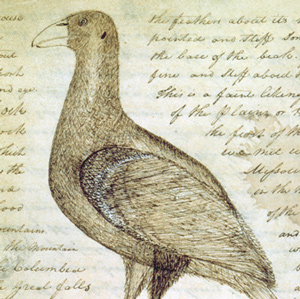
Why did Lewis call the spruce grouse, blue grouse, and Oregon ruffed grouse “Three species of Pheasants?” What species did he actually see?
The Wabash River
Familiar water
by Joseph A. Mussulman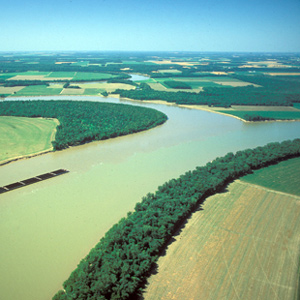
Lewis, Clark, and their crew must have passed the mouth of the Wabash about 5 November 1803. The captains had crisscrossed the area in the course of their military duties, and in 1792 Clark had gained one of his first experiences in river navigation.
The Clearwater Canoe Camp
by Joseph A. Mussulman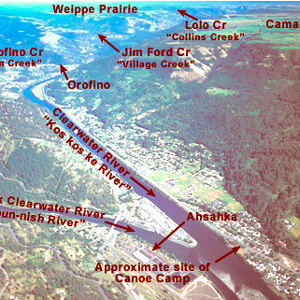
Still sick and exhausted from their recent crossing of the Bitterroot Mountains, Lewis, Clark, and their crew arrived on 26 September 1805, at what they called Canoe Camp, on the Clearwater River.
Wheeler’s Railroad Promotions
The Lewis and Clark Centennial
by Barbara Fifer, Joseph A. Mussulman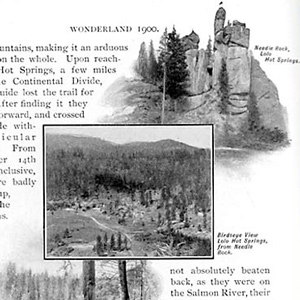
The Northern Pacific Railway had identified two new attractions within its Wonderland—a centennial commemoration of the historic Lewis and Clark expedition, plus extensive segments of the original trail within sight of its rails.
Observing Bighorn Sheep
A pictorial essay
by Joseph A. Mussulman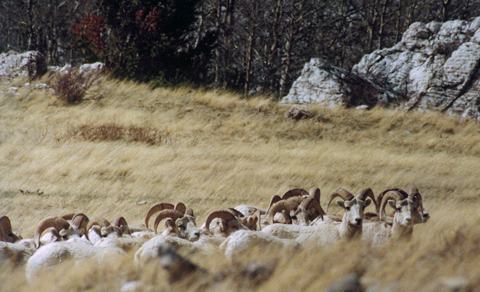
By telling the story of how these photos and videos were created, the behaviors of the bighorn sheep are described.
Lewis and Clark Pass
A shorter way
by Joseph A. Mussulman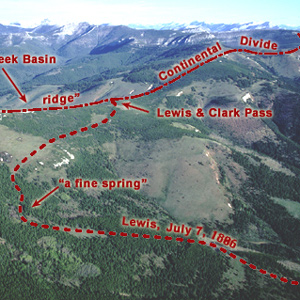
Sergeant Gass recorded that on 7 July 1806, Lewis’s detachment took a three-hour lunch break and then proceeded four miles, “when we came to the dividing ridge between the waters of the Missouri and Columbia.”
The Pirogues
by Joseph A. Mussulman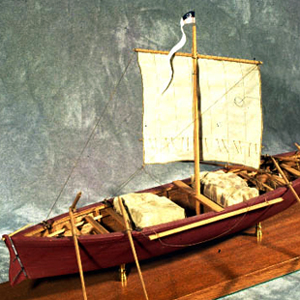
The two pirogues served as supplementary cargo carriers accompanying the barge from the mouth of the Missouri to the Mandan villages, one of which became the command boat on the return trip from the Marias River to St. Louis.
Naming the Lolo: A Summary
A worthwhile study
by Joseph A. Mussulman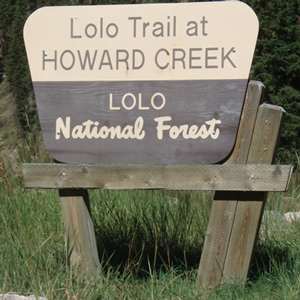
Snowbank Camp to Lonesome Cove
Tough going
by Joseph A. Mussulman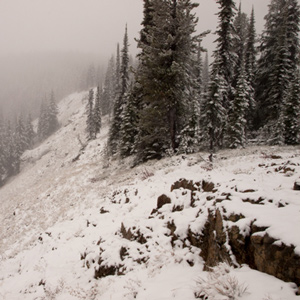
Although none of the journalists mentioned it, the very presence of last winter’s snow on those mountains in late September must have aroused the feeling that crossing the Rockies was going to be even tougher than they had figured.
Coal Mines
Brilliant blaze
by Joseph A. Mussulman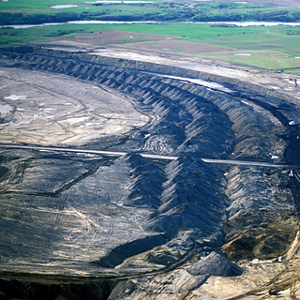
Lewis and Clark could never have imagined a pit like the one in this photograph. Opened in 1997, it is about twelve miles east of the Missouri River and sixty miles north of Bismarck, North Dakota. In the background is a postglacial tarn called Coal Lake.
Clark’s Lookout
by Joseph A. Mussulman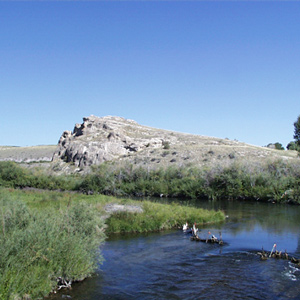
Clark arrived at this “high Point of Limestone rocks” and strolled to its low summit. This was a convenient place from which to take at least three different bearings, making of it a surveyor’s “station” or triangulation point.
Travelers’ Rest
Hub of the west
by Joseph A. Mussulman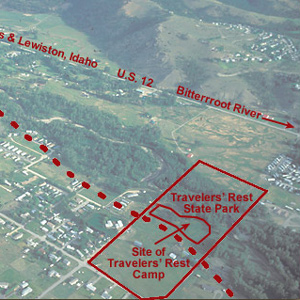
In the afternoon of 9 September 1805 they turned westward at a creek they dubbed Travelers’ Rest, today known as Lolo Creek. They stopped at a gathering place that Indians had been using for that same purpose for thousands of years.
Making Leather
by Joseph A. Mussulman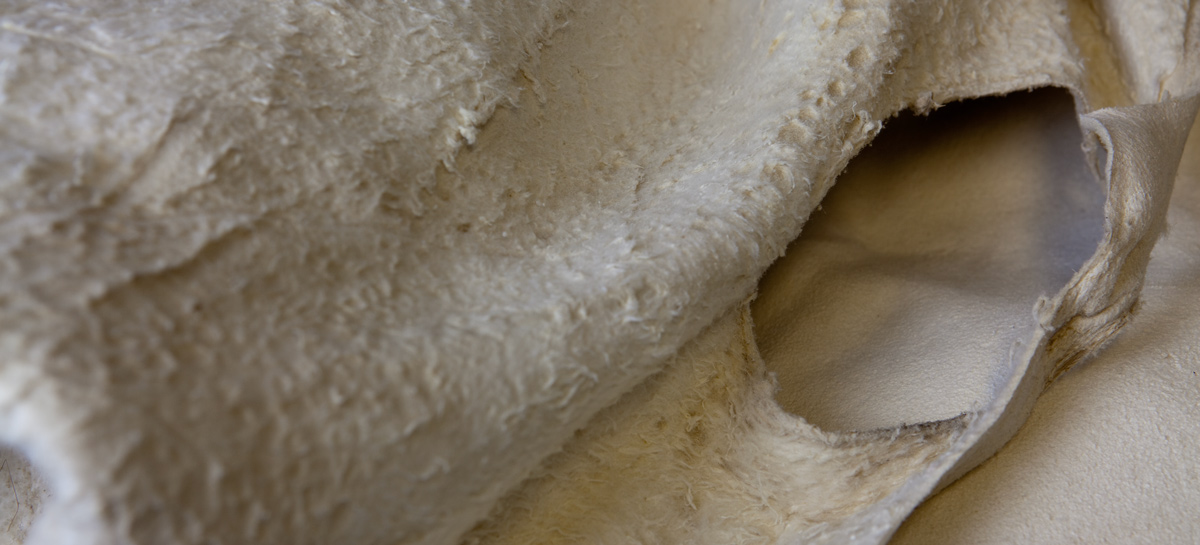
“The men of the garison are still busily employed in dessing Elk’s skins for cloathing.” Regrettably, Lewis was compelled to add that “they find great difficulty for the want of branes [brains].”
The Milk River
The river which scolds all others?
by Joseph A. Mussulman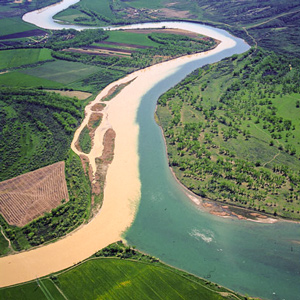
Creeping down the nearly imperceptible slope of the northern high plains, this is the stream Lewis and Clark described as possessing a peculiar whiteness, being about the colour of a cup of tea with the admixture of a tablespoonfull of milk.
Clarkia
Clarkia pulchella
by James L. Reveal, Joseph A. Mussulman, Kristopher K. Townsend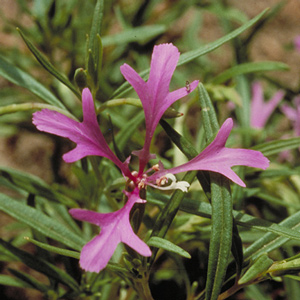
The plant’s common names include elkhorn, ragged robin, pink fairy, and deerhorn. In the spring of 1807 Lewis turned over his plant specimens to Frederick Pursh, who gave this flower the scientific name Clarkia pulchella
The Lost Trail Divide
Leaving the Indian road
by Joseph A. Mussulman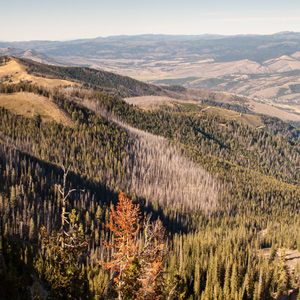
Continuing north up the North Fork Salmon River, they leave a good Indian road and must cut their own trail. Were they lost? Sergeant Gass’s laconic remark gives us a hint: “This was not the creek our guide wished to have come upon.”
Columbia River Explorers
Hecata, Gray, and Vancouver
by Joseph A. Mussulman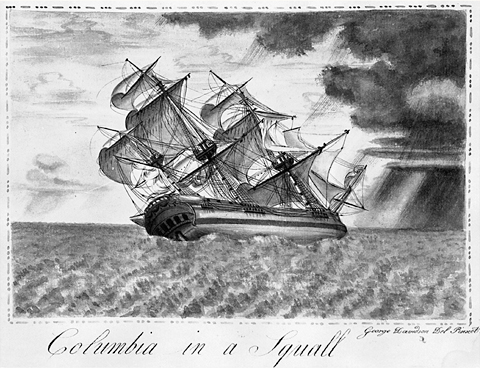
The Corps of Discovery was but one of a great number of expeditions by land and sea made between 1770 and 1870 across the North American continent in search of a Northwest Passage. Lewis knew much about the mouth of the Columbia River.
The Lewis and Clark River
Coast Range winter
by Joseph A. Mussulman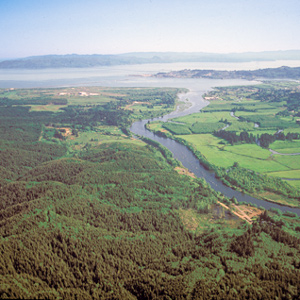
During their time at the coast, the Corps saw only six sunny days; the rest brought clouds, fog, rain, and a little snow. Fifty-three were partly clear. That’s a normal winter on the west slopes of the Coast Range.
Hungery Creek
And a return to Bald Mountain
by Joseph A. Mussulman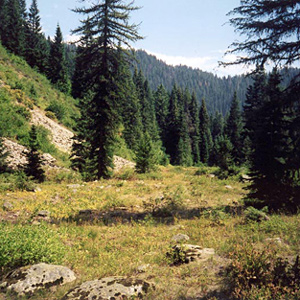
By the evening of 17 September 1805, their seventh sleep west of Travelers’ Rest, it was obvious to the captains that the Indians’ assurance that they could cross the mountains in six days was false, whereas the prediction that they would find no game there was all too true.
St. Charles
Petites Côtes
by Joseph A. Mussulman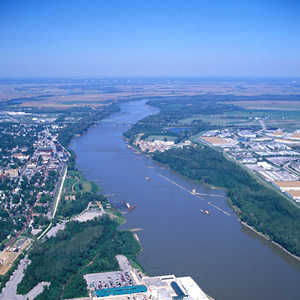
With Captain Clark in sole command, the Corps of Volunteers for North Western Discovery left the mouth of Wood River on 14 May 1804. The flotilla was comprised of the barge and two pirogues. Clark and the men “proceeded on under a jentle brease,” bound for St. Charles.
The Platte River
High road junction
by Joseph A. Mussulman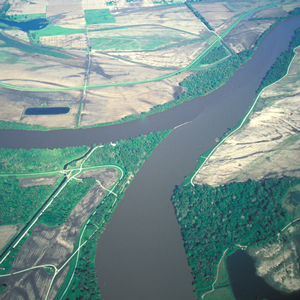
The Corps of Discovery arrived at the mouth of the Platte on 21 July 1804, noting first of all that “the Current of This river Comes with great Velocity roleing its Sands into the Missouri, filling up its Bend….”
Culbertson, Montana
Abundance
by Joseph A. Mussulman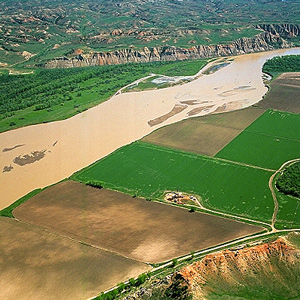
Somewhere in this vicinity, on 29 April 1805, Lewis shot his first grizzly bear and promptly began his detailed study of the fascinating species. Other game was astonishingly abundant, too.
Friedrich Wilhelm von Steuben (1730–1794)
Early American Army trainer
by Joseph A. Mussulman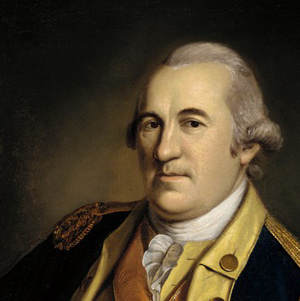
Until he presented his services to General Washington at Valley Forge, the Continental Army still consisted merely of a number of state-sponsored militias that were entirely independent of one another, each operating according to its own rules and regulations.
Naming Travelers’ Rest
Thinking of South Carolina?
by Joseph A. Mussulman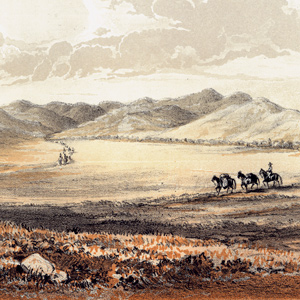
Lewis and Clark and their men camped on 9–10 September 1805 and again on 30 June though 2 July 1806 beside a stream they called “Travelers Rest Creek.” Meriwether Lewis may have seen or sensed a comparison between it and the Travelers Rest in South Carolina.
Clark’s Nutcracker
Nucifraga columbiana
by Joseph A. Mussulman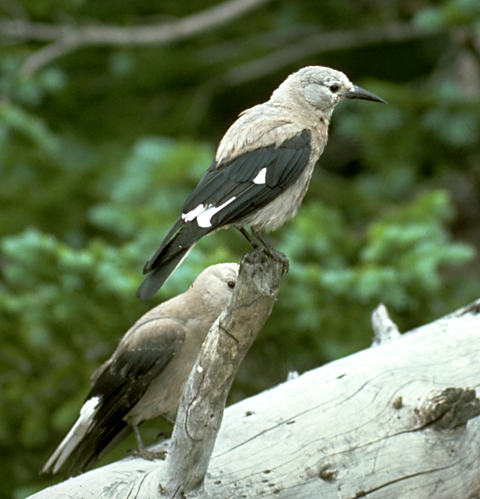
On the Salmon River, Clark “saw to day [a] Bird of the woodpecker kind which fed on Pine burs it’s Bill and tale white the wings black every other part.” Later, Meriwether Lewis had time to study and describe it with his usual thoroughness.
John Colter
Private
by Barbara Fifer, Joseph A. Mussulman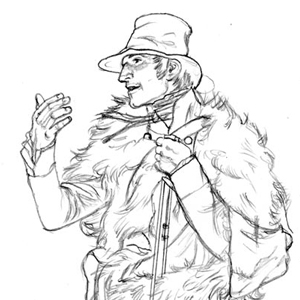
Colter left a legacy of western lore, not the least of which was his famous run from the Blackfeet Indians and his exploration of “Colter’s Hell.” Yet his contributions to the expedition were also many.
Travelers’ Rest Creek
Today's Lolo Creek in Montana
by Joseph A. Mussulman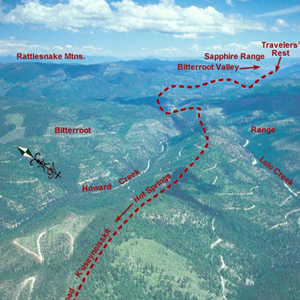
At 3 o’clock in the afternoon, 11 September 1805, Toby led the Corps of Discovery out of Travelers’ Rest camp toward the Bitterroot Mountain barrier.
Unaccountable ‘Artillery’ of the Rockies
by Joseph A. Mussulman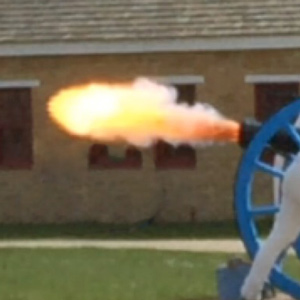
Near the Great Falls, Lewis describes loud noises “resembling precisely the discharge of a piece of ordinance of 6 pounds at the distance of three miles.” Thunder didn’t seem likely as “It was perfectly calm, clear, and not a cloud to be seen.”
End of the Enlightenment
Anti calomel and the "genteel tradition"
by Joseph A. Mussulman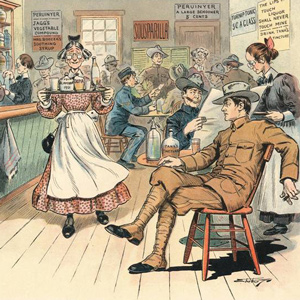
No more calomel! Not just an anthem, a reflection on the transition from the “Age of Enlightenment” to the “genteel tradition.”
Eldorado Creek
Full Stomachs to Pheasant Camp
by Joseph A. Mussulman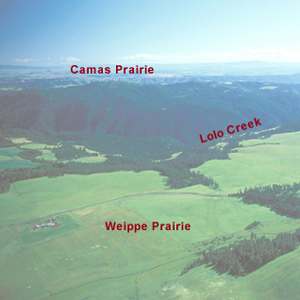
“we killed a few Pheasants, and I killd a prarie woolf [coyote] which together with the ballance of our horse beef and some crawfish which we obtained in the creek enabled us to make one more hearty meal.
Chinookan Houses
Inside Chinookan plank houses
by Joseph A. Mussulman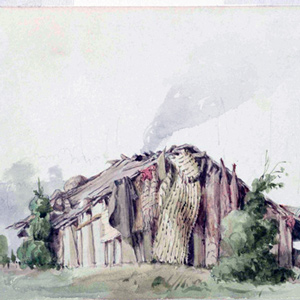
Sgt. Gass reported, “We found our huts smoked; there being no chimneys in them except in the officers’ rooms.” Coastal Natives had devised simple, reliable ways of manipulating the balance of atmospheric pressure, temperature and air flow in what is now called the “stack effect.”
Grizzly Bear Encounters
Thirteen significant encounters
by Joseph A. Mussulman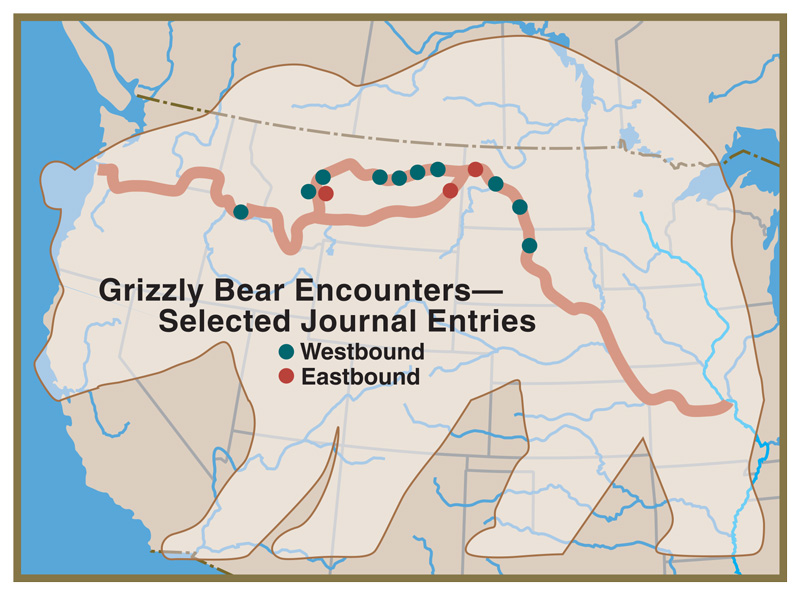
“the Indians give a very formidable account of the strength and ferocity of this anamal, which they never dare to attack but in parties of six, eight or ten persons; and are even then frequently defeated with the loss of one or more of their party.”
Leaving the Lemhi Valley
Detour at Tower Creek
by Joseph A. Mussulman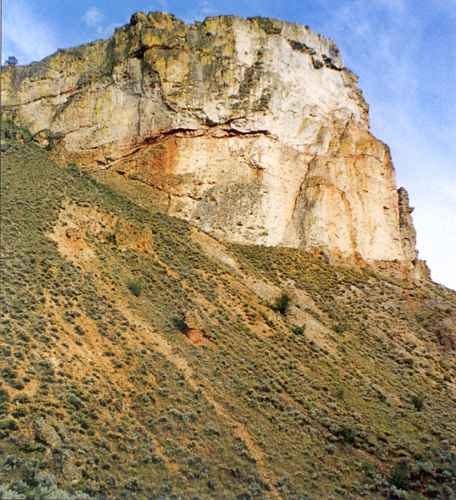
The Salmon winds tortuously through a seven-mile-long canyon where the vertical walls at that time crowded the riverbanks so tightly in several places that Clark and his party were compelled to clamber over “four mountains verry Steap high & rockey.”
Citadel Rock
"Steep black rock"
by Joseph A. Mussulman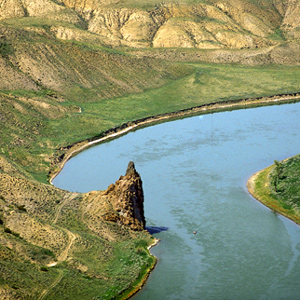
Clark remarked on this “high Steep black rock riseing from the waters edge” as they passed it on 31 May 1805, but he did not give it a name. Citadel Rock, so called during the steamboat era for its fortress-like presence, was an igneous intrusion into a layer of sandstone.
The Jefferson Canyon
The fourth mountain gate
by Joseph A. Mussulman, Robert N. Bergantino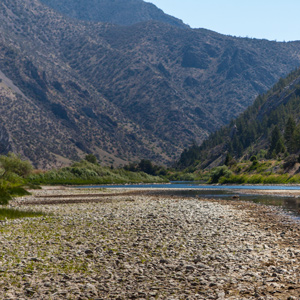
On 1 August 1805, Clark and the expedition’s flotilla of eight dugout canoes pushed up the Jefferson River through “a verrey high mountain which jutted its tremendious Clifts on either Side for 9 Miles, the rocks ragide.” They emerged into a “wide exte[n]sive vallie.”
Beacon Rock
A remarkable, high and detached rock
by Joseph A. Mussulman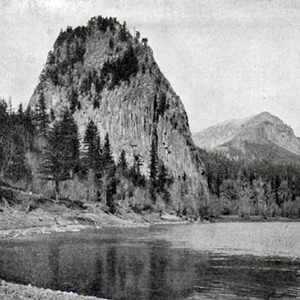
“a remarkable high detached rock Stands in a bottom on the Stard [starboard, the navigator’s right] Side & about 800 feet high and 400 paces around”
The Trapper Peaks
Bitterroot Mountain sentinels
by Joseph A. Mussulman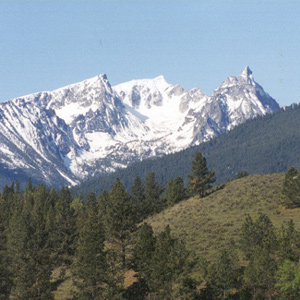
On 7 September 1805, the day after they left the Salish people at Ross’s Hole, the Corps proceeded north down the Bitterroot River valley. “The foot of the Snow toped mountains approach near the river on the left,” wrote Clark.
Lewis’s Hunting Accident
Lewis's closest call
by Joseph A. Mussulman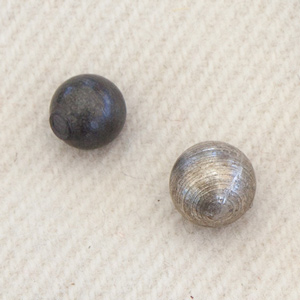
The most serious hunting mishap, and surely the most memorable episode in Lewis’s frequently referenced “chapter of accedents,” was the moment on 11 August 1806 when Pierre Cruzatte shot him in the buttocks.
Bison in Decline
An interview with Dan Flores
by Dan Flores, Joseph A. Mussulman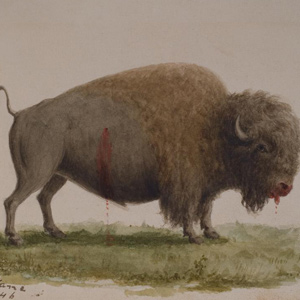
In this interview, Dan Flores, A.B. Hammond Professor of History at The University of Montana, sets the scene at the time of Lewis and Clark, and then discusses some of those circumstances which brought the American bison to the brink of extinction.
The Woodlands
Repository of plant specimens
by Catharine P. Fussell, Joseph A. Mussulman, Timothy Preston Long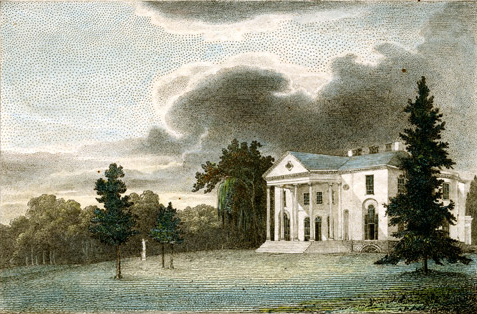
Lewis sent plant specimens to William Hamilton who cultivated them in his garden at The Woodlands outside of Philadelphia.
Moose
Alces alces
by Joseph A. Mussulman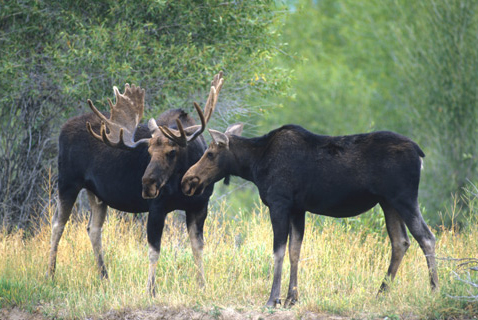
“Reubin Field wounded a moos deer this morning near our camp,” Lewis wrote on 7 July 1806, adding, “my dog much worried.”
The Osage Delegations
by Joseph A. Mussulman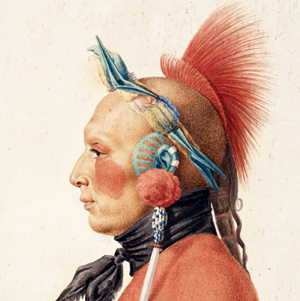
They were “certainly the most gigantic men we have ever seen,” Jefferson wrote on 12 July 1804. A dozen Osage men and two boys had arrived in Washington City the previous day, escorted by Pierre Chouteau.
Shoshone Travel Advice
Leaving Withington Creek Village
by Joseph A. Mussulman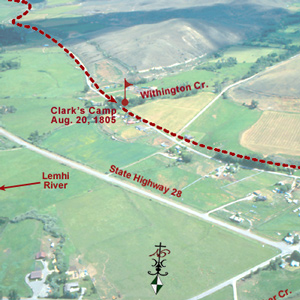
Lewis was still at Camp Fortunate directing the digging of a cache and the making of packs and pack-saddles for the portage across the divide. Meanwhile, Clark and his contingent left to see whether the Salmon River was as bad as Cameahwait had said.
Glacier Lilies
Erythronium grandiflorum
by Joseph A. Mussulman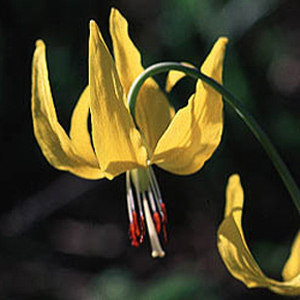
Because it appears in the Rockies at the edges of receding snowbanks it has also earned the name glacier lily. Lewis’s specimen, collected 15 June 1806 on the Clearwater River, was the one used by Pursh to describe the species.
Clark’s Umbrella
A matter of melanins?
by David J. Peck, Joseph A. Mussulman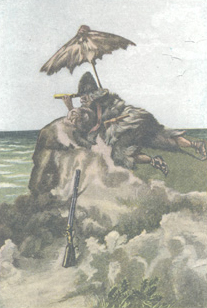
There may have been one good personal reason why Clark carried an umbrella. Beneath our skins we’re all supposed to be pretty much alike, but at the epidermal level there are some conspicuous differences that we owe to melanin.
Jefferson the Violinist
by Joseph A. Mussulman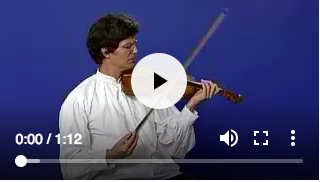
One of Thomas Jefferson’s favorite compositions was the Sonata for Violin and Continuo, Opus 5, written by Corelli. Using a violin such as Jefferson owned, violinist Samuel Taylor plays the theme and two of the variations.
Meeting the Snake
Water color
by Joseph A. Mussulman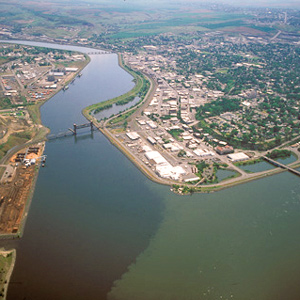
The Corps’ four-day trip to this point from Canoe Camp on the Clearwater in their five crowded dugouts was a taste of things to come.
Miller Island
River of the falls
by Joseph A. Mussulman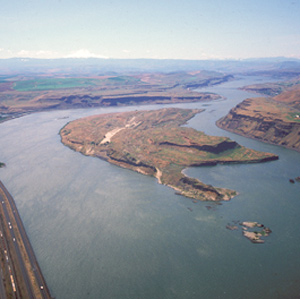
Near the west end of the island, they passed a sizeable tributary local Indians called To war ne hi ooks. The journalists left us no hint that the word they heard as Towarnehiooks was a Chinookan expression meaning “enemies.”
The Beaverhead Canyon Gateway
Last gate of the Rockies
by Joseph A. Mussulman, Robert N. Bergantino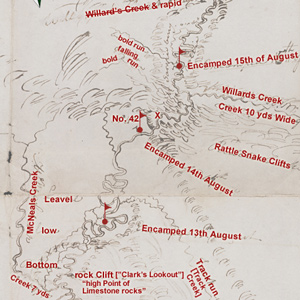
Lewis’s simple, orderly concept of the Rocky Mountains began to crumble. The truth was, this was not the easy portage to the Pacific Ocean they had expected from the beginning. Countless “chains” of mountains still intervened.
Engraving
Mass producing art
by Joseph A. Mussulman, William Gadradt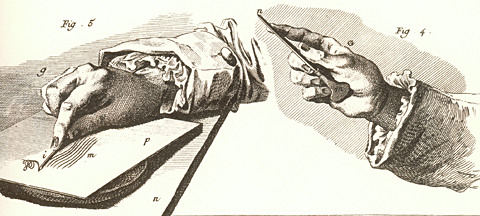
The printing of pictures employed a 350-year-old technology based on a process called intaglio—from an Italian word meaning to “cut in”—in which lines and dots were incised into a metal sheet called a plate.
Passing Hell’s Gate
Up the Blackfoot River
by Joseph A. Mussulman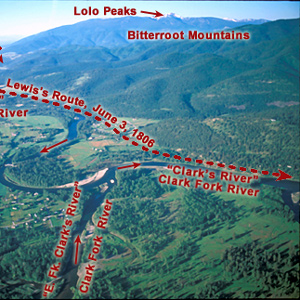
The continuation of the Northern Nez Perce Trail led from their camp at Travelers’ Rest to the plains near the Great Falls of the Missouri, saving hundreds of miles from the expedition’s 1805 route.
Three Pests and a Yoke
Lewis's literary metaphor
by Joseph A. Mussulman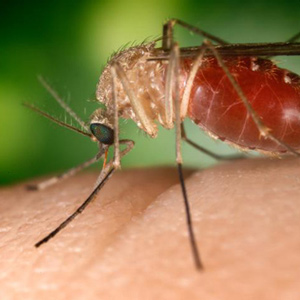
Lewis displays his talent for seeing the world metaphorically. Perhaps he wrote this vignette as he slapped at mosquitoes, waved off gnats, or plucked barbed spines from his feet.
Colter’s Creek
Today's Potlatch River
by Joseph A. Mussulman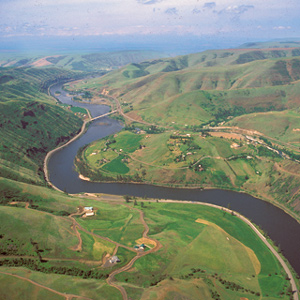
At 3 p.m. on 7 October 1805, the Corps loaded their five new dugout canoes–four large ones plus a small one “to look ahead”–and set out down the Clearwater River toward the Columbia and the Pacific beyond.
Defining ‘Discover’
Shades of meaning
by Joseph A. MussulmanThe Dictionary of Bias-Free Usage remonstrated that “only by a strange twist of white ethnocentrism can one be considered to ‘discover’ a continent inhabited by millions of people.” Political correctitude might suggest that we simply drop the word discovery from our Lewis and Clark lexicon, and just speak of the captains as explorers.
The Lochsa River
Packer Meadows to Colt Killed Creek
by Joseph A. Mussulman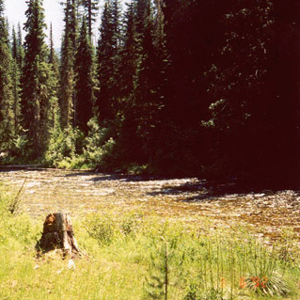
Snow was falling in the high country above them on the morning of 14 September 1805 when, after striking camp two miles downstream from Packer Meadows, the Corps slogged down the Glade Creek canyon through rain and sleet.
Wheeler on the Marias
Meeting a Blackfeet survivor
by Barbara Fifer, Joseph A. Mussulman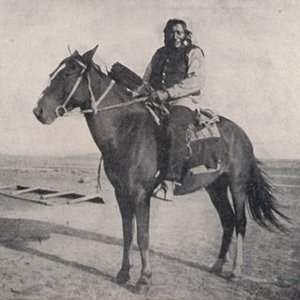
Traveling through the Marias River country with anthropologist George Bird Grinnell, Wheeler met Wolf Calf, one of the Indian survivors of Lewis’s encounter with the Blackfeet.
Crossing the Clark Fork
Lewis's rafting adventure
by Joseph A. Mussulman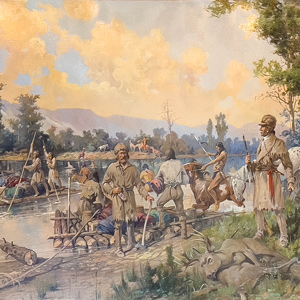
With every crossing they unavoidably drifted farther downstream. Lewis recounted the climactic rafting episode of the day.
Fleas
Pulex irritans
by Joseph A. Mussulman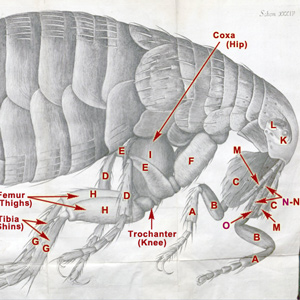
Nearly a century and a half before Lewis and Clark’s encounter with fleas en masse on the lower Columbia River, the little insect acquired an almost admirable, if not respectable, reputation, thanks to Hooke and his microscope.
The Musselshell River
Sharp curve
by Joseph A. Mussulman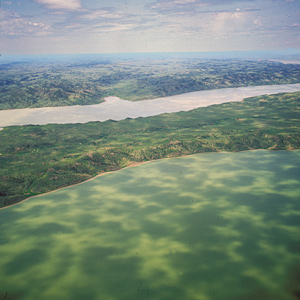
On 19 May 1805, the expedition camped on the east side of the neck, or “gouge,” in the Missouri River where the Musselshell River joins it. It had been an exhausting day.
Fort Clatsop’s Legacy
by Joseph A. Mussulman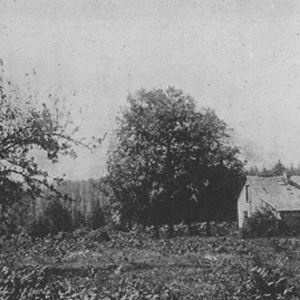
One of the first writers to devote special attention to the question of Fort Clatsop’s post-history was Olin D. Wheeler, who visited the site with Coboway’s grandson, Silas B. Smith, in 1900, and wrote briefly of it.
Decision Point
Marias River decision
by Joseph A. Mussulman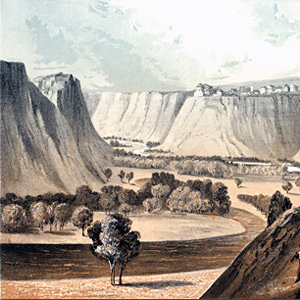
The two captains “strolled out to the top of the hights in the fork of these rivers,” from which they had “an extensive and most inchanting view.”
Rainbow Falls by Air
"Pleasingly beautifull"
by Joseph A. Mussulman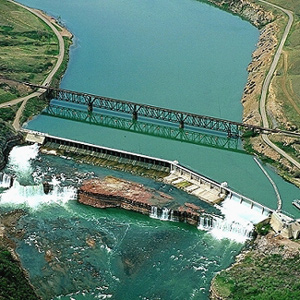
After briefly contemplating the Crooked Falls on 14 June 1805, Lewis followed the sound of “a tremendious roaring” to “one of the most beautifull objects in nature,” a fifty-foot-high cascade “with an edge as regular and as straight as if formed by art.”
Harpers Ferry by Air
Wedge of history
by Joseph A. Mussulman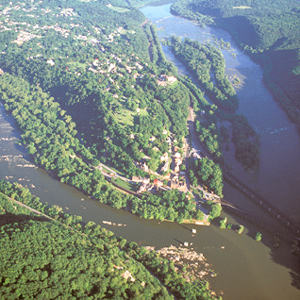
Harpers Ferry’s tiny footprint belies the richness of its roles in American history—in industrialization, in commerce, and especially in the unfolding of the Civil War and the long struggle of African-Americans out of slavery.
Prickly Pears
One of nature's greatest pests
by Joseph A. Mussulman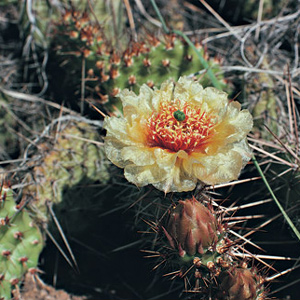
“The prickly pear is now in full blume,” he wrote on a mild early-summer day in 1805, “and forms one of the beauties as well as the greatest pests of the plains.”
St. Louis by Air
The western gate
by Joseph A. Mussulman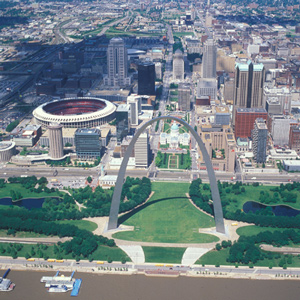
The expedition arrived on 7 December 1803, witnessed the transfer of Louisiana from Spain to the United States, and metaphorically passed through its western gate on 14 May 1804. They would not return until 23 September 1806.
Jean-Bapiste Lolo
Another corporeal Lolo
by Joseph A. Mussulman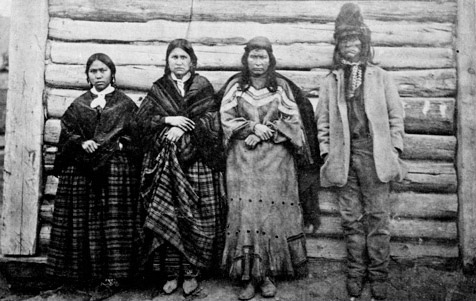
He spent most of his 70 years at Fort Kamloops in British Columbia and is not known to have traveled as far south as today’s Lolo, Montana.
Pompeys Pillar
Pompy's Tower
by Joseph A. Mussulman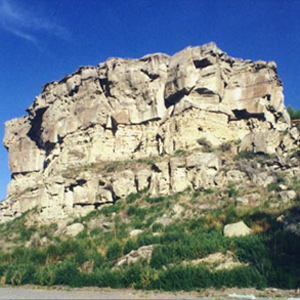
On 25 July 1806, Clark and his contingent of nine men, plus York, Toussaint Charbonneau, Sacagawea, and little Jean Baptiste, arrived at “a remarkable rock Situated in an extensive bottom, on the Star[boar]d. [south] Side of the river.”
Lewis’s Three Wishes
Pencil, pen, and camera obscura
by Joseph A. Mussulman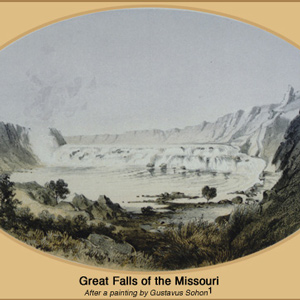
“I wished for the pencil of Salvator Rosa, or the pen of Thompson, that I might be enabled to give to the enlightened world some just idea of this truly magnifficent and sublimely grand object, which has from the commencement of time been concealed from the view of civilized man”
Lewis’s Education
Education for the young gentleman
by Joseph A. Mussulman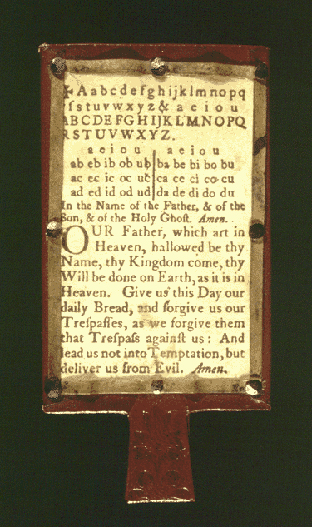
Land management introduced the pupil to the practical aspects of natural history. Jefferson recalled Lewis’s “talent for observation, which had led him to an accurate knowledge of the plants and animals of his own country, would have distinguished him as a farmer.”
Lolo Stories
Endless possibilities
by Joseph A. Mussulman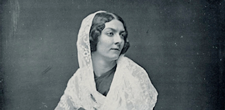
One amateur historian averred that it was “a corruption of the French name Le Louis, given to the stream and pass by early French trappers” in honor of Meriwether Lewis. Another claimed that the mystery [wo]man was named after “Lolo [i.e., Lola] Montez, a noted Spanish beauty.”
Dugout Canoes
by Joseph A. Mussulman
Altogether, the men carved 15 dugout canoes. At Fort Mandan they hewed 6 from cottonwood logs. West of the Rockies they used ponderosa pine logs to craft five new canoes. On the Yellowstone, Clark made two small dugouts a few miles above today’s Billings.
Clark’s Military Rank
An elephant on the trail
by Joseph A. Mussulman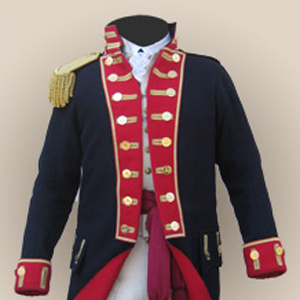
Lewis had assured Clark that their situations would be identical in every respect, beginning with rank. The fact that Clark was actually a lieutenant was a secret kept throughout the expedition.
Lost Trail Pass
Uncertainty
by Joseph A. Mussulman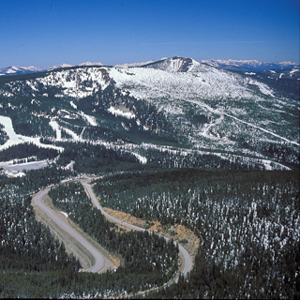
Where did they camp? This was not the only time Toby was unsure of himself, nor that the captains were temporarily baffled, but it is perhaps the one that most readily invites study and discussion.
Meriwether Lewis (1774–1809)
The life of Captain Lewis
by Joseph A. Mussulman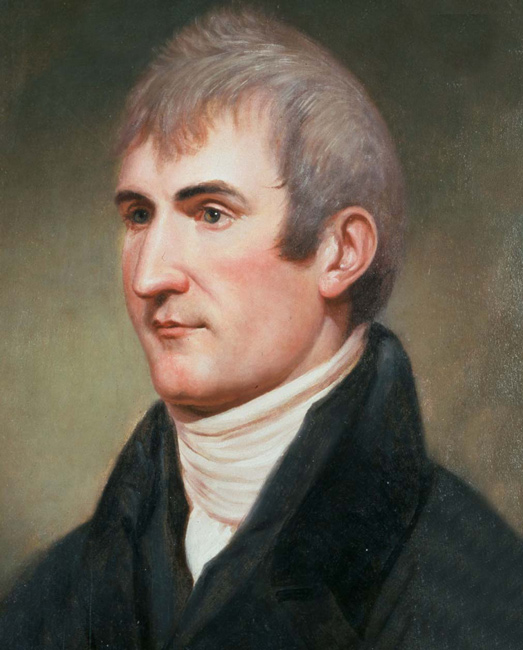
Born on 18 August 1774, he was exactly eight months old when Paul Revere made the legendary ride that signaled the beginning of the War of Independence, and the birth of the new United States of America, which Lewis was to serve with distinction.
Early Bighorn Specimens
by Joseph A. Mussulman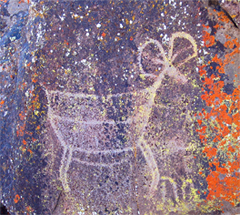
In 1800 a Scottish explorer shot several specimens in the Canadian Rockies and brought back hides, heads and horns for study by American and British zoologists, including Dr. George Kearsley Shaw of the British Museum, whose study was published in 1804.
The Salt Works by Air
Seaside, Oregon
by Joseph A. Mussulman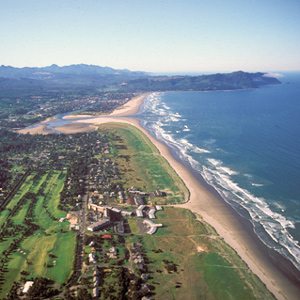
Here they built an oven of stones and, day and night for a month and a half, scooped perhaps 1,400 gallons of water from the surf, boiling it down to about twenty-eight gallons of salt.
African-American Song and York
Did he sing?
by Joseph A. Mussulman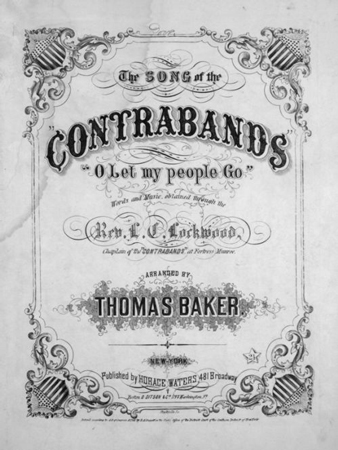
Even if someone had invited him to sing them, it is probable that he as well as many of his listeners would have considered it ill-mannered if not illegal to do so.
The Headwaters by Air
Essential point
by Joseph A. Mussulman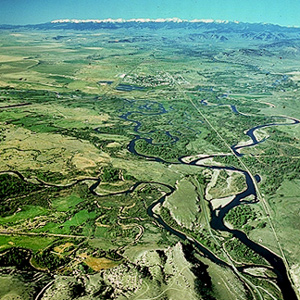
Upon the Corps’s arrival at this confluence on 25 July 1805, Lewis quickly recognized it as “an essential point in the geography of this western part of the Continent.”
John Mullan’s Lolo
Naming Lo Lo's Fork
by Joseph A. Mussulman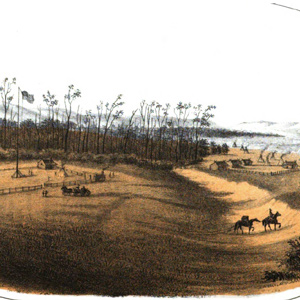
Lt. John Mullan surveyed the Northern Nez Perce road across the Bitterroot Range in 1853-54 to assess its suitability as a railroad route. He never met anyone named Lolo, but was told by an Iroquois guide and interpreter that the creek was called the “Lo Lo Fork,” or “Lo Lo’s Fork.”
Columbian Black-Tailed Deer
Odocoileus hemionus columbianus
by Joseph A. Mussulman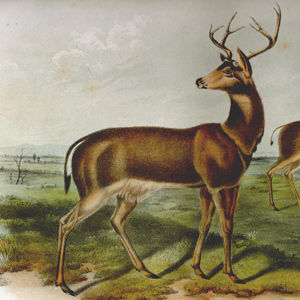
Lewis’s conviction that the “black tailed fallow deer of the coast” and the “common fallow deer” were two distinct species was sufficient to urge later investigators to try to clarify them.
Long Beach
Mementos
by Joseph A. Mussulman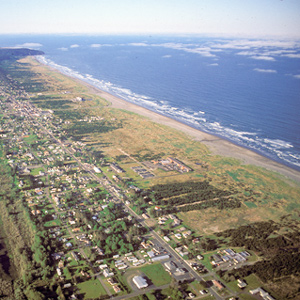
Clark’s party continued north along the beach for four miles, to the vicinity of today’s Long Beach, Washington. Here Clark memorialized their first visit to the Pacific Ocean by marking his name and the date on a small pine tree.
Bighorn Sheep Encounters
by Joseph A. Mussulman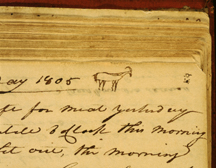
During a reconnaissance assignment eight miles up the Yellowstone River on 26 April 1805, Joseph Field became the first member of the Corps to glimpse a live bighorn sheep.
Harvesting the Hunt
by Joseph A. Mussulman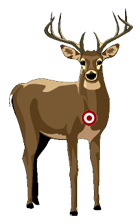
After the animal is shot, the work begins: field dressing, hauling the meat to camp, butchering, and preserving the extra meat for future meals.
Jerusalem Artichokes
Helianthus tuberosus
by Joseph A. Mussulman, Kristopher K. Townsend
The French explorer Samuel de Champlain found the vegetable growing in Indian gardens along the Saint Lawrence seaway and carried specimens of it back to France in 1603, where its root soon became a staple food for humans.
Bugs
Worthy of notice
by Joseph A. Mussulman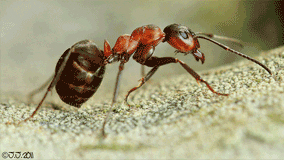
President Jefferson directed Lewis to observe seasonal transitions as they are marked by the “times of appearance of particular birds, reptiles or insects.”
Over Tillamook Head
Clark's point of view
by Joseph A. Mussulman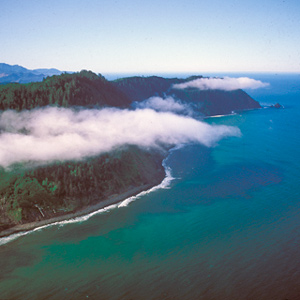
After passing the salt works and continuing along the “round Slippery Stones under a high hill,” Clark related, “my guide made a Sudin halt, pointed to the top of the mountain and uttered the word Pe Shack which means bad, and made Signs that we . . . must pass over that mountain.
The Two Medicine Formation
Dinosaur country
by Joseph A. Mussulman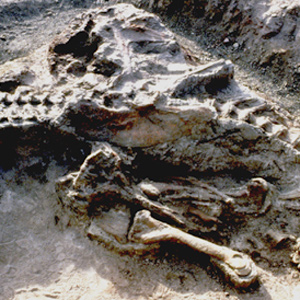
During his trips on the Marias in June 1805 and 1806, had he not been continually on the lookout for signs of those hostile Blackfeet Indians, Lewis just might have seen some fossils of marine shellfish.
Driftwood Danger
An embarras (obstacle)
by Joseph A. Mussulman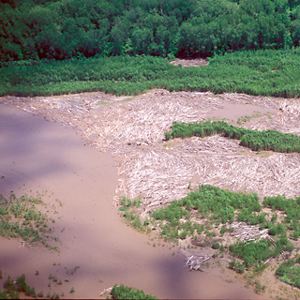
The Missouri spawned countless hazards such as a drift or raft of logs—an embarras, or “obstacle,” as the French engagés called it.
Bismarck and Mandan
The main attraction
by Joseph A. Mussulman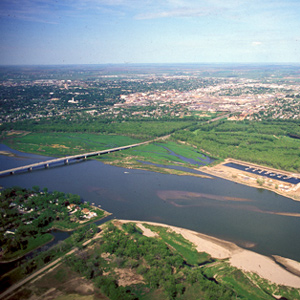
The Corps of Discovery arrived in the vicinity on 20 October 1804, having worked their way some 1,450 miles up the Missouri in 155 days. That day, wildlife was the main attraction.
Portable Inkwell
Their most important tool
by Joseph A. Mussulman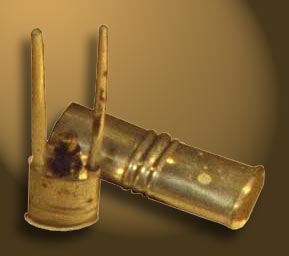
None of their tons of supplies, not even the guns, powder, and bullets with which they fed themselves, were ultimately as important as the pens, ink, and paper they carried, and protected from the elements.
Fort Clatsop Detachment Orders
by Joseph A. Mussulman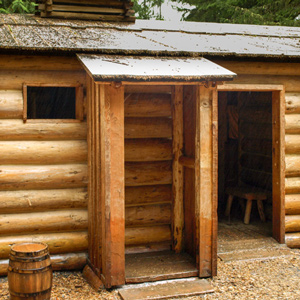
The captains issued Detachment Orders showing the degree to which Lewis and Clark consistently maintained the spirit of Baron von Steuben’s Regulations for the Order and Discipline of the Troops of the United States.
Rush’s Bilious Pills
Rush's Thunderbolts
by Gregory J. Higby, Joseph A. Mussulman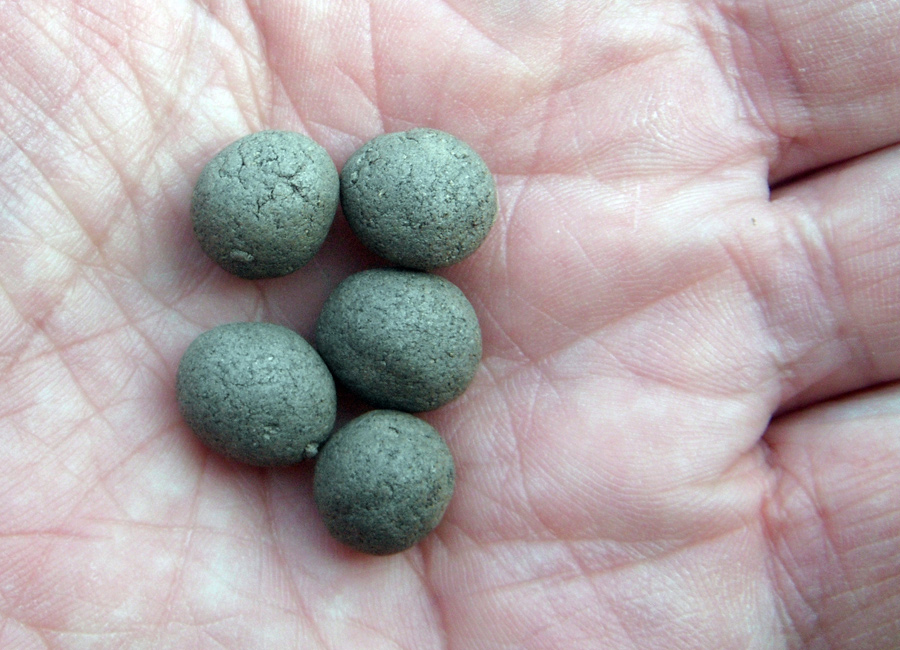
Dr. Rush had expressly indicated to Lewis that when one of his men showed the “sign of an approaching disease . . . take one or two of the opening pills” nicknamed “Rush’s Thunderbolts.”
Bozeman Pass
Of great service
by Joseph A. Mussulman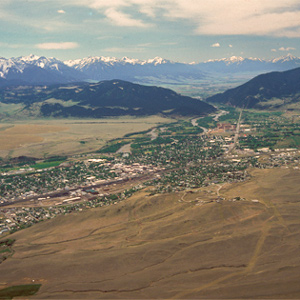
Clark reported, “the indian woman who has been of great Service to me as a pilot through this Country recommends a gap in the mountain more South which I shall cross.” This was one of the few times Sacagawea acted as the guide.
Western Meadowlark
Sturnella neglecta
by Joseph A. Mussulman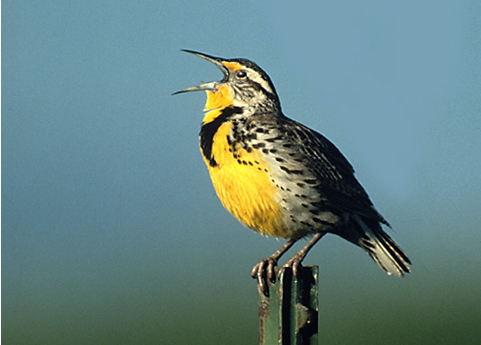
The species remained nameless until John James Audubon dubbed it neglecta because, he wrote in 1840, although “the existence of this species was known to the celebrated explorers of the west, Lewis and Clark . . . no one has since taken the least notice of it.”
Church in St. Charles
by Joseph A. Mussulman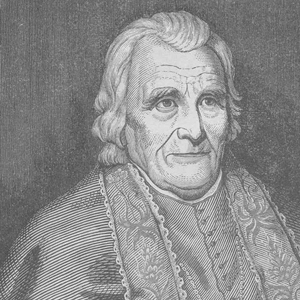
On the first Sunday after leaving Camp River Dubois, Joseph Whitehouse wrote that some of the party “went to church, which the french call Mass, and Saw their way of performing &c.”
Recruiting the Hunters
Finding soldiers that could hunt
by Joseph A. Mussulman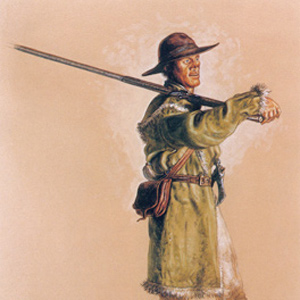
While traveling down the Ohio and wintering at Camp River Dubois, the captains searched for army recruits accustomed to the ways of the woods. If they were to survive, the expedition needed hunters.
Dietary Salt
Lewis's singular thirst
by Joseph A. Mussulman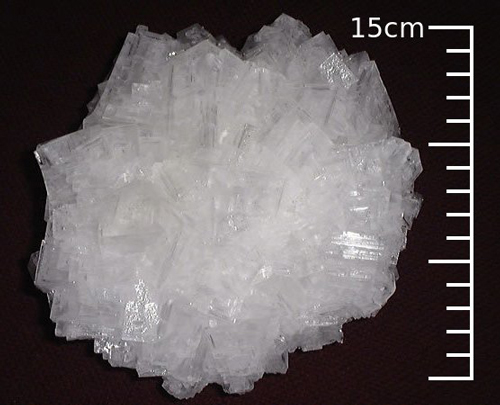
The formula is simple. One molecule of sodium, a reactive metal, plus one molecule of chlorine, a poisonous gas, equals a harmless mineral that once was deemed “the fifth element,” along with earth, air, fire, and water.
Indigenous Forestry
by Joseph A. Mussulman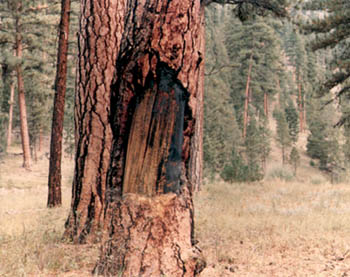
Archaeological evidence indicates that deliberate burning of forests and fields has been occurring on the North American continent for at least the past 10,000 to 20,000 years.
Long Camp
Five weeks with the "Chopunnish"
by Joseph A. Mussulman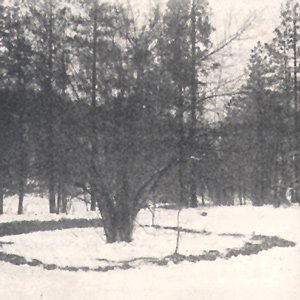
Upon its return from the Pacific coast in the spring of 1806, the expedition camped on the Clearwater River near present-day Kamiah from 14 May 1806 until 10 June 1806, waiting for the snow to melt on the crest of the Bitterroot Mountains.
The Blackfoot River by Air
Prairie of the knobs
by Joseph A. Mussulman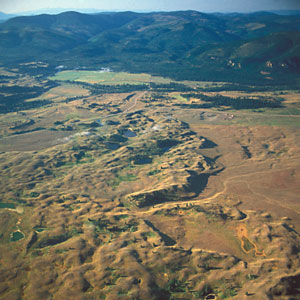
On 6 July 1806, Lewis’s eleven-man party had broken camp at the mouth of a Blackfoot River tributary they named Seamans Creek, after, and headed on up the river along the “road” that Indians living in the Rocky Mountains called the Cokahlahrishkit—the Road to the Buffalo.
Big Bend of the Missouri by Air
Around the bend
by Joseph A. Mussulman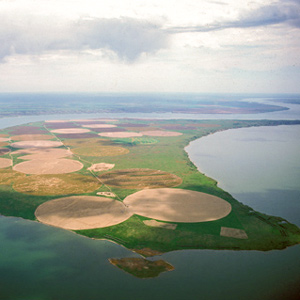
They paced off the distance across “the gouge,” wrote Clark, and found it to be about a mile and a quarter; he estimated the distance around the oxbow to be thirty miles.
Pryor’s Intended Route
The best of intentions
by Joseph A. Mussulman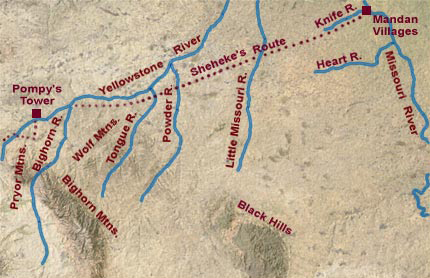
Via the shorter route, Pryor would have arrived at the Knife River villages by about 6 August 1806. A trip to see Hugh Heney at Fort Assiniboine would take another two weeks.
Bobcats
Lynx rufus fasciatus
by Joseph A. Mussulman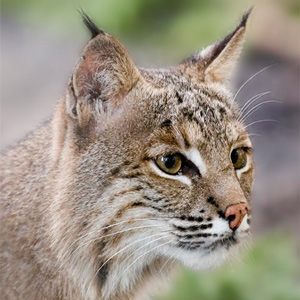
While constructing Fort Clatsop, Clark recorded two significant transactions: “The Indians left us to day after brackfast, haveing Sold us 2 of the robes of a Small animal for which I intend makeing a Capot.”
Columbia River Dams
The rough places plain
by Joseph A. Mussulman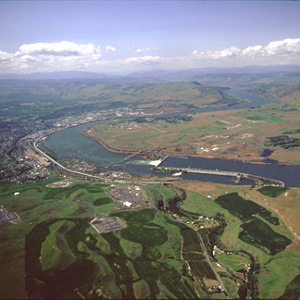
Bonneville Dam, was the first dam to be built on the Columbia River. The slackwater pool it impounds, called Lake Bonneville, eliminated the Cascades as a barrier to commercial shipping, and provided a deep, navigable channel for barges and tugs.
Father De Smet’s Arrival
Did they know any Lolos?
by Joseph A. Mussulman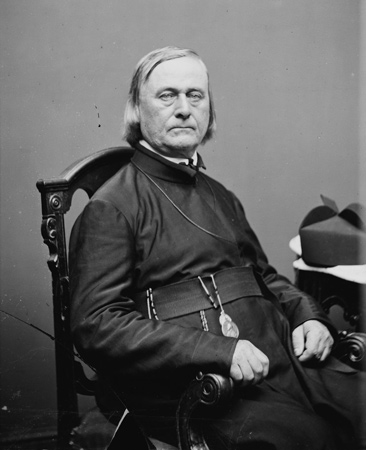
Among the most faithful of the missionaries’ converts to Catholicism was a half-breed trapper named Lolo who was killed by a grizzly bear in November 1850.
Willard’s Bad Day
And a dreadful hurricane
by Joseph A. Mussulman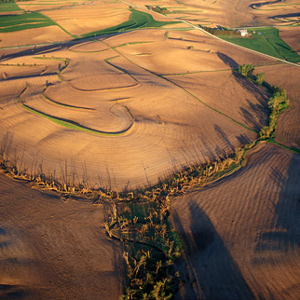
Willard had to walk back 3 miles to get his tomahawk. On his way back, he dropped his rifle in the water, and he couldn’t find the weapon in the deep mud. On that same day, Clark took note of “much fallen timber, apparently the ravages of a dreadful haricane.”
La Véndrye’s Golden Sands
His visit to Spirit Mound
by Joseph A. Mussulman, Kristopher K. Townsend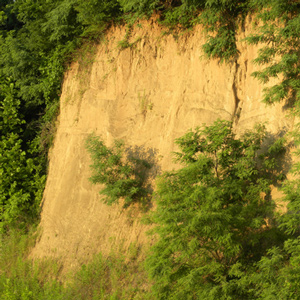
La Vérendrye’s 1728 name for Spirit Mound contains several puzzling statements. Pako’s reference to that “very fine gold-coloured sand,” suggests the “little mountain” was located in a fabulous land, an Eldorado, of precious natural riches.
Experience the Lewis and Clark Trail
The Lewis and Clark Trail Experience—our sister site at lewisandclark.travel—connects the world to people and places on the Lewis and Clark Trail.
Discover More
- The Lewis and Clark Expedition: Day by Day by Gary E. Moulton (University of Nebraska Press, 2018). The story in prose, 14 May 1804–23 September 1806.
- The Lewis and Clark Journals: An American Epic of Discovery (abridged) by Gary E. Moulton (University of Nebraska Press, 2003). Selected journal excerpts, 14 May 1804–23 September 1806.
- The Lewis and Clark Journals. by Gary E. Moulton (University of Nebraska Press, 1983–2001). The complete story in 13 volumes.
This site is provided as a public service by the

Lewis and Clark Trail Alliance
with additional funding from the following: