Figure 1
Nach-a-wish, a Nez Percé Indian
Paul Kane (1810–1871)
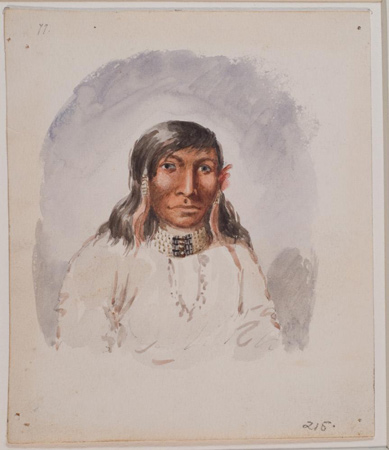
Watercolor and pencil on paper, 5 3/8 x 4 1/2 inches (13.6 x 11.4 cm). Courtesy Stark Museum of Art.
Figure 2
“A Nesperces Indian” (1849–1856)
Paul Kane (1810–1871)
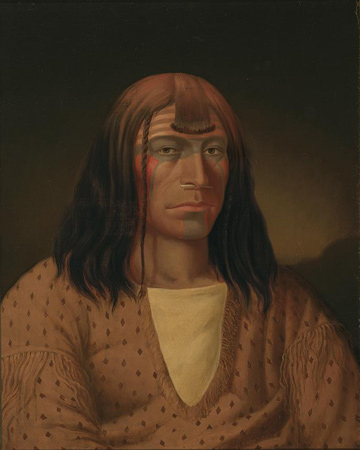
Oil on canvas, 64.2 x 51.2 cm. Courtesy Royal Ontario Museum, https://rom.on.ca.
Kane’s oil painting was based on two field sketches, one of which is Nach-a-wish (Fig. 1) and the other a “spokan” or “Rocky Mountain Indian.” Neither of his field subjects have pierced noses, and the artist would not have seen the practice while in the field circa 1850. In Fig. 2, the artist appears to be meeting the expectations of the name, Nez Perce.[1]Kenneth R. Lister, Paul Kane the Artist: Wilderness to Studio (Toronto: Royal Ontario Museum Press, 2010), 318–19.
The expedition first encountered the Nez Perce people on 10 September 1805 when John Colter met them on Lolo Creek near Travelers’ Rest. They would remain with the expedition in one way or another until 25 October 1805 where they said goodbye at Fort Rock at The Dalles. They would join once again on 23 April 1806 meeting a family of travelers at Rock Creek on the Columbia River. Their final day, 4 July 1806, was at present-day Missoula, Montana. The Nez Perce provided the expedition’s longest period of contact with any Native American Nation.
The designation ‘Nez Perce’ is from the French nez percé referring to the practice of placing a dentalium shell through the septum, a tradition strongly denied by many tribal members. In addition to some form of “Pierced noses,” the captains often called the people Chopunnish, a word derived from cú•pǹitpel̀u•: cú•pǹit means ‘piercing’ and -pel̀u• means ‘people’.[2]Ives Goddard, Handbook of North American Indians: Plateau Vol. 12, ed. Deward E. Walker, Jr. (Washington, D.C.: Smithsonian Institution, 1998), 437.
Whether or not they pierced their noses, the people today call themselves Nimiipuu and are still known as the Nez Perces. On this website, the historically adopted name Camp Chopunnish has been replaced with the more appropriate moniker Long Camp.
Selected Pages and Encounters
Twisted Hair
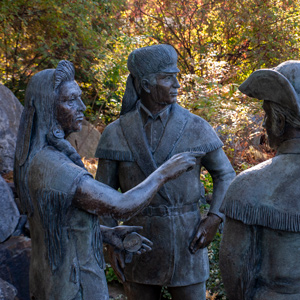
Twisted Hair helped Clark locate a canoe-building site, drew maps of the route to the mouth of the Columbia, and along with Tetoharsky, traveled with the expedition to The Dalles of the Columbia.
Indian Horses in the PNW
by Barbara Fifer
One of the reasons Clark had so much difficulty in purchasing horses at The Dalles in the spring of 1806 is that he was at the very northwestern edge of their dispersal across North America.
Tetoharsky
Tetoharsky, along with Twisted Hair, accompanied the expedition down the Clearwater and lower Snake Rivers, acting as river guides and interpreters. They continued down the Columbia to The Dalles.
Through Nez Perce Eyes
An interview with an elder
by W. Otis Halfmoon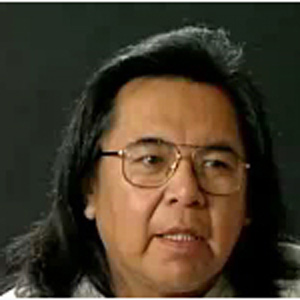
We call ourselves Ni-mee-poo, which means “The People.” We also call ourselves Tsoopnitpeloo, and Tsoopnitpeloo means “The Walking-Out People”—people from the mountains come to the plains, to hunt buffalo.
Nez Perce War of 1877
Forty miles from freedom
by Joseph A. Mussulman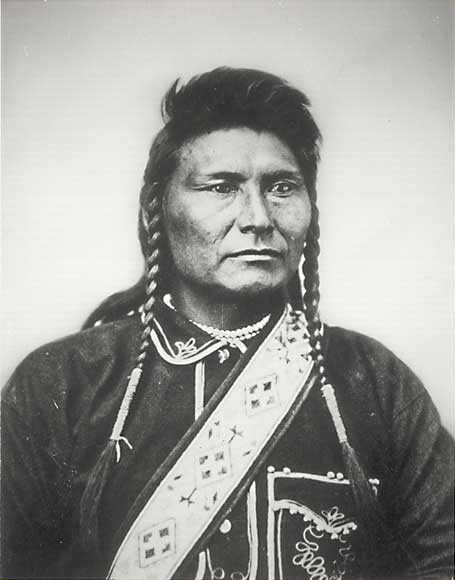
Two troops of the 1st U.S. Cavalry met their first defeat. That set in motion the heroic flight of 450 women, children and elders, 200 warriors, and their only remaining wealth—some 2,000 horses—toward the safe refuge that would forever elude them.
Life’s Cycle at the Dalles
by Barbara Fifer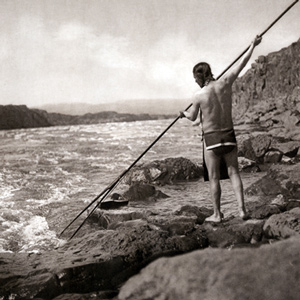
From the Columbia Plateau to the river’s mouth, people followed a yearly cycle for fishing, hunting, and harvesting wild foods. In the summer, people from many Sahaptin and Chinookan tribes visited The Dalles to trade and socialize.
Cultivating Camas
Invisible gardening
by Sarah Walker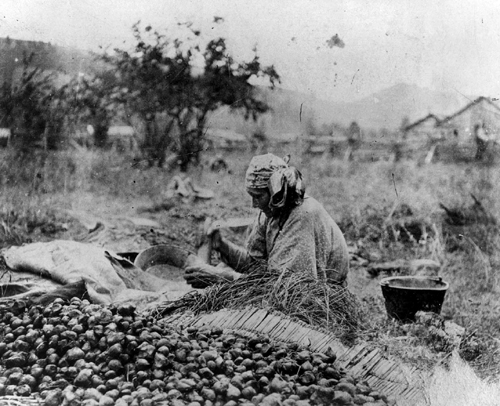
Ethnobotonists and anthropologists describe the cultivation and storage of important food plants as complex systems capable of sustaining dependable annual supplies for large populations. The Nez Perce system for camas is a good example.
The Northern Nez Perce Trail
Traces of the ancient trail
by Steve F. Russell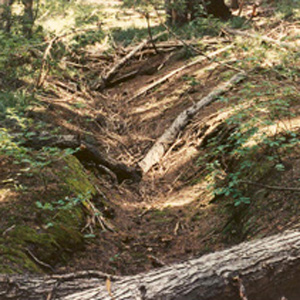
Imagine a time when all travel was on foot. This ancient time was the beginning of travel across the rugged Bitterroot Mountains for the Indian tribes of the northwest United States. This is a story of travel in those mountains from ancient times up to the present.
The Bears Paw Mountains
And the Sweet Grass Hills
by Joseph A. Mussulman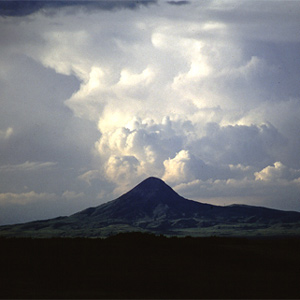
By his 5 June 1805 estimate, Meriwether Lewis was 38 miles up the Marias River from the expedition’s camp on the Missouri. To the northeast, he identified the Bears Paw Mountains and Sweet Grass Hills.
September 10, 1805
The travelers rest
by Kristopher K. Townsend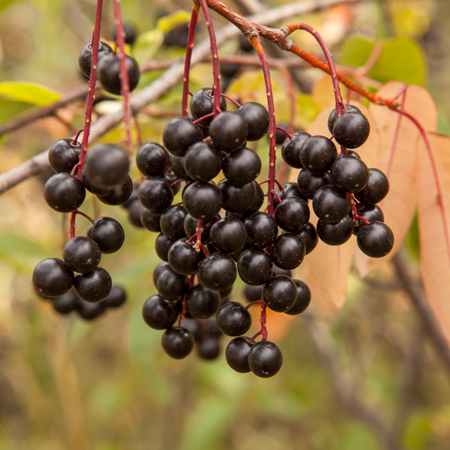
From Travelers’ Rest near present Lolo, Montana, hunters disperse in several directions. Pvt. Colter brings three Indians to camp, and the captains learn about the trail that will take them to the Clearwater River. Pvt. Whitehouse reports that the area’s abundant choke cherries have recently been harvested.
September 11, 1805
The Northern Nez Perce Trail
by Kristopher K. Townsend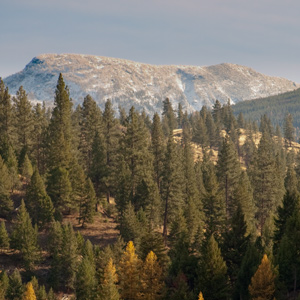
After looking for stray horses, the expedition heads up the trail that follows Travelers’ Rest Creek—present Lolo Creek in Montana. They come across a painted tree and stay at an Indian campsite where the ponderosa bark has been stripped for food.
September 14, 1805
Colt Killed Creek
by Kristopher K. Townsend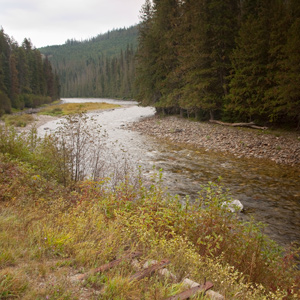
After leaving Glade Creek below Packer Meadows, the expedition climbs and descends high ridges. They leave the Northern Nez Perce Trail and cross Brushy Fork and Crooked Fork rivers. Lewis issues portable soup, but they end up killing a colt to satisfy the enlisted men’s hunger. They continue to a small island in the Lochsa River opposite present Powell, Idaho.
Weippe Prairie Villages
Nez Perce camas grounds
by Joseph A. Mussulman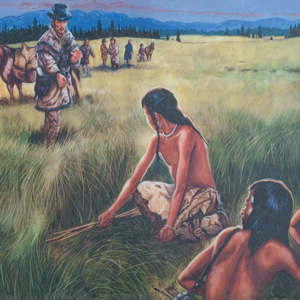
For countless generations, Weippe Prairie (prounouced WEE-yipe), like Travelers’ Rest, was a major node in the transportation, trade, and social networks of the Rocky Mountain West.
September 20, 1805
Weippe welcome
by Kristopher K. Townsend
Clark’s advance party reaches the Weippe Prairie Villages where Nez Perce women are gathering and baking camas bulbs. The kind women offer the hungry men dried salmon and roots.
Many miles behind Clark, Lewis and the main party get their fill of the horse meat left by Clark yesterday. One of the pack horses wonders away with his load, and Pvt. Lepage is sent back to find it. They camp on a small divide between Hungery Creek and the Lolo Creek (Idaho) drainage.
September 21, 1805
Lolo struggles
by Kristopher K. Townsend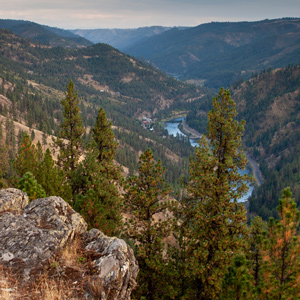
On the Lolo Trail, Lewis and several of his party find themselves “growing weak for the want of food”. At camp on Lolo Creek (Idaho), they have nothing to eat but a “few pheasants” (grouse) and a “prairie wolf” (coyote).
Already in the Clearwater country, Clark descends from Weippe Prairie and visits Twisted Hair’s fishing camp. Pvt. Reubin Field and a Nez Perce man head back to Lewis and the main party loaded with salmon, camas bread, and berries.
September 22, 1805
Bitterroot Mountain triumph
by Kristopher K. Townsend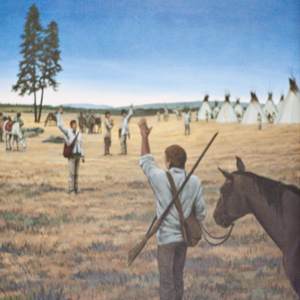
Lewis and the main party receive food sent by some Nez Perce and later arrive at the Weippe villages ‘having triumphed over the Rocky Mountains’. Clark and Twisted Hair climb up from the Clearwater River, and the two captains re-unite. Conversations ensue using Plains Sign Language, and Twisted Hair draws a map of the two rivers that will take them to the Columbia River.
Elsewhere, a large deputation of various Native Nations— organized in part by Lewis—assembles in St. Louis.
September 23, 1805
Nez Perce council
by Kristopher K. Townsend
At the Weippe Prairie villages, the captains hold their first Nez Perce council with a message of “peace and good understanding”. Gifts are given, and trading for food and leather commences. Lewis and two others are sick.
September 25, 1805
Searching for a canoe camp
by Kristopher K. Townsend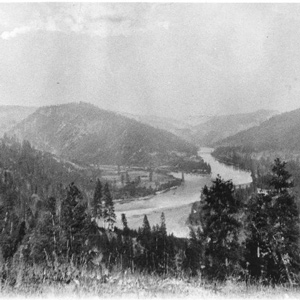
Near present Orofino, Idaho, Clark and three Nez Perce men travel down the Clearwater River in search of a place to make canoes. Opposite the North Fork Clearwater River, Clark finds the ponderosa pine trees he needs. He returns to camp and finds many are sick.
Clearwater Canoe Camp by Air
by Joseph A. Mussulman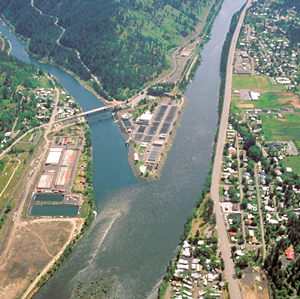
Still sick and exhausted from their recent crossing of the Bitterroot Mountains, Lewis, Clark, and their crew arrived on 26 September 1805, at what they called Canoe Camp, on the Clearwater River.
October 4, 1805
Dried fish and roots
by Kristopher K. Townsend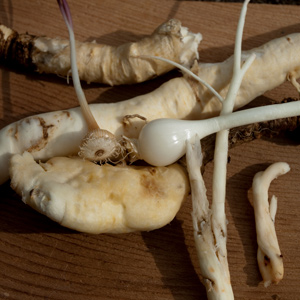
Lewis can finally “walk about a little” at Clearwater Canoe Camp near present Orofino, Idaho. The enlisted men tire of their diet of roots, and a disgruntled Nez Perce man helps himself to some tobacco.
October 5, 1805
Two Nez Perce guides
by Kristopher K. Townsend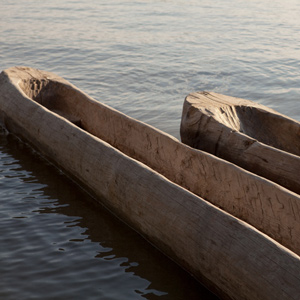
At Clearwater Canoe Camp, two new dugouts are put in the water. The horses are rounded up, branded, and given to Nez Perce caretakers, and two guides volunteer to take them down the river.
October 7, 1805
Down the Clearwater
by Kristopher K. Townsend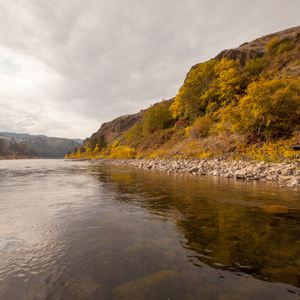
After a busy day, thirty-three expedition members, Lewis’s dog, Seaman, and the two Lemhi Shoshone guides start down the Clearwater in their five new dugout canoes. Challenging rapids test their skills.
October 8, 1805
A canoe accident
by Kristopher K. Townsend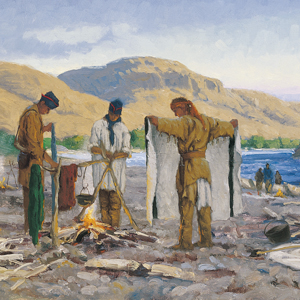
On the Clearwater River, the paddlers navigate numerous rapids and pick up guides Twisted Hair and Tetoharsky. After a canoe accident at Colter’s Creek—present Potlatch River—travel abruptly stops.
October 10, 1805
Clearwater and Snake confluence
by Kristopher K. Townsend
The paddlers navigate several rapids, and one canoe is damaged when it hits a rock. By day’s end, they reach the confluence of the Snake and Clearwater rivers at present Clarkston, Washington.
October 11, 1805
Down the Snake River
by Kristopher K. Townsend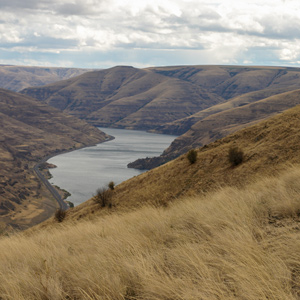
Between present Clarkston and Almota, Washington, the paddlers navigate numerous Snake River rapids where the Nez Perce and Palouse have established fisheries. The captains notice a curious sweat lodge.
October 24, 1805
Running the Short Narrows
by Kristopher K. Townsend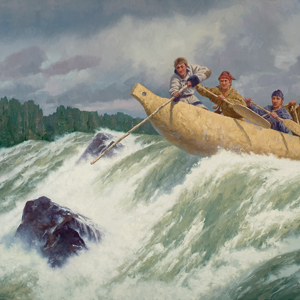
The dugout canoes are safely run down the Short Narrows of the Columbia astonishing the local onlookers. Below the narrows, the expedition encounters their first Chinookan-speaking People.
October 25, 1805
A "bad whorl & Suck"
by Kristopher K. Townsend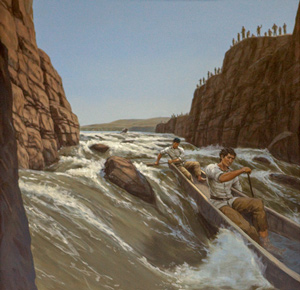
The expedition’s most valuable cargo is carried around the Long Narrows of the Columbia, and then the best paddlers run the canoes. At present The Dalles, Oregon, Fort Rock Camp is established.
April 18, 1806
Tenino horse deal
by Kristopher K. Townsend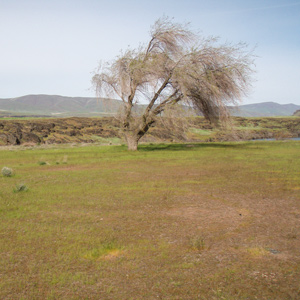
At a Wishram village on the north side of the Columbia, Clark meets a Nez Perce man who would become their guide. He doctors a Tenino chief and his wife, and he is able to buy a horse from them.
At Fort Rock on the south side of the Columbia, Lewis has the two large dugouts cut up for fuel, crosses the river, and sets up camp at the Long Narrows below Celilo Falls.
April 23, 1806
Friendly Tenino village
by Kristopher K. Townsend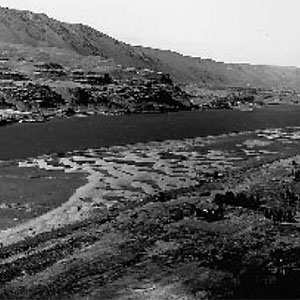
To continue up the Columbia without enough horses, the travelers must walk over large sand dunes. They meet a Nez Perce family with several horses who offer to help pack some of their cargo. At present Rock Creek, they reach a friendly Tenino village of Wah-how-pum. The day ends with smoking and dancing.
May 3, 1806
The Tucannon crossing
by Kristopher K. Townsend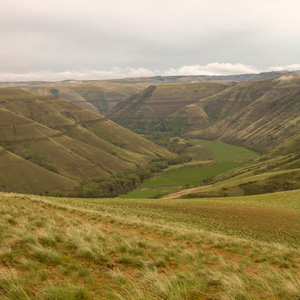
In southeastern Washington, the expedition follows the Travois Road climbing from present Patit Creek to the high plains. They then descend into the Tucannon Canyon and climb to the plains on the other side. The trail takes them to the fertile Pataha Creek valley where they are met by a familiar Nez Perce chief, We-ah-koomt.
May 4, 1806
Reaching the Snake
by Kristopher K. Townsend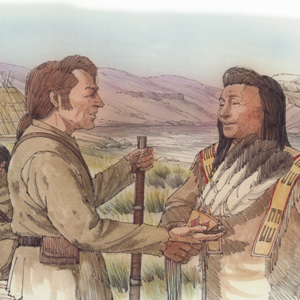
After a frosty morning, the Corps descends present Alpowa Creek to reach the Snake River. Their 1805 guide Te-toh-kan Ahs-kahp, or Tetoharsky, shows them where to cross the river. They continue to a campsite near present Clarkston, Washington where many curious Nez Perce villagers crowd around them. Lewis describes their menstrual lodges.
May 5, 1806
Clark's eye water magic
by Kristopher K. Townsend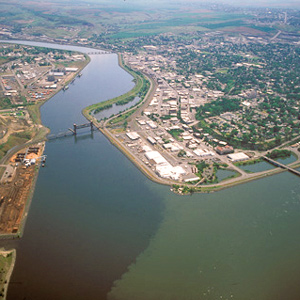
The Corps travels up the Clearwater River where they meet various Nez Perce families. They discover that Clark’s eye water can be traded for food and horses. As a joke, a Nez Perce man tosses a puppy at Lewis to eat, but he fails to see the humor. At the day’s camp at Colters Creek—present Potlatch River—they hold a council of sorts with the help of a Shoshone interpreter.
May 6, 1806
Colter's Creek
by Kristopher K. Townsend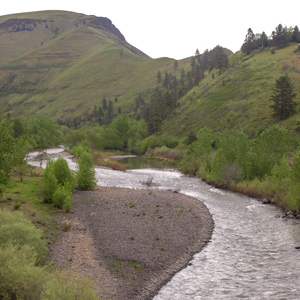
The expedition spends most of the day at Colter’s Creek—present Potlatch River. Lewis meets three Coeur d’Alene Indians, and Clark gives medical aid as payments of food. Lewis collects a nine-leaved biscuit-root specimen—an indigenous vegetable. They eventually move to another Nez Perce village a few miles up the Clearwater River.
May 7, 1806
Mosquito Creek
by Kristopher K. Townsend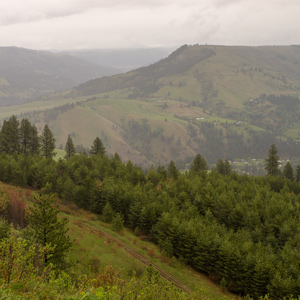
Following their Nez Perce guides, the expedition crosses to the southern side of the Clearwater River and then climbs present Angel Ridge where they can see the “spurs” of the Rocky Mountains still covered in snow. They camp at “Musquetoe” Creek, present Big Canyon. A Nez Perce man brings two lost lead canisters, and Lewis collects a specimen of serviceberry.
May 8, 1806
An argument about horses
by Kristopher K. Townsend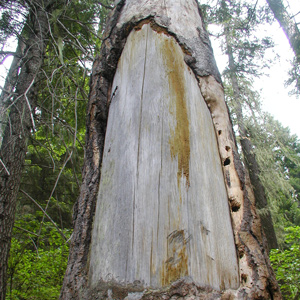
After describing northern shovelers and the Nez Perce methods of feeding on ponderosa pine, the expedition climbs to the Camas plains high above present Idaho’s Clearwater River. Walammottinin, Twisted Hair, and Neesh-ne-park-ke-ook, Cutnose, argue about the expedition’s horses left in their care the previous winter, and Lewis adds the glacier lily to his plant collection.
May 9, 1806
Horses and saddles found
by Kristopher K. Townsend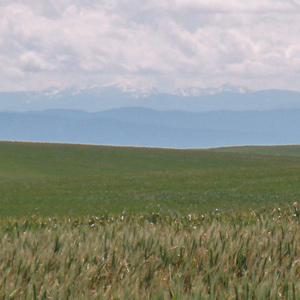
The expedition moves about six miles to Walammottinin’s [Twisted Hair’s] small camp near present Nezperce, Idaho. The horses and saddles that the captains left with the Nez Perce last fall are found, and then, it begins to snow.
In Washington City, arrangements are made to send a sick Osage delegate home.
May 10, 1806
Broken Arm's welcome
by Kristopher K. Townsend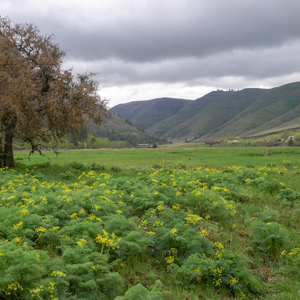
After waking to six or more inches of snow, the enlisted men gather the horses, and everyone travels about 16 miles across the Camas Prairie. They descend to Lawyer Creek near present Kamiah, Idaho where Tunnachemootoolt, Broken Arm, welcomes them, and a council begins.
May 11, 1806
Council at Lawyer Creek
by Kristopher K. Townsend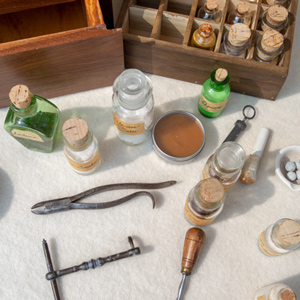
Four major Nez Perce chiefs assemble at Lawyer Creek near Kamiah, Idaho and are added to the ongoing council. Progress is slow as the translated words must move between five different languages. The captains demonstrate the air gun and magnets and give medical aid to several applicants.
May 12, 1806
Swallowing objections
by Kristopher K. Townsend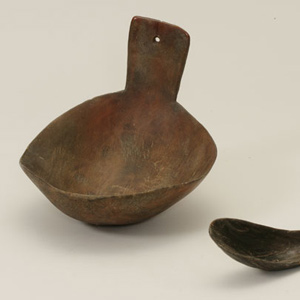
At Lawyer Creek near Kamiah, Idaho, the Nez Perce chiefs share what they heard at yesterday’s council and the People are told to swallow their objections with their mush. The captains then give a gun and ammunition to Walammottinin, Twisted Hair, as payment for watching their horses the previous winter. They also form a plan for crossing the Bitterroot Mountains.
May 13, 1806
Nez Perce manner and dress
by Kristopher K. Townsend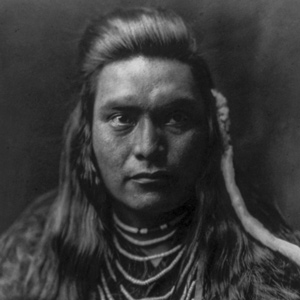
The expedition moves a few miles from Lawyer Canyon to the Clearwater River in present Kamiah, Idaho. Lewis describes in detail the manner, appearance, dress, ornamentation, and hairstyles of the Nez Perce.
Long Camp
Five weeks with the "Chopunnish"
by Joseph A. Mussulman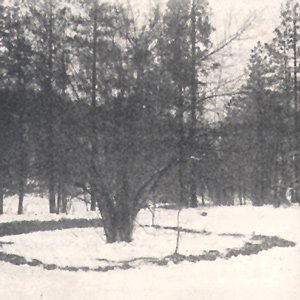
Upon its return from the Pacific coast in the spring of 1806, the expedition camped on the Clearwater River near present-day Kamiah from 14 May 1806 until 10 June 1806, waiting for the snow to melt on the crest of the Bitterroot Mountains.
May 14, 1806
Establishing Long Camp
by Kristopher K. Townsend
Nez Perce People help ferry the expedition’s gear, horses, and personnel across the Clearwater River at Kamiah in present Idaho. Broken Arm (Tunnachemootoolt) and Red Grizzly Bear (Xàxaac `ilpilp) show the captains how they castrate horses, and the captains give the latter a grizzly bear claw necklace.
May 15, 1806
Settling in at Long Camp
by Kristopher K. Townsend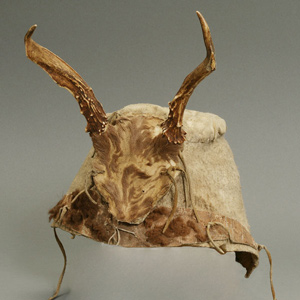
The expedition settles into Long Camp across the Clearwater River from Kamiah in present Idaho. Some build shelters and others search for a good location for a hunting camp. Clark reports that several enlisted men are sick while Lewis describes grizzly bear colors and Nez Perce hunting decoys.
May 18, 1806
Salmon run begins
by Kristopher K. Townsend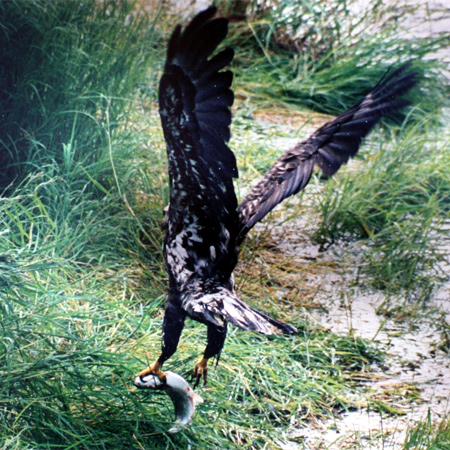
At Long Camp near Kamiah, Idaho, three hunters bring in bear meat. Someone sees an eagle with a salmon—a signal that the spring salmon run begins. Clark gives medical aid, Lewis gives meat to three unlucky Nez Perce hunters, and Sacagawea gathers more Yampah roots.
May 21, 1806
Last of the merchandise
by Kristopher K. Townsend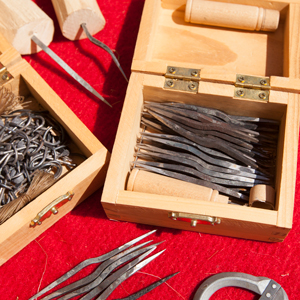
At Long Camp, the captains divide the last of their trade merchandise so that the men can barter for food and favors at nearby Nez Perce villages. At one village, Sgt. Ordway and Pvt. Goodrich observe Nez Perce women in mourning. A new shelter is built for the captains and their baggage, and five men start a new dugout canoe. Lewis discusses the fear of mistaking the edible roots collected by the locals with poisonous water hemlock.
May 23, 1806
Seaman helps hunt
by Kristopher K. Townsend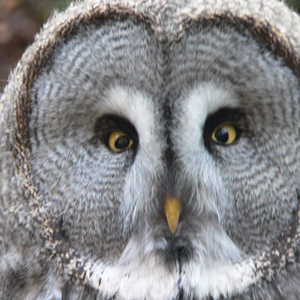
At Long Camp in present Kamiah, Idaho, toddler Jean Baptiste’s health improves, and Lewis’s dog Seaman helps hunt by pursuing a wounded deer. Lewis declares the Nez Perce method of castrating horses works better than his, and the hunters bring in a few grouse and two animals new to science: the Columbian ground squirrel and great grey owl.
May 24, 1806
Sweats and horsemint tea
by Kristopher K. Townsend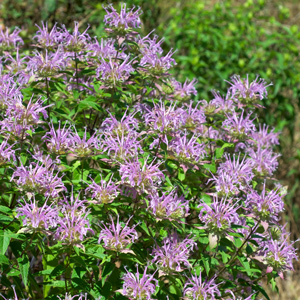
At Long Camp, the swelling on young Jean Baptiste’s neck worsens, and Pvt. Bratton is given sweats and horsemint tea. An old Nez Perce chief—treated a month ago—arrives, and Lewis is at a loss for a cure. At Tunnachemootoolt’s (Broken Arm) village, four men trade awls re-purposed from the small chain of a beaver trap.
May 25, 1806
Sweating the old chief
by Kristopher K. Townsend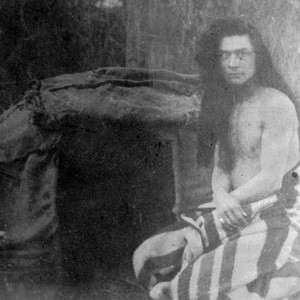
At Long Camp in present Idaho, young Jean Baptiste’s abscess worsens, and an enema is added to his medical treatments. The captains give some Nez Perce people directions on sweating their old chief while giving him horsemint tea. Silas Goodrich is told of “remarkably fat and fine” salmon brought from the Snake River, and Lewis takes celestial observations.
May 26, 1806
A South Fork village
by Kristopher K. Townsend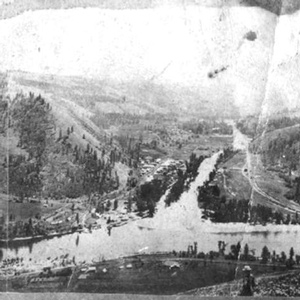
At Long Camp, Jean Baptiste’s abscess improves, and the canoe-builders finish their dugout. Brothers Joseph and Reubin Field return from a village on the South Fork Clearwater River with a large quantity of cous bread and root, and plans are made to trade for more. Some Nez Perce give them a horse to eat.
The Salmon and Snake Villages
Side trip
by Joseph A. Mussulman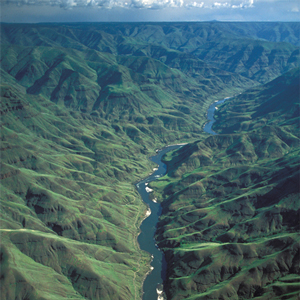
When the captains saw Nez Perces with several fresh chinook salmon, “fat and fine,” which the Indians said came from “Lewis’s River,” known today as the Salmon River, they dispatched Sgt. John Ordway and two privates to buy some.
May 27, 1806
Lewis's woodpecker
by Kristopher K. Townsend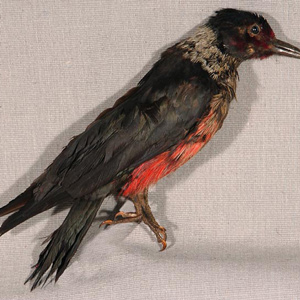
At Long Camp, Lewis begins his twelve-day treatise on natural history. Today, he describes the Columbian ground squirrel and Lewis’s woodpecker, both new to science. Sgt. Ordway and two others leave for the Snake River to buy salmon, and a Nez Perce chief says the expedition can use any of his horses for food. Young Jean Baptiste continues to improve.
Ordway’s Fishing Trip
No mere half day
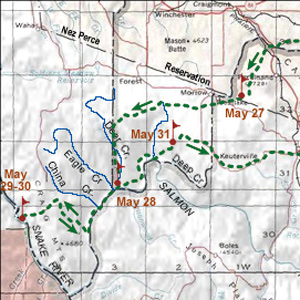
On 27 May 1806, Sergeant John Ordway, accompanied by Privates Frazer and Weiser, left Long Camp under orders to ride over to “the East branch of the Salmon River. The spring run of chinooks had not yet appeared on the Clearwater, so the three were to buy some fresh fish.
Frazer’s Razor
The enthno-history of a common object
by James P. Ronda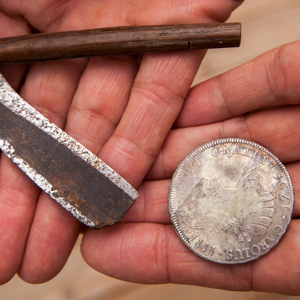
The comments made by Ordway and Gass about Frazer selling his razor for two Spanish dollars can tell us much about the ethno-history of the Lewis and Clark Expedition and the native peoples of the Plateau.
May 29, 1806
Frazer's razor
by Kristopher K. Townsend
Sgt. Ordway’s group climbs up from the Salmon River and then descends to the Snake River where there is a village of Nez Perce salmon fishers. There, Pvt. Frazer trades his old razor for two Spanish dollars.
At Long Camp, Lewis describes the short-horned lizard and prepares four plant specimens—all new to science.
May 30, 1806
Two river disasters
by Kristopher K. Townsend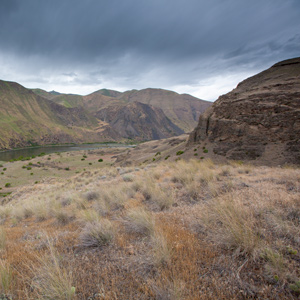
On the flooding Clearwater River near Long Camp, Pvts. Shannon and Collins lose the new canoe along with three blankets. Charbonneau and Pvt. LePage try swimming their horses across the swollen river with similar losses. The captains attend to an ailing Nez Perce chief.
On the Snake River, Sgt. Ordway buys salmon at a Nez Perce fishing village.
May 31, 1806
Classifying grizzlies
by Kristopher K. Townsend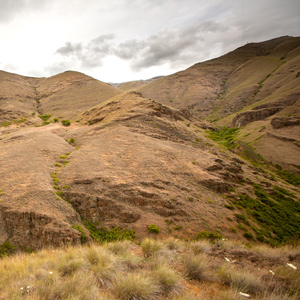
At the Nez Perce fishing camp on the Snake River, Sgt. Ordway wakes to find some of his salmon missing. He then begins the arduous journey back to Long Camp at present Kamiah, Idaho.
At Long Camp, Pvt. Willard brings in the skin of a cinnamon-colored grizzly bear. Confused, Lewis decides to follow the Nez Perce system that classifies all their colors as a single species. Attempts to cross the flooding Clearwater fail, and another of last year’s horses is found.
June 3, 1806
Early Bitterroot crossing
by Kristopher K. Townsend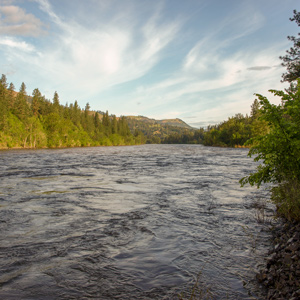
When the Nez Perce send an “express” to try an early Bitterroot Mountain crossing, the captains hope they too can now leave. They are informed otherwise. With little hope of salmon arriving at Long Camp, they make plans to move to the Weippe Prairie in one week. The sick people continue to recover.
June 13, 1806
The hunters advance
by Kristopher K. Townsend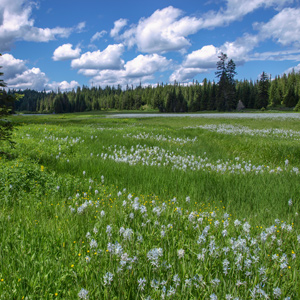
Pvts. Reubin Field and Willard leave Weippe Prairie for present Crane Meadow to hunt ahead of the main group. At the primary camp, the enlisted men—and likely Sacagawea—dry meat. The captains trade horses and work on their “Estimate of Western Indians”.
June 21, 1806
Retracing their steps
by Kristopher K. Townsend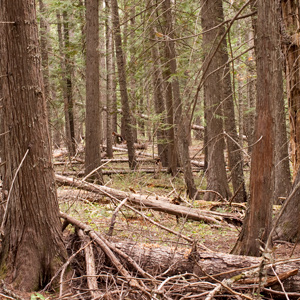
While retracing their steps to Weippe Prairie, Lewis expresses “mortification in being thus compelled.” On the way, they meet two Nez Perce men who bring with them three stray horses and a mule. Pvt. Shannon and George Drouillard are at the Nez Perce villages (present Kamiah, Idaho) seeking guides.
June 24, 1806
Burning trees
by Kristopher K. Townsend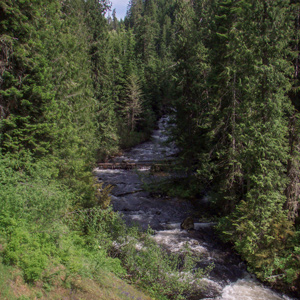
The expedition leaves Weippe Prairie with three Nez Perce guides who intone fair weather by burning some trees. Sgt. Gass is already at the evening’s camp on Eldorado Creek where he hopes to find the two Nez Perce men they met three days ago.
In St. Louis, General James Wilkinson writes his instructions for Zebulon Pike’s Southwest exploration.
June 25, 1806
Jerusalem Artichoke Camp
by Kristopher K. Townsend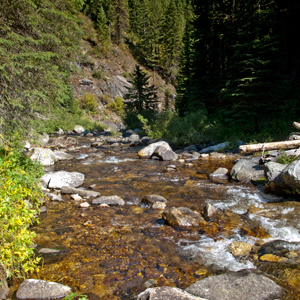
The expedition leaves Eldorado Creek and follows the Northern Nez Perce Trail over a small divide to Hungery Creek. The captains fear their Nez Perce guides have left them, so are relieved when they finally catch up. Sacagawea gathers roots resembling the Jerusalem artichoke, and Lewis prepares specimens of angelica and California false hellebore.
June 26, 1806
Cache Mountain recovery
by Kristopher K. Townsend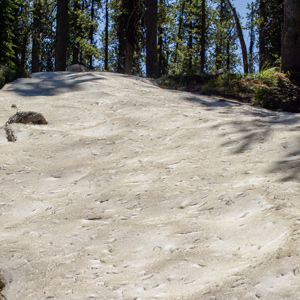
On the Northern Nez Perce Trail, the travelers once again climb ‘Cache Mountain’ where they recover the cargo left there over a week ago. They notice the snows have melted nearly four feet since then. Their Nez Perce guides take them to Greensward Camp—present Bald Mountain—where there is grass for their horses. Soon after, another Nez Perce man arrives.
June 27, 1806
The Smoking Place
by Kristopher K. Townsend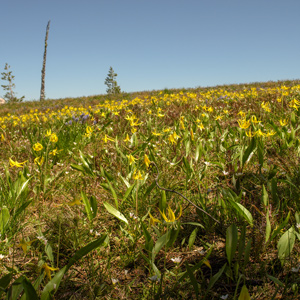
At the request of their Nez Perce guides, the expedition pauses at the Smoking Place. There, they see yellow glacier lilies and “Stupendeous Mountains” covered with snow. They push hard along the Northern Nez Perce Trail and encamp at present Spring Mountain—sometimes called Bears Oil and Roots Camp. The captains apply a poultice made from wild ginger to Pvt. Potts’ badly swollen leg.
July 1, 1806
A plan to divide forces
by Kristopher K. Townsend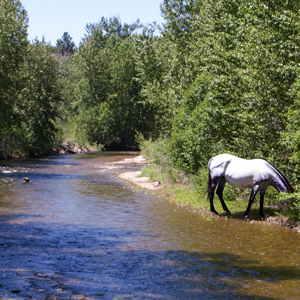
At Travelers’ Rest near present Lolo, Montana, the captains describe their plan to divide forces—each taking a different route back to the Knife River villages. Their Nez Perce guides agree to show Lewis a shortcut leading to the Falls of the Missouri, and Lewis prepares several plant specimens—all new to science.
July 2, 1806
Rest and torment
by Kristopher K. Townsend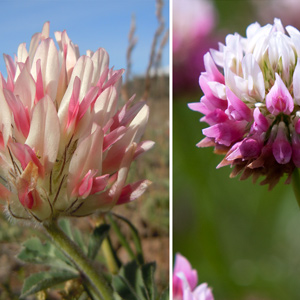
At Travelers’ Rest near present Lolo, Montana, Lewis notices two types of clover. All the arms are put in good working order, and their Nez Perce guides race horses. They also run foot races with the enlisted men. Pvts. McNeal and Goodrich suffer from syphilis, and mosquitoes torment everybody.
July 4, 1806
Dangerous roads
by Kristopher K. Townsend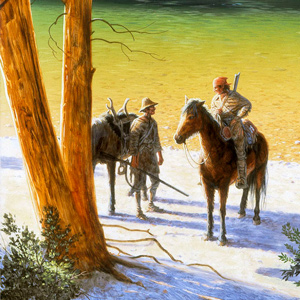
The expedition is divided into two groups, and today, both are on dangerous roads.
On the Blackfoot River, Lewis’s Nez Perce guides warn him about dangerous Indians, and they decline to continue. He travels east on “Cokahlahishkit”—the Road to the Buffalo—for eight miles. He also collects a specimen of mock orange, a species named in his honor.
On the Bitterroot River, Clark’s group must cross several creeks swollen from snows melting in the nearby Bitterroot Mountains. Despite there being no buffalo, whiskey, or tobacco, they celebrate the Fourth of July with a “Sumptious Dinner”.
Notes
Experience the Lewis and Clark Trail
The Lewis and Clark Trail Experience—our sister site at lewisandclark.travel—connects the world to people and places on the Lewis and Clark Trail.
Discover More
- The Lewis and Clark Expedition: Day by Day by Gary E. Moulton (University of Nebraska Press, 2018). The story in prose, 14 May 1804–23 September 1806.
- The Lewis and Clark Journals: An American Epic of Discovery (abridged) by Gary E. Moulton (University of Nebraska Press, 2003). Selected journal excerpts, 14 May 1804–23 September 1806.
- The Lewis and Clark Journals. by Gary E. Moulton (University of Nebraska Press, 1983–2001). The complete story in 13 volumes.
This site is provided as a public service by the
Lewis and Clark Trail Alliance
with additional funding from the following: