Joseph Mussulman
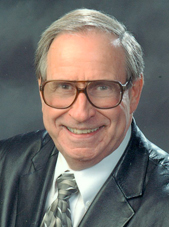
Marc A. Hefty photo.
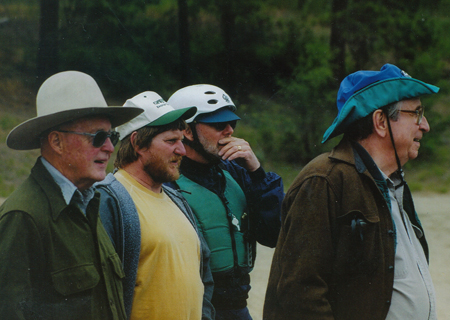
Photo by Bill Bevis.
Left to right: Two concerned dugout canoe owners, one concerned expert paddler, and Joe grinning with delight
Joseph A. Mussulman (1928–2017) was the founding producer, editor and writer for Discovering Lewis & Clark. After five years of preparation and experimentation the website went online in 1998, under the auspices of a non-profit entity called VIAs Inc., and funded by grants from various sources, especially–throughout the bicentennial observance from 2003 to 2006–the Challenge Cost Share Program of the National Park Service. In 2009 the site was taken over by the Lewis & Clark Fort Mandan Foundation of Washburn, North Dakota.
Dr. Mussulman earned his bachelor’s and master’s degrees in music history and literature at Northwestern University in 1950 and 1951. As a Danforth Scholar he earned a doctorate in humanities from Syracuse University in 1967.
He has written and produced a number of interpretive programs in collaboration with audio specialist Richard H. Kuschel, also of Missoula Montana. In 1986, he wrote, narrated, and co-produced a multimedia presentation for the Blaine County Museum (MT) titled Forty Miles from Freedom, about the Non-Treaty Nez Perce Indians’ final battle with the U.S. Army, at the Bear Paw Mountains in 1877. In 2012-13 Mussulman and Kuschel revised the 20-minute onsite production and updated it in High Definition video. In 1994 their interactive self-guided audio-CD tour of Yellowstone National Park, a five-hour program produced for Tour Technologies, Inc., received first prize in the category of media productions from the National Association for Interpretation. Their Two Days to Destiny, an audio interpretive tour of the Little Bighorn Battlefield, won first place from the NAI in 1995.
Mussulman is the author of five articles on Lewis and Clark that appeared in We Proceeded On, the official journal of the Lewis and Clark Trail Heritage Foundation, Inc.: “My Boy Pomp’: About That Name,” Vol. 21, No. 2 (May 1995); “Soundscapes: The Sonic Dimensions of the Lewis and Clark Expedition,” Vol. 21, No. 4 (November 1995); “Men in High Spirits: Humor on the Lewis and Clark Trail,” Vol.22, No. 2 (May 1996); “‘In Greatest Harmoney’: ‘Meddicine Songs’ on the Lewis and Clark Trail,” Vol. 23, No. 4 (November 1997); and “Pomp’s bier was a bar,” Vol. 27, No. 1 (February 2001).
Dr. Mussulman has designed and produced maps for various books, brochures and study guides about Lewis and Clark, including 58 full-color maps illustrating the expedition’s entire route from coast to coast for the travelers’ guide, Along the Trail with Lewis and Clark, by Barbara Fifer and Vicky Soderberg (2nd ed., Helena: Montana Magazine, 2001). Those maps also appeared in the same publisher’s annual Lewis and Clark Travel Planner and Guide. They may be seen in Discovering Lewis & Clark at Discovering Lewis & Clark from the Air. In 1998, he created a poster illustrating the trail from Washington, D.C. to the Pacific, for Farcountry Press.
His other publications include a biography, Dear People . . . Robert Shaw (Indiana University Press,1979; reprint, Chapel Hill, NC: Hinshaw Music, 1996), and Music in the Cultured Generation (Evanston: Northwestern University Press, 1974). From 1987 through 1998 he was the interpretive writer and designer of Montana Afloat, a series of sixteen maps of Montana’s major floatable rivers.
Dr. Mussulman was a 1999 recipient of a Montana Governor’s Arts Award. Several years later he received an award of meritorious achievement from the Lewis and Clark Trail Heritage Foundation “for outstanding contributions in bring to this nation a greater awareness and appreciation of the Lewis and Clark expedition.” In 2005, he received the Montana Governor’s Humanities Award.
Contributions to this Site
Up the Columbia
Heading home
by Barbara Fifer, Joseph A. Mussulman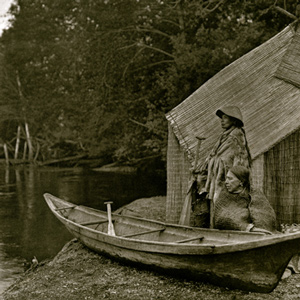
Homeward bound in April 1806, the Lewis and Clark Expedition traveled through the Columbia Gorge and pitched camps on its north side. Their passage was tense and unpleasant, with Indians taking small goods regularly.
Crossing the Clark Fork
Lewis's rafting adventure
by Joseph A. Mussulman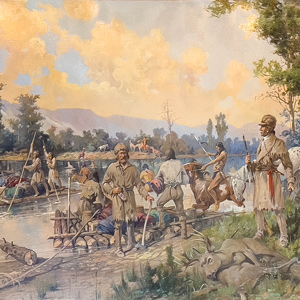
With every crossing they unavoidably drifted farther downstream. Lewis recounted the climactic rafting episode of the day.
The Grand Natural Wall
"walls of tolerable workmanship"
by Joseph A. Mussulman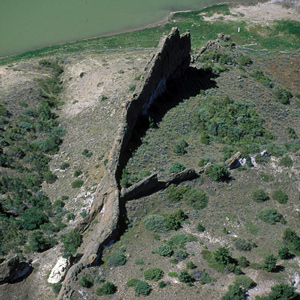
“As we passed on it seemed as if those seens of visionary inchantment would never have an end; for here it is too that nature presents to the view of the traveler vast ranges of walls of tolerable workmanship.”
Badgers
Taxidea taxus or brarow
by Joseph A. Mussulman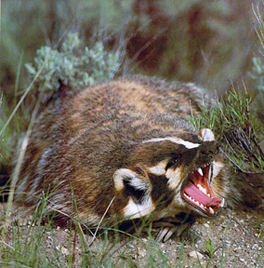
No doubt Lewis was preoccupied with the preservation process, for his entry was shorter. “It is a carniverous anamal . . . . it’s eye are small black and piercing.”
Apsáalooke Country
by Joseph A. Mussulman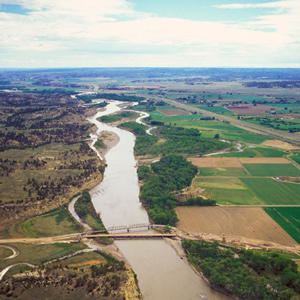
The Crow People called themselves Apsáalooke, sometimes heard as Absarokas or Absalookas, or “Children of the Large-beaked Bird.” Various early white travelers transcribed or defined the name differently, but the Apsáalooke maintain it refers to the raven. One of the oldest and most famous landmarks on Lewis and Clark’s route, now known officially, but erroneously, as Pompeys Pillar or, among the Apsáalooke, Iish-biia ah-naac’he’.
Jefferson City
"Nightengale" song
by Joseph A. Mussulman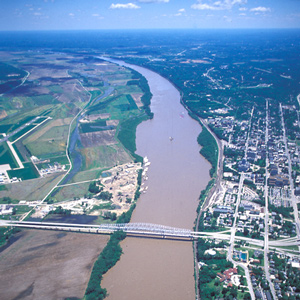
On Sunday, 3 June 1804, the expedition left its camp at the mouth of the Osage River and proceeded five miles upstream to the mouth of the Moreau River. There, Clark wrote, he and George Drouillard, “Saw much sign of war parties of Inds. having Crossed from the mouth of this Creek.”
Charles M. Russell NWR
Missouri Breaks
by Joseph A. Mussulman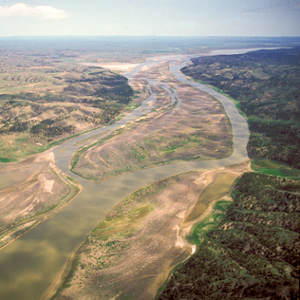
The wind against them again on 25 May 1805, the Corps had to tow their boats with ropes. Lewis observed, “the water run with great violence, and compelled us in some instances to double our force in order to get a perorogue or canoe by them.”
Bivouac at Tongue Point
A long and wet encampment
by Joseph A. Mussulman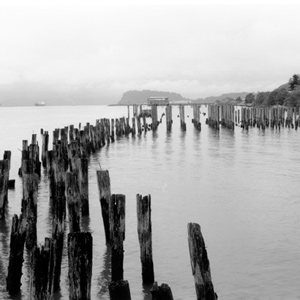
As the Corps rounded Tongue Point the wind rose hard from the west, and heavy seas with torrential rain forced them back to the east shore of the narrow isthmus, where they huddled for ten miserable days.
Wood River by Air
Starting point
by Joseph A. Mussulman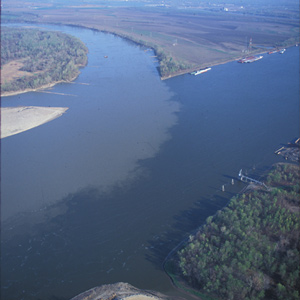
Clark recorded: “Capts. Lewis & Clark wintered at the enterance of a Small river opposite the Mouth of Missouri Called wood River, where they formed their party, Composed of robust Young Backwoodsmen of Character.”
Point Ellice
"blustering point"
by Joseph A. Mussulman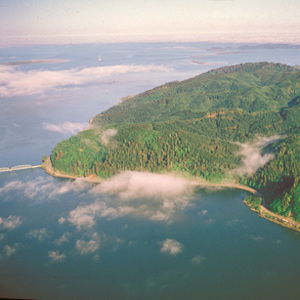
It was “the most disagreeable time I have experienced,” Clark grumbled on 15 November 1805. “Confined on a tempiest Coast wet, where I can neither get out to hunt, return to a better Situation, or proceed on”
Local Recollections
Wheeler's inquiries
by Joseph A. Mussulman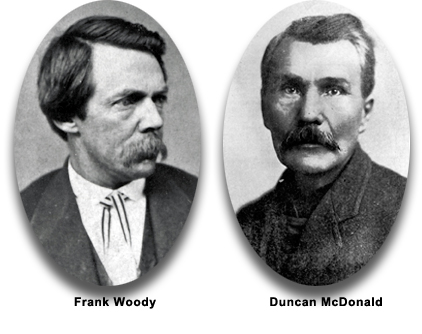
Around 1900, Olin D. Wheeler, initiated an inquiry into the source and meaning of the name Lolo. He secured the aid of Judge Frank Woody of Missoula, who in turn discussed the matter with some other “old-timers.”
Log Line, Reel, and Ship
Measuring nautical speed
by Joseph A. Mussulman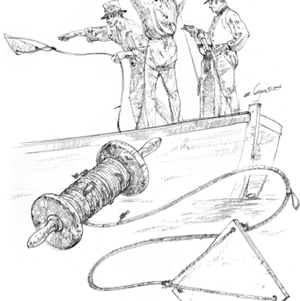
This device was typically used for measuring the speed of a vessel at sea, but it could also be used to measure the velocity of a river’s current. It consisted of four parts: a log-ship, or log-chip; a specially calibrated log-line; a reel to hold the log-line; and a log-glass, or sand-glass.
Little Gate of the Mountain
Lewis's "second grand chain"
by Joseph A. Mussulman, Robert N. Bergantino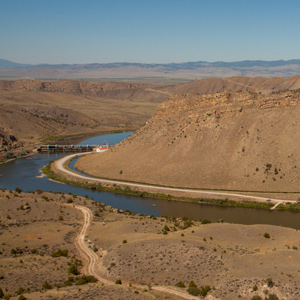
Before arriving at the three forks of the Missouri, Whitehouse wrote that they “passed some rough rockey hills, which we expect from the account we have from the Indian Woman that is with us, to be the commencement of the Second chain of the Rockey Mountains.
Major Owen’s Lolos
An early settler's records
by Joseph A. Mussulman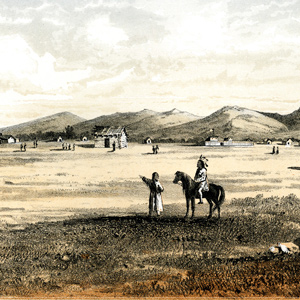
Bitterroot Valley businessman John Owen counted no Lolos among the customers he dealt with at Fort Owen, but he occasionally hired one as a trail-hand.
Clearwater Canoe Camp by Air
by Joseph A. Mussulman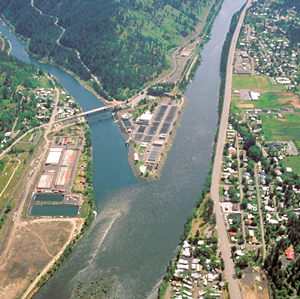
Still sick and exhausted from their recent crossing of the Bitterroot Mountains, Lewis, Clark, and their crew arrived on 26 September 1805, at what they called Canoe Camp, on the Clearwater River.
Lost Trail Pass
Uncertainty
by Joseph A. Mussulman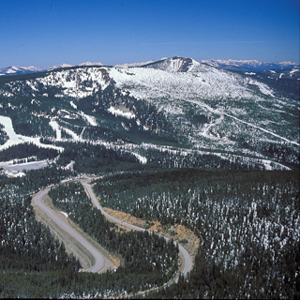
Where did they camp? This was not the only time Toby was unsure of himself, nor that the captains were temporarily baffled, but it is perhaps the one that most readily invites study and discussion.
Clark’s Nutcracker
Nucifraga columbiana
by Joseph A. Mussulman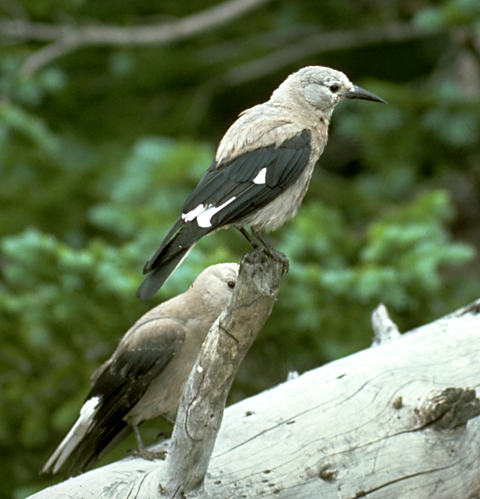
On the Salmon River, Clark “saw to day [a] Bird of the woodpecker kind which fed on Pine burs it’s Bill and tale white the wings black every other part.” Later, Meriwether Lewis had time to study and describe it with his usual thoroughness.
Yellowstone Canoe Camp
by Joseph A. Mussulman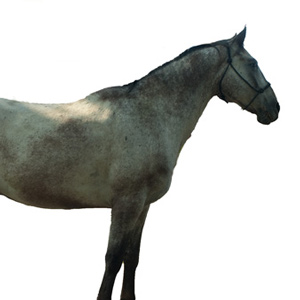
One week and a hundred miles after starting down the Yellowstone River, Clark finally found cottonwood trees large enough for building canoes. That night some Indians made off with half their horses.
Decision Point by Air
At the mouth of the Marias
by Joseph A. Mussulman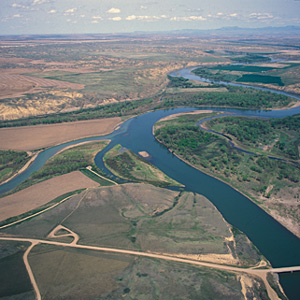
In the late afternoon of Sunday, 2 June 1805, the Corps of Discovery “came too on the Lard. side in a handsome bottom of small cottonwood timber opposite to the entrance of a very considerable river.” They now faced a crucial question: Which river was the Missouri?
Defining ‘Squaw’
Shades of meaning
by Joseph A. Mussulman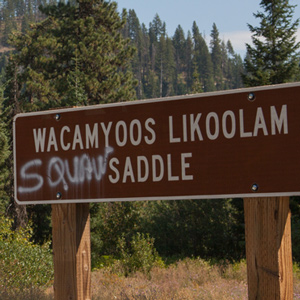
Both of the captains referred to Charbonneau’s young wife as a squaw, usually spelling it with a post-vocalic /r/—”Squar.” In the 1980s a nationwide movement arose to extirpate squaw from general use, because of its worst connotations.
Barbary Coast War
Lewis's "Mahometant yoke"
by Joseph A. Mussulman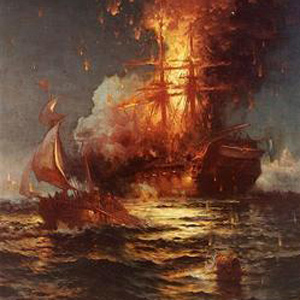
The story of what was known by his detractors as “Jefferson’s War,” opens for us a narrow window on a little known but intriguing episode in Meriwether Lewis’s brief position as the President’s secretary.
The Dearborn River Crossing
Along the Old North Trail
by Joseph A. Mussulman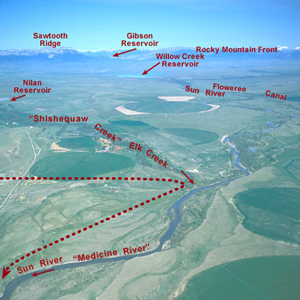
Shortly after crossing the Dearborn River, Lewis saw that the Indian road “continued along the foot of the mountain to the West of north” so he and his men cut northeast across the “tolerably level” plain toward the Sun River.
The Kansas River by Air
"Great river of the Kansas"
by Joseph A. Mussulman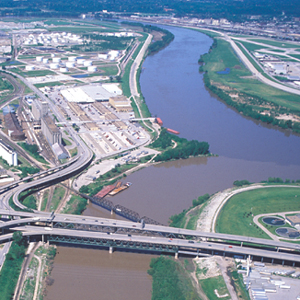
The expedition’s campsite from 26 June 1804 to 28 June 1804 was near the wooded point that protrudes at the confluence of the Kansas and Missouri Rivers.
The Niobrara River
Rushing river
by Joseph A. Mussulman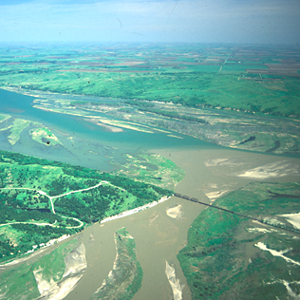
“We hoisted Sail,” wrote Ordway, and “ran verry fast a Short time. Broke our mast.” The party “came to” on the west side of the Niobrara. There the men made a new mast from the trunk of a tall, sturdy red cedar, which apparently lasted at least until they reached the Mandan villages.
Lolos in the Fur Trade
Thompson, Ashley, and Work
by Joseph A. Mussulman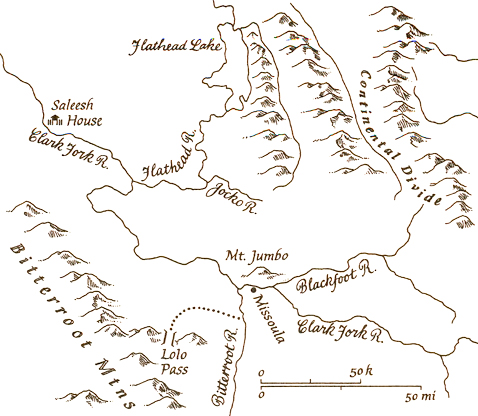
The first written record of a man named Lolo appeared in the field notes of David Thompson while at today’s Kettle Falls on the Columbia River. Fifteen years later, trader John Ashley mentions a “Mr. Lolo.”
Clark’s Apsáalooke (Crow) Speech
A speech never given
by Joseph A. Mussulman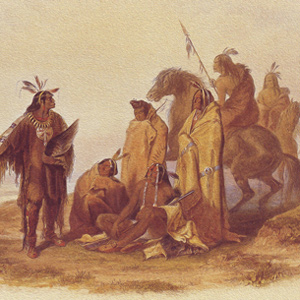
While stinging from having so many of his horses stolen, Clark wrote a speech to the Crow Indians imploring them to return the booty. After all, he needed those horses to complete the captain’s bold diplomatic plan.
Lost Hunters
by Joseph A. Mussulman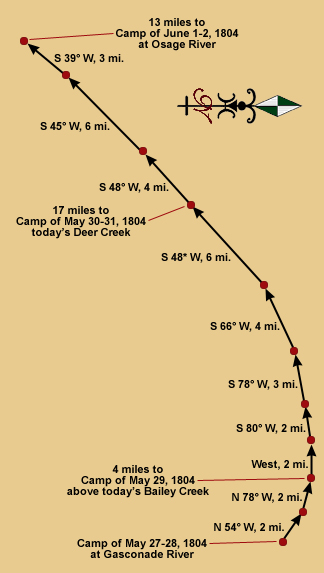
Every hunter, after following the land instead of the river, had to somehow end his day within sight or sound of the party’s camp at a location which no one could have known in advance. They were not always successful.
The River’s End
End of navigable water
by Joseph A. Mussulman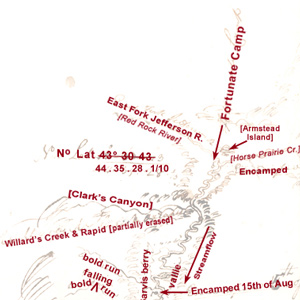
Lewis: “here I halted and examined those streams and readily discovered from their size that it would be vain to attempt the navigation of either any further.”
Indian Tobacco
Nicotiana quadrivalvis
by James L. Reveal, Joseph A. Mussulman, Kristopher K. Townsend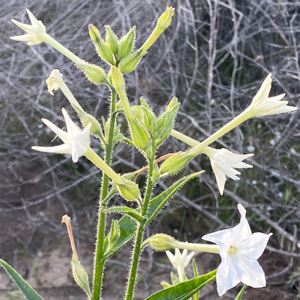
Lewis mentioned two species of tobacco, possibly Nicotiana quadrivalvis and N. rustica—a Mexican species called Aztec tobacco—that the Arikara cultivated.
How Flintlocks Work
With illustrations, narrations, and videos
by Joseph A. Mussulman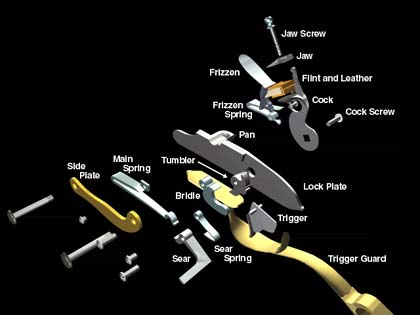
Though text, animations, and narrated video, this page provides a thorough explanation showing how a flintlock works, best practices in the field, and instructions to load and fire.
The Pirogues
by Joseph A. Mussulman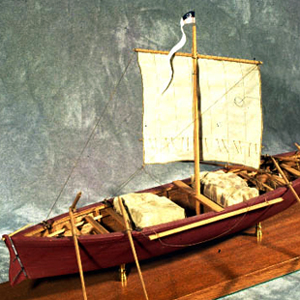
The two pirogues served as supplementary cargo carriers accompanying the barge from the mouth of the Missouri to the Mandan villages, one of which became the command boat on the return trip from the Marias River to St. Louis.
Spirit Mound
An elevation of devilish spirits
by Joseph A. Mussulman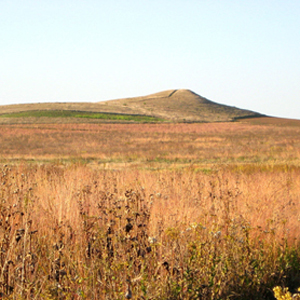
The visit to this prairie hill was among the more bizarre sidelights of the whole expedition, but evidently it was not entirely unexpected. Seventy-six years earlier, explorer Pierre La Véndrye called the place the “Dwelling of the Spirits.”
Fortunate Camp
Western road
by Joseph A. Mussulman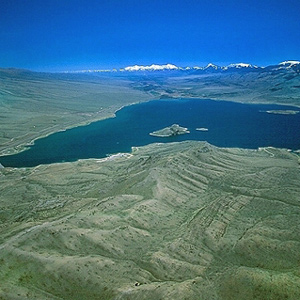
Today the confluence of the Beaverhead River and Horse Prairie Creek is submerged at left of the large island (photo center) in Clark Canyon reservoir, beneath eighty feet of water when the reservoir is full.
Portable Inkwell
Their most important tool
by Joseph A. Mussulman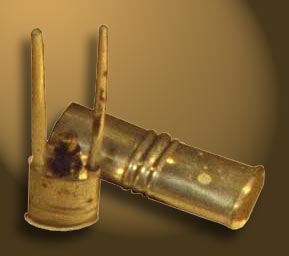
None of their tons of supplies, not even the guns, powder, and bullets with which they fed themselves, were ultimately as important as the pens, ink, and paper they carried, and protected from the elements.
The Sun River by Air
"Curious adventures"
by Joseph A. Mussulman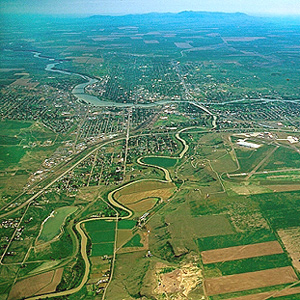
The day’s “succession of curious adventures wore the impression on my mind of inchantment,” he mused. “It now seemed to me that all the beasts of the neighbourhood had made a league to distroy me.”
Decision Point
Marias River decision
by Joseph A. Mussulman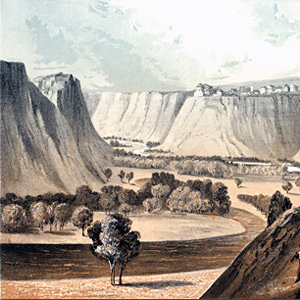
The two captains “strolled out to the top of the hights in the fork of these rivers,” from which they had “an extensive and most inchanting view.”
Naming the Lolo
by Joseph A. Mussulman
Even though it is highly unlikely that any of the expedition’s journalists ever heard the name, Lolo is among the most familiar and useful of all the place names in the story of the Lewis and Clark expedition. How did the Lolo get its name?
Lewis’s Hunting Accident
Lewis's closest call
by Joseph A. Mussulman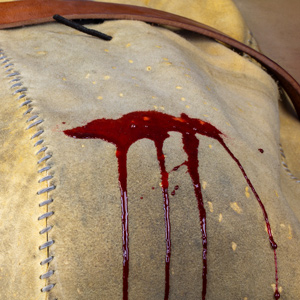
The most serious hunting mishap, and surely the most memorable episode in Lewis’s frequently referenced “chapter of accedents,” was the moment on 11 August 1806 when Pierre Cruzatte shot him in the buttocks.
Bearberry
Kinnikinnick, Arctostaphylos uva-ursi
by James L. Reveal, Joseph A. Mussulman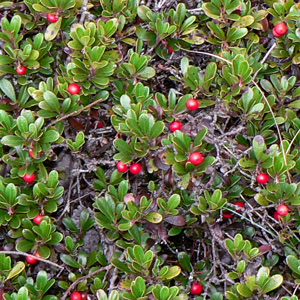
Lewis and Clark sometimes called it kinnikinnick, sometimes sacacommis. At Fort Clatsop on 29 January 1806, he described this useful plant.
Mosquito Ills and Cures
by Joseph A. Mussulman
Symptoms of the ague, a disease that would later be called malaria, were recorded in the journals. Unknown to anyone at that time, this illness was carried by mosquitoes. What did they do to prevent bites and treat mosquito-born illnesses?
Fort Clatsop Today
Reconstructing the fort
by Joseph A. Mussulman
Today’s Fort Clatsop stands at or near the site of the Corps’ winter encampment of 1805-06 was built on the same floor plan that Clark drew on the cover of the Elkskin-covered Journal. The rest of the present structure resembles the original only in a remote sense.
The Osage River
"a delightfull prospect"
by Joseph A. Mussulman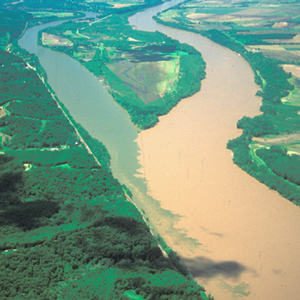
On 1 June 1804, the expedition arrived at the mouth of the Osage River, one of the major Indian trail intersections on the lower Missouri. From the height on the point, Clark wrote: “I had a delightfull prospect of the Missouries up & down, also the Osage R. up.”
The Headwaters by Air
Essential point
by Joseph A. Mussulman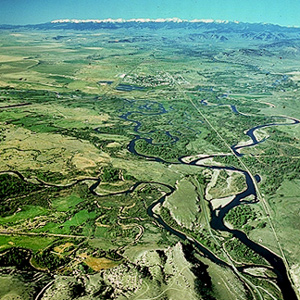
Upon the Corps’s arrival at this confluence on 25 July 1805, Lewis quickly recognized it as “an essential point in the geography of this western part of the Continent.”
Dietary Salt
Lewis's singular thirst
by Joseph A. Mussulman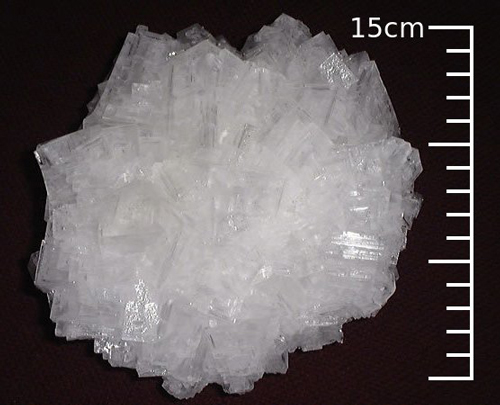
The formula is simple. One molecule of sodium, a reactive metal, plus one molecule of chlorine, a poisonous gas, equals a harmless mineral that once was deemed “the fifth element,” along with earth, air, fire, and water.
The Blackfoot River by Air
Prairie of the knobs
by Joseph A. Mussulman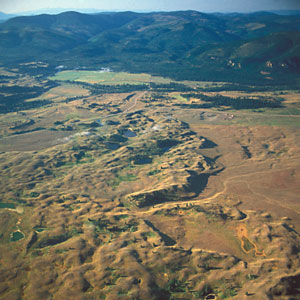
On 6 July 1806, Lewis’s eleven-man party had broken camp at the mouth of a Blackfoot River tributary they named Seamans Creek, after, and headed on up the river along the “road” that Indians living in the Rocky Mountains called the Cokahlahrishkit—the Road to the Buffalo.
Station Camp
"the extent of our journey"
by Joseph A. Mussulman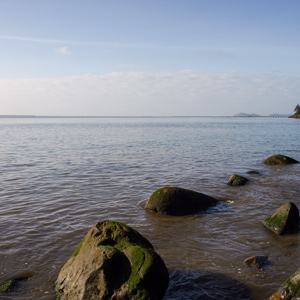
“…this I could plainly See would be the extent of our journey by water, as the waves were too high at any Stage for our Canoes to proceed any further down ….”
Wheeler’s Lolo Crossing
On the Northern Nez Perce Trail
by Barbara Fifer, Joseph A. Mussulman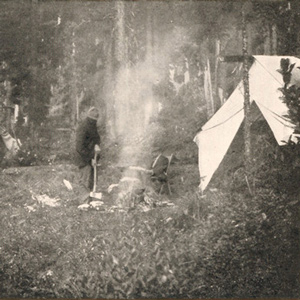
One of Wheeler’s most successful efforts to amplify any part of Lewis and Clark’s route was his exploration of the Lolo Trail. For that he relied heavily on Elliott Coues’ 1893 annotations to the expedition’s narrative.
The Mouth of the Ohio
Meeting of the waters
by Joseph A. Mussulman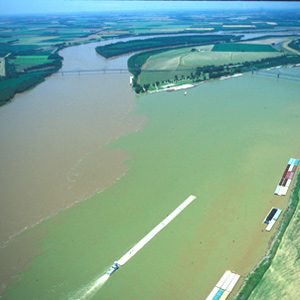
On the evening of 14 November 1803, Lewis and Clark camped on the point between the Ohio and Mississippi Rivers. By now they had rowed, poled, dragged, and occasionally sailed their boats a total of 981 miles.
The Lochsa River
Packer Meadows to Colt Killed Creek
by Joseph A. Mussulman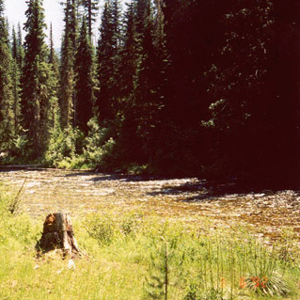
Snow was falling in the high country above them on the morning of 14 September 1805 when, after striking camp two miles downstream from Packer Meadows, the Corps slogged down the Glade Creek canyon through rain and sleet.
Buffalo: Pioneer Uses
L&C to present-day
by Joseph A. Mussulman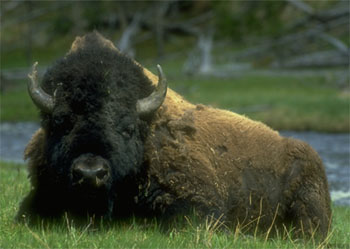
To some extent, the Corps of Discovery used buffalo much as the Indians did–for clothing, blankets, tents, saddle pads, and moccasins for both men and horses. After railroads, demand for buffalo robes soared, the iconic animal’s downfall was swift.
Mapping the Falls
by Joseph A. Mussulman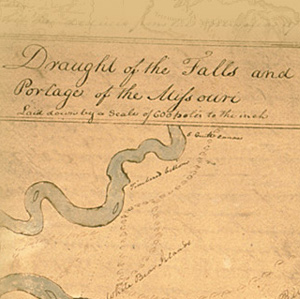
The falls of the Missouri comprised the most remarkable of all the “remarkeable points” that Clark described and mapped in conscientious obedience to an order from Thomas Jefferson to take observations “with great pains & accuracy.”
Naming the Marias
"in honour of Miss Maria"
by Joseph A. Mussulman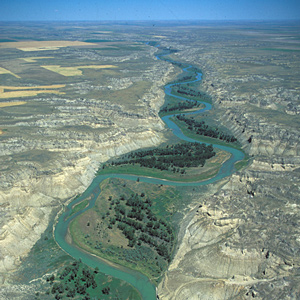
“The whole of my party to a man except myself were fully perswaided that this river was the Missouri, but being fully of opinion that it was neither . . . I determined to give it a name and in honour of Miss Maria W____d.”
Mapping Siouxland
A cartographic palimpsest
by Joseph A. Mussulman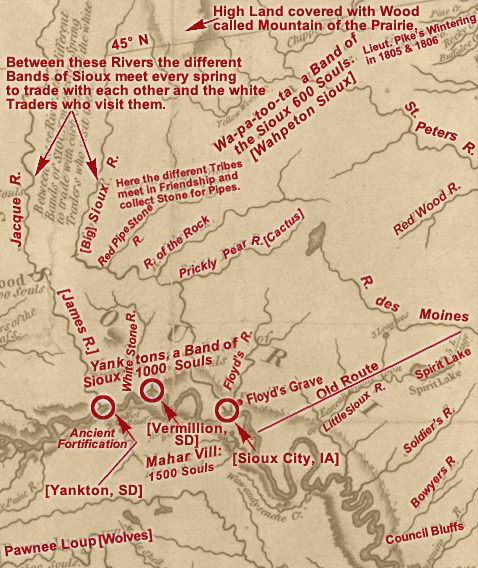
The historic Map of Lewis and Clark’s Track Across the Western Portion of North America can fruitfully serve as a major palimpsest of American history as of the year in which it was created, 1810.
Indian Presentation Flags
What kind of flag did they give out?
by Joseph A. Mussulman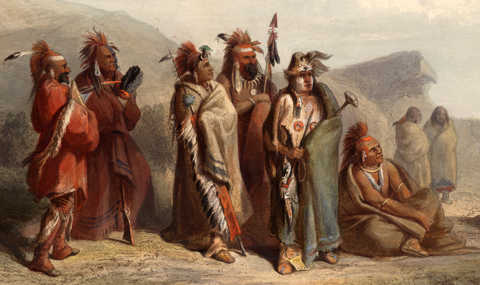
Several vexillologists have speculated that Lewis and Clark might have carried some “Indian presentation flags” with seventeen stripes, plus the Great Seal in the canton with seventeen stars either surrounding the eagle or inside the Glory.
Illustrating the Great Fall
At the Falls of the Missouri
by Joseph A. Mussulman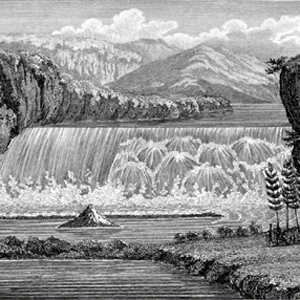
After Lewis’s preliminary sketch, later artists and photographers contributed to the visual documentation of the “sublimely grand” waterfall including Barralet, Gustavus Sohon, A. E. Mathews, and F. Jay Haynes.
Edgar S. Paxson
by Joseph A. Mussulman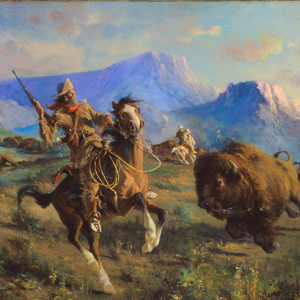
Edgar Paxson captured the essence of the fast-disappearing Old West as he personally experienced it. In 1895, he painted “Over the Trail of Lewis and Clark,” his first known scene from that episode in western history.
Mule Deer
Odocoileus hemionus
by Joseph A. Mussulman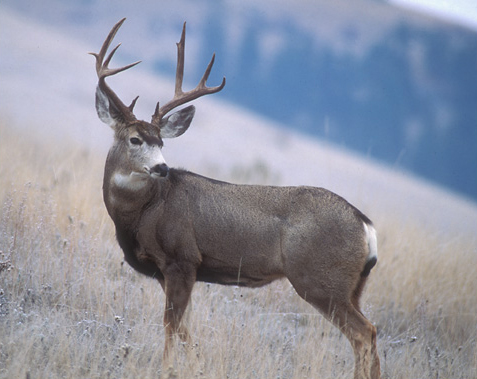
Drouillard spotted the first “Deer with black tales” on 5 September 1804, on the cliffs upstream from the mouth of the Niobrara River in northeast Nebraska. By 10 May 1805 Lewis had seen enough specimens to write an 800-word description of the new species.
Travelers’ Rest by Air
Turning point
by Joseph A. Mussulman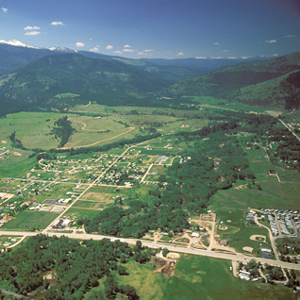
For three days the Corps rested here, gathering strength for the arduous 150-mile trek across the Bitterroot Mountains. The campsite was about two-thirds down in the photo, among the cottonwoods that shelter Lolo Creek.
The Shoshone Caparison
Indian horse tack
by Joseph A. Mussulman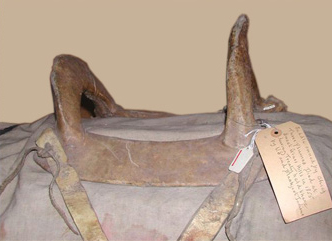
On the day before he left Camp Fortunate for the last time, Lewis described, with typical attention to detail, the usual caparison of the Shoshone Horse”–halter, saddle, and all other trappings.
Rattlesnakes
Crotalus sp.
by Joseph A. Mussulman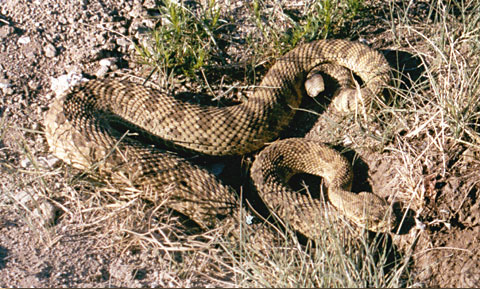
Lewis awoke to find “a large rattlesnake coiled on the leaning trunk of a tree under the shade of which I had been lying.” It certainly wasn’t the first rattlesnake seen on the trip, but he killed this one, and took time to study it.
Weippe Prairie Villages
Nez Perce camas grounds
by Joseph A. Mussulman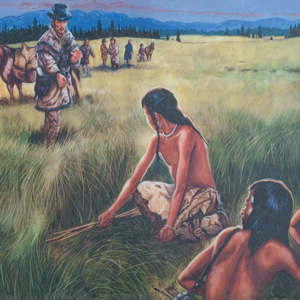
For countless generations, Weippe Prairie (prounouced WEE-yipe), like Travelers’ Rest, was a major node in the transportation, trade, and social networks of the Rocky Mountain West.
The White Cliffs
by Joseph A. Mussulman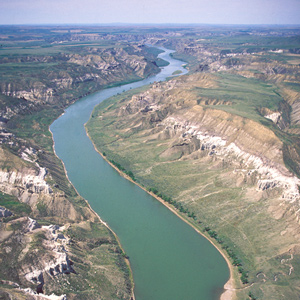
Under cloudy skies on the morning of 31 May 1805, the expedition “proceeded at an early hour,” and roped their flotilla of six cottonwood dugout canoes and two big pirogues into one of the most famous riverscapes on the Missouri.
Jerusalem Artichokes
Helianthus tuberosus
by Joseph A. Mussulman, Kristopher K. Townsend
The French explorer Samuel de Champlain found the vegetable growing in Indian gardens along the Saint Lawrence seaway and carried specimens of it back to France in 1603, where its root soon became a staple food for humans.
Indigenous Forestry
by Joseph A. Mussulman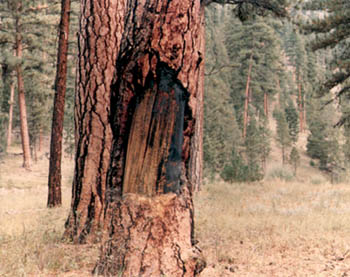
Archaeological evidence indicates that deliberate burning of forests and fields has been occurring on the North American continent for at least the past 10,000 to 20,000 years.
Weippe Prairie by Air
"Tryumph"
by Joseph A. Mussulman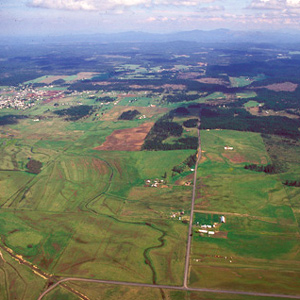
For countless generations, Weippe Prairie (prounouced WEE-yipe), like Travelers’ Rest, was a major node in the transportation, trade, and social networks of the Rocky Mountain West.
Too Né’s Delegation
by Joseph A. Mussulman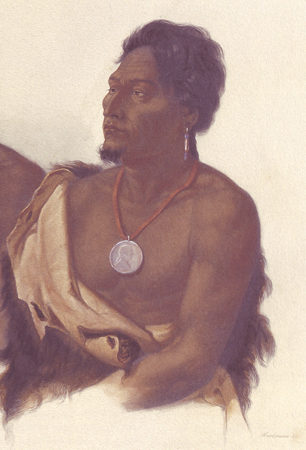
A delegation of chiefs from the Arikara, Ponca, Omaha, Otoe, Iowa, and Missouria nations sailed down the Missouri with Corporal Warfington on the expedition’s keelboat in the spring of 1805. Early in January, 1806, President Jefferson greeted them in Washington City with a formal speech.
Engraving
Mass producing art
by Joseph A. Mussulman, William Gadradt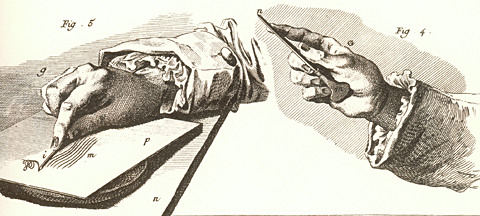
The printing of pictures employed a 350-year-old technology based on a process called intaglio—from an Italian word meaning to “cut in”—in which lines and dots were incised into a metal sheet called a plate.
Reunion
Lewis and Pryor catch up
by Joseph A. Mussulman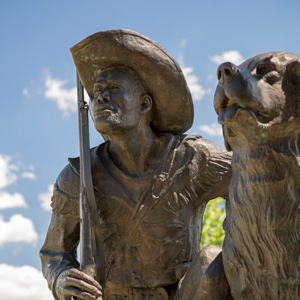
After splitting up into five separate details over five weeks earlier, all the members of the Corps of Discovery were finally reunited 142 miles downriver from the mouth of the Yellowstone.
St. Louis by Air
The western gate
by Joseph A. Mussulman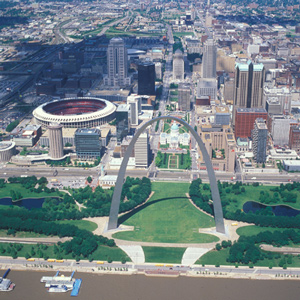
The expedition arrived on 7 December 1803, witnessed the transfer of Louisiana from Spain to the United States, and metaphorically passed through its western gate on 14 May 1804. They would not return until 23 September 1806.
Naming the Lolo: A Summary
A worthwhile study
by Joseph A. MussulmanLolo Stories
Endless possibilities
by Joseph A. Mussulman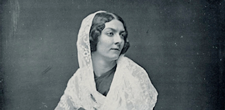
One amateur historian averred that it was “a corruption of the French name Le Louis, given to the stream and pass by early French trappers” in honor of Meriwether Lewis. Another claimed that the mystery [wo]man was named after “Lolo [i.e., Lola] Montez, a noted Spanish beauty.”
Fort Clatsop Detachment Orders
by Joseph A. Mussulman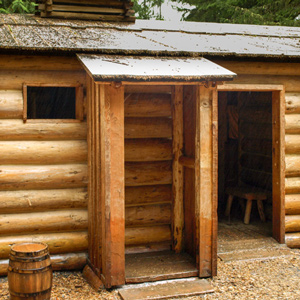
The captains issued Detachment Orders showing the degree to which Lewis and Clark consistently maintained the spirit of Baron von Steuben’s Regulations for the Order and Discipline of the Troops of the United States.
Harpers Ferry by Air
Wedge of history
by Joseph A. Mussulman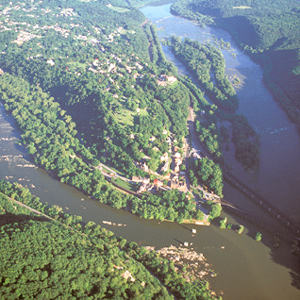
Harpers Ferry’s tiny footprint belies the richness of its roles in American history—in industrialization, in commerce, and especially in the unfolding of the Civil War and the long struggle of African-Americans out of slavery.
The Dalles
Through the Narrows
by Joseph A. Mussulman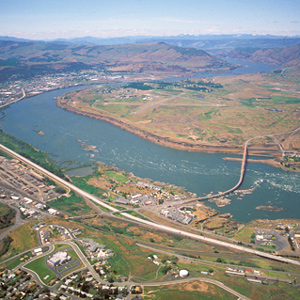
There really was no need for him to have been on the defensive. Pierre Cruzatte cast a spell over the assembled Indians with his fiddle, which was much more effective than any pompous diplomatic talk.
Flag Presentations
by Joseph A. Mussulman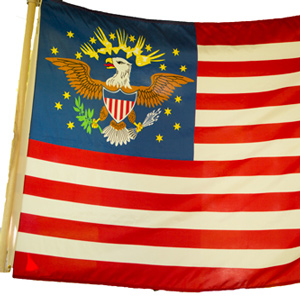
Lewis and Clark usually distributed flags at councils with the chiefs and headmen of the tribes they encountered—one flag for each tribe or independent band.
Western Meadowlark
Sturnella neglecta
by Joseph A. Mussulman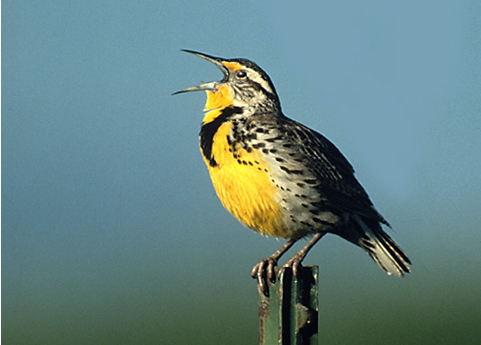
The species remained nameless until John James Audubon dubbed it neglecta because, he wrote in 1840, although “the existence of this species was known to the celebrated explorers of the west, Lewis and Clark . . . no one has since taken the least notice of it.”
Robert Frazer
Private
by Barbara Fifer, Joseph A. Mussulman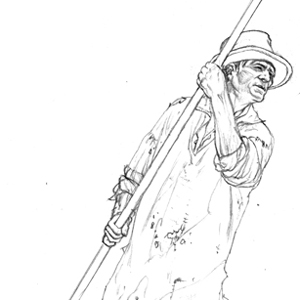
At a place where “one false Step of a horse would be certain destruction,” Frazer’s pack horse took that fateful step, lost its footing and rolled with its load “near a hundred yards into the Creek,” over “large irregular and broken rocks.”
The Snowberry
Symphoricarpos albus
by Joseph A. Mussulman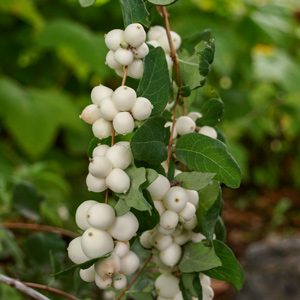
13 August 1805 near Lemhi Pass, Lewis wrote that he noticed “a species of honeysuckle much in it’s growth and leaf like the small honeysuckle of the Missouri.” He had discovered a plant that was new to the scientific community—the snowberry.
Lithography
"Stone-printing"
by Joseph A. Mussulman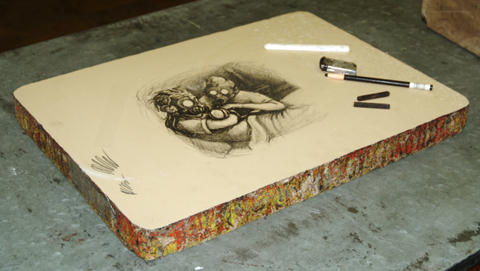
In 1798 a German actor-playwright-turned-printer named Alois Senefelder (1771-1834) discovered the principle of lithography, relying upon simple chemical principles—the mutual repulsion of oil and water, and the mutual attraction of water and salt.
Common and Fallow Deer
Common meanings and tangled names
by Joseph A. Mussulman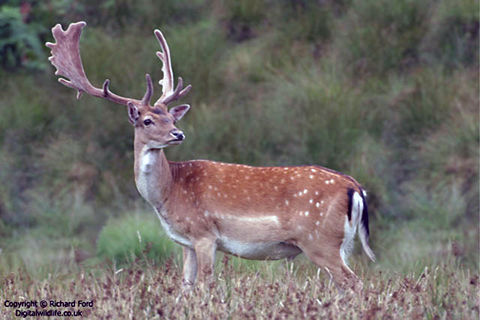
Lewis and Clark used the word fallow mainly in reference to the color of the Virginia whitetail. Few, probably, had ever seen a picture of a European fallow deer, and may have been unaware that this species’ distinctive antlers were not round like those of indigenous North American deer.
A Flash Flood
A narrow escape
by Joseph A. Mussulman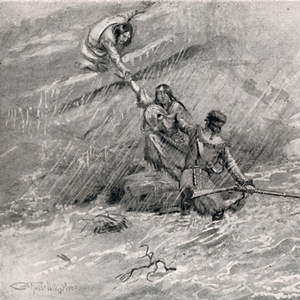
Of all the near-calamities the Corps of Discovery experienced, none was more dire than the one that occurred on 29 June 1805 in a normally dry ravine a short distance above the Great Fall. The principals were Charbonneau, Sacagawea, Jean Baptiste, York, and William Clark.
Hugh Heney
by Joseph A. MussulmanHeney expressed his willingness to help the Americans in dealing with the Indians—perhaps seeing this as a way of subverting the Hudson’s Bay Company’s power among the Indians in that part of the continent.
Colter’s Creek
Today's Potlatch River
by Joseph A. Mussulman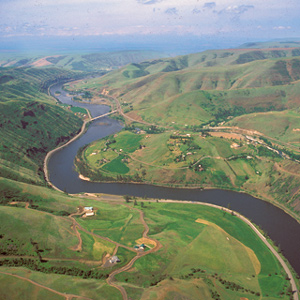
At 3 p.m. on 7 October 1805, the Corps loaded their five new dugout canoes–four large ones plus a small one “to look ahead”–and set out down the Clearwater River toward the Columbia and the Pacific beyond.
The Clearwater River
Looking for a canoe camp
by Joseph A. Mussulman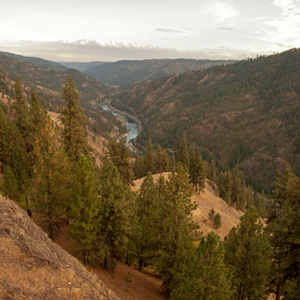
Clark spent the night of 21 September 1805 at Twisted Hair’s camp on an island in the Middle Fork of the Clearwater River. The next morning the chief and his son accompanied him back up to the village on Weippe Prairie where he expected to rendezvous with Lewis.
Bighorn: Sheep or Goat?
by Joseph A. Mussulman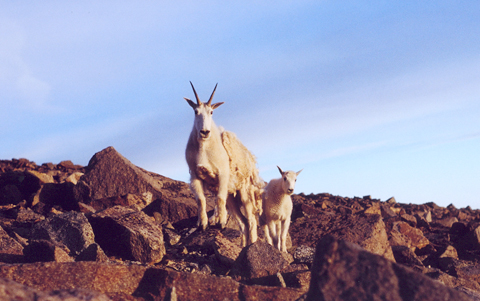
We confront the paradox that Elliott Coues pointed out in 1893—that Lewis and Clark had mistaken goats with wool … for sheep, and sheep without wool . . . for ibexes. Succeeding naturalists heightened the misunderstanding with invidious comparisons.
Travelers’ Rest
Hub of the west
by Joseph A. Mussulman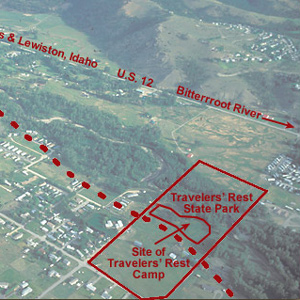
In the afternoon of 9 September 1805 they turned westward at a creek they dubbed Travelers’ Rest, today known as Lolo Creek. They stopped at a gathering place that Indians had been using for that same purpose for thousands of years.
Columbia River Explorers
Hecata, Gray, and Vancouver
by Joseph A. Mussulman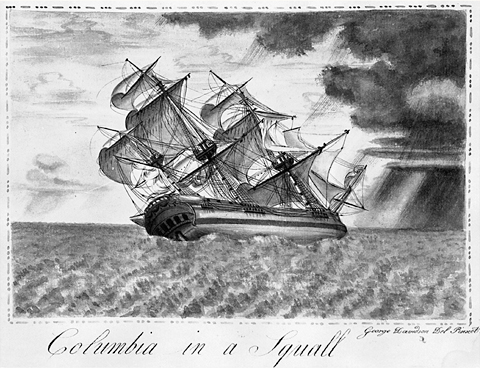
The Corps of Discovery was but one of a great number of expeditions by land and sea made between 1770 and 1870 across the North American continent in search of a Northwest Passage. Lewis knew much about the mouth of the Columbia River.
Classifying Bighorn Sheep
by Joseph A. Mussulman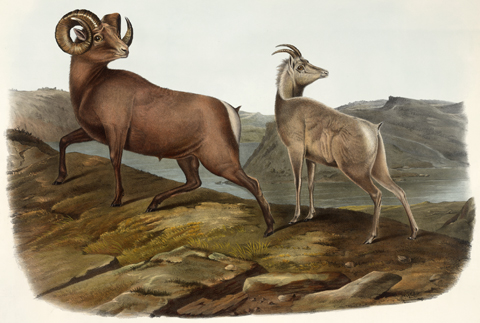
The first naturalist to publish an honest admission of uncertainty over the respective identities of the wild sheep and goat of North America was John Davidson Godman (1794-1830). Audubon and Bachman contributed illustrations and descriptions.
Crossing the Yellowstone
Parting ways
by Joseph A. Mussulman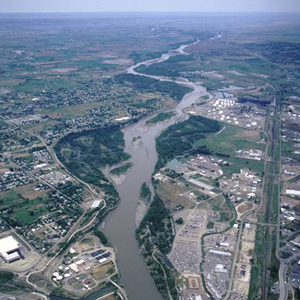
Pryor was to proceed downriver to the mouth of the Bighorn River, where Clark, with the canoes, would help him and his detail across the Yellowstone to its south bank. But they happened upon a good fording place at today’s Billings, and seized the opportunity.
Ecola
Whale tale
by Joseph A. Mussulman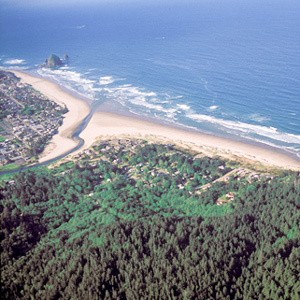
By the time Clark and his party got to present-day Cannon Beach, Oregon, on 8 January 1806, the locals had picked the dead whale’s 105-foot-long carcass clean.
Meeting the Snake
Water color
by Joseph A. Mussulman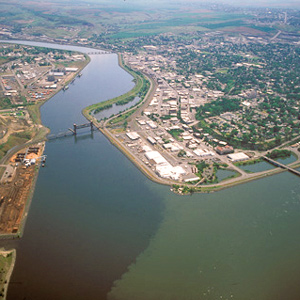
The Corps’ four-day trip to this point from Canoe Camp on the Clearwater in their five crowded dugouts was a taste of things to come.
The Bears Paw Mountains
And the Sweet Grass Hills
by Joseph A. Mussulman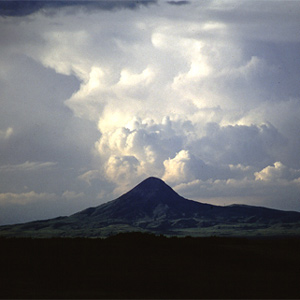
By his 5 June 1805 estimate, Meriwether Lewis was 38 miles up the Marias River from the expedition’s camp on the Missouri. To the northeast, he identified the Bears Paw Mountains and Sweet Grass Hills.
The Salmon River
A river of no return
by Joseph A. Mussulman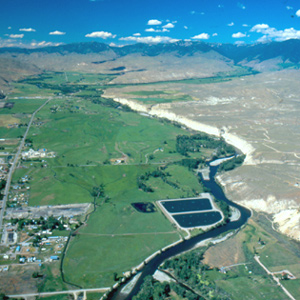
On the 23 August 1805, the centuries-old fantasy of a “water route across the continent for the purposes of commerce” dissolved in the roar of an unimaginable torrent–one of the most dangerous, unforgiving rivers in North America, that would later be called “The River of No Return.”
Cascade Mountains at Dawn
by Joseph A. Mussulman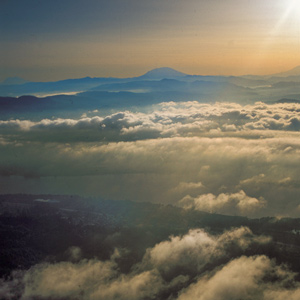
In 1838, a patriotic citizen started a campaign to change the Cascade Mountains into the “Presidential Range.” This was to include renaming Mount Hood after John Adams.
The Big Bend of the Missouri
Around the 'Grand Detour'
by Joseph A. Mussulman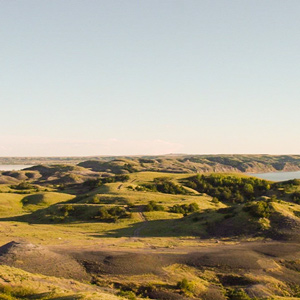
The huge meander called the Big Bend, or Grand Detour, had been a well-known Missouri River landmark for many years when the Corps of Discovery arrived at its lower bend on 19 September 1805.
Lice
Pediculus humanus
by Joseph A. Mussulman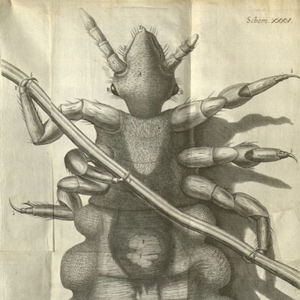
“This is a Creature so officious,” wrote the pioneer English microscopist Robert Hooke, “that ’twill be known to every one at one time or other, so busie, and so impudent, that it will be intruding it self in every ones company, and so proud and aspiring withall….”
Grizzly Bear Encounters
Thirteen significant encounters
by Joseph A. Mussulman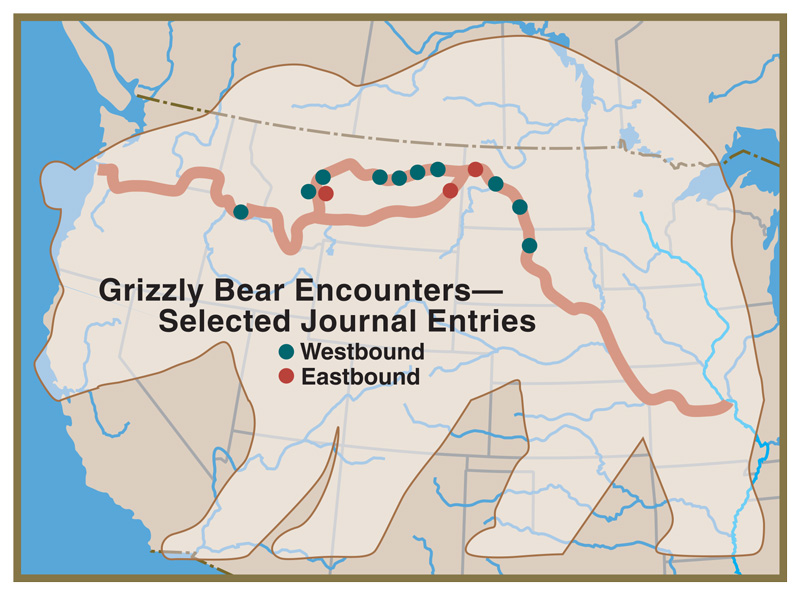
“the Indians give a very formidable account of the strength and ferocity of this anamal, which they never dare to attack but in parties of six, eight or ten persons; and are even then frequently defeated with the loss of one or more of their party.”
Snake River Rapids
"Stuk fast"
by Joseph A. Mussulman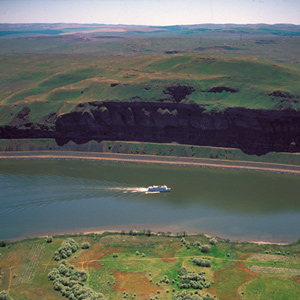
The boating didn’t improve on 14 October 1805. At the head of a particularly bad three-mile-long rapid, three canoes “Stuk fast for some time . . . and one Struk a rock in the worst part.”
Pompeys Pillar by Air
Remarkable rock
by Joseph A. Mussulman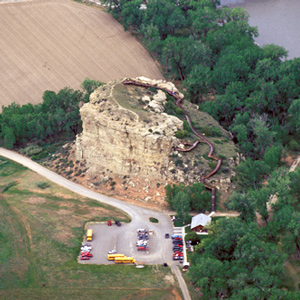
For countless generations this conspicuous sandstone formation had been a distinctive feature in the homeland of the Crows.
Clark’s Fort Mandan Maps
by Joseph A. Mussulman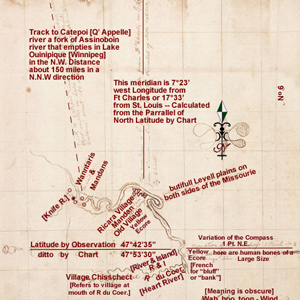
While wintering over at Fort Mandan, Clark made a series of maps based on Indian information and previous traders such as John Evans and François Larocque.
Rainbow Falls by Air
"Pleasingly beautifull"
by Joseph A. Mussulman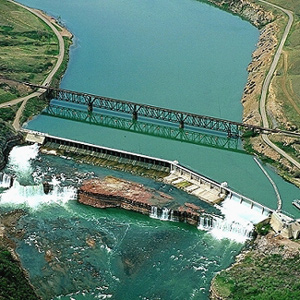
After briefly contemplating the Crooked Falls on 14 June 1805, Lewis followed the sound of “a tremendious roaring” to “one of the most beautifull objects in nature,” a fifty-foot-high cascade “with an edge as regular and as straight as if formed by art.”
Missouri River Fur Trade
by Joseph A. Mussulman, W. Raymond Wood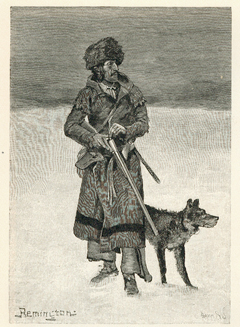
The Corps of Discovery had been, as James Ronda phrased it, “only the latest in a long series of traders and travelers” to visit the tribes living along the Missouri. The Mandans had been visited in 1738 by la Vérendrye from his base on the Assiniboine River.
The Sounding Horn
The "sounden horn"
by Joseph A. Mussulman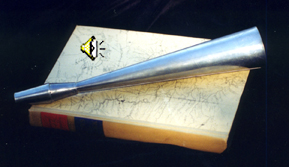
In May of 1803, Lewis bought four “tin horns”—elsewhere called “Tin blowing Trumpets” or, by Sgt. Ordway, “Sounden [Sounding] horns.” They were likely used a signals between boats and on several occasions a horn was used to call in lost hunters.
Jefferson the Violinist
by Joseph A. Mussulman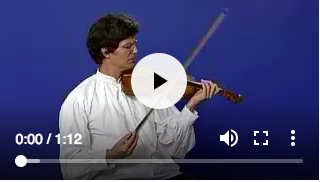
One of Thomas Jefferson’s favorite compositions was the Sonata for Violin and Continuo, Opus 5, written by Corelli. Using a violin such as Jefferson owned, violinist Samuel Taylor plays the theme and two of the variations.
Lewis’s Education
Education for the young gentleman
by Joseph A. Mussulman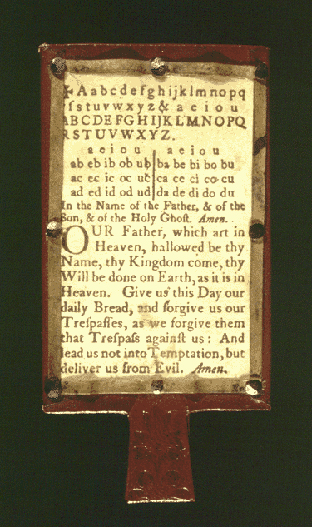
Land management introduced the pupil to the practical aspects of natural history. Jefferson recalled Lewis’s “talent for observation, which had led him to an accurate knowledge of the plants and animals of his own country, would have distinguished him as a farmer.”
Columbian Ground Squirrel
Spermophilus columbianus
by Joseph A. Mussulman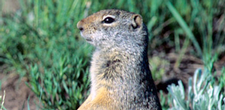
Labiche brought a specimen into Long Camp on the Clearwater River and four days later, Meriwether Lewis penned one of his longest and most meticulous descriptions of any small mammal.
Bad ‘humered’ Island
Change of heart
by Joseph A. Mussulman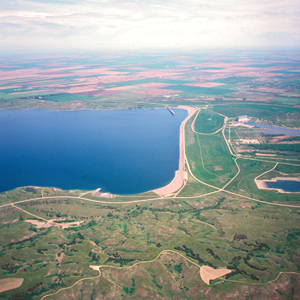
On the evening of 25 September 1804 after a negative encounter with the Lakota Sioux, the Corps camped on a nearby island Clark called “bad humered Island.” The next morning, the Indians had a change of heart.
Shoshone Travel Advice
Leaving Withington Creek Village
by Joseph A. Mussulman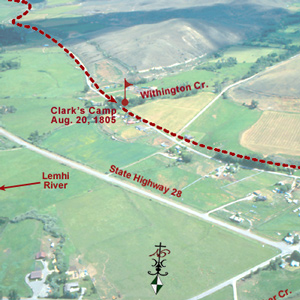
Lewis was still at Camp Fortunate directing the digging of a cache and the making of packs and pack-saddles for the portage across the divide. Meanwhile, Clark and his contingent left to see whether the Salmon River was as bad as Cameahwait had said.
Tiber Dam
by Joseph A. Mussulman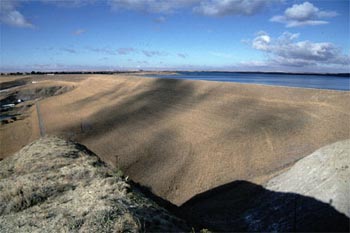
Tiber Dam was part of an extensive project starting in 1952 to mitigate flooding, generate electricity, irrigate the deserts of the Northern Plains, and ensure ample water to float commercial river traffic below Sioux City, Iowa.
Air Gun Accident
A shooting on Brunot's Island
by Joseph A. Mussulman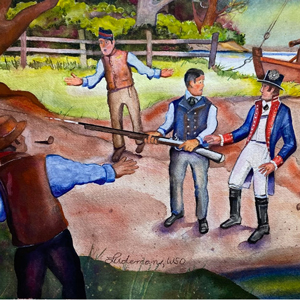
“accedentaly the ball passed through the hat of a woman about 40 yards distanc cutting her temple about the fourth of the diameter of the ball.”
Packer Meadows
"A pretty little plain"
by Joseph A. Mussulman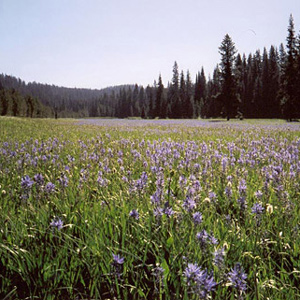
Lewis acknowledged it was “a pretty little plain of about 50 acres plentifully stocked with quawmash” and “one of the principal stages or encampments of the indians”
Hunting
by Joseph A. Mussulman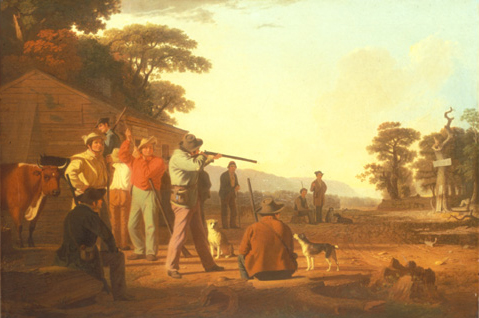
Target shooting contests were an important part of American frontier life from the late 17th century until the end of the 19th. Competition was also an important part of Lewis and Clark’s plans to hone the marksmanship of the Corps’ most promising hunters.
Measuring Heights and Distances
From Owen's Dictionary
by Joseph A. Mussulman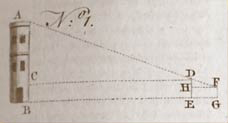
This article shows methods for measuring heights and distances as described by Owen’s Dictionary of Arts and Sciences (1754), a book in the expedition’s traveling library.
Over Tillamook Head
Clark's point of view
by Joseph A. Mussulman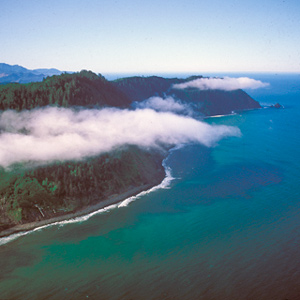
After passing the salt works and continuing along the “round Slippery Stones under a high hill,” Clark related, “my guide made a Sudin halt, pointed to the top of the mountain and uttered the word Pe Shack which means bad, and made Signs that we . . . must pass over that mountain.
Early American Flags
by Joseph A. Mussulman
Lewis’s long list of needs for the journey would have been a large supply of American flags, to be flown on their boats, over their camps, and at their council sites. Leading up to the Lewis and Clark expedition, what did the young country’s flags look like?
Gallatin City
Three Forks after the expedition
by Joseph A. Mussulman, Robert N. Bergantino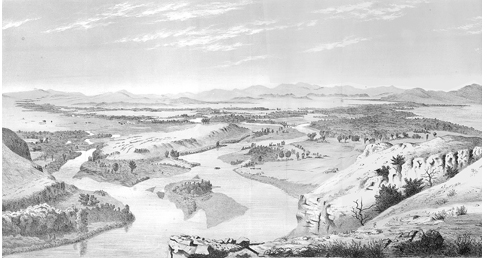
After the expedition, the Three Forks area would see the death of Potts and Drouillard, the start of Colter’s famous run, and an emerging frontier lifestyle in Gallatin City, later to be known as Three Forks, Montana.
End of the Enlightenment
Anti calomel and the "genteel tradition"
by Joseph A. Mussulman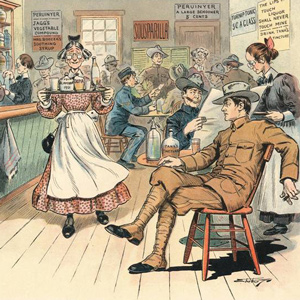
No more calomel! Not just an anthem, a reflection on the transition from the “Age of Enlightenment” to the “genteel tradition.”
The Manual of Arms
Basic maneuvers for every soldier
by Joseph A. Mussulman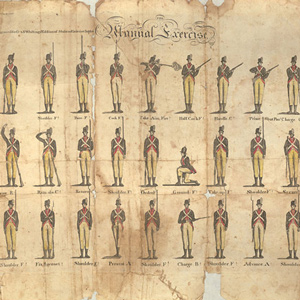
The first major objective of basic training was mastery of the “Manual Exercise,” or manual of arms. It involved 27 commands from the sergeant, calling for 56 motions by the recruit. The single command, “Prime and Load,” involved fifteen motions.
The Jefferson Canyon
The fourth mountain gate
by Joseph A. Mussulman, Robert N. Bergantino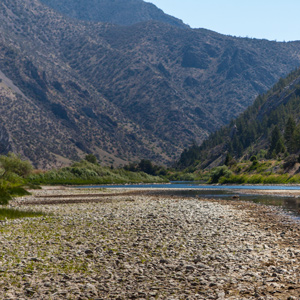
On 1 August 1805, Clark and the expedition’s flotilla of eight dugout canoes pushed up the Jefferson River through “a verrey high mountain which jutted its tremendious Clifts on either Side for 9 Miles, the rocks ragide.” They emerged into a “wide exte[n]sive vallie.”
The Bitterroot River
Tum-sum-lech, no salmon!
by Joseph A. Mussulman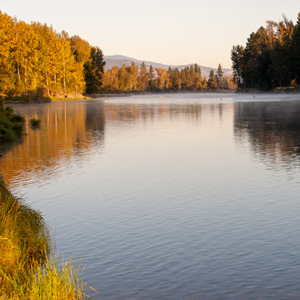
“The stream appears navigable,” he had earlier confided to his journal in reference to the Bitterroot River, “but from the circumstance of their being no sammon in it I believe that there must be a considerable fall in it below”
Pryor Creek
Ill-fated mission
by Joseph A. Mussulman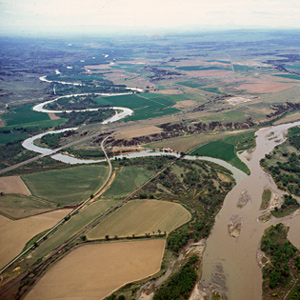
The stream Clark named for Nathaniel Pryor meanders from its montane sources in the mountain range that now bears Pryor’s name to join the Yellowstone River in the area where Pryor began his ill-fated diplomatic mission.
The Mouth of the Missouri
by Joseph A. Mussulman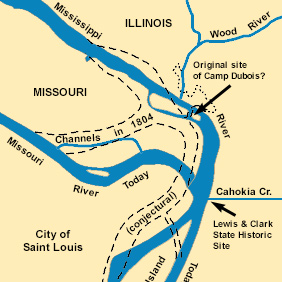
The Missouri River still contributes its tint a few miles north of St. Louis. It is difficult to determine exactly how much, and how often, the confluence of the Missouri and the Mississippi Rivers changed during the nine decades after the Lewis and Clark Expedition.
Wild Ginger
Asarum canadense
by James L. Reveal, Joseph A. Mussulman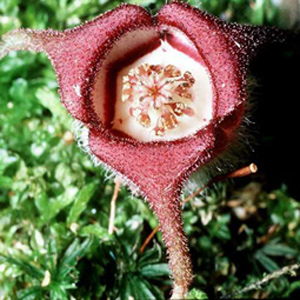
Lewis reported that a specimen of this plant “was taken the 1st of June at the mouth of the Osage River; it is known in this country by the name of the wild ginger.”
Lemhi Pass by Air
Division point
by Joseph A. Mussulman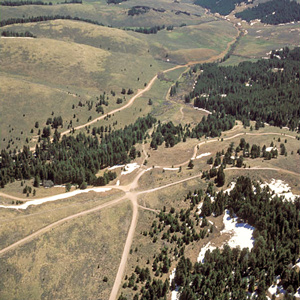
The gravel road winding parallels Trail Creek, which is lined by low willows. It corresponds roughly to the Indian road that Lewis, Drouillard, Shields, and McNeal followed westward from the forks of the Beaverhead River.
Long-tailed Weasels
Mustela frenata
by Joseph A. Mussulman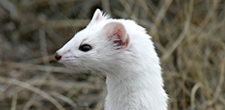
The captains saw their first white weasel at Fort Mandan on 9 November 1804. At Fort Clatsop on Christmas Day, 1805, Sacagawea gave Clark “2 Doz wesels tales.”
Lewis’s Birthday Meditation
A "sadly interesting passage"
by Joseph A. Mussulman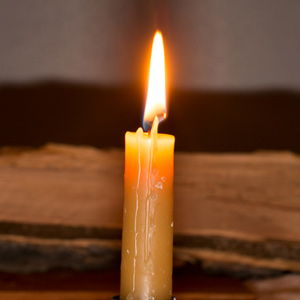
It has been remembered as “the most gloomy self-examination of the entire journal,” and “a passage of unreasonable melancholy,” of poignant sadness and self-doubt.
Lewis & Clark by Air
by Jim Wark, Joseph A. Mussulman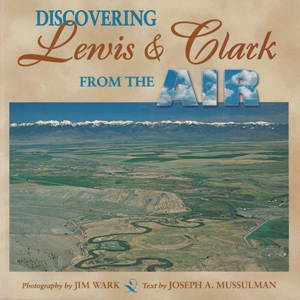
Aerial photographer Jim Wark and scholar Joseph A. Mussulman offer a fascinating new perspective on the Corps of Discovery’s historic journey. From Monticello in the east to Fort Clatsop on the Pacific Ocean, the entire 2004 book is provided online with updates by Mussulman.
Uniforms
by Joseph A. Mussulman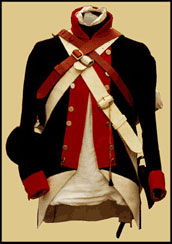
Each enlisted man, as well as the Captains, brought with them their dress uniforms which was worn for formal, official occasions such as dress reviews and parades, courts-martial, and funerals.
York’s Fallout over Freedom
by Joseph A. Mussulman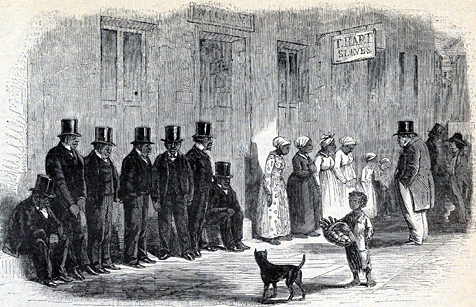
It is remarkable that we have no record of York’s words and thoughts. Insofar as the nineteenth century “slave narratives” were produced by Africans who had freed themselves, it may be conjectured that York did not leave a record of his thoughts and experiences because he was never freed.
The “Deserts of America”
by Joseph A. Mussulman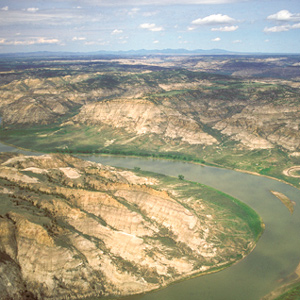
The men of the Corps of Discovery were fascinated by the varied textures, shapes and colors of the 200- to 300-foot cliffs that defined the river’s immediate borderlands. Clark judged from all he could see that “this Countrey may with propriety … be termed the Deserts of America.”
Richardson’s Ground Squirrel
Spermophilus richardsonii
by Joseph A. Mussulman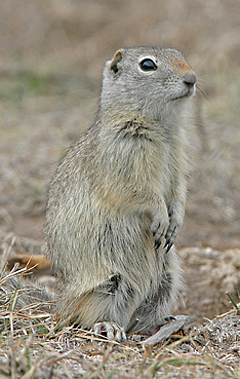
Lewis wrote his brief account of the new species on 25 February 1806: “the small grey squirrel common to every part of the rocky mountain which is timbered, difirs from the dark brown squirrel . . . only in its colour.”
Leaving the Lemhi Valley
Detour at Tower Creek
by Joseph A. Mussulman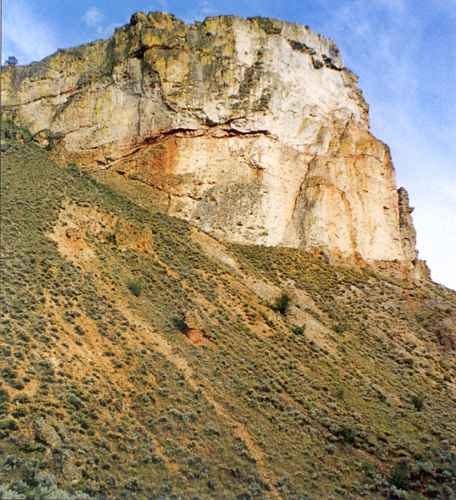
The Salmon winds tortuously through a seven-mile-long canyon where the vertical walls at that time crowded the riverbanks so tightly in several places that Clark and his party were compelled to clamber over “four mountains verry Steap high & rockey.”
Sweet Grass
Hierochloe odorata
by Joseph A. Mussulman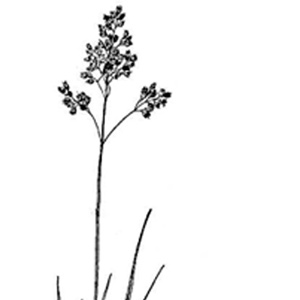
For thousands of years sweet grass has been used as incense in spiritual and religious ceremonies, as a personal perfume, and braided into necklaces and bracelets for wearing as amulets to ward off illness and injury.
The Milk River
The river which scolds all others?
by Joseph A. Mussulman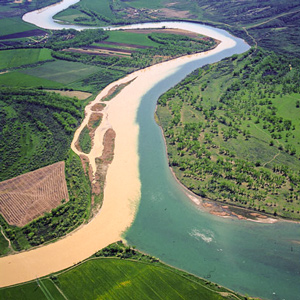
Creeping down the nearly imperceptible slope of the northern high plains, this is the stream Lewis and Clark described as possessing a peculiar whiteness, being about the colour of a cup of tea with the admixture of a tablespoonfull of milk.
White-tailed Deer
Odocoileus virginianus
by Joseph A. Mussulman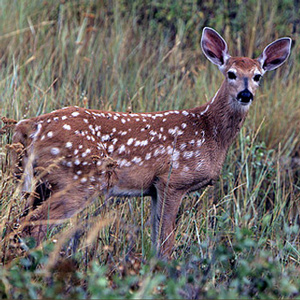
Lewis had no reason to write about the common or fallow deer of the East Coast, although in using it for the purpose of comparison, he gave quite a clear picture of it. John Godman’s 1828 description relied partly on Lewis and Clark’s journals.
Glacier Lilies
Erythronium grandiflorum
by Joseph A. Mussulman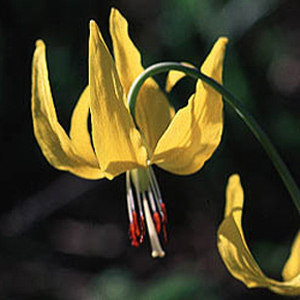
Because it appears in the Rockies at the edges of receding snowbanks it has also earned the name glacier lily. Lewis’s specimen, collected 15 June 1806 on the Clearwater River, was the one used by Pursh to describe the species.
Through Wallula Gap
Yelleppit and Sacagawea help out
by Joseph A. Mussulman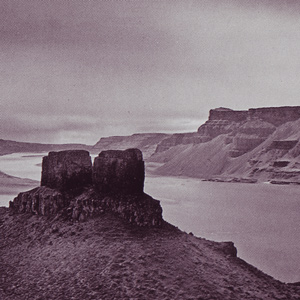
They encountered several rapids that nineteenth of October, including “a verry bad one” about two miles long. Clark climbed a 200-foot “clift” from which he could see many miles across the high desert.
Clark’s Columbia River Maps
by Joseph A. Mussulman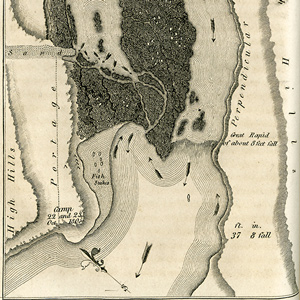
St. Joseph by Air
Bad medicine
by Joseph A. Mussulman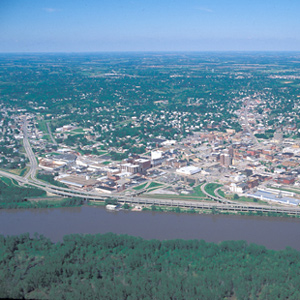
Pvt. Robert Frazer came close to being the expedition’s first fatality, for he was “verry Sick, struck with the Sun.” Probably his affliction would be diagnosed today as either heat exhaustion or sunstroke.
The Mosquito
Measures of torment
by Joseph A. Mussulman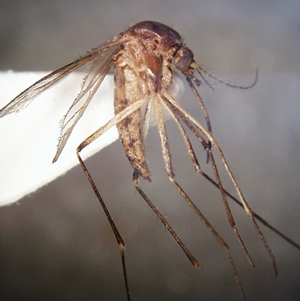
“Our trio of pests still invade and obstruct us on all occasions, these are the Musquetoes eye knats and prickley pears, equal to any three curses that ever poor Egypt laiboured under.”
Jefferson-Lewis Cryptology
Jefferson's ciphers
by Joseph A. Mussulman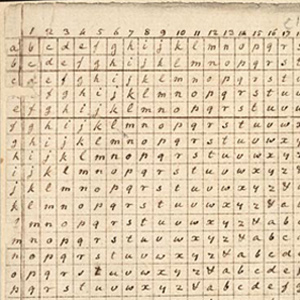
It was Thomas Jefferson who gave cryptography in America its greatest impetus. Sometime in 1803 Jefferson presented Meriwether Lewis with a cipher based on a square table or tableau used to create a substitution cipher.
Thrapples
by Joseph A. MussulmanOf four Yankton Sioux, Sgt. Ordway wrote: “They had each of them a Thrapple made of a fresh buffelow hide dressed white with Some Small Shot in it and a little bunch of hair tied on it.”
The Lemhi Valley
Hospitable people
by Joseph A. Mussulman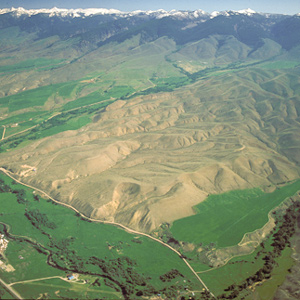
Lewis and his four companions crossed over the dividing ridge on the west side of the upper Missouri River basin and the Columbia drainage, then descended a dusty, well-traveled Indian road for some miles down into a “handsome little valley” among the sources of the Columbia River basin.
Camp Disappointment
The northernmost extent
by Joseph A. Mussulman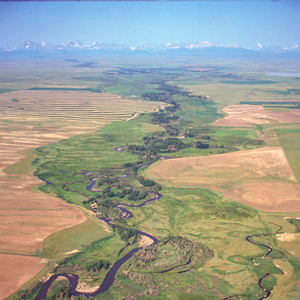
In 1806, Lewis, Drouillard, Joe Field, and Reubin Field made a second excursion up the Marias, this time on horseback. The four men reached the northernmost point of the Expedition’s exploration on 22 July 1806, camping on the south side of today’s Cut Bank Creek.
Charbonneau’s Prayer
Accident in the white pirogue
by Joseph A. Mussulman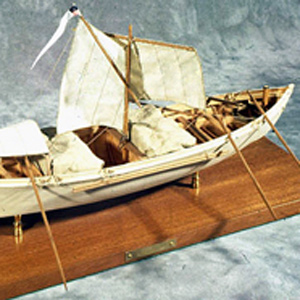
Charbonneau’s ultimate test of faith came as a boatman, on a day when he was at the helm of the white pirogue. After a sudden gust of wind, he panicked and turned the boat sideways to the wind, turning the boat over.
The Trapper Peaks
Bitterroot Mountain sentinels
by Joseph A. Mussulman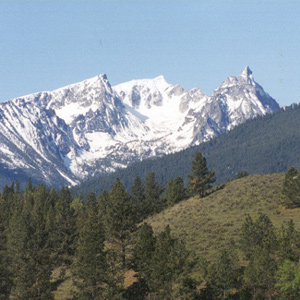
On 7 September 1805, the day after they left the Salish people at Ross’s Hole, the Corps proceeded north down the Bitterroot River valley. “The foot of the Snow toped mountains approach near the river on the left,” wrote Clark.
Big Bend of the Missouri by Air
Around the bend
by Joseph A. Mussulman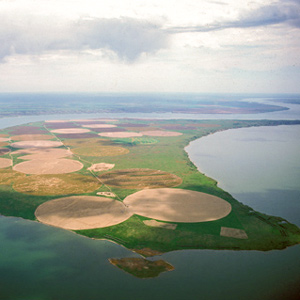
They paced off the distance across “the gouge,” wrote Clark, and found it to be about a mile and a quarter; he estimated the distance around the oxbow to be thirty miles.
Crooked Falls by Air
A "thousand conjectures"
by Joseph A. Mussulman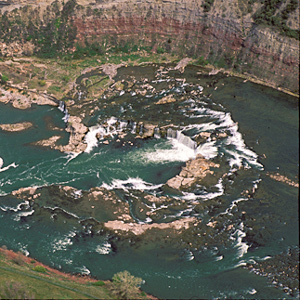
After passing “one continued rappid and three small cascades of abut for or five feet each,” Lewis “arrived at a fall of about 19 feet,” which he suitably named “the crooked falls” and proceeded to describe its geometry.
Harvesting the Hunt
by Joseph A. Mussulman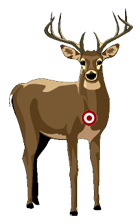
After the animal is shot, the work begins: field dressing, hauling the meat to camp, butchering, and preserving the extra meat for future meals.
Eulachon
Thaleichthys pacificus
by Joseph A. Mussulman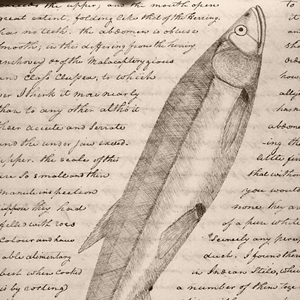
On 24 February 1806, Meriwether Lewis recorded that the Clatsop Indian chief, Coboway, came to the fort to sell some hats, some sturgeon, and “a species of small fish which now begin to run, and are taken in great quantities.”
Experience the Lewis and Clark Trail
The Lewis and Clark Trail Experience—our sister site at lewisandclark.travel—connects the world to people and places on the Lewis and Clark Trail.
Discover More
- The Lewis and Clark Expedition: Day by Day by Gary E. Moulton (University of Nebraska Press, 2018). The story in prose, 14 May 1804–23 September 1806.
- The Lewis and Clark Journals: An American Epic of Discovery (abridged) by Gary E. Moulton (University of Nebraska Press, 2003). Selected journal excerpts, 14 May 1804–23 September 1806.
- The Lewis and Clark Journals. by Gary E. Moulton (University of Nebraska Press, 1983–2001). The complete story in 13 volumes.
This site is provided as a public service by the
Lewis and Clark Trail Alliance
with additional funding from the following: