September 22, 1803

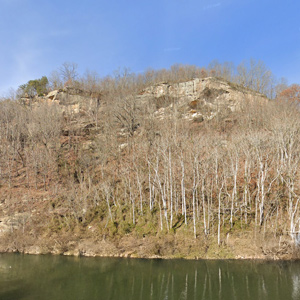
Hanging Rock

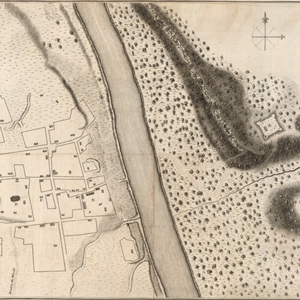
On or near this date, Lewis passes a notable hanging rock and the Ohio River towns of Alexandria (Portsmouth, Ohio) and Vanceburg, Kentucky. Travelers Fortescue Cuming and Thomas Rodney describe the area.

OPEN


September 4, 1803

Leaky boats

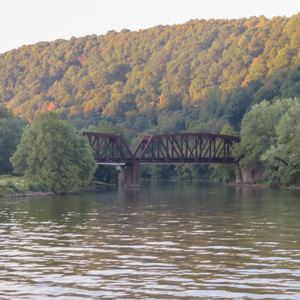
As they leave Pennsylvania along the Ohio River, the pirogue springs a serious leak, so they must stop to repair it. Lewis buys a canoe, but it too leaks. Camp is near Newell in present West Virginia.

OPEN


August 29, 1803

Ohio River flatboats

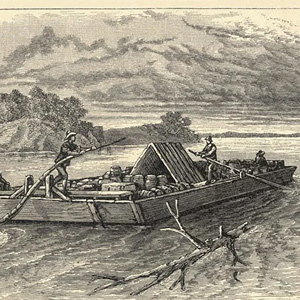
As he waits in Pittsburgh for the military barge to be completed, Lewis leaves little record of his day-to-day activities. The role of flatboats in Ohio River commerce was described by other travelers.

OPEN


August 24, 1803

New Orleans smugglers

From Natchez, William Claiborne, Governor of the Mississippi Territory, answers President Jefferson‘s Louisiana questions and describes smuggling at New Orleans—an activity experienced by William Clark.

OPEN


July 30, 1803

Forts Duquesne and Pitt

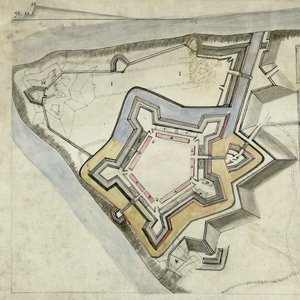
In Pittsburgh, Lewis oversees construction of the expedition’s military-style barge prior to departing down the Ohio River. His base is the U.S. Army headquarters at Fort Fayette. Nearby, remnants of two earlier forts—Pitt and Duquesne—can still be seen.

OPEN


July 27, 1803

Building Fort Kaskaskia

In Pittsburgh, Lewis oversees construction of the barge and waits to see if Clark will accept or decline his offer to co-command his Western expedition. In Washington City, orders are issued to lease land in Kaskaskia to build an American Army post to support the transfer of Louisiana and Jefferson’s Western expeditions.

OPEN


July 19, 1803

Stoddard's orders

In Pittsburgh, Lewis is working and waiting for the day he can begin down the Ohio River.

In Washington City, Cpt. Stoddard’s orders are to support President Jefferson’s Western expeditions and the transfer of Louisiana to the United States by recommending the best location for an Army fort west of the Mississippi.

OPEN


May 18, 1803

Gifts and fishing tackle

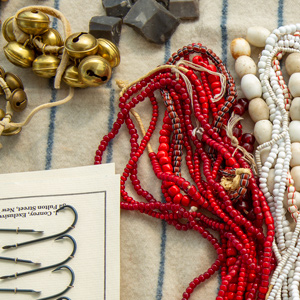
In Philadelphia, Purveyor of Public Supplies Israel Whelan buys over $150 of gifts and trade items and $25 of fishing tackle.

Spain announces the retrocession of Louisiana to France, and Washington City residents learn that the port of New Orleans has reopened to American trade.

OPEN


April 29, 1803

The price for Louisiana

In Paris, France, the Louisiana Purchase negotiators settle on a price—80 million francs (about 15 million dollars) plus payment of French debts worth about 20 million francs (3.75 million dollars). This is twice as much as Napoleon originally desired.

OPEN


April 27, 1803

Philadelphia mentors

From Washington City, President Jefferson tells Lewis that he has mentors waiting for him in Philadelphia. He also misinforms the public by saying his Western Expedition will explore the Mississippi River.

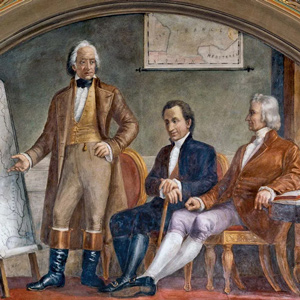
In Paris, James Monroe, Robert Livingston, and François Barbé-Marbois negotiate a price for Louisiana’s purchase.

OPEN