A list of articles about Seaman and an index of selected stories from the expedition journals
Articles
Lewis’s Dog Seaman
A working expedition member
by Joseph A. Mussulman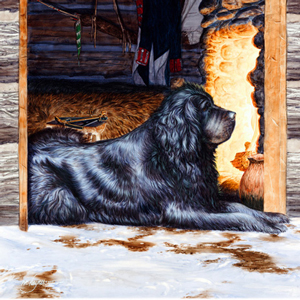
The Shoshones, like all other Indian people, had owned, bred, trained, used, and loved dogs from the dimmest days of their own origins. What was it, then, about this dog that thrilled them so? Lewis called it sagacity.
The Newfoundland Dog
Seaman's breed
by Joseph A. Mussulman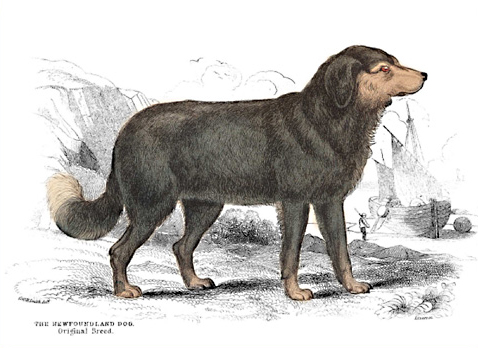
The original Newfoundland was smaller, the body more slender, forehead more arched, the muzzle sharper, and “nearly all of a totally black colour, excepting a bright rust coloured spot above each eye.”
Seaman’s Fate
Loyal to the end?
by James J. Holmberg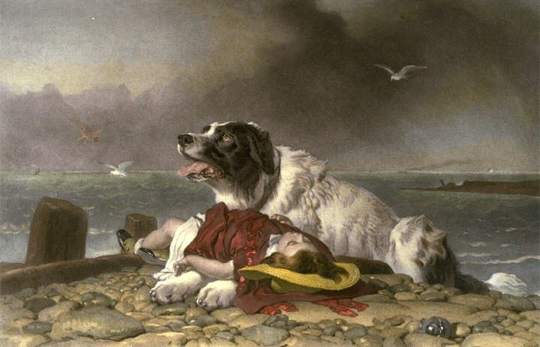
What happened to this famous Newfoundland dog? Did he complete the expedition? Or did he perish somewhere along the Missouri River? Was he with Lewis when at Grinder’s Stand?
Seaman’s Creek
Clues to his name
by Joseph A. Mussulman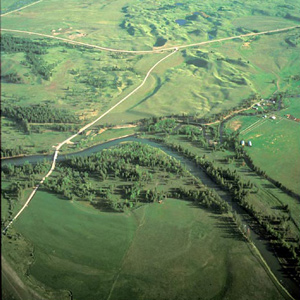
Twenty-eight and one-half miles upriver from their camp of 4 July 1806 the Indian road crossed a stream Lewis named after William Werner. At mile 31, they camped near the mouth of a stream the captain named after his dog, Seaman.
Seaman in the Journals
September 11, 1803
Swimming squirrels
by Kristopher K. Townsend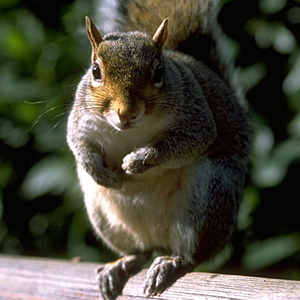
Lewis and his small flotilla enter the Long Reach of the Ohio where he sees numerous squirrels swimming across the river. He has his dog, Seaman, capture several and when fried, he finds them fat and tasty.
At Louisville, Clark writes a letter to update Lewis on his progress to find an interpreter and recruit young men from Kentucky.
November 16, 1803
Seaman not for sale
by Kristopher K. Townsend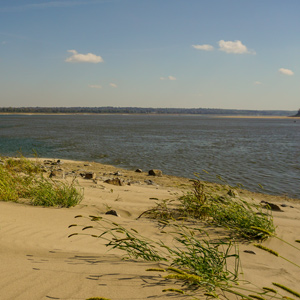
At the mouth of the Ohio, Lewis and Clark scout the western shore of the Mississippi River where a Shawnee man tries to buy Lewis’s dog, Seaman. In Washington City, President Jefferson plans more expeditions.
April 22, 1805
A frightened buffalo calf
by Kristopher K. Townsend
Towing the boats in high winds, the expedition makes only eleven miles up the Missouri River. In the area of present Williston, North Dakota, Lewis describes salt deposits and glacial erratics. A bison calf, perhaps afraid of Lewis’s dog Seaman, looks to Lewis for protection.
April 25, 1805
Lewis on the Yellowstone
by Kristopher K. Townsend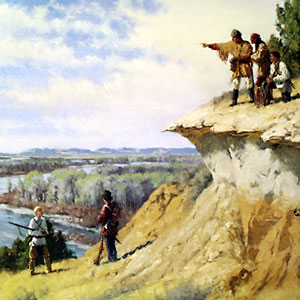
Lewis’s dog Seaman disappears during the night but fortunately returns in the morning. Lewis and a small detachment advance to the Yellowstone River. With water freezing to the paddles, Clark commands the boats. His group stops short of the Yellowstone.
April 26, 1805
Yellowstone River celebration
by Kristopher K. Townsend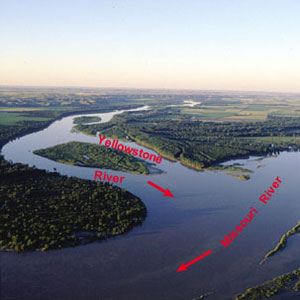
Pvt. Joseph Field scouts the lower reaches of the Yellowstone River while Lewis explores that river’s confluence with the Missouri. The boats catch up and with everyone now at this milestone, they celebrate with a dram of whiskey followed by singing and dancing.
May 19, 1805
Seaman bitten
by Kristopher K. Townsend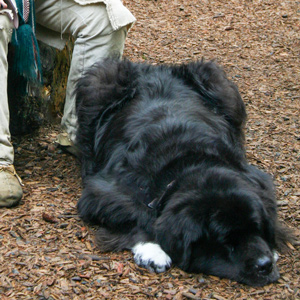
After morning fog clears, the enlisted men tow the boats up the Missouri stopping about seven miles below the Musselshell River in Eastern Montana. A grizzly bear shot in the heart runs for 1/4 miles before falling, and Lewis’s dog Seaman is bitten by a wounded beaver.
May 29, 1805
A bison terrorizes camp
by Kristopher K. Townsend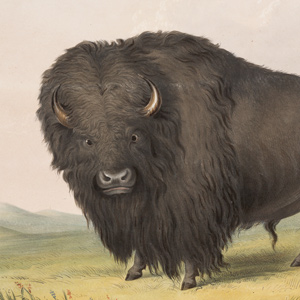
In the Judith Basin, a frightened bison runs amok damaging York’s gun and the white pirogue’s swivel gun. Lewis’s dog Seaman saves the day by chasing it away from camp. They continue up the Missouri camping above the “slaughter river”—present Arrow Creek—where numerous dead bison have washed ashore.
June 19, 1805
Sacagawea relapses
by Kristopher K. Townsend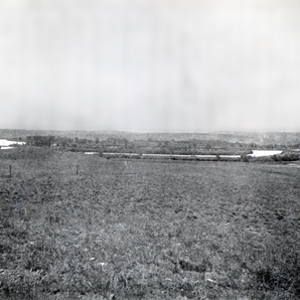
At Lower Portage Camp below the Great Falls of the Missouri, the enlisted men prepare to portage the boats, and Sacagawea relapses. After dark, Seaman alarms the men with his barking.
At the White Bear Islands above the falls, Clark determines to find the best route to haul the heavy dugout canoes.
June 27, 1805
Sightseeing at the falls
by Kristopher K. Townsend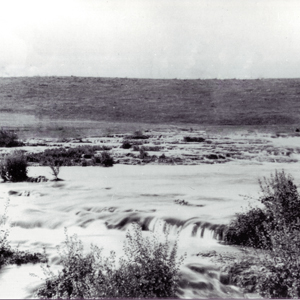
At the Great Falls of the Missouri, Sgt. Ordway’s group detours from the portage route to view the falls and Giant Springs. Sgt. Gass reports hail stones as large as seven inches. At the upper camp, Pvts. Whitehouse and Frazer sew hides that will cover the iron-framed boat, Drouillard and Pvt. J. Field ambush a grizzly bear, and Seaman barks at bears all night.
Near Kaskaskia, James Wilkinson takes his oath of office as Governor of Louisiana Territory and asks the Secretary of War what should be done with the many Natives that have come to St. Louis.
July 15, 1805
Leaving the Falls of the Missouri
by Kristopher K. Townsend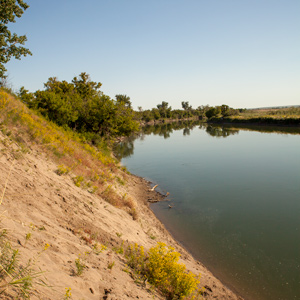
After laboring since 2 June 1805 to move beyond the Great Falls of the Missouri, the expedition is finally moving again. They make about 26 river miles passing high sand banks, a fort mountain, and blooming prickly pears. Lewis’s dog Seaman helps hunt.
July 21, 1805
Slow and laborious
by Kristopher K. Townsend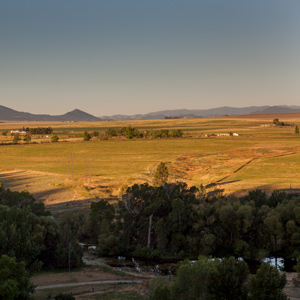
In present Helena Valley, Clark’s group scouts ahead in search of Shoshones. His party’s feet are so bruised and cut they must come back to the river and wait for Lewis. The enlisted men move the boats 15 miles up the Missouri, and Seaman catches several geese.
July 26, 1805
Charbonneau nearly drowns
by Kristopher K. Townsend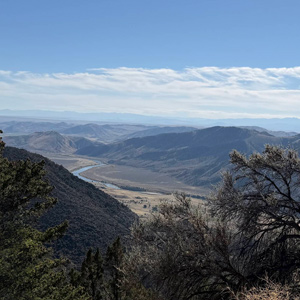
Above the Missouri River headwaters, Clark and two others climb a mountain to survey the Jefferson River. While crossing that river, Clark saves Charbonneau from drowning.
On the Missouri River several miles to the north, Lewis and the main party work the boats past “Howard” Creek where they suffer from barbed grass and prickly pears. Even Seaman is “in a rack of pain.”
April 11, 1806
Lining the big chute
by Kristopher K. Townsend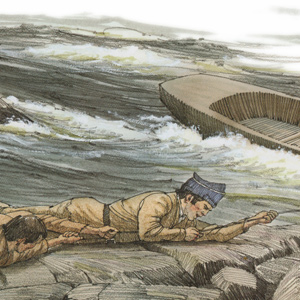
On this wet spring day at the Cascades of the Columbia, the men tow four dugout canoes through the “big Shoote.” Hostilities ensue when a few local Natives start stealing things. Even Lewis’s dog Seaman is stolen.
In Washington City, President Jefferson writes a letter to the Arikaras explaining Chief Too Né‘s death there.
May 23, 1806
Seaman helps hunt
by Kristopher K. Townsend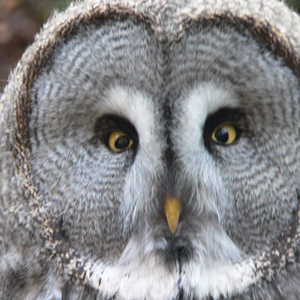
At Long Camp in present Kamiah, Idaho, toddler Jean Baptiste’s health improves, and Lewis’s dog Seaman helps hunt by pursuing a wounded deer. Lewis declares the Nez Perce method of castrating horses works better than his, and the hunters bring in a few grouse and two animals new to science: the Columbian ground squirrel and great grey owl.
July 5, 1806
Crossing rivers and creeks
by Kristopher K. Townsend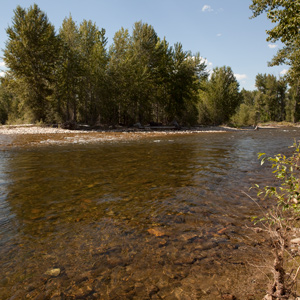
Lewis continues east on the Road to the Buffalo generally following the present Blackfoot River east of Missoula, Montana. He crosses several creeks, and names one after Pvt. Werner and another for his dog Seaman.
Nearing the end of the Bitterroot Valley in present Montana, Clark must cross the west and east forks of the Bitterroot River. They wet several items and then stop for the day at the place they met the Interior Salish last fall—present Ross’ Hole.
July 7, 1806
Over mountain and dale
by Kristopher K. Townsend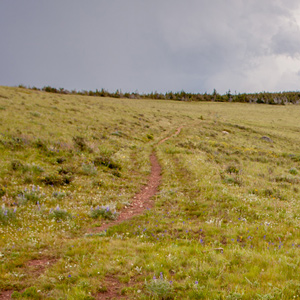
East of Lincoln, Montana, Lewis and his group follow the Road to the Buffalo cresting the Rocky Mountains and descending to the plains. His dog Seaman is bitten by a beaver and Pvt. Reubin Field wounds a moose. They also see fresh signs of bison.
In Montana’s Big Hole Valley, Clark’s group wakes to find several horses missing. Sgt. Ordway and three others spend the day looking for them while the others cross the valley.
July 15, 1806
Yellowstone arrival
by Kristopher K. Townsend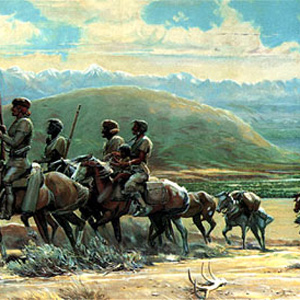
Today, the expedition is split into five separate detachments. Clark crosses present Bozeman Pass and arrives at the Yellowstone River. He names a river after Pvt. Shields but fails to find any trees large enough to build canoes.
Lewis remains at camp above the Great Falls of the Missouri where mosquitoes torment his dog, Seaman.
In three other detachments, Pvt. McNeal clubs a grizzly bear with his musket while on his way to the Lower Portage Camp. Drouillard returns without the missing horses, and Sgt. Ordway and his nine enlisted men paddle the dugouts down the Missouri.
Elsewhere, at Cantonment Belle Fontaine near the mouth of the Missouri, Zebulon Pike’s Southwest expedition begins.
Experience the Lewis and Clark Trail
The Lewis and Clark Trail Experience—our sister site at lewisandclark.travel—connects the world to people and places on the Lewis and Clark Trail.
Discover More
- The Lewis and Clark Expedition: Day by Day by Gary E. Moulton (University of Nebraska Press, 2018). The story in prose, 14 May 1804–23 September 1806.
- The Lewis and Clark Journals: An American Epic of Discovery (abridged) by Gary E. Moulton (University of Nebraska Press, 2003). Selected journal excerpts, 14 May 1804–23 September 1806.
- The Lewis and Clark Journals. by Gary E. Moulton (University of Nebraska Press, 1983–2001). The complete story in 13 volumes.
This site is provided as a public service by the
Lewis and Clark Trail Alliance
with additional funding from the following: