On or just after this day, President Thomas Jefferson acknowledges the receipt of Meriwether Lewis‘s letter announcing the expedition’s arrival in St. Louis on 23 September 1806. He sends a press release for the National Intelligencer of Washington City.
In Illinois, Clark, Lewis, and the Osage and Mandan delegations[1]For the delegations traveling with Lewis and Clark on this day, see The Osage Delegations and Sheheke’s Delegation. continue crossing the plains enroute to Vincennes. With them are two Mandan wives and five children.[2]The party included former expedition sergeant and private: John Ordway and François Labiche—the latter acting as an interpreter. Indian agent and St. Louis fur trader Pierre Chouteau led a … Continue reading
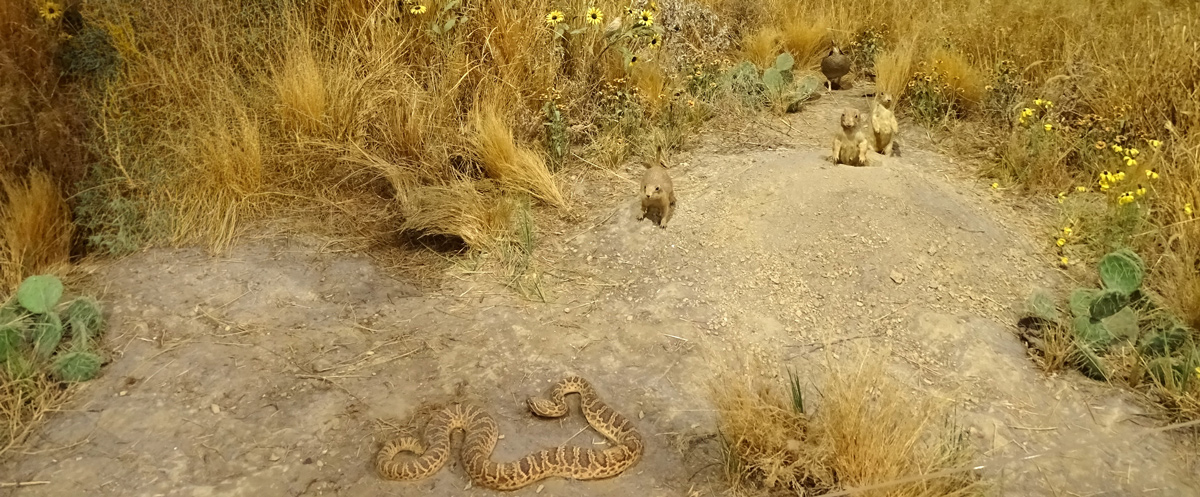
In Kansas, Zebulon Pike describes prairie dog towns and their potential as a food source.
Writing Letters
© 2026 by Kristopher K. Townsend. Permission to use granted under the Creative Commons Attribution-Share Alike 4.0 International license.
Thomas Jefferson’s Press Release
[on or after 24 October 1806]
Mr. Smith may notify in his paper that I have recieved a letter from Capt. Lewis dated at St. Louis Sep. 23. at which place himself, capt Clarke & their party arrived that day.
. . . . .
he speaks of this whole line furnishing the most valuable furs in the world, and a short & direct course for them to the Eastern coast of China; but that the greatest part of these would be from the head of the Missouri. he says it is fortunate he did not send back from the head of the Missouri any part of his force, consisting of 31. men, as more than once they owed their lives & the fate of the expedition to their numbers.
Capt Lewis expected to remain at St. Louis some days to settle with & discharge his men, & would then set out for Washington, by the way of Vincennes, Louisville, Abington, Fincastle, Staunton & Charlottesville. he is accompanied by the great Mandan chief, who is on a visit to Washington. Capt Lewis speaks of his colleague, Capt Clarke, in the most affectionate terms, and declares his equal title to whatever merit may be ascribed to the success of this enterprize.[3]Thomas Jefferson to Samuel Harrison Smith, Founders Online, National Archives, founders.archives.gov/documents/Jefferson/99-01-02-4466, accessed 16 December 2025.
In 1800, Samuel Harrison Smith (1772–1845) founded the National Intelligencer—a newspaper favoring Thomas Jefferson and the Democratic-Republican party. Along with Jefferson and Lewis, he was a member of the American Philosophical Society. He later served as Commissioner of the Revenue for the U.S. Treasury Department, and for ten years, was president of the Bank of the United States.[4]“Samuel Harrison Smith”, Wikipedia, en.wikipedia.org/wiki/Samuel_Harrison_Smith_(printer), accessed 16 December 2025.
Prairie Dogs and Rattlesnake
Generated from an original photo © 2018 by Adam Jones. Permission to use granted under the Creative Commons Attribution-ShareAlike 2.0 Generic (CC-BY-SA 2.0) license.
Pike’s Prairie Dogs
We assended the right branch [Pawnee River] about five miles, but could not see any sign of the Spanish trace; this is not surprizing, as the river bears south west, and they no doubt kept more to the west from the head of one branch to another. We returned and on our way, killed some prairie squirrels, or wishtonwishes, and nine large rattle snakes, which frequent their villages.
The Wishtonwish of the Indians, prairie dogs of some travellers; or squirrels as I should be inclined to denominate them; reside on the prairies of Louisana in towns or villages . . . . We killed great numbers of them with our rifles and found them excellent meat, after they were exposed a night or two to the frost, by which means the rankness acquired by their subteranneous dwelling is corrected. It requires a very nice shot with a rifle to kill them.
—Zebulon Pike[5]Donald Jackson, The Journals of Zebulon Montgomery Pike (Norman, Oklahoma: University of Oklahoma Press, 1966), 1:338–339.
Notes
| ↑1 | For the delegations traveling with Lewis and Clark on this day, see The Osage Delegations and Sheheke’s Delegation. |
|---|---|
| ↑2 | The party included former expedition sergeant and private: John Ordway and François Labiche—the latter acting as an interpreter. Indian agent and St. Louis fur trader Pierre Chouteau led a delegation of five Osage men. According to a Chambersburg, Pennsylvania newspaper, two sons of the Osage “principal chief” were with them. The Mandan delegation included Sheheke, his wife Yellow Corn, and their son. With them were former expedition interpreter René Jusseaume, one of his wives, and their two children. Most accounts have these last two children as boys, but an account by British diplomat August Foster says the two children were brother and sister. (The Franklin Repository, Chambersburg, Pennsylvania, Tuesday, Dec 16 1806, page 3; Augustus John Foster, Jeffersonian America: Notes on the United States of America, ed. Richard Beale Davis, ed. (San (Marino, California: Huntington Library, 1954), 27–28, available at archive.org/details/jeffersonianamer0000fost/.) |
| ↑3 | Thomas Jefferson to Samuel Harrison Smith, Founders Online, National Archives, founders.archives.gov/documents/Jefferson/99-01-02-4466, accessed 16 December 2025. |
| ↑4 | “Samuel Harrison Smith”, Wikipedia, en.wikipedia.org/wiki/Samuel_Harrison_Smith_(printer), accessed 16 December 2025. |
| ↑5 | Donald Jackson, The Journals of Zebulon Montgomery Pike (Norman, Oklahoma: University of Oklahoma Press, 1966), 1:338–339. |
Experience the Lewis and Clark Trail
The Lewis and Clark Trail Experience—our sister site at lewisandclark.travel—connects the world to people and places on the Lewis and Clark Trail.
Discover More
- The Lewis and Clark Expedition: Day by Day by Gary E. Moulton (University of Nebraska Press, 2018). The story in prose, 14 May 1804–23 September 1806.
- The Lewis and Clark Journals: An American Epic of Discovery (abridged) by Gary E. Moulton (University of Nebraska Press, 2003). Selected journal excerpts, 14 May 1804–23 September 1806.
- The Lewis and Clark Journals. by Gary E. Moulton (University of Nebraska Press, 1983–2001). The complete story in 13 volumes.
This site is provided as a public service by the
Lewis and Clark Trail Alliance
with additional funding from the following: