Calendar
Expedition Calendar
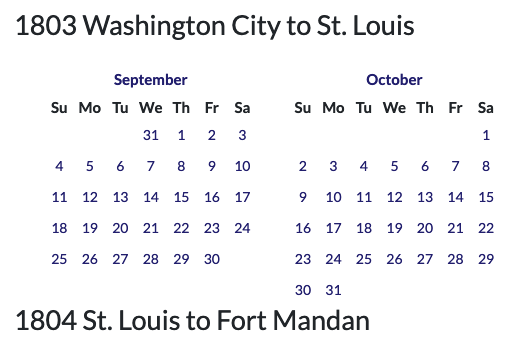
Links to every day-by-day page in a calendar format spanning 31 August 1803 to 26 September 1806. A page every day!
Expedition Calendar
Links to every day-by-day page in a calendar format spanning 31 August 1803 to 26 September 1806. A page every day!
Jefferson's extraordinary plan

From Washington City, President Thomas Jefferson writes a letter to James Monroe asking him to become Envoy Extraordinary and Minister Plenipotentiary with the authority to negotiate a solution to the Spanish closure of the port of New Orleans to American commercial traffic.
In a separate letter, Attorney General Levi Lincoln gives Jefferson advice on the legality of acquiring the Mississippi River channel from France.
In Philadelphia, Charles Willson Peale updates the president on his sons’ mammoth bone exhibit and sends silhouettes created with a physiognotrace.
Negotiations proposed
In response to the closure of New Orleans to American commercial traffic, President Jefferson’s plan to acquire the lower territory along the Mississippi River is read to the U.S. Senate—an act that would lead to the fruition of the Lewis and Clark Expedition. Jefferson also pays for 200 bottles of champaign from the private reserves of the Spanish envoy to the United States, Marqués de Casa Yrujo.
Envoys to France

In Washington City, President Jefferson writes the commission appointing Robert Livingston and James Monroe to negotiate a cession of land in the lower Mississippi and eastward toward Florida.
A Western expedition
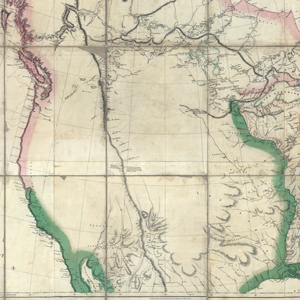
In Washington City, Meriwether Lewis delivers President Thomas Jefferson’s confidential message to the U.S. Congress proposing that they fund an expedition to the Western ocean.
Laying the foundation
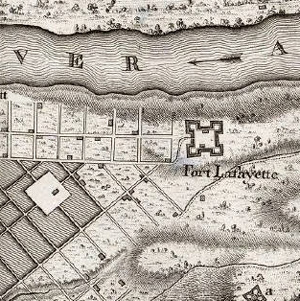
From Fort Fayette, Capt. Stoddard writes a letter to Col. Burbeck asking for further orders. Those orders would be to establish a fort on the Mississippi to support Jefferson’s western expeditions.
George Logan's support
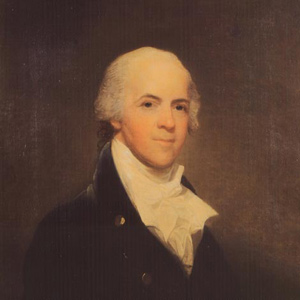
In Washington City, President Jefferson’s request to fund the expedition to the Western Ocean is referred to a three-member Senate committee that includes George Logan—an ardent supporter.
Jefferson's theories
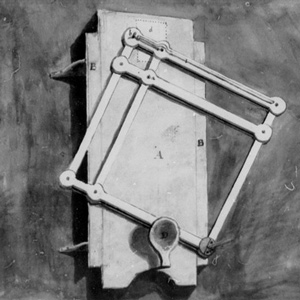
In Washington City, President Jefferson writes about mammoths, the physiognotrace, and Charles Willson Peale’s Museum collection—theories and technologies that influenced the Lewis and Clark Expedition.
Gallatin's problem
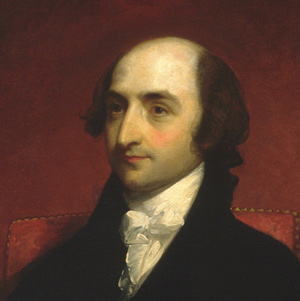
In Washington City, President Jefferson proposes that the United States moor a ship opposite New Orleans to act as a temporary customs house until a solution to the port’s closure can be arranged.
Funding moves forward
In response to President Jefferson’s confidential request of 18 January, a Congressional committee recommends a bill to appropriate $2500 to fund what would become known as the Lewis and Clark Expedition.
Polygraphs and physiognotraces
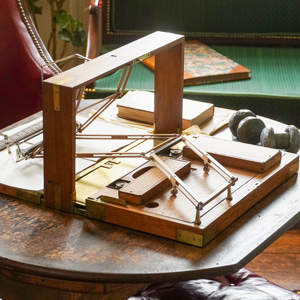
From his museum in Philadelphia, Charles Willson Peale writes to President Jefferson regarding the physiognotrace that can be used to draw portraits and the polygraph that can write a copy as an original is being written. He also announces his essay on preserving health.
Spanish unease
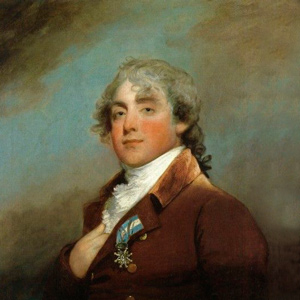
In Washington City, the Spanish minister to the United States, Carlos Martínez de Yrujo, writes a letter to the Chief Minister of Spain with an update on the progress of President Jefferson’s proposal to send an expedition to the Pacific ocean—an act Spain opposes. The Senator from New York, Samuel Mitchell, debates Jefferson’s need to keep the expedition a secret.
Harrison's nomination
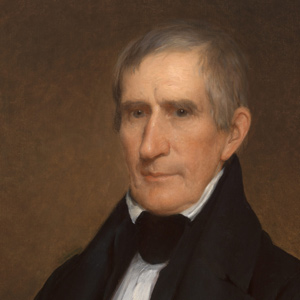
In Washington City, President Jefferson nominates William Henry Harrison to a second term as governor of the Illinois Territory. He would give the list to his secretary—Meriwether Lewis.
Livingston's update
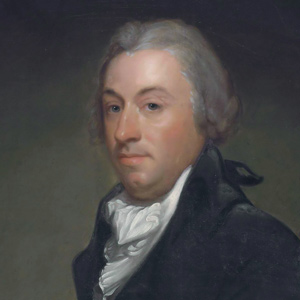
President Jefferson writes the U.S. envoy in Paris telling him that ministers will be sent to negotiate a peaceful solution to the New Orleans closure—an effort resulting in the Louisiana Purchase.
Kentucky militants
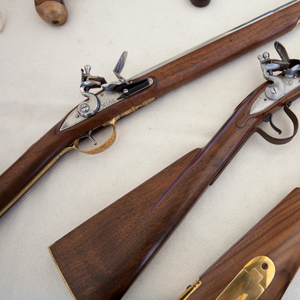
James Madison summarizes Spain’s request that he do something about the militants from Kentucky who are organizing to open the port of New Orleans by force. The Louisiana Purchase would ultimately result.
Rodney recommended
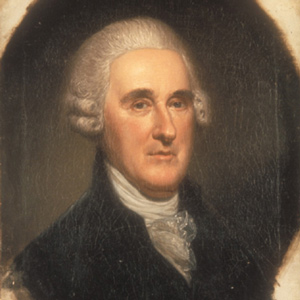
Pennsylvania Governor Thomas McKean asks President Thomas Jefferson to find a Federal appointment for Thomas Rodney, who would parallel and intersect with Lewis’s travel down the Ohio next fall.
Unauthorized forces
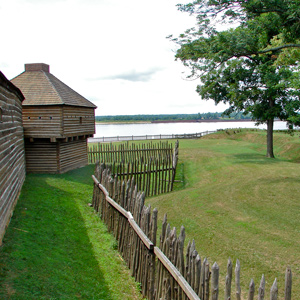
President Jefferson recommends that any unauthorized groups intent on opening the port of New Orleans by force be arrested. The peaceful solution would be the Louisiana Purchase.
Two new ambassadors
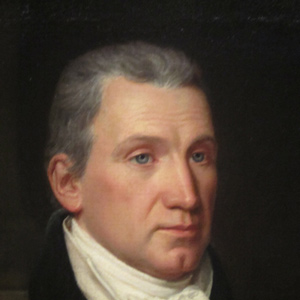
In Washington City, President Jefferson writes a letter of credence granting the powers of a full ambassador to James Monroe and Robert Livingston. The two would negotiate Louisiana’s purchase.
Portsmouth fire donations
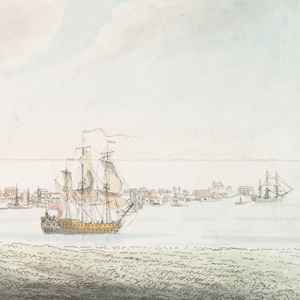
While they wait for Congress to approve funding the Western Expedition, President Thomas Jefferson gives his secretary Meriwether Lewis 100 dollars for pay for a “year’s gazettes”. He also makes a donation to Joseph Willard on behalf of the Portsmouth fire victims.
The "Mississippi Question"

In Washington City, Senator James Ross raises his Mississippi Question regarding the closure of New Orleans. Ultimately, an answer will be needed before the Western Expedition can begin.
This site is provided as a public service by the
Lewis and Clark Trail Alliance
with additional funding from the following: