No other individual shaped the military aspects of the Lewis & Clark Expedition than Friedrich Wilhelm Baron von Steuben.
Friedrich Wilhelm von Steuben (1730–1794)
Early American Army trainer
by Joseph A. Mussulman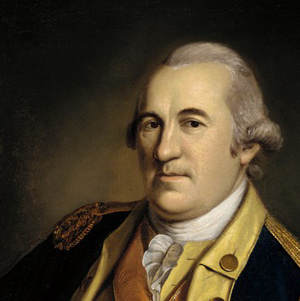
Until he presented his services to General Washington at Valley Forge, the Continental Army still consisted merely of a number of state-sponsored militias that were entirely independent of one another, each operating according to its own rules and regulations.
The Frontier Soldier
Life in the 1803 U.S. Army
by Robert J. Moore
A multitude duties awaited the hapless private, and idle hands and feet were never knowingly allowed in a military camp. Most fatigue duties rewarded the men with an extra gill (1/4 of a pint) of whiskey each day.
Von Steuben’s Regulations
The Army's 'blue book'
by Joseph A. Mussulman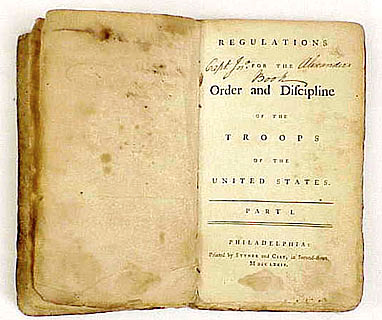
Steuben’s book was much more than a “blue book” of military regulations and procedures. It concluded with guides to character, pride and conduct for men of every rank, from regimental commanders and their subordinates, to non-commissioned officers and privates.
Courts Martial on the Trail
Military trials during the expedition
by Joseph A. Mussulman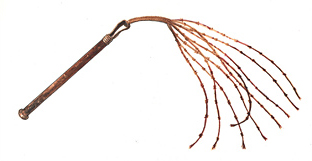
The first court martial took place on 29 March 1804, when John Colter, Robert Frazer, and John Shields were called before the court. Discreetly, Clark committed no details of this one to his journal, and no record of it was entered in the Orderly Book.
The Manual of Arms
Basic maneuvers for every soldier
by Joseph A. Mussulman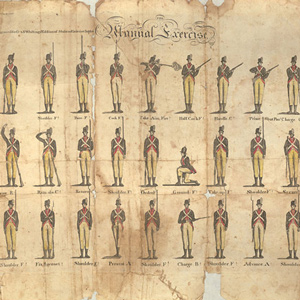
The first major objective of basic training was mastery of the “Manual Exercise,” or manual of arms. It involved 27 commands from the sergeant, calling for 56 motions by the recruit. The single command, “Prime and Load,” involved fifteen motions.
The Articles of War
Rules for soldiers
by Joseph A. MussulmanThe expedition’s enlisted men were obliged to comply with the basic military rules and regulations contained in two distinct official documents that had been written in the initial heat of the Revolutionary War.
Guard Duty
by Joseph A. Mussulman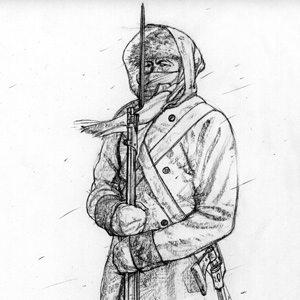
During their journey up the Missouri to the Mandan villages, security procedures were outlined in the detachment orders of 26 May 1804. The detachment orders setting forth procedures for the security of Fort Clatsop, were issued on 1 January 1806.
Order of Encampment
Lay out of the nightly camps
by Joseph A. Mussulman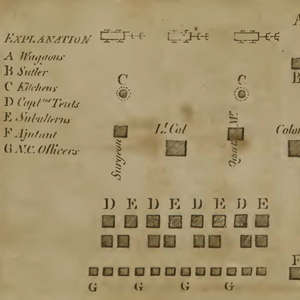
Spacing between tents, as well as lines of tents, was strictly measured. Privates’ tents, accommodating 6 men each, were between the sergeants’ tents; all were two feet apart. The “sink,” or latrine, was to be 60 paces (300 feet) in front of the first line of tents.
Foggy Ohio Mornings
Weather report
by Joseph A. Mussulman
They camped for that night somewhere on the big island now known as Brown’s. When darkness fell the two canoes, which carried most of Lewis’s most valuable supplies, were still behind. “Ordered the trumpet to be sound[ed],” he wrote, “and they came up in a few minutes.”
September 6, 1803
Sailing past Steubenville

Lewis employs horses, sails, and oxen to pass over several gravel bars. He tries sailing, but in the high wind, the sprit sail breaks. They pass Steubenville, Ohio but only make ten miles for the day.
Fort Clatsop Detachment Orders
by Joseph A. Mussulman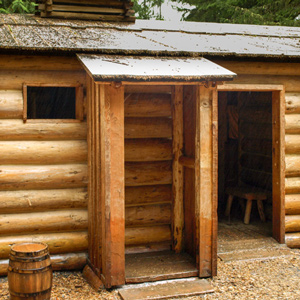
The captains issued Detachment Orders showing the degree to which Lewis and Clark consistently maintained the spirit of Baron von Steuben’s Regulations for the Order and Discipline of the Troops of the United States.
Experience the Lewis and Clark Trail
The Lewis and Clark Trail Experience—our sister site at lewisandclark.travel—connects the world to people and places on the Lewis and Clark Trail.
Discover More
- The Lewis and Clark Expedition: Day by Day by Gary E. Moulton (University of Nebraska Press, 2018). The story in prose, 14 May 1804–23 September 1806.
- The Lewis and Clark Journals: An American Epic of Discovery (abridged) by Gary E. Moulton (University of Nebraska Press, 2003). Selected journal excerpts, 14 May 1804–23 September 1806.
- The Lewis and Clark Journals. by Gary E. Moulton (University of Nebraska Press, 1983–2001). The complete story in 13 volumes.
This site is provided as a public service by the

Lewis and Clark Trail Alliance
with additional funding from the following: